
Reviewed · CITY TOURS
Dar es Salaam City Tour – Everyday
Dar es Salaam rewards a closer look. This six-hour tour connects the city’s major museums and landmarks with a private driver-guide, making it a smart way to understand Tanzania before heading to Zanzibar or the safari parks. I especially like the included admission fees and the chance to travel in an air-conditioned vehicle while your guide handles the city roads. I also like the private format, since guides such as Michael, Anna, and Godfrey have adjusted the day to suit individual interests.
The main consideration is pace. The National Museum and Village Museum each deserve time, while the Tingatinga cooperative and Askari Monument are shorter stops. Traffic can also affect the schedule, and the advertised route does not always include every place guests may hope to see. Ask about additions such as Kariakoo Market, the fish market, churches, or shopping areas before the morning begins.
In This Review
- Six details that shape the day
- Why this Dar es Salaam tour works well
- The National Museum: one hour with Tanzania’s long story
- Tingatinga Arts Cooperative: bright paint and local scenes
- Askari Monument: ten minutes of difficult history
- Village Museum: houses that explain cultural variety
- The extra stops that can make the day better
- Guides, comfort, and the private format
- Is $97 per person a fair price?
- Who should book this city tour?
- Should you book it?
- FAQ
- How long does the Dar es Salaam City Tour last?
- What time does the tour start?
- Where does the tour begin?
- Where does the tour end?
- Is hotel pickup available?
- Is transportation included?
- Are admission fees included?
- Is this a private tour?
- Can most people participate?
- What is the cancellation policy?
Six details that shape the day
- Olduvai Gorge’s famous early-human discovery: The National Museum displays remains of Paranthropus boisei, found by Louis Leakey.
- A private vehicle and guide: You travel with your own party rather than following a large walking group.
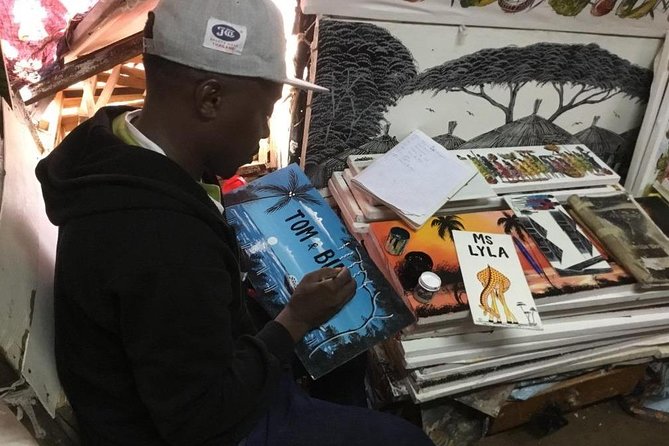
- Tingatinga art made with bicycle paint: The cooperative explains a distinctly Tanzanian painting style known for sharp color contrasts.
- A World War I monument with a complicated past: Askari Monument honors African soldiers, carriers, and others who served and died in the war.
- Sixteen traditional village settings: The Village Museum presents homes and household objects linked to selected Tanzanian ethnic groups.
- A useful half-day city introduction: At $97 per person, the cost includes transportation, entrance fees, and guiding, which matters most when you have limited time.
Why this Dar es Salaam tour works well
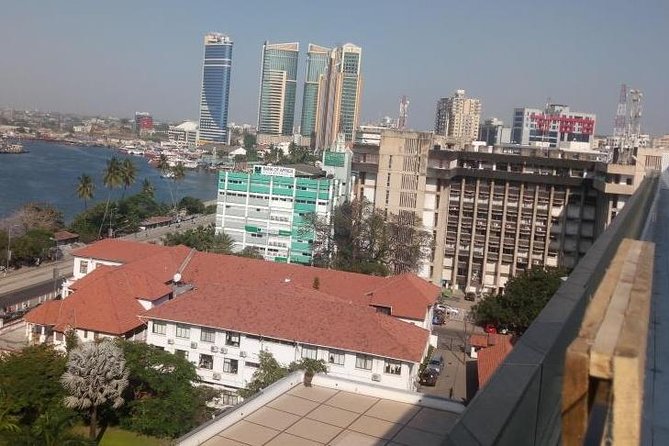
Dar es Salaam is often treated as a jumping-off point. People arrive, sleep, and hurry toward Zanzibar or the Serengeti. That is a shame. The city is Tanzania’s commercial center and a place where Swahili, African, Arab, German, British, and modern Tanzanian stories meet.
This tour gives you a compact introduction without asking you to arrange several taxis, learn the museum locations, or sort out admission fees at each stop. You begin at 8:00 a.m. from the Dar es Salaam Serena Hotel on Ohio Street and return to the same meeting point after about six hours. Hotel and cruise-port pickups have also been arranged for some bookings, but you should confirm your exact pickup details when reserving.
The private setup is important. You can ask questions as you go, linger at an exhibit, or request a change if the schedule allows. Godfrey has tailored the day around a guest’s preferred places, while Michael has helped with bus and ferry tickets and added Kariakoo Market for a more everyday view of the city. That kind of help can be more useful than a fixed script.
The published route is cultural rather than scenic. You will not spend the morning hopping between beaches or taking a long coastal cruise. Instead, you get museums, public monuments, art, and a village display. For a first visit, that gives you a solid sense of Tanzania’s past and its many cultural traditions.
More City Tours in Dar es Salaam
- Dar es Salaam: City Tour
★ 4.7 · 159 reviews - Dar es Salaam City Center: Walking Tour
★ 4.8 · 102 reviews - The Best/Top Rated Cultural City Tour in Dar es Salaam
★ 5.0 · 57 reviews
The National Museum: one hour with Tanzania’s long story
The National Museum is the most important stop for putting Tanzania in context. It began in 1934 as a memorial museum for King George V, opened to the public as the National Museum in 1940, and expanded in 1963. Its entrance is on Shaaban Robert Street.
The museum’s strongest attraction is its early-human material. The remains of Paranthropus boisei, found by Dr. Louis Leakey at Olduvai Gorge, connect Dar es Salaam to one of East Africa’s most important archaeological areas. You get a glimpse of the scientific story behind a place many people know mainly from safari brochures.
The colonial section adds another layer. Ethnographic displays cover traditional crafts, headwear, ornaments, and musical instruments. You can also see objects linked to hunting and gathering, initiation ceremonies, traditional healing, and witchcraft.
Some of the displays are especially memorable because they are ordinary objects with practical purpose. Leather and bark clothing show how people used available materials. A wooden bicycle, still in working order, is the sort of unusual item that can make a museum visit stick in your mind.
You have about an hour here, and that is enough for a guided overview but not for every display in detail. Listen closely to your guide’s explanations, since the value of the stop depends partly on how the objects are connected to Tanzania’s wider story. If you prefer museums at a slow pace, you may wish to ask if the schedule can be adjusted.
Tingatinga Arts Cooperative: bright paint and local scenes
The Tingatinga Arts Cooperative Society offers a very different experience. After the museum’s archaeological and historical displays, you shift to a living Tanzanian art tradition.
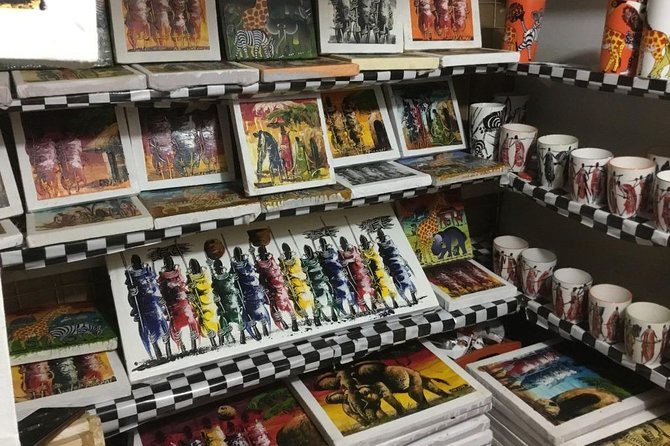
Tingatinga paintings are made with layers of glossy enamel paint, often the type used for bicycles. The method produces sharp contrasts and strong colors. Artists commonly depict local people, daily activities, exotic animals, and recognizable places.
The style takes its name from its founder, Edward Tingatinga. Early works were painted on Masonite and ceiling boards before artists began using canvas more often. The painting process is not just about bright color. The bicycle paint allows artists to create clear forms, hard edges, and some shading.
The visit lasts about 45 minutes and admission is free. That makes it a good short stop, especially if you enjoy seeing how art is made and want the chance to buy a piece directly from an artists’ cooperative. The provided details do not specify purchasing arrangements, prices, or shipping, so ask the guide or artists about those matters if you are considering a painting.
This is also a place where your questions can improve the visit. Ask about the subjects in the paintings, the materials, and how the style developed. A short stop can otherwise become simply a room of colorful pictures. With a guide’s help, you get a better sense of why Tingatinga art is associated so strongly with Tanzania.
Askari Monument: ten minutes of difficult history
Askari Monument is a quick stop, but it carries more historical weight than its ten-minute duration suggests. The statue sits at the center of a roundabout between Samora Avenue and Maktaba Street and was unveiled in 1927.
It honors African soldiers who fought in World War I, along with the carriers who served the army and the men who fought, served, and died for King and country in East Africa. The monument opens a useful conversation about colonial military service, African participation in European wars, and the complicated loyalties created by empire.
The site also has an earlier layer. A previous statue, unveiled in 1911, celebrated the German victory in 1888 and showed Major Herman von Wissmann, a German explorer and soldier who later became governor of German East Africa. When the British entered Dar es Salaam in 1916, they removed that statue, as well as statues of Karl Peters and Otto von Bismarck.
You will not spend long here, and this is mainly a guided explanation and photo stop rather than a full monument visit. Still, the subject is unusual and worth your attention. One of the most interesting lessons from the day is that Tanzanians fought in World War I for Germany, a fact that many people do not expect before visiting East Africa.
A few more trips of this kind worth comparing:
- MIKUMI NATIONAL PARK – 3 Days
★ 4.5 · 63 reviews - 2 nights 3 days safari to mikumi national park
★ 5.0 · 62 reviews - 2 Days 1 Night Mikumi National Park from Dar es salaam
★ 5.0 · 60 reviews - Private Full-Day Trip to Mikumi National Park from Dar es Salaam
★ 5.0 · 54 reviews
Village Museum: houses that explain cultural variety
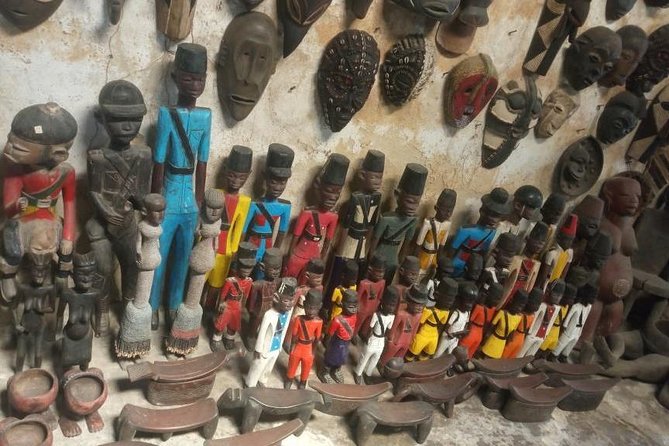
The Village Museum is likely to be the most useful stop if you want a clearer picture of Tanzania’s cultural variety. Tanzania has about 124 ethnic tribes, and the museum uses 16 selected groups to show older ways of living before colonial and industrial change.
The display is made up of traditional house structures built from natural materials. You can enter the houses and see how rooms were divided and assigned to family members. This makes the visit more concrete than reading a short description on a wall.
Household objects show how daily tasks were handled. Depending on the display, you may see cooking stoves, pots, bowls, water-cooling pots, spears, and arrows used for hunting, defense, and protection. Printed information at each house provides further details about customs and ways of life.
This is where a strong guide matters most. Godfrey has explained the different cultures represented at the museum in a way that helped make the displays easier to understand. The guides named by past guests, including Michael, Anna, Godfrey, Haroon, and Anastacia, have been praised for being kind, patient, and attentive. The specific guide you receive depends on availability, but the private arrangement gives you a chance to ask for more explanation.
The Village Museum is not a substitute for visiting rural communities or meeting people in their homes. It is a planned educational display, and the houses are presented as examples rather than as a complete picture of every Tanzanian group. Even so, it is a useful introduction when you have only a few hours in the city.
The extra stops that can make the day better
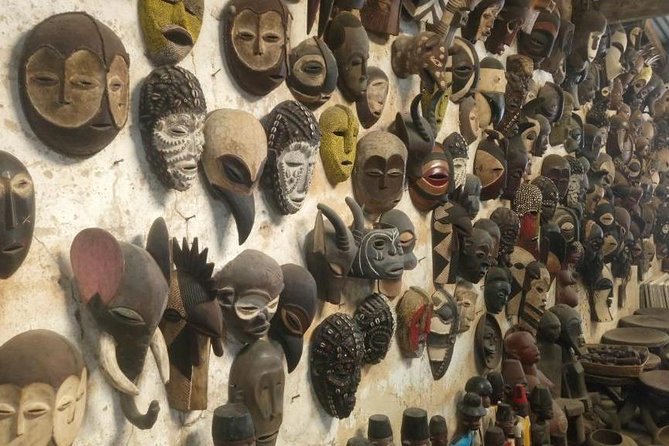
The four listed stops fill the cultural core of the tour, but the day can be flexible. Several guests have been taken to the fish market, churches, shopping areas, or Kariakoo Market. These additions are not guaranteed parts of the published route, so mention your interests before setting off.
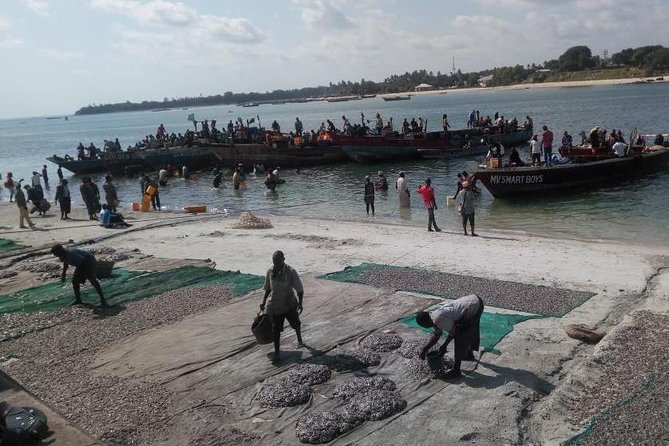
Kariakoo Market is particularly useful if you want to see daily commerce rather than only formal attractions. It is described as a very busy place, and it can add a strong local contrast to the museums. The fish market can also be a highlight, especially if you want a more immediate sense of the city’s food trade and waterfront economy.
Do not assume that every extra stop fits into the six-hour schedule. The National Museum and Village Museum together account for about two hours, and the art cooperative takes another 45 minutes. Add driving time and traffic, and the day can fill quickly.
If you are arriving by cruise ship, communication and timing matter even more. Pickup at the cruise port has been arranged for some visitors, but the meeting point listed for this experience is the Dar es Salaam Serena Hotel. Confirm the pickup location, return plan, and any must-see requests in advance.
Guides, comfort, and the private format
The strongest part of this experience is the guide service. Michael has been described as punctual, patient, and helpful with practical matters such as bus and ferry tickets. Anna has been praised for her history and culture explanations, along with a considerate manner. Godfrey has been valued for clear English and his ability to shape the day around a guest’s list.
One family traveling with a one-year-old and a six-year-old received extra help from Haroon and Anastacia. That does not guarantee childcare or special family services, but it suggests that the team can be attentive when families need a little practical support.
You ride in an air-conditioned vehicle, a welcome feature in Dar es Salaam’s warm climate. The vehicle also saves energy between sites, since the attractions are spread around the city. You should still expect some time on the road, and traffic may affect how long you have at each stop.
The tour can accommodate most people, according to the provided information, and the stated maximum is 100 participants. At the same time, it is presented as a private tour for you and your party. Confirm the group arrangement when you book, particularly if the private format is central to your decision.
Is $97 per person a fair price?
At $97 per person, the price is not the cheapest way to see Dar es Salaam. It can still be good value if you want a guide, private transportation, and several admission fees handled in one booking.
The value improves for a first-time visitor with only one day in the city. You get roughly six hours of transport and interpretation, entrance to the National Museum and Village Museum, and a planned route that connects archaeology, colonial history, modern art, and cultural traditions. Arranging all of that independently would require more time and local transport planning.
The price is less compelling if you mainly want to wander markets, shop, or visit one museum at your own pace. In that case, the fixed cultural route may feel too structured. You should also remember that Tingatinga admission is free, while Askari Monument has no admission fee, so part of the price pays for the vehicle and guide rather than entrance tickets.
Free cancellation is available if you cancel at least 24 hours before the start time. Changes or cancellations made inside that window are not accepted for a refund. The tour requires good weather, and if poor weather causes cancellation, you are offered another date or a full refund.
Who should book this city tour?
I would choose this tour if you have a short stay in Dar es Salaam, are arriving by cruise, or want an organized first look before continuing to Zanzibar. It also suits families and small private groups that value a driver-guide who can answer questions and make modest adjustments.
It is a good match for people interested in museums, history, art, and culture. The Village Museum is especially useful if you want an introduction to Tanzania’s ethnic variety, while the National Museum gives you an important archaeological and colonial frame.
I would think twice if your priority is beaches, nightlife, food-only experiences, or a slow morning at one site. The tour can sometimes include markets and other places, but those additions need to be discussed ahead of time and may depend on time.
Should you book it?
Yes, if you want a well-organized introduction to Dar es Salaam and prefer learning with a local guide rather than sorting out the city alone. The combination of private transport, included museum fees, and flexible guiding makes the $97 price reasonable for a six-hour visit.
Before booking, send a short list of your priorities. Ask whether the fish market, Kariakoo Market, churches, or shopping areas can fit alongside the four main stops. If you do that, you are more likely to get the kind of day you want instead of simply following a standard route.
FAQ
How long does the Dar es Salaam City Tour last?
The tour lasts approximately six hours.
What time does the tour start?
The scheduled start time is 8:00 a.m.
Where does the tour begin?
The listed meeting point is the Dar es Salaam Serena Hotel on Ohio Street in Dar es Salaam.
Where does the tour end?
The activity ends back at the meeting point.
Is hotel pickup available?
Pickup is offered, but you should confirm the exact pickup location when booking. Some bookings have included hotel or cruise-port pickup.
Is transportation included?
Yes. The tour includes transportation in an air-conditioned vehicle with a private driver-guide.
Are admission fees included?
Admission to the National Museum of Tanzania and the Village Museum is included. The Tingatinga Arts Cooperative Society and Askari Monument are listed with free admission.
Is this a private tour?
The experience is described as private for you and your party. The stated maximum is 100 participants, so confirm the exact arrangement when booking.
Can most people participate?
The provided information says most people can participate.
What is the cancellation policy?
You can cancel at least 24 hours before the start time for a full refund. Cancellations or changes made less than 24 hours before the start time are not accepted for a refund. If poor weather cancels the experience, you can choose another date or receive a full refund.
Just added around Dar es Salaam
- Ruaha National Park And Mikumi National Park Budget Safari 6 Days 5 Nights★ 5.0 · 3 reviews
- 3 Days Nyerere National Park Safari (Selous Game Reserve)★ 5.0 · 3 reviews
- Saadani National Park Day Tour★ 5.0 · 3 reviews
- Private Mikumi Adventure★ 4.5 · 3 reviews
- Dar es Salaam City tour and Beach Leisure – 9 hours★ 5.0 · 3 reviews
- Mbudya island from Dar es salaam safari.★ 4.2 · 3 reviews
- Day Trip To Bagamoyo From Dar Es Salaam ..historical town★ 4.5 · 3 reviews
- 3 Days Mikumi National Park Private Tour★ 5.0 · 3 reviews
City Tours, compared.

Arusha Guided Walking City Tour, Culture, Lifestyle & History
Read our review →

The Best/Top Rated Cultural City Tour in Dar es Salaam
Read our review →
Browse the lists this tour appears in