
Reviewed · HISTORICAL TOURS
Private Tour in Historical Dar es Salaam with Lunch
Dar es Salaam rewards curious eyes. This private city tour links colonial buildings, open-air markets, museums, churches, art studios, and Indian Ocean views into one long day of local life and Tanzanian history. I especially like the chance to visit both major museums and working markets, and I like having a private guide who can adjust the pace and explain what you are seeing.
The strongest part is the guide-led storytelling, with Ben receiving repeated praise for his warmth, clear explanations, and gift for bringing each place to life. Lunch, bottled water, soda, an air-conditioned vehicle, WiFi, entrance fees, and pickup are included, which makes the $145 per-person price easier to justify. The main caution is timing: the listed stops already add up to about seven and a half hours before lunch, while the tour is advertised at approximately seven hours. Traffic, market visits, and extra stops may require a flexible approach.
In This Review
- Key points to know before booking
- Why this Dar es Salaam tour is worth considering
- Old Boma begins the city story
- Kivukoni Fish Market brings daily commerce close
- The National Museum connects fossils and nationhood
- Village Museum gives culture a physical shape
- Mwenge Woodcarvers Market puts the craft in front of you
- Tingatinga art adds color and local expression
- Three historic religious sites show different traditions
- Mlimani City and the University show modern Dar
- Kariakoo Market is the city’s loudest lesson
- Monuments, the beach, and lunch round out the day
- Timing, comfort, and the one serious caution
- Who should book this private city tour
- Should you book it?
- FAQ
- How long does the tour last?
- What is included in the price?
- Are alcoholic drinks included?
- Is this a private tour?
- Is pickup available?
- Which museums are included?
- Can I cancel for a full refund?
- What happens if bad weather cancels the tour?
Key points to know before booking
- Ben is the guide most often praised: His storytelling, kindness, and enthusiasm are the clearest strengths of the experience.
- You see many sides of Dar es Salaam: Colonial buildings, religious sites, markets, modern shopping, art, coastal life, and national history all appear in one outing.
- The tour is private: Only your group participates, so you can ask questions and spend more time where your interests are strongest.
- The market visits are especially useful: Kivukoni Fish Market and Kariakoo Market show daily commerce rather than a polished tourist version of the city.
- The itinerary is full: The scheduled stops total more than seven hours before lunch, so do not expect long, leisurely visits everywhere.
- Air-conditioning deserves confirmation: One unhappy account described a vehicle with broken air-conditioning and a long wait in traffic. Ask for a vehicle check before departure.
Why this Dar es Salaam tour is worth considering
Dar es Salaam can be difficult to read in a short visit. Its important places are spread across different parts of the city, and the city’s character is not contained in one museum or one historic quarter. This tour gives you a useful first portrait by moving between old colonial structures, markets, art spaces, religious buildings, and modern city life.
I like the range. You can look at German-era architecture in the morning, watch fish being prepared at Kivukoni, study early human fossils at the National Museum, then browse carved wood and colorful paintings. That variety helps you understand Dar es Salaam as a living city, not simply a place of old buildings.
The private format matters here. With only your own group, you can ask Ben to explain a symbol, pause at a market stall, or spend less time at a shopping stop. The tour is not a fixed group march from one sight to the next. Still, the number of stops means the day will feel active rather than slow.
The tour costs $145 per person. That includes lunch, soft drinks, bottled water, transport in an air-conditioned vehicle, WiFi on board, entrance fees, and taxes. For one person, the price may feel high compared with visiting a single museum independently. For a small group that wants a guide, private transport, and many admission fees covered, the value is more convincing.
More Private Tours in Dar es Salaam
- Private Full-Day Trip to Mikumi National Park from Dar es Salaam
★ 5.0 · 54 reviews - Private 3 Days 2 Nights Mikumi Adventures
★ 5.0 · 47 reviews - Dar Es Salaam City Tour (Full Day With Private Guide And Car)
★ 5.0 · 39 reviews
Old Boma begins the city story
Old Boma is a useful opening stop because it gives you a physical introduction to Dar es Salaam’s colonial past. The building dates to the German colonial period and now houses the Dar es Salaam Centre for Architectural Heritage, known as DARCH.
You can expect preserved architecture, displays about urban development, and objects connected with the city’s built heritage. This is not just a photo stop. It helps explain how Dar es Salaam changed from a coastal settlement into a major Tanzanian city.
The allotted 30 minutes is enough for an overview, but not for a slow study of every display. I would use this time to ask questions about the building and the city’s changing neighborhoods. A guide adds real value here because architectural details can be easy to miss when you are looking on your own.
Kivukoni Fish Market brings daily commerce close
Kivukoni Fish Market is one of the most direct encounters with working Dar es Salaam. Fishermen bring in their catch, vendors clean and prepare seafood, and buyers select fish, prawns, octopus, and other products.
You will hear bargaining and see the quick, practical work that keeps the market moving. The sea smell is part of the experience, and this is not a carefully staged cultural display. If you want to see how food reaches local households and restaurants, this stop gives you a useful glimpse.
The planned visit lasts 30 minutes. Wear comfortable shoes and be ready for a busy setting. If you are sensitive to strong smells or wet floors, this may be the least comfortable stop, but it is also one of the most revealing.
The National Museum connects fossils and nationhood
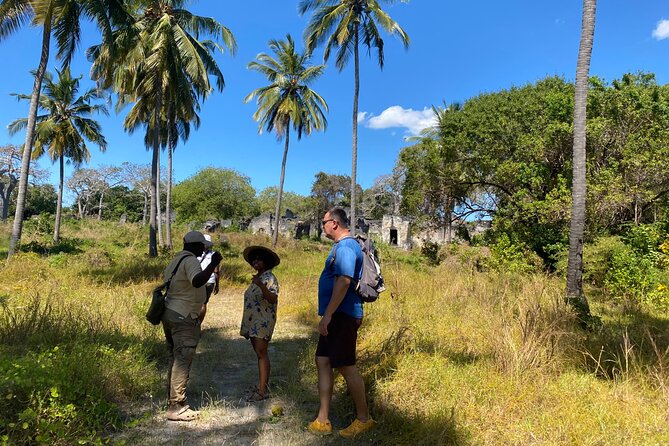
The National Museum gives the day a broader historical frame. Its collections cover fossil discoveries from Olduvai Gorge, traditional cultures, colonial-era material, independence, art, and Tanzania’s natural history.
The Olduvai material is a major draw. It links Tanzania to some of the most important discoveries in the study of early humans. The museum also helps connect those ancient finds with the country’s more recent political and cultural story.
You have one hour here, which is a sensible amount of time for a guided overview. I would ask Ben to point out the exhibits that best fit your interests, since the collection covers a lot of ground. One account specifically described the museum as very interesting before the rest of the experience became disappointing, so this is a stop worth protecting if the schedule begins to slip.
A few more trips of this kind worth comparing:
- Dar es Salaam: Mikumi National Park Day Trip with Lunch
★ 4.5 · 4 reviews - Zanzibar: Stone Town, Spice Tour, Prison Island with Lunch
★ 4.4 · 1,219 reviews - Zanzibar: Prison Island and Nakupenda Boat Trip with Lunch
★ 4.1 · 882 reviews - Mnemba Island: Dolphin Swim & Snorkeling with Optional Lunch
★ 4.3 · 591 reviews
Village Museum gives culture a physical shape
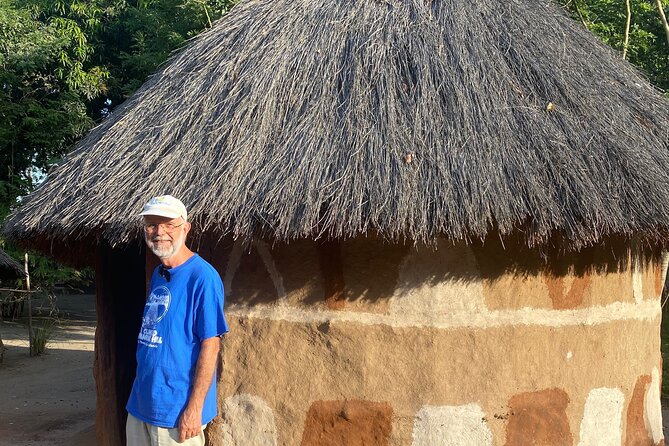
At the Village Museum, you can walk among traditional houses representing different ethnic groups from across Tanzania. Each structure shows a different approach to building, household space, and rural life.
The museum may also include craft demonstrations, music, dance, and explanations of local customs. These elements make the visit more active than a display behind glass. You can see how architecture, work, family life, and belief connect.
One hour allows you to look around without rushing too badly. The exact demonstrations or performances can vary, so treat them as part of what may be available rather than a guaranteed show at a precise time. I find this stop especially useful for people who want cultural context beyond the city center.
Mwenge Woodcarvers Market puts the craft in front of you
Mwenge Woodcarvers Market focuses on Tanzanian craftsmanship. You will find wooden animals, figures, household pieces, small souvenirs, and larger carvings with traditional themes.
A key benefit is the chance to watch artisans work. That makes the shopping more meaningful because you can see the skill and time behind the objects rather than simply browsing finished goods in a shop.
The visit is scheduled for 30 minutes, so think of it as an introduction rather than a full shopping session. If you plan to buy a large carving, remember that the tour details do not specify shipping services or luggage arrangements. Ask the guide and seller about practical handling before you commit to a big piece.
Tingatinga art adds color and local expression
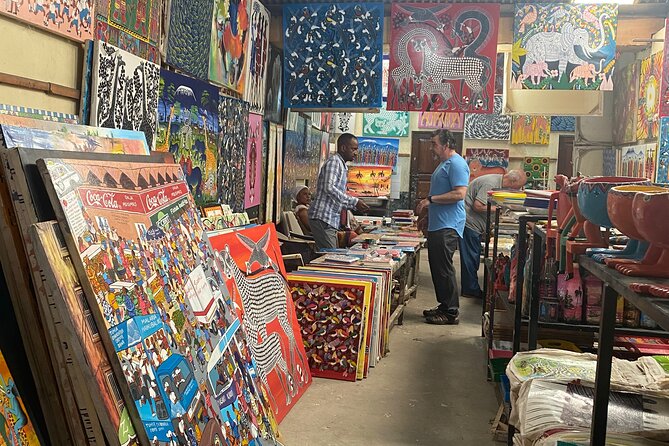
The Tingatinga Arts Cooperative Society offers a different kind of craft experience. The paintings are known for bold colors and scenes of wildlife, ordinary life, and playful fantasy.
You can watch artists work and buy original pieces. The cooperative also gives you a chance to learn how this Tanzanian art style developed. It is a good counterpoint to the woodcarvers’ market because the medium and mood are different.
Again, 30 minutes is a short visit. You can see the style, speak with artists, and make a quick purchase, but serious art shoppers may want more time than the standard schedule allows. I would decide in advance if you are browsing or buying, since that makes the stop easier to manage.
Three historic religious sites show different traditions
Azania Front Lutheran Church is a fine example of German colonial-era architecture. Expect Gothic-style details, stained glass, a quiet interior, and gardens around the building. A service or concert may be taking place, but that is not presented as a guaranteed part of the tour.
St. Joseph’s Cathedral offers a Catholic counterpart, with ornate decoration, religious artwork, stained glass, and a calm prayer space. Together, the church visits show how religious buildings became part of Dar es Salaam’s civic and architectural identity.
Ngazija Mosque adds an Islamic and Swahili perspective. Its features may include carved details, Arabic calligraphy, and a peaceful prayer hall. These places are active religious sites, so respectful clothing and behavior are important. The supplied schedule gives 30 minutes to the two named churches, but no specific duration for the mosque, so confirm how it fits into your day.
Mlimani City and the University show modern Dar
Mlimani City Mall brings you into present-day commercial life. You can find local and international brands, a supermarket, restaurants, a food court, a cinema, and other leisure facilities.
Some people may find a mall less distinctive than a market or museum. I see its value as contrast. After historic buildings and traditional crafts, the mall shows how Dar es Salaam shops and spends time today. The 30-minute visit is enough to see the setting, but not enough for serious shopping or a film.
The University of Dar es Salaam offers another view of modern Tanzania. It includes faculties, research centers, libraries, classrooms, laboratories, and sports facilities. The tour does not promise a lecture or cultural event, so expect a look at the campus rather than a formal academic program.
Kariakoo Market is the city’s loudest lesson
Kariakoo Market is a major marketplace for produce, spices, clothing, household goods, and local crafts. It is a place to watch commerce at close range, with colorful stalls, crowded trading areas, and bargaining.
The scheduled 30 minutes will give you a taste, not a full exploration. Stay close to your guide and keep your attention on your belongings in any busy market. If you want to buy something, ask about the price and quality before spending your limited time negotiating.
For me, this is one of the more useful stops because it shows ordinary buying and selling. It is less polished than a souvenir market, which is exactly why it helps you understand the city.
Monuments, the beach, and lunch round out the day
The Askari Monument is a short historical stop in the city center. The bronze statue commemorates soldiers of the British colonial forces and sits near other central landmarks. It gives Ben a chance to explain colonial symbols and how public monuments shape memory.
Coco Beach shifts the mood toward the coast. You may see sandy shoreline, ocean swimming, water sports, beachside restaurants, bars, and vendors selling snacks or souvenirs. The stop is described without a set duration, so ask whether you will have time to sit, walk, or simply take photographs.
Lunch is included, but the supplied details do not name the restaurant, menu, or exact time. That means you should confirm those points before departure, especially if you have dietary needs or want a specific type of meal. Bottled water and soda are included, while alcoholic drinks are not.
Timing, comfort, and the one serious caution
The tour lasts about seven hours, but the listed durations for the 12 timed stops total roughly seven and a half hours. Coco Beach and Ngazija Mosque are additional locations without stated times. Dar es Salaam traffic can also affect the plan.
I would treat the schedule as a framework rather than a promise that every stop will receive its full advertised duration. Ask at the start which places are priorities. If you care most about the National Museum, Village Museum, or markets, say so before the vehicle leaves.
The tour includes an air-conditioned vehicle and WiFi. One negative account described broken air-conditioning and a long wait in traffic, making the day hot and tiring. The provider disputed that account and described a separate pickup delay, but the practical lesson is simple: confirm the meeting time, arrive promptly, and check that the vehicle’s air-conditioning is working.
Pickup is offered, confirmation comes at booking, and the tour is near public transportation. Most people can participate, according to the supplied details, but no specific accessibility information is given. Ask directly if you need details about walking, steps, market surfaces, or vehicle access.
Who should book this private city tour
I would choose this tour if you have one full day in Dar es Salaam and want a broad introduction without arranging separate taxis, guides, and admissions. It suits history and architecture fans, first-time visitors, photographers, art buyers, and anyone who wants both formal sights and ordinary city life.
It is also a good fit for a private group that values conversation. Ben’s repeated praise for storytelling and personal attention suggests that the guide can be the difference between simply seeing buildings and understanding why they matter.
I would hesitate if you dislike packed schedules, shopping stops, crowded markets, or traffic. You may also prefer a shorter, more focused tour if you want a slow museum visit or a relaxed beach afternoon. The price is easiest to defend when you share the experience with several people and make full use of the included transport, food, entrance fees, and private guiding.
Should you book it?
Book this tour if you want Dar es Salaam in many forms: colonial, coastal, religious, artistic, academic, commercial, and domestic. The city cannot be understood through one polished attraction, and this route makes a real effort to show its many working parts.
Before paying, confirm the pickup time, vehicle air-conditioning, lunch arrangements, and which stops are priorities if traffic cuts into the schedule. With those points settled, the private format and Ben’s praised storytelling make this a strong choice for a first look at Dar es Salaam.
FAQ
How long does the tour last?
The tour is advertised as approximately seven hours. The timed stops add up to about seven and a half hours, and two additional stops have no stated duration, so the schedule may be flexible.
What is included in the price?
Lunch, soda or pop, bottled water, an air-conditioned vehicle, WiFi on board, all fees, and taxes are included.
Are alcoholic drinks included?
No. Alcoholic beverages are not included.
Is this a private tour?
Yes. Only your group participates in the activity.
Is pickup available?
Yes. Pickup is offered, though you should confirm the exact meeting point and time when booking.
Which museums are included?
The tour includes the National Museum of Tanzania and the Village Museum. Old Boma also includes exhibitions at the Dar es Salaam Centre for Architectural Heritage.
Can I cancel for a full refund?
Yes, if you cancel at least 24 hours before the experience start time. Cancellations within 24 hours are not refunded.
What happens if bad weather cancels the tour?
If poor weather causes cancellation, you will be offered another date or a full refund.
More Historical Tours
- Dar es Salaam History and Architectural Tours
★ 5.0 · 36 reviews - Bagamoyo Historical Tour – Everyday
★ 5.0 · 13 reviews - Bagamoyo Historical Tour – Everyday
★ 4.4 · 8 reviews - Day Trip To Bagamoyo From Dar Es Salaam ..historical town
★ 4.5 · 3 reviews
Just added around Dar es Salaam
- Ruaha National Park And Mikumi National Park Budget Safari 6 Days 5 Nights★ 5.0 · 3 reviews
- 3 Days Nyerere National Park Safari (Selous Game Reserve)★ 5.0 · 3 reviews
- Saadani National Park Day Tour★ 5.0 · 3 reviews
- Private Mikumi Adventure★ 4.5 · 3 reviews
- Dar es Salaam City tour and Beach Leisure – 9 hours★ 5.0 · 3 reviews
- Mbudya island from Dar es salaam safari.★ 4.2 · 3 reviews
- Day Trip To Bagamoyo From Dar Es Salaam ..historical town★ 4.5 · 3 reviews
- 3 Days Mikumi National Park Private Tour★ 5.0 · 3 reviews
Historical Tours, compared.

Stone Town Historical Cultural Walking Guided Tour
Read our review →
Arusha Guided Walking City Tour, Culture, Lifestyle & History
Read our review →
Stone Town’s Hidden History: Private Guided Walking Tour
Read our review →

Browse the lists this tour appears in