
Reviewed · HISTORICAL TOURS
Bagamoyo Historical Tour – Everyday
Bagamoyo tells difficult stories well. This full-day private trip from Dar es Salaam takes you through former trading grounds, a German colonial building, Arab ruins, missionary sites, and places tied to the slave trade. I like the mix of major landmarks and smaller historical details, and I like that you can set the pace with your own driver and guide. The main drawback is the long day and the fact that lunch costs extra, so you need to plan for a full road trip rather than a quick coastal outing.
I also like the human touch reported from the strongest customer feedback. Derrick, the driver, was praised for being prompt, safe, and good company, while Sadiq was singled out for explaining Bagamoyo’s history and culture in depth. Still, Bagamoyo’s past is heavy, and parts of this tour focus on captivity, forced movement, and death. It suits you best if you want a thoughtful historical day, not simply a beach break.
In This Review
- Key Points Before You Book
- Why Bagamoyo Makes a Strong Day Trip from Dar es Salaam
- Entering the Old Arab Fort
- Reading the German Chapter at Old Boma
- Walking Among the Kaole Ruins
- Understanding the Mission at Bagamoyo Museum
- A Private Pace, With a Real Guide
- What the $199 Price Really Covers
- Practical Things to Know Before 8:00 am
- Who Will Get the Most from This Tour?
- Should You Book the Bagamoyo Historical Tour?
- FAQ
- Where does the Bagamoyo Historical Tour begin?
- How long does the tour last?
- Is the tour private?
- What attractions are included?
- Is lunch included?
- Are admission fees included?
- What type of vehicle is provided?
- Can I cancel for a full refund?
- What happens if poor weather cancels the tour?
Key Points Before You Book
- Bagamoyo’s Old Arab Fort links directly to the slave trade, with a prison and underground routes leading toward the harbor.
- Kaole Ruins reach back to the eighth century, with mosques, tombs, wells, and the remains of an old trading settlement.
- The tour is private, so you can spend more time at places that interest you and move faster through those that do not.
- The Bagamoyo Museum includes the old Holy Ghost Mission, connected with early Christian work and David Livingstone.
- The $199 price includes an air-conditioned vehicle, entry fees, and taxes, but not lunch.
- Pickup is offered at 8:00 am, and the entire outing lasts about eight hours.
Why Bagamoyo Makes a Strong Day Trip from Dar es Salaam
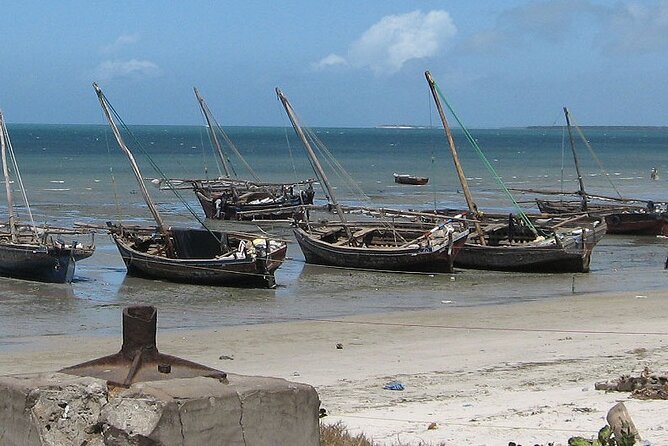
Bagamoyo is more than an old coastal town with a few ruins. Its position on the Indian Ocean made it an important trading center, and it later became the capital of German East Africa for a short period. Those layers sit close together, which gives this tour its value.
In one day, you move from Arab trading history to German administration, Christian missionary work, archaeology, and the cruel business of human trafficking. The sites are not all polished or presented in the same way. That is part of the appeal. You get a place where the past remains visible in buildings, graves, church rooms, and harbor connections.
The tour begins at 8:00 am and lasts about eight hours. That leaves enough time for several stops without turning each one into a rushed photo pause. Since the outing is private, you can ask questions as you go and spend more time on subjects that matter to you.
The trip includes pickup and an air-conditioned vehicle. That matters in Tanzania’s coastal heat, especially when the day includes outdoor ruins and a drive from Dar es Salaam. Entry fees and taxes are included, which makes the $199 per person price easier to assess. You are paying for transport, a guide, admissions, and the flexibility of a private arrangement, not just a ride to Bagamoyo.
More historical tours:
- Dar es Salaam History and Architectural Tours
★ 5.0 · 36 reviews - Bagamoyo Historical Tour – Everyday
★ 4.4 · 8 reviews - Private Tour in Historical Dar es Salaam with Lunch
★ 4.5 · 6 reviews
Entering the Old Arab Fort
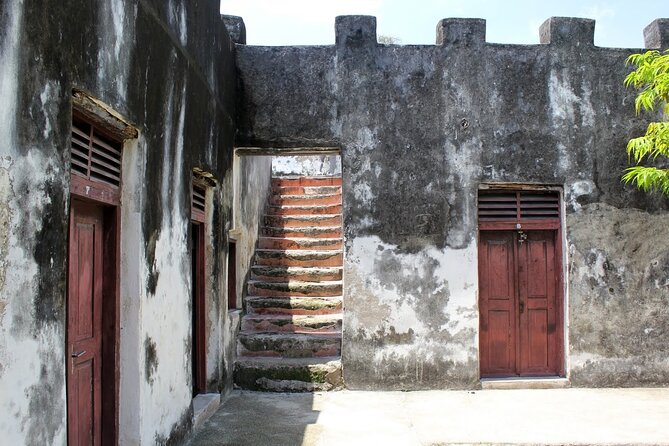
The Old Arab Fort is the most difficult stop emotionally, and possibly the most important one for understanding Bagamoyo. It was used as a prison where enslaved people were held before being taken through underground tunnels toward dhows waiting at the harbor.
That detail changes how you read the town. Bagamoyo was not simply a commercial port where goods passed through. It was also part of a system that forced captives toward an unknown future across the sea. The tour description refers to the broken-heart captives who arrived in a world they did not know, and a good guide can help you understand the human cost behind the architecture.
You have about an hour here, with admission included. That is a useful amount of time because the fort calls for explanation rather than a fast walk-through. Ask your guide to connect the prison with the harbor and the wider trading network. Without that context, you may see only old walls and passageways.
This stop may not suit young children or anyone looking for a lighthearted morning. The subject is painful, and the setting can be stark. I would approach it with patience and respect. The value is not in dramatic scenery. It is in facing an important part of the region’s past directly.
Reading the German Chapter at Old Boma
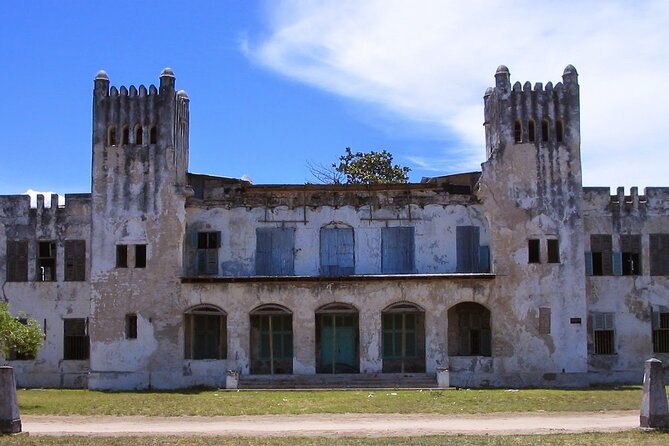
Old Boma gives you a different view of Bagamoyo. Built by the Germans near the end of the 19th century, it served as a state residence for German leaders in the area.
The building was used for only a few years before the capital moved to Mzizima, present-day Dar es Salaam. The reason given was practical: Bagamoyo’s port had shallow water. That small detail is useful because it shows how geography and shipping shaped political decisions. A place could be important, yet still lose influence when its harbor failed to meet the needs of a colonial administration.
You spend about 30 minutes here. That shorter visit makes sense. Old Boma is a compact historical stop, best understood through your guide’s explanation rather than a long independent exploration. If you have an interest in colonial architecture or East African political history, this is a place where questions will improve the visit.
Do not expect a full museum experience at every stop. Old Boma is one piece of the day, not a standalone attraction. Its strength is the contrast with the Arab fort and the later mission sites. Within a short distance, you see several powers and institutions that shaped Bagamoyo.
Walking Among the Kaole Ruins
Kaole Ruins is likely to be one of the most rewarding stops for anyone interested in archaeology. The settlement was established as a trading town in the eighth century, and the site includes remains connected with Arab settlers in Bagamoyo.
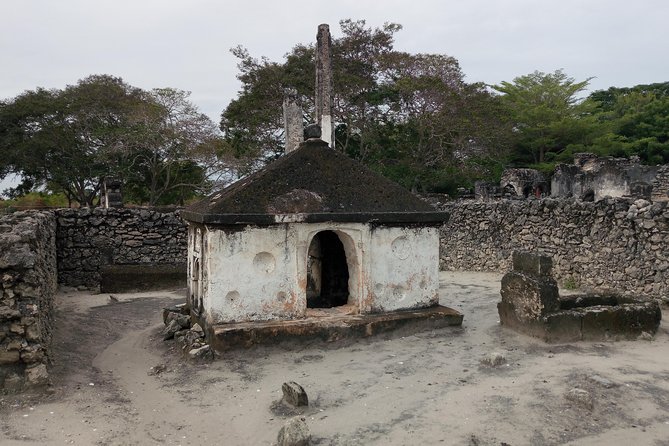
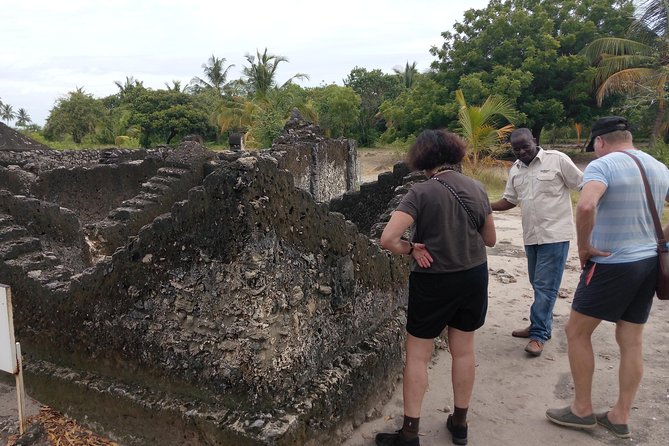
The ruins include houses, mosques, wells, and graves. The surviving remains date from between the 13th and 16th centuries, and the site contains two mosques and around 30 tombs. That range of dates gives Kaole more depth than a single abandoned building. You are looking at a place that changed over centuries as people traded, worshipped, lived, and died there.
You get about an hour at the site, with admission included. That should give you time to take in the layout and listen to the story behind the stones. The archaeological setting is likely to feel quieter and less formal than the museum. You might find the site easier to appreciate if you let your guide explain what is known and what remains uncertain.
Kaole is southeast of Bagamoyo town on the Indian Ocean coast. The tour information also mentions nearby mangrove forest and beaches, but it does not promise a separate beach or mangrove walk. Keep that distinction in mind. You may see coastal surroundings during the day, but this is primarily a historical tour.
For me, Kaole is where the tour’s timeline expands. The Old Boma tells you about German rule in the late 19th century. Kaole takes you much further back, to trade and settlement long before that period. It helps prevent the common mistake of treating East African coastal history as beginning with European colonial involvement.
A few more trips of this kind worth comparing:
- Dar es Salaam: City Tour
★ 4.7 · 159 reviews - Dar es Salaam City Center: Walking Tour
★ 4.8 · 102 reviews - Dar es Salaam City Tour – Everyday
★ 5.0 · 64 reviews - MIKUMI NATIONAL PARK – 3 Days
★ 4.5 · 63 reviews
Understanding the Mission at Bagamoyo Museum
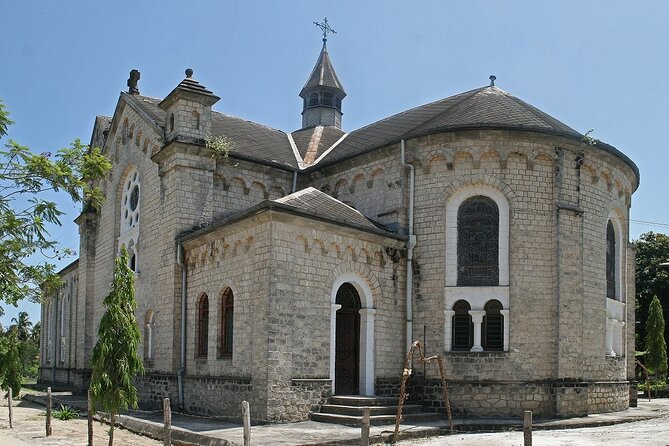
The Bagamoyo Museum includes the original Holy Ghost Church and the Sisters’ House. The church was built in 1872 and is described as the oldest church on the mainland of East Africa. The Sisters’ House followed in 1876 and was later converted into the Roman Catholic Mission Museum.
This stop adds the Christian missionary chapter to the day. The Holy Ghost Mission was among the early Christian missions in East Africa, and the site presents material on missionary work and conversion to Christianity. You will also see photographs of enslaved people bound in chains, along with books and booklets connected with the mission.
The church is linked to David Livingstone, who was interred there for one night in 1874. The Livingstone Tower, part of the original church, carries his name. That connection may attract visitors interested in exploration history, but the museum’s importance is wider than one famous individual. The exhibits also raise questions about religion, colonial contact, conversion, and the people whose lives were changed by these forces.
You have about an hour here. I would not rush it. The photographs and mission displays call for quiet attention, and your guide can help place them in the wider story of Bagamoyo. The subject matter may be upsetting, particularly the images of people in chains, but that is also why the museum matters.
The museum is a good counterweight to the open-air ruins. At Kaole, you read the past from stone foundations and graves. Here, you encounter photographs, buildings, printed material, and personal traces. The two stops work better together than either would alone.
A Private Pace, With a Real Guide
The private format is one of the clearest advantages. You are not locked into a large group’s pace or forced to leave a site just as a good question comes to mind. If you are traveling with family or friends, you can shape the day around shared interests.
A private tour does not automatically guarantee a perfect guide, but the available feedback gives you useful names to look for. Derrick was praised for prompt pickup, safe driving, and pleasant company. Sadiq received particularly strong praise for explaining all periods of Bagamoyo’s history and culture in a thorough way.
Those details matter because this outing depends heavily on interpretation. The forts, ruins, and mission buildings do not explain themselves. A driver who is reliable and a guide who can connect the sites will make the day far more worthwhile than transport alone.
The tour information lists a maximum of 100 participants, although the experience itself is described as private. I would confirm the exact arrangement for your booking if group size matters to you. The key promise is still the ability to go at your own pace, which is especially useful at the museum and Old Arab Fort.
What the $199 Price Really Covers
At $199 per person, this is not the cheapest way to reach Bagamoyo. The price makes more sense if you value comfort, a dedicated guide, included admission, and pickup from Dar es Salaam.
The package includes an air-conditioned vehicle, all fees, and taxes. You do not need to budget separately for the listed attractions. Lunch is not included, and you can stop for it during the day, so set aside extra money for that meal.
The value depends on how many people share the booking. For one person, $199 is a serious expense. For a small private group, the cost may feel more reasonable because you are buying transport and guiding for the group rather than joining a basic transfer. The private format also saves you from arranging separate transport between Old Boma, Kaole, the museum, and the other sites.
The 4.8 rating from 13 reviews and the 92 percent recommendation rate suggest strong satisfaction, though the sample is small. I would treat those figures as encouraging rather than conclusive. The clearest praise focuses on the driver’s reliability and the guide’s historical explanations, which are exactly the parts that can make or break this type of trip.
Practical Things to Know Before 8:00 am
Pickup is offered, and the listed start time is 8:00 am. Because the tour lasts about eight hours, you should keep the rest of your day fairly open. Trying to schedule a late afternoon activity immediately afterward could make the day feel cramped.
Wear comfortable clothing for walking between historical sites. The information provided does not specify a dress code or exact walking conditions, so avoid assuming every stop will be paved or shaded. Kaole includes outdoor ruins, and coastal heat can make an ordinary walking day feel longer.
Bring money for lunch. The meal is not included, but a stop can be made during the tour. Since the itinerary covers several sites, lunch is not just a cost issue. It is also your chance to take a proper break during a long day.
The experience requires good weather. If poor weather forces cancellation, you can receive a full refund or choose another date. A minimum number of participants is also required, and if that minimum is not met, you are offered another date, another experience, or a full refund.
You can cancel for a full refund if you do so at least 24 hours before the 8:00 am start time. Changes or cancellations inside that window are not accepted and are not refunded. That policy is reasonable, but set a reminder if your Dar es Salaam plans are still changing.
Who Will Get the Most from This Tour?
I would choose this tour if you want to understand how several parts of Tanzania’s past fit together. It works well for people interested in archaeology, colonial history, religion, coastal trade, or the history of slavery.
It also suits you if you prefer private touring over a fixed group schedule. Families, couples, and small groups may appreciate having one guide explain difficult subjects at a pace that feels right.
This is less suitable if your main goal is swimming, lounging, or seeing beaches. Mangrove forest and beaches are mentioned as part of Bagamoyo’s surroundings, but the planned stops focus on forts, ruins, buildings, and museums. You should book it for the history, not as a beach excursion with a little culture added.
I would also think carefully about the emotional tone. The Old Arab Fort and the museum present painful material. That does not make the tour a poor choice. It means you should arrive ready for a serious day, with time to listen rather than simply collect photographs.
Should You Book the Bagamoyo Historical Tour?
You should book this tour if you want a well-rounded introduction to Bagamoyo and value a private guide who can connect the sites. The strongest reasons are the carefully varied itinerary, air-conditioned transport, included entry fees, and the reported service from Derrick and Sadiq.
The price is fair for a private full-day outing with admissions included, but lunch and the long duration need to fit your budget and schedule. I would ask about the exact pickup arrangement and group size before paying if those details are important to you.
Choose it for the Old Arab Fort, Kaole Ruins, and Bagamoyo Museum. Choose it for the stories behind the buildings. Skip it if you want a relaxed coastal day with little walking or difficult subject matter. For a serious, useful look at one of Tanzania’s most important historic towns, this is a strong choice.
FAQ
Where does the Bagamoyo Historical Tour begin?
The tour is based in Dar es Salaam, offers pickup, and starts at 8:00 am.
How long does the tour last?
The experience lasts approximately eight hours.
Is the tour private?
Yes. The tour is described as a private experience, allowing you to go at your own pace.
What attractions are included?
The planned stops include the Old Arab Fort, Old Boma, Kaole Ruins, and Bagamoyo Museum.
Is lunch included?
No. Lunch is not included, although you can stop for lunch during the tour.
Are admission fees included?
Yes. Admission tickets for the listed stops, along with all fees and taxes, are included.
What type of vehicle is provided?
An air-conditioned vehicle is included.
Can I cancel for a full refund?
Yes. You can receive a full refund if you cancel at least 24 hours before the experience start time.
What happens if poor weather cancels the tour?
You will be offered a different date or a full refund if poor weather causes the tour to be canceled.
Just added around Dar es Salaam
- Ruaha National Park And Mikumi National Park Budget Safari 6 Days 5 Nights★ 5.0 · 3 reviews
- 3 Days Nyerere National Park Safari (Selous Game Reserve)★ 5.0 · 3 reviews
- Saadani National Park Day Tour★ 5.0 · 3 reviews
- Private Mikumi Adventure★ 4.5 · 3 reviews
- Dar es Salaam City tour and Beach Leisure – 9 hours★ 5.0 · 3 reviews
- Mbudya island from Dar es salaam safari.★ 4.2 · 3 reviews
- Day Trip To Bagamoyo From Dar Es Salaam ..historical town★ 4.5 · 3 reviews
- 3 Days Mikumi National Park Private Tour★ 5.0 · 3 reviews
Historical Tours, compared.

Stone Town Historical Cultural Walking Guided Tour
Read our review →
Arusha Guided Walking City Tour, Culture, Lifestyle & History
Read our review →
Stone Town’s Hidden History: Private Guided Walking Tour
Read our review →


Browse the lists this tour appears in