
Reviewed · HISTORICAL TOURS
Bagamoyo Historical Tour – Everyday
Bagamoyo makes Tanzania’s past impossible to ignore. This eight-hour trip from Dar es Salaam takes you to Kaole Ruins, the old slave-holding prison, German colonial buildings, and Christian sites tied to Dr. Livingstone. I like the way it connects several chapters of coastal history in one day, and I also like the calm change of pace once you leave Dar es Salaam. The main consideration is guide quality: English has been excellent for some visitors but difficult for at least one person.
At $187 per person, this is not a budget outing, but the price includes private-style air-conditioned transport, an English-speaking guide, water, soft drinks, and hotel pickup. Michael has earned praise for safe driving, while Sedic has been singled out for lively explanations of Bagamoyo’s leaders, education, art, trade, and geography. History fans will get the most from it, while beach lovers may find the sightseeing schedule more important than time by the sea.
In This Review
- Five things to know before visiting Bagamoyo
- Why Bagamoyo matters on Tanzania’s coast
- The 65-kilometer road from Dar es Salaam
- Kaole Ruins and the old Arab settlement
- Bagamoyo’s slave-trade sites and difficult history
- German rule at the Old Boma
- The Catholic Museum and Dr. Livingstone
- A warm coastal finish by the beach
- What the $187 price includes
- Who should book this day?
- Booking details worth knowing
- FAQ
- How long is the Bagamoyo Historical Tour?
- How far is Bagamoyo from Dar es Salaam?
- Is hotel pickup included?
- What language is the tour offered in?
- Is transportation air-conditioned?
- Are water and soft drinks provided?
- Are meals included?
- Can I cancel for a full refund?
- Is the tour wheelchair accessible?
- Should you book the Bagamoyo Historical Tour?
Five things to know before visiting Bagamoyo
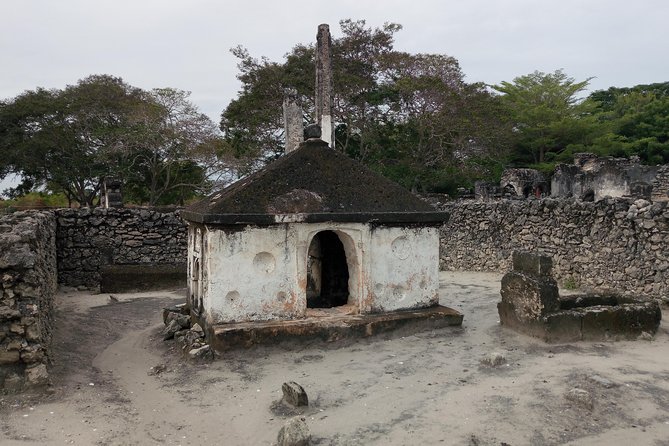
- Kaole Ruins are the oldest stop: See 30 tombs and what is described as the oldest mosque in East Africa, about 5 kilometers south of Bagamoyo.
- The town’s name carries sorrow: Bwagamoyo means Here I throw down my heart, a phrase linked to captives who were taken away and never returned.
- The day covers several eras: Arab trade, the slave and ivory trade, German rule, British rule, and the early Christian mission all appear on the route.
- The ride is part of the experience: Bagamoyo lies 65 kilometers north of Dar es Salaam, and the road offers a visible shift from the capital’s busy pace.
- Guide communication matters: The tour is offered in English, but clear explanations may vary, so ask questions when you need more detail.
- The beach is a bonus, not the main event: You may enjoy Bagamoyo’s coast and hotels, but this is primarily a history tour.
Why Bagamoyo matters on Tanzania’s coast
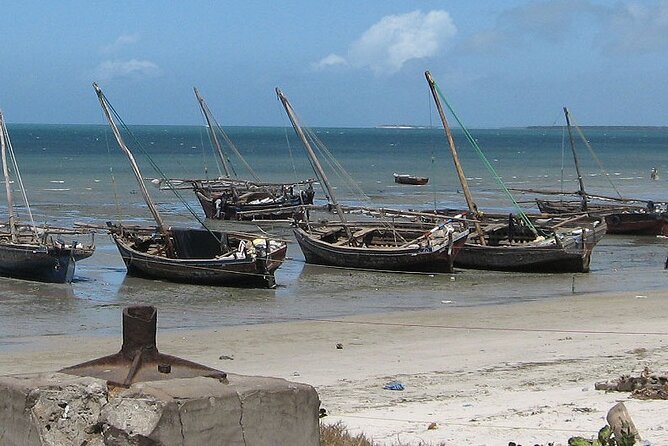
Bagamoyo sits on the coast opposite Zanzibar, about 65 kilometers north of Dar es Salaam. Its location helped make it one of the most important trading ports along the east-central African coast.
The town’s past is tied to Arab commerce, ivory, enslaved people, European colonial rule, and Christian missions. Those subjects are difficult, but they are central to understanding the town. This is not a day built around pretty streets and easy stories. You will see places connected to loss, forced movement, political control, and religious change.
Bagamoyo later became the formal capital of German East Africa. That gives the tour a wider purpose. You are not only visiting an old coastal settlement. You are seeing a place where local life, Indian Ocean trade, European rule, and missionary activity met.
I find this kind of day useful early in a Tanzania visit because it adds context to the country beyond wildlife and beaches. The tour also helps you understand why coastal Tanzania cannot be separated from Zanzibar, the slave trade, and the movement of goods and people across the Indian Ocean.
More historical tours:
- Dar es Salaam History and Architectural Tours
★ 5.0 · 36 reviews - Bagamoyo Historical Tour – Everyday
★ 5.0 · 13 reviews - Private Tour in Historical Dar es Salaam with Lunch
★ 4.5 · 6 reviews
The 65-kilometer road from Dar es Salaam
The journey begins with pickup at your hotel. The driver waits in the lobby with a sign bearing your name, a simple arrangement that removes one common source of morning confusion.
Air-conditioned transport matters here. You are spending about eight hours on a warm coastal outing, and the vehicle gives you a cooler place to rest between stops. Water and soft drinks are included, but meals are not, so you should plan for that before setting off.
The drive itself has value. As Dar es Salaam falls behind, you can watch the change in pace along the road. One recent account praised Michael for driving safely and described the trip as a chance to move away from Dar’s hectic feel. That makes the ride more than a transfer. It gives you time to look at daily life and settle into the day.
The exact start time depends on availability, so check it before booking. Since the outing lasts eight hours, you should avoid planning another major activity for the same evening. Traffic in and out of Dar es Salaam can affect how much time you have at each historic site, though no fixed stop-by-stop timing is provided.
Kaole Ruins and the old Arab settlement
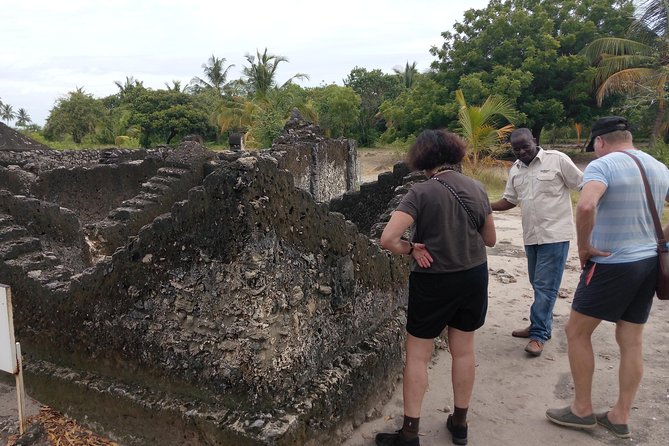
Kaole Ruins lie about 5 kilometers south of Bagamoyo. This is one of the most important archaeological stops on the tour.
The site preserves the remains of an ancient Arab town that declined after the Portuguese arrived in the 15th century. That single detail gives the ruins a useful place in the wider story of the coast. Political and commercial power along the Indian Ocean did not remain fixed. New foreign forces changed trading patterns, and towns that once mattered could lose their position.
You will see 30 tombs and the remains of a mosque described as the oldest in East Africa. The tombs make the site especially valuable because they show that Kaole was not simply a trading post. It was also a settled community with religious and civic life.
Expect an archaeological visit rather than a polished museum display. The interest comes from standing among the remains and hearing how the town fits into coastal history. Your guide’s explanation will make a major difference here. Sedic has been praised for covering subjects ranging from migration and political leaders to education, art, and geography, all of which can help turn scattered ruins into a clear story.
Wear practical shoes and bring water, even though bottled water is supplied. The site is only one part of the day, but it rewards patience. Take time to look closely at the tombs and mosque remains rather than rushing through for photographs.
Bagamoyo’s slave-trade sites and difficult history
The town’s name is often explained through the word Bwagamoyo, meaning Here I throw down my heart. It reflects the despair of enslaved people who passed through Bagamoyo and knew they might never return to Africa.
The tour includes a former prison where captives were held during the slave and ivory trade. This is the emotional center of the day. The building or site is not simply an old structure. It represents the system that treated human beings as cargo and connected inland routes with coastal shipping.
You should expect this stop to feel more serious than the archaeological ruins or the beach. That is appropriate. A good guide will help you understand how Bagamoyo functioned within the trade, rather than presenting the prison as an isolated curiosity.
The visit also gives the town’s name a human meaning. Trade routes, ports, and political dates can feel distant. The story behind Here I throw down my heart brings the experience back to the people who suffered there.
This part of the outing may not suit someone looking only for light sightseeing. I think it is essential for anyone who wants an honest account of Bagamoyo. Ask your guide to explain what is known about the site and how it fitted into the wider slave and ivory trade.
A few more trips of this kind worth comparing:
- Dar es Salaam: City Tour
★ 4.7 · 159 reviews - Dar es Salaam City Center: Walking Tour
★ 4.8 · 102 reviews - Dar es Salaam City Tour – Everyday
★ 5.0 · 64 reviews - MIKUMI NATIONAL PARK – 3 Days
★ 4.5 · 63 reviews
German rule at the Old Boma
The Old Boma introduces another period of Bagamoyo’s past. The building was constructed by the Germans in 1897 as a statehouse and later taken over by the British after the First World War.
Its value comes from the change in power it represents. In a short visit, you can trace how Bagamoyo moved from an important coastal trading center into a colonial administrative town. The building also helps connect local history to the larger story of German East Africa.
Do not expect the Old Boma to provide the same feeling as the Kaole site. Kaole is archaeological and much older, while the Old Boma is a colonial structure tied to more recent political control. Together, they show how different powers shaped the town at different times.
The tour also includes tombs of German leaders who died during the First World War. This stop adds a personal element to colonial history. You see not only administration and military power, but also the human cost carried by those who lived and died far from home.
The colonial section is most useful when you pay attention to sequence. First came established coastal societies and trade. Then came Portuguese pressure, expanding European control, German administration, and British rule. Bagamoyo’s buildings become easier to understand when you see them as part of that chain.
The Catholic Museum and Dr. Livingstone
Christianity enters the story at the Catholic Museum, which is connected with the early mission period in Bagamoyo. The site is also described as the former resting place of Dr. David Livingstone, the famous explorer.
Livingstone’s connection gives the museum a strong draw, but the place matters for more than one famous name. It helps explain how Christian missions became part of Bagamoyo’s social and cultural life during the 19th century.
You will also see the First Cross, erected in 1867 by French missionaries. That date gives the visit a clear historical anchor. The cross is a physical reminder of the early mission presence and of the way European religious institutions became established on the coast.
I like this stop because it balances the darker slave-trade history with another major force that shaped Bagamoyo. Still, you should not treat the mission story as separate from the town’s political and commercial past. The same coastal setting that supported trade also made Bagamoyo a key point for missionaries and explorers.
If Dr. Livingstone is the main reason you are interested, keep expectations sensible. The information supplied describes the former resting place and museum, but it does not promise a large collection or a long exhibition. The guide’s narration will likely provide much of the context.
A warm coastal finish by the beach
Bagamoyo is also known for its beaches and hotels, and the tour allows you to experience the town’s more relaxed side after the historical visits.
This can be a welcome change. The day moves from tombs, prisons, colonial buildings, and mission sites to the coast. You may find the sea air and slower pace a useful way to process what you have seen.
The beach portion should not be confused with a full beach holiday. The listed duration is eight hours, and the main purpose is the guided history route. The information does not specify a set amount of swimming or free beach time, so ask the operator how the day will be divided if that matters to you.
Meals are not included, and alcohol is excluded as well. Water and soft drinks are supplied. Since Bagamoyo has hotels and places associated with relaxation, you may be able to arrange food separately, but do not assume a meal is part of the package.
What the $187 price includes
At $187 per person, the cost is easiest to justify if you value a full-day guided outing from Dar es Salaam. You are paying for transport, a live English-speaking guide, hotel pickup, water, soft drinks, and access to a route that would be difficult to understand fully without local explanation.
The value is strongest for solo visitors or small parties who want a planned day rather than arranging transport and site visits independently. Safe driving also matters on an eight-hour outing. Michael received particular praise for handling the road, which can make the long day feel more comfortable.
The price is less attractive if you mainly want a quick look at the beach. Meals are not included, and there is no stated list of entrance fees, so confirm what is covered before paying. You should also ask how much time is reserved for each location.
The rating is 4.4 from eight reviews, with especially strong praise for the guides’ historical explanations and communication with the agency. One lower score focused on weak English from the guide. That does not cancel the positive feedback, but it is a fair reason to confirm that your guide can explain complex subjects clearly.
Who should book this day?
I would choose this tour if you enjoy history, archaeology, geography, or the story of Tanzania’s coastal towns. It is also a good choice if you want a break from Dar es Salaam without giving up cultural substance.
The outing suits you best if you are comfortable with serious subjects. The slave-trade prison and the meaning of Bagamoyo’s name are not easy sightseeing, but they are important. You will get more from the day if you ask questions and allow time for the guide’s explanations.
It may be less suitable if you want a slow beach day, a food-focused excursion, or a tightly timed museum program. The itinerary covers many sites, and the distance from Dar es Salaam means road time is part of the package.
For the best experience, request a guide with strong spoken English and a clear interest in Bagamoyo’s past. Michael is a name worth noting for driving, while Sedic has been praised for broad and detailed commentary. Those details matter because the quality of interpretation can shape the whole day.
Booking details worth knowing
Pickup is included from your hotel, with the driver waiting in the lobby under your name. The tour runs every day, lasts eight hours, and has an English-speaking live guide.
You can cancel up to 24 hours before the activity for a full refund. A reserve-now, pay-later option is also available, which helps if your Dar es Salaam schedule may change.
The tour is listed as wheelchair accessible. Since the route includes archaeological ruins and historic sites, ask the operator about the practical access at each individual stop before booking.
FAQ
How long is the Bagamoyo Historical Tour?
The tour lasts eight hours.
How far is Bagamoyo from Dar es Salaam?
Bagamoyo is about 65 kilometers north of Dar es Salaam.
Is hotel pickup included?
Yes. The driver waits in your hotel lobby with a sign showing your name.
What language is the tour offered in?
The live guided tour is offered in English.
Is transportation air-conditioned?
Yes. Air-conditioned transportation is included.
Are water and soft drinks provided?
Yes. Water and soft drinks are included.
Are meals included?
No. Meals are not included in the tour price.
Can I cancel for a full refund?
Yes. You can cancel up to 24 hours in advance for a full refund.
Is the tour wheelchair accessible?
Yes. The activity is listed as wheelchair accessible.
Should you book the Bagamoyo Historical Tour?
Book it if you want to understand Tanzania’s coast through real places: the Kaole tombs, the old mosque, the slave-holding prison, the German Old Boma, the Catholic Museum, and the 1867 First Cross. The day gives you much more than a scenic drive, and the beach provides a gentler finish after the difficult history.
I would be cautious only if clear English interpretation is essential and you have not confirmed the guide. I would also check what time is available for the beach and whether site entrance fees are included. For a history-minded visitor staying in Dar es Salaam, the combination of transport, guiding, and wide historical coverage makes this a worthwhile full-day trip.
Just added around Dar es Salaam
- Ruaha National Park And Mikumi National Park Budget Safari 6 Days 5 Nights★ 5.0 · 3 reviews
- 3 Days Nyerere National Park Safari (Selous Game Reserve)★ 5.0 · 3 reviews
- Saadani National Park Day Tour★ 5.0 · 3 reviews
- Private Mikumi Adventure★ 4.5 · 3 reviews
- Dar es Salaam City tour and Beach Leisure – 9 hours★ 5.0 · 3 reviews
- Mbudya island from Dar es salaam safari.★ 4.2 · 3 reviews
- Day Trip To Bagamoyo From Dar Es Salaam ..historical town★ 4.5 · 3 reviews
- 3 Days Mikumi National Park Private Tour★ 5.0 · 3 reviews
Historical Tours, compared.

Stone Town Historical Cultural Walking Guided Tour
Read our review →
Arusha Guided Walking City Tour, Culture, Lifestyle & History
Read our review →
Stone Town’s Hidden History: Private Guided Walking Tour
Read our review →

Browse the lists this tour appears in