
Reviewed · KILIMANJARO TREKS
Kilimanjaro climb, Lemosho Route (6-day)
Kilimanjaro rewards patience, not bravado. This 8-day Kilimanjaro package from Moshi gives you six days on the mountain, with the Lemosho Route chosen for its broad scenery and useful acclimatization pattern. You begin with a hotel night, finish with another, and spend the middle six days hiking from the western side of the mountain to Uhuru Peak at 5,895 meters.
I like two things right away. First, the professional support is unusually complete: certified Wilderness First Responder guides, porters, cooks, camp staff, oxygen, oximeters, medical kits, and regular medical checks. Second, the route uses the important climb-high, sleep-lower pattern, including lunch at Lava Tower before descending to Barranco Camp. The main consideration is the schedule itself: six climbing days is demanding, and the summit night is a long, cold, high-altitude push with little room for a bad day.
The price is $3,034 per person, before flights, visa, insurance, personal gear, and tips. That is a serious sum, but it covers park fees, transport, two hotel nights, tents, meals, drinks, and a full mountain crew. For a major climb where safety and logistics matter, the package offers solid value, provided you understand that the mountain remains physically hard even when the service is polished.
In This Review
- Five details that shape the experience
- Why Lemosho is a smart route choice
- Day 1: Airport pickup and a useful briefing in Moshi
- Day 2: Londorossi Gate, the Shira Plateau, and the first camp
- Day 3: Lava Tower and the descent to Barranco
- Day 4: Barranco Wall, Karanga Camp, and a short acclimatization walk
- Day 5: Barafu Camp and the quiet before summit night
- Day 6: Uhuru Peak, the longest and hardest day
- Day 7: Rainforest descent and a proper finish
- Day 8: A quiet hotel morning and airport transfer
- What the $3,034 price really covers
- Food, comfort, and the human side of the climb
- Safety, medical checks, and guide support
- Who should book this climb?
- Should you book Altezza Travel’s Lemosho climb?
- FAQ
- How long is the full Kilimanjaro experience?
- What is the price per person?
- Is airport pickup included?
- Are hotel nights included?
- Are Kilimanjaro National Park fees included?
- Are meals included?
- Can dietary requirements be accommodated?
- What medical support is provided?
- Is personal hiking gear included?
- Is the climb private?
- What fitness level is required?
- Can I cancel for a full refund?
Five details that shape the experience
- A high drop-off begins the mountain days at about 3,500 meters, giving you early access to the Shira Plateau but also making day-one acclimatization important.
- Lava Tower reaches 4,630 meters, then the route drops to Barranco Camp at 3,960 meters for a useful altitude adjustment.
- Every pair of climbers receives a personal guide for summit night, allowing close attention to physical and mental condition.
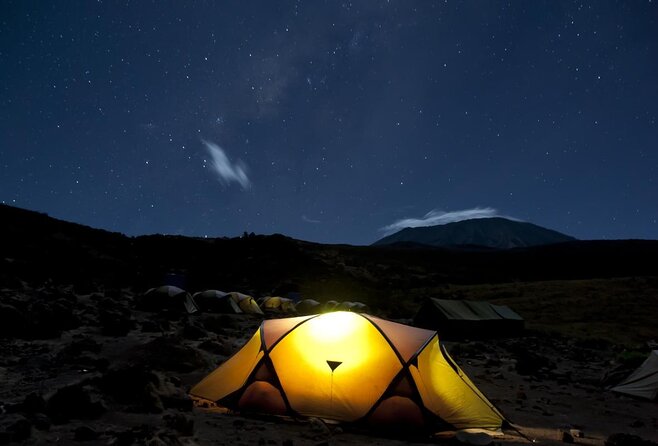
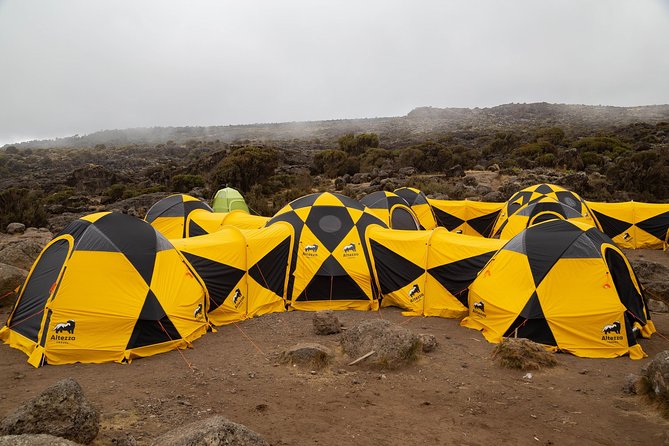
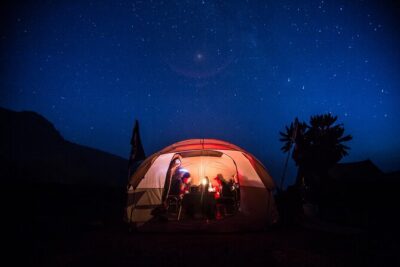
- North Face VE-25 tents, a dining tent, sleeping pads, tables, chairs, and kitchen equipment are included, so you are not carrying the camp.
- The strongest praise centers on the crew, including guides such as Stanford, Osman, Hance, Frank, Emmanuel, Innocent, Richard, and Agrey, along with cooks and porters who keep camp running.
- The climb is private to your group, with pickup, airport transfers, and two nights at Aishi Machame Hotel included.
Why Lemosho is a smart route choice
The Lemosho Route approaches Kilimanjaro from the west. It is valued for its changing climate zones and for the way its camps let you gain height, then drop slightly before sleeping. That rhythm cannot remove altitude risk, but it gives your body more time to adjust than a rushed ascent.
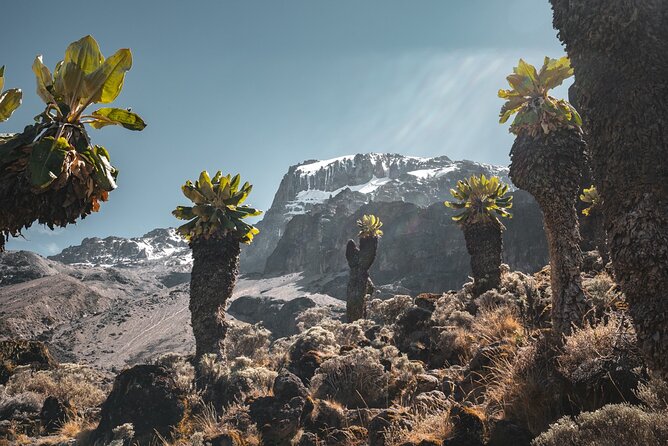
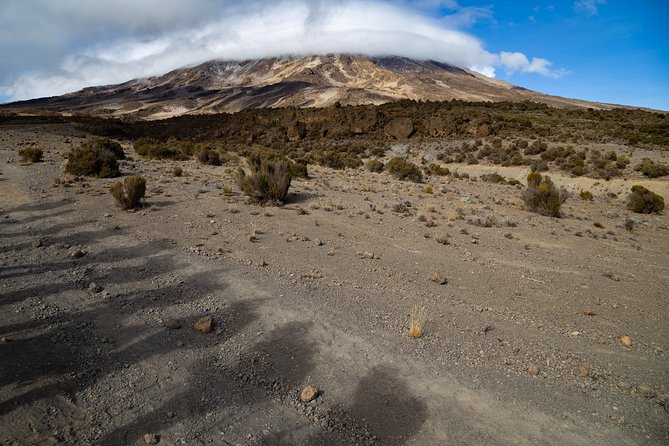
Your first mountain view comes across the Shira Plateau. Later, the route moves through high volcanic terrain, steep gullies, and the upper slopes near Kibo, Kilimanjaro’s main volcanic cone. The scenery changes often enough to keep the walk interesting, even on tiring days.
This is not a technical mountaineering route. The climb to Uhuru Peak is described as technically simple, but altitude makes it difficult. You will need steady pacing, basic fitness, and the willingness to move slowly. The guides set the pace for the group, which is useful because many fit people make the mistake of walking too fast at the start.
The western drop-off deserves special attention. A vehicle carries you beyond Londorossi Gate toward about 3,500 meters, rather than beginning the first hiking day at a much lower elevation. That saves walking time, but it also places you high on day one. You should treat the first afternoon as an acclimatization day, not as an easy warm-up.
More Kilimanjaro routes and climbs:
- Kilimanjaro climb by Lemosho Route (7-day)
★ 5.0 · 651 reviews - Kilimanjaro climb, Machame Route (7-day)
★ 5.0 · 262 reviews - Kilimanjaro Climbing Lemosho Route 8 Days.
★ 5.0 · 186 reviews
Day 1: Airport pickup and a useful briefing in Moshi
The experience begins with pickup at Kilimanjaro International Airport. An Altezza Travel representative meets you there and takes you to Aishi Machame Hotel, where you receive a room, hot water, Internet access, a swimming pool, and breakfast accommodation for the night.
Check-in begins at 2:00 PM. An evening briefing follows, with managers checking that you are ready for the climb. This is when you should ask practical questions about your gear, clothing, medication, water, pacing, and the summit-night plan.
The first night matters more than it may seem. You can organize your pack, sleep in a proper bed, and meet the people coordinating the climb before heading toward the mountain. Hotel lunches and dinners are not included, so plan on paying about $15 per person for each meal at the hotel, based on the stated average.
Day 2: Londorossi Gate, the Shira Plateau, and the first camp
The mountain crew meets you at the hotel in the morning for another briefing. The drive to Londorossi Gate takes roughly three to four hours. There, staff handle park permits and registration with the search and rescue service.
You then continue by off-road vehicle to the drop-off point at about 3,500 meters. The first walk leads toward Shira 2 Camp at approximately 3,900 meters. The route includes a moderate altitude gain and is described as manageable from a physical standpoint, though the elevation can still make breathing feel different.
The first reward is the view over the Shira Plateau. It is a broad, open setting that gives you an early sense of Kilimanjaro’s scale. The day takes about seven hours, including transport and mountain formalities.
I would not underestimate this day. The hiking may feel gentle, but sleeping nearly 4,000 meters above sea level is a major change for many people. Drink as directed, move slowly, and tell your guide about headaches, nausea, unusual fatigue, or other symptoms.
Day 3: Lava Tower and the descent to Barranco
After breakfast at Shira 2, you hike toward Lava Tower at 4,630 meters. This is one of the route’s most useful days for acclimatization because you climb high, spend one to two hours there, eat lunch, and then descend to Barranco Camp at 3,960 meters.
The route includes repeated ascents and descents. You may feel short of breath or uncomfortable at Lava Tower, and that is precisely why the guides monitor you closely. The descent to Barranco gives your body a better chance to adjust before the higher camps.
Barranco Camp sits beneath the famous Barranco Wall. It looks imposing, but the path up it is not described as a technical climb. The next morning brings a steep walk up the gorge wall, usually taking about an hour.
This is an eight-hour day, so it tests both stamina and patience. Keep your camera handy for the wall and the views toward Kibo, but do not burn energy trying to hurry. The route is designed around gradual adjustment, not speed.
A few more trips of this kind worth comparing:
- Kilimanjaro climb, Marangu route (6-day)
★ 5.0 · 72 reviews - 6 Days 5 Night Safari
★ 5.0 · 57 reviews - 6 Days Tanzania Classic Safari
★ 5.0 · 52 reviews - The Best of Machame Route in 6 Days: Your World’s Summit Guide
★ 5.0 · 44 reviews
Day 4: Barranco Wall, Karanga Camp, and a short acclimatization walk
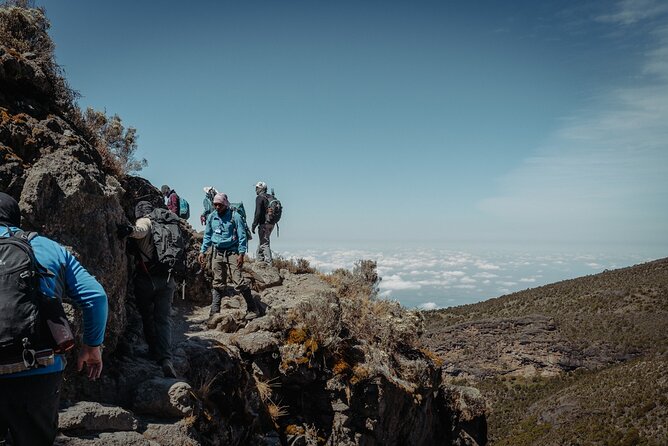
You start early to climb Barranco Wall before the route becomes crowded. That early departure is practical advice, not a luxury. More people on a narrow route can slow the morning and make the wall feel more stressful than it needs to be.
The climb takes around an hour. You then have time to rest and photograph Kibo before walking toward Karanga Camp at 4,035 meters. This section rolls up and down, with several short climbs and descents. Your guide’s pacing becomes especially useful here.
After reaching camp, you receive a warm lunch. Later, you complete an acclimatization walk in the direction of Barafu Camp before returning to Karanga. This extra movement helps your body experience more height without committing you to sleeping there yet.
The day lasts about seven hours. It is not the highest day, but the repeated ups and downs can wear on your legs. I would save some energy for the summit push and avoid treating the Barranco Wall as the main event. It is memorable, but summit night is still ahead.
Day 5: Barafu Camp and the quiet before summit night
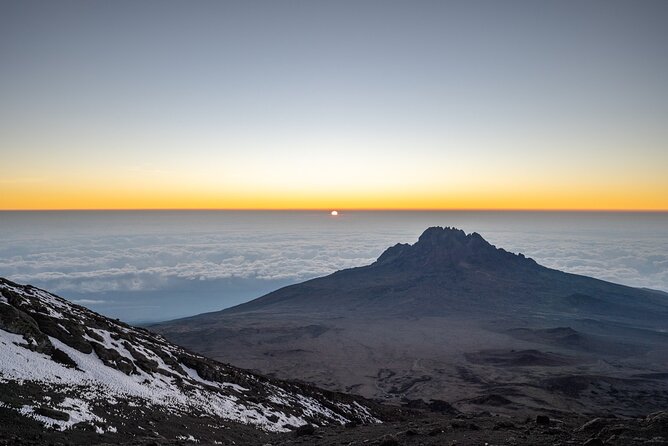
The walk from Karanga Camp to Barafu Camp takes you from 4,035 meters to 4,640 meters. Barafu is the launch point for the night ascent to Uhuru Peak. The mountain crew sets up your tent and sleeping bag before you arrive, allowing you to focus on eating, drinking, and resting.
You also make an acclimatization walk toward the intermediate Kosovo Summit Camp at about 4,800 meters, then return to Barafu for a hot dinner. That short climb gives you more time at altitude while keeping you close to the main camp.
The schedule calls for rest and sleep during the remaining part of the day. In practical terms, sleep may be difficult at this height, and your mind may be busy with the summit ahead. Even a short rest helps. Keep your summit clothing, headlamp, water, snacks, and any needed personal items organized before lying down.
The support system earns its keep here. Porters carry the camping equipment, cooks prepare hot meals, and camp staff handle setup. You still need to carry your personal day items, but you are not building camp after a long walk.
Day 6: Uhuru Peak, the longest and hardest day
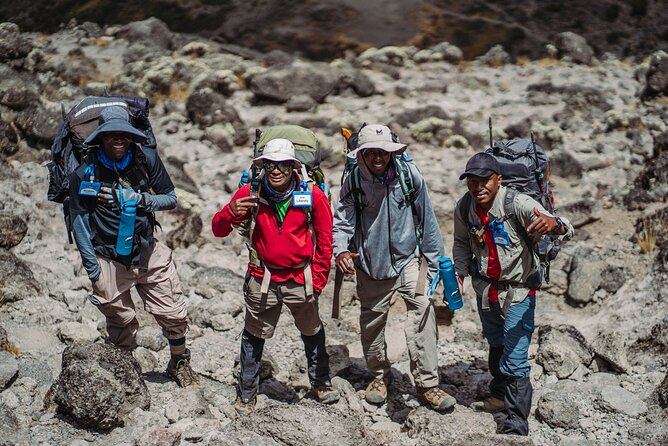
The summit attempt begins at night from Barafu Camp. You climb to Uhuru Peak at 5,895 meters, the highest point on Kilimanjaro. The technical route is not described as difficult, but the altitude, cold, darkness, and length make this the toughest part of the experience.
Each pair of climbers receives a personal guide for the ascent. That arrangement is one of the strongest safety features in the package. Your guide can watch your pace, mood, coordination, and physical condition more closely than a single guide could manage with a large spread-out group.
After reaching Uhuru Peak, you may descend toward the nearest glacier if desired, then return to Barafu Camp. After about two hours of rest, you continue down to Millennium Camp at 3,820 meters.
The entire day takes about 12 hours. That is a long time on your feet, and the descent can be harder than the ascent. The safety advice is blunt and important: many accidents happen while descending, including serious falls and broken limbs. Watch each step, especially when tired, and listen to your guide rather than rushing downhill in relief.
Reaching the summit is the headline moment, but getting safely to Millennium Camp is part of the achievement. Keep food and water available for the descent. Your energy can drop sharply after the summit, even as the lower altitude begins to feel easier.
Day 7: Rainforest descent and a proper finish
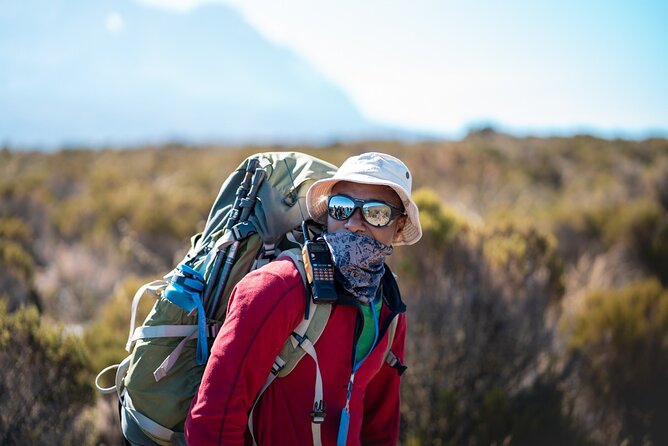
Millennium Camp lies in tropical rainforest, a welcome change after the dry, exposed upper mountain. You wake with the satisfaction of having reached the summit and with noticeably less altitude pressure.
After a warm breakfast, you descend to Mweka Gate at 1,640 meters. The walk covers about 12 kilometers and takes four to five hours. At the gate, the group gathers to congratulate one another, and you can write in the company guestbook.
The finish includes commemorative certificates at the Altezza office and a transfer back to the hotel. This is a pleasant touch after a physically demanding week. You get a proper shower, a bed, and time to process what you have done.
The rainforest also makes this day feel like a return to ordinary life. Your legs may be tired, but the reduction in altitude should bring relief. Do not schedule a demanding activity immediately after the descent unless you have plenty of time to recover.
Day 8: A quiet hotel morning and airport transfer
The final day is for rest at Aishi Machame Hotel and transfer to the airport. Hotel checkout is at 11:00 AM. If your flight leaves later in the day, late checkout can be arranged for an added fee.
Airport pickup and drop-off, as well as ground transport during the package, are included. That removes a layer of planning at the start and end of the trip, especially useful if you are arriving tired or connecting to another Tanzanian experience.
What the $3,034 price really covers
At $3,034 per person, this is not a budget hike. It is also more than a permit and a guide. The price includes:
- Kilimanjaro National Park fees
- Airport transfers and ground transport
- Two hotel nights
- Mountain tents shared by two hikers
- Sleeping pads and group camp equipment
- Three meals daily on the mountain
- Tea, coffee, juices, soda, and other listed drinks
- Vegetarian, vegan, lactose-free, gluten-free, halal, and other meal plans
- Guides, porters, cooks, and camp staff
- Medical checkups, oxygen tanks, oximeters, and medical kits
That package matters because independent-looking savings can disappear once you add park access, camping equipment, food, transport, and staffing. The company also uses North Face VE-25 tents, a well-known expedition-style tent model, rather than leaving you to arrange basic shelter yourself.
You still pay for international flights, a Tanzanian visa, insurance, personal clothing and boots, and a sleeping bag unless you hire equipment. Most nationalities pay a $50 visa fee at JRO, while US passport holders pay $100. Insurance should cover mountain trekking, not just ordinary sightseeing.
Tips are optional and based on your satisfaction. Single hotel and tent arrangements cost extra. These are important budget details because the advertised price is substantial, but it is not the final cost for every climber.
Food, comfort, and the human side of the climb
Food is a major strength of this setup. You receive three energy-focused meals each day, with choices at each meal, plus drinks. Dietary plans can be arranged for vegetarian, vegan, lactose-free, gluten-free, halal, and other needs.
Hot food at high camp is more than a pleasant extra. It helps you replace energy after long walks and gives the day a reliable rhythm. The kitchen crew receives especially warm praise, with one review naming chef Raymond and describing the meals as consistently enjoyable.
The porters also shape the experience. Your tent and sleeping gear are set up before you arrive at camp, so you can sit down rather than work through camp chores after a seven or twelve-hour day. Singing and dancing are part of the atmosphere described by several people, adding warmth to what can otherwise be a serious and tiring undertaking.
The polished support does not make the trip luxurious in the normal sense. You are still sleeping in a tent, hiking at altitude, dealing with cold, and using mountain facilities. Think of it as well-run expedition comfort, not a hotel on a volcano.
Safety, medical checks, and guide support
Safety receives clear attention. Guides are certified Wilderness First Responders, and the crew carries oxygen tanks, oximeters, and medical kits. Medical checkups take place during the hike, giving the guides regular chances to assess how you are handling the altitude.
The personal-guide arrangement during summit night is especially valuable. It means your physical and mental condition is watched at close range during the most difficult hours.
The provided experience includes repeated briefings and guide-led pacing. Guides named in the feedback include Stanford, Balthazar, Phillipo, Ayubo, Osman, Hance, Frank, Emmanuel, Innocent, Richard, and Agrey. You should not assume a particular guide will be assigned to your group, but these names reflect the broad praise given to the guiding team.
The package is not a guarantee that you will reach the summit. No mountain operator can remove altitude sickness, weather problems, exhaustion, or injury from the equation. The strongest safety decision you can make is to report symptoms early and accept a slower pace or descent if the guide recommends it.
Who should book this climb?
I would choose this experience if you want Kilimanjaro handled by a full-service local crew rather than piecing together permits, vehicles, food, tents, and medical support yourself. It suits people with moderate physical fitness who are ready for long hiking days and a demanding summit night.
It is also a good fit if you care about dietary flexibility, hotel support, airport transfers, and a private group arrangement. The company’s flexibility with flight delays and travel changes, praised in the supplied feedback, may be useful when your wider Tanzania plans shift.
I would hesitate if you want a relaxed holiday with a little hiking added. Six mountain days include several seven to eight-hour walks, one 12-hour summit day, high camps, and a steep descent. You also need to budget for gear, insurance, flights, visa costs, hotel meals, and tips.
The Lemosho Route gives you variety and a sensible acclimatization pattern, but the six-day schedule is still compact. If your main concern is altitude adjustment, ask about longer options before booking. That choice is not provided here, so you should confirm directly with the operator rather than assume the six-day plan is the only one.
Should you book Altezza Travel’s Lemosho climb?
Book it if you want strong logistical support and a safety-minded crew for a serious Kilimanjaro attempt. The included park fees, meals, transport, tents, medical equipment, and trained guides make the $3,034 price easier to justify.
Before paying, check the personal equipment list, confirm what can be hired, arrange trekking insurance, and ask how dietary needs and single accommodation will be handled. If you are fit, prepared, and comfortable with a demanding summit night, this is a well-organized way to approach Uhuru Peak. If you need more time to acclimatize or prefer shorter days, request a longer route plan instead.
FAQ
How long is the full Kilimanjaro experience?
The full package lasts approximately eight days. Six days are spent climbing and descending on the Lemosho Route, with one hotel night before the climb and one hotel night afterward.
What is the price per person?
The listed price is $3,034 per person.
Is airport pickup included?
Yes. Pickup and drop-off at Kilimanjaro International Airport are included, along with all ground transportation.
Are hotel nights included?
Yes. Two nights at Aishi Machame Hotel are included, with two people sharing a room unless you book a solo climb or request single accommodation for an additional charge.
Are Kilimanjaro National Park fees included?
Yes. All fees collected by Kilimanjaro National Park are included.
Are meals included?
Breakfast is included for the hotel stay, and three meals per day are provided on the mountain. The package includes five lunches, five dinners, and seven breakfasts. Hotel lunches and dinners are not included.
Can dietary requirements be accommodated?
Yes. Vegetarian, vegan, lactose-free, gluten-free, halal, and other meal plans are available.
What medical support is provided?
The crew includes certified Wilderness First Responder guides. Medical checkups, oxygen tanks, oximeters, and medical kits are provided.
Is personal hiking gear included?
No. You must provide personal clothing, hiking boots, a sleeping bag, and other personal equipment. Gear is available for hire.
Is the climb private?
Yes. This is a private activity, so only your group participates.
What fitness level is required?
A moderate physical fitness level is required. The climb includes several seven to eight-hour hiking days and a summit day lasting about 12 hours.
Can I cancel for a full refund?
You can cancel up to 24 hours before the experience starts for a full refund. Cancellations or changes made less than 24 hours before the start time are not accepted for a refund.
Just added around Moshi
- Moshi: Lake Chala Tour: Hiking &/or Kayaking★ 4.5 · 3 reviews
- 3 Days Tanga Exclusive Beach Holiday★ 5.0 · 3 reviews
- Serengeti Wildebeest Migration.★ 5.0 · 3 reviews
- Chemka Hotpsrings E-Bike Day Trip★ 5.0 · 3 reviews
- Explore 1 day Ngorongoro Crater Budget Group Safari from Arusha★ 5.0 · 3 reviews
- Explore the 360° of Kilimanjaro★ 5.0 · 3 reviews
- Affordable Short Tanzania Safari (2 Days Camping Safari)★ 5.0 · 3 reviews
- Rongai Route 7 Days★ 5.0 · 3 reviews
Kilimanjaro Treks, compared.



8-Day Small-group Lemosho Kilimanjaro Summit Trekking
Read our review →


Climbing Kilimanjaro through 7 days Machame Route
Read our review →
7-Day Machame Kilimanjaro Summit Tour from Arusha
Read our review →Browse the lists this tour appears in