
Reviewed · KILIMANJARO TREKS
Climbing Kilimanjaro through 7 days Machame Route
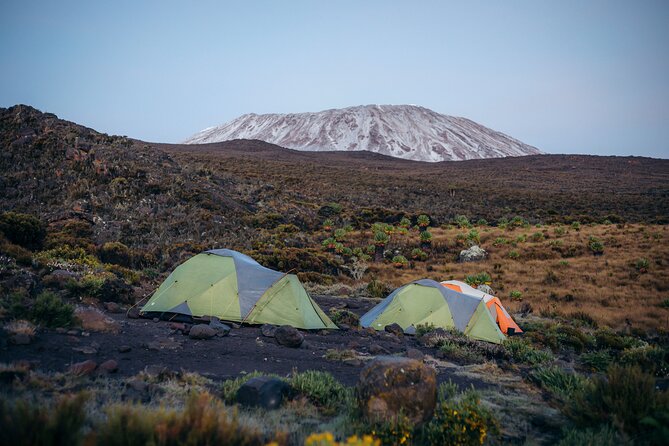
Seven days can change your view of mountains. ZAFS Tours’ Machame Route climb gives you a varied route through rainforest, high volcanic terrain, Lava Tower, Barranco Wall, and a separate descent trail. I like the route’s walk high, sleep low pattern, which helps with altitude adjustment, and I like the strong safety focus, including daily health checks and emergency oxygen.
The main drawback is that Machame is Kilimanjaro’s busiest route, so the camps and trail can feel crowded. It is also steeper and longer in places than the Marangu Route, despite requiring no technical climbing. At $2,425 per person, the price is substantial, but it covers the mountain fees, private camping setup, meals, transport, guides, porters, chef, and waiter.
In This Review
- Key points about the 7-day Machame climb
- Why Machame earns the Whiskey Route nickname
- Day 1: From Machame Gate into the rainforest
- Day 2: Reaching Shira Camp and meeting the wider route
- Day 3: Lava Tower and the walk to Barranco
- Day 4: Climbing the Great Barranco Wall
- Day 5: Across the southern slopes toward Barafu Camp
- Day 6: The summit attempt and descent by Mweka
- Day 7: Completing the Mweka descent
- Meals, tents, and the human side of the climb
- Is $2,425 a fair price?
- Who should book this Machame itinerary?
- Should you book the 7-day Machame Route?
- FAQ
- Where does the Kilimanjaro climb begin?
- Where does the activity finish?
- How long is the Machame Route climb?
- What is the starting altitude?
- Is transportation included?
- Are meals included?
- Is camping equipment included?
- Who leads the climb?
- Is emergency oxygen provided?
- Is accommodation in Moshi included?
Key points about the 7-day Machame climb
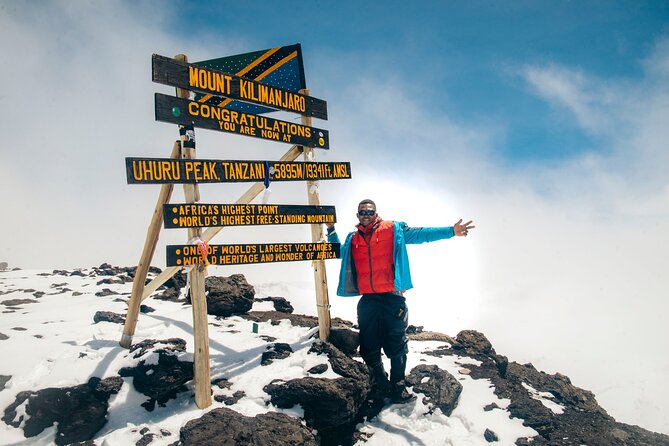
- A route with changing scenery: You begin in rainforest, cross the Shira Plateau, pass Lava Tower, climb Barranco Wall, and descend through Mweka forest.
- Better acclimatization than a shorter climb: The route gains and loses height before summit day, giving your body more time to adjust.
- Experienced mountain support: Guides have at least eight years of mountain experience and Wilderness First Responder certification.
- Health checks every day: The guide team monitors your condition and offers advice to help you manage the altitude.
- Full camping service: Private tents, a dining tent, mattresses, tables, chairs, utensils, and crew tents are included.
- A strong record of satisfaction: The operator has a five-star rating from 151 reviews and a 100 percent recommendation rate.
Why Machame earns the Whiskey Route nickname
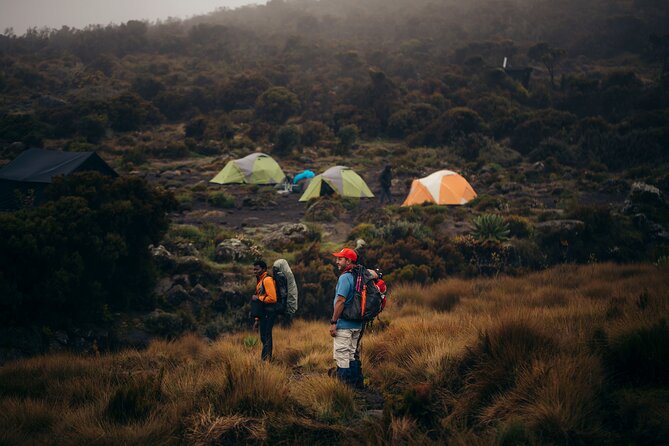
Machame is often called the Whiskey Route, while Marangu is known as the Coca Cola Route. The nicknames suggest that Machame is the tougher option, but the difference is not technical climbing. You do not need ropes or mountaineering skills for the standard route.
The challenge comes from longer walking days, steeper sections, and camping throughout the climb. That extra effort brings a major benefit: the route crosses different elevations instead of simply going up and down the same path.
I like this design because it gives you more time to adjust before the summit attempt. You climb higher during the day, then spend the night at a lower camp than your highest point. That pattern cannot remove the risk of altitude sickness, but it gives your body a better chance than a rushed itinerary.
Machame is also attractive because the scenery changes often. The first day takes you through rainforest. Later, the vegetation becomes thinner and the surroundings more open and rocky. By the time you reach the upper camps, the mountain feels far more severe than it did at the gate.
The tradeoff is popularity. Machame is described as the busiest route on Kilimanjaro, so you should not expect solitude. If quiet trails matter more to you than scenery and route variety, another route may suit you better.
More Kilimanjaro routes and climbs:
- Kilimanjaro climb by Lemosho Route (7-day)
★ 5.0 · 651 reviews - Kilimanjaro climb, Machame Route (7-day)
★ 5.0 · 262 reviews - Kilimanjaro Climbing Lemosho Route 8 Days.
★ 5.0 · 186 reviews
Day 1: From Machame Gate into the rainforest
The climb begins at Machame Gate, at about 1,800 meters. From there, the trail approaches Kilimanjaro from the southwest and enters the mountain’s rainforest zone.
This first stage is a gentle introduction to the expedition’s rhythm. You will be walking on a natural trail, carrying only your personal day items while porters handle the larger camping load. The forest gives you shade and a close look at the lower mountain’s plants and wildlife.
The route is scenic, but do not treat the first day as an easy warm-up that you can rush. The guiding team’s repeated advice is likely to be pole pole, meaning slowly, slowly. That pace matters from the beginning because saving energy is more useful than proving how fast you can walk.
Your support team sets up the camp and prepares dinner. Breakfast, lunch, dinner, tea, coffee, tents, mattresses, and the dining setup are included. This is one reason the price is more than a basic guided walk: you are paying for a mobile camp and a full crew, not just trail direction.
Day 2: Reaching Shira Camp and meeting the wider route
The trail continues upward from the forest toward Shira Camp. Shira is where the Lemosho Route joins from the west, so the route begins to feel more open and connected to the wider Kilimanjaro network.
This change is one of Machame’s pleasures. You leave behind the enclosed forest and gain broader views of the mountain’s upper slopes. The air and vegetation change as you climb, giving you a clear sense of moving through several ecological zones.
Shira Camp also has an important role in acclimatization. You are spending time at a higher elevation, but the schedule still spreads the climb across several days. Your guide should check how you are eating, sleeping, walking, and coping with the altitude.
The company says its guides have at least eight years of experience and have made more than 100 mountain trips as a team. Those claims matter most in small decisions: when to slow the group, when to pause, and how to respond if someone develops a headache, nausea, or unusual fatigue.
Day 3: Lava Tower and the walk to Barranco
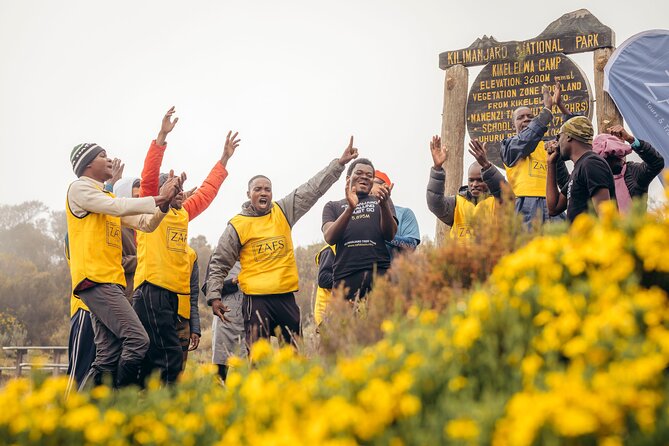
From Shira, the route crosses the southern side of Kilimanjaro toward Lava Tower. This is the classic high point of the acclimatization plan. You climb to a higher elevation during the day, then continue to Barranco for the night.
The route between Lava Tower and Barranco is valuable because it lets you test how your body reacts before summit day. You may feel strong, tired, or uncomfortable. None of those feelings should be ignored, and the daily health checks are an important part of deciding how to proceed.
Barranco is also one of the most memorable camps on the route. The setting is more rugged than the rainforest, and the next stage includes the Great Barranco Wall. The wall looks intimidating, but this is a steep hiking section rather than a technical rock-climbing pitch.
You should expect a slower pace here. The goal is not to finish first. The goal is to arrive in good enough shape to eat, drink, rest, and continue the following day.
A few more trips of this kind worth comparing:
- 7 Days Kilimanjaro via Machame route affordable price
★ 5.0 · 110 reviews - Private Kilimanjaro Hike 7 Day Lemosho Route
★ 5.0 · 60 reviews - 7-Day Magical Tanzania Safari -Premium High End Package
★ 5.0 · 53 reviews - 7 Days Machame route – Kilimanjaro
★ 5.0 · 45 reviews
Day 4: Climbing the Great Barranco Wall
The Great Barranco Wall is the route’s most obvious physical challenge before the summit push. It is steep in places, so you will use your hands for balance and move carefully over uneven ground.
That can sound more dramatic than it is. The provided description does not call for technical climbing equipment, and the route is presented as a demanding trek rather than a mountaineering course. Still, you should be comfortable with sustained uphill walking and uneven trail surfaces.
This is where a good guide makes a practical difference. The team can set the pace, point out the safest line, and keep the group together. Guides named in the supplied experiences include Alex, Gabriel, Mushi, Musa, Danis, and Frank, but your exact team will depend on the departure.
The camp arrangements also help here. A dining tent, chairs, tables, mattresses, and cooked meals give you a place to recover away from the trail. Several accounts praise the food and describe it as far better than expected for a mountain camp, with fresh meals prepared by the chef each day.
Day 5: Across the southern slopes toward Barafu Camp
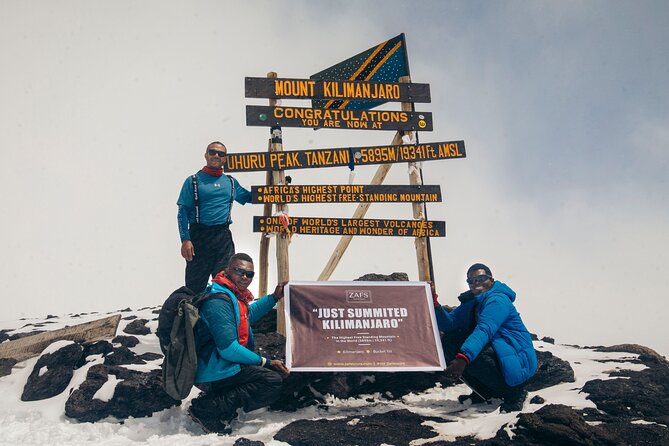
After Barranco, you continue across the southern side of the mountain toward Barafu Camp. This section is less about one famous obstacle and more about steadily gaining the height needed for the final ascent.
Barafu is the launch point for summit day, so this evening is likely to feel different from earlier nights. You need to rest, organize your clothing and equipment, and follow the guide’s instructions. The listed start time for the overall activity is 12:00 a.m., so confirm the exact daily schedule with ZAFS before departure, especially the timing of the summit attempt.
The support system is at its most useful here. Porters, a chef, waiter, and guides are included, allowing you to focus on pacing and recovery rather than carrying the full camp. The company also supplies emergency oxygen and says it conducts daily health checks.
Oxygen is not a promise that every summit attempt will be safe or successful. It is an emergency resource, not a substitute for sensible altitude decisions. You should still tell the guide immediately if you feel seriously unwell.
Day 6: The summit attempt and descent by Mweka
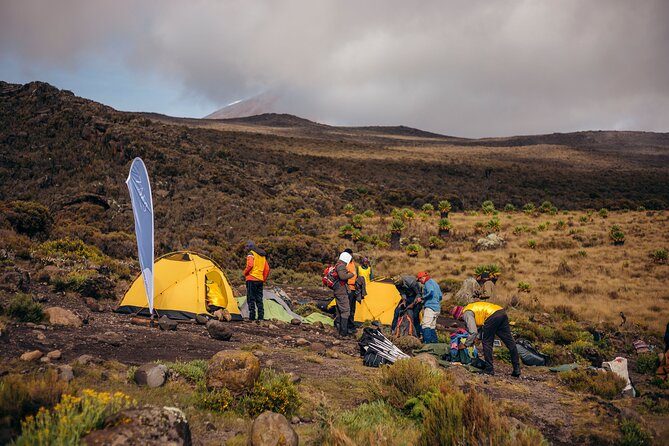
The summit section is the hardest part of the climb. You will start very early, walk in darkness for at least part of the route, and spend much of the day dealing with cold, fatigue, and altitude. The provided information does not give exact summit hours or distances, so ask for those details before you book.
The guide’s job is to keep you moving at a safe pace and to assess your condition. The strongest praise for this operator focuses on encouragement, patience, medical advice, and careful attention when climbers struggle. One account describes the guides and porters matching a climber’s pace rather than giving up on them.
That support can make a real difference, but it cannot guarantee that you will reach the top. Fitness helps, yet altitude affects people unpredictably. You should view a successful summit as the goal, not an entitlement built into the price.
After the summit, you descend by the Mweka Trail instead of retracing the Machame route. This is a welcome design choice. You see new surroundings and avoid walking the entire ascent route in reverse, although the descent itself can be hard on tired knees and legs.
Day 7: Completing the Mweka descent
The final stage follows the Mweka descent toward the end of the mountain portion. The route brings you back through lower terrain and eventually returns the activity to its meeting point in Moshi.
The supplied details identify the Moshi Leopard Hotel on Market Street as the start and end meeting point. Private transportation is included, which simplifies transfers connected with the climb. Pre- and post-hike accommodation in Moshi is not included, though it can be arranged on request.
That hotel detail is worth handling carefully. The advertised start time is midnight, which may refer to the beginning of the scheduled activity rather than an ordinary office meeting. Confirm the pickup time, hotel arrangements, luggage storage, and airport transfer plan directly with ZAFS.
Meals, tents, and the human side of the climb
The food service is a major part of the package. Breakfast, lunch, and dinner are freshly prepared on the mountain, with tea and coffee included. This is not a self-catering trip, so you do not need to plan seven days of trail meals.
The camping equipment includes private tents, a dining tent, crew tents, tables, chairs, mattresses, cutlery, and cooking utensils. That setup gives you a more organized base at the end of each walking day, though camping on Kilimanjaro is still camping. Comfort has limits at high altitude.
The crew includes experienced guides, a chef, a waiter, and porters. The personal accounts give special praise to the warmth and motivation of the staff, with names such as Alex, Gabriel, Mushi, Musa, Danis, Frank, and Farooq appearing in positive accounts. You should not assume a particular guide will lead your departure, but the repeated emphasis on kindness and encouragement is useful when comparing operators.
The company also says its team has strong knowledge of the mountain’s plants, animals, and climber health. That broad knowledge adds interest to the walk, especially during the lower forest sections, where the route feels more like a nature trek than a bare summit expedition.
Is $2,425 a fair price?
At $2,425 per person, this is not a budget climb. The value depends on what you would otherwise need to arrange yourself.
The fee covers private transportation, mountain fees and taxes, camping equipment, three daily meals, tea or coffee, guides, porters, a chef, and a waiter. It also includes the practical safety structure of daily health checks and emergency oxygen.
You still need to budget for accommodation in Moshi before and after the climb unless you arrange it through the operator. You should also ask what personal equipment is required, since the supplied details do not list boots, clothing, sleeping bags, trekking poles, or other personal gear.
For a first Kilimanjaro climb, I see the price as reasonable if you value a full-service camp and a large support team. It is less attractive if you already own all your equipment and want the smallest possible operation. The operator’s five-star rating from 151 reviews and 100 percent recommendation rate suggest strong customer satisfaction, but the right choice still depends on crew standards, group arrangements, and how clearly the company answers your questions before payment.
Who should book this Machame itinerary?
This climb suits you if you have moderate physical fitness, can walk uphill for several days, and are prepared for a demanding summit day. You do not need technical climbing experience based on the route description, but you do need patience, stamina, and a willingness to follow the guide’s pace.
It is a good match if you want varied scenery, a separate descent route, a full camping service, and close guidance on altitude and health. Solo customers can also fit into a group arrangement, as one account describes joining as a solo participant and becoming part of a supportive team.
You may want another option if crowded trails bother you, if you prefer lodge-style accommodation, or if you want a short and simple mountain walk. Machame is scenic and well supported, but it is not a gentle holiday.
Free cancellation is available if you cancel at least 24 hours before the local start time. Changes or cancellations inside that window are not accepted for a refund, and the operator may offer another date or a full refund if the minimum number of participants is not reached.
Should you book the 7-day Machame Route?
I would choose this climb if your priorities are route variety, careful pacing, and a well-supported camp. The Barranco Wall, Lava Tower section, Shira Camp, and Mweka descent give the week a satisfying sense of progress rather than one repetitive uphill march.
Book it only after confirming the exact pickup time, the summit schedule, the Moshi accommodation plan, personal equipment requirements, group size, and current guide assignment. If you accept the crowds and prepare for a serious physical effort, ZAFS Tours offers a strong package for reaching Kilimanjaro with a friendly, active support team.
FAQ
Where does the Kilimanjaro climb begin?
The activity begins at Moshi Leopard Hotel on Market Street in Tanzania.
Where does the activity finish?
The activity ends back at the stated meeting point in Moshi.
How long is the Machame Route climb?
The climb lasts approximately seven days.
What is the starting altitude?
The route begins at Machame Gate at an altitude of about 1,800 meters.
Is transportation included?
Yes. Private transportation is included in the package.
Are meals included?
Yes. Breakfast, lunch, and dinner are provided each day on the mountain. Coffee and tea are also included.
Is camping equipment included?
Yes. The package includes private tents, a dining tent, crew tents, tables, chairs, mattresses, cutlery, and utensils.
Who leads the climb?
The mountain crew includes experienced guides, a chef, a waiter, and porters. The guides have a minimum of eight years of mountain experience and Wilderness First Responder certification.
Is emergency oxygen provided?
Yes. The climb is equipped with an emergency oxygen cylinder.
Is accommodation in Moshi included?
No. Pre- and post-hike accommodation in Moshi is not included, but it is available on request.
Just added around Moshi
- Moshi: Lake Chala Tour: Hiking &/or Kayaking★ 4.5 · 3 reviews
- 3 Days Tanga Exclusive Beach Holiday★ 5.0 · 3 reviews
- Serengeti Wildebeest Migration.★ 5.0 · 3 reviews
- Chemka Hotpsrings E-Bike Day Trip★ 5.0 · 3 reviews
- Explore 1 day Ngorongoro Crater Budget Group Safari from Arusha★ 5.0 · 3 reviews
- Explore the 360° of Kilimanjaro★ 5.0 · 3 reviews
- Affordable Short Tanzania Safari (2 Days Camping Safari)★ 5.0 · 3 reviews
- Rongai Route 7 Days★ 5.0 · 3 reviews
Kilimanjaro Treks, compared.



8-Day Small-group Lemosho Kilimanjaro Summit Trekking
Read our review →



7-Day Machame Kilimanjaro Summit Tour from Arusha
Read our review →Browse the lists this tour appears in