
Reviewed · NORTHERN CIRCUIT SAFARIS
9 Days Kilimanjaro Hiking or Climbing via Northern Circuit route
Africa’s highest summit rewards patience.
This 9-day Northern Circuit climb gives you a long, gradual route to Uhuru Peak, with time to move from rainforest through heath, moorland, and alpine desert. I like the route’s quiet northern side and its careful altitude schedule. I also like that meals, park fees, crew wages, transfers, and airport pickup and drop-off are built into the package.
The main concern is the summit day. You face a midnight start, extreme cold, thin air, and up to 14 hours of walking before reaching Mweka Camp. The price of $1,584 per person is appealing for a guided Kilimanjaro trip, but you still need to budget for tips, flights, insurance, visas, and personal hiking gear.
In This Review
- Key points to know before booking
- Why the Northern Circuit route is worth nine days
- Day 1: Londorossi Gate to Mti Mkubwa
- Day 2: Mti Mkubwa to Shira 1 Camp
- Day 3: Exploring the Shira Plateau
- Day 4: Lava Tower and Moir Hut
- Day 5: Moir Hut to Buffalo Camp
- Day 6: Buffalo Camp to Third Cave
- Day 7: Third Cave to School Hut
- Day 8: Uhuru Peak and the long descent to Mweka
- Day 9: Mweka Camp to Moshi
- What the $1,584 price really covers
- Meals, transfers, and practical planning
- Who should choose this climb?
- Should you book the 9-day Northern Circuit?
- FAQ
- Where does the Kilimanjaro climb start and end?
- What time does the experience start?
- Is airport pickup included?
- Are meals included during the climb?
- What is not included in the price?
- Can I cancel for a full refund?
Key points to know before booking
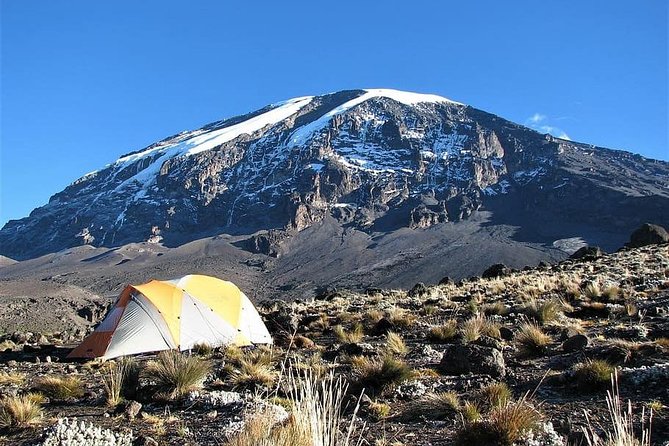
- The Northern Circuit takes you around Kilimanjaro’s quieter northern slopes, with broad views toward the Kenya and Tanzania border.
- Nine days gives you useful acclimatization time, including a high climb to Lava Tower followed by a lower night at Moir Hut.
- The summit push begins around midnight, reaching Uhuru Peak at 19,341 feet before a long descent to Mweka Camp.
- The route changes dramatically by altitude, from lush rainforest to heath, alpine desert, and the cold Arctic zone near the summit.
- The $1,584 price includes major operating costs, but not crew tips, flights, visas, insurance, or your own hiking equipment.
- The group limit can reach 500 people, so ask how many climbers will actually be in your departure group before paying.
Why the Northern Circuit route is worth nine days
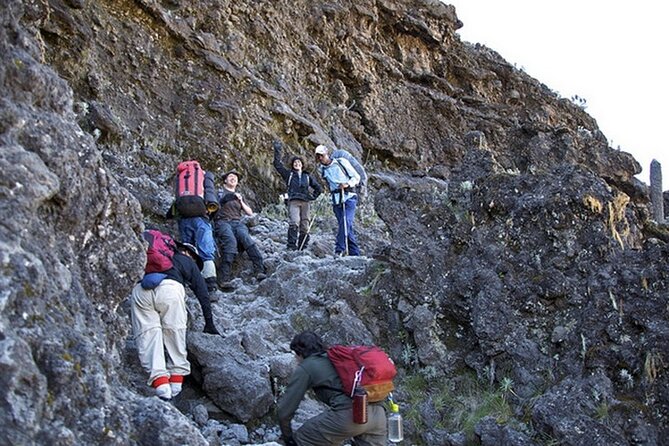
Kilimanjaro has several established routes, and the Northern Circuit is designed for a slower approach. That matters because altitude, not technical climbing, is the central challenge here. You walk uphill for many days, sleep high, and give your body more time to adjust before summit night.
I particularly like the route’s change of scenery. The first day begins in forest, but by Day 2 you are above the trees, walking through tall grasses, heather, and volcanic rock covered with lichen. Later, the path reaches open alpine desert and the broad Saddle between Kibo and Mawenzi.
The northern side also brings a feeling of distance from the more heavily used parts of the mountain. Days 5 and 6 pass through remote valleys and sparse terrain. You get views across the plains toward the Kenya and Tanzania border, rather than spending the whole climb among busy camp areas.
Still, this is not an easy walk. A longer route means more days carrying or managing your personal gear, more nights at altitude, and a higher total physical demand. The slower schedule improves your chances, but it does not remove the risks of altitude sickness, cold, fatigue, or poor weather.
More Kilimanjaro routes and climbs:
- Kilimanjaro climb by Lemosho Route (7-day)
★ 5.0 · 651 reviews - Kilimanjaro climb, Machame Route (7-day)
★ 5.0 · 262 reviews - Kilimanjaro Climbing Lemosho Route 8 Days.
★ 5.0 · 186 reviews
Day 1: Londorossi Gate to Mti Mkubwa
The day starts at 8:30 a.m. from the operator’s meeting point on Mkwawa Street in Moshi. The drive to Londorossi Gate takes about four hours, followed by entry formalities and a transfer to the Lemosho trailhead.
Your first hike covers about 6 kilometers, or 4 miles, and takes three to four hours. The trail rises from 7,742 feet to 9,498 feet through rainforest.
This is a gentle introduction by Kilimanjaro standards. The forest is undisturbed, and the winding path gives you an early sense of the mountain’s scale without forcing a hard first day. Expect the beginning and end of the day to involve vehicle time, so keep your day bag organized for both transport and walking.
The first camp is Mti Mkubwa. Since this is your first night on the mountain, focus on eating, drinking, and resting rather than trying to judge your performance. The first day is about settling into the rhythm.
Day 2: Mti Mkubwa to Shira 1 Camp
Day 2 covers 8 kilometers, or 5 miles, in five to six hours. You rise from 9,498 feet to 11,500 feet as the forest gives way to heath.
The scenery opens quickly. Tall grasses, heather, volcanic rock, and lichen replace the dense trees. You cross streams and climb rolling ground toward Shira Ridge, then descend gently to Shira 1 Camp.
This is where Kilimanjaro begins to feel like a high mountain rather than a forest trek. You may catch your first clear view of Kibo across the Shira Plateau, a useful reminder that the summit is still several days away.
The gain in height is meaningful, so walk slowly. A common mistake is to feel strong at the start and push too hard. The route rewards a steady pace more than speed.
Day 3: Exploring the Shira Plateau
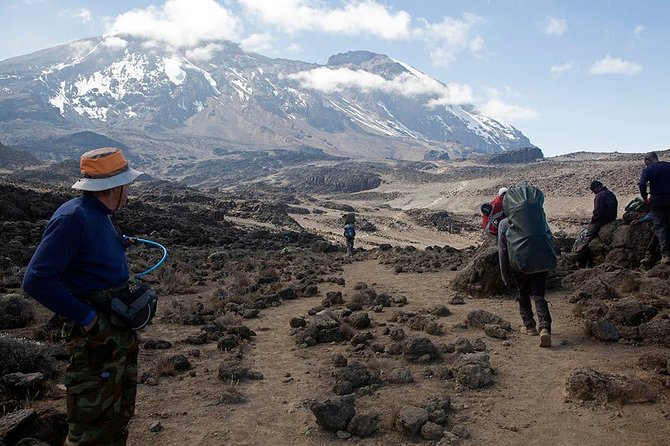
The move from Shira 1 to Shira 2 is only 7 kilometers, or 4 miles, with three to four hours of hiking. The trail rises from 11,500 feet to 12,500 feet through heath.
This is one of the easier days on paper, and that is valuable. You walk east across moorland meadows, passing wildflowers and unusual giant Senecio trees. The plateau gives you room to look outward, with Kibo dominating the horizon.
A shorter day also gives your body time to adjust. Do not treat it as a chance to race ahead or wander far from the group. At this altitude, a relaxed walk and a full afternoon of rest can help more than extra sightseeing.
The Shira Plateau is one of the highest plateaus on Earth. Its open setting and unusual plants make it one of the most memorable parts of the route, even before the summit.
More northern circuit safaris:
- Kilimanjaro climb, Northern Circuit route (8-day)
★ 5.0 · 40 reviews - Private 4-Days Northern Circuit National Parks in Tanzania
★ 4.5 · 26 reviews - 6 Days Tanzania Northern Circuit Safari
★ 4.5 · 7 reviews - Kilimanjaro Northern Circuit Route 8 Days
★ 5.0 · 5 reviews
Day 4: Lava Tower and Moir Hut
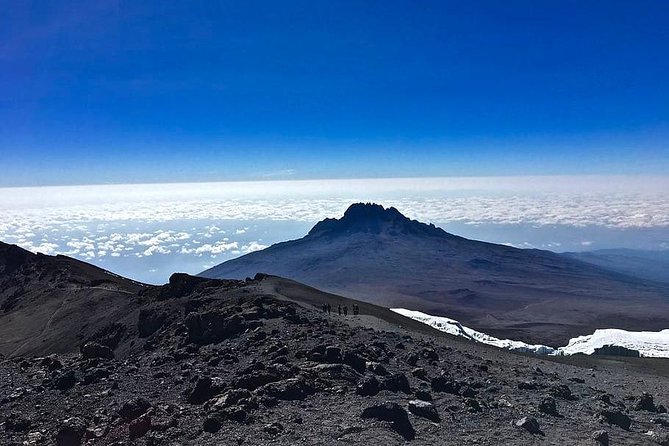
Day 4 is the route’s key acclimatization day. You climb from Shira 2 Camp at 12,500 feet to Lava Tower at 15,190 feet, covering 7 kilometers in three to four hours. Then you descend to Moir Hut at 13,580 feet over another 7 kilometers and two to three hours.
The first section follows a ridge before turning southeast toward Lava Tower, a roughly 300-foot volcanic rock formation. The terrain has shifted into alpine desert, with less vegetation and a stronger sense of exposure.
The important part is the climb high, then sleep lower. Reaching 15,190 feet during the day gives your body time at a demanding altitude, while dropping to Moir Hut reduces the height at which you spend the night. Short walks on Lent Hills may also be available for further adjustment.
At eight hours, this is a long day. The distance is not enormous, but the altitude makes every uphill section harder. Keep warm, drink regularly, and do not be surprised if your pace slows sharply near Lava Tower.
Day 5: Moir Hut to Buffalo Camp
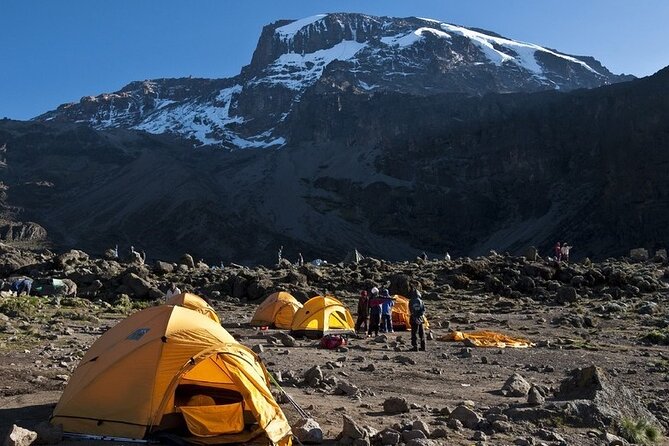
From Moir Hut, the trail covers 12 kilometers, or 7 miles, in five to seven hours. You begin at 13,580 feet, climb toward the Lent Hills, then finish at Buffalo Camp around 13,200 feet.
The path leaves Moir Valley with a moderately steep climb. You reach the top of Lent Hills, return to the main route, cross a rocky area, and follow a trail that rises and falls gently toward camp.
This section gives you some of the route’s best wide views. The plains north of Kilimanjaro stretch toward the Kenya and Tanzania border, creating a very different view from the forests and slopes of the opening days.
You may find the repeated small climbs tiring. The trail is not simply downhill after Lent Hills, and altitude continues to affect your breathing. Still, the remote feel is a major reward. This is a good day to keep your camera ready while protecting it from dust and rock.
Day 6: Buffalo Camp to Third Cave
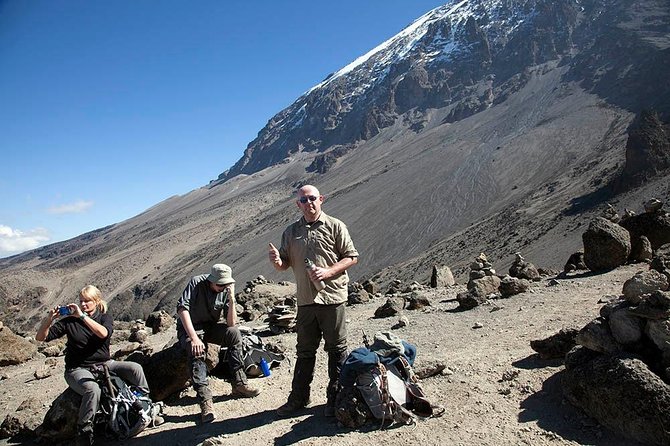
Day 6 covers 8 kilometers in five to seven hours. The route begins at 13,200 feet and finishes at Third Cave at 12,700 feet, passing through heath and increasingly bare ground.
You climb Buffalo Ridge, then cross remote valleys on Kilimanjaro’s northern slopes. The path is rarely used compared with some other mountain sections, so the sense of wilderness grows.
The net drop in camp height is helpful, but the day still includes uphill walking and uneven ground. You should not expect an effortless descent. The sparse terrain also offers less shelter, so clothing that can handle wind and changing temperatures is important.
For many people, this is where the Northern Circuit earns its name. You are no longer simply walking toward the summit on a direct line. You are circling the mountain, seeing its northern character before turning back toward Kibo.
Day 7: Third Cave to School Hut
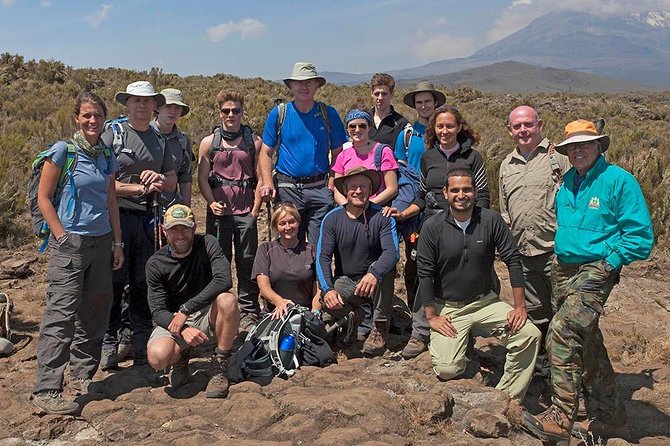
This is a shorter but important day. You walk 5 kilometers, or 3 miles, in four to five hours, climbing from 12,700 feet to School Hut at 15,600 feet.
The route rises over the Saddle, the broad area between Kibo and Mawenzi. The surroundings are alpine desert, with little vegetation and a stark volcanic feel.
School Hut is your launch point for the summit. After arriving, the plan is to rest and eat an early dinner. This schedule can feel strange because you need to sleep soon after arriving, then wake around midnight for the final push.
Treat this afternoon as recovery time. Organize your summit clothing, headlamp, water, snacks, and personal items before lying down. The less you need to think about at midnight, the better.
Day 8: Uhuru Peak and the long descent to Mweka
Summit day is the hardest part of the climb. You begin around midnight and walk from School Hut at 15,600 feet to Uhuru Peak at 19,341 feet. The ascent covers 6 kilometers and usually takes six to eight hours.
The trail rises in darkness through intense cold and thin air. Breaks are frequent but short, since standing still for too long makes it harder to stay warm. At Gilman’s Point, around 18,600 feet, sunrise over Mawenzi can provide a powerful lift.
From there, you continue to Uhuru Peak, the highest point on Kilimanjaro. Reaching the summit is only half of this day. You then descend 12 kilometers, or 7 miles, to Mweka Camp at 10,065 feet, taking another four to six hours.
That makes the full day about 14 hours. The rapid descent is tiring on knees and feet, even though breathing becomes easier lower down. This is the place to value your guide’s pacing and instructions, and to be honest about symptoms rather than trying to hide them.
The summit route is not technical rock climbing. It is a demanding high-altitude hike, with the physical challenge concentrated into one very long day. You need good preparation, warm layers, durable footwear, and the willingness to move slowly for hours.
Day 9: Mweka Camp to Moshi
The final walk covers 10 kilometers, or 6 miles, in three to four hours. You descend from 10,065 feet to 5,380 feet through rainforest and reach Mweka Gate.
Lower sections can be wet and muddy, so gaiters or clothing that handles mud may be useful if you already own them. At the gate, you collect summit certificates before continuing for about one hour to Mweka Village, where a vehicle takes you back to your Moshi hotel.
The return to trees and warmer air can feel almost dramatic after the summit zone. This is a straightforward final day, but tired legs make downhill walking awkward. Take your time.
What the $1,584 price really covers
At $1,584 per person, this is a strong price for a nine-day guided climb if the listed inclusions are delivered as described. The package includes park fees and taxes, operating costs, crew wages, airport pickup and drop-off, gate transfers, and three daily meals on the mountain.
You receive breakfast on eight days, lunch on nine days, and dinner on eight days. That covers the full mountain schedule, though you should still confirm what food is provided and what personal snacks you should bring.
Hotel accommodation before and after the climb is included in the arrangements, but the booking details need clarification. The information says it can be booked directly by you or through the operator, so ask exactly which nights and hotel level are included in your quoted price.
Your extra budget should include:
- Crew tips
- Local and international flights
- Personal hiking gear
- Visa costs
- Medical and travel insurance
Group discounts are offered, which could make the trip more attractive for friends or family. The stated maximum of 500 people is unusually large, so ask for the actual group size, guide-to-climber ratio, and sleeping arrangements. The published maximum may refer to overall capacity rather than one walking party, but you should not leave that unclear.
Meals, transfers, and practical planning
Pickup is offered, and the meeting point is on Mkwawa Street in Shanty Town, Moshi. The activity returns to that same meeting point after the final transfer.
The listed start time is 8:30 a.m. You should confirm the exact pickup plan if you are arriving by air or staying outside central Moshi. Airport transfers are included, but your flight details and transfer timing still need to be coordinated.
Meals are included throughout the climb. Since the summit day begins around midnight, ask how the early meal and summit snacks are handled. Do not assume that included meals replace the need for compact personal snacks, especially on the 14-hour summit day.
Most people can participate, but this is not a casual sightseeing walk. A medical check, proper insurance, and honest preparation for high altitude are sensible. The operator requires good weather for the activity, and a cancellation caused by poor weather results in either a new date or a full refund.
Free cancellation is available up to 24 hours before the 8:30 a.m. start time. Inside that window, payment is not refunded and changes are not accepted.
Who should choose this climb?
I would point this route toward fit hikers who want a better acclimatization schedule and a quieter approach to Kilimanjaro. It can also suit less experienced mountain walkers who are prepared to train and accept a long, demanding summit day.
The route has worked for mixed-age groups, including people from their twenties through their sixties, but age alone tells you little about readiness. Your ability to walk for several hours, handle cold, and recover day after day matters more.
You should think twice if you want a short, direct climb or dislike early starts. The Northern Circuit is longer, and the summit day remains severe despite the extra acclimatization time.
The strongest praise for this experience centers on reaching the summit with friendly guides and drivers, along with the route’s help for people who need more time at altitude. Those are meaningful strengths. Just confirm the crew structure, hotel arrangements, and group size before booking.
Should you book the 9-day Northern Circuit?
Yes, if you want a scenic, slower route and understand that nine days on Kilimanjaro is a serious physical undertaking. The northern approach, Shira Plateau, Lava Tower acclimatization day, and views toward Kenya give this climb more variety than a simple rush to the summit.
The $1,584 cost offers good value because major mountain expenses and meals are included. I would book only after confirming the hotel nights, actual departure group size, crew-to-climber ratio, tipping expectations, and the gear you must supply yourself.
Choose this trip for patience, scenery, and a better chance to adjust to altitude. Do not choose it because the price makes Kilimanjaro sound easy. The mountain still gets the final word on summit night.
FAQ
Where does the Kilimanjaro climb start and end?
It starts at BURIGI CHATO SAFARIS CO LTD on Mkwawa Street in Shanty Town, Moshi. The activity ends back at the same meeting point after transport from Mweka Village.
What time does the experience start?
The stated start time is 8:30 a.m.
Is airport pickup included?
Yes. Airport pickup and drop-off are included, along with gate transfers and crew wages.
Are meals included during the climb?
Yes. The package includes eight breakfasts, nine lunches, and eight dinners.
What is not included in the price?
Crew tips, local and international flights, personal hiking gear, visas, medical insurance, and travel insurance are not included.
Can I cancel for a full refund?
Yes, if you cancel at least 24 hours before the experience start time. Cancellations made within 24 hours are not refunded, and poor-weather cancellations offer either a different date or a full refund.
More Hiking & Trekking
- Private Kilimanjaro Hike 7 Day Lemosho Route
★ 5.0 · 60 reviews - Best Kilimanjaro hiking day trip tour with Kilinge Adventures
★ 4.5 · 54 reviews - #1. Best Kilimanjaro Day hike Tour-Machame Route-ISMANI
★ 4.2 · 47 reviews - Best Kilimanjaro Adventure 7 days Machame route Trekking
★ 5.0 · 42 reviews
Just added around Moshi
- Moshi: Lake Chala Tour: Hiking &/or Kayaking★ 4.5 · 3 reviews
- 3 Days Tanga Exclusive Beach Holiday★ 5.0 · 3 reviews
- Serengeti Wildebeest Migration.★ 5.0 · 3 reviews
- Chemka Hotpsrings E-Bike Day Trip★ 5.0 · 3 reviews
- Explore 1 day Ngorongoro Crater Budget Group Safari from Arusha★ 5.0 · 3 reviews
- Explore the 360° of Kilimanjaro★ 5.0 · 3 reviews
- Affordable Short Tanzania Safari (2 Days Camping Safari)★ 5.0 · 3 reviews
- Rongai Route 7 Days★ 5.0 · 3 reviews
Northern Circuit Safaris, compared.
5 Days Best of Tanzania Luxury Safari Northern Circuit
Read our review →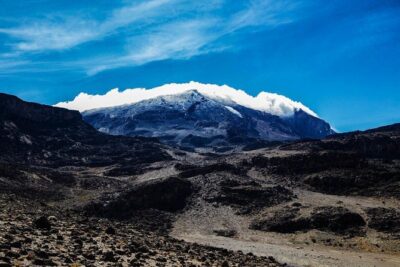
Kilimanjaro climb, Northern Circuit route (8-day)
Read our review →
Private 4-Days Northern Circuit National Parks in Tanzania
Read our review →
7 Days Classic Safari Central Northern Circuit
Read our review →
5 Days Best of Northern Circuit Budget Safari in Tanzania
Read our review →
6 Days Luxury Northern Circuit Safari – A Glimpse of Tanzania Adventure
Read our review →Browse the lists this tour appears in