
Reviewed · CITY TOURS
Ancient Bagamoyo City Day Tour
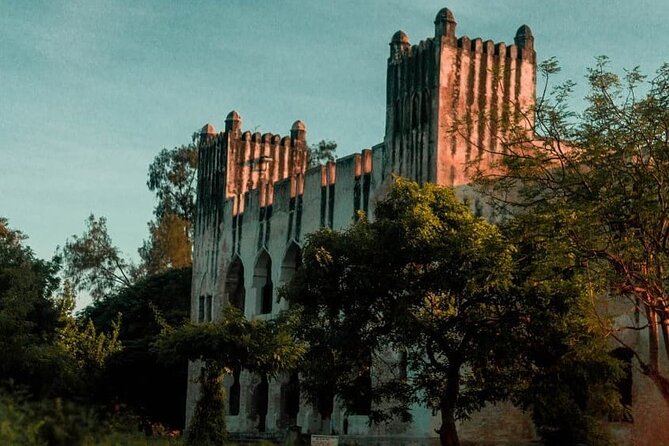
History meets the Indian Ocean here. This private day trip from Dar es Salaam takes you to Bagamoyo, an old coastal port with Swahili, Arab, German, and missionary connections. I like the way it combines major historic sites with a seafood lunch, bottled water, snacks, and hotel pickup. I also like that you travel privately, so your group can ask questions and set the pace within the planned 10-hour day.
The main consideration is the long schedule. You start at 7:00 a.m., and Bagamoyo’s story includes slavery, colonial rule, and missionary work, so this is not a light sightseeing outing. The crocodile sanctuary may also appeal more to some people than others, especially if you are looking for architecture and history alone.
In This Review
- Five things to know before you book
- Why Bagamoyo makes a worthwhile day trip
- Bagamoyo Museum: begin with the difficult history
- Kaole Ruins: older than Bagamoyo itself
- The Old Boma and Bagamoyo’s trading role
- The cathedral and Livingstone connection
- The crocodile and reptile sanctuary
- Lunch, seafood, and what the price covers
- The private format and the long day
- What guests liked most about the guiding
- Weather, cancellation, and who should book
- Should you book the Ancient Bagamoyo City Day Tour?
- FAQ
- How long does the Ancient Bagamoyo City Day Tour last?
- What time does the tour start?
- Is this a private tour?
- Are meals and drinks included?
- What attractions are included?
- Can I cancel for a full refund?
Five things to know before you book
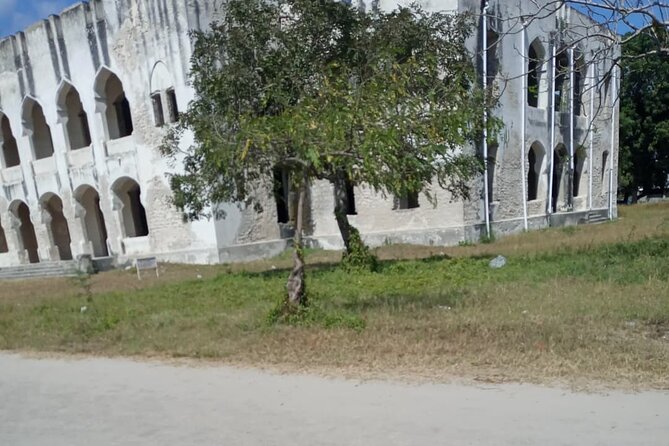
- Bagamoyo connects several eras in one day: You will see evidence of the older Swahili settlement at Kaole, Arab trading influence, German colonial administration, and Christian missionary activity.
- The tour is private: Only your own group takes part, which makes it easier to ask questions or spend more time at a site.
- The day begins early: Pickup is arranged for 7:00 a.m., and the full experience lasts about 10 hours.
- Lunch and drinks are included: Seafood has earned particular praise, while snacks, bottled water, and alcoholic beverages are also provided.
- The guides are a major part of the experience: Guides named in guest comments include Erick and Emmanuel, while Jacqueline and Abby helped guests plan their outings.
- The price reflects more than entrance tickets: At $200 per person, you are paying for a private full-day outing, transport, site admissions, food, and guiding rather than a simple walking tour.
Why Bagamoyo makes a worthwhile day trip
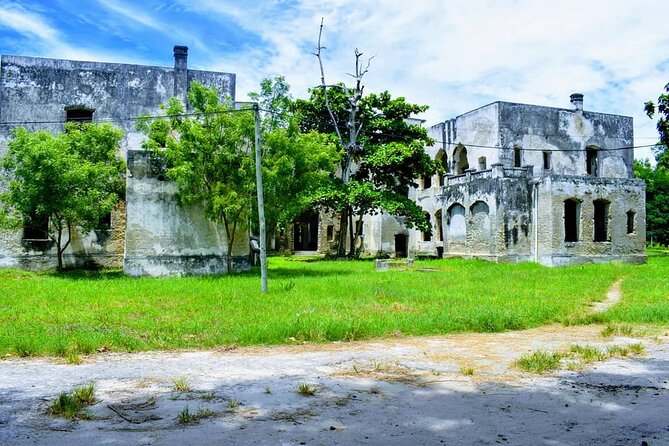
Bagamoyo is not simply an old town with a few crumbling buildings. Its importance comes from the way several strands of East African history meet in one place.
The town was founded toward the end of the 18th century, but its story reaches farther back through Kaole, an older Swahili settlement dating to the 8th century. Later, Bagamoyo became an important port on the western Indian Ocean. Arab traders, local communities, European missionaries, and German colonial officials all shaped the town.
The German administration chose Bagamoyo as the capital of German East Africa. That gives the city a different feel from a purely Swahili coastal settlement. You are looking at an African port shaped by trade, religion, forced movement, colonial power, and local culture.
I find this combination useful because it prevents the day from becoming a single-story history lesson. At the museum, you confront the slave trade. At Kaole, you look farther back to early coastal civilization. At the Old Boma, you see the mechanics of trade and colonial control. The cathedral and Livingstone connections add another layer.
The tour also gives you a chance to see how Kiswahili and coastal culture developed through contact among different communities. The subject is serious, but it is handled through places you can see rather than dates and names alone.
More City Tours in Dar es Salaam
- Dar es Salaam: City Tour
★ 4.7 · 159 reviews - Dar es Salaam City Center: Walking Tour
★ 4.8 · 102 reviews - Dar es Salaam City Tour – Everyday
★ 5.0 · 64 reviews
Bagamoyo Museum: begin with the difficult history
The first planned stop is the Bagamoyo Museum, with about one hour set aside and admission included.
This is where you should expect the most direct treatment of the slave trade and the town’s role as an ancient capital and port. The museum provides context for everything that follows. Without it, the old buildings and ruins could look like disconnected photo stops. With it, you can better understand why Bagamoyo mattered and why its position on the coast brought both wealth and suffering.
I would pay close attention to the way the museum explains movement through the region. Bagamoyo’s history is tied to trade routes, port activity, and people being forced into slavery. That makes the stop important, but also emotionally demanding.
The guide can make a big difference here. Erick has been praised for being friendly and professional, while other guests have valued guides who explain both the precolonial and colonial periods. You should ask questions if the subject moves quickly, particularly if you want to understand how local Swahili society related to Arab and European influence.
One hour is enough for a focused visit, but it is not an unlimited amount of time. If you read every display slowly, you may want to keep an eye on the clock so later stops do not feel rushed.
Kaole Ruins: older than Bagamoyo itself
The drive to the Kaole Ruins takes you into an earlier chapter, with about one hour at the site and admission included.
Kaole is linked to an 8th-century Swahili settlement, making it older than Bagamoyo’s later development. The remains help explain how coastal communities built trading centers long before German colonial rule. You can think of this stop as the foundation beneath the rest of the day.
The ruins also illustrate changes in technology and culture along the coast. Their importance is not only in the stones themselves. They help you picture the growth of trading towns, the movement of ideas, and the development of Kiswahili as a coastal East African language.
This is the sort of place where a guide’s explanation matters more than a quick photograph. Emmanuel has been specifically praised for giving extra attention to history when he noticed that his group wanted more detail. If your interest leans toward archaeology or early Swahili culture, say so at the start of the day.
Do not expect a polished museum-style attraction. Ruins require imagination. Their appeal comes from the sense of age and connection to a wider coastal network, not from rows of perfectly preserved buildings.
The Old Boma and Bagamoyo’s trading role
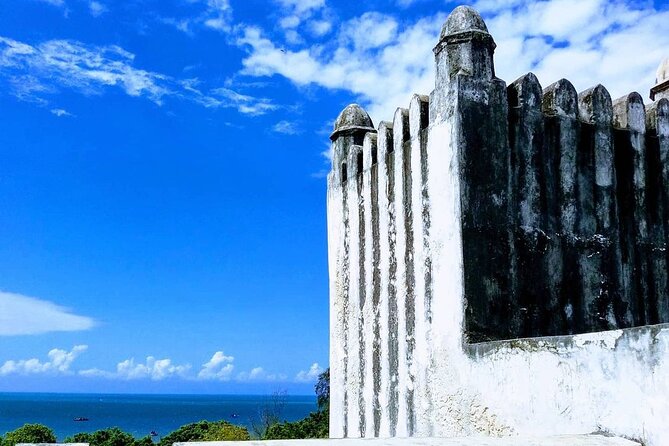
The Old Boma receives about 30 minutes and admission is included. It sits near the beach and close to the center of town.
Boma is associated with customs and administration, so this stop helps show how Bagamoyo worked as a port. The building points to the town’s role in trade and its strategic value during the colonial era. After the museum and Kaole, you can now see how commerce and government shaped the physical town.
The short visit is appropriate for a landmark that is mainly viewed from the outside or through a brief guided explanation, but it may feel quick if you want extensive architectural study. I would treat it as a compact piece of the larger story rather than the day’s main event.
Its location near the beach also gives you a change of setting. Bagamoyo’s coastal character is not an abstract idea here. The sea, port activity, and customs administration all help explain why this town attracted traders and colonial officials.
A few more trips of this kind worth comparing:
- MIKUMI NATIONAL PARK – 3 Days
★ 4.5 · 63 reviews - 2 nights 3 days safari to mikumi national park
★ 5.0 · 62 reviews - 2 Days 1 Night Mikumi National Park from Dar es salaam
★ 5.0 · 60 reviews - The Best/Top Rated Cultural City Tour in Dar es Salaam
★ 5.0 · 57 reviews
The cathedral and Livingstone connection

The next town visit includes the old Bagamoyo Cathedral and places associated with the explorer David Livingstone. About one hour is allocated, with admission listed as free.
The cathedral represents the missionary chapter of Bagamoyo’s past. That story is closely linked to the wider history of European religious activity on the East African coast. It also adds a human and spiritual dimension to a day that otherwise focuses heavily on trade and colonial administration.
The Livingstone connection will interest anyone who enjoys the history of exploration, but it is worth keeping expectations measured. The supplied information identifies places visited by Livingstone, but it does not promise a large exhibit or a fully reconstructed interpretive center. You are visiting a historic setting, not necessarily a major standalone museum.
This is another stop where your guide’s storytelling can bring the location to life. A good explanation should help you connect the cathedral to Bagamoyo’s position as a point of arrival, departure, mission work, and cultural contact.
The crocodile and reptile sanctuary
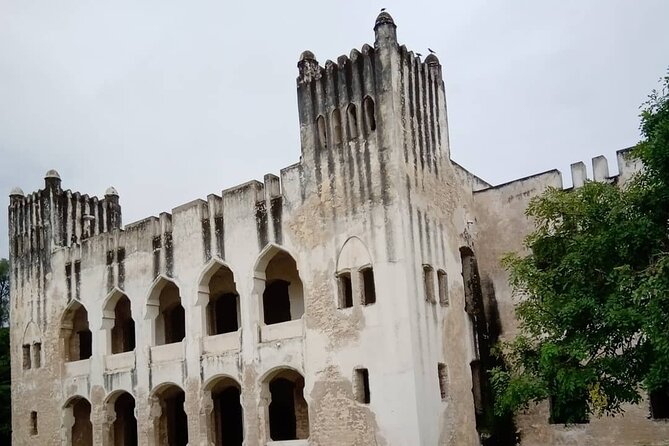
The final planned stop lasts about 40 minutes and takes you to a crocodile and reptile sanctuary. Admission is listed as free.
This is a sharp change from the museum and historic buildings. You can see crocodiles and other reptiles at close range, and the experience allows you to hold them if you want photographs. That makes the stop particularly attractive for families and anyone who likes wildlife encounters.
It is also the easiest part of the day to skip mentally if your main interest is history. The sanctuary does not add much to the story of Kaole, German East Africa, or the slave trade. Instead, it breaks up the serious subject matter and gives you a more playful photo opportunity before the return journey.
Use common sense around the animals and follow the guide’s instructions. The fact that you can hold crocodiles for pictures does not mean you need to do so. You can enjoy the stop without taking part in every photo opportunity.
Lunch, seafood, and what the price covers
The cost is $200 per person. That is a serious price for a day trip, but the value depends on how many people are in your group and how much you value private transport and a guide.
This is not simply an admission-ticket package. The day includes pickup, lunch, snacks, bottled water, alcoholic beverages, and admission to the Bagamoyo Museum, Kaole Ruins, and Old Boma. You also receive a private experience rather than joining a large shared group.
Seafood has received especially warm praise, so I would look forward to lunch as part of the coastal experience. The food is not just a practical break. It connects the day to Bagamoyo’s position beside the Indian Ocean and to the hospitality associated with the coast.
Alcoholic beverages are included, but the minimum drinking age is 18. If nobody in your group drinks, that part of the price has less value to you. Tips and gratuities are not included, so plan to pay those separately if you feel the guide or driver has served you well.
For a solo visitor, $200 may feel expensive. For a couple or small private group, the cost can make more sense because the transport, food, entry fees, and personal attention are bundled together. I would compare it with the cost and hassle of arranging each part independently before booking.
The private format and the long day
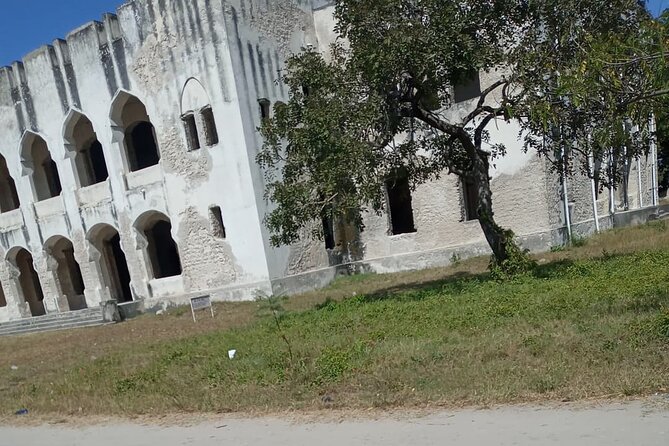
The tour starts at 7:00 a.m. and lasts approximately 10 hours. Pickup is offered in Dar es Salaam, though the supplied details do not specify every pickup address or the exact driving time.
An early start is useful because it gives you a full day in Bagamoyo. It also means you should be ready before breakfast or confirm how the morning meal works when you book. Snacks are included, which helps during a long day, but the schedule is still demanding.
The private format is one of the strongest features. Your group is the only group taking part, so you can ask for more explanation at the museum, tell the guide that you prefer archaeology over wildlife, or discuss the difficult subject of slavery at your own pace.
At the same time, private does not mean completely flexible. The tour has five planned stops and a fixed start time. If you want to spend far longer at Kaole or add several unlisted sights, confirm what is possible before you pay.
Most people can participate, and service animals are allowed. The experience is also near public transportation, though pickup is offered. Confirmation arrives when you book, and mobile tickets make access simple.
What guests liked most about the guiding
The strongest praise centers on hospitality, clear explanations, and professional service.
Erick is described as both friendly and professional. Emmanuel earned special appreciation for noticing a group’s interest in history and responding with more explanation. Those details matter because Bagamoyo is best understood through context, not just by walking past old walls.
Jacqueline appears to be an important contact for planning. She advised one couple to choose Bagamoyo after rain disrupted a safari, and another couple reached out to her specifically because of their interest in history. Abby is also described as welcoming and professional when helping guests arrange their trip.
The comments also point to a warm coastal welcome and excellent seafood. That gives you a useful picture of the day: the appeal is not just the sites, but also the way the guide connects them to local culture and daily life.
Still, guide quality can vary from one departure to another. When booking, tell the operator what interests you most. Ask for more emphasis on Swahili history, the slave trade, German colonial rule, missionary work, or wildlife, depending on your priorities.
Weather, cancellation, and who should book
The experience requires good weather. If poor weather forces cancellation, you will be offered another date or a full refund. You can also cancel for a full refund if you do so at least 24 hours before the 7:00 a.m. start time. Changes or cancellations inside that 24-hour period are not accepted, and the cutoff uses local time.
I would book this tour if you want a private, history-focused day outside Dar es Salaam and you enjoy learning through several different sites. It suits couples, families, and small groups that want their own guide rather than a fixed large-group schedule.
You may want another activity if you are mainly seeking a beach day, a wildlife outing, or a relaxed schedule. The subject matter is serious, the day is long, and the crocodile sanctuary may not appeal to everyone.
Should you book the Ancient Bagamoyo City Day Tour?
Book it if Bagamoyo’s past genuinely interests you. The day gives you a useful sequence: early Swahili settlement at Kaole, the slave trade at the museum, colonial commerce at the Old Boma, missionary history at the cathedral, and a coastal wildlife stop to lighten the mood.
The $200 price is easiest to justify when you value private transport, included meals and drinks, admission fees, and a guide who can explain the connections among the sites. Before booking, ask about pickup details and tell Enroute Africa what kind of history you want to hear most.
For history enthusiasts, this is one of the more focused day trips available from Dar es Salaam. For everyone else, it is still a solid choice, provided you are comfortable with an early start and a full day of serious subject matter.
FAQ
How long does the Ancient Bagamoyo City Day Tour last?
The experience lasts approximately 10 hours.
What time does the tour start?
Pickup and departure begin at 7:00 a.m.
Is this a private tour?
Yes. Only your group participates in the activity.
Are meals and drinks included?
Yes. Lunch, snacks, bottled water, and alcoholic beverages are included. Tips and gratuities are not included.
What attractions are included?
The tour includes the Bagamoyo Museum, Kaole Ruins, Old Boma, the old Bagamoyo Cathedral and locations associated with David Livingstone, plus a crocodile and reptile sanctuary.
Can I cancel for a full refund?
Yes, if you cancel at least 24 hours before the experience start time. Poor weather cancellations offer a different date or a full refund.
Just added around Dar es Salaam
- Ruaha National Park And Mikumi National Park Budget Safari 6 Days 5 Nights★ 5.0 · 3 reviews
- 3 Days Nyerere National Park Safari (Selous Game Reserve)★ 5.0 · 3 reviews
- Saadani National Park Day Tour★ 5.0 · 3 reviews
- Private Mikumi Adventure★ 4.5 · 3 reviews
- Dar es Salaam City tour and Beach Leisure – 9 hours★ 5.0 · 3 reviews
- Mbudya island from Dar es salaam safari.★ 4.2 · 3 reviews
- Day Trip To Bagamoyo From Dar Es Salaam ..historical town★ 4.5 · 3 reviews
- 3 Days Mikumi National Park Private Tour★ 5.0 · 3 reviews
City Tours, compared.

Arusha Guided Walking City Tour, Culture, Lifestyle & History
Read our review →

The Best/Top Rated Cultural City Tour in Dar es Salaam
Read our review →
Browse the lists this tour appears in