
Reviewed · HIKING & TREKKING
Book Day Hike at Rau Forest Reserve, Near Moshi Town in Tanzania
A quiet forest sits below Kilimanjaro. Rau Forest Reserve gives you a short, local nature outing near Moshi, with forest trails, spring-fed woodland, monkeys, rice farms, and a chance to help with tree conservation. I like the mix of wildlife and community life, and I like that the outing can include hands-on work in a tree nursery. The main consideration is fitness: this is a hike, not simply a stroll, and the route can extend into the rice fields.
I also like the small-scale feel. The private format means your group takes part on its own, while guides such as Peter have been praised for explaining plants, animals, and farming life with warmth and humor. At $39.47 per person, the experience offers good value if you want more than a quick view from a vehicle, though the short three-and-a-half-hour schedule leaves limited time for a long forest and rice-field walk.
In This Review
- Five things to know before you book
- Why Rau Forest makes a good Moshi side trip
- Starting on Ghala Road near Moshi
- Walking through a forest fed by underground water
- Watching for black and white colobus monkeys
- Adding 30 to 45 minutes of conservation work
- Extending the walk to Moshi’s rice fields
- What the $39.47 price includes
- Fitness, weather, and what to bring
- Who will enjoy Rau Forest most
- Cancellation and booking details
- Should you book this Rau Forest hike?
- FAQ
- Where does the Rau Forest hike start?
- Where does the activity end?
- How long does the experience last?
- What animals might I see?
- Can I visit the rice fields?
- Can I take part in conservation work?
- What happens if bad weather cancels the hike?
Five things to know before you book
- Rau is an underground water forest: Its natural springs give the reserve important catchment value near Moshi.
- Two monkey species are a main attraction: Look for black and white colobus monkeys and blue monkeys.
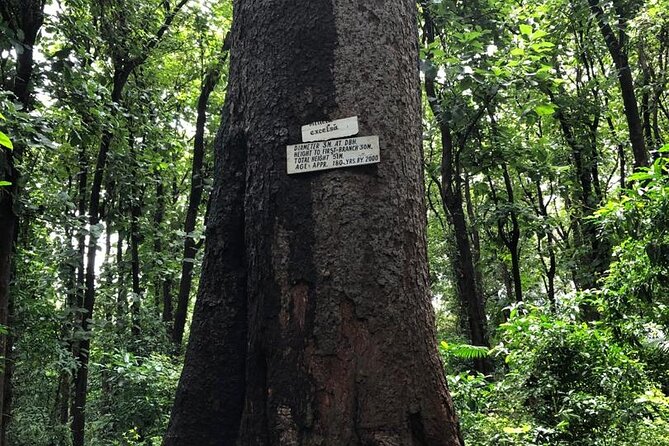
- The forest has cultural value: Traditional healers use bark from a notable tree for rituals and medicine, and some local beliefs connect it with driving away evil spirits.
- You can add conservation work: Spend 30 to 45 minutes watering and managing young seedlings, or plant trees.
- The walk can reach rice farms: From the southern edge, the route may continue to irrigation plots covering more than 3,000 hectares.
- It is a private, guided outing: Pickup is offered, the activity starts and ends on Ghala Road, and all fees and taxes are included.
Why Rau Forest makes a good Moshi side trip
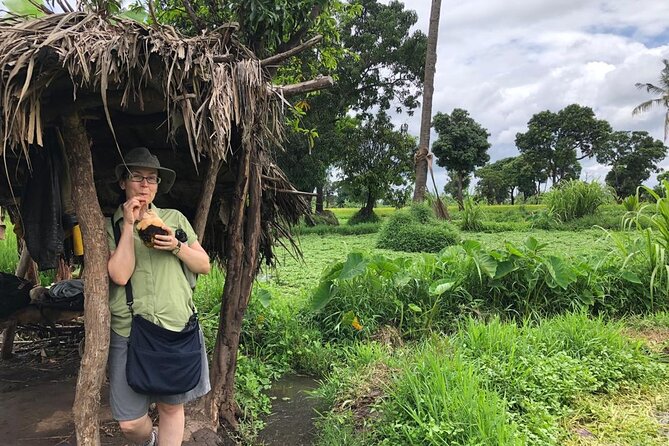
Moshi is best known as the gateway to Mount Kilimanjaro, but you do not need a mountain climb to find worthwhile nature nearby. Rau Forest Reserve offers a lower-key alternative. In about three and a half hours, you can leave the town behind, walk under native trees, watch for monkeys, and see how nearby farmers use water to grow rice.
That combination gives the outing its appeal. You are not only looking at trees. You are seeing a forest that supports springs, wildlife, traditional practices, and agriculture. The experience also puts local life close at hand, especially if your route reaches the rice fields.
I would choose this outing when I wanted a half-day break from town or a gentler nature activity to fit around other Moshi plans. It does not try to replace a national park safari or a Kilimanjaro trek. Its value comes from proximity, local guiding, and the chance to connect forest conservation with everyday farming.
A few more trips of this kind worth comparing:
- Private Kilimanjaro Hike 7 Day Lemosho Route
★ 5.0 · 60 reviews - Best Kilimanjaro hiking day trip tour with Kilinge Adventures
★ 4.5 · 54 reviews - #1. Best Kilimanjaro Day hike Tour-Machame Route-ISMANI
★ 4.2 · 47 reviews
Starting on Ghala Road near Moshi
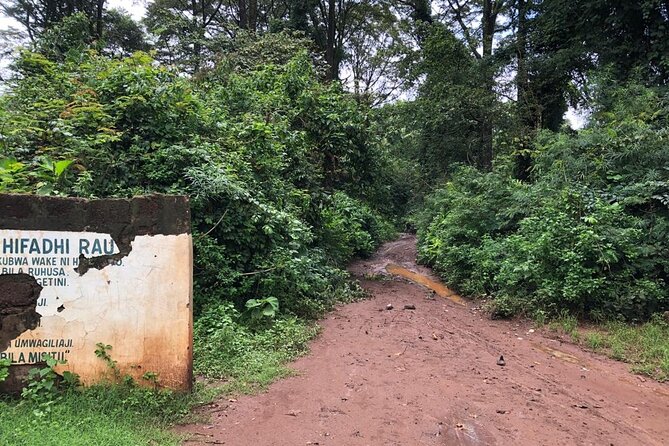
The meeting point is on Ghala Road in Tanzania, and pickup is offered. The exact pickup arrangement should be confirmed when you book, since the published starting point remains the meeting location and the activity finishes back there.
That return to the meeting point makes planning simple. You do not need to arrange a separate ride at the end, and a guide may pick you up at your hotel if that has been arranged. Peter received particular praise for collecting people at their hotel and bringing them back afterward, a useful touch if you are staying in Moshi and do not want to negotiate local transport.
The outing is private, so only your own group takes part. That matters here. A forest walk is more enjoyable when you can stop to examine a tree, ask about a monkey, or spend extra time discussing farming without keeping pace with a large group.
Confirmation is sent within 48 hours of booking, subject to availability. If you are working around a Kilimanjaro departure or a fixed safari schedule, book with enough notice rather than leaving this for the last minute.
Walking through a forest fed by underground water
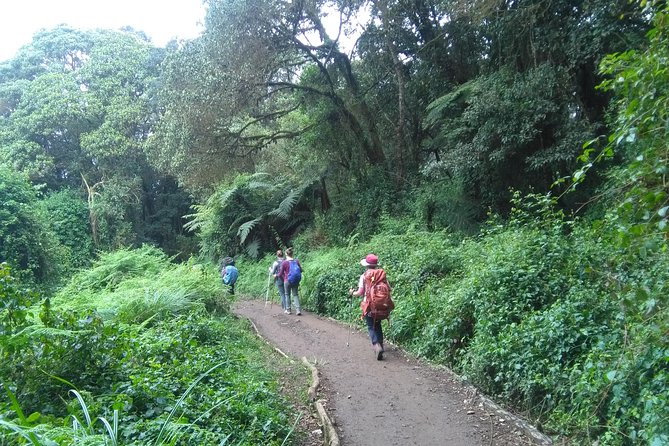
Rau is described as an underground water forest, with natural springs and important catchment value. In plain terms, this is a forest shaped by water beneath and around it. The springs help explain why the reserve matters beyond its scenery.
The walk focuses on trees, plants, and animals. A good guide can turn an ordinary-looking path into a lesson in how the forest functions. Peter has been praised for explaining different trees, fruits, animals, and the uses of plants. His humor was also a repeated part of the experience, which can make a technical subject easier to follow.
Do not expect a polished city park with signs at every turn. The point is the guide’s interpretation and your attention to the surroundings. You might stop often to identify plant species or watch the canopy. The pace will depend on your group, wildlife sightings, and the condition of the route.
The reserve is especially appealing to anyone interested in the relationship between nature and local culture. One notable tree is used by traditional healers from nearby communities. Its bark has ritual and medicinal uses, and some people believe the tree can chase away evil spirits.
That information deserves respectful treatment. You are not being offered a staged folklore performance. You are hearing about beliefs and practices connected to the surrounding communities. A thoughtful guide can explain the subject without turning it into a curiosity show.
Watching for black and white colobus monkeys
Rau’s best-known wildlife feature is its monkey population. The reserve is home to black and white colobus monkeys, identified in the tour material as Colobus guereza, along with blue monkeys.
Sightings are never guaranteed. Still, the three published accounts all highlighted seeing monkeys, and that makes wildlife the strongest reason to bring patience and a little luck. Keep your eyes in the trees as well as along the trail. You may find that the forest walk becomes a series of pauses, listening and looking upward.
The colobus monkeys are particularly distinctive because of their black and white coloring. Blue monkeys are another important species in the reserve. The guide’s role matters greatly here, since an experienced local guide can help you notice movement or explain what you are seeing.
The outing is not presented as a formal safari, so you should set reasonable expectations. You are visiting a forest reserve close to town, not heading into a large game area with guaranteed animal encounters. If monkeys are high in the canopy or hidden by leaves, the walk still has value through its plants, springs, and cultural context.
I would bring binoculars if you already have a compact pair, but the supplied information does not promise specialist wildlife equipment. The safest approach is to treat the monkeys as a welcome part of the walk rather than the only reason to go.
A completely different kind of day out from Moshi:
- Kilimanjaro climb by Lemosho Route (7-day)
★ 5.0 · 651 reviews - Safari Serengeti And Ngorongoro
★ 5.0 · 288 reviews - Kilimanjaro climb, Machame Route (7-day)
★ 5.0 · 262 reviews - Kilimanjaro Climbing Lemosho Route 8 Days.
★ 5.0 · 186 reviews
Adding 30 to 45 minutes of conservation work
The conservation option gives this experience a useful practical edge. You can spend 30 to 45 minutes in the tree nurseries, watering and managing young seedlings, or you can plant some trees to support forest conservation.
This is more meaningful than simply hearing that a forest needs protection. You get to take part in a small task that supports the reserve’s future. Watering seedlings and managing young plants may sound modest, but that is precisely the point. Conservation often depends on repeated, ordinary work rather than one dramatic gesture.
Ask about this option before the walk begins if it is important to you. The total outing lasts about three and a half hours, so the conservation time will form a noticeable part of your visit. It may also reduce the time available for a longer forest walk or the rice-field extension.
Families and visitors interested in environmental work may find this the most memorable part. It gives children and adults something physical to do, and it connects the forest you are seeing today with its future growth. You should also be comfortable with a hands-on activity and changing the balance of the schedule.
Extending the walk to Moshi’s rice fields
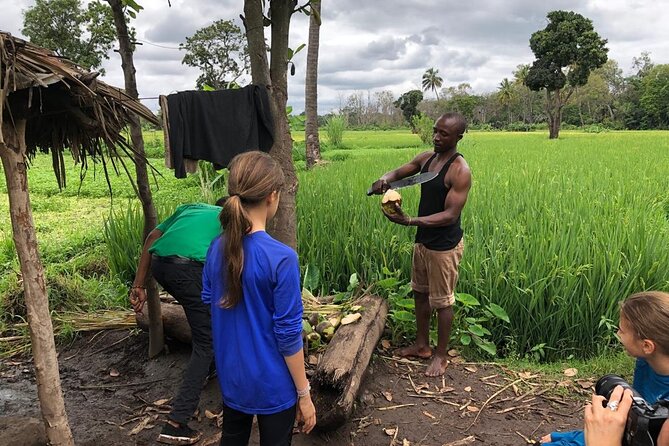
From the southern edge of the forest, the hike can continue into rice farms. Local farmers use irrigation to cultivate more than 3,000 hectares of rice plots.
This extension changes the focus from woodland to working agriculture. You may walk between the fields and see how water is directed through the farming system. The rice plots show that Rau is not an isolated patch of nature. Water, forest, and food production are linked in the area around Moshi.
The rice fields were a clear highlight in the available accounts, especially because walking between the plots offered a different view of local life. You also get to hear about farmers’ routines and the irrigation system from the guide, rather than simply passing the fields in a vehicle.
There is a practical trade-off. A forest walk, nursery work, and rice-field visit cannot all receive unlimited time within three and a half hours. Tell your guide what interests you most. If monkeys and trees are your priority, stay longer in the reserve. If farming and daily life appeal more, ask about continuing toward the rice plots.
The extension also makes this a stronger choice for people who want a cultural outing as well as a nature walk. You are not visiting a museum or a formal cultural center. You are seeing an active farming area and learning about the system from the route itself.
What the $39.47 price includes
The listed price is $39.47 per person. It includes a professional guide plus all fees and taxes. A tip for the guide is not included.
For a private outing, that price is reasonable if your group values personal attention and hotel pickup. The cost covers more than a basic walk because the guide interprets the forest, helps you look for wildlife, explains plant and cultural uses, and may take you toward the rice fields or conservation area.
Value depends on how you use the time. A group that spends the full outing moving quickly between every possible feature may feel rushed. A group that chooses one or two priorities can get more from the same schedule. I would decide in advance whether you care most about monkeys, trees, conservation, or rice farming.
The guide can make or break the experience. Peter’s reported strengths were his humor, interest in wildlife, and ability to explain the forest, animals, and farmers’ way of life. Those qualities are worth more here than fancy facilities. You are paying for interpretation and access to a local setting, not for luxury transport or a large visitor center.
Remember to budget for the guide’s tip if the service is good. It is not part of the advertised price.
Fitness, weather, and what to bring
The activity requires a moderate level of physical fitness. You should be ready for a forest hike lasting about three and a half hours, with a possible extension to the rice fields. The information provided does not give a detailed distance, trail surface, or elevation profile, so you should ask the operator if those details matter for your plans.
Wear comfortable walking clothes and shoes suitable for a natural trail. Bring drinking water and protection from the sun, since the route may move between shaded forest and open rice fields. A small bag is useful for personal items, but avoid carrying anything that makes walking awkward.
Good weather is required. If poor weather causes cancellation, you will be offered another date or a full refund. The forest may look different in wet conditions, but safety and trail conditions come first.
The activity is near public transportation, though pickup is offered. If you plan to use public transport, confirm the meeting details before setting out. The simplest plan is usually to arrange pickup and return directly with the provider.
Who will enjoy Rau Forest most
I would recommend this outing to you if you want:
- A short nature experience close to Moshi
- A private walk rather than a large group excursion
- A chance to see black and white colobus and blue monkeys
- Local explanations of trees, fruits, and traditional plant uses
- A look at irrigation farming and rice production
- A practical conservation activity
- A break from town without committing to a full-day safari
It may be less suitable if you want guaranteed wildlife sightings, a long wilderness hike, or a highly structured sightseeing schedule. The experience depends on weather, wildlife, trail conditions, and the amount of time your group spends at each stop.
It also may not suit anyone looking for a fully accessible, easy paved walk. The published information only says that a moderate fitness level is needed, so ask about the route before booking if mobility is a concern.
Cancellation and booking details
You can cancel at least 24 hours before the local start time for a full refund. Cancellations or changes made within 24 hours are not refunded or accepted.
Because confirmation can take up to 48 hours and is subject to availability, allow some planning time. This is especially important if your Moshi stay is short. Pickup, the rice-field extension, and the conservation activity should be discussed ahead of time so your expectations match the schedule.
Should you book this Rau Forest hike?
Book it if you want an affordable, private half-day outing that connects wildlife, forest conservation, traditional plant use, and rice farming. The strongest features are the chance to see two monkey species, the guide-led interpretation, and the option to plant or care for young trees.
I would be especially happy choosing it between larger adventures in northern Tanzania. It gives you a different view of the Moshi area, one based on springs, working farms, and a nearby forest rather than headline attractions alone.
Skip it if you need guaranteed animals, a precise trail distance, or a full-day wilderness experience. Otherwise, $39.47 is a fair price for a guided local excursion, particularly when hotel pickup and the private format fit your plans. Confirm your preferred focus before you go, bring patience for wildlife, and leave room for the forest to set the pace.
FAQ
Where does the Rau Forest hike start?
The activity starts on Ghala Road in Tanzania, near Moshi Town. Pickup is offered, so confirm the pickup arrangement when booking.
Where does the activity end?
The outing ends back at the meeting point on Ghala Road.
How long does the experience last?
The forest hike lasts approximately 3 hours and 30 minutes.
What animals might I see?
Rau Forest Reserve is known for black and white colobus monkeys and blue monkeys. Wildlife sightings are not guaranteed.
Can I visit the rice fields?
Yes. From the southern edge of the forest, the hike can be extended to rice farms where local farmers use irrigation across more than 3,000 hectares of rice plots.
Can I take part in conservation work?
Yes. You may spend 30 to 45 minutes watering and managing seedlings in the tree nurseries or planting trees to help conserve the forest.
What happens if bad weather cancels the hike?
You will be offered a different date or a full refund if poor weather causes the activity to be canceled.
Just added around Moshi
- Moshi: Lake Chala Tour: Hiking &/or Kayaking★ 4.5 · 3 reviews
- 3 Days Tanga Exclusive Beach Holiday★ 5.0 · 3 reviews
- Serengeti Wildebeest Migration.★ 5.0 · 3 reviews
- Chemka Hotpsrings E-Bike Day Trip★ 5.0 · 3 reviews
- Explore 1 day Ngorongoro Crater Budget Group Safari from Arusha★ 5.0 · 3 reviews
- Explore the 360° of Kilimanjaro★ 5.0 · 3 reviews
- Affordable Short Tanzania Safari (2 Days Camping Safari)★ 5.0 · 3 reviews
- Rongai Route 7 Days★ 5.0 · 3 reviews
Hiking & Trekking, compared.

8-Day Small-group Lemosho Kilimanjaro Summit Trekking
Read our review →
Private Full Day Hiking Experience to Marangu Route
Read our review →
From Arusha/Moshi: Kilimanjaro Hike Marangu Route Day Trip
Read our review →
4 days Best experience Kilimanjaro Hike, Serengeti &Ngorongoro
Read our review →
Best Kilimanjaro hiking day trip tour with Kilinge Adventures
Read our review →Browse the lists this tour appears in