
Reviewed · CITY TOURS
Dar es Salaam City Tour – Visit all attractive places
See Dar es Salaam beyond the beach.
This private, six-to-seven-hour tour packs the city’s key sights into one day, from Kariakoo Market and St. Joseph’s Cathedral to the National Museum, Kivukoni Fish Market, Village Museum, and Mwenge Woodcarvers Market. I like the private vehicle and flexible pace, and I also like that hotel, ferry, and port pickup are offered. The main consideration is that lunch is extra, and part of the later journey uses public transport and a tuk tuk.
You pay $117 per person, with water, admission fees, taxes, and listed activities included. That price makes the most sense for cruise passengers or first-time visitors who want a guide and transport arranged in advance. The day is full, so you should expect a busy tour rather than a slow, relaxed wander.
In This Review
- Five useful things to know before booking
- A practical way to see Dar es Salaam in one day
- Kariakoo Market and the story behind its name
- St. Joseph’s Cathedral and Dar es Salaam’s German-era center
- Askari Monument and the changing colonial story
- The National Museum in a 45-minute visit
- Kivukoni Fish Market beside the harbor
- Lunch and the move to the Village Museum
- Village Museum and Tanzania’s many communities
- Mwenge Woodcarvers Market and the final stop
- What the $117 price really covers
- Pickup, timing, and the guide relationship
- Cancellation and weather
- Who should book this Dar es Salaam tour?
- Should you book it?
- FAQ
- How long does the Dar es Salaam city tour last?
- Where can pickup take place?
- Is this a private tour?
- Is lunch included in the price?
- What transport is included?
- What happens if bad weather cancels the tour?
Five useful things to know before booking
- Kariakoo Market opens the day with local life: You get an hour to see one of Dar es Salaam’s main trading centers and learn how its unusual name began.
- The tour is private: Only your own group takes part, so you can move at your own pace instead of following a large busload.
- Transport changes during the day: A private vehicle handles most of the route, but you use public transport and a tuk tuk between Kivukoni and the Village Museum.
- The fish market is an active working place: Kivukoni is not a polished attraction. It is a place to watch fish auctions, cleaning, cooking, and resale.
- Mansoor receives special praise for communication: One booking account notes that he stayed in touch before pickup, arrived at the cruise ship, supplied cold water, and used a well-kept minivan.
- Lunch is not included: You pay directly at the hotel during the break, so carry some Tanzanian shillings or confirm which payment methods are accepted.
A practical way to see Dar es Salaam in one day
Dar es Salaam can be difficult to read on a first visit. Important sights are spread across different parts of the city, traffic can slow the day, and some places are easier to understand with local context.
This tour solves much of that problem. You are collected at your hotel, ferry point, or port, then taken between central landmarks and northern city sights. The guide provides transport, bottled water, entry fees, and explanations along the way. That arrangement is especially useful if you have only one day in town or are visiting from a cruise ship.
The tour is private, but the day is not entirely private-car sightseeing. After the fish market and lunch, you use public transport from Kivukoni to Morocco Road and then a tuk tuk to the Village Museum. I see this as both a benefit and a limitation. You get a more ordinary view of moving around Dar es Salaam, but you also lose some comfort and predictability.
The advertised duration is about six to seven hours. The listed visits add up to more than five hours before driving, lunch, and transfers, so timing may feel tight. I would keep the rest of your day open, particularly if you are returning to a ship or catching a ferry.
More City Tours in Dar es Salaam
- Dar es Salaam: City Tour
★ 4.7 · 159 reviews - Dar es Salaam City Center: Walking Tour
★ 4.8 · 102 reviews - Dar es Salaam City Tour – Everyday
★ 5.0 · 64 reviews
Kariakoo Market and the story behind its name
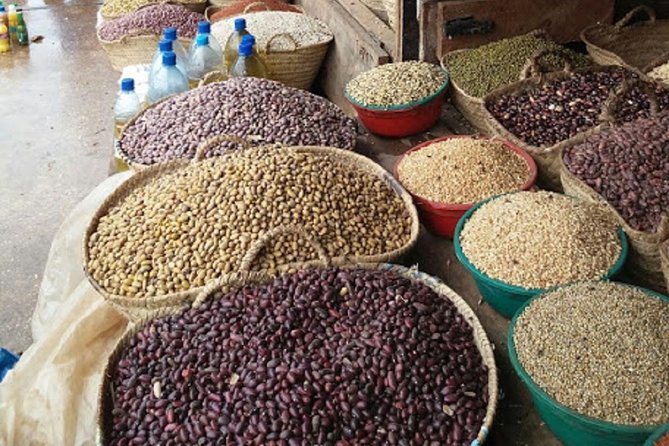
The first stop is Kariakoo Market, with about an hour set aside for the visit. This is a strong opening because it introduces Dar es Salaam through trade and daily work rather than monuments alone.
The market’s story begins in 1916. After British forces took Dar es Salaam from the Germans during the First World War, a depot built for the Carrier Corps was no longer needed. The governor allowed the building to become a market. Swahili speakers pronounced Carrier Corps in their own way, producing the name Kariakoo.
That small language shift gives the market a useful connection to the city’s colonial past. You are not simply looking at stalls. You are seeing how wartime buildings, British administration, and Swahili speech shaped a place that remains known by the same name today.
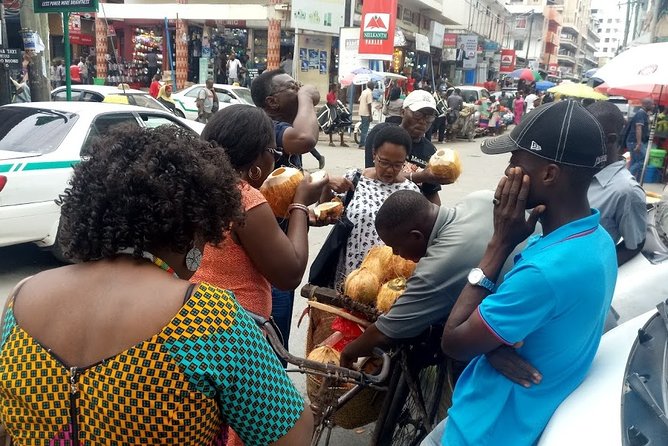
The attraction is the setting itself. You might see a wide range of goods and ordinary buying and selling, though the exact activity will depend on the time of day. Keep your belongings secure and follow your guide’s advice about where to walk and when to stop. A market visit can feel crowded and intense, so this is not the best stop for anyone who wants a quiet introduction to the city.
St. Joseph’s Cathedral and Dar es Salaam’s German-era center
From Kariakoo, the route passes Mnazi Mmoja and the Uhuru Torch Monument before reaching Dar es Salaam’s old Boma area and St. Joseph’s Cathedral. About 30 minutes is allowed at the cathedral.
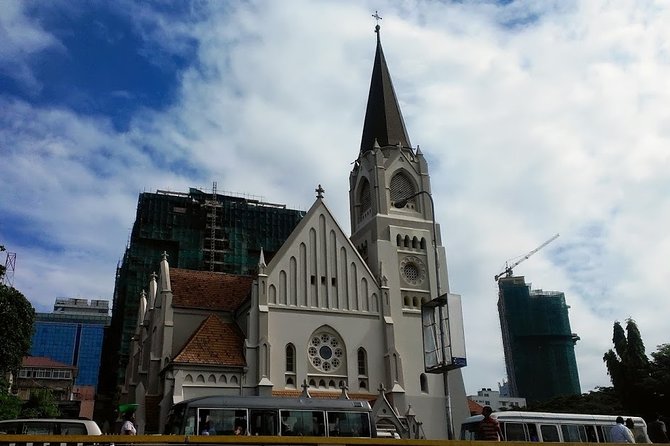
St. Joseph’s is the first Roman Catholic cathedral on mainland Tanzania. The main building took five years, from 1897 to 1902, and it was consecrated in 1908. Its Gothic design includes a shingled spire, a vaulted interior, and carved relief above the main altar. German inscriptions remain inside.
I like this stop because it gives you a close look at the city’s European colonial architecture without treating the building as a detached museum piece. It overlooks the harbor, linking the church to Dar es Salaam’s long role as a port city.
The visit is short, so expect an exterior and interior look rather than a long architectural study. Dress and behave respectfully in this working religious building. Afterward, the route passes the Lutheran Cathedral before continuing to the Askari Monument.
Askari Monument and the changing colonial story
The Askari Monument takes about 15 minutes and has no separate admission charge. It is a brief stop, but the background is useful.
The British colonial government built the monument after replacing a German statue erected in 1911 to honor Major Herman von Wissmann, the first governor of German East Africa, appointed in 1895. The British removed the German statue in 1916 after Germany’s defeat and retreat during the First World War.
This is a good place to pause over the layers of power that shaped the city. One monument replaced another, and the change reflected a shift in colonial control. Your guide can provide the local setting that a quick photograph would miss.
Do not expect a large site or a long visit. The value is in the story and its location within the older central district. Fifteen minutes is enough for a look and photographs before moving on.
A few more trips of this kind worth comparing:
- MIKUMI NATIONAL PARK – 3 Days
★ 4.5 · 63 reviews - 2 nights 3 days safari to mikumi national park
★ 5.0 · 62 reviews - 2 Days 1 Night Mikumi National Park from Dar es salaam
★ 5.0 · 60 reviews - The Best/Top Rated Cultural City Tour in Dar es Salaam
★ 5.0 · 57 reviews
The National Museum in a 45-minute visit
The National Museum of Tanzania, also called the Museum and House of Culture, receives about 45 minutes. It was Tanzania’s first national museum, established in 1937 and opened to the public in 1940 as the King George V Memorial Museum. It took its current name in 1962.
For you, the museum provides a useful pause after the streets and monuments. It gives more context to Tanzania’s past and national identity, though 45 minutes means you will need to keep moving. If you enjoy museums and want to read every display carefully, this tour may feel too brief.
The admission fee is included, which makes the stop easy to manage. You do not need to budget for another payment at the entrance. I would treat the museum as a focused introduction rather than a full museum day.
Kivukoni Fish Market beside the harbor
The tour then heads toward Kivukoni Fish Market, with about an hour here. On the way, you pass Tanzania’s State House. Photography is not allowed there, so follow that rule and keep your camera away as you pass.
Kivukoni is one of the most direct ways to see Dar es Salaam as a working port city. Fishers bring in their catch, then restaurateurs and local households come to buy it. The market has eight zones in two main sections, including an auction area. Elsewhere, fish are cleaned, cooked, and sold again at marked-up prices.
This is a real market rather than a staged cultural display. You may notice strong smells, wet floors, quick transactions, and close activity around the catch. Wear practical shoes and listen carefully to your guide. The reward is a clear look at how seafood moves from fishing boats to kitchens and restaurants.
An hour gives you time to watch the auction and see the different stages of preparation. It also gives you a chance to compare this working market with the more general trade at Kariakoo. The two stops show different sides of the city’s economy.
Lunch and the move to the Village Museum
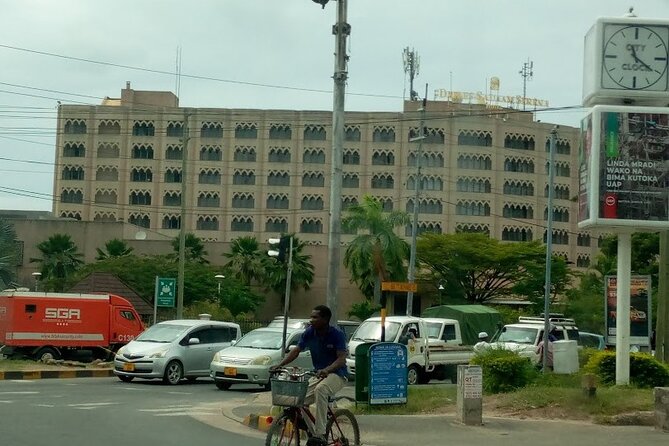
After Kivukoni, you stop for lunch at a hotel. Lunch is not included, and you pay directly. This is a small but important cost to plan for, since the $117 price does not cover your meal.
The next transfer is unusual for a private tour. You take public transport from Kivukoni to Morocco Road, then continue by tuk tuk to the Village Museum. I like this part for the contact with ordinary city transport, but it may not suit anyone looking for an entirely private and air-conditioned day.
The change of vehicle also means you should pay attention to your belongings and stay with the group. Since only your group participates, the guide can help coordinate the transfers, but the experience is still more exposed to traffic and public movement than the earlier sections.
Village Museum and Tanzania’s many communities
The Village Museum, known in Swahili as Kijiji cha Makumbusho, is along Ali Hassan Mwinyi Road in Kijitonyama. The visit lasts about 90 minutes, making it the longest single stop.
The museum presents about 20 traditional houses representing Tanzania’s more than 120 ethnic groups. You can enter the houses and see furnished huts, cattle pens, and meeting places. The arrangement gives you a physical sense of how homes and shared spaces were organized in different communities.
The site cannot represent every group in Tanzania, of course, but it offers a useful introduction through buildings you can walk into rather than displays behind glass. I would give yourself time to notice the construction and layout, not just take photographs from outside.
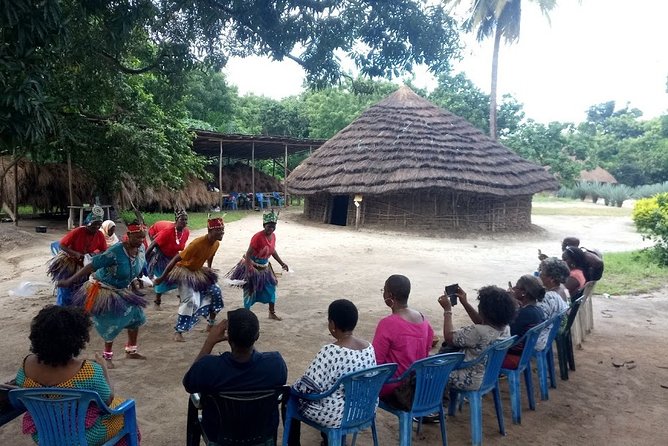
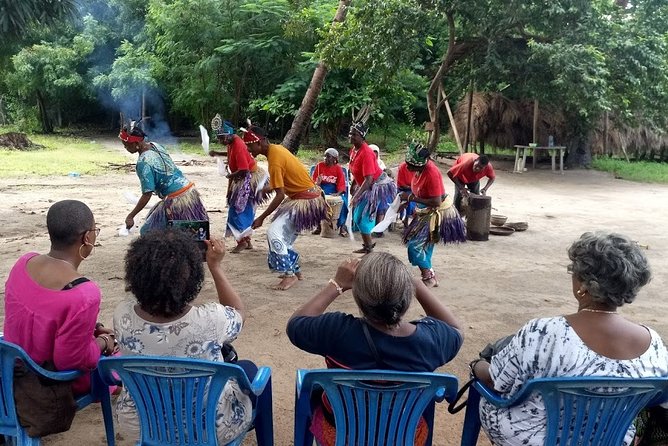
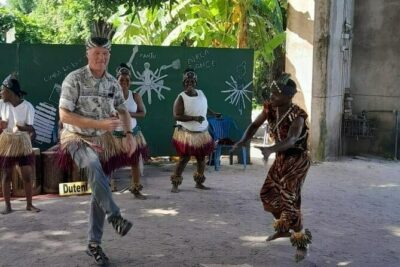
A traditional ngoma dance session is arranged during the visit. This adds a live performance to the houses and gives the stop a clear cultural focus. Since the tour sets aside 90 minutes, you have more room here than at the cathedral or Askari Monument.
Mwenge Woodcarvers Market and the final stop
The final attraction is Mwenge Woodcarvers Market, where about 30 minutes is planned. You see carved products made from African blackwood, also called ebony.
This is a natural place to finish because it combines craft, shopping, and a chance to take home something connected to Tanzania. Half an hour is enough for a look, but not necessarily enough for a long search or careful comparison of every piece.
If you want to buy, take your time before agreeing to a price and ask about the wood used. Your guide can help you understand the products and the buying process. The tour then returns you to your hotel.
What the $117 price really covers
At $117 per person, this is not a budget walking tour. The value comes from having a private guide, arranged transport, pickup options, drinking water, admission fees, and a full route through central and northern Dar es Salaam.
The price is easier to justify if you are splitting the experience with family or friends, since group discounts are offered. It is also useful for cruise passengers who would rather have a planned port day than arrange several taxis and separate entry tickets.
The included items remove several small costs that can otherwise add up. You do not pay admission at the cathedral, museum, Village Museum, or other listed activities, and all taxes and fees are covered. You still need money for lunch, tips, purchases, and anything not listed.
The value is weaker if you prefer to spend a whole day at one museum, shop independently, or move slowly through markets. This tour is designed for coverage. You see many places, but some visits are necessarily short.
Pickup, timing, and the guide relationship
The stated starting point is the Ferry Ticket Office at 57JW+4XH in Dar es Salaam, but pickup is also offered from hotels, ferries, and ports. Confirm the exact meeting place and time when booking, especially if you are arriving by ship.
The operator is African Pangolin Safaris. A booking account specifically praises Mansoor for staying in contact before the excursion, meeting the group at the cruise ship, providing cold water, and using a clean, well-maintained minivan. If Mansoor is assigned to your tour, that early communication is a useful sign for a port-day schedule.
Water is provided, but Dar es Salaam can still make a long day feel tiring. Bring sun protection, comfortable shoes, and a small amount of local cash for lunch and purchases. The tour requires enough movement for you to manage markets, museum visits, public transport, and a tuk tuk transfer.
Confirmation is provided when you book, and most people can participate. Since the activity is private, your group is the only group on the tour.
Cancellation and weather
You can cancel up to 24 hours before the local start time for a full refund. Changes or cancellations made less than 24 hours before the start are not accepted, and the amount paid is not refunded.
The tour also requires good weather. If poor weather causes cancellation, you are offered another date or a full refund. That policy matters because several stops involve walking between vehicles, markets, and outdoor areas.
Who should book this Dar es Salaam tour?
I would recommend it to first-time visitors who want a broad introduction to the city in one day. It also suits cruise passengers, families or friends who prefer a private group, and anyone who would rather have transport, entry fees, and a guide organized in advance.
It is a good match if you value local markets and working places as much as formal monuments. Kariakoo and Kivukoni are likely to be the most immediate parts of the day, while the cathedral, Askari Monument, and museum provide historical and national context.
I would think twice if your priority is a slow pace, a private vehicle for every transfer, or a long lunch. The public transport and tuk tuk section is part of the experience, but it is not what every visitor expects from a private tour.
Should you book it?
Book this tour if you have limited time in Dar es Salaam and want to see many important places without arranging separate taxis, tickets, and guides. The strongest reasons are the private format, broad route, included fees, cold drinking water, and the mix of markets, religious buildings, museums, crafts, and traditional houses.
Skip it if you want to explore at your own speed or spend hours in only one district. At $117, the tour earns its price through convenience and coverage, not through a leisurely schedule. For a well-organized first look at Dar es Salaam, especially from a port, it is a practical choice.
FAQ
How long does the Dar es Salaam city tour last?
The tour lasts approximately six to seven hours, including sightseeing, transfers, lunch time, and the return to your hotel.
Where can pickup take place?
Pickup is offered from hotels, ferry points, and ports. The stated meeting point is the Ferry Ticket Office at 57JW+4XH in Dar es Salaam.
Is this a private tour?
Yes. Only your own group participates in the activity, and you can follow a more flexible pace than on a large group tour.
Is lunch included in the price?
No. Lunch is not included. You stop at a hotel after the Kivukoni Fish Market, and you pay for lunch directly.
What transport is included?
The tour includes private and public transport. You use a private vehicle for much of the route, then public transport from Kivukoni to Morocco Road and a tuk tuk to the Village Museum.
What happens if bad weather cancels the tour?
If poor weather causes cancellation, you are offered a different date or a full refund. You can also cancel up to 24 hours before the start time for a full refund.
Just added around Dar es Salaam
- Ruaha National Park And Mikumi National Park Budget Safari 6 Days 5 Nights★ 5.0 · 3 reviews
- 3 Days Nyerere National Park Safari (Selous Game Reserve)★ 5.0 · 3 reviews
- Saadani National Park Day Tour★ 5.0 · 3 reviews
- Private Mikumi Adventure★ 4.5 · 3 reviews
- Dar es Salaam City tour and Beach Leisure – 9 hours★ 5.0 · 3 reviews
- Mbudya island from Dar es salaam safari.★ 4.2 · 3 reviews
- Day Trip To Bagamoyo From Dar Es Salaam ..historical town★ 4.5 · 3 reviews
- 3 Days Mikumi National Park Private Tour★ 5.0 · 3 reviews
City Tours, compared.

Arusha Guided Walking City Tour, Culture, Lifestyle & History
Read our review →

The Best/Top Rated Cultural City Tour in Dar es Salaam
Read our review →
Browse the lists this tour appears in