
Reviewed · COOKING CLASSES
NGO Lifted Strong – Traditional Tanzanian Cooking Class
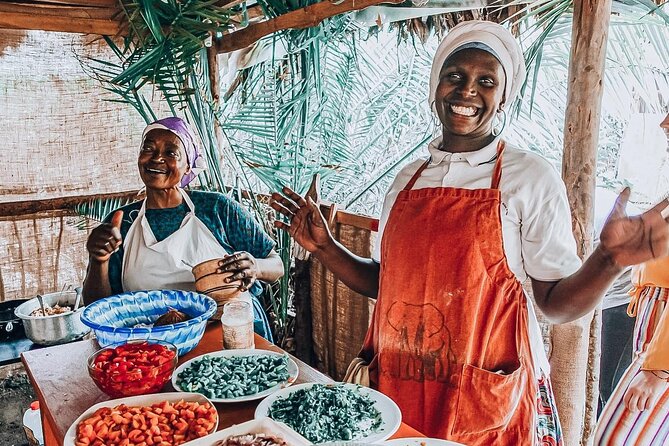
Food opens doors in Arusha. This three-hour class with Lifted Strong Community Organization, or LISCO, combines hands-on Tanzanian cooking with a close look at a local effort to support women facing poverty, HIV, domestic violence, and poor health. I like the chance to cook alongside the Mama’s rather than simply watch a demonstration, and I like that you learn Swahili names for the ingredients as you work. The main consideration is that this feels more like cooking together than a formal, chef-led lesson, so you should book it for human connection and shared food, not polished culinary instruction.
The class costs $50 per person, which is fair if you value the community work behind the activity as well as the meal. Joyce and her team are praised for their warm welcome and flexibility, including adjusting the cooking plan for vegetarian and vegan diets and, in some cases, moving a booking to the morning. The 2 p.m. start works well with a free evening, though arranging pickup or allowing extra time to find the meeting point at MJHR+GF is wise.
In This Review
- Key points at a glance
- Why this Arusha cooking class feels different
- Meeting the Mama’s at MJHR+GF
- Preparing ingredients and learning Swahili names
- Samosas, soup, ugali, and cooked banana
- Talking with women supported by LISCO
- What the three-hour schedule means for your day
- Is $50 a fair price in Arusha?
- Who will enjoy this experience most?
- Booking, cancellations, and useful planning tips
- Should you book the Lifted Strong cooking class?
- FAQ
- Where does the cooking class begin?
- What time does the class start?
- How long does the experience last?
- How many people can join the class?
- Can vegetarians and vegans join?
- Can I cancel for a refund?
Key points at a glance
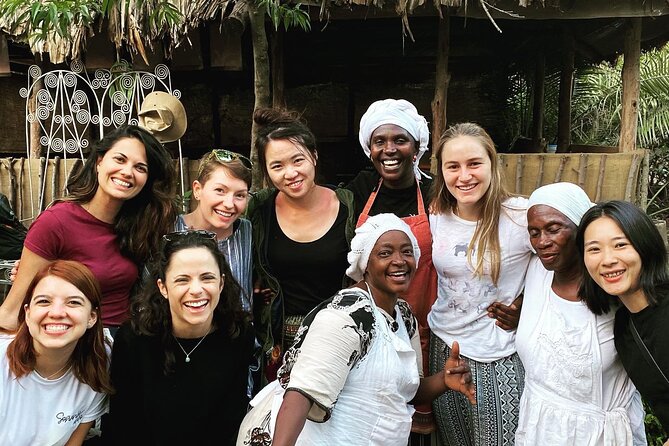
- Cook with local Mama’s: Prepare Tanzanian-inspired food alongside women connected with LISCO, rather than sitting through a distant demonstration.
- Learn useful Swahili words: Ingredient names and cooking terms add a small language lesson to the meal.
- Try several Tanzanian dishes: Past cooking plans have included samosas, soup, ugali with vegetables, rice, and cooked banana.
- Support women through your booking: Your fee helps LISCO advocate for and support women dealing with serious hardships.
- Small group, about 10 people: The limited size should make it easier to take part, ask questions, and talk with the cooks.
- Plan for roughly three hours: The 2 p.m. class leaves the rest of your day open for other Arusha plans.
Why this Arusha cooking class feels different
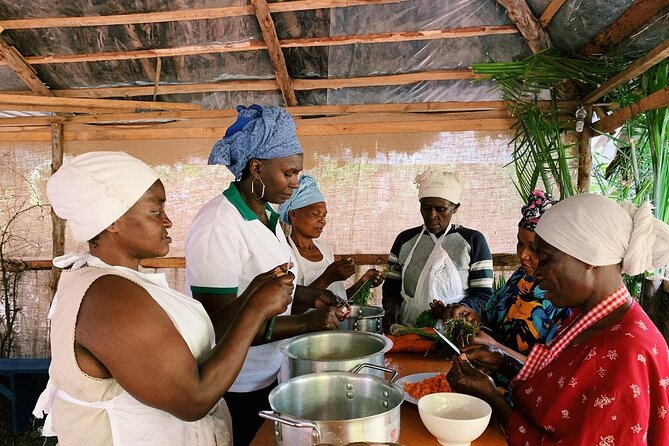
Many cooking classes are built around a professional kitchen, a set menu, and a polished instructor. Lifted Strong offers something more personal. You meet women involved with a community organization, work with local cooks, and learn about the problems LISCO tries to address.
That social purpose is not just a line attached to the booking. It shapes the afternoon. You are not only learning how to fold a samosa or prepare vegetables. You are also spending time with women who are building a better life while facing difficult circumstances.
Joyce is one of the names connected with the experience. Her communication and flexibility receive particular praise. Before one class, she contacted the group to discuss what they wanted to prepare. That is useful because the exact menu may depend on the group, the available produce, and dietary needs.
You should expect a friendly, shared kitchen session rather than a strict sequence of culinary drills. If you want to master restaurant techniques, this may feel informal. If you want to make food with local women and have real conversation across the chopping board, the format makes good sense.
More cooking classes:
- Arusha: Traditional Tanzania Cooking Class & Food Market Tour
★ 5.0 · 34 reviews - Cooking and Sewing & Jewelry Workshops in Arusha
★ 5.0 · 14 reviews - Arusha: Traditional Tanzania Cooking class& Food Market Tour
★ 4.9 · 12 reviews
Meeting the Mama’s at MJHR+GF
The listed meeting point is MJHR+GF in Arusha, and the activity ends back there. The class begins at 2 p.m., with the full session lasting about three hours.
You can meet at the center or arrange pickup. Since the meeting point may not be obvious to every first-time visitor, confirm the pickup details before the day of the class. One useful tip is to allow time for the walk if you plan to go on foot. A past participant described the center as a short distance from the main street, not an alarming journey, but far enough that you should not leave it until the last minute.
The location is near public transportation, and the activity accepts service animals. The class has a maximum of 10 participants, which matters here. In a large cooking group, you can easily become an observer. With a smaller group, you have a better chance to handle ingredients, follow the preparation, and speak directly with the women leading the session.
The meeting point is also the finishing point, so you do not need to arrange a second transfer after the meal. If you choose pickup, confirm where you will be collected and returned. The tour information allows pickup arrangements, but it does not list a standard hotel transfer route or fixed pickup fee.
Preparing ingredients and learning Swahili names
The first part of the class centers on the ingredients and preparation. You help prepare the produce and learn the Swahili names for what you are using. That small language lesson gives the meal more meaning than a list of unfamiliar foods on a plate.
You may hear the local name for each ingredient as it is prepared, then use it in conversation while cooking. I like this approach because the words are tied to something you can see, touch, smell, and eat. You do not need to study Swahili before arriving. The class is designed to introduce the terms as part of the work.
The food plan is not presented as one rigid menu. Past sessions have included samosas and soup, as well as ugali with vegetables, rice, and cooked banana. The range gives you a useful taste of everyday Tanzanian flavors and textures, but you should not assume every dish will appear on your date.
If you have a dietary need, tell LISCO in advance. Vegetarian and vegan cooking can be arranged, and the team has also adjusted meals for allergies. This is one of the strongest practical reasons to contact the provider before the activity rather than waiting until you arrive.
Samosas, soup, ugali, and cooked banana
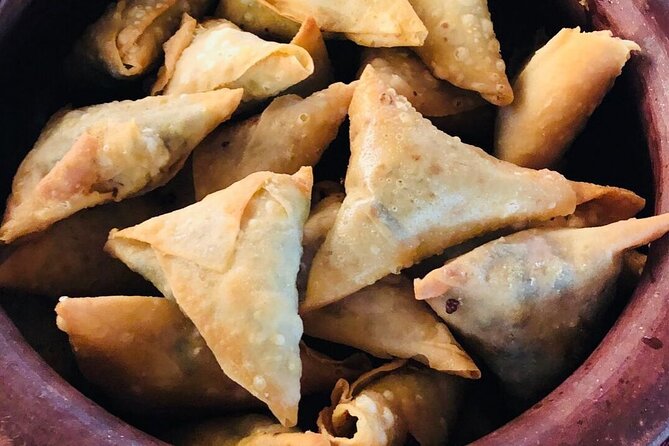
Samosas are a particularly good choice for a hands-on class because preparation involves more than simply stirring a pot. You can learn how the filling is made and how the pastry is handled, folded, and cooked. One school group used the session to learn samosa-making, and the women were described as welcoming and encouraging with the children.
Soup offers a different lesson, with attention on combining ingredients and building flavor. The exact recipe is not specified, so you should treat it as a local cooking session rather than a fixed recipe workshop. That flexibility is part of the charm, though it also means your experience can vary by date.
Ugali with vegetables gives you a chance to try a familiar Tanzanian staple in a simple setting. Rice and cooked banana have also featured in the class. These dishes may not sound elaborate, but they help you understand the everyday side of Tanzanian food, where a satisfying meal does not need a long list of ingredients.
The portions can be generous. One group made enough food to take some home. That will not necessarily happen every time, but it suggests the class is not designed around tiny tasting portions. Come ready to eat, and do not plan a large meal immediately afterward.
A few more trips of this kind worth comparing:
- Private Traditional Pottery Class near Arusha
★ 5.0 · 6 reviews - Arusha: Local Tanzanian Cooking Class by Kingstone Asilia
★ 5.0 · 3 reviews - Zanzibar Cooking Class & Spice Tour
★ 4.5 · 77 reviews - Zanzibar: Spice Farm Tour with Traditional Cooking Lesson
★ 4.8 · 77 reviews
Talking with women supported by LISCO
The food is only half of the afternoon. The other half is meeting the women and learning about Lifted Strong Community Organization.
LISCO works to advocate for and support women facing severe hardship. The organization’s focus includes women affected by HIV, domestic violence, poverty, and poor health. The cooking class gives you a direct way to support that work while spending time with the people connected to it.
The tone described by past participants is warm and welcoming. The women are called Mama’s in the class description, a term that reflects the friendly, community-based setting rather than a formal restaurant structure. You may find that conversation and shared preparation matter as much as the final dish.
I would book this activity if you want your spending to have a clear local purpose. Your $50 fee is not only paying for food and instruction. It also helps keep attention on LISCO’s work and gives the organization an activity through which visitors can connect with its mission.
Still, keep your expectations respectful. This is not a hardship tour, and the women are not there to provide a dramatic story for your entertainment. The best approach is to listen, cook, ask polite questions, and let the shared meal lead the afternoon.
What the three-hour schedule means for your day
A 2 p.m. start gives you a useful balance. You can spend the morning on another Arusha activity, have lunch beforehand, and then head to the center for the class. After roughly three hours, you should have the evening free.
The timing is also helpful if you are fitting the class around a packed Tanzania itinerary. A half-day cooking activity is easier to combine with other plans than a full-day excursion. It does not require you to give up an entire day of sightseeing.
Allow some flexibility around the start. Pickup arrangements may take coordination, and the class itself is social rather than strictly timed. You should not book a major appointment immediately after the stated end time. The tour is advertised as approximately three hours, not as a minute-by-minute performance.
The provider has also shown some willingness to move bookings to the morning when schedules require it. That is not a guaranteed option, but it is worth asking if your safari departure or other plans conflict with the 2 p.m. start.
Is $50 a fair price in Arusha?
At $50 per person, this class sits in a reasonable range for a small-group activity that includes food, instruction, and a community benefit. The value is strongest if you want more than a standard meal and are happy to support LISCO’s work.
You are paying for a three-hour experience with a maximum of 10 people. That small size can make the class feel more personal and gives you a better chance to participate. The meal itself is part of the value, but the social purpose is the real reason to choose this class over a conventional cooking lesson.
The price may feel less attractive if you are judging it only by the number of recipes learned. The menu can vary, and the class is described more accurately as cooking together than as a technical course. You might prepare only a few dishes, and the instruction may be informal.
For me, the fair comparison is not with a professional culinary school. Compare it with a community-based cultural activity that feeds you, teaches you some Swahili, and directs money toward women supported by LISCO. By that measure, the price is sensible.
Who will enjoy this experience most?
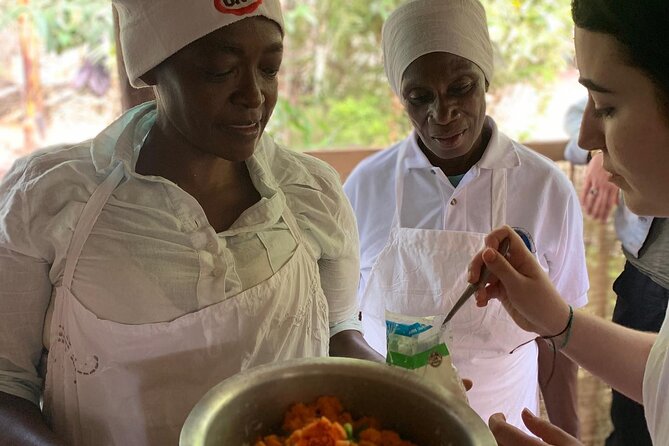
I would recommend the class to couples, solo visitors, families, and small groups who want a slower, more personal afternoon in Arusha. It also suits people who prefer meeting local residents over moving from one major sight to another.
Families and school groups may find the format especially useful. The women have been encouraging with children, and making samosas gives younger participants a clear task. The class can turn a food lesson into a simple conversation about community support and resilience.
Vegetarians and vegans are welcome if they give advance notice. People with allergies should also contact LISCO before the session. This kind of preparation gives the team time to plan rather than improvise.
You may want to skip it if you need a fixed menu, advanced culinary theory, or a highly polished cooking studio. You should also think twice if your schedule allows no room for a three-hour social activity. The strength of the class is its human scale, and that means it will not feel like an efficient cooking lecture.
Booking, cancellations, and useful planning tips
The class is typically booked about 17 days ahead, so reserve early if your Arusha dates are fixed. Confirmation is provided at booking, and the ticket is mobile, which keeps the arrival process simple.
You can cancel for a full refund up to 24 hours before the local start time. Changes made inside that 24-hour window are not accepted, and late cancellations are not refunded. The activity also requires a minimum number of participants. If LISCO cancels because that minimum is not reached, you can choose another date or experience, or receive a full refund.
Before you go, I would send a short message covering three things:
- Your preferred dishes, if the team offers menu choices
- Any vegetarian, vegan, or allergy requirements
- Your pickup needs and exact meeting details
Wear something comfortable for food preparation, though the provided information does not specify a dress code. Most important, arrive ready to take part. The more willing you are to chop, fold, stir, taste, and practice a few Swahili words, the more rewarding the afternoon should feel.
Should you book the Lifted Strong cooking class?
Book it if you want good food, direct community contact, and a clear social purpose in one manageable Arusha activity. The 4.9 rating from 39 posted ratings and 100 percent recommendation fit the strongest features: warm treatment, tasty food, helpful flexibility, and the chance to meet women connected with LISCO.
I would choose it over a standard cooking class if supporting local women matters to you. I would also choose it if you like informal experiences where the conversation is as important as the recipe.
Skip it if you want a formal chef’s lesson with a guaranteed menu and advanced technique. Otherwise, this is a thoughtful way to spend an afternoon, and the fact that you may leave with a full stomach, a few Swahili words, and a better understanding of LISCO’s work makes the $50 worthwhile.
FAQ
Where does the cooking class begin?
The class begins at MJHR+GF in Arusha, Tanzania. The activity ends back at the same meeting point.
What time does the class start?
The listed start time is 2 p.m.
How long does the experience last?
The cooking class lasts approximately three hours.
How many people can join the class?
The activity has a maximum of 10 participants.
Can vegetarians and vegans join?
Yes. Vegetarian and vegan meals can be arranged, but you should provide your dietary requirements in advance. Allergies can also be discussed before the class.
Can I cancel for a refund?
Yes. You can cancel at least 24 hours before the local start time for a full refund. Cancellations or changes made less than 24 hours before the start are not accepted for a refund.
Just added around Arusha
- 5 Days Safari Tarangire, Serengeti, and Ngorongoro Crater★ 5.0 · 3 reviews
- Love lives in Africa★ 5.0 · 3 reviews
- 5 Days of Safari, Culture & Hot Springs – Tour from Arusha★ 5.0 · 3 reviews
- Arusha National Park Safari by Jeep★ 4.5 · 3 reviews
- 5Days Family _Group Tour Lodging Mid-Range in the Jungle★ 5.0 · 3 reviews
- Serengeti & Ngorongoro 3 Days Budget Safari★ 5.0 · 3 reviews
- 2 Days Tarangire and Ngorongoro Crater Tour★ 5.0 · 3 reviews
- 7 Days PRIVATE Best of Tanzania Safari *Departing everyday*★ 5.0 · 3 reviews
Cooking Classes, compared.
Half-Day Kuza Cave Swimming Adventure and Cooking Class
Read our review →
Traditional Tanzania Cooking Class & Food Market Tour
Read our review →

Cooking and Sewing & Jewelry Workshops in Arusha
Read our review →
Mnemba Dolphin Tour, Clear Kayak, Cooking Class, Horse Riding
Read our review →
Traditional Zanzibar Cooking Class including Spice Tour
Read our review →Browse the lists this tour appears in