
Reviewed · CITY TOURS
Private Insightful City Tour of Dar es Salaam
Markets tell the real story. This private Dar es Salaam tour brings you into Kariakoo Market and Kivukoni Fish Market, then links those daily scenes with churches, monuments, and the city center’s past. I like the personal format and the chance to ask questions in a language you understand well. I also like that the tour focuses on working parts of the city, not only polished sights.
The biggest consideration is time. With a listed duration of only one to two hours, the schedule can feel brisk, especially since Kariakoo and the fish market each receive about 45 minutes. You should also note that pickup is available for an extra $10, while the advertised price of $55.26 per person covers the tour itself rather than hotel pickup.
In This Review
- Key points at a glance
- Why this short tour gives you a useful first look
- Kariakoo Market: where Dar es Salaam gets down to business
- Kivukoni Fish Market and the working waterfront
- St. Joseph’s Cathedral and German-era Dar es Salaam
- The Askari Monument and wartime memory
- The 1898 waterfront sanctuary
- Private guiding, conversation, and flexibility
- Timing, fitness, and what to bring
- Who will get the most from this Dar es Salaam tour
- Should you book it?
- FAQ
- How long does the private Dar es Salaam city tour last?
- Where does the tour start?
- Where does the tour end?
- Is hotel pickup included?
- What attractions are included?
- Is this a private tour?
- What is included in the price?
Key points at a glance
- Kariakoo Market offers the strongest local contact: You see shopping, trade, movement, and the everyday business of Dar es Salaam in one concentrated stop.
- Kivukoni Fish Market adds a waterfront working scene: The focus is on fishermen, boats, transport, and the fish trade rather than a staged cultural display.
- The private format makes the tour flexible: Your group participates alone, so you can ask questions and shape the conversation around your interests.
- Colonial and wartime history fill out the city picture: St. Joseph’s Cathedral, the Askari monument, and a 1898 waterfront sanctuary connect Dar es Salaam’s present to its German and British eras.
- Rain need not ruin the outing: A previous booking shifted from walking to a tuk tuk because of rain, showing some practical flexibility.
- The price works best for small groups: At $55.26 per person, the value depends on how much you want personal guidance and local context in a short window.
Why this short tour gives you a useful first look
Dar es Salaam can be hard to read at first. The city is large, active, and spread along the coast, with markets, religious buildings, government offices, and port activity sharing the central area. A private guide helps connect these pieces instead of leaving you with a string of disconnected photo stops.
The tour begins at Bustani ya Posta and returns there. That central meeting point is near public transportation, which makes it practical if you are already in the city center. Pickup is offered, but it costs an additional $10, so you should compare that fee with the time and effort needed to reach the start point yourself.
The tour is priced at $55.26 per person and is usually reserved about 31 days ahead. For a small private group, that is a reasonable price if you value conversation and local interpretation. It is less compelling if you only want a quick ride past major landmarks, since the experience depends heavily on walking, looking closely, and asking questions.
You receive bottled water and a soda or pop. That is a modest inclusion, but useful in Dar es Salaam’s warm conditions, particularly when the schedule keeps you outdoors around the markets and waterfront.
More City Tours in Dar es Salaam
- Dar es Salaam: City Tour
★ 4.7 · 159 reviews - Dar es Salaam City Center: Walking Tour
★ 4.8 · 102 reviews - Dar es Salaam City Tour – Everyday
★ 5.0 · 64 reviews
Kariakoo Market: where Dar es Salaam gets down to business
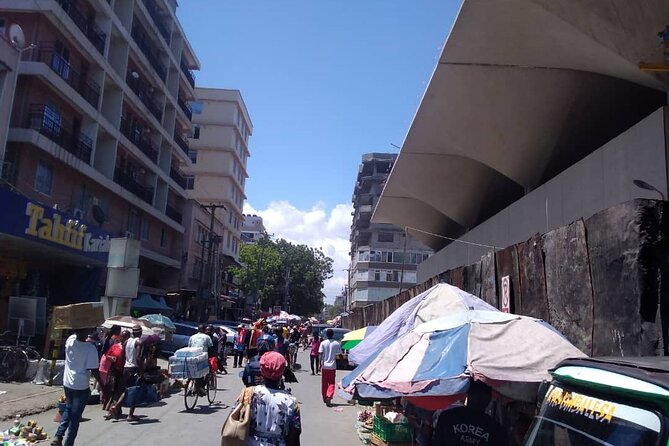
Kariakoo is the tour’s most energetic stop. It is described as one of the largest markets in East Africa, and the appeal is not a single building or display. The point is the scale of business taking place around you.
You have about 45 minutes here. That gives you enough time to see the market’s rhythm, notice the colors and smells, and ask how the area fits into Dar es Salaam’s commercial life. The guide’s role matters most at this point. Without context, a large market can blur into noise and crowds. With a private guide, you can focus on the parts that interest you, from shopping habits to the market’s past.
I especially like that this is not treated as a quick photo stop. The experience is built around seeing how the city works. You may find yourself paying attention to movement, transactions, and the way people use the space rather than simply checking off a landmark.
There is also a practical side. Kariakoo is an active market, not a quiet museum. Keep your belongings secure, wear comfortable shoes, and expect a sensory experience. The tour information calls for a moderate level of physical fitness, so this will suit you better if you are comfortable walking and standing in a busy public setting.
The free admission is another small advantage. Your cost goes toward the private guiding rather than an entrance ticket. That makes the explanation and personal attention central to the value.
Kivukoni Fish Market and the working waterfront
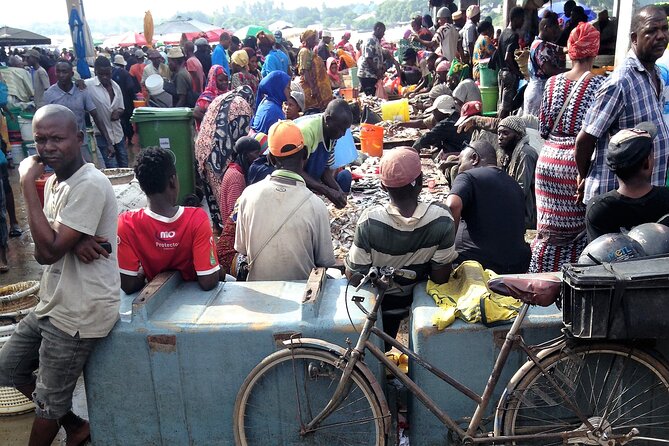
The second major stop is Kivukoni Fish Market, with another 45 minutes set aside. Here the focus shifts from general shopping to the day-to-day life of fishermen and the trade that brings fish into the city.
You learn about the fishermen’s means of transport and how the fish trade operates. That gives the stop a clear purpose. You are not simply looking at stalls. You are connecting the market with the people, boats, and work behind the goods being sold.
This is one of the strongest parts of the experience for anyone interested in ordinary life. The fish market offers a direct look at an economic activity tied to Dar es Salaam’s coastal setting. The sights and smells may be strong, but that is part of understanding the place. If you prefer carefully arranged attractions, this stop may feel rough around the edges. If you want to see a working city, it should be memorable.
Travel time is included in the overall duration, so the total schedule does not mean 45 minutes at each location plus separate travel time. That is important. Once you add the cathedral and the other central landmarks, the experience may feel closer to a fast orientation than a slow, relaxed walking tour.
Rain can also affect the way this part of the outing works. A previous booking used a tuk tuk because of rain instead of walking. That is encouraging if the weather turns, though the supplied details do not promise tuk tuk transport as a standard feature. You should treat it as a possible adjustment, not an included service.
St. Joseph’s Cathedral and German-era Dar es Salaam
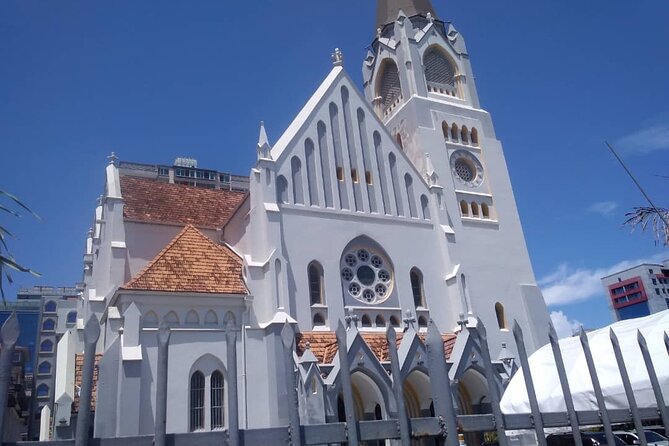
After the markets, the tour turns to St. Joseph’s Cathedral of the Archdiocese of Dar es Salaam. The cathedral dates from the early 1900s and was built by the Germans. Its position facing the Dar es Salaam port area gives it a useful connection to the city’s early colonial development and maritime identity.
You receive about 20 minutes here. That is enough for an exterior look, a short explanation, and a sense of the building’s place in the center. It is not a long church visit, so you should not expect an extended architectural study or a quiet period of reflection.
The value comes from contrast. Kariakoo and Kivukoni show the city through trade and daily work. St. Joseph’s adds religion, colonial architecture, and the influence of German rule. The guide can help you see how these different layers sit close together in central Dar es Salaam.
The cathedral is also a reminder that Dar es Salaam is not defined by one culture or one historical period. The tour’s communication style is presented as a strength, allowing you to engage more fully with the guide and ask about the connections between the sites. That personal exchange is especially useful during a short stop, when a building’s story could otherwise pass by quickly.
More Private Tours in Dar es Salaam
- Private Full-Day Trip to Mikumi National Park from Dar es Salaam
★ 5.0 · 54 reviews - Private 3 Days 2 Nights Mikumi Adventures
★ 5.0 · 47 reviews - Dar Es Salaam City Tour (Full Day With Private Guide And Car)
★ 5.0 · 39 reviews - Full-Day Private Tour of Dar es Salaam
★ 4.5 · 37 reviews
The Askari Monument and wartime memory
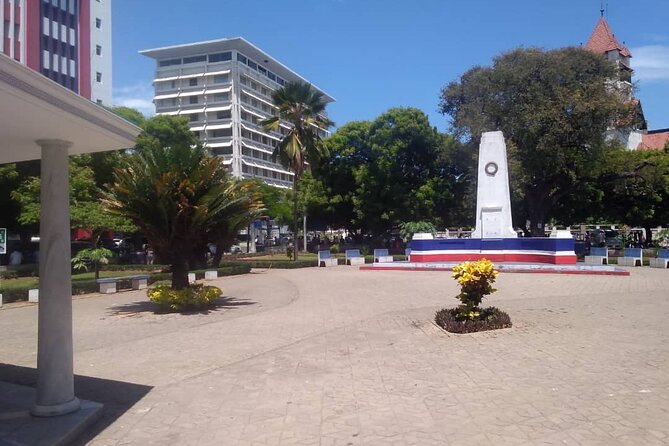
The Askari monument is another central point on the route. It commemorates African troops and carriers who served with the British Army during the First World War.
The monument also reflects the change from German to British control. Before it was there, a monument to a German soldier reportedly occupied the site and was removed after the British took over. That detail gives the Askari monument more weight than a simple statue in a traffic circle or city square. It symbolizes the political changes that shaped Dar es Salaam.
The supplied details do not state a fixed visit length for this stop, so you should expect it to be covered as part of the central walking portion rather than as a long standalone visit. This is one reason the guide’s explanation is important. The monument may take only a few minutes to see, but its background opens a larger discussion about African service, European military rule, and public memory.
You may find this stop most rewarding if you enjoy historical context. It is less about dramatic architecture and more about the story attached to a familiar urban landmark.
The 1898 waterfront sanctuary
The final unnamed landmark is a sanctuary built in 1898. It faces the ocean and is surrounded by Dar es Salaam’s judiciary buildings. The location gives it a strong visual connection to the city center, the waterfront, and the institutions that shape modern public life.
The information provided does not identify the sanctuary by name, so you should confirm the exact building with Chuh Chuh Tours before booking if that detail matters to you. The attraction is presented as a place with several things to learn, which suggests that the guide’s historical explanation is a key part of the stop.
This landmark adds another religious and architectural layer to the route. Along with St. Joseph’s Cathedral, it shows how central Dar es Salaam contains buildings tied to faith, administration, colonial rule, and the sea. That combination makes the tour more useful than a simple market visit.
Private guiding, conversation, and flexibility
This is a private activity, so only your group participates. That changes the feel of the tour. You are not waiting for strangers to take photographs or listening to questions that do not interest you. You can ask for more detail about markets, religious buildings, wartime history, or the city center.
The tour description places strong emphasis on fluency in the language used for communication. That matters because the experience is built around explanation rather than silent sightseeing. If you want to understand what you are seeing, clear conversation can be worth more than a longer route with less personal attention.
The guide is also described as willing to accommodate particular interests. You should use that flexibility from the start. Tell the guide if you care most about food markets, architecture, local business, colonial history, or public monuments. With only one to two hours, choosing a focus will help you get more from the time.
The rain-related tuk tuk adjustment is another useful sign. It shows that the operator can respond to conditions, although you should not assume that a tuk tuk is included or guaranteed. Ask before the tour if weather is a concern.
Timing, fitness, and what to bring
The advertised duration is approximately one to two hours. Since the two markets each receive about 45 minutes and the cathedral receives 20 minutes, the schedule appears compact. The remaining monuments are likely handled during the walking route or with brief explanations.
You should plan for a moderate physical effort. The tour may involve walking, standing, market conditions, and time outdoors. Comfortable footwear is sensible, and the included bottled water is welcome. A soda or pop is also provided.
The tour operates Monday through Sunday from 9:00 a.m. to 6:00 p.m. Confirmation is received when you book. You can cancel for a full refund if you do so at least 24 hours before the start time. Cancellations or changes made inside that 24-hour window are not accepted for a refund, with cut-off times based on local time.
Who will get the most from this Dar es Salaam tour
I would recommend this experience to you if you want a quick but personal introduction to Dar es Salaam. It suits first-time visitors who want markets and history in the same outing, as well as anyone with a short stay who needs a central orientation.
It is also a good match if you prefer local activity to formal sightseeing. Kariakoo and Kivukoni are the heart of the tour, and both offer a closer look at work, trade, transport, and daily routines.
You may want something else if you need a long, slow city walk, extensive interior visits, or a detailed architectural tour. The short duration means you will cover several subjects without spending much time at any one monument.
The tour works especially well for couples, families, or friends who want to control the pace and questions. Solo visitors should weigh the per-person price against the benefit of having a private guide. The $10 pickup charge is modest, but it is still worth checking the meeting point before you commit.
Should you book it?
Book this tour if you want Kariakoo and Kivukoni to be more than quick photo stops. Their markets, combined with the cathedral, Askari monument, and 1898 sanctuary, give you a compact view of Dar es Salaam’s working life and changing past.
At $55.26 per person, the best value comes from the private format, clear communication, and ability to shape the conversation. Go in expecting a brisk introduction rather than a full-day exploration, confirm the pickup fee and unnamed sanctuary in advance, and wear shoes suited to walking and market conditions. For a short first look at the city, Chuh Chuh Tours offers a practical and engaging choice.
FAQ
How long does the private Dar es Salaam city tour last?
The tour lasts approximately one to two hours, including travel time between stops.
Where does the tour start?
The tour starts at Bustani ya Posta in Dar es Salaam, Tanzania.
Where does the tour end?
The activity ends back at the meeting point at Bustani ya Posta.
Is hotel pickup included?
Pickup is offered for an additional $10. It is not included in the advertised tour price.
What attractions are included?
The route includes Kariakoo Market, Kivukoni Fish Market, St. Joseph’s Cathedral, the Askari monument, and a 1898 sanctuary facing the ocean and surrounded by judiciary buildings.
Is this a private tour?
Yes. Only your group participates in the activity.
What is included in the price?
Bottled water and a soda or pop are included. Admission tickets for the listed stops are free.
Just added around Dar es Salaam
- Ruaha National Park And Mikumi National Park Budget Safari 6 Days 5 Nights★ 5.0 · 3 reviews
- 3 Days Nyerere National Park Safari (Selous Game Reserve)★ 5.0 · 3 reviews
- Saadani National Park Day Tour★ 5.0 · 3 reviews
- Private Mikumi Adventure★ 4.5 · 3 reviews
- Dar es Salaam City tour and Beach Leisure – 9 hours★ 5.0 · 3 reviews
- Mbudya island from Dar es salaam safari.★ 4.2 · 3 reviews
- Day Trip To Bagamoyo From Dar Es Salaam ..historical town★ 4.5 · 3 reviews
- 3 Days Mikumi National Park Private Tour★ 5.0 · 3 reviews
City Tours, compared.

Arusha Guided Walking City Tour, Culture, Lifestyle & History
Read our review →

The Best/Top Rated Cultural City Tour in Dar es Salaam
Read our review →
Browse the lists this tour appears in