
Reviewed · KILIMANJARO TREKS
5 Days Classic Kilimanjaro Climb via Marangu route
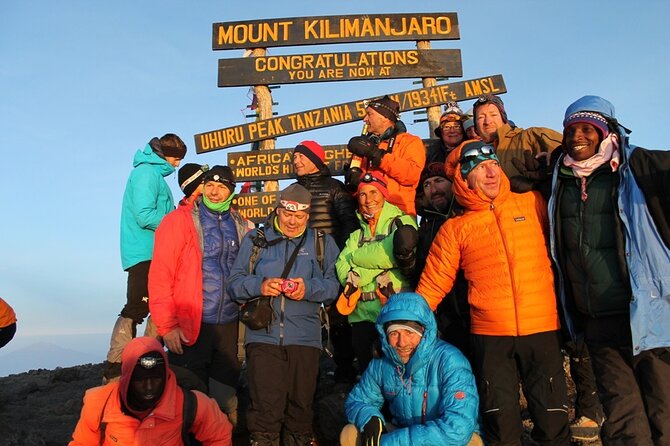
Kilimanjaro rewards patience. This five-day Marangu Route climb appeals to me for two clear reasons: you sleep in mountain huts instead of tents, and the trail moves from rainforest to high moorland, the Mawenzi and Kibo peaks, and finally Uhuru Peak at 5,895 meters. I also like that the price includes airport transfers, an Arusha hotel night, park costs, rescue fees, meals, filtered water, and a full mountain crew. The main drawback is the schedule: the climb reaches the summit quickly, with no separate acclimatization day.
The route is known as the Coca-Cola Route because of its comparatively steady gradient and hut accommodation. That sounds friendly, but summit night remains a serious test. You begin around midnight, walk for about 15 hours on Day 4, and cover roughly 22 kilometers that day. The support team is a major part of the appeal, with guides Dickson and Bob praised for keeping the climb safe, upbeat, and memorable.
In This Review
- Key points to know before booking
- What the $2,178 price really covers
- Day 1: Marangu Gate and the rainforest to Mandara Hut
- Day 2: Heath, moorland, and the Horombo Hut
- Day 3: The saddle and Kibo Hut
- Day 4: Gillman’s Point, Uhuru Peak, and the long return
- Day 5: Returning through the forest to Arusha
- Why the Marangu Route suits some climbers better
- What the crew adds to the experience
- Practical details before you commit
- Should you book this Kilimanjaro climb?
- FAQ
- How long is the Kilimanjaro climb?
- Which route does the climb use?
- Where does the tour begin?
- Is the activity private?
- Is airport transportation included?
- Is accommodation in Arusha included?
- Are meals included during the climb?
- Is drinking water provided?
- Are travel insurance and flights included?
- Can I cancel for a full refund?
Key points to know before booking
- Hut-based trekking: You sleep at Mandara, Horombo, and Kibo huts rather than camping.
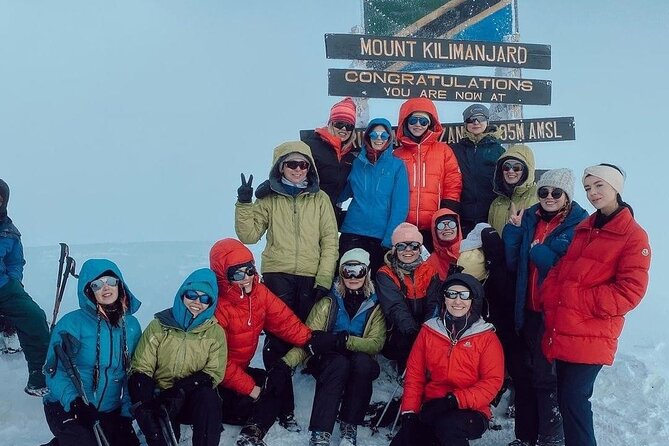
- A fast five-day schedule: The plan reaches Uhuru Peak without an extra acclimatization day.
- A long summit stage: Day 4 combines the midnight ascent, Uhuru Peak, the return to Kibo, and the descent to Horombo.
- Strong crew support: Guides, porters, and a cook are included, with fair wages listed as part of the package.
- Useful transport coverage: Pickup from your Arusha lodge, gate transfers, and private airport transport are included.
- Private group format: Only your own group participates, though group discounts are available.
What the $2,178 price really covers
At $2,178 per person, this is not simply a hiking fee. The package combines park and government charges, transportation, food, mountain accommodation, rescue coverage, and staff support. That matters on Kilimanjaro, where the logistics behind a climb are almost as important as the trail itself.
You receive private transport from Kilimanjaro International Airport to your accommodation in Arusha, plus a transfer to the Marangu gate and a return transfer after the climb. One night of accommodation in Arusha is included on the final day, giving you a place to shower and rest after the descent.
The mountain portion includes breakfast four times, dinner four times, and lunch five times. Treated and filtered drinking water is supplied during the trek, and hot water is available for washing. These are practical comforts, not fancy extras, but they make a difference after cold, dusty hours on the trail.
The listed price also includes Kilimanjaro rescue fees, an emergency first-aid kit, 18 percent VAT, park charges, and government taxes. You are not left to sort out these basic costs separately. A professional guide team, cook, and porters are part of the arrangement, and fair wages for the mountain crew are specifically included.
You still need to budget for travel insurance, flights, personal toiletries, laundry, hotel meals and drinks before and after the climb, and tips for the guides, porters, and cook. Tips are not a small detail on a supported mountain trek, so include them in your total budget before booking.
More Kilimanjaro routes and climbs:
- 8-Day Small-group Lemosho Kilimanjaro Summit Trekking
★ 5.0 · 186 reviews - 7-Day Machame Kilimanjaro Summit Tour from Arusha
★ 5.0 · 125 reviews - Mountain Kilimanjaro Day Hike
★ 5.0 · 102 reviews
Day 1: Marangu Gate and the rainforest to Mandara Hut
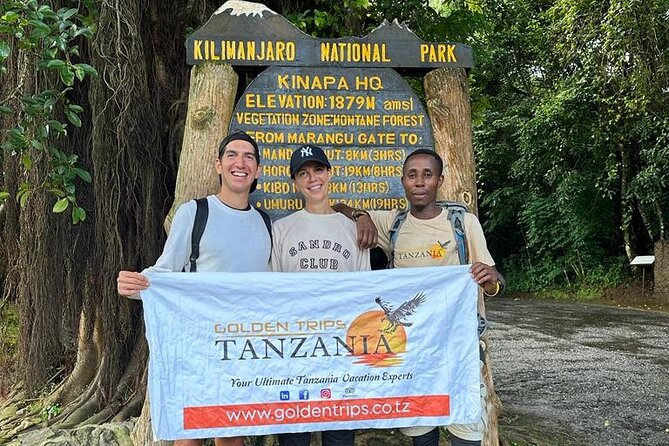
Your morning begins with breakfast, followed by pickup from your lodge in Arusha. The drive takes you to Marangu Gate, where registration and park paperwork are completed before you enter Kilimanjaro National Park.
The first walking section passes through dense rainforest. This is one of the most pleasant parts of the route, with thick vegetation and the possibility of seeing primates. The shaded setting gives you a gentle visual introduction to the mountain, though the 12-hour day makes this more than a casual forest walk.
Your destination is Mandara Hut. After settling in and taking a break, your guide can lead you to Maundi Crater. The crater viewpoint offers views toward the Kenyan interior and gives you an extra reason to keep walking after reaching camp.
The first day includes no separate admission charge because park access is covered in the tour price. You should expect a full day from pickup through the hike and hut stay. Starting with a steady pace is wise. The trail may feel manageable at this point, but saving energy matters more than racing ahead.
Day 2: Heath, moorland, and the Horombo Hut
Day 2 begins with an early breakfast. Soon after leaving Mandara, the forest thins and you reach the timberline. The surroundings change into heath and moorland, with less tree cover and a more open feel.
The route climbs toward Horombo Hut at about 3,700 meters. The listed distance is 12.5 kilometers, and the day takes about nine hours. You will notice the higher altitude here, even if the trail remains well built and reasonably steady.
Horombo is one of the scenic high points of the route. From the hut, you can look toward Mawenzi and Kibo, the two major volcanic peaks, as well as the broad plain of the Masai steppe. This is where the trip begins to feel like a high mountain crossing rather than a forest hike.
The schedule does not include an additional day at Horombo for acclimatization. That is important. The route gives you one night before moving higher, so you should be prepared for the physical demands of rapid altitude gain. Your guides can control the pace and help you manage the day, but no operator can remove the effects of altitude.
Day 3: The saddle and Kibo Hut
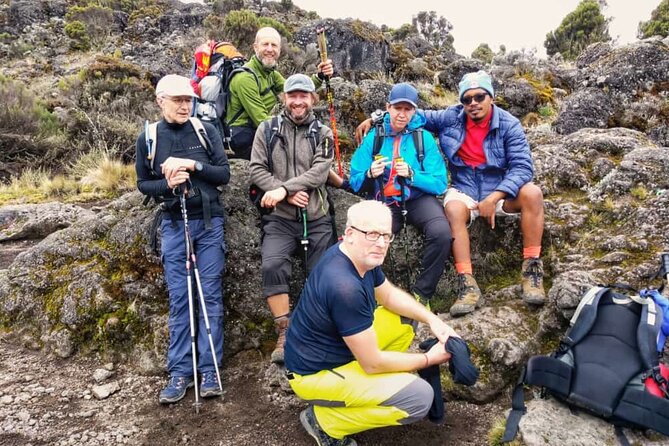
Day 3 is shorter in distance than Day 2, but it is a key stage. You cover about 9.5 kilometers in seven hours, passing the Last Water point before crossing the saddle.
The saddle is a broad, nearly vegetation-free plateau between Mawenzi and Kibo. The change is stark. The trees and shrubs are gone, and the open terrain makes the mountain feel more exposed. You are heading toward Kibo Hut, normally reached after five to six hours of walking.
Kibo Hut is at the base of the final summit ascent. The evening routine is simple: an early meal, preparation for the night climb, and an early bedtime. You will not have a long evening here, since the summit push begins around midnight.
This is a good point to keep your packing simple. Set aside what you need for the night ascent, keep your water accessible, and follow the guide’s instructions about timing. The tour supplies drinking water and hot water for washing, but you are responsible for your personal items and toiletries.
A few more trips of this kind worth comparing:
- 5 Days Group Camping Safari
★ 5.0 · 730 reviews - 5-Day Highlights mid-Range Crater, Serengeti, Tarangire
★ 5.0 · 296 reviews - 5 Days Camping Tarangire, Serengeti & Ngorongoro crater & Visiting Maasai
★ 5.0 · 229 reviews - Tanzania Simba Safari – 5 Days
★ 5.0 · 217 reviews
Day 4: Gillman’s Point, Uhuru Peak, and the long return
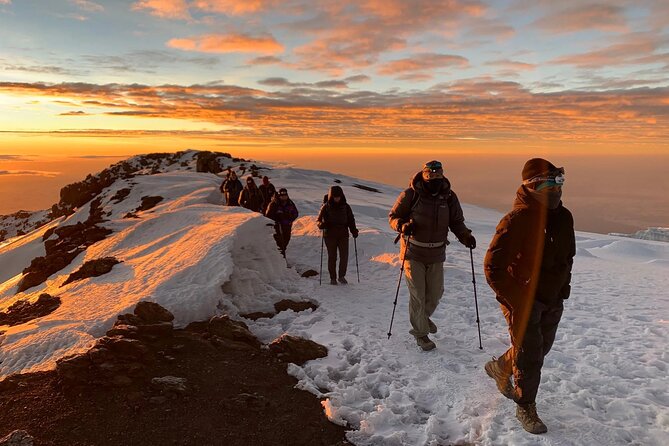
Day 4 is the heart of the climb and the toughest day by a wide margin. The plan calls for a midnight start from Kibo Hut, an ascent to the crater rim, a push to Uhuru Peak, and a descent first to Kibo and then Horombo.
The climb passes Hans Meyer Cave at about 5,220 meters. From there, the trail continues upward toward Gillman’s Point at 5,681 meters. Reaching Gillman’s Point means you have arrived at the crater rim, usually around sunrise according to the schedule.
The sunrise timing is one of the memorable parts of this stage. After the cold, dark hours of walking, daylight begins to warm the terrain. You then continue for another one to two hours toward Uhuru Peak, the summit of Kilimanjaro, at 5,895 meters.
The summit is not the end of the day. You return to Kibo Hut for a warm meal and a one to two-hour rest, then continue down to Horombo Hut. The total distance is about 22 kilometers, and the day can last 15 hours.
That number tells you what you need to know. The route may be gentler than some alternatives, but the summit schedule is not gentle. You should choose this trip because you are ready for a very long day at high altitude, not because the nickname suggests an easy walk.
The crew can make this stage more manageable. The package includes guides, porters, a cook, first-aid supplies, and rescue fees. Dickson and Bob received special praise for their support and for helping make the climb enjoyable as well as safe. One group even celebrated reaching the summit with sparkling wine at the base, a cheerful finish after a demanding effort.
Day 5: Returning through the forest to Arusha
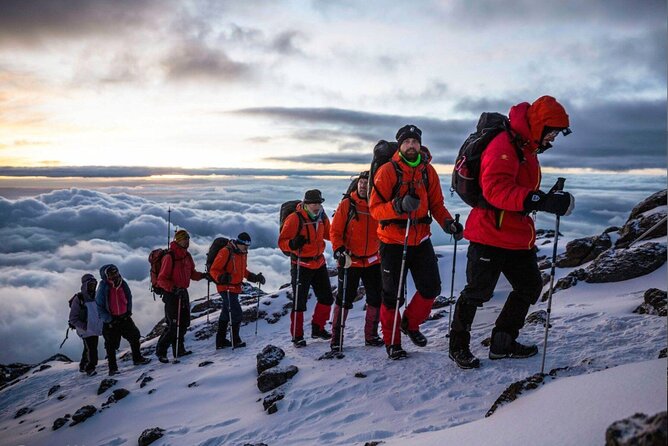
The final morning begins with the descent from Horombo through the heath and moorland. You stop at Mandara Hut for a warm lunch, then continue through the rainforest.
The full descent covers about 20.8 kilometers and takes around 10 hours. You finish at the Kilimanjaro National Park Gate at approximately 1,860 meters, where you say goodbye to the mountain crew.
A short transfer takes you back to your Arusha hotel. The included room is especially useful here. After several nights on the mountain and a long descent, a warm shower and a proper place to rest are worth more than they may sound on paper.
The final day is not just a formality. Your legs may be tired from the summit stage, and the distance is substantial. Keep your pace controlled and use the lunch stop to refuel. Once back in Arusha, you can celebrate the climb without needing to arrange another hotel transfer.
Why the Marangu Route suits some climbers better
The Marangu Route is a strong fit if you prefer huts, a defined trail, and a less rough walking surface than a purely remote mountain route might offer. You also get changing scenery in a compact schedule, from rainforest to heath, moorland, open saddle, crater rim, and summit.
The hut format can make the climb feel more comfortable than camping. You do not need to carry a tent, and the package includes meals, drinking water, hot washing water, and a cook. That said, comfort should not be confused with ease. The altitude and summit day remain the central challenges.
This five-day version suits someone who wants a focused climb and has limited time. It may not be ideal if your main priority is gradual altitude adjustment. The plan moves from 1,860 meters at the park gate to Horombo at about 3,700 meters, then Kibo, Gillman’s Point, and Uhuru Peak in quick succession.
The private format is another plus. Only your group participates, which can make the pace and daily routine feel more personal. Group discounts are available, so the value may improve if you are booking with companions.
What the crew adds to the experience
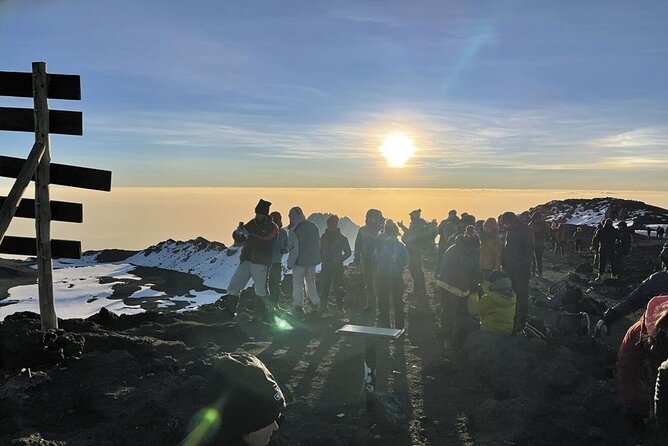
The crew is not background support. Guides set the pace, handle route decisions, and help you through the most demanding sections. Porters move equipment, while the cook prepares the included meals.
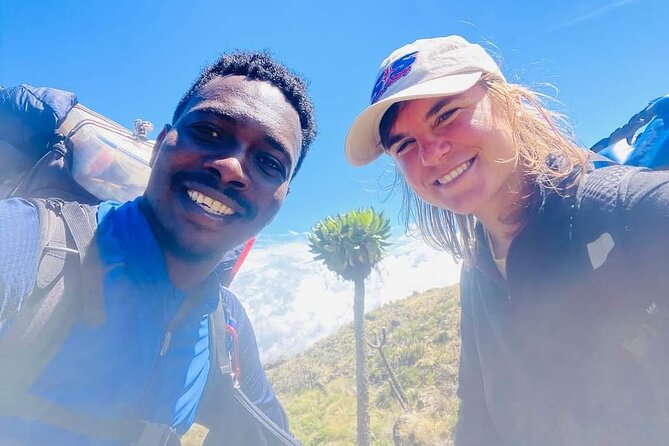
The strongest personal praise attached to this climb centers on Dickson and Bob, who were singled out for encouragement and practical support. That matters most on summit night, when the combination of darkness, cold, fatigue, and altitude can make a steady guide presence very reassuring.
The package also states that the mountain crew receives fair wages. You should still plan for tips, since gratuities are excluded. Ask for clear guidance before the climb about appropriate tipping arrangements, and carry enough local currency if the operator advises it.
Practical details before you commit
Pickup is offered from your Arusha lodge, and private airport transport is included between Kilimanjaro International Airport and your Arusha accommodation. The advertised operating hours are Monday through Sunday from 8:00 AM to 6:00 PM, for the period listed from December 13, 2024, through June 18, 2026.
Confirmation is provided at booking, and the activity is described as suitable for most people. That broad statement should not replace an honest check of your own fitness and medical readiness. The summit day is long, and the maximum altitude is significant.
The cancellation terms are simple: cancel at least 24 hours before the start time for a full refund. Cancellations or changes made within 24 hours are not accepted for a refund, and the cutoff follows local time.
The advertised product is five days, while some past customer accounts refer to six days on the Marangu Route. Confirm the exact schedule, number of nights, and Arusha accommodation details before paying, especially if you have seen a six-day version elsewhere.
Should you book this Kilimanjaro climb?
I would book this trip if you want the convenience of huts, meals, transfers, a private group, and an experienced support crew in one package. The combination of Maundi Crater, Mawenzi and Kibo views, the saddle, Gillman’s Point, and Uhuru Peak gives you a full Kilimanjaro experience without adding a separate acclimatization day.
I would pause if you want the most gradual possible ascent. Five days is efficient, but Day 4 is a major physical test, and the itinerary leaves little spare time if altitude affects you. Ask Golden Trips Tanzania to confirm the exact five-day schedule and explain how the team handles a climber who cannot continue upward.
For a prepared climber with limited time, this is a well-equipped and well-supported route. The value comes less from luxury than from having the major costs, crew, meals, rescue fees, and transfers organized before you arrive.
FAQ
How long is the Kilimanjaro climb?
The advertised duration is five days, approximately.
Which route does the climb use?
The climb follows the Marangu Route, also known as the Coca-Cola Route.
Where does the tour begin?
Pickup is provided from your lodge in Arusha, followed by transport to Marangu Gate.
Is the activity private?
Yes. Only your own group participates in the activity.
Is airport transportation included?
Yes. Private transport to and from Kilimanjaro International Airport and your Arusha accommodation is included.
Is accommodation in Arusha included?
One night of accommodation in Arusha is included on the last day.
Are meals included during the climb?
Yes. The package includes four breakfasts, four dinners, and five lunches.
Is drinking water provided?
Yes. Treated and filtered drinking water is provided throughout the trek.
Are travel insurance and flights included?
No. Flights and travel insurance are not included.
Can I cancel for a full refund?
Yes, if you cancel at least 24 hours before the experience start time. Cancellations within 24 hours are not refunded.
Just added around Arusha
- 5 Days Safari Tarangire, Serengeti, and Ngorongoro Crater★ 5.0 · 3 reviews
- Love lives in Africa★ 5.0 · 3 reviews
- 5 Days of Safari, Culture & Hot Springs – Tour from Arusha★ 5.0 · 3 reviews
- Arusha National Park Safari by Jeep★ 4.5 · 3 reviews
- 5Days Family _Group Tour Lodging Mid-Range in the Jungle★ 5.0 · 3 reviews
- Serengeti & Ngorongoro 3 Days Budget Safari★ 5.0 · 3 reviews
- 2 Days Tarangire and Ngorongoro Crater Tour★ 5.0 · 3 reviews
- 7 Days PRIVATE Best of Tanzania Safari *Departing everyday*★ 5.0 · 3 reviews
Kilimanjaro Treks, compared.



8-Day Small-group Lemosho Kilimanjaro Summit Trekking
Read our review →


Climbing Kilimanjaro through 7 days Machame Route
Read our review →

Browse the lists this tour appears in