
Reviewed · SAFARIS IN MOSHI
7-Day Tanzania Odyssey Safari- High End Tour
The migration is nature at full volume. This private, high-end safari links Tarangire National Park, Ngorongoro Crater, and the Serengeti in seven days, with special attention to the northern Serengeti and the Mara River. I like the mix of famous wildlife areas and the private format, which lets your guide shape the day around animals rather than a fixed group schedule. I also like the practical flight from Kogatende to Arusha on the final day, instead of spending another long day driving south.
The main catch is the pace. You cover a lot of ground, and the drive into northern Serengeti can be long. A Mara River crossing is never guaranteed, even when the timing is right. At $7,630 per person, this is a serious purchase, so you should choose it for the private guiding, luxury accommodation, park access, and chance to see the migration at close range, not because every day will produce a dramatic crossing.
In This Review
- Key points at a glance
- Why this safari earns its high price
- Day 1: A calm start in Arusha
- Day 2: Elephants and baobabs in Tarangire
- Day 3: Ngorongoro Crater and the crater floor
- Day 4: Central Serengeti and the migration story
- Days 5 and 6: Two chances in the Mara area
- Day 7: Flying south from Kogatende
- The guides are a major part of the experience
- Accommodation, meals, and comfort
- Who should book this safari?
- Should you book the Tanzania Odyssey Safari?
- FAQ
- Where does the safari begin?
- Is this a private safari?
- Which national parks and regions are included?
- Is a Mara River crossing guaranteed?
- What meals are included?
- What is not included in the price?
Key points at a glance
- Private seven-day routing: Only your group takes part, giving you more control over stops, questions, and wildlife viewing.
- Three major wildlife areas: Tarangire, Ngorongoro Crater, and the Serengeti each offer a different kind of safari.
- Northern Serengeti focus: Days five and six are set aside for the Mara area, where migration timing and luck matter.
- Strong driver-guide service: Guides named in guest feedback include Juma, Rodrick, Roderick, Samir, Albert, James, Calvin Kileo, Frank Winstone, and Hassani.
- Luxury-style lodging and meals: Accommodation, six breakfasts, six lunches, and six dinners are included, with Acacia luxury tented camps praised for comfort and setting.
- Air transfer at the end: A flight from Kogatende Airstrip to Arusha saves time before the airport transfer.
Why this safari earns its high price
The price includes the expensive parts of a northern Tanzania safari: park fees, transport, a professional driver-guide, lodging, and three meals each day for six days. That matters in Tanzania, where distances between parks are large and private vehicles, fuel, park access, and specialist guiding quickly add up.
You are not paying only for a bed and a vehicle. You are paying for a route that reaches the northern Serengeti, a private safari vehicle for your own group, and a guide who can spend time explaining animal behavior and local culture. Several guides praised in the supplied feedback have decades of field experience. Albert, for example, was described as having 23 years in the bush and a sharp eye for finding good positions for photographs. Rodrick was repeatedly praised for careful driving, patience, and his ability to respond to requests.
Still, $7,630 is not a bargain safari. You should compare the exact accommodation category, vehicle standard, flight arrangements, and group size before booking. The tour is described as high end, and Acacia luxury tented camps are mentioned by name, but the full lodging schedule is not spelled out. Ask Gosheni for the precise camp or lodge at each stop.
The value improves if you care about comfort and time. A private group means you are not sharing every decision with strangers. You can ask for more time with a pride of lions, pause for photography, or request a different pace when practical. You also avoid repeating the long return drive from the north by flying out of Kogatende.
More Safaris in Moshi
- Safari Serengeti And Ngorongoro
★ 5.0 · 288 reviews - Big Five Safari In Tanzania
★ 5.0 · 99 reviews - Unforgettable Tanzania Safari And Zanzibar Beach
★ 5.0 · 97 reviews
Day 1: A calm start in Arusha
Your safari begins with pickup at Kilimanjaro International Airport. Gosheni staff meet you, answer questions, provide a short briefing, and take you to Arusha Coffee Lodge.
This first day is mostly about getting your bearings. That is useful after an international flight. You are not thrown straight into a park or asked to manage a complicated transfer on your own. The airport pickup and briefing give you a chance to clarify the route, meals, luggage, and departure time for the next morning.
The schedule lists about eight hours for the stop, but that does not mean eight hours of sightseeing. It reflects the arrival, transfer, and time at the accommodation. If your flight arrives late, confirm how the first night and briefing will work.
Day 2: Elephants and baobabs in Tarangire
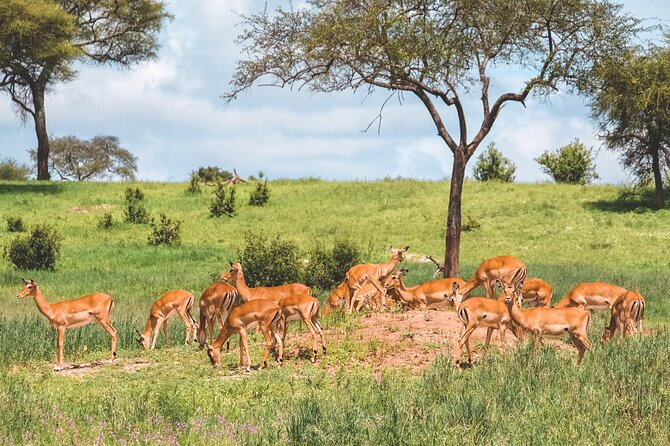
After breakfast in Arusha, you drive to Tarangire National Park for a full day of wildlife viewing. Tarangire is known for large elephant herds, baobab trees, tree-climbing lions, and the Tarangire River, which flows throughout the year.
The river is the key to understanding the park. During dry periods, it can be the main dependable water source for wildlife, so animals gather nearby. That gives you a good reason to watch patiently instead of racing from one sighting to the next.
Tarangire also changes the visual rhythm of the trip. Ngorongoro and the Serengeti are famous for open grassland, while Tarangire brings huge trees, woodland, and a more enclosed feel. The baobabs are especially memorable, with thick trunks and strange, spreading shapes that make them easy to recognize in photographs.
The phrase tree-climbing lions should be treated as a possibility, not a promise. Wildlife is wild, and sightings depend on season, weather, and luck. The same is true of elephants. You may see large herds, but the exact experience changes from day to day.
The drive from Arusha takes time, and a park day can feel long when you add road travel to game viewing. That is normal on a Tanzania safari. Your guide’s skill matters here, particularly when deciding how long to remain at a sighting and where to look next.
Day 3: Ngorongoro Crater and the crater floor
After breakfast, you head to Ngorongoro for a crater tour and picnic lunch. The vehicle descends to the crater floor, where about 20,000 mammals are said to live, including roughly 20 black rhinoceros.
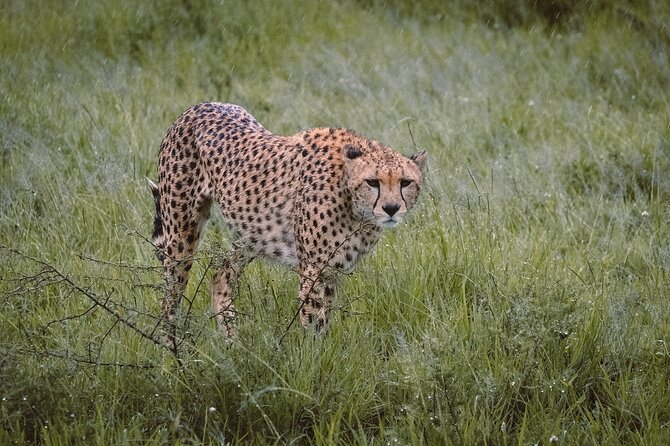
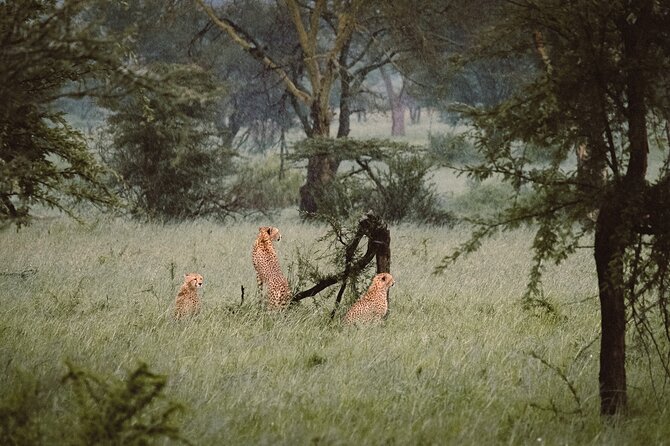
Ngorongoro is one of the strongest wildlife days in this itinerary because animals are concentrated in a relatively contained area. The crater floor has a high density of predators, and possible sightings include lions, cheetahs, hyenas, jackals, leopards, servals, and bat-eared foxes.
That list needs a small reality check. Lions and hyenas are commonly seen, while leopards, servals, and bat-eared foxes require more luck. Black rhinos are a major prize, but you should not expect to see one simply because the crater contains them.
The picnic lunch adds convenience, since you can spend the day inside the park rather than returning to a lodge for a midday meal. It also makes this another full day, with an eight-hour itinerary listed. Bring patience. The best moments may come after a quiet wait, not during a rapid circuit of the crater.
Ngorongoro is also a useful contrast with Tarangire. Tarangire spreads into woodland and river country. Ngorongoro places you in a dramatic natural bowl with concentrated wildlife. You get variety without needing to add another park.
More safaris to compare:
- 8-Day Essence of Tanzania Safari – Luxury
★ 5.0 · 72 reviews - Great Migration Safari In Tanzania
★ 5.0 · 71 reviews - Serengeti, Ngorongoro and Tarangire 4 Days Safari
★ 5.0 · 59 reviews - 6 Days 5 Night Safari
★ 5.0 · 57 reviews
Day 4: Central Serengeti and the migration story
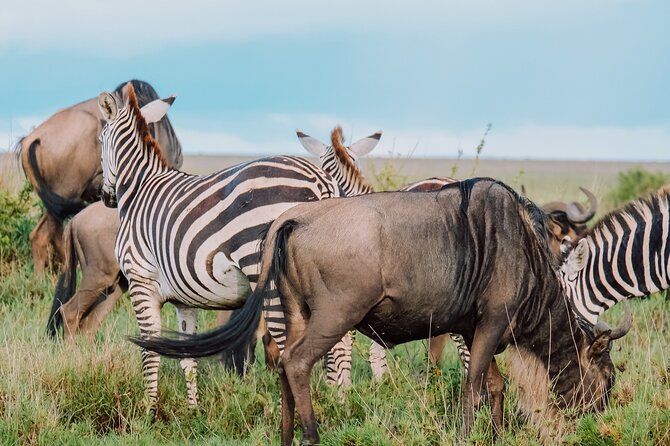
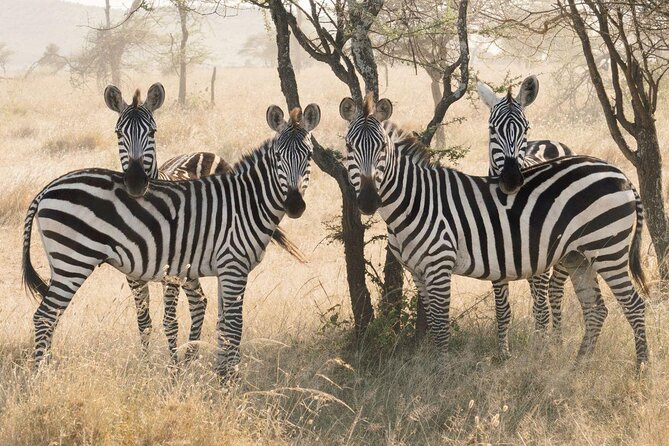
Day four takes you toward Central Serengeti, with a picnic lunch and wildlife viewing along the route. The Serengeti is the trip’s great open stage, famous for the annual movement of more than 1.5 million wildebeest and hundreds of thousands of zebras.
The migration is not a single event at one fixed location. It is a huge, moving cycle driven by rain, grass, calving, predators, and water. The route describes animals moving about 1,000 kilometers, or roughly 600 miles, and notes that wildebeest can produce more than 8,000 calves per day during the calving period.
The July to October period is associated here with territorial competition, mating, and river crossings. Those months can offer dramatic scenes, but the animals may be spread across a wide area. You should not judge the safari only by the chance of seeing a crossing.
The Central Serengeti day is also valuable when the migration is elsewhere. Lions, cheetahs, hyenas, elephants, and other animals live in the park year-round. Your guide’s ability to read the terrain, listen to radio information, and spot movement can shape the day.
A picnic lunch keeps the route flexible, but you should expect extended time in the vehicle. Roads between the parks and distant regions are part of the experience. If you want a trip with little driving, this is not the right format. If you want to connect several of Tanzania’s best-known wildlife areas in one journey, the road time serves a purpose.
Days 5 and 6: Two chances in the Mara area
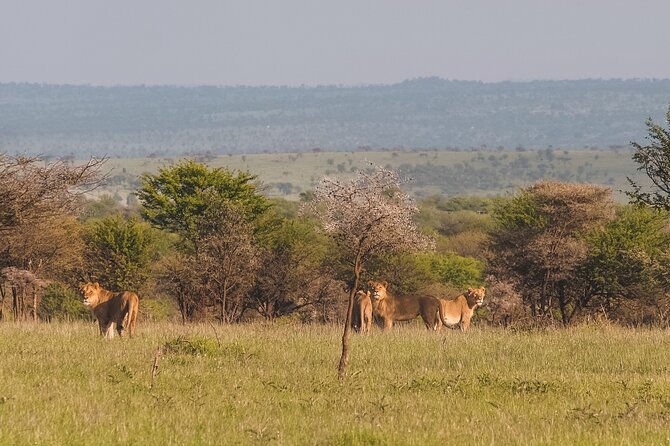
After breakfast on day five, you continue north toward the Mara area of the Serengeti. The scenery changes to kopjes, woodland, river vegetation, and open plains. The region resembles Kenya’s Masai Mara in character, but you remain within Tanzania.
The Mara River is the focus. Wildebeest and zebras may gather at the bank, hesitate, turn back, and return days later. A crossing can happen suddenly, or not at all during your stay. The itinerary is refreshingly honest about this point: finding a crossing is difficult and sometimes comes down to luck.
That uncertainty is not a flaw in the safari. It is the reality of watching a wild migration. You cannot schedule animals like a stage show. The value of having two days in the Mara region is that you get more than one chance to explore the river area and surrounding plains.
Day six is listed as a game drive in the Mara region. The extra day gives your guide room to search without also needing to make a major transfer. You might spend time near the river, investigate nearby kopjes, or focus on other wildlife if the herds are not ready to cross.
The crocodiles add danger to the migration story, but do not expect a guaranteed attack or crossing spectacle. Your best approach is to enjoy the entire northern Serengeti, not only one hoped-for moment. Lions and cheetahs may be present among the herds, and the area’s mix of open plains and river vegetation makes it rewarding even when the river stays quiet.
For photography, tell your guide what matters most. Albert was praised for finding good camera positions, while Juma was praised for patience, humor, and a sharp eye. Rodrick and Roderick were also singled out for field knowledge and driving skill. You cannot request a specific guide with certainty from the information provided, but you can ask Gosheni about guide assignment before paying.
Day 7: Flying south from Kogatende
After breakfast, you drive to Kogatende Airstrip and fly to Arusha, arriving in time for lunch. From Arusha, a vehicle takes you to Kilimanjaro International Airport for your onward flight.
This is one of the smartest parts of the plan. After several days of long road sections, the air transfer reduces the final travel burden. It also makes the itinerary workable for people whose international flight leaves later in the day.
You should still confirm the timing of the domestic flight and your international departure. The schedule says you arrive in Arusha for lunch and then continue to the airport, but exact flight times are not provided. Leave enough margin for delays and changes.
The guides are a major part of the experience
On safari, the vehicle is your viewing platform, but the guide is your interpreter, driver, spotter, and problem solver. The strongest praise attached to this trip concerns the guides.
Juma was described as patient, funny, experienced, and attentive to small details. Samir was praised for handling special requests and solving problems. Calvin Kileo was credited with understanding wildlife and local culture, while James was praised for explaining both nature and local life.
Hassani was especially valued for handling difficult roads in the rainy season, including the Ndutu area. That detail matters if you are considering a seasonal trip. Conditions can change quickly, and an experienced driver can affect comfort and access.
The company has many named guides in the supplied feedback, including Frank Winstone, Elibariki, Albert, Rodrick, Roderick, Ombeni, Francis, Bariki, Obeini, and Hassani. You should treat this as evidence of a strong guiding team, not a promise that one particular person will lead your safari.
Accommodation, meals, and comfort
All accommodation is included, along with six breakfasts, six lunches, and six dinners. The food was praised for variety and flavor, and Acacia luxury tented camps in Tarangire and Serengeti were described as comfortable and well placed for wildlife viewing.
The exact property list is not supplied, so ask for it before booking. Accommodation can shape the safari as much as the animals do. A well-located camp reduces road time and gives you a more peaceful base, while a long transfer to a distant lodge can make an already busy day tiring.
This is marketed as a high-end tour, but you should confirm what high end means in practical terms. Ask about room style, private bathrooms, electricity, laundry, Wi-Fi, and the vehicle. Those details are not provided here and should not be assumed.
Who should book this safari?
I would recommend this route to you if you want Tanzania’s major wildlife highlights in one carefully organized trip, prefer a private group, and are willing to accept long drives for access to the northern Serengeti.
It suits couples, families, and serious wildlife photographers who value a dedicated guide. The private format is especially useful for families because you do not need to match another group’s schedule.
It is less suitable if you want a slow lodge holiday, dislike early starts and long road journeys, or need a guaranteed migration crossing. It also may not suit a strict budget. The price pays for comfort, access, and private service, but you should confirm every lodging and flight detail first.
Cancellation is free if you cancel at least 24 hours before the start time. Poor weather may lead to a new date or a full refund. Budget separately for visas, insurance, personal purchases, airport or departure taxes, extra nights, and tips. The stated tipping guideline is $20 per person per day.
Should you book the Tanzania Odyssey Safari?
Book it if the northern Serengeti and Mara River are your priority, and you want Tarangire and Ngorongoro included without arranging several separate trips. The two Mara days are a real strength, and the flight from Kogatende makes the final day easier.
Before committing $7,630, request the full accommodation list, vehicle details, domestic flight schedule, and guide arrangements. If those match your expectations, this is a strong choice for a private, comfort-focused Tanzania safari. Just keep your expectations grounded: you can plan the route, but the animals write the schedule.
FAQ
Where does the safari begin?
The safari begins with pickup at Kilimanjaro International Airport in Tanzania. Gosheni staff provide a briefing and transfer you to accommodation in Arusha.
Is this a private safari?
Yes. Only your group participates in this private tour or activity.
Which national parks and regions are included?
The route includes Tarangire National Park, Ngorongoro Crater, Central Serengeti, and the Mara region of northern Serengeti.
Is a Mara River crossing guaranteed?
No. Crossings are difficult to predict. Herds may gather near the river and wait for days before crossing, or may not cross during your visit.
What meals are included?
Six breakfasts, six lunches, and six dinners are included.
What is not included in the price?
Airport or departure taxes, extra accommodation before or after the safari, personal expenses, souvenirs, travel insurance, visa fees, and tips are not included. The suggested tip is $20 per person per day.
More 7-Day Experiences
- Kilimanjaro climb by Lemosho Route (7-day)
★ 5.0 · 651 reviews - Kilimanjaro climb, Machame Route (7-day)
★ 5.0 · 262 reviews - Climbing Kilimanjaro through 7 days Machame Route
★ 5.0 · 151 reviews - 7 Days Kilimanjaro via Machame route affordable price
★ 5.0 · 110 reviews
Just added around Moshi
- Moshi: Lake Chala Tour: Hiking &/or Kayaking★ 4.5 · 3 reviews
- 3 Days Tanga Exclusive Beach Holiday★ 5.0 · 3 reviews
- Serengeti Wildebeest Migration.★ 5.0 · 3 reviews
- Chemka Hotpsrings E-Bike Day Trip★ 5.0 · 3 reviews
- Explore 1 day Ngorongoro Crater Budget Group Safari from Arusha★ 5.0 · 3 reviews
- Explore the 360° of Kilimanjaro★ 5.0 · 3 reviews
- Affordable Short Tanzania Safari (2 Days Camping Safari)★ 5.0 · 3 reviews
- Rongai Route 7 Days★ 5.0 · 3 reviews
Safaris in Moshi, compared.

Unforgettable Tanzania Safari And Zanzibar Beach
Read our review →
Serengeti, Ngorongoro and Tarangire 4 Days Safari
Read our review →
7-Day Magical Tanzania Safari -Premium High End Package
Read our review →Browse the lists this tour appears in