
Reviewed · KILIMANJARO TREKS
7 days Kilimanjaro climb via Machame route (Whiskey route)
Kilimanjaro saves its hardest test for sunrise. This 7-day Machame Route climb gives you some of the mountain’s finest scenery, from rain forest and moorland to glaciers, volcanic rock, and the summit rim. I like the route’s changing scenery, and I like the way the schedule uses the Lava Tower ascent and Barranco descent for altitude practice.
I also like that the price includes park and rescue fees, mountain meals, tents, purified drinking water, and a full support crew. The main drawback is the pace: seven days is demanding, and the summit night begins around 11:30 p.m. This is a better choice for fit hikers with some mountain, backpacking, or high-altitude experience than for first-time walkers seeking a gentle introduction.
The climb is operated by Serengeti African Tours from Arusha. The group may include up to 16 people, with pickup available. The company has earned a 5-star rating from 16 published ratings, with all recommending it. Much of the praise centers on the guides and porters, especially guides named Gasto, James, and David, along with Lucas, who handles trip planning and questions.
In This Review
- Key points to know before you book
- Why the Machame Route is so popular
- Arusha to Machame Gate, then into the rain forest
- Day 2: Moorland and the Shira Plateau at 3,840 meters
- Day 3: Lava Tower and the altitude lesson
- Day 4: The Barranco Wall and Karanga Valley
- Day 5: Barafu Camp and the final preparation
- Day 6: Stella Point, Uhuru Peak, and sunrise
- Day 7: Celebration, certificates, and the Mweka descent
- What the $2,300 price really covers
- Camp life, meals, and the porter team
- Who should choose this climb?
- Should you book the 7-day Machame climb?
- FAQ
- Where does the Kilimanjaro climb begin?
- How long is the Machame Route climb?
- What is the maximum group size?
- Is the Machame Route suitable for beginners?
- What altitude does Uhuru Peak reach?
- What altitude is Stella Point?
- What is the highest point reached before the summit?
- Are meals included?
- Is drinking water included?
- Are flights and climbing gear included?
- Are park and rescue fees included?
- When does the summit attempt begin?
- What certificate do you receive after the climb?
Key points to know before you book
- Machame is Kilimanjaro’s scenic Whiskey Route: You move through rain forest, moorland, semi-desert, alpine desert, and the glacial summit zone.
- The 7-day plan is physically serious: Steep trails, long walking days, cold camps, and a difficult overnight summit push require steady preparation.
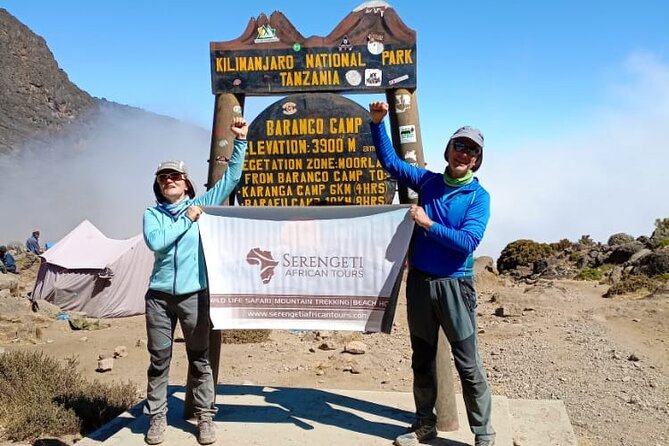
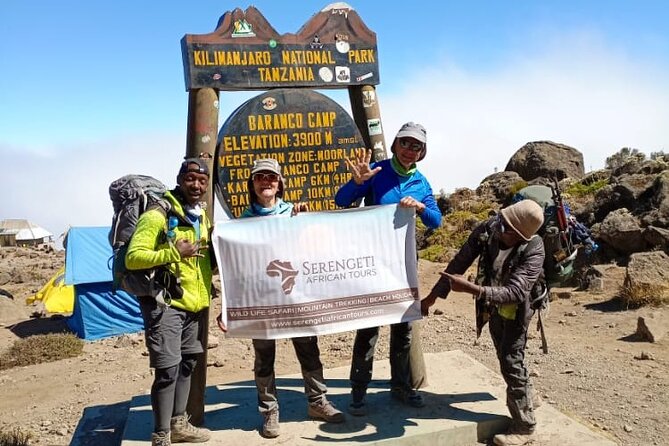
- Lava Tower is the key acclimatization day: You climb to 4,630 meters, then descend to Barranco Camp, giving your body useful time at altitude.
- The Barranco Wall looks worse than it feels: It is a Class 2 scramble and one of the memorable sections of the route.
- The summit attempt starts before midnight: You leave Barafu Camp around 11:30 p.m. with tea and biscuits before the long climb to Stella Point and Uhuru Peak.
- The $2,300 price covers the mountain essentials: Flights, tips, and personal climbing gear are extra, so budget for those separately.
Why the Machame Route is so popular
Machame earns its Whiskey nickname from its tougher character. Unlike the gentler-sounding Marangu Route, it uses tents and includes steep, uneven sections. You should expect a real mountain trek, not a walk with a summit photo attached.
The reward is variety. On the first day, the trail enters the rain forest almost at once. By the second day, trees give way to moorland and the open Shira Plateau. The route then crosses rocky ground near Lava Tower, passes below glaciers, climbs the Barranco Wall, and reaches the exposed high camp at Barafu.
That constant change keeps the walk interesting. It also gives you a clear sense of moving through Kilimanjaro’s different climate zones. I consider that a major reason to choose Machame, even though the route can be muddy, steep, and tiring.
More Kilimanjaro routes and climbs:
- 8-Day Small-group Lemosho Kilimanjaro Summit Trekking
★ 5.0 · 186 reviews - 7-Day Machame Kilimanjaro Summit Tour from Arusha
★ 5.0 · 125 reviews - Mountain Kilimanjaro Day Hike
★ 5.0 · 102 reviews
Arusha to Machame Gate, then into the rain forest
Your climb begins with pickup in Arusha, at about 1,400 meters. After an early breakfast, the drive continues to Machame Village, where you can buy mineral water and receive a packed lunch.
The road from the village to Machame Gate can be affected by muddy conditions. If vehicles cannot continue, you walk roughly 3 kilometers for about an hour before reaching the gate. This is a small but important practical detail: your first walking time may begin before the official trailhead.
After registration, the path enters the rain forest. The first day takes about seven hours, and the forest can be wet, muddy, and slippery, especially when rain turns the trail into a soggy track. Good waterproof footwear and rain protection are not optional here.
A welcome lunch stop comes roughly halfway. You then continue to Machame Camp, where the first night on the mountain begins. The forest is atmospheric and shaded, but you should not expect a relaxed stroll. The steady climb, mud, and humidity make this a proper opening day.
Day 2: Moorland and the Shira Plateau at 3,840 meters
Day two covers about 9 kilometers in roughly six hours. You leave Machame Camp after breakfast and climb for around an hour toward the top of the forest.
The trail then becomes gentler for about two hours as you pass through moorland. This zone feels more open, with fewer trees and wider views. After lunch and a short rest, the route climbs a rocky ridge toward the Shira Plateau.
One of the best views appears here: the Western Breach and its glaciers come into sight in an easterly direction. You are now west of Kibo, the main volcanic cone, and the mountain begins to feel much larger and more exposed.
Shira Camp sits at about 3,840 meters. The camp is colder than Machame, with temperatures potentially dropping well below freezing. Porters boil water for drinking and washing, which helps, but camp life remains basic. You will have a tent, meals, and water, yet not the comforts of a lodge.
Day 3: Lava Tower and the altitude lesson
The third day is the route’s main altitude-training day. You walk east through a semi-desert of rock toward Lava Tower, reaching about 4,630 meters after approximately five hours.
This is often the toughest day before the summit push. At this height, you might feel breathless, irritable, or develop a headache. Take those symptoms seriously and tell your guide. The route is designed to bring you high, then take you lower for the night.
After lunch near Lava Tower, you descend roughly 680 meters toward Barranco Camp. That high climb followed by a lower sleeping altitude is valuable acclimatization. It is one of the strongest features of this seven-day plan, even though the day can feel like a strange amount of effort for a campsite that sits lower than your lunch stop.
The descent to Barranco brings a welcome change in temperature and scenery. You have crossed one of the route’s starkest sections and positioned yourself well for the next day.
A few more trips of this kind worth comparing:
- Tanzania Classic – 7 Days
★ 5.0 · 1,151 reviews - 7-Day Premium Luxury Tanzania Safari All-Inclusive
★ 5.0 · 426 reviews - Group Safari 7 Days in Tanzania’s Main Parks
★ 5.0 · 240 reviews - 7 Days Tanganyika Wilderness Safari
★ 5.0 · 159 reviews
Day 4: The Barranco Wall and Karanga Valley
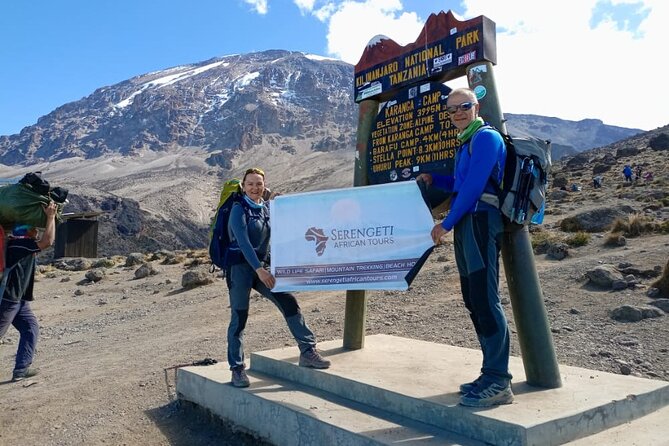
Day four is shorter, covering about 5 kilometers in four to five hours. It is an ideal day to keep moving without adding another long distance.
The main event is the Barranco Wall. From below, it can look intimidating. The route is described as a Class 2 hike, and it is usually easier than its appearance suggests. You will use your hands at points and pay close attention to your footing, but this is not technical climbing.
At the top, you may see Heim Glacier and look out above the clouds. The trail then rises and falls through the Karanga Valley before reaching Karanga Camp.
This day gives you time to adjust to the altitude and to settle into the mountain routine. You will be sleeping at roughly 3,959 meters, so rest matters more than speed. Walk slowly, drink regularly, and let the guides set a sensible pace.
Day 5: Barafu Camp and the final preparation
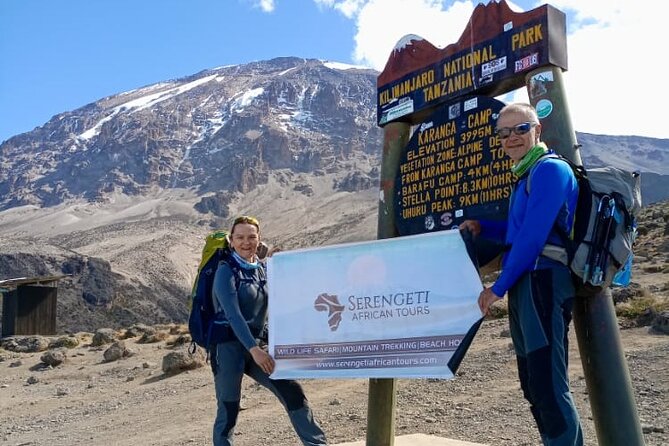
Day five is short in distance, about 4 kilometers over two to three hours, but it is important. You leave Karanga Camp and follow the trail toward Barafu Hut.
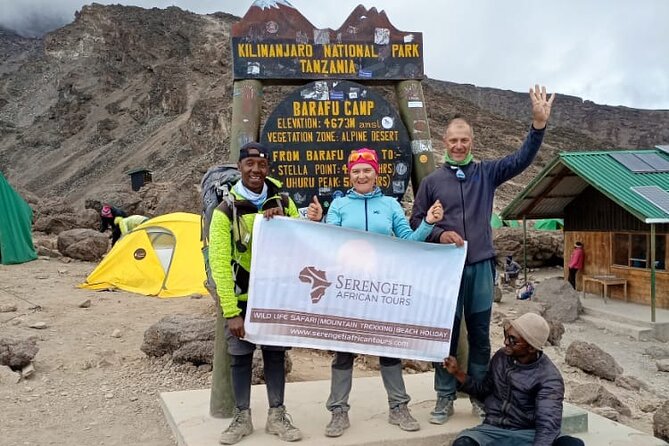
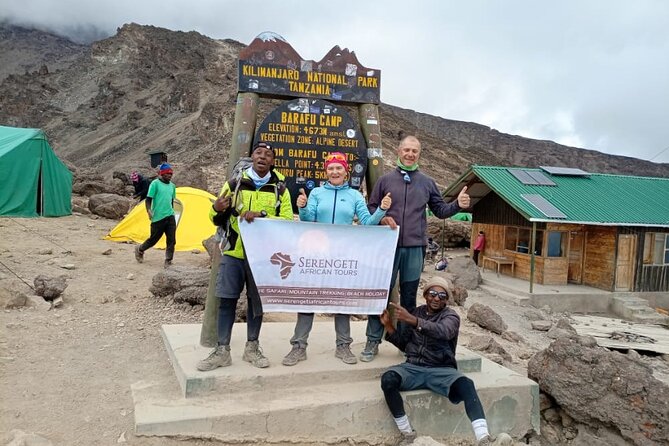
The route intersects with the Mweka Route, which you use during the descent. After about an hour, you reach Barafu Hut, the last water stop for the porters. Barafu Camp itself has no accessible water and sits at about 4,550 meters on a rocky, exposed ridge.
The Swahili word barafu means ice, and the name fits the conditions. Wind and rocks make the camp feel stark. Your tent will be exposed, so get familiar with the campsite before dark and organize your summit clothing, headlamp, water, snacks, and personal gear in advance.
Dinner is served early, followed by a short night of rest. The schedule can feel odd because you have just eaten while your body is preparing to sleep during the afternoon or early evening. That rest is precious. Summit night starts around 11:30 p.m.
Day 6: Stella Point, Uhuru Peak, and sunrise
Summit day begins with tea and biscuits before you leave in the darkness. You climb northwest through heavy scree toward Stella Point on the crater rim.
The six-hour walk to Stella Point, at about 5,685 meters, is often the hardest mental and physical section. Scree makes every step feel slow, and the altitude is severe. The best approach is to keep your pace measured and follow your guide’s instructions.
At Stella Point, you stop briefly. If the weather cooperates, sunrise over Kilimanjaro provides the day’s great reward. From there, you generally encounter snow during the roughly two-hour ascent to Uhuru Peak.
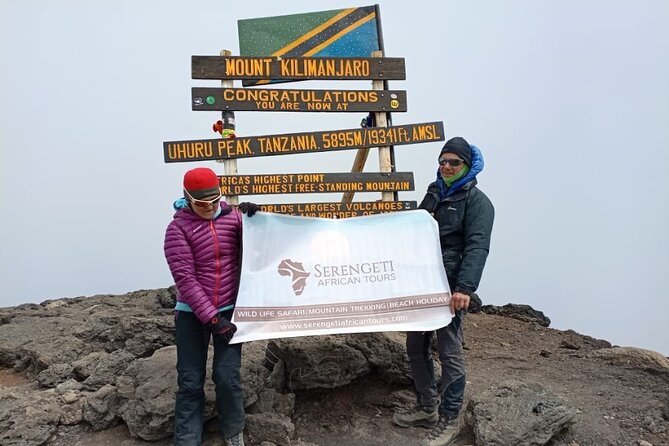
Uhuru Peak reaches 5,895 meters, the highest point on Kilimanjaro. Your time at the summit depends on weather conditions. Do not linger simply for photographs if the cold, wind, or altitude is becoming unsafe.
The summit day is not finished at the top. You still need to descend after reaching your highest point. That is why the previous day’s early rest, careful packing, and sensible pacing matter so much.
Day 7: Celebration, certificates, and the Mweka descent
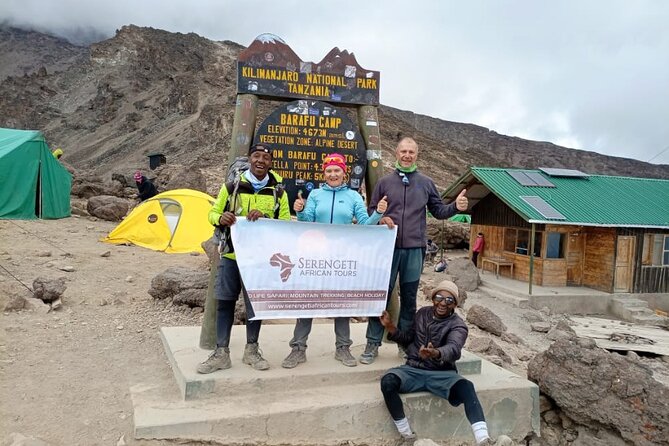
After a well-earned breakfast, the mountain staff hold a celebration with singing and dancing. It is also the point when you give tips to the main guide, assistant guides, chef or chefs, and porters.
Tipping is not included in the $2,300 price. Carry enough local currency or another accepted form of payment and ask the operator for current guidance before the climb, since the correct amount may depend on group size and crew roles.
The descent to Mweka Gate takes about three hours through forest and covers roughly 15 kilometers. At the gate, you sign your name to receive a certificate. Reaching Stella Point earns a green certificate, while reaching Uhuru Peak earns a gold certificate.
The route then continues to Mweka Village, about one hour and 3 kilometers away. The activity ends back at the meeting point in Arusha, according to the supplied details, though you should confirm the exact transfer timing when arranging your trip.
What the $2,300 price really covers
At $2,300 per person, the price is not simply paying for a guide to walk beside you. It includes the major operating costs of a supported Kilimanjaro climb:
- Park fees and rescue fees
- Professional mountain guides
- Waterproof, four-season private mountain sleeping tents
- A mess tent with tables and chairs
- Breakfast, lunch, and dinner while on the mountain
- Large portions of fresh, nutritious food
- Clean, purified drinking water
- Porter support and stated fair treatment of porters
That package gives the price solid value, especially because park access, rescue coverage, food, tents, and water can add up quickly on a high mountain. The meal plan lists seven breakfasts, seven lunches, and six dinners, while the final morning includes breakfast after the summit night.
You still need to pay for flights, tips, and personal climbing gear. Those exclusions matter. Waterproof clothing, warm layers, gloves, headlamp, suitable boots, and a sleeping bag can add a noticeable amount to your total budget.
Food receives repeated praise, as does the crew’s support. Names that appear in the feedback include Gasto, James, and David as guides, with Lucas handling prompt communication and trip planning. One account also describes a guide carrying a climber’s bag during summit night. That is encouraging, but you should still pack light and ask exactly what luggage support is included.
Camp life, meals, and the porter team
The support system is a major part of this climb. You sleep in private mountain tents, eat in a mess tent, and receive purified drinking water. Porters boil water for drinking and washing at camp, but seven days on Kilimanjaro is still a basic outdoor trip.
Do not expect running water at the camps. You will wash with supplied water and manage your personal items carefully. Keeping dry clothing separate from wet layers is especially useful after the rain forest day.
The food is described as generous, fresh, healthy, and nutritious. That matters more than fancy presentation when you are walking for hours at altitude. A substantial meal helps you recover, while tea and biscuits before the summit give you something light to start with.
The crew also shapes the atmosphere. The strongest praise is directed at the guides, cooks, and porters, who are described as attentive, dedicated, friendly, funny, and trustworthy. The stated commitment to fair and ethical porter treatment is an important point to check when comparing operators.
Who should choose this climb?
I would recommend this route to you if you:
- Have a moderate level of physical fitness
- Enjoy long uphill walks and uneven trails
- Have some hiking, backpacking, or high-altitude experience
- Prefer scenery and a tent-based mountain route
- Can handle cold nights and limited washing facilities
- Are prepared for a midnight start and a long summit day
I would be cautious if you dislike steep paths, mud, exposed camps, or basic conditions. The seven-day schedule is not the longest option on Kilimanjaro, so it offers less time for adjustment than a longer route.
The maximum group size is 16. That is large enough to provide company but small enough to remain manageable, provided the guide team is well organized. Ask about your expected group size, guide-to-climber ratio, and the exact personal gear list before paying.
Pickup is offered from Arusha, and the activity begins from that meeting point. The listed start time is 12:00 a.m., while the first day also refers to an early breakfast and pickup. Confirm the practical departure time directly, since the midnight notation may refer to the booking system rather than the actual road departure.
Should you book the 7-day Machame climb?
Book it if you want Kilimanjaro’s most scenic route and you are ready for a demanding seven-day mountain trip. The Lava Tower and Barranco schedule gives you useful acclimatization, while the crew, meals, tents, park fees, and rescue fees make the $2,300 package reasonably strong in value.
Think twice if you are new to strenuous hiking or want a relaxed summit attempt. The route is steep, the summit night is punishing, and weather can make the rain forest muddy and the high camps bitterly cold.
For the right person, this is a serious but rewarding way to reach Africa’s highest summit. Choose it for the changing scenery, the strong support team, and the chance to experience Kilimanjaro as a real mountain rather than a quick sightseeing stop.
Cancellation is free if you cancel at least 24 hours before the local start time. Changes or cancellations made inside that period are not accepted for a refund.
FAQ
Where does the Kilimanjaro climb begin?
The climb begins in Arusha, Tanzania, with pickup offered from the meeting point.
How long is the Machame Route climb?
The climb lasts approximately seven days.
What is the maximum group size?
The maximum group size is 16 people.
Is the Machame Route suitable for beginners?
The route is described as difficult, steep, and challenging. It is better suited to people with moderate fitness and some hiking, backpacking, or high-altitude experience.
What altitude does Uhuru Peak reach?
Uhuru Peak reaches 5,895 meters.
What altitude is Stella Point?
Stella Point is at approximately 5,685 meters on the crater rim.
What is the highest point reached before the summit?
On day three, the route reaches Lava Tower at approximately 4,630 meters.
Are meals included?
Yes. Breakfast, lunch, and dinner are included while on the mountain. The supplied meal plan lists seven breakfasts, seven lunches, and six dinners.
Is drinking water included?
Yes. Clean, purified drinking water is included, and porters boil water for drinking and washing.
Are flights and climbing gear included?
No. Flights, tips, and personal climbing gear are not included.
Are park and rescue fees included?
Yes. Park fees and rescue fees are included in the price.
When does the summit attempt begin?
You rise around 11:30 p.m. and leave after tea and biscuits for the climb toward Stella Point and Uhuru Peak.
What certificate do you receive after the climb?
You receive a green certificate if you reach Stella Point and a gold certificate if you reach Uhuru Peak.
Just added around Arusha
- 5 Days Safari Tarangire, Serengeti, and Ngorongoro Crater★ 5.0 · 3 reviews
- Love lives in Africa★ 5.0 · 3 reviews
- 5 Days of Safari, Culture & Hot Springs – Tour from Arusha★ 5.0 · 3 reviews
- Arusha National Park Safari by Jeep★ 4.5 · 3 reviews
- 5Days Family _Group Tour Lodging Mid-Range in the Jungle★ 5.0 · 3 reviews
- Serengeti & Ngorongoro 3 Days Budget Safari★ 5.0 · 3 reviews
- 2 Days Tarangire and Ngorongoro Crater Tour★ 5.0 · 3 reviews
- 7 Days PRIVATE Best of Tanzania Safari *Departing everyday*★ 5.0 · 3 reviews
Kilimanjaro Treks, compared.



8-Day Small-group Lemosho Kilimanjaro Summit Trekking
Read our review →


Climbing Kilimanjaro through 7 days Machame Route
Read our review →

Browse the lists this tour appears in