
Reviewed · KILIMANJARO TREKS
7 days Lemosho route
The long way up pays off. This Kilimanjaro climb uses the scenic Lemosho Route, known for lighter trail traffic, changing habitats, and a careful acclimatization plan. I like the quiet western approach and the climb-high, sleep-lower pattern at Lava Tower and Barranco. I also like the strong support system, with guides, porters, a chef, camping equipment, transfers, and balanced meals included.
The main drawback is the price: $6,300 per private group of up to two people is a serious commitment. The trip is also advertised as a 7-day climb but occupies about 8 days when the Arusha arrival, hotel night, and exit are counted. You need moderate fitness, proper trekking gear, and patience for a very long summit day.
In This Review
- Key points to know before booking
- Why the western Lemosho approach is worth the extra time
- Your Arusha arrival includes a useful gear check
- Day two: Londorossi Gate and the first forest walk
- Day three: Shira Plateau and the first cold night
- Day four: Lava Tower gives you altitude, then relief
- Day five: The Barranco Wall and a short acclimatization day
- Day six: Karanga to Barafu, the final camp
- Day seven: Uhuru Peak and a punishing descent
- Day eight: Mweka Gate, certificates, and the crew celebration
- What the $6,300 private price really covers
- The guide team and the human side of the climb
- Who should book this Lemosho trek?
- FAQ
- How long does the Lemosho Route experience take?
- What is the price for this Kilimanjaro climb?
- What meals are included?
- Is transportation included?
- What fitness level is required?
- Is trekking equipment included?
- What happens if the experience is canceled because of weather?
- Should you book it?
Key points to know before booking
- The Lemosho Route begins in the west, with a long transfer from Arusha to Londorossi Gate before the walking starts.
- The route crosses five habitat zones, from montane forest and moorland to alpine desert, stone scree, and the ice-capped summit.
- Lava Tower at 4,630 meters is the acclimatization test, followed by a descent to Barranco Camp at 3,950 meters.
- Summit day lasts about 15 hours, with roughly 8 hours to Uhuru Peak and another 7 to 8 hours down to Mweka.
- The private price includes major operating costs, including park fees, camping equipment, guides, porters, transportation, and meals.
- The company earned praise for pacing and organization, including a reported 100 percent summit result on one departure.
Why the western Lemosho approach is worth the extra time
Kilimanjaro is not a technical climb, but it is a high-altitude trek. The route you choose affects how much time your body has to adjust, how crowded the trail feels, and what scenery you see along the way.
Lemosho starts at Londorossi Gate on the western side of the mountain. Getting there takes about two hours from Arusha, followed by a rough 45-minute forest track that requires a four-wheel-drive vehicle. That transfer is not glamorous, but it puts you on a quieter trail and gives the climb a gradual start.
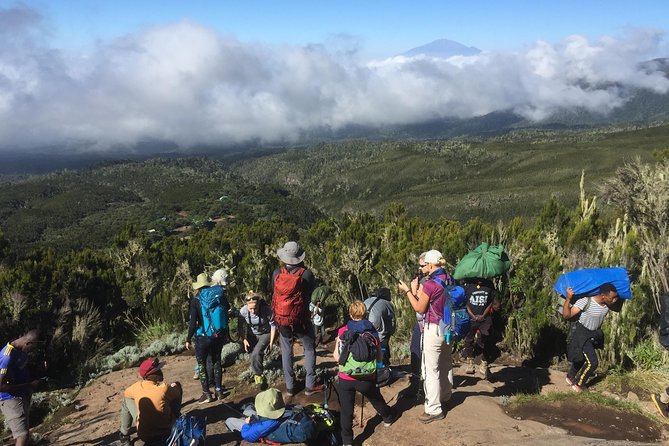
The route begins in thick montane forest. You might spot colobus monkeys, and the first walking hours feel more like a forest trek than a high mountain expedition. Over the next several days, the trees thin out, the air gets colder, and the views open toward Shira Plateau, the Western Breach, glaciers, and the summit cone.
Lemosho joins the Machame route at Shira 2 Camp. From there, you follow the southern circuit through Lava Tower, Barranco, Karanga, and Barafu before descending by Mweka. This gives you a broad range of scenery without sending you back down the same trail.
I consider seven walking days the minimum sensible plan for Lemosho. The published schedule uses seven trekking days plus the Arusha arrival and hotel night, making eight days in practice. An extra day would offer better acclimatization, so ask Wild Root Safaris and Adventures to confirm the exact schedule before paying.
More Kilimanjaro routes and climbs:
- 8-Day Small-group Lemosho Kilimanjaro Summit Trekking
★ 5.0 · 186 reviews - 7-Day Machame Kilimanjaro Summit Tour from Arusha
★ 5.0 · 125 reviews - Mountain Kilimanjaro Day Hike
★ 5.0 · 102 reviews
Your Arusha arrival includes a useful gear check
The trip begins with pickup at Kilimanjaro International Airport and a transfer to Arusha Planet Lodge. This first night matters. You are not expected to arrive at the gate and start hiking immediately.
At the lodge, you meet your guide for a briefing and equipment check. Any missing mountain gear can be rented that day. That is handy if your luggage is delayed or you discover that your cold-weather kit is not quite up to the job.
The package includes transportation, but your international flight, visa, and personal trekking gear are not included. The start point is listed in Arusha, with pickup offered. The stated start time is 8:00 a.m., although the airport arrival transfer and hotel briefing naturally depend on your flight schedule.
This is also the moment to ask direct questions about the camping equipment included, the number of porters assigned to your group, and the exact meal plan. The price covers camping gear, guides, porters, transportation, breakfast, lunch, and dinner, but personal clothing and technical trekking equipment remain your responsibility.
Day two: Londorossi Gate and the first forest walk
After breakfast, you drive from Arusha at about 1,400 meters to Londorossi Park Gate at roughly 2,100 meters. The journey takes around two hours before the rougher forest road begins.
Near the gate, you receive a packed lunch and have the chance to buy mineral water. The crew registers with the Tanzania National Parks Authority, distributes supplies, and gets the group ready to walk.
The first hike takes about three hours through montane forest. This is a short day, which is useful because the goal is to begin steadily rather than burn energy early. The forest can feel humid and enclosed, while monkeys and birds give the route a sense of place beyond the simple business of gaining height.
Your tents are set up before you reach camp, and the porters prepare drinking and washing water. Those small services become increasingly valuable as the trail gets colder and more exposed.
The main caution is the road. The final approach to the gate is bumpy, and anyone prone to motion sickness may want to prepare for it. Once you start walking, the pace should remain controlled. This is not the day to prove anything.
Day three: Shira Plateau and the first cold night
The trail leaves the forest and enters heather moorland. You walk for about six hours, crossing streams and moving across the plateau toward Shira 2 Camp at approximately 3,840 meters.
This is where Kilimanjaro begins to feel like a high mountain. The trees disappear, the air gets thinner, and the open views make the mountain feel much larger. From camp, you can see toward the Western Breach and its glaciers to the east.
Shira 2 is exposed, and temperatures can drop below freezing at night. Your tent may be comfortable enough with the right sleeping bag and layers, but cold-weather preparation is not optional. Pack clothing that you can put on before the evening chill takes hold.
The schedule lists six to six and a half hours for this day. That difference is minor on paper, but mountain timing varies with pace, weather, and breaks. Your guide’s job is to keep the group moving slowly enough for your body to adjust.
Dinner and evening snacks are prepared by the camp chef. A warm meal is more than a pleasant extra here. You need calories, fluids, and rest for the tougher days ahead.
A few more trips of this kind worth comparing:
- Tanzania Classic – 7 Days
★ 5.0 · 1,151 reviews - 7-Day Premium Luxury Tanzania Safari All-Inclusive
★ 5.0 · 426 reviews - Group Safari 7 Days in Tanzania’s Main Parks
★ 5.0 · 240 reviews - 7 Days Tanganyika Wilderness Safari
★ 5.0 · 159 reviews
Day four: Lava Tower gives you altitude, then relief
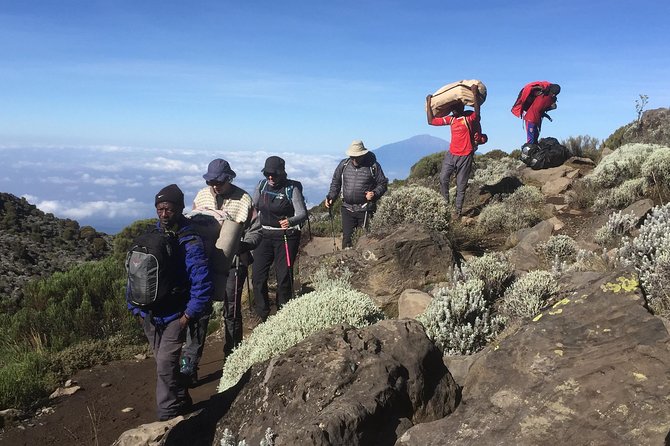
This is one of the most important days on the route. You leave the moorland behind and walk through a rocky semi-desert zone for about five hours toward Lava Tower at 4,630 meters.
The total walking time is around seven hours, covering approximately 15 kilometers. Packed lunch is served at Lava Tower, and you may be able to climb the formation if weather permits. The key benefit, though, is not the optional scramble. It is the controlled exposure to a higher altitude.
At this height, headaches and shortness of breath are common signs that your body is working hard. Do not treat them as a contest. Tell your guide how you feel, drink regularly, and follow the slow pace.
After lunch, you descend about 680 meters to Barranco Camp at 3,950 meters. This is the classic climb high, sleep lower pattern that makes the day valuable for acclimatization. You gain height during the walk, then sleep at a lower camp instead of spending the night at Lava Tower.
Barranco is one of the most memorable camps on the route because of its position beneath the Barranco Wall. The drawback is simple: you have already walked uphill for hours, then must descend for camp. That can feel frustrating if you think only in terms of distance. For altitude adjustment, it is a smart trade.
Day five: The Barranco Wall and a short acclimatization day
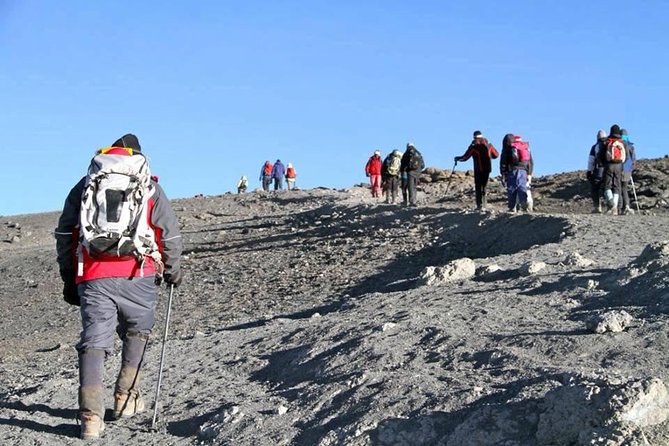
The day begins with the Barranco Wall. From below, it may look intimidating, but the route is described as a Class 2 hike and is generally less difficult than its appearance suggests.
You will use your hands in places, but this is not presented as technical climbing. Move slowly, listen to your guide, and keep your pack balanced. The top gives you views toward Heim Glacier and a striking position above the clouds.
After the wall, the trail rises and falls through Karanga Valley before reaching Karanga Camp at about 3,950 meters. The walking distance is only around five kilometers, and the day takes four to five hours.
That shorter schedule is a major strength of the plan. You get time to recover after Lava Tower while still spending the night at a useful altitude. You should not mistake a short distance for an easy day, though. The wall and the repeated valley changes still require steady legs.
At camp, you have dinner and washing water. By now, the simple routine is clear: walk, eat, drink, rest, and repeat. The less energy you waste worrying about camp chores, the more you can reserve for the summit.
Day six: Karanga to Barafu, the final camp
The walk from Karanga to Barafu Camp takes about two to three hours and covers approximately four kilometers. The trail connects with the Mweka Route, which you will use for the final descent.
You pass the last water stop for the porters before reaching Barafu. There is no accessible water at the camp, so the support team must carry what is needed. Barafu sits at about 4,550 meters on a rocky, exposed ridge.
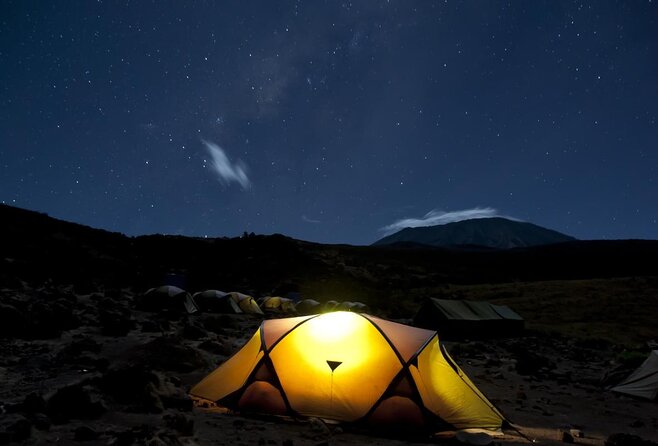
The Swahili word barafu means ice, and the camp earns its name through its cold, windy setting. Tents are exposed to wind and rocks, so look around and organize your sleeping area before darkness arrives. This is practical advice, not decoration. You may wake for the summit attempt around 11:30 p.m., and searching for equipment in the dark is a poor way to begin.
Dinner is served early, followed by rest. You will not get a normal night of sleep, but lying down still helps. Keep your summit clothing, gloves, headlamp, water, and snacks ready before you try to rest.
Day seven: Uhuru Peak and a punishing descent
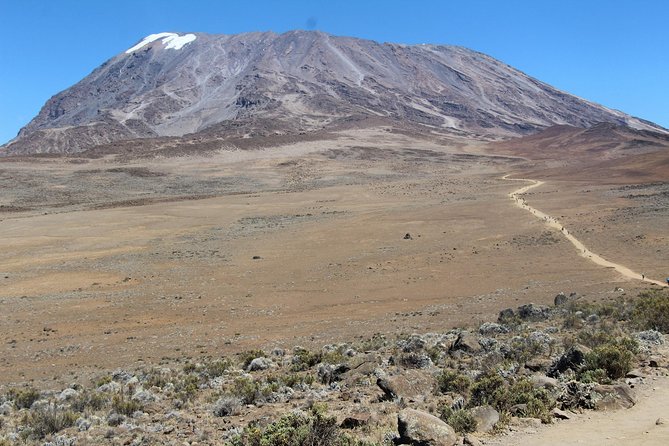
The summit day starts around 11:30 p.m. with tea and biscuits. You begin in darkness, ascending northwest over stone scree toward Stella Point at 5,685 meters.
The climb to Stella Point takes about six hours. This is usually the toughest part mentally and physically because the air is thin, the trail is steep, and every step feels slow. The guiding style matters greatly here. The company received strong praise for a controlled pace and careful acclimatization, with one group reporting that everyone reached the summit.
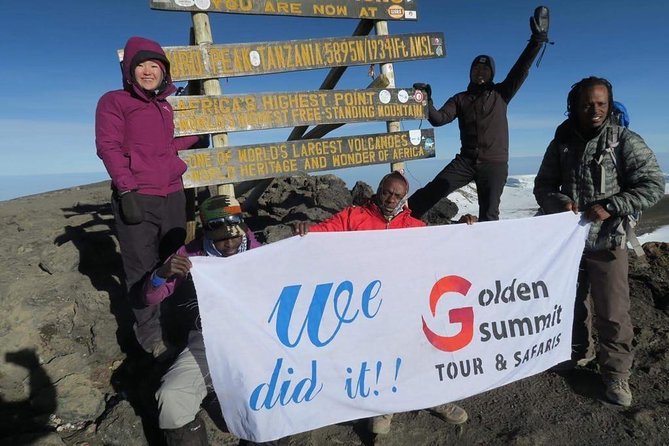
At Stella Point, you reach the crater rim and can watch the sunrise. From there, the route continues for about two hours over a snow-covered trail to Uhuru Peak at 5,895 meters, the highest point in Africa.
The final approach can feel surprisingly long. Keep your expectations modest. You may be cold, tired, short of breath, and moving slowly. The achievement comes from continuing safely, not from racing to the sign.
After Uhuru Peak, you descend to Barafu and continue to Mweka. The stated schedule allows about seven to eight hours for the descent, making the full day roughly 15 hours. The distance is about seven kilometers up and 23 kilometers down.
That is an enormous day. Even if the descent feels easier at first, your knees and feet will take a beating. This is the biggest physical consideration in the whole program. Eat something, drink, protect your feet, and follow your guide’s advice about the safest pace.
Day eight: Mweka Gate, certificates, and the crew celebration
After breakfast, the team holds a celebration with singing and dancing. You also present tips to the lead guide, assistant guides, chef or chefs, and porters. Tipping is not listed as included, so budget for it separately and ask the operator for current guidance before departure.
The walk to Mweka Gate takes about three hours through forest and covers approximately 15 kilometers. After signing your name at the national park office, you receive a completion certificate.
Those who reach Stella Point receive green certificates. Those who reach Uhuru Peak receive gold certificates. This gives the final paperwork a clear meaning, especially if altitude or weather prevents the last push to the summit.
From Mweka Gate, the plan includes a one-hour transfer to Mweka village, about three kilometers away. The activity then ends back at the listed meeting point in Arusha, although you should confirm the exact return arrangements.
What the $6,300 private price really covers
At $6,300 per group of up to two people, this is not a budget climb. Split between two people, the stated cost works out to $3,150 each, before flights, visas, personal trekking gear, and tips.
The price includes park admission fees, camping equipment, guides, porters, transportation, and meals. You receive seven breakfasts, seven lunches, and six dinners. The first and final days explain the meal count, since you are not spending every night on the mountain.
For a private pair, the value depends on what you want. You are paying for a dedicated arrangement rather than joining a large shared group, plus the staff and logistics needed to carry supplies, prepare food, manage camps, and handle park formalities.
The food received unusually strong praise. It was described as plentiful, balanced, and well prepared, which matters because appetite and energy can suffer at altitude. The crew’s coordination was also praised for keeping porters and guides working effectively without making them intrusive.
Before booking, request a written breakdown of camping equipment and transportation. The supplied information says camping gear is included but trekking gear is not. Those are different things. A tent and camp setup do not replace warm layers, sturdy footwear, gloves, or other personal equipment.
The guide team and the human side of the climb
A Kilimanjaro route is more than a line on a map. Your experience depends on the people controlling the pace, checking your condition, preparing meals, and getting camp ready.
The named staff connected with past departures include Mathew, Lucia as lead guide, and Hamish as a local guide and driver. The strongest praise focused on organization, personal attention, slow pacing, and support all the way to Uhuru Peak.
One group combined the climb with a three-day safari, and another was invited to consider a longer 8-night, 9-day climb with crater camping. Those options are not part of this package, but they show that Wild Root Safaris and Adventures may arrange longer Tanzania programs. Ask for a separate quote rather than assuming an extension is included.
The crew celebration at Mweka is a genuine closing ritual, but it also highlights the importance of fair tipping. Guides, assistant guides, chefs, and porters all contribute to your summit attempt. Clarify the recommended amount and payment method before leaving Arusha.
Who should book this Lemosho trek?
I would recommend this climb to someone who wants a quieter route, broad scenery, and a private setup for two people. It suits hikers with moderate fitness who can manage long walking days, cold camps, rough roads, and a summit day lasting about 15 hours.
It is also a good fit if you value support services. The package includes a chef, porters, guides, camping equipment, and meals, so you are not carrying every item or managing camp alone.
I would hesitate if you want a short holiday with flexible sleep, private rooms, or a low total cost. You should also think twice if you have not prepared for cold weather or if a 23-kilometer descent after the summit sounds beyond your current ability.
The route offers a strong chance of success, but no operator can promise a summit. Weather, altitude, and your health decide the final result. The company’s free cancellation policy allows a full refund if you cancel at least 24 hours before the start time. If poor weather forces cancellation, you are offered another date or a full refund. Changes made within 24 hours are not accepted.
FAQ
How long does the Lemosho Route experience take?
The program takes about eight days in total. It includes an Arusha arrival and briefing day, followed by the mountain trek and the descent to Mweka Gate.
What is the price for this Kilimanjaro climb?
The price is $6,300 per private group of up to two people. International flights, visas, trekking gear, and tips are not included.
What meals are included?
The package includes seven breakfasts, seven lunches, and six dinners. Meals are prepared during the mountain portion of the trip, with packed lunch provided near Londorossi Gate on the first hiking day.
Is transportation included?
Yes. Transportation is included, and airport pickup is offered. The route begins with a drive from Arusha to Londorossi Gate and ends after the descent through Mweka Gate and the transfer to Mweka village.
What fitness level is required?
A moderate physical fitness level is required. The summit day includes about eight hours to Uhuru Peak and another seven to eight hours descending to Mweka.
Is trekking equipment included?
Personal trekking gear is not included. Camping equipment is included, and missing personal mountain gear may be rented during the Arusha arrival day.
What happens if the experience is canceled because of weather?
If poor weather causes cancellation, you are offered a different date or a full refund. For your own cancellation, you must cancel at least 24 hours before the start time to receive a full refund.
Should you book it?
Book this Lemosho trek if you want a private, well-supported climb with a quiet start, strong scenery, and a route designed around acclimatization. The careful Lava Tower and Barranco plan, early gear check, porters, chef, and praised pacing all add real value.
Do not book it simply because the price promises a high summit success rate. You still need the right gear, moderate fitness, and the willingness to endure a cold night at Barafu followed by a very long summit day.
For two people who want experienced local support and a full Kilimanjaro experience, this is a convincing choice. Just confirm the exact number of trekking days, what camping equipment is supplied, the return transfer, and the tipping guidance before you commit the $6,300.
Just added around Arusha
- 5 Days Safari Tarangire, Serengeti, and Ngorongoro Crater★ 5.0 · 3 reviews
- 5 Days of Safari, Culture & Hot Springs – Tour from Arusha★ 5.0 · 3 reviews
- Love lives in Africa★ 5.0 · 3 reviews
- Arusha National Park Safari by Jeep★ 4.5 · 3 reviews
- 5Days Family _Group Tour Lodging Mid-Range in the Jungle★ 5.0 · 3 reviews
- 2 Days Tarangire and Ngorongoro Crater Tour★ 5.0 · 3 reviews
- Serengeti & Ngorongoro 3 Days Budget Safari★ 5.0 · 3 reviews
- 7 Days PRIVATE Best of Tanzania Safari *Departing everyday*★ 5.0 · 3 reviews
Kilimanjaro Treks, compared.



8-Day Small-group Lemosho Kilimanjaro Summit Trekking
Read our review →


Climbing Kilimanjaro through 7 days Machame Route
Read our review →

Browse the lists this tour appears in