
Reviewed · CITY TOURS
Full Day Private Tour in Dar es Salaam City
Dar es Salaam rewards curious eyes. This private city tour links working markets, historic landmarks, museums, neighborhood life, and the Indian Ocean in one long day. I like the local focus and the freedom of a private vehicle, especially with a guide such as Said, whose friendly care has earned warm praise. I also like that the schedule includes both major sights and ordinary city scenes. The main drawback is its length: nine stops over six to nine hours can feel full, especially in busy markets.
The $90 price is reasonable if you want transport, guiding, and entry to the National Museum and Village Museum in one package. You should still expect a lively, sometimes crowded day rather than a slow museum visit or a quiet beach outing. This is Dar es Salaam with the volume turned up.
In This Review
- Key points to know before booking
- Why this private Dar es Salaam tour works
- Kivukoni Fish Market: Dar before breakfast
- Azania Front Lutheran Church and the colonial past
- National Museum: fossils, colonial rule, and independence
- Askari Monument: a short lesson in memory
- Kariakoo Market: the city at full speed
- Village Museum: Tanzania in an open-air setting
- Tingatinga Arts Cooperative Society: art with a story
- Coco Beach: Dar’s Indian Ocean reset
- Suburban Dar es Salaam: everyday life beyond the monuments
- The guide, vehicle, and private value
- Who should book this day in Dar es Salaam
- FAQ
- How long does the private Dar es Salaam tour last?
- What is the price?
- Is hotel or location pickup offered?
- Is this a private activity?
- Which museum admissions are included?
- Are any of the other stop admissions free?
- Is a mobile ticket available?
- Are service animals allowed?
- Can I cancel for a full refund?
- Should you book it?
Key points to know before booking
- Kivukoni Fish Market opens the day with working-city energy, fresh seafood, fishermen, and a close look at coastal trade.
- The private format keeps your group together, with pickup offered and no strangers setting the pace.
- Two museums give the tour real historical weight, especially the National Museum and the open-air Village Museum.
- Kariakoo Market and suburban neighborhoods show everyday Dar, not just monuments and photo stops.
- Coco Beach adds an Indian Ocean break, with local snacks, coconut juice, music, and weekend leisure.
- Tingatinga Arts Cooperative Society is the best stop for a meaningful purchase, with paintings, carvings, fabrics, and jewelry made in Tanzania.
Why this private Dar es Salaam tour works
Dar es Salaam is a large coastal city with several personalities. It is a port, a commercial center, a former colonial capital, a meeting place for many Tanzanian communities, and a beach town when the workday ends. Seeing those parts separately can be awkward without local help. This tour brings them together.
I like the private setup because it gives you room to ask questions and adjust your attention. If the fish market fascinates you, you can focus on trade and seafood customs. If colonial-era buildings or national history matter more, your guide can give those stops greater context. The tour is not just a string of roadside photographs.
You receive confirmation at booking, pickup is offered, and mobile tickets are used. The activity lasts about six to nine hours, so plan for a full day. The exact pace may depend on traffic, time spent at markets, and how deeply your group explores each museum.
The tour is suitable for most people, and service animals are allowed. It is also near public transportation, though the private pickup means you do not need to build your day around city connections. Since only your group participates, this can suit families, couples, and small groups who prefer a flexible outing.
More City Tours in Dar es Salaam
- Dar es Salaam: City Tour
★ 4.7 · 159 reviews - Dar es Salaam City Center: Walking Tour
★ 4.8 · 102 reviews - Dar es Salaam City Tour – Everyday
★ 5.0 · 64 reviews
Kivukoni Fish Market: Dar before breakfast
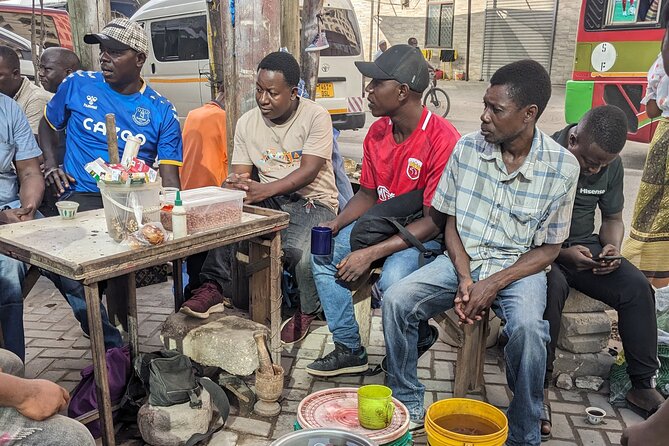
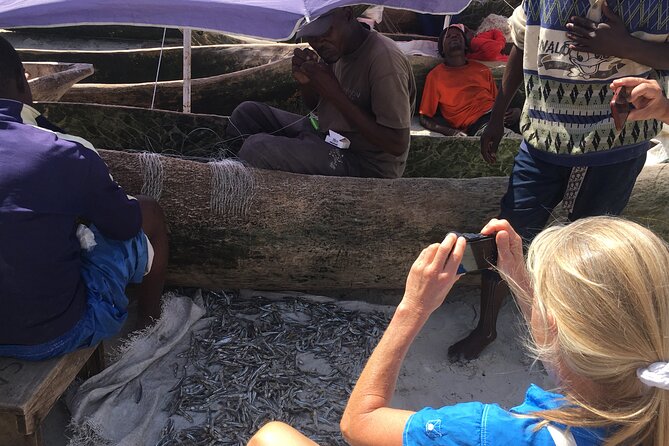
Kivukoni Fish Market gives you an immediate sense of Dar es Salaam as a port city. The market comes alive early with fishermen, fresh catch, shouted prices, and the practical work of moving seafood from the water to the public.
Your guide helps explain how the market functions and why fishing matters to coastal life. This is not a polished attraction designed for visitors. It is a place of work, and that is precisely its value.
Bring your patience and your senses. Fish markets can be wet, crowded, and strongly scented. You may find the setting intense, but the experience offers a far clearer look at the city’s working life than a standard monument tour. The stop lasts about an hour and has no separate admission charge.
If you care about photography, ask your guide before taking close pictures of people or their goods. A respectful approach matters in a place where everyone is busy earning a living.
Azania Front Lutheran Church and the colonial past
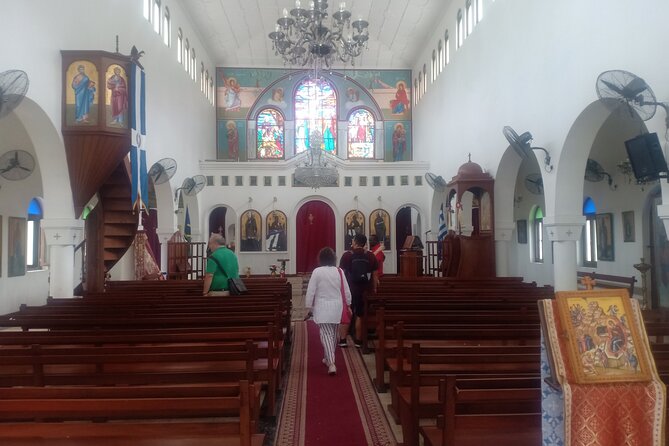
The red-roofed Azania Front Lutheran Church provides a change of pace after Kivukoni. Built in 1891 by German missionaries, it recalls the period when European powers shaped the coast and its institutions.
The church overlooks the Indian Ocean, and the interior offers a quiet pause. Your guide can explain its origin, its role in the local community, and the way it fits into Dar es Salaam’s layered past.
You get about 30 minutes here, with no admission fee. That is enough for a look inside and a short explanation, but not enough for a long architectural study. I see this as a useful context stop rather than the main event. It helps you understand the city’s past before the museums present it in greater detail.
National Museum: fossils, colonial rule, and independence
Allow about an hour and a half at the National Museum of Tanzania. This is one of the tour’s most important stops because it connects ancient human origins, national culture, colonial rule, and independence.
Displays include ancient hominid fossils, cultural objects, and material from the colonial and independence eras. The range gives you a framework for the rest of the day. After seeing markets and neighborhoods, you can place those living scenes within a much longer story.
A guide adds value here. Museum labels can give you dates and names, but a local explanation can connect the objects to Tanzania today. I would pay close attention to how the exhibits present national identity and the path from foreign rule to independence.
The entry fee is included. The 90-minute visit is substantial, though anyone hoping to inspect every display in detail may want more time than the schedule allows. Still, this is the stop that makes the rest of the tour easier to understand.
More Full-Day Tours in Dar es Salaam
- Private Full-Day Trip to Mikumi National Park from Dar es Salaam
★ 5.0 · 54 reviews - Dar Es Salaam City Tour (Full Day With Private Guide And Car)
★ 5.0 · 39 reviews - Full-Day Private Tour of Dar es Salaam
★ 4.5 · 37 reviews - Explore Dar es Salaam: Full-Day Private City Tour
★ 5.0 · 18 reviews
Askari Monument: a short lesson in memory
The Askari Monument occupies a central place in Dar es Salaam and honors African soldiers who served in World War I. The bronze figure was erected during British colonial rule, so the monument carries more than one message.
It recalls the courage and loss of local troops, while also pointing to the colonial system that recruited and directed them. That tension makes the stop useful. History here is not presented as a simple march of heroes and dates.
You spend about 30 minutes at the monument, without a separate ticket. This is mainly an orientation and interpretation stop. Your guide’s explanation matters more than the amount of time you spend looking at the statue.
Kariakoo Market: the city at full speed
Kariakoo is the tour’s loudest and most crowded stop. It is a major commercial district where vendors, shoppers, porters, and pedestrians move through streets filled with produce, cloth, electronics, and street food.
The appeal is direct: this is daily commerce, not a staged cultural display. You see how people shop, sell, carry goods, and negotiate space in one of Dar es Salaam’s busiest areas. The market also gives you a sense of the city’s urban scale.
Your guide helps you move through the maze and explains what you are seeing. That assistance is especially useful here, since the energy can be tiring and the layout may feel confusing. Set aside an hour.
Kariakoo is not the place for a leisurely stroll. Crowds, noise, and traffic are part of the deal. If you dislike busy commercial areas, this may be the hardest stop. If you want to understand how Dar works on an ordinary day, it may be the most revealing.
Village Museum: Tanzania in an open-air setting
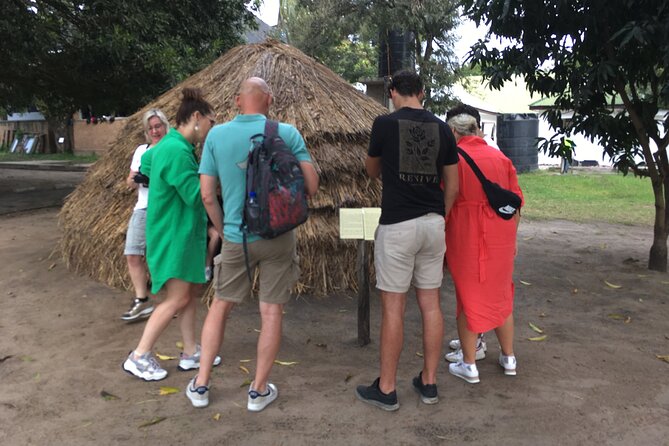
Makumbusho Village, also called the Village Museum, takes about 90 minutes and presents traditional homes, tools, and customs linked to more than 200 Tanzanian tribes.
The museum’s strength is its physical setting. Rather than seeing only objects behind glass, you walk among houses built with traditional materials. Each structure gives you a starting point for learning about regional building methods and community life.
I like this stop because Tanzania is not one single cultural story. The country contains many communities, and the Village Museum gives you a visible way to compare them. Your guide can explain the purpose and cultural meaning of the homes instead of leaving you to guess from the architecture.
The admission fee is included. The open-air format may mean more walking and exposure to the weather, so comfortable clothing makes sense. The stop is broad rather than highly specialized. You will get an overview of cultural variety, not an exhaustive study of every group.
Tingatinga Arts Cooperative Society: art with a story
The Tingatinga Arts Cooperative Society is the tour’s best stop for browsing local creative work. You can see bold paintings, carved wood, fabrics, and handmade jewelry, while learning about the techniques and traditions behind them.
This is more useful than a generic souvenir shop because the emphasis is on local makers and their work. A painting or carved object can become a lasting reminder of Tanzania, provided you choose something you genuinely like rather than buying in a rush.
You have about an hour here, with no separate admission fee. Prices are not provided, so ask about cost, materials, and packing before deciding. The private format helps if you want time to look carefully or ask questions without holding up a large group.
The stop also highlights the business side of art. You are not only seeing decoration. You are seeing people turn skill and heritage into an income.
Coco Beach: Dar’s Indian Ocean reset
Coco Beach shifts the mood again. This coastal stretch is a popular local retreat, especially on weekends, with sand, sea air, music, food stalls, and people taking a break from city business.
The tour allows about an hour. You might try fried cassava or fresh coconut juice, both specifically associated with the experience, while enjoying the ocean view. This is not presented as a private resort beach. Its appeal comes from seeing how local residents relax.
I like that the tour includes this stop after the markets and museums. It keeps the day from becoming a long lesson in dates and buildings. At the same time, you should not book this expecting a full beach day. One hour gives you a taste of the coast, not a long swim or extended sun session.
Weekend activity may make the beach feel especially lively. That can be part of the fun, but it also means less solitude.
Suburban Dar es Salaam: everyday life beyond the monuments
The final listed stop lasts about 40 minutes and takes you through ordinary suburban neighborhoods. You see street vendors, fresh produce, neighbors greeting each other, and the small exchanges that keep a city moving.
This is a valuable ending because it shifts attention away from official landmarks. After the monument, museum, and church, you see Dar as a place where people work, shop, socialize, and carry on with daily routines.
The stop is not a formal attraction, so the experience depends heavily on your guide’s judgment and your own curiosity. Go with an open mind. The point is not to collect another landmark but to notice how the city feels outside its visitor circuit.
The guide, vehicle, and private value
The strongest praise attached to this experience focuses on the guide and driver, especially Said. He is described as friendly, caring, and devoted to making the day memorable. Those qualities matter in Dar es Salaam because the schedule crosses very different settings, from fish stalls to museums and crowded shopping streets.
A private tour also changes the practical experience. You do not need to wait for strangers, and your group can ask questions throughout the day. That personal attention is a major part of the value.
At $90 per person, the price makes the most sense for people who want an organized full-day introduction rather than a few isolated sights. The fee includes entry to the National Museum and Village Museum, while the other listed stops have no admission charge. Pickup and a private group are also included features.
For a solo visitor, $90 may feel less economical than it would for two or more people sharing a private outing. For a family or small group, the price can be easier to justify because you are paying for a dedicated guide and vehicle rather than a seat on a large coach.
The tour averages 17 days of advance booking, so I would not leave it until the last minute if your dates are fixed. Free cancellation is available up to 24 hours before the local start time. Cancel inside that window and the payment is not refunded.
Who should book this day in Dar es Salaam
I would choose this tour if you have one day in the city and want a broad introduction. It suits first-time visitors who want history, food-market culture, art, neighborhoods, and the coast in one organized outing.
It is also a good fit if you value conversation. The guide is central to the experience, and the private format gives you room to ask about customs, history, and daily life. Families and small groups may particularly appreciate the control over pace.
I would hesitate if you want a relaxed beach day, a specialist museum tour, or a schedule with long breaks. Nine stops create variety, but they also create a full timetable. Markets can be noisy and crowded, and the city’s traffic may affect the rhythm of the day.
FAQ
How long does the private Dar es Salaam tour last?
The tour lasts approximately six to nine hours.
What is the price?
The listed price is $90 per person.
Is hotel or location pickup offered?
Yes, pickup is offered.
Is this a private activity?
Yes. Only your group participates.
Which museum admissions are included?
Admission to the National Museum of Tanzania and the Village Museum is included.
Are any of the other stop admissions free?
Yes. Kivukoni Fish Market, Azania Front Lutheran Church, Askari Monument, Kariakoo Market, Tingatinga Arts Cooperative Society, Coco Beach, and the suburban Dar es Salaam stop are listed with free admission.
Is a mobile ticket available?
Yes, the experience offers a mobile ticket.
Are service animals allowed?
Yes, service animals are allowed.
Can I cancel for a full refund?
Yes, if you cancel at least 24 hours before the experience start time. Cancellations made less than 24 hours before the start time are not refunded.
Should you book it?
Book this tour if you want Dar es Salaam explained through its people, markets, museums, and coastline, not just viewed from a car window. The combination of Kivukoni, Kariakoo, the National Museum, Village Museum, Tingatinga art, and Coco Beach gives you a useful cross-section of the city.
The day is long and occasionally hectic, but that is part of its honest appeal. With a private guide, pickup, included museum entries, and strong praise for Said’s friendly service, $90 is a fair price for a first look at Dar. Go with comfortable expectations, stay flexible, and let the city’s everyday life take up as much space as its official sights.
More Full-Day Tours
- Mikumi national park full day tour from Dar es sallam
★ 5.0 · 9 reviews - Dar el Salam: Full-Day Mikumi National Park Tour
★ 4.4 · 4 reviews - Full-Day Private Stone Town +Spice Farm and Prison Island Tour
★ 4.5 · 216 reviews - Zanzibar full day Jozani forest + Spice farm and stone town
★ 4.7 · 90 reviews
More Private Tours in Dar es Salaam
- Private 3 Days 2 Nights Mikumi Adventures
★ 5.0 · 47 reviews - 2 Days and 1 Night Mikumi Safari Private Tour
★ 5.0 · 32 reviews - 2-Day Private Mikumi National Park Tour with Pickup
★ 5.0 · 31 reviews - Dar Es Salaam City Tour. All Must See Things (Private Guide and car) Full day
★ 5.0 · 12 reviews
Just added around Dar es Salaam
- Ruaha National Park And Mikumi National Park Budget Safari 6 Days 5 Nights★ 5.0 · 3 reviews
- 3 Days Nyerere National Park Safari (Selous Game Reserve)★ 5.0 · 3 reviews
- Saadani National Park Day Tour★ 5.0 · 3 reviews
- Private Mikumi Adventure★ 4.5 · 3 reviews
- Dar es Salaam City tour and Beach Leisure – 9 hours★ 5.0 · 3 reviews
- Mbudya island from Dar es salaam safari.★ 4.2 · 3 reviews
- Day Trip To Bagamoyo From Dar Es Salaam ..historical town★ 4.5 · 3 reviews
- 3 Days Mikumi National Park Private Tour★ 5.0 · 3 reviews
City Tours, compared.

Arusha Guided Walking City Tour, Culture, Lifestyle & History
Read our review →

The Best/Top Rated Cultural City Tour in Dar es Salaam
Read our review →
Browse the lists this tour appears in