
Reviewed · CITY TOURS
Explore Dar es Salaam: Full-Day Private City Tour
Dar es Salaam makes sense one stop at a time. This private city tour links the fish market, old churches, museums, markets, memorials, and beaches into a useful introduction to Tanzania’s largest city. I like the customizable route, which lets you give more time to history, food, shopping, or photography. I also like the chance to see ordinary city life at Kivukoni and Kariakoo, not just polished landmarks.
The main consideration is time. The tour lasts about six to eight hours, but Dar es Salaam traffic can stretch the day. Some stops are brief photo visits, and Kariakoo Market can feel crowded and hectic. If you prefer a slow museum day or one neighborhood explored in detail, this packed schedule may feel rushed.
In This Review
- Key points to know before booking
- Why this tour works for a first day in Dar es Salaam
- Kivukoni Fish Market brings Dar to life
- Gothic churches and the old harbor quarter
- The Old Boma and Dar es Salaam’s early story
- Short city-center stops with real meaning
- The National Museum covers fossils, art, and rock art
- Kariakoo Market is the city in motion
- War memorials and the Tanzanite Bridge
- Mwenge Woodcarvers Market and Tanzanian art
- The University of Dar es Salaam and Village Museum
- Coco Beach is a relaxed finish
- What the $165 price delivers
- Who should book this Dar es Salaam tour?
- FAQ
- What time does the tour start?
- How long does the Dar es Salaam city tour last?
- Is hotel pickup available?
- Is this a private tour?
- Is lunch included?
- Is breakfast included?
- Is bottled water provided?
- Are alcoholic drinks included?
- Are entrance tickets included?
- Can the tour include a ferry trip to Zanzibar?
- What is the cancellation policy?
- Is the tour suitable for everyone?
- Should you book it?
Key points to know before booking
- Private transport and a flexible route: Your group travels in an air-conditioned vehicle, with the day adjusted around your interests.
- Kivukoni Fish Market is the early highlight: Expect a close look at fishermen, seafood trading, and one of the city’s most direct links to the Indian Ocean.
- History comes in many forms: Gothic churches, the Old Boma, the Askari Monument, war memorials, and the National Museum cover several centuries of Dar es Salaam’s past.
- Kariakoo and Mwenge show daily commerce and craft: One is a major shopping center, while the other focuses on Makonde carvings and Tinga Tinga paintings.
- Lunch, water, and parking are included: Breakfast is not, and coffee or personal purchases cost extra.
- The day ends at Coco Beach: It is a pleasant place for a walk, seafood, photographs, and a final look at the coast.
Why this tour works for a first day in Dar es Salaam
Dar es Salaam is spread out, and its best-known sights do not sit neatly in one compact old town. This tour solves that problem with private transportation and a driver-guide who knows how to connect the pieces.
The day begins at 9:00 a.m., a sensible start after breakfast. You are picked up at your hotel, then taken around the city in an air-conditioned vehicle. The private format matters here. You are not tied to a large group’s pace, so you can ask for a photo stop or spend more time at a place that catches your interest.
The guides are a major part of the experience. Marselino is praised for his English, courtesy, and command of local history. Erick is patient with frequent photo requests and gives information without overwhelming the day. Thomas is also singled out for making the city easy to explore, especially at the fish market.
The tour has a perfect five-star rating from 18 reviews, with 100 percent recommending it. That is a small sample, but the praise is consistent: strong guiding, good site selection, patience, useful explanations, and a well-chosen lunch stop.
More City Tours in Dar es Salaam
- Dar es Salaam: City Tour
★ 4.7 · 159 reviews - Dar es Salaam City Center: Walking Tour
★ 4.8 · 102 reviews - Dar es Salaam City Tour – Everyday
★ 5.0 · 64 reviews
Kivukoni Fish Market brings Dar to life
Kivukoni Fish Market is a strong first stop because it introduces Dar es Salaam through work, food, and the sea. It is described as Tanzania’s largest seafood market, where you can watch fishermen at work and see the trade that supports many local families.
You have about 25 minutes here, with admission included. That is enough to see the action and ask questions, though not enough for a leisurely market study. The setting can be noisy, wet, and crowded, so wear comfortable shoes and keep your belongings close.
The useful part is the local guide. Instead of simply walking past stalls, you can learn how the market operates and what role seafood plays in city life. Fresh seafood sampling may be available as part of the visit, but the tour does not specify exactly what will be served.
I would put this near the top of the day’s best stops. It gives you something a museum cannot: a direct look at people earning a living in the city right now.
Gothic churches and the old harbor quarter
The Azania Front Lutheran Cathedral was built by German missionaries between 1899 and 1902. Its Gothic design, church connection to the Evangelical Lutheran Church in Tanzania, and harbor views give the stop several layers.
You have about 25 minutes, and admission is included. Look for the architecture first, then ask your guide about the name Azania, which comes from a Greek word for the East African coast. The cathedral also offers views toward Dar es Salaam’s harbor, a useful reminder that the city grew around its port.
St. Joseph’s Cathedral is another short but worthwhile stop. Built by German missionaries between 1897 and 1902, it has a vaulted ceiling, original German stained glass, and religious artwork. It sits across from Azam Marine and Zan Fast Ferries, so it is especially convenient if you are planning a ferry ride from Dar es Salaam to Zanzibar.
The stop may last only five minutes. That sounds minor, but the cathedral works well as a quick architectural pause before the ferry terminal or as part of a wider look at the city’s colonial-era buildings.
The Old Boma and Dar es Salaam’s early story
The Dar es Salaam Centre for Architectural Heritage occupies the Old Boma, built in 1866 and 1867 by Sultan Majid bin Said of Zanzibar. It is identified as the oldest structure in Dar es Salaam City.
You have about 25 minutes here, with admission included. The point is not just the building itself. The Old Boma helps explain the city’s connection to Zanzibar, coastal trade, government, and changing architectural styles.
The nearby City Hall adds another layer, while the waterfront provides harbor views. This is a good place to ask your guide to connect the city’s early coastal history with the later German and British periods.
The short timing is the drawback. If architecture is your main interest, you may want to ask in advance for extra attention here. Since the tour is private and customizable, that request fits the format.
More Full-Day Tours in Dar es Salaam
- Private Full-Day Trip to Mikumi National Park from Dar es Salaam
★ 5.0 · 54 reviews - Dar Es Salaam City Tour (Full Day With Private Guide And Car)
★ 5.0 · 39 reviews - Full-Day Private Tour of Dar es Salaam
★ 4.5 · 37 reviews - Dar Es Salaam City Tour. All Must See Things (Private Guide and car) Full day
★ 5.0 · 12 reviews
Short city-center stops with real meaning
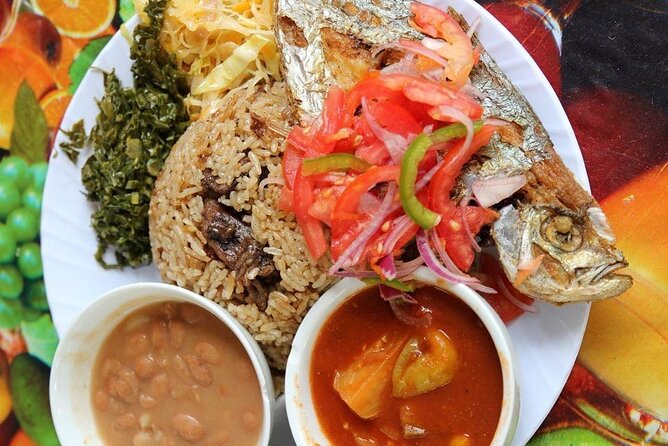
The Askari Monument sits at the roundabout where Maktaba Street meets Samora Avenue. The bronze soldier was erected in 1927 to honor African soldiers who fought in the First World War under British rule.
You get about five minutes for photographs. It is a quick stop, but the monument raises important questions about colonial military service and the place of African soldiers in the war. Ask your guide for context rather than treating it as only a photo backdrop.
Mnazi Mmoja offers another brief pause. The site includes the Uhuru Torch, placed there in 1961 to mark Tanzania’s liberation from British colonial rule. Again, the scheduled photo opportunity is about five minutes.
These small stops are useful because they break up the longer visits and connect Dar es Salaam’s streets with national history. They can feel too short if you want a detailed discussion, but the private format gives you a chance to ask for more explanation while moving between sites.
The National Museum covers fossils, art, and rock art
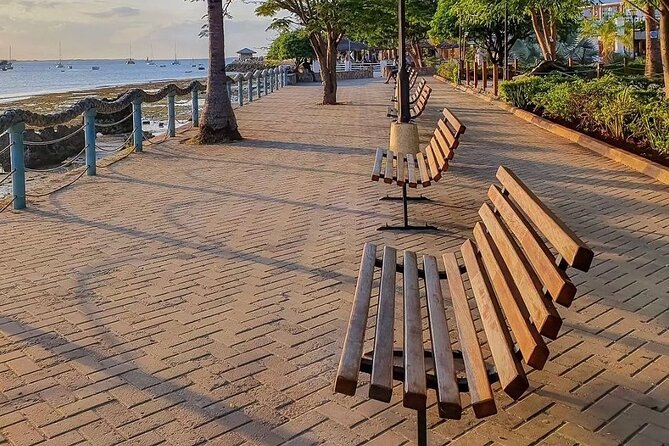
The National Museum of Tanzania is the tour’s main indoor history stop. Built between 1938 and 1939, it is the country’s largest and oldest museum.
The museum has four permanent exhibition areas: Art, History, Human Evolution, and Rock Art. You can see early human fossils from Olduvai Gorge, learn about Tanzania’s artistic traditions, and look at material connected with human development and regional rock art.
The scheduled visit lasts 40 minutes, with admission included. That is enough for a focused visit, but not enough to read every display carefully. If early human history is your main interest, tell your guide early in the day so you can use the museum time well.
I like this stop because it gives national context to the rest of the tour. After seeing markets, churches, roads, and memorials, the museum helps place Dar es Salaam within Tanzania’s wider story.
Kariakoo Market is the city in motion
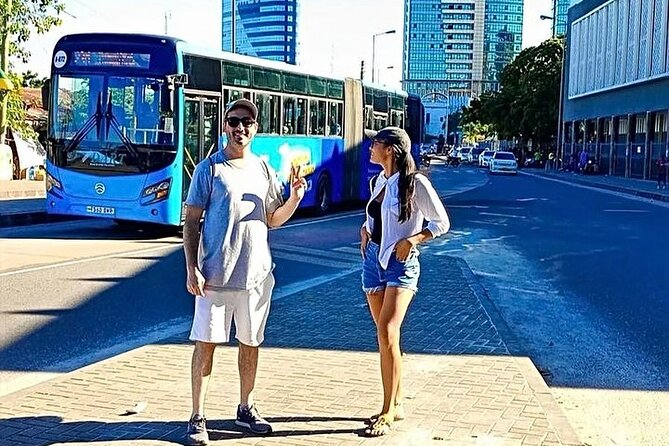
Kariakoo Market shows a different side of Dar es Salaam. Designed by architect B. J. Amuli and opened in December 1975 in the presence of Julius Nyerere, it occupies a site that was once a British Carrier Corps campsite.
Today, it is a major center for everyday trade. Fresh produce, electronics, and many other goods move through the market as thousands of people shop and work there.
The visit lasts about 30 minutes and admission is free. That is enough to experience the noise, movement, and range of goods, but you should not expect a calm browsing session. Stay close to your guide and keep your attention on your belongings.
Locally brewed coffee may be available, but coffee and tea are not included. If you want to sample it, bring local currency or confirm payment details with your guide. Kariakoo is less about sightseeing in the usual sense and more about seeing how the city functions.
War memorials and the Tanzanite Bridge

The Dar es Salaam War Cemetery offers a quieter change of pace. Screen walls erected in 1968 commemorate 1,844 people connected with the First World War, including 404 people originally buried at Dar es Salaam Seaview Cemetery. The site also includes a Hindu cremation memorial for 14 Indian servicemen.
You have about 25 minutes, with admission included. The cemetery calls for respectful behavior and a slower pace. It is valuable for anyone interested in military history, colonial-era memorials, or the many communities affected by the First World War.
The Tanzanite Bridge provides a modern counterpoint. The bridge is described as 1.03 kilometers long and 670 meters high, crossing the Indian Ocean between Coco Beach in Oyster Bay and Aga Khan Hospital. The itinerary offers time for photographs rather than a formal visit.
Because traffic affects the day, these shorter stops may be adjusted. The bridge is best treated as a scenic photo pause, not a major attraction requiring a long visit.
Mwenge Woodcarvers Market and Tanzanian art
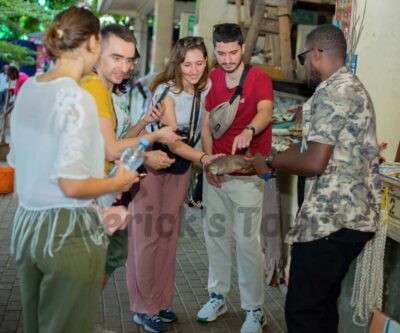
Mwenge Woodcarvers Market is one of the better shopping stops because it focuses on locally made art. The market is known for Makonde woodcarvings, which often express ancestral stories, spiritual ideas, and scenes from daily life.
You can also find Tinga Tinga paintings, traditional clothing, accessories, and souvenirs. The visit is scheduled for 40 minutes and admission is free.
I would ask questions before buying. A good guide can help explain what you are looking at and may make the market more meaningful than a quick search for a souvenir. The tour does not state that shopping is required, so you can focus on the workmanship if you are not looking to purchase anything.
This stop is likely to suit shoppers and art lovers more than visitors who want archaeological sites. It also offers a chance to support local craft sellers, though prices and payment methods are not specified.
The University of Dar es Salaam and Village Museum
The University of Dar es Salaam may be included as a photo stop if you want a few pictures. Founded in 1961 as an affiliate college of the University of London, it became the University of Dar es Salaam in 1970.
The university covers 1,625 acres and has seven campuses. Its alumni include former Tanzanian presidents Jakaya Mrisho Kikwete and John Pombe Magufuli, several prime ministers, and Asha-Rose Migiro, a former deputy secretary-general of the United Nations.
This is not a full campus tour. Think of it as a brief stop with national educational and political context.
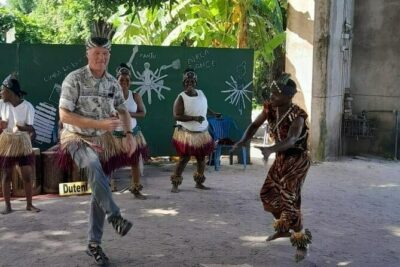
The Village Museum is more substantial. Founded in 1967, it presents traditional homes, artifacts, handicrafts, and musical instruments from Tanzania’s many cultural groups. The country has more than 130 tribes, so the museum cannot represent every community, but it offers a useful introduction to the range of local building styles and customs.
Plan on about one hour here, with admission included. This is one of the tour’s best stops for understanding Tanzania beyond Dar es Salaam. It is also a good place to slow down after the city markets.
Coco Beach is a relaxed finish
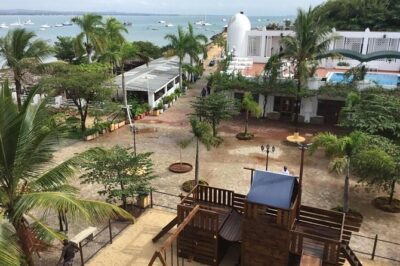
The final stop is Coco Beach in Oyster Bay. After a full day of markets, roads, churches, and museums, the Indian Ocean provides a welcome change.
You have about 30 minutes for a walk, photographs, nearby shops, or food from beachfront restaurants and vendors. Personal purchases are not included. The beach is also linked with Wavuvi Kempu, a local story that your guide may explain.
Coco Beach is not presented as a full beach day. The time is too short for that. It works better as a final breath of sea air before returning to your hotel or the original departure point.
What the $165 price delivers
At $165 per person, this is not the cheapest way to see Dar es Salaam. It is a private full-day outing, though, and the price includes an air-conditioned vehicle, private transportation, parking, GST, bottled water, lunch, and selected admission tickets.
Unlimited bottled water is a useful inclusion in a warm city. Complimentary alcoholic beverages are also offered to those who want them, though you should not feel obliged to partake.
The value depends on your group size and priorities. A solo visitor or couple pays more for privacy, but gains a flexible route and direct access to a guide. A family or small group may find the cost more reasonable because the vehicle and guide serve only your party.
The tour is strongest as an orientation day. You get a broad view of Dar es Salaam, then can return later to the places you want to explore at a slower pace.
Breakfast is not included, so eat before the 9:00 a.m. pickup. Tell the operator about dietary restrictions at least 24 hours ahead. Coffee, tea, shopping, and food at Coco Beach are extra.
Who should book this Dar es Salaam tour?
I would recommend it to first-time visitors who want a clear introduction to the city without arranging many separate rides. It also suits families, solo visitors who prefer a private guide, and people transferring through Dar es Salaam before taking the ferry to Zanzibar.
History fans will appreciate the churches, Old Boma, monuments, museum, cemetery, and Uhuru Torch. Food and market lovers will get the most from Kivukoni and Kariakoo. Art shoppers should allow time for Mwenge Woodcarvers Market.
You may want another option if your priority is a slow day at one museum, a long beach visit, or a tightly focused food tour. The route covers a lot, and traffic can change the timing.
Most people can participate, but the operator does not advise the tour for women in advanced stages of pregnancy. The tour is near public transportation, but its main advantage is the private vehicle.
FAQ
What time does the tour start?
The tour starts at 9:00 a.m.
How long does the Dar es Salaam city tour last?
It lasts approximately six to eight hours. The final duration depends on traffic conditions.
Is hotel pickup available?
Yes, pickup is offered, and the itinerary begins with pickup from your hotel.
Is this a private tour?
Yes. Only your group participates in the private activity.
Is lunch included?
Yes, lunch is included. Dietary restrictions should be provided at least 24 hours before the activity begins.
Is breakfast included?
No. You should eat breakfast before the tour starts.
Is bottled water provided?
Yes. An unlimited supply of bottled water is included.
Are alcoholic drinks included?
Yes. Complimentary alcoholic beverages are offered to people who choose to drink them.
Are entrance tickets included?
Admission is included at Kivukoni Fish Market, Azania Front Lutheran Cathedral, the Dar es Salaam Centre for Architectural Heritage, the National Museum of Tanzania, the Dar es Salaam War Cemetery, and the Village Museum. Kariakoo Market, Mwenge Woodcarvers Market, and Coco Beach have no admission fee listed.
Can the tour include a ferry trip to Zanzibar?
The itinerary can be adjusted to help include a ferry ride from Dar es Salaam to Zanzibar. St. Joseph’s Cathedral is located across from the ferry operators.
What is the cancellation policy?
You can cancel at least 24 hours before the start time for a full refund. Cancellations or changes made less than 24 hours before the tour are not accepted for a refund.
Is the tour suitable for everyone?
Most people can participate, but it is not advised for women in advanced stages of pregnancy.
Should you book it?
Book this tour if you want a broad, well-guided first look at Dar es Salaam and value private transport, local explanations, lunch, and a flexible pace. The strongest parts are the Kivukoni Fish Market, National Museum, Kariakoo Market, Village Museum, and the guides, especially Marselino, Erick, and Thomas.
Skip it if you want a quiet, slow visit to only one or two places. For everyone else, $165 buys a useful day of orientation, with enough history, local life, art, and coast to help you decide what deserves a second look.
More Full-Day Tours
- Mikumi national park full day tour from Dar es sallam
★ 5.0 · 9 reviews - Full Day Private Tour in Dar es Salaam City
★ 5.0 · 4 reviews - Dar el Salam: Full-Day Mikumi National Park Tour
★ 4.4 · 4 reviews - Full-Day Private Stone Town +Spice Farm and Prison Island Tour
★ 4.5 · 216 reviews
More Private Tours in Dar es Salaam
- Private 3 Days 2 Nights Mikumi Adventures
★ 5.0 · 47 reviews - 2 Days and 1 Night Mikumi Safari Private Tour
★ 5.0 · 32 reviews - 2-Day Private Mikumi National Park Tour with Pickup
★ 5.0 · 31 reviews - Private Insightful City Tour of Dar es Salaam
★ 5.0 · 9 reviews
Just added around Dar es Salaam
- Ruaha National Park And Mikumi National Park Budget Safari 6 Days 5 Nights★ 5.0 · 3 reviews
- 3 Days Nyerere National Park Safari (Selous Game Reserve)★ 5.0 · 3 reviews
- Saadani National Park Day Tour★ 5.0 · 3 reviews
- Private Mikumi Adventure★ 4.5 · 3 reviews
- Dar es Salaam City tour and Beach Leisure – 9 hours★ 5.0 · 3 reviews
- Mbudya island from Dar es salaam safari.★ 4.2 · 3 reviews
- Day Trip To Bagamoyo From Dar Es Salaam ..historical town★ 4.5 · 3 reviews
- 3 Days Mikumi National Park Private Tour★ 5.0 · 3 reviews
City Tours, compared.

Arusha Guided Walking City Tour, Culture, Lifestyle & History
Read our review →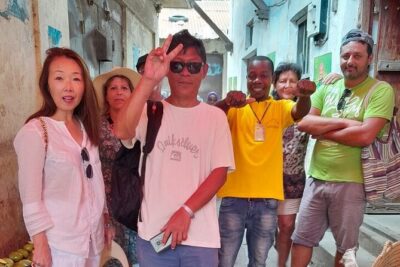

The Best/Top Rated Cultural City Tour in Dar es Salaam
Read our review →
Browse the lists this tour appears in