
Reviewed · KILIMANJARO TREKS
KILIMANJARO MACHAME ROUTE, (Climb 7days) “Whiskey” route
Kilimanjaro rewards patience. This seven-day Machame Route climb gives you a strong mix of changing mountain zones, careful altitude adjustment, and a private support team led by Paul. I like the route’s climb-high, sleep-lower day at Lava Tower and Barranco, and I like the personal care shown by the guides and cooks, including the ability to handle a gluten-free diet.
The main catch is simple: this is a demanding climb, not a casual walk. Summit night begins around midnight, reaches 19,341 feet, and includes a long descent to Mweka Camp. You need moderate fitness, tolerance for cold and fatigue, and enough time to move slowly.
In This Review
- Key points to know before booking
- Why the Machame Route is worth seven days
- Day one: Machame Gate to Machame Camp
- Day two: From the forest to the Shira Plateau
- Day three: Lava Tower and the Barranco descent
- Day four: Climbing the Barranco Wall
- Day five: Karanga to Barafu Camp
- Day six: Uhuru Peak from a midnight start
- Day seven: Returning through the rain forest
- The guides, food, and personal care
- Is $2,564.11 good value?
- Who should choose this climb?
- Booking, cancellation, and practical checks
- Should you book the Machame Route?
- FAQ
- Where does the Kilimanjaro climb take place?
- How long is the climb?
- What route does the climb use?
- How physically fit do I need to be?
- How high is Uhuru Peak?
- How long does the summit climb take?
- Is the Barranco Wall technical?
- Is this a private tour?
- What happens if weather cancels the climb?
Key points to know before booking
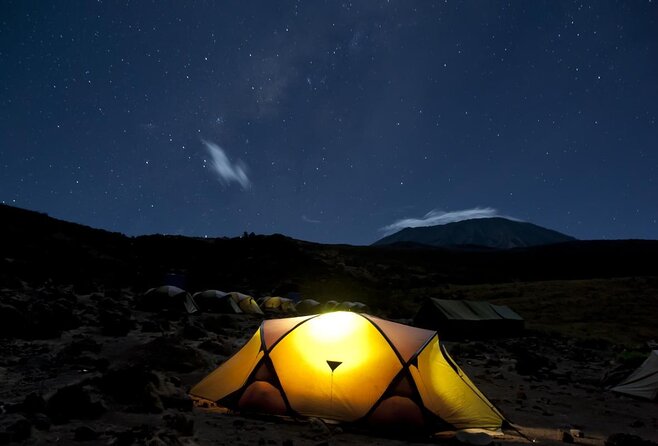
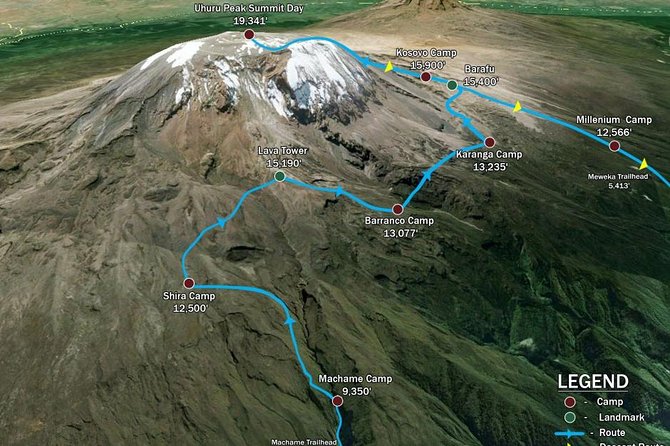
- The seven-day Machame route uses the southern circuit: You approach the summit through Machame, Shira, Barranco, Karanga, and Barafu before descending by Mweka.
- Day three is the key acclimatization day: You climb to Lava Tower at 15,190 feet, then descend to Barranco Camp at 13,044 feet.
- Summit morning starts around midnight: The climb to Uhuru Peak takes about seven to eight hours, followed by a four-to-six-hour descent to Mweka Camp.
- The Barranco Wall is steep but non-technical: It rises nearly 900 feet and requires hands, balance, and steady pacing, but no technical climbing is listed.
- Paul and his team receive especially warm praise: Their care, food, practical advice, and attention to dietary needs are major strengths.
- The price is $2,564.11 per person: The cost may offer good value for private guiding and a seven-day route, but you should confirm exactly what is included before paying.
Why the Machame Route is worth seven days
Machame is often called the Whiskey Route, a nickname that hints at its steeper, more serious character compared with easier approaches. Here, you gain altitude through several distinct mountain zones rather than rushing toward the summit.
The route begins in thick rain forest, crosses open heath and moorland, reaches the bare alpine desert, and finishes in the cold Arctic zone near Uhuru Peak. That change is not just scenic. It gives the climb a clear rhythm and helps you understand how quickly conditions change on Kilimanjaro.
I also like the seven-day schedule because it gives you more time to adjust than a shorter climb. The plan includes a high point at Lava Tower before dropping to Barranco, then two shorter acclimatization days before Barafu. That does not remove the risk of altitude sickness, but it gives your body more time to respond.
You participate in a private activity, so only your own group takes part. That can make the pace and daily routine feel more personal. It also means your group should be ready for the physical demands together, since there is no larger party to absorb delays or differences in speed.
More Kilimanjaro routes and climbs:
- 8-Day Small-group Lemosho Kilimanjaro Summit Trekking
★ 5.0 · 186 reviews - 7-Day Machame Kilimanjaro Summit Tour from Arusha
★ 5.0 · 125 reviews - Mountain Kilimanjaro Day Hike
★ 5.0 · 102 reviews
Day one: Machame Gate to Machame Camp
The first transfer from Moshi to Machame Gate takes about 50 minutes and passes through Machame village on the lower slopes of the mountain. A pickup is offered, with the listed meeting hours running from 8:00 in the morning until 11:30 at night, Monday through Sunday.
After park entry, you walk into the rain forest on a winding trail that follows a ridge. The elevation rises from 5,380 feet to 9,350 feet, with about 11 kilometers of walking and five to seven hours on the trail.
This is a full first day, though the forest provides shade and a striking start. The path can feel damp and muddy in rainforest conditions, and the steady uphill work begins immediately. Take this day slowly. A strong start does not mean racing ahead.
Machame Camp is your first overnight point. The itinerary lists the day at about 12 hours, which likely includes transport, gate procedures, and time around camp rather than seven straight hours of walking. Still, you should expect a long day on your feet.
Day two: From the forest to the Shira Plateau
You leave the trees behind and climb toward a steep, rocky ridge. The setting changes to heath and open moorland as you reach the Shira Plateau, giving you broad views and a more exposed feel.
The route covers about 5 kilometers in four to six hours, rising from 9,350 feet to 12,500 feet. You cross a large river gorge before reaching Shira 2 Camp.
This is a shorter walking day than day one, but the altitude makes it feel more serious. At 12,500 feet, you may notice that each uphill step takes more effort. Keep your pace easy and listen closely to Paul and the support team.
The open ground can also bring stronger weather than the forest. The supplied details do not specify temperature, shelter, or equipment, so ask the operator what camping gear and protection are provided. Those details matter more here than they did in the trees.
Day three: Lava Tower and the Barranco descent
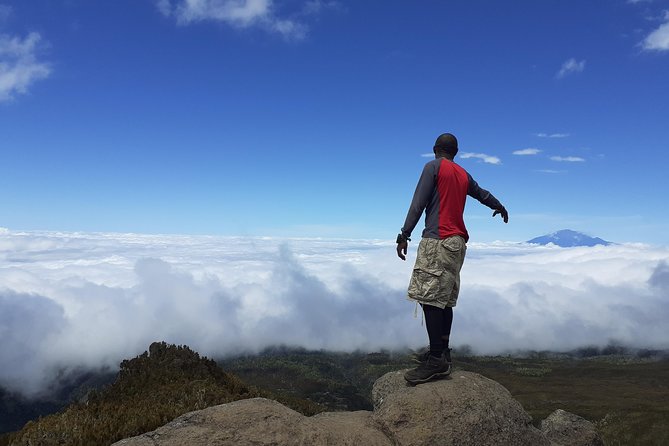
Day three is the most carefully designed part of the route for altitude adjustment. You climb from Shira 2 to Lava Tower at 15,190 feet, covering about 7 kilometers in four to five hours.
Lava Tower is a roughly 300-foot volcanic rock formation and a clear landmark on the route. The ground here is alpine desert, with little of the greenery found lower down. You then descend 3 kilometers to Barranco Camp at 13,044 feet, taking another two to three hours.
You finish close to the elevation where you began, but you spend several hours at a much higher altitude. That climb high, sleep lower pattern is valuable. It lets you test how your body responds before summit day, while the descent gives you a better chance to rest at Barranco.
The day is not easy. The altitude and loose, rocky ground can make the climb to Lava Tower tiring, even though the distance is modest. Do not judge your summit chances by speed on this day. Slow and steady is the point.
Barranco Camp sits below the famous Barranco Wall, so you get an early look at the next morning’s challenge. The itinerary gives about six hours of hiking, though the day may feel longer once breaks and camp routines are included.
A few more trips of this kind worth comparing:
- Tanzania Classic – 7 Days
★ 5.0 · 1,151 reviews - 7-Day Premium Luxury Tanzania Safari All-Inclusive
★ 5.0 · 426 reviews - Group Safari 7 Days in Tanzania’s Main Parks
★ 5.0 · 240 reviews - 7 Days Tanganyika Wilderness Safari
★ 5.0 · 159 reviews
Day four: Climbing the Barranco Wall
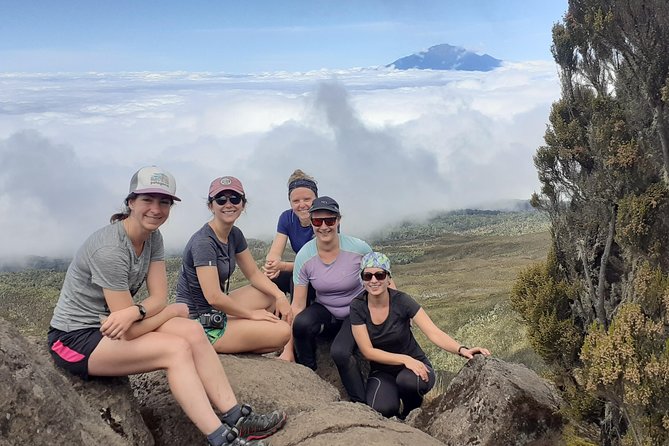
You begin by descending into a ravine at the base of the Barranco Wall. Then comes a steep climb up the nearly 900-foot cliff.
The wall is described as non-technical, which means you do not need technical climbing skills for the route described. It is still steep, and you may use your hands for balance on portions of the ascent. Your guide’s pacing and positioning matter here, especially if you are nervous with exposed or uneven ground.
From the top, the trail crosses a series of hills and valleys before dropping sharply into Karanga Valley. One more steep climb brings you to Karanga Camp at 13,106 feet.
This is a short day of about 5 kilometers and four to five hours. That shorter distance is welcome after Lava Tower, but the wall and repeated ups and downs keep it from feeling easy. The purpose is acclimatization rather than distance.
I would treat this as a day to conserve energy. You are not trying to prove anything on the wall. You are preparing for Barafu and the summit push.
Day five: Karanga to Barafu Camp
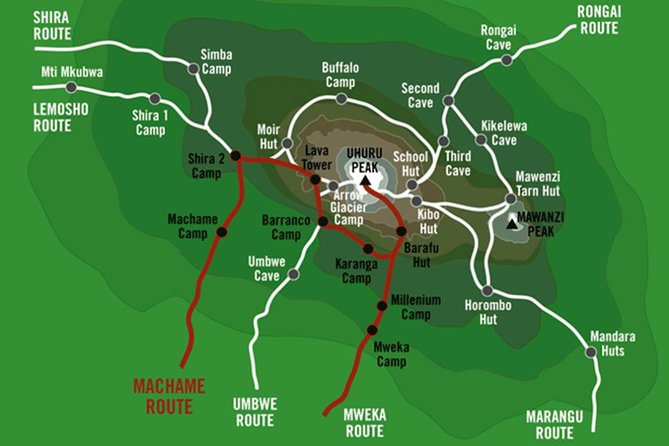
From Karanga Camp, you walk toward the junction with the Mweka Trail, then continue over rocky ground to Barafu Hut and camp. The day covers only about 4 kilometers, but the elevation rises from 13,106 feet to 15,331 feet.
Barafu means ice in Swahili, and the camp’s high position gives you a clear sense that summit day is close. The two peaks of Mawenzi and Kibo can be viewed from here, and the route has completed the southern circuit that provides summit views from several angles.
This is officially a four-to-five-hour walking day, listed at about eight hours overall. The extra time likely allows for a measured ascent, camp setup, rest, and the early meal before the summit attempt.
Rest is the main job at Barafu. You should eat early, organize your clothing and equipment, and sleep if you can. The midnight start means the normal day-night pattern will be disrupted.
Because the supplied information does not list meals, tents, porter arrangements, transfers beyond the stated pickup and return, or gear rental, ask for a written list of inclusions. At this price, knowing what you are paying for is essential.
Day six: Uhuru Peak from a midnight start
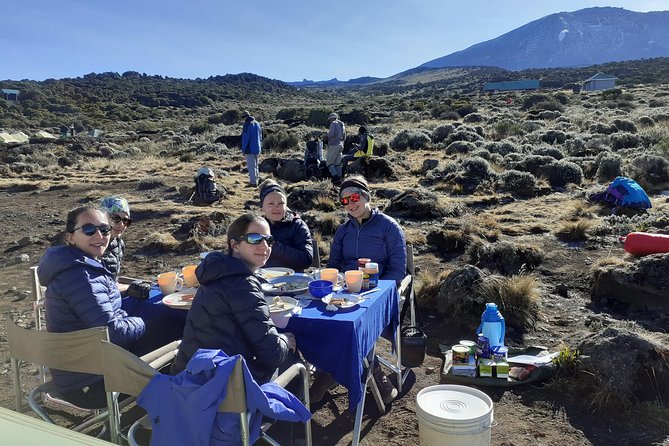
Summit day is the hardest section by a wide margin. You leave Barafu around midnight and climb in darkness toward Uhuru Peak, the highest point on Kilimanjaro at 19,341 feet.
The ascent covers about 5 kilometers and takes seven to eight hours. At this altitude, cold and wind can be severe, and the effort can feel slow. You take frequent short breaks, which is a better plan than stopping for long periods in the cold.
Near Stella Point, at about 18,900 feet, the sunrise over Mawenzi is described as one of the great rewards of the climb. From there, you continue toward Uhuru Peak. The final section is not simply a victory lap. You are still at extreme altitude, and fatigue is already building.
After reaching the summit, you descend 12 kilometers to Mweka Camp at 10,065 feet. That takes another four to six hours and returns you to the rain forest zone.
This combined ascent and descent is the day’s great difficulty. Your summit success depends not only on fitness, but also on pacing, hydration, food, rest, and the willingness to follow safety advice. Paul’s calm guidance is especially valuable here. One climber who had reached Kilimanjaro six times praised his care and attention, while another said the team made the difficult climb feel easier. That is exactly the kind of support you want when the trail becomes a test of judgment as much as strength.
Do not plan anything demanding for the evening after Mweka Camp. The itinerary gives about six hours for the listed stop, but the summit schedule itself runs much longer when you include the overnight start and the full descent.
Day seven: Returning through the rain forest
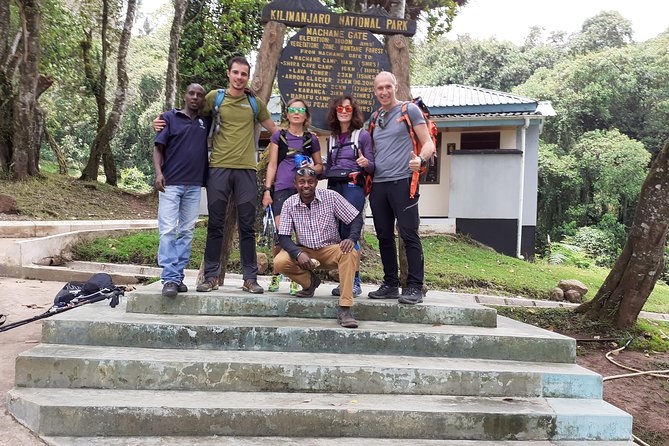
The final walk goes from Mweka Camp to Mweka Gate. You descend from 10,065 feet to 5,380 feet over about 10 kilometers, with three to four hours of hiking.
The trail returns to rain forest, but the descent can be wet and muddy at lower elevations. Trekking poles, careful footing, and patience will be useful if conditions are slick.
At Mweka Gate, you collect summit certificates. The itinerary then describes another hour to Mweka village, where a vehicle meets you for the drive back to your hotel in Moshi or Arusha.
This last day is a proper finish, not a rushed transfer. You have time to come down gradually, complete the gate formalities, and return by vehicle. You may feel exhausted, pleased, sore, or all three. That is normal after the summit schedule.
The guides, food, and personal care
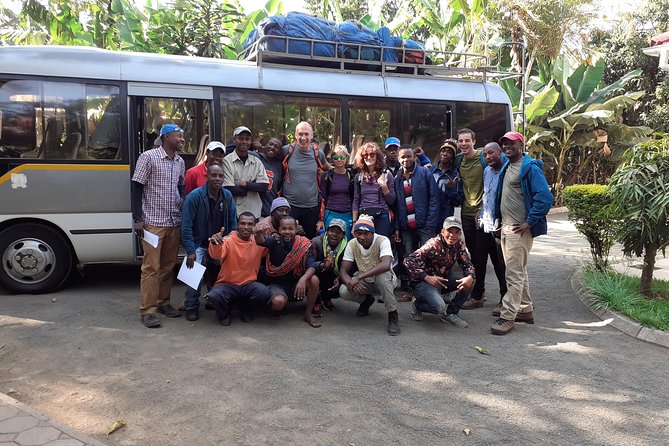
The strongest part of this experience is the human support. Paul and his team are described as friendly, attentive, and committed to making climbers feel at home. That matters on a mountain where morale can change quickly.
The food also earns praise. One particularly useful detail is the ability to cater for a gluten-free diet. If you have dietary needs, tell the operator clearly when booking and confirm the arrangements again before departure.
The cook and guide team are central to your comfort, but the supplied details do not state the guide-to-climber ratio, porter policy, menu, tent type, or sleeping equipment. Do not assume these details. Ask directly.
A private tour can be a good fit if you want personal attention and a group made up only of people you know. It can be less suitable if one person in your party is much slower or less prepared than the others. Discuss pacing before departure.
Is $2,564.11 good value?
At $2,564.11 per person, this is a serious purchase, but the value depends on the inclusions. You receive a seven-day private climb, park access, guiding, cooking support, pickup availability, and transport from Mweka village back to Moshi or Arusha as described.
The longer route is also part of the value. You are not paying only for seven nights on a mountain. You are paying for a schedule that includes several altitude-adjustment stages, a full southern circuit approach, and a more gradual buildup to Barafu.
Still, the information does not spell out every cost. Before booking, ask if the price covers accommodation before or after the climb, park fees, meals, camping equipment, porter support, transfers, tips, and any rescue or medical arrangements. I would not treat the price as fully comparable with another operator until those points match.
The private format and praised personal care may justify the cost for you. If your priority is the lowest possible price, compare the inclusions carefully rather than choosing by headline figure.
Who should choose this climb?
This route suits you if you want a demanding Kilimanjaro climb with varied scenery and a full seven-day schedule. You should have moderate physical fitness and be ready for long uphill days, high altitude, cold, and a midnight summit attempt.
It is a good choice for people who value close guide support, dietary flexibility, and a private group. Paul’s experience with repeat climbers is another encouraging sign for anyone who wants practical supervision rather than a bare-bones outing.
It is not a good match if you want a relaxed holiday, dislike early starts, or have not prepared for sustained uphill walking. The word climb is important here. Even the short days include steep ground and high elevation.
The route is also not described as wheelchair accessible or suitable for limited mobility. The stated requirement is moderate physical fitness, and the Barranco Wall, rocky sections, and long summit descent make the physical demands clear.
Booking, cancellation, and practical checks
Confirmation is provided at booking, and the activity is listed as private. Pickup is offered, and the return vehicle meets the group at Mweka village for the drive to Moshi or Arusha.
The cancellation policy is strict near departure. Cancel at least six full days before the start time for a full refund. Cancellation two to six full days ahead provides a 50 percent refund, while cancellation less than two full days before departure is nonrefundable.
The local cut-off time applies. If poor weather cancels the climb, you are offered another date or a full refund. If the minimum number of participants is not reached, you are offered another date or experience, or a full refund.
Should you book the Machame Route?
I would book this climb if you want the Machame Route’s changing terrain, a seven-day acclimatization plan, and close support from a private team. Paul’s care, the cooking support, and the ability to handle gluten-free food add real value.
I would pause before paying until the operator confirms every inclusion, especially park fees, meals, camping equipment, porters, transfers, and tips. If those costs are covered or clearly reasonable, $2,564.11 can be a fair price for a private seven-day ascent.
Choose it for the mountain challenge and the attentive team, not for comfort. The reward is a sunrise near Stella Point, Uhuru Peak at 19,341 feet, and the satisfaction of earning the summit one slow step at a time.
FAQ
Where does the Kilimanjaro climb take place?
The experience begins in the Arusha area, with the first transfer described from Moshi to Machame Gate. The return is by vehicle from Mweka village to a hotel in Moshi or Arusha.
How long is the climb?
The climb lasts approximately seven days.
What route does the climb use?
It follows the Machame Route, also known as the Whiskey Route. The ascent passes through Machame, Shira 2, Lava Tower, Barranco, Karanga, and Barafu before reaching Uhuru Peak and descending through Mweka.
How physically fit do I need to be?
The stated requirement is a moderate level of physical fitness. You should also be prepared for steep sections, high altitude, a midnight summit start, and a long descent after reaching Uhuru Peak.
How high is Uhuru Peak?
Uhuru Peak is listed at 19,341 feet.
How long does the summit climb take?
The ascent from Barafu Camp to Uhuru Peak takes about seven to eight hours. The descent from the summit to Mweka Camp takes another four to six hours.
Is the Barranco Wall technical?
The Barranco Wall is described as non-technical but steep. It rises nearly 900 feet.
Is this a private tour?
Yes. Only your own group participates in the activity.
What happens if weather cancels the climb?
You are offered a different date or a full refund if poor weather causes the experience to be canceled.
Just added around Arusha
- 5 Days Northern Circuit Adventure★ 5.0 · 3 reviews
- Tanzania: Big 5 Tour★ 4.6 · 3 reviews
- Arusha National Park: Walking Safari and Game Drive★ 4.2 · 3 reviews
- 5 Days cheapest Kilimanjaro Marangu Route★ 5.0 · 3 reviews
- Arusha: Maasai-style Beaded Jewelry Lesson★ 5.0 · 3 reviews
- Private Day Trip to Ngorongoro Crater★ 5.0 · 3 reviews
- 5 days Tanzania Camping Safari Tour★ 5.0 · 3 reviews
- Day 1 Arusha – Lake Manyara National Park★ 5.0 · 3 reviews
Kilimanjaro Treks, compared.



8-Day Small-group Lemosho Kilimanjaro Summit Trekking
Read our review →


Climbing Kilimanjaro through 7 days Machame Route
Read our review →

Browse the lists this tour appears in