

Reviewed · WALKING TOURS
Moshi Town: Walking Tour: Theme Urban lifestyle
Moshi makes more sense on foot. This two-hour walk brings you into the town’s food market, Makonde art scene, old railway station, bus network, and KNCU story. I like the chance to see ordinary Moshi life rather than only the sights aimed at visitors, and I like the small group limit of 10 people, which should make conversations easier.
The $20 price is fair if you want a quick orientation with a local guide, especially with pickup from your hotel, hostel, or another agreed location. The main caution is reliability: the overall rating is 3.1 from four bookings, including one serious report of the operator not appearing and failing to respond to a refund request. Confirm your meeting details before setting out.
In This Review
- Key Points At A Glance
- Why This Walk Works As A Moshi Introduction
- Starting At Coffee Union Cafe Or KNCU
- Tinga Tinga Artist Cooperative: Paintings And Carvings
- Moshi Train Station And A Town In Transition
- Mbuyuni Market: Fruit, Vegetables, And Local Trade
- Moshi Bus Stand And The Practical Side Of Travel
- KNCU And The Coffee Story Of Moshi
- What The $20 Price Really Buys You
- Who Will Enjoy This Walk Most
- Reliability, Cancellation, And A Smart Booking Check
- Should You Book The Moshi Town Walking Tour?
- FAQ
- How long does the Moshi walking tour last?
- How much does the tour cost?
- Where can the tour begin?
- Where does the tour finish?
- Which languages are available?
- What places does the walking tour visit?
- Are food tastings included?
- Is entry to the coffee curing industry included?
- Is the tour wheelchair accessible?
Key Points At A Glance
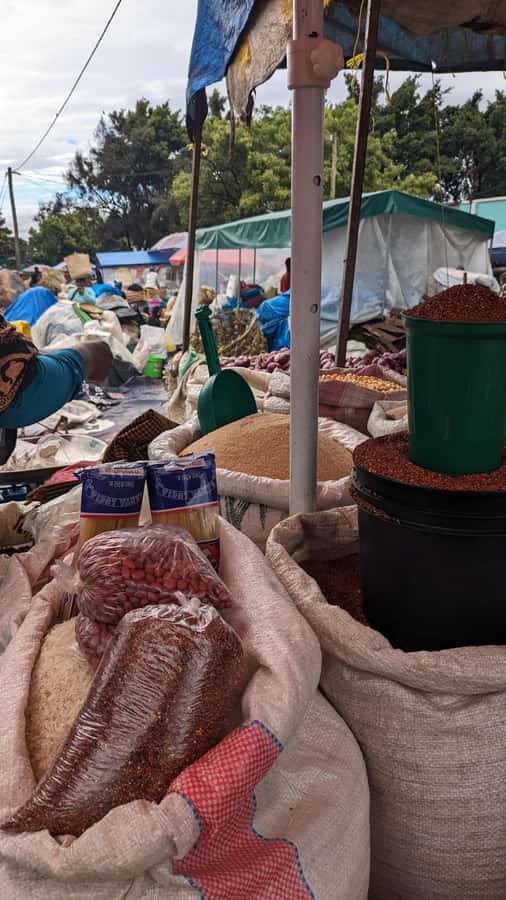
- Mbuyuni Market brings Moshi’s daily food trade close: Expect fruit, vegetables, snacks, and a look at how local buying and selling works.
- Makonde art gives the walk a creative focus: Paintings, carvings, and souvenirs are available, with time to buy handmade work if something catches your eye.
- The old train station shows Moshi in transition: You’ll see a former transport center now being used in a different way.
- The bus stand explains local movement: The guide covers town routes and regional connections, useful if you plan to travel around northern Tanzania.
- KNCU connects coffee, cooperatives, and Moshi’s economy: This stop gives the walk a wider social and economic frame.
- Pickup and a small group keep it simple: The guide can meet you at your chosen accommodation, or you can start at Coffee Union Cafe or KNCU.
Why This Walk Works As A Moshi Introduction
Moshi is often treated as a base for Kilimanjaro trips. That is a shame. The town has its own rhythm, and you can get a much better sense of it by walking through places where people shop, work, wait for buses, make art, and meet for food.
This experience focuses on that everyday setting. It does not promise grand monuments or a long list of formal attractions. Instead, it links several useful places across central Moshi and explains how they fit together.
I particularly like the mix of stops. The market shows daily commerce. The art cooperative gives you something visual and personal. The station and bus stand explain transport. KNCU adds a local business story. Together, these stops make a short walk feel more thoughtful than a simple town orientation.
The tour is conducted in English or Swahili. The small group size, capped at 10, should suit you if you prefer questions and conversation over a large crowd. The guide is described as a local expert, and one particularly warm review names James as the guide who made the experience enjoyable and welcoming.
More walking tours:
- Kilimanjaro: Village Walk, Coffee Tour, Waterfall, and Lunch
★ 4.5 · 56 reviews - 9 Days 8 Nights Walking Safari
★ 5.0 · 11 reviews - Walking Day Tour to Safari in Arusha National Park
★ 5.0 · 5 reviews
Starting At Coffee Union Cafe Or KNCU
You have two listed meeting points: Coffee Union Cafe and KNCU. If you know Moshi’s streets, you can meet at one of these locations. If not, pickup is available from a hotel, hostel, or another place you choose.
That flexibility matters on a walking tour. You do not need to spend time finding an unfamiliar starting point, and you can ask the guide to meet you where you are staying. Confirm the arrangement before the day of the walk, especially because one booking reported that no guide arrived.
The advertised duration is two hours, but the practical information warns that the walk can involve two hours or more of hiking. Wear comfortable shoes and expect continuous time outdoors. Sunglasses and sunscreen are specifically recommended, and Moshi’s sun can make a short walk feel longer than expected.
Children under five are not considered suitable for this activity. The tour is listed as wheelchair accessible, but the route includes markets, streets, and several walking sections, so you should confirm the exact route and surfaces if you use a wheelchair.
Tinga Tinga Artist Cooperative: Paintings And Carvings
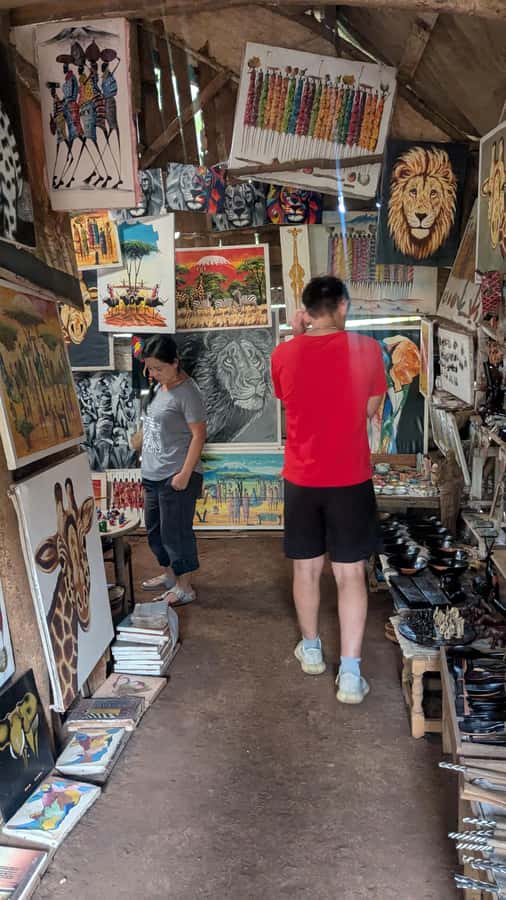
The first major stop is the Tinga Tinga Artist Cooperative, with about 30 minutes for a visit, sightseeing, and walking. The description also refers to this as the Makonde Art Market, where you may find paintings, carvings, and souvenirs.
This is one of the most appealing parts of the walk if you want a direct connection with local makers. Handmade art gives you something to examine at your own pace, and the guide can help explain what you are seeing. You also have the opportunity to buy a piece, though purchases are not included in the $20 fee.
Keep your shopping expectations practical. The tour offers access to the art market, not a guaranteed private demonstration or a fixed number of pieces. Prices and quality can vary, so take your time and ask about the work before buying. If you plan to purchase art, bring room in your luggage and remember that a short stop may not allow for lengthy bargaining.
The art stop also helps break up the historical and transport-focused parts of the walk. After seeing commercial life at the market, you get a look at Moshi’s creative economy and the handmade objects connected with local culture.
Moshi Train Station And A Town In Transition
The train station receives about 20 minutes. The station is described as an old facility that was once dormant and is now active again, making it a useful place to think about change in Moshi.
You are not simply looking at a building. The guide uses the station to explain how the town has developed and how transport has shaped its links with other places. For anyone interested in infrastructure and local history, this should be a worthwhile pause.
The stop is relatively short, so expect an overview rather than a full railway history lesson. The value comes from hearing the local story and seeing the station as part of present-day Moshi. It also gives the route a sense of time, linking older systems with the town you see today.
If you prefer only major landmark visits, this may feel modest. The station’s appeal depends on the explanation around it. Go in expecting context, not a polished museum experience.
A few more trips of this kind worth comparing:
- Kilimanjaro climb by Lemosho Route (7-day)
★ 5.0 · 651 reviews - Safari Serengeti And Ngorongoro
★ 5.0 · 288 reviews - Kilimanjaro climb, Machame Route (7-day)
★ 5.0 · 262 reviews - Kilimanjaro Climbing Lemosho Route 8 Days.
★ 5.0 · 186 reviews
Mbuyuni Market: Fruit, Vegetables, And Local Trade
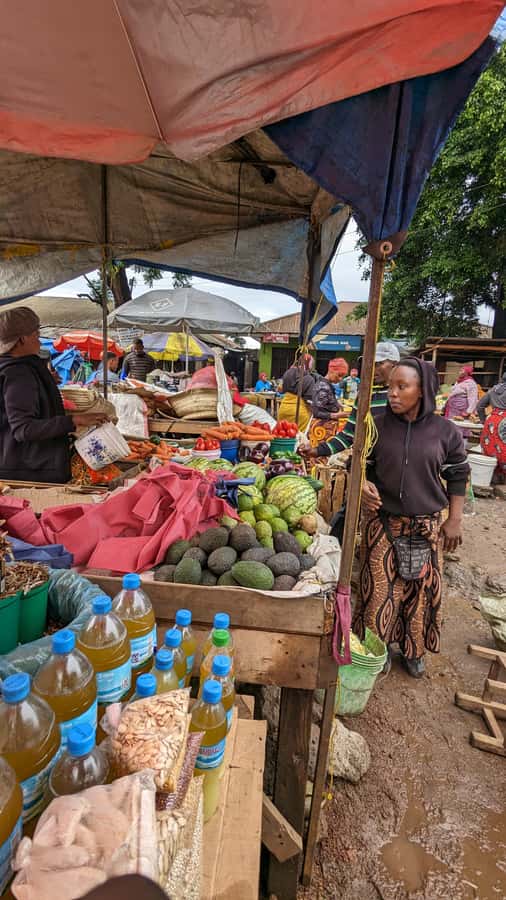
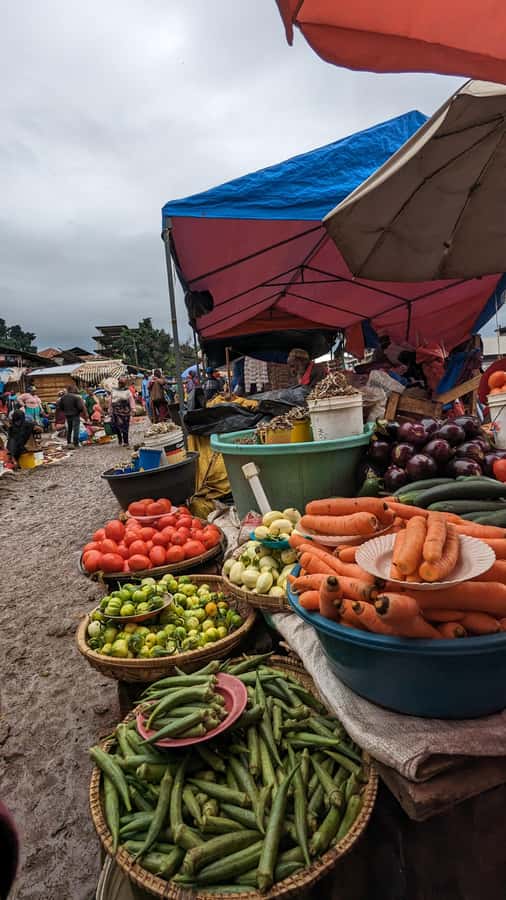
The Mbuyuni Market gets about 30 minutes and is likely to be the most immediate expression of Moshi life. Here, you can see fresh fruits and vegetables, watch local commerce, and learn about buying and selling practices.
I like this kind of stop because it gives you useful details that a formal sightseeing route often misses. You can see what is being sold, how the market is arranged, and how food moves through the town. The guide also provides interaction with local people, giving you a chance to ask questions in a respectful setting.
Sampling of local fruits and snacks is included. That is a small but valuable part of the price because food gives you a direct way to connect with the place. Traditional Moshi dishes and beverages are a separate matter, however. The information lists these tastings as not included, even though the wider description refers to culinary tastings, so you should ask what is covered before ordering anything.
The market may be crowded, noisy, or uneven underfoot. Keep your belongings secure and follow the guide’s lead when taking photographs. A market is a working place, not a stage, and a little courtesy goes a long way.
Moshi Bus Stand And The Practical Side Of Travel
The route then spends about 30 minutes at Moshi Bus Stand. This is a useful stop even if you have no immediate bus journey planned.
The guide explains how the local bus system works, including town routes and regional connections. That can help you understand how people move around Moshi and how the town connects with other parts of Tanzania. It may also make a later trip less confusing if you decide to travel independently.
Transport stations are rarely quiet or especially easy to read at first glance. This is where a local explanation has real value. Rather than trying to work out the system from signs alone, you can ask which types of services connect local neighborhoods and which serve longer routes.
The drawback is that a bus stand is a functioning transport hub, not a conventional attraction. You may find it busy and practical rather than beautiful. If you enjoy seeing how a town actually operates, that is the point. If you want a calm sightseeing stop, this part may test your patience.
KNCU And The Coffee Story Of Moshi
The final listed stop is KNCU, with a 10-minute break before drop-off. KNCU is described as an important part of Tanzania’s cooperative movement and a force in Moshi’s social and economic life.
This stop gives the tour a wider meaning. Markets and bus stands show what happens day to day, while KNCU helps explain how organized cooperation has shaped local livelihoods. For a town closely associated with the Kilimanjaro area and coffee production, that background adds useful context.
There is an important extra cost to note. Entry to the coffee curing industry in Moshi is not included. If you want to go inside that facility, you should plan to pay the entrance fee separately and confirm whether it can be added to your visit.
The KNCU stop is also one of the two possible drop-off points. You can finish at KNCU or return to Coffee Union Cafe. If you are being picked up elsewhere, check whether the route ends at one of these points or at your chosen accommodation.
What The $20 Price Really Buys You
At $20 per person, this is priced as a short guided orientation rather than a full-day cultural program. You are paying for a local guide, route planning, explanations at several stops, market interaction, fruit and snack sampling, and the convenience of pickup.
The price looks strongest if you are new to Moshi and want a useful first look before exploring alone. A guide can connect places that might otherwise feel unrelated. The bus stand becomes part of the town’s transport story, the market becomes part of the food economy, and KNCU gives context to Moshi’s cooperative and coffee connections.
The value is less certain if you only want famous sights or a food tour. The walk does not include every meal or beverage tasting, and coffee curing industry entry costs extra. Art purchases also come from your own budget.
A small group improves the value. With no more than 10 participants, you should have a better chance to ask about local life, transport, food, and shopping than you would in a large group. The two-hour length also makes it easy to fit around a Kilimanjaro climb or other Moshi plans.
Who Will Enjoy This Walk Most
I would recommend this experience to you if you want to understand Moshi before heading into the mountains. It suits first-time visitors, independent explorers who want local orientation, and anyone curious about markets, transport, art, and cooperative business.
It should also suit people who prefer an active introduction to a town. You will spend most of the time walking, so this is not a sit-down history talk with occasional short steps between buildings.
You may want something else if your priority is a detailed coffee tour, a long meal, or a major museum visit. The route touches several subjects but gives each one limited time. That variety is its strength, but it also means no single topic receives a full treatment.
The walk is not suitable for children under five. A moderate level of fitness is needed, and you should bring sunscreen and sunglasses. English and Swahili are available, and wheelchair access is listed, though confirming the street conditions in advance is sensible.
Reliability, Cancellation, And A Smart Booking Check
The activity allows free cancellation up to 24 hours before departure for a full refund. You can also reserve now and pay later, which helps if your Kilimanjaro schedule is still changing.
Still, the cancellation policy does not solve a communication problem on the day. One verified booking from January 2026 reported that the operator failed to appear and did not respond to a refund request. That is a serious concern beside three positive experiences, including two five-star accounts praising the introduction to Moshi and the guide’s warm manner.
Before you rely on this walk, confirm the pickup time, exact location, guide name, and phone contact. If you are staying outside central Moshi, make sure pickup is actually agreed rather than assumed. These simple checks are worth making because the walk itself appears well planned, but the booking record is mixed.
Should You Book The Moshi Town Walking Tour?
Book it if you want a short, affordable introduction to daily Moshi life, especially markets, local transport, Makonde art, and KNCU’s cooperative story. The positive experiences point to a friendly guide, a useful town overview, and more insight than you might get by wandering without context.
I would be more cautious if your schedule is tight or you cannot tolerate a missed appointment. Confirm everything directly and keep the provider’s contact details handy. If the meeting is clearly settled, $20 is a reasonable price for two hours of walking and local explanation.
For the best experience, wear comfortable shoes, carry sun protection, leave time for art purchases, and budget separately for coffee curing entry and any traditional meals or drinks. This is not Moshi’s grand sightseeing circuit. It is a practical look at how the town works, and that is exactly why it may be worth your time.
FAQ
How long does the Moshi walking tour last?
The tour is advertised as two hours, with the practical information noting that the walking portion may take two hours or more.
How much does the tour cost?
The price is $20 per person.
Where can the tour begin?
You can meet at Coffee Union Cafe or KNCU. Pickup is also available from a hotel, hostel, or another chosen location if arranged in advance.
Where does the tour finish?
The listed drop-off points are KNCU and Coffee Union Cafe.
Which languages are available?
The tour is offered in English and Swahili.
What places does the walking tour visit?
The route includes the Tinga Tinga Artist Cooperative, the old Train Station, Mbuyuni Market, Moshi Bus Stand, and KNCU.
Are food tastings included?
Sampling local fruits and snacks at the food market is included. Traditional Moshi dishes and beverages are listed as not included, so ask for clarification before ordering.
Is entry to the coffee curing industry included?
No. The entrance fee for the coffee curing industry in Moshi Town is not included.
Is the tour wheelchair accessible?
Yes, the activity is listed as wheelchair accessible. Because it includes extended walking through markets and town streets, confirm the route conditions when booking.
Just added around Moshi
- Moshi: Lake Chala Tour: Hiking &/or Kayaking★ 4.5 · 3 reviews
- 3 Days Tanga Exclusive Beach Holiday★ 5.0 · 3 reviews
- Serengeti Wildebeest Migration.★ 5.0 · 3 reviews
- Chemka Hotpsrings E-Bike Day Trip★ 5.0 · 3 reviews
- Explore 1 day Ngorongoro Crater Budget Group Safari from Arusha★ 5.0 · 3 reviews
- Explore the 360° of Kilimanjaro★ 5.0 · 3 reviews
- Affordable Short Tanzania Safari (2 Days Camping Safari)★ 5.0 · 3 reviews
- Rongai Route 7 Days★ 5.0 · 3 reviews
Walking Tours, compared.


3 Hours Private Stone Town walking Tour with Guide
Read our review →
Stone Town Historical Cultural Walking Guided Tour
Read our review →
Stonetown: Food Markets and Street Food Walking Tour
Read our review →
Arusha Guided Walking City Tour, Culture, Lifestyle & History
Read our review →

Browse the lists this tour appears in