
Reviewed · WALKING TOURS
Street Food and Community Walking Tour
See Arusha through local eyes. This 2 to 3-hour walk through Sinoni offers two things I value: a real look at everyday community life and small tastes of traditional Tanzanian food along the way. I also like that the tour supports Jamii Imarika Foundation, with all profits directed to education, basic needs, women’s empowerment, and youth programs.
The main consideration is that this is a community walk, not a polished sightseeing circuit. You should expect ordinary streets, modest buildings, and a flexible pace rather than major monuments. The tour also depends on good weather and a minimum number of participants.
In This Review
- Key points to know before you book
- Starting at Kajo Art Gallery near Arusha’s Masai Market
- Walking into Sinoni for a closer look at daily life
- Urban farming shows how food connects to the neighborhood
- Recycling and maize milling bring local work into view
- Carpentry and mud houses add texture to the walk
- Churches and community life beyond the food
- Local foods from sweet and salty vendors
- What the guides add to the Sinoni visit
- Why the $25 price has added value
- Timing, group size, and practical comfort
- Who will like this tour most
- Should you book the Sinoni community walk?
- FAQ
- Where does the tour start?
- Where does the tour finish?
- How long does the tour last?
- Is food included?
- How many people can join?
- Can I cancel for a refund?
Key points to know before you book
- Sinoni is the main attraction: You walk through a district south of Arusha’s center and see daily work, homes, churches, and local projects.
- Food is part of the route: Sweet and salty foods from different vendors are included, giving you several small tastes rather than one formal meal.
- Jackson and Given may lead the way: The available feedback praises these guides for being friendly, helpful, and generous with local information.
- Your $25 supports local work: All profits go to Jamii Imarika Foundation’s community programs.
- The group is limited to 10 people: That should make it easier to ask questions and keep the walk personal.
- The route ends in Sinoni: The meeting point is at Kajo Art Gallery near the Masai Market, and the team helps you return to your hotel afterward.
Starting at Kajo Art Gallery near Arusha’s Masai Market
The tour begins at Kajo Art Gallery on Tanesco Road, near the Masai Market. This is a useful starting point because it places you close to a familiar part of central Arusha before you head toward Sinoni.
You receive a mobile ticket and confirmation when booking. Since the meeting point is specific, I would save the address and map location before leaving your hotel. The stated starting point is Kajo Art Gallery, Masai Market, Tanesco Road, Arusha, Tanzania.
The tour does not include private transportation. That matters because you need to arrange your own way to the start. After the walk, the organizers help you get back to your hotel, but the tour details do not promise a private vehicle or a hotel transfer.
Because the group can have no more than 10 people, you should have a fair chance to hear the guide and ask questions. A small group also makes it easier to pause at community stops without turning the visit into a large procession through the neighborhood.
More Walking Tours in Arusha
- Arusha Guided Walking City Tour, Culture, Lifestyle & History
★ 5.0 · 150 reviews - 7-Day Private Tanzania Safari with Sunset Walking on the Crater Rim and Maasai
★ 5.0 · 40 reviews - 4 Days lodge safari Tarangire , Ngorongoro crater & Walking
★ 5.0 · 39 reviews
Walking into Sinoni for a closer look at daily life
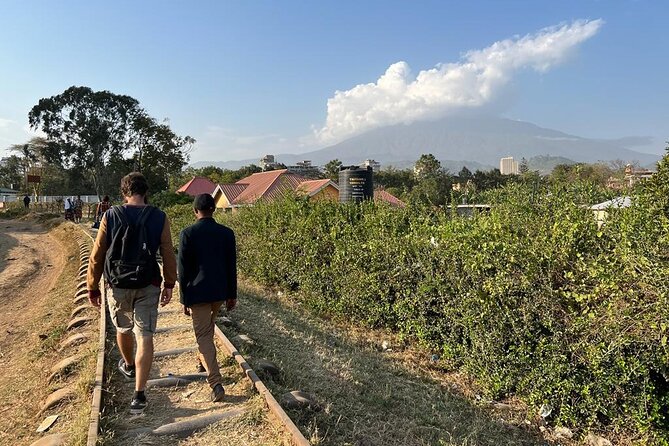
Sinoni is south of Arusha’s city center. Here, the point is not to tick off famous sights. You are there to see how people work, worship, build, grow food, and spend ordinary days.
The guide explains Tanzanian culture and everyday life in Arusha as you walk. That local commentary is important because many of the places you see may look simple at first. A maize mill, a workshop, or a mud house can tell you much more when someone explains how it fits into the neighborhood.
I like this format because it gives you room to ask questions. You are not simply passing through with a camera. You can engage with local people, though you should do so with the guide’s direction and with normal courtesy about photographs and personal space.
The pace is likely to be conversational rather than hurried. The stated walking time in Sinoni is about 2 hours and 30 minutes, while the overall tour is listed as roughly 2 to 3 hours. You should wear comfortable shoes and be ready to spend most of the outing on foot.
Urban farming shows how food connects to the neighborhood
One of the planned stops is urban farming. This gives the walk a useful link between the food you taste and the work that helps produce or support local life.
The available details do not specify the crops, methods, or size of the farming project, so I would not book this expecting a formal agricultural demonstration. Instead, think of it as a chance to see how food production can fit into an urban community.
This kind of stop also helps you understand why the tour includes food along with social and economic sites. The snacks are not isolated restaurant samples. They are part of a broader look at how people earn money, prepare food, and use available space.
Recycling and maize milling bring local work into view
The walk also includes recycling and maize milling. These are practical stops, not decorative photo opportunities, and that is part of their value.
A recycling stop can show you how materials are handled within the community and how useful work grows around everyday waste. The tour information does not give exact details about the process, so your guide’s explanation will shape what you learn.
Maize milling offers another look at a basic service people rely on. Maize is an important food in many parts of Tanzania, and a milling business connects agriculture, local commerce, and household cooking. You may find that this is one of the most useful stops for understanding how an ordinary product moves through a community.
These places may be active and workmanlike. You should not expect museum-style displays or a carefully staged presentation. The reward is seeing working parts of the neighborhood that a standard city tour would likely pass by.
A few more trips of this kind worth comparing:
- Arusha: Traditional Tanzania Cooking Class & Food Market Tour
★ 5.0 · 34 reviews - Organic Coffee Tour and Local Food Experience in Arusha
★ 5.0 · 29 reviews - Arusha: Traditional Tanzania Cooking class& Food Market Tour
★ 4.9 · 12 reviews - Waterfalls, Coffee, Hotsprings, Food Cuisine, & Serval Wildlife
★ 5.0 · 6 reviews
Carpentry and mud houses add texture to the walk
Carpentry is another stop on the route. A workshop can help you see the practical skills and small businesses that support daily life in Sinoni. The available information does not identify the type of furniture or products made there, so the guide’s local explanation will be the key part of the visit.
You will also see mud houses. This may be one of the clearest reminders that Arusha is not only a gateway to safari parks and Mount Kilimanjaro. It is a living city with varied housing, work, income levels, and building traditions.
I appreciate that the tour does not hide these everyday realities. At the same time, you should approach the neighborhood respectfully. This is where people live, work, and worship. The experience is strongest when you remain curious without treating homes or businesses as exhibits.
Churches and community life beyond the food
Churches are included among the stops. Their presence offers another way to discuss community life and belief in Tanzania.
The details do not identify the denominations or promise entry into a church, so you should view this as an outside stop or a point of explanation unless your guide says otherwise. It is still useful because religion can be part of how a neighborhood organizes social life and marks its shared identity.
The tour’s wider purpose is to connect you with people and places rather than give you a list of attractions. Food, worship, small businesses, housing, and environmental work all appear in one route. That mix makes the walk feel broader than a simple street-food outing.
Local foods from sweet and salty vendors
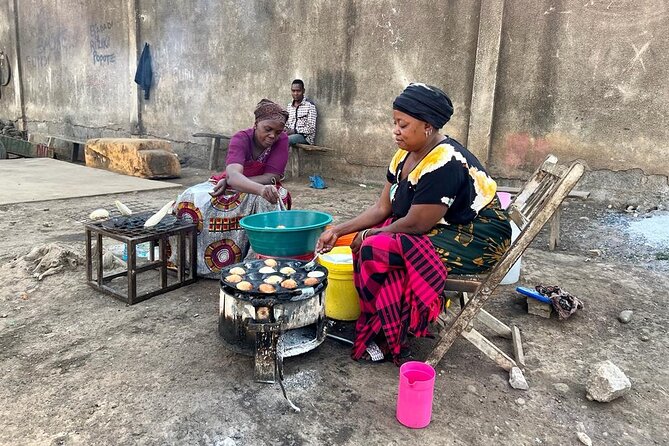
Food is included throughout the walk. You receive sweet and salty items from different vendors, with the guide helping you understand what you are tasting.
The tour description does not name the dishes, and that is worth noting. If you need to avoid certain ingredients or have allergies, ask before eating and tell the organizers when you book or meet the guide. You should not assume every sample will suit your diet.
The food is presented as part of the neighborhood, not as a seated restaurant meal. That means you get variety and a direct connection to local vendors, but you should not expect a full lunch or dinner. If you need a substantial meal afterward, plan for one.
I like this approach because small bites let you try more than one thing without giving the entire tour over to a restaurant visit. Sweet and salty samples also add rhythm to the walk. A stop for food can be a natural pause while the guide explains the next part of the community.
The food is also one of the tour’s most praised features. The available feedback specifically appreciates the treats along the route, along with the friendly help provided by Jackson and Given. Their role appears to be more than pointing out snacks. They help connect the food to the neighborhood and answer questions as you go.
What the guides add to the Sinoni visit
A community walking tour depends heavily on the guide. Here, the guide is described as coming from the community, which should give you a more direct connection to the area than a guide who only visits for work.
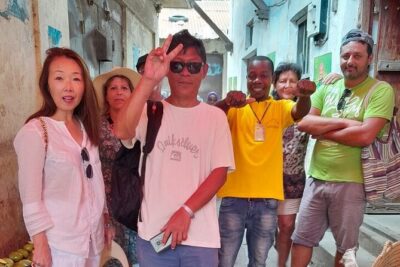
Jackson and Given receive particularly warm praise for showing the neighborhood, sharing interesting information, and being helpful and friendly. That combination matters. A good guide needs to explain what you are seeing, but also help you feel comfortable in a place that may be unfamiliar.
The tour has a 4.8 rating from 12 reviews and is recommended by 100 percent of the people who rated it. That is a small sample, so I would treat it as encouraging rather than final proof. Still, the praise is focused on the things that matter most here: the guides, the local information, the welcoming manner, and the food stops.
You should come prepared to participate. Ask about the farming, milling, recycling, houses, churches, and food. The more curious you are, the more useful the walk is likely to become.
Why the $25 price has added value
At $25 per person, this is reasonably priced for a small-group, food-and-walking experience lasting about 2 to 3 hours. The price includes the guide, sweet and salty foods from different vendors, and all fees and taxes.
The strongest value is not the amount of food. You are paying for access to a community setting with local explanation, several stops, and a direct contribution to Jamii Imarika Foundation.
The foundation says its work supports disadvantaged children through education and basic needs, while also empowering women and educating young people. The tour’s profits go entirely to that organization. That gives your spending a clear social purpose, although you should still choose the tour for the walk itself rather than treating the payment as a donation alone.
There are limits to the value. Transportation is not included, and the food should be viewed as tasting portions rather than a complete meal. If you want a polished culinary class or a long list of named dishes, this will not be the right format.
For someone already staying in Arusha, though, $25 buys a fairly unusual afternoon. You get a local guide, a small group, community access, and food samples while supporting a local foundation. That is a better deal than a generic city stroll if you care about how tourism affects the place you visit.
Timing, group size, and practical comfort
The walk lasts approximately 2 to 3 hours, with about 2 hours and 30 minutes allocated to Sinoni. That is long enough to see several parts of the area without taking up an entire day.
The group maximum is 10 people. This should help with questions and make it easier for the guide to keep everyone together. It also means the tour may feel more personal than a large coach-based outing.
Most people can participate, and service animals are allowed. The tour is near public transportation, which may help you reach the start, but private transportation is not included. Since the route is a walking tour, comfortable footwear is a sensible choice, even though the listing does not state a formal footwear requirement.
The tour requires good weather. If poor weather cancels it, you are offered another date or a full refund. A minimum number of participants is also required, and if that minimum is not met, you are offered another date or experience, or a full refund.
You can cancel for a full refund up to 24 hours before the start time. Cancellations or changes inside 24 hours are not refunded or accepted, and all cut-off times use local time in Tanzania.
Who will like this tour most
I would recommend this walk to you if you want to see Arusha beyond the usual visitor route. It suits people who enjoy talking with local guides, trying small food samples, and learning from ordinary workplaces and community spaces.
It is also a strong choice if you want your tour spending to support a local organization. The foundation’s focus on children, women, and youth gives the walk a clear purpose beyond sightseeing.
You may want to skip it if you have limited mobility, dislike walking through residential areas, or need a tightly scheduled food itinerary with exact dishes listed in advance. The tour is community-based and may feel less predictable than a restaurant tour.
It is also not designed as a full history tour of Arusha or a safari activity. You will not be visiting wildlife areas. You will be spending time with the human side of the city.
Should you book the Sinoni community walk?
Book it if you want an honest, people-centered look at Arusha and are comfortable with a simple walking route. The mix of food, local businesses, urban farming, recycling, churches, and housing gives you a useful picture of daily life, while the small group keeps the visit personal.
The strongest reasons to go are the community guides, the chance to ask questions, the food stops, and the fact that profits support Jamii Imarika Foundation. Jackson and Given appear to bring warmth and practical help to the route, which is exactly what this kind of tour needs.
Choose another activity if you want famous sights, a sit-down meal, private transportation, or a fully scripted schedule. For $25, this is best understood as a modest but meaningful walk through Sinoni, with local food and local purpose.
FAQ
Where does the tour start?
It starts at Kajo Art Gallery near the Masai Market on Tanesco Road in Arusha, Tanzania.
Where does the tour finish?
The walking tour finishes in Sinoni at the listed location JM7M+65W, Arusha. The organizers help you return to your hotel.
How long does the tour last?
The tour lasts approximately 2 to 3 hours. The Sinoni walking portion is listed as about 2 hours and 30 minutes.
Is food included?
Yes. Sweet and salty food from different local vendors is included, along with all fees and taxes.
How many people can join?
The tour has a maximum of 10 participants.
Can I cancel for a refund?
Yes. You can cancel at least 24 hours before the local start time for a full refund. Cancellations or changes made less than 24 hours before the start are not refunded or accepted.
More Walking Tours
- Tanzania – Arusha NP – Private Guided 4×4 Safari – Game Drive & Walking
★ 5.0 · 30 reviews - Private Walking Tour with Giraffes
★ 5.0 · 18 reviews - Arusha: City Walking Tour Historic and Modern Highlights
★ 4.5 · 12 reviews - Coffee walk day trip
★ 5.0 · 10 reviews
More Food Tours
- Mama Aziz Food Court
★ 5.0 · 3 reviews - Stonetown: Food Markets and Street Food Walking Tour
★ 4.7 · 151 reviews - Authentic Street Food Tours in Stone Town, Zanzibar
★ 5.0 · 46 reviews - Stone Town Evening Walk Tour With Visit Food Markets
★ 4.5 · 28 reviews
Just added around Arusha
- 5 Days Safari Tarangire, Serengeti, and Ngorongoro Crater★ 5.0 · 3 reviews
- Love lives in Africa★ 5.0 · 3 reviews
- 5 Days of Safari, Culture & Hot Springs – Tour from Arusha★ 5.0 · 3 reviews
- Arusha National Park Safari by Jeep★ 4.5 · 3 reviews
- 5Days Family _Group Tour Lodging Mid-Range in the Jungle★ 5.0 · 3 reviews
- Serengeti & Ngorongoro 3 Days Budget Safari★ 5.0 · 3 reviews
- 2 Days Tarangire and Ngorongoro Crater Tour★ 5.0 · 3 reviews
- 7 Days PRIVATE Best of Tanzania Safari *Departing everyday*★ 5.0 · 3 reviews
Walking Tours, compared.


3 Hours Private Stone Town walking Tour with Guide
Read our review →
Stone Town Historical Cultural Walking Guided Tour
Read our review →
Stonetown: Food Markets and Street Food Walking Tour
Read our review →
Arusha Guided Walking City Tour, Culture, Lifestyle & History
Read our review →

Browse the lists this tour appears in