
Reviewed · KILIMANJARO TREKS
Small-group 7-day Lemosho Route Kilimanjaro Climb from Arusha
Kilimanjaro rewards patience, not speed. This small-group Lemosho climb takes you from Arusha or Moshi through rainforest, moorland, high desert, and glacier country before the final push to Uhuru Peak. With a maximum of six people, an English-speaking guide, cook, porters, tents, meals, transfers, and mountain equipment included, the $2,400 price covers much of what makes a Kilimanjaro climb work.
I especially like the route’s gradual acclimatization profile, including the high Lava Tower walk followed by a descent to Barranco Camp. I also like the personal scale of the trip, with guides such as Kenedy and Julius praised for their leadership and with safety gear including oxygen and pulse oximeters used appropriately. The main consideration is simple: seven days is a serious physical challenge, and Lemosho is harder than the Marangu and Rongai routes. Summit night lasts about 12 hours, so preparation matters.
In This Review
- Key Points Before You Book
- Why the Lemosho Route Is Worth the Extra Effort
- Day 1: From the Kilimanjaro Gate to the Rainforest
- Day 2: Climbing Toward the Shira Plateau
- Day 3: Lava Tower and the Descent to Barranco
- Day 4: The Barranco Wall and Karanga Valley
- Day 5: Reaching Barafu Camp on the South Circuit
- Day 6: The Long Push to Uhuru Peak
- Day 7: Descending Through Wet Forest to Mweka Gate
- What the $2,400 Price Covers
- Who Should Choose This Kilimanjaro Climb?
- Useful Preparation for the Seven Days
- Should You Book It?
- FAQ
- How long is the Lemosho Kilimanjaro climb?
- What time does the experience begin?
- How many people can join the group?
- What accommodation is provided?
- Are meals and drinking water included?
- Is the climb suitable for most people?
- What happens if I cancel or the weather is poor?
Key Points Before You Book
- Lemosho begins on Kilimanjaro’s western side, with the first two days passing through thick rainforest before reaching the Shira Plateau.
- The group is limited to six people, which can make communication, pacing, and camp routines easier.
- Day 3 reaches Lava Tower at 4,650 meters, then drops to Barranco Camp to help your body adjust to altitude.
- The Barranco Wall is the route’s most adventurous passage, followed by Karanga and Barafu camps on the southern circuit.
- The $2,400 cost includes guides, porters, cook, tents, meals, drinking water, transfers, and park-related fees, but not flights, visas, tips, alcohol, or personal purchases.
- The summit attempt begins from Barafu Camp, with sunrise near Stella Point and a final ascent to Uhuru Peak.
Why the Lemosho Route Is Worth the Extra Effort
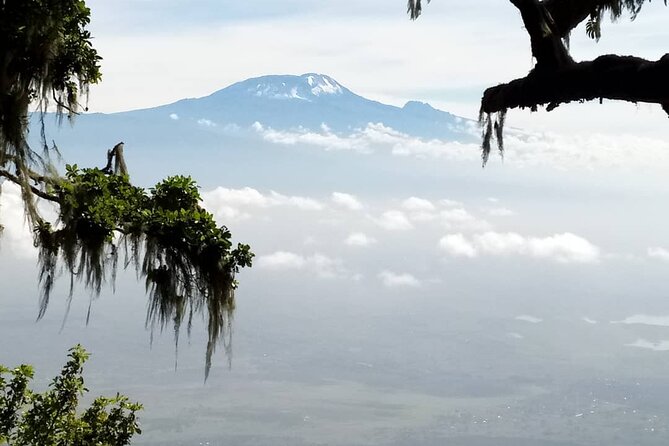
Lemosho is not the easiest way up Kilimanjaro, but it gives you a varied approach to Africa’s highest mountain. The route starts in the west, where the lower slopes are covered in rainforest. Ferns, ericas, muddy paths, and changing temperatures make the first few days feel like a journey through several different worlds.
On the third day, Lemosho joins the Machame route. From there, you follow the southern circuit toward Barranco, Karanga, and Barafu. This route arrangement matters because you gain height, lose some of it, and then gain it again. That pattern can feel tiring, but it gives your body more time to adjust than a route that climbs steadily without relief.
You should not confuse seven days on Kilimanjaro with seven gentle walking days. The elevation is the real test. Even when the daily altitude gain looks modest, the air is thin and the hours on your feet add up. The final summit night is a long effort that starts after an early dinner and a short rest.
The small group helps here. A maximum of six people means your guide can keep a closer eye on how you are coping, and you are not lost in a large procession. The crew includes an English-speaking professional guide, a cook, and porters. Previous climbers specifically praised Kenedy and Julius, along with the wider Meru Slopes team, for strong support and good organization.
More Kilimanjaro routes and climbs:
- 8-Day Small-group Lemosho Kilimanjaro Summit Trekking
★ 5.0 · 186 reviews - 7-Day Machame Kilimanjaro Summit Tour from Arusha
★ 5.0 · 125 reviews - Mountain Kilimanjaro Day Hike
★ 5.0 · 102 reviews
Day 1: From the Kilimanjaro Gate to the Rainforest
The day begins with departure from Moshi, with pickup offered and a drive of about 45 minutes to the Kilimanjaro National Park Gate. The road passes through mountainside villages before the practical business of permits begins.
The gate can be a busy place, with crews preparing supplies and getting ready for the trail. You may spend time waiting while permits are issued. This is not wasted time, but it is worth knowing that the climb does not begin the instant you leave your hotel.
The first walking section runs from about 2,389 meters to 2,785 meters. It takes around four hours. The route passes through thick rainforest, with your guide explaining local plant life, wildlife, and the changing conditions around the mountain.
This is a moderate introduction in terms of altitude, but the trail can be muddy, slippery, and windy. Gaiters and trekking poles are especially useful here. Good boots with dependable grip matter more than fashionable hiking gear.
The forest is one of Lemosho’s main attractions. It gives you a strong sense of moving gradually into the mountain rather than being dropped straight into a high-altitude camp. Your overnight stay is in a mountain tent, with camping equipment, meals, and clean drinking water provided.
Day 2: Climbing Toward the Shira Plateau
Day 2 is longer, taking about eight hours. You leave the rainforest behind and follow a steady uphill trail from 2,785 meters to roughly 3,895 meters.
The vegetation changes as you climb. Thick forest gives way to heath and moorland, with ferns and ericas appearing along the route. The wider views are a welcome reward after the enclosed feel of the trees.
This is also the first day when the cold becomes more noticeable. You gain about 1,110 meters, which is a substantial increase, and the walking time is long. A hearty breakfast is important, but you should also keep small snacks and water within easy reach during the day.
The trail can be narrow in places, with steep sections. You will want to keep your pace controlled rather than trying to match the fastest person in the group. The point is to arrive at camp in good shape, not to win the morning.
Reaching the rim of the Shira Plateau is a memorable change in scenery. The open ground and broad mountain views make the climb feel bigger. At this height, however, a short walk can require more effort than expected. Listen carefully to your guide and report headaches, unusual tiredness, dizziness, or other symptoms early.
Day 3: Lava Tower and the Descent to Barranco
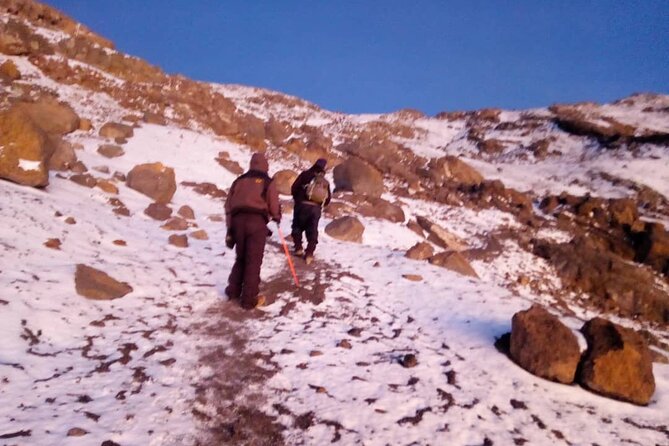
Day 3 is the key acclimatization day. You begin around 3,895 meters and finish at approximately 3,986 meters, a net gain of only 91 meters. The clever part is that you climb much higher during the day, reaching Lava Tower, also called Shark’s Tooth, at about 4,650 meters, then descend to Barranco Camp.
This is classic high-altitude planning. You spend time at a higher elevation, then sleep lower. That makes the day physically demanding, but it is valuable preparation for the summit attempt.
The route heads east across the Shira Plateau, up a ridge and past a junction leading toward Kibo Peak. It then turns southeast toward Lava Tower. A second junction leads toward the Arrow Glacier before the trail drops toward Barranco.
The day takes about seven hours. The elevation gain recorded for the overnight point does not tell the whole story, since the route includes that major high point at Lava Tower. Pack warm layers and do not judge the day by the relatively small final altitude gain.
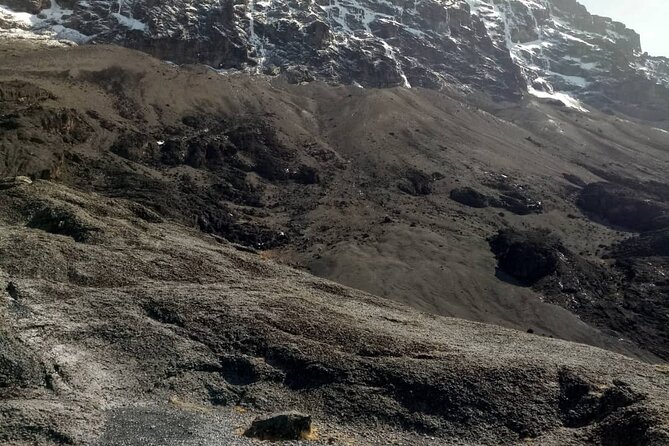
Barranco Camp sits among striking volcanic terrain. The setting gives you a clear reminder that Kilimanjaro is not just a forested mountain. It is an immense volcanic massif with rough ridges, dark rock, and high, open spaces.
A few more trips of this kind worth comparing:
- Tanzania Classic – 7 Days
★ 5.0 · 1,151 reviews - 7-Day Premium Luxury Tanzania Safari All-Inclusive
★ 5.0 · 426 reviews - Group Safari 7 Days in Tanzania’s Main Parks
★ 5.0 · 240 reviews - 7 Days Tanganyika Wilderness Safari
★ 5.0 · 159 reviews
Day 4: The Barranco Wall and Karanga Valley
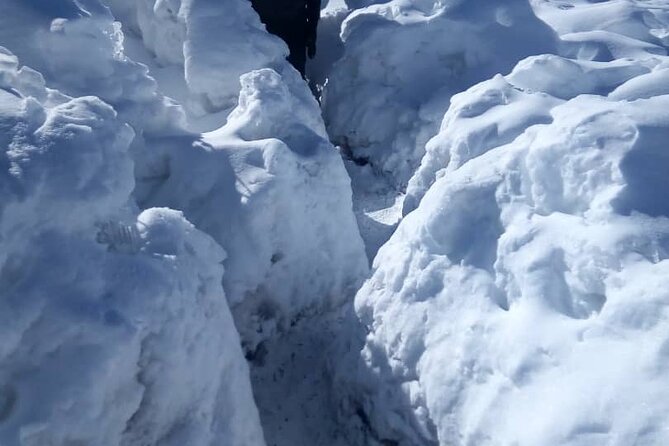
Day 4 covers around five hours, rising from 3,986 meters to 4,034 meters. The altitude gain is only about 48 meters, but this is not an easy day.
The main feature is the Barranco Wall. The route climbs a steep ridge and requires careful movement over rocky ground. You do not need technical climbing equipment for the passage described here, but you do need steady footing, patience, and a willingness to use your hands at times where appropriate.
This is where a strong mountain crew can make a real difference. The guides and porters know the route and move over the wall with impressive confidence. You should not feel pressured to copy their speed. Their job is to support you, not to make you feel slow.
After the wall, the route continues toward Karanga Valley and the junction connecting with the Mweka Trail. The scenery opens up again, and the changing views give you something to focus on when your legs are tired.
Karanga Camp is another mountain-tent overnight. Because the day is shorter than Day 2 or Day 3, you have more time to eat, rest, organize clothing, and prepare for the next stage. That quiet time is useful. On a mountain, camp routines are part of the adventure, not an interruption to it.
Day 5: Reaching Barafu Camp on the South Circuit
Day 5 takes around five hours and climbs from approximately 4,034 meters to 4,662 meters. The trail heads toward Barafu Camp, the launch point for summit night.
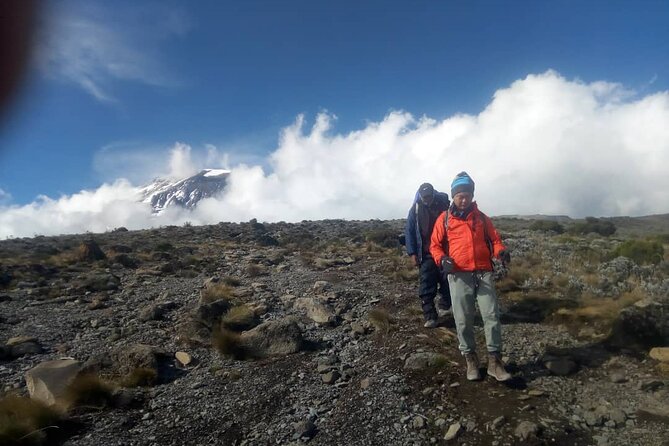
At Barafu, you have completed the South Circuit. This route gives you views of the summit from several angles, which helps the mountain feel less like a single wall ahead and more like a vast volcanic peak with changing ridges and glaciers.
The camp is high, cold, and functional. You should expect the focus to shift from sightseeing to rest and preparation. The plan calls for an early dinner before the summit attempt. Pack the next set of layers where you can reach them, keep your headlamp and water ready, and avoid wasting energy on unnecessary movement.
The information provided does not specify the exact sleeping arrangements beyond mountain tents, so ask the operator about tent sharing, sleeping mat details, and the overnight setup before departure. Camping equipment is included, as are chairs and tables, which makes camp life more manageable.
Day 6: The Long Push to Uhuru Peak
Summit day is the test that gives the whole climb its shape. From Barafu, you begin the ascent between the Rebmann and Ratzel glaciers. The route uses switchbacks and crosses heavy scree while heading northwest toward Stella Point on the crater rim.
The summit schedule lasts about 12 hours. That figure includes the ascent, time at the high points, the summit celebration, and the descent details included in the day’s plan. You need to treat it as a full day and night of effort, not a quick morning walk.
Stella Point is around 5,739 meters, although the supplied itinerary does not state that figure. The important detail for you is the route’s structure: you reach the crater rim first, pause for the sunrise, and then continue for about another hour to Uhuru Peak. Snow may appear on the final section.
Some climbers reach Stella Point in time for sunrise. Faster hikers may see sunrise from Uhuru Peak itself. Do not turn that into a race. Altitude affects people differently, and the safest pace is the one that lets you keep moving with control.
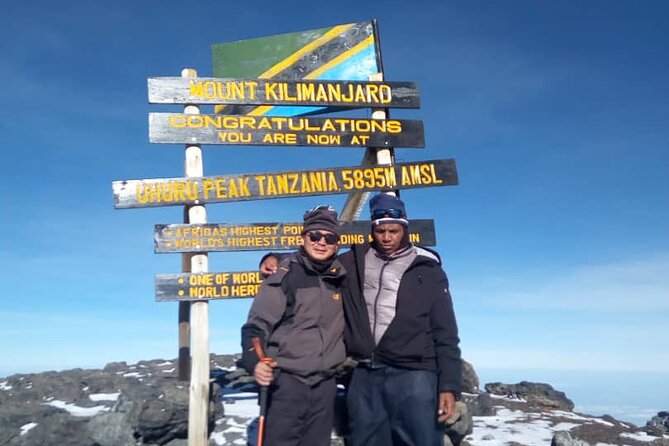
At Uhuru Peak, you have reached the highest point of Kilimanjaro. There is time for photos, celebration, and a moment to take in the achievement before continuing according to the mountain team’s instructions.
Safety support is an important part of this stage. The equipment described includes oxygen and pulse oximeters, and these were used appropriately on previous climbs. That does not remove the risks of altitude, but it shows why you should choose an operator that takes monitoring seriously.
Day 7: Descending Through Wet Forest to Mweka Gate
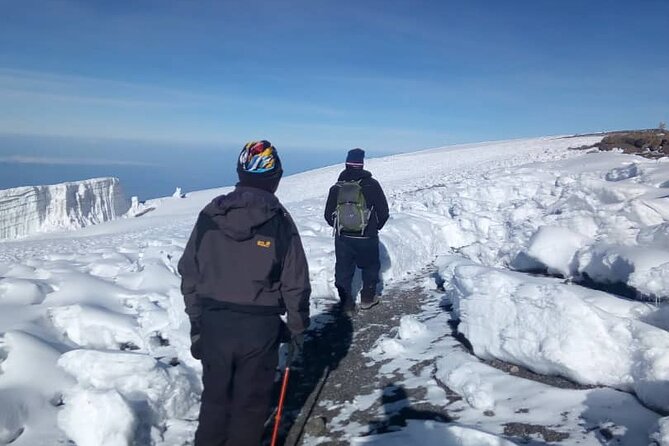
The final day begins at about 3,106 meters and descends to roughly 1,633 meters, losing around 1,473 meters. Walking time is about four hours.
After breakfast, the crew holds a ceremony of appreciation and team bonding before you say goodbye. This small ritual matters. A Kilimanjaro climb is not only a personal effort. The guide, cook, and porters make the camps, meals, route support, and summit attempt possible.
The descent to Mweka Park Gate is steep, wet, and muddy. The lower elevation brings warmer weather, but it also brings slippery ground. Keep the gaiters and trekking poles handy instead of packing them away after summit day.
At the gate, you receive your summit certificate. A vehicle then meets you at Mweka village for the drive back to your hotel in Moshi, which takes about 30 minutes. The promised reward is a hot shower, dinner, and a chance to celebrate. After seven days on the mountain, that shower may feel like a major attraction in its own right.
What the $2,400 Price Covers
At $2,400 per person, this climb offers strong value if you would otherwise need to arrange each part separately. The price includes all fees and taxes, an English-speaking guide, the mountain crew, hotel and tent accommodation, camping equipment, meals, clean drinking water, bottled water, tea, coffee, and transfers mentioned in the itinerary.
The meal allowance is substantial: eight breakfasts, eight lunches, and seven dinners are included. That is important because food logistics on Kilimanjaro are not simple. You are not just paying for a place to sleep, but for a working support system that carries supplies and prepares meals on the mountain.
You still need to budget for flights, visa fees, alcoholic and soft drinks, tips, and personal spending. Tips are not a minor detail in a supported mountain climb, so ask the operator for current guidance before you go.
The price is also attractive when compared with the much higher cost sometimes charged by overseas-based companies. One previous climber specifically praised the trip for saving money without cutting corners on food, accommodation, guides, porters, or safety equipment. That is the right way to assess the deal: not simply by finding the cheapest price, but by checking what the price leaves out.
Who Should Choose This Kilimanjaro Climb?
I would choose this route if you want a varied approach, a small group, and a camping-based climb with a clear acclimatization day. The Lemosho route suits people who enjoy changing scenery and do not mind a few steep, rough sections.
You should be reasonably fit and ready for long days on foot. The itinerary says most people can participate, but that should not be read as a promise that the climb is easy. The combination of altitude, cold, mud, steep ground, and a 12-hour summit day demands serious preparation.
This is less suitable if you want a short, simple mountain holiday or if you strongly prefer huts and fixed lodging. Lemosho is more challenging than Marangu and Rongai, and the mountain-tent accommodation is part of the experience.
The group size is a good fit for solo climbers, couples, or small friend groups who want support without joining a large crowd. Guides Kenedy and Julius have been specifically praised, so you can ask when booking if either is available for your departure. Guide assignments can change, so treat that as a request rather than a guarantee.
Useful Preparation for the Seven Days
Pack for wet forest, cold high camps, and possible snow near the summit. Gaiters and trekking poles are directly recommended for the muddy lower trail and the descent to Mweka Gate.
You should also organize your clothing so warm layers are easy to reach on Days 2 through 6. Keep water, snacks, rain protection, and personal essentials accessible during the walking day rather than buried inside your main bag.
The start time is 8:30 a.m., and pickup is offered. Confirmation is received at booking, and the activity has a maximum of six people. It is near public transportation, although the mountain itinerary itself includes transfers by vehicle at the start and finish.
Free cancellation is available if you cancel at least 24 hours before the local start time. A cancellation inside that window is not refundable, and poor weather may lead to a different date or a full refund.
Should You Book It?
I would book this seven-day Lemosho climb if you want a serious but well-supported Kilimanjaro route at a competitive price. The strongest reasons are the small group, the varied western approach, the high-and-low acclimatization pattern on Day 3, and the broad package of guides, porters, food, equipment, and transfers.
I would pause if your fitness is uncertain or if you are hoping for a relaxed walking holiday. The Barranco Wall, high camps, cold nights, muddy trails, and long summit attempt all require commitment.
Ask about the current guide team, tent arrangements, tipping expectations, and the full summit-day descent plan before paying. If those details suit you, this is a practical route with excellent scenery and a support structure that has earned strong praise for its people, food, organization, and safety care.
FAQ
How long is the Lemosho Kilimanjaro climb?
The climb lasts approximately seven days, beginning with pickup and transfer toward the Kilimanjaro National Park Gate and ending with a vehicle transfer from Mweka village to a hotel in Moshi.
What time does the experience begin?
The stated start time is 8:30 a.m.
How many people can join the group?
The maximum group size is six people.
What accommodation is provided?
The package includes overnight stays in hotels and mountain tents. Camping equipment such as tents, sleeping mats, chairs, and tables is included.
Are meals and drinking water included?
Yes. The package includes meals according to the itinerary, clean drinking water, bottled water, coffee, and tea. It lists eight breakfasts, eight lunches, and seven dinners.
Is the climb suitable for most people?
The activity information says most people can participate, but the Lemosho route is more challenging than the Marangu and Rongai routes. It includes steep passages, high-altitude camps, and a summit day lasting about 12 hours.
What happens if I cancel or the weather is poor?
You can receive a full refund if you cancel at least 24 hours before the local start time. Cancellations or changes made less than 24 hours before the start are not accepted for a refund. If poor weather causes the experience to be canceled, you will be offered another date or a full refund.
Just added around Arusha
- 5 Days Safari Tarangire, Serengeti, and Ngorongoro Crater★ 5.0 · 3 reviews
- Love lives in Africa★ 5.0 · 3 reviews
- 5 Days of Safari, Culture & Hot Springs – Tour from Arusha★ 5.0 · 3 reviews
- Arusha National Park Safari by Jeep★ 4.5 · 3 reviews
- 5Days Family _Group Tour Lodging Mid-Range in the Jungle★ 5.0 · 3 reviews
- Serengeti & Ngorongoro 3 Days Budget Safari★ 5.0 · 3 reviews
- 2 Days Tarangire and Ngorongoro Crater Tour★ 5.0 · 3 reviews
- 7 Days PRIVATE Best of Tanzania Safari *Departing everyday*★ 5.0 · 3 reviews
Kilimanjaro Treks, compared.



8-Day Small-group Lemosho Kilimanjaro Summit Trekking
Read our review →


Climbing Kilimanjaro through 7 days Machame Route
Read our review →

Browse the lists this tour appears in