
Reviewed · KILIMANJARO TREKS
10 Days Machame Route Kilimanjaro Climb
Africa rises beneath your boots. This 10-day Machame Route climb gives you a scenic, demanding way up Kilimanjaro, with forest, moorland, high-altitude desert, glaciers, and the broad Shira Plateau along the way. You approach from the southwest and descend by the Mweka Route, so the scenery keeps changing instead of repeating itself.
I like the careful acclimatization pattern, especially the high walk toward 4,250 meters before sleeping at Barranco. I also like the practical support package, which includes park fees, mountain crew wages, camping, mountain water, emergency oxygen, oximeters, a hyperbaric chamber, and Flying Doctors Insurance. The main drawback is simple: this is a hard climb, with long days, steep ground, cold nights, and a midnight summit start.
The price is $3,025 per person, and the activity is private, meaning only your group takes part. Past praise for Real Life Adventure Travel centers on attentive service from airport pickup through the climb. Freddie Chikima is named in the feedback, along with guides Hans and Wilfred, and the company is described as a member of KPAP, the Kili Porter Assistance Project. Those details matter when you are trusting a mountain operator with both your money and your safety.
In This Review
- Key points to know before you book
- Why the Machame Route earns its reputation
- Moshi arrival and the useful pre-climb day
- Day 3: from Machame Gate into the forest
- Day 4: Shira Plateau and the first big views
- Day 5: climbing high before sleeping at Barranco
- Day 6: the Barranco Wall and southern glaciers
- Day 7: Barafu Camp and the final preparation
- Day 8: midnight to Uhuru Peak
- Day 9: descending to Mweka Gate
- Day 10: airport, safari, or Zanzibar
- What the $3,025 price covers
- Food, camping, and mountain support
- Who should book this climb
- Should you book the 10-day Machame climb?
- FAQ
- Where does the Kilimanjaro climb begin?
- How long does the experience last?
- Which route is used to climb Kilimanjaro?
- How high is Uhuru Peak?
- Is the Barranco Wall a technical climb?
- What level of fitness is required?
- Are meals included?
- Is water provided on the mountain?
- What safety equipment is included?
Key points to know before you book
- The Machame Route uses varied scenery: Expect tropical forest, the Shira Plateau, moorland, alpine desert, southern glaciers, and volcanic rock near the summit.
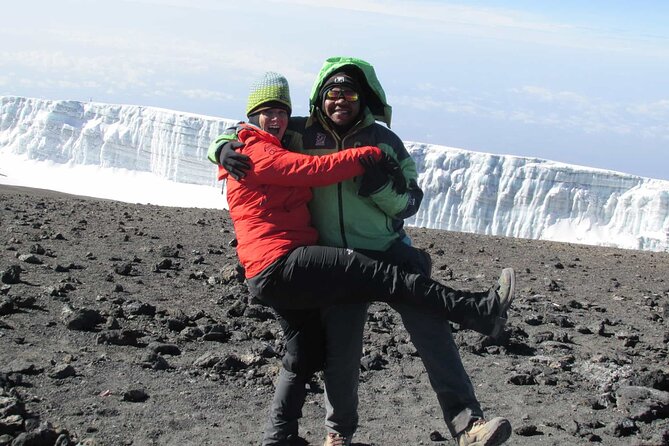
- The summit day begins around midnight: You climb from Barafu toward Stella Point, then continue to Uhuru Peak at 5,895 meters.
- Barranco is a major feature: The Barranco Wall is steep and hands-on in places, but it is not a technical climb.
- The route includes useful altitude practice: You climb as high as about 4,250 meters before sleeping lower at Barranco.
- Mountain safety equipment is included: Support covers emergency oxygen, oximeters, a hyperbaric chamber, and Flying Doctors Insurance.
- The trip ends with a hot shower in Moshi: After descending to Mweka Gate, your trip leaders return you to Bristol Cottages or Parkview Inn.
Why the Machame Route earns its reputation
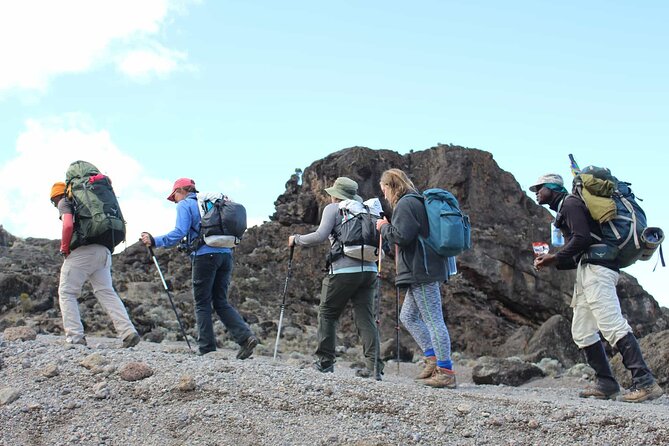
Machame is now Kilimanjaro’s most popular ascent route, and the reason is easy to understand. You get a fuller mountain experience than on the gentler Marangu approach, with more dramatic scenery and a stronger feeling of moving through distinct climate zones.
The price is a more demanding walk. Hiking days are longer, the trail is steeper, and the camp routine is basic. This route suits you best if you have some hiking or backpacking experience and are comfortable carrying yourself through several consecutive days outdoors.
The route’s design also helps with altitude adjustment. You climb high on several days, then sleep lower or take a shorter walking day. That does not remove the risk of altitude sickness, but it gives your body a better chance to adapt than a rushed schedule would.
More Kilimanjaro routes and climbs:
- Kilimanjaro climb by Lemosho Route (7-day)
★ 5.0 · 651 reviews - Kilimanjaro climb, Machame Route (7-day)
★ 5.0 · 262 reviews - Kilimanjaro Climbing Lemosho Route 8 Days.
★ 5.0 · 186 reviews
Moshi arrival and the useful pre-climb day
Your trip begins with pickup at Kilimanjaro International Airport. A car takes you to your Moshi hotel, either Bristol Cottages or Parkview Inn. The drive and transfer time listed for arrival is about one hour, and the first day is intentionally light.
That slow start is welcome. International flights can leave you tired, and arriving without rushing straight to the mountain gives you time to eat, sleep, and get organized.
The second day gives you a morning to rest. After lunch, you attend a short orientation and equipment check, followed by a town tour. Dinner and overnight accommodation are again at Bristol Cottages or Parkview Inn.
The equipment check is one of the most useful parts of this day. A missing warm layer or poor-fitting boot becomes a serious problem higher up, where cold, wind, and fatigue leave little room for mistakes. Use the check to confirm that your clothing, sleeping gear, footwear, and personal items are ready before you leave town.
The supplied meeting information gives an 8 a.m. start time, while the Machame transfer is described as leaving after breakfast at about 9:30 a.m. Confirm the exact pickup time with the operator before the climb.
Day 3: from Machame Gate into the forest
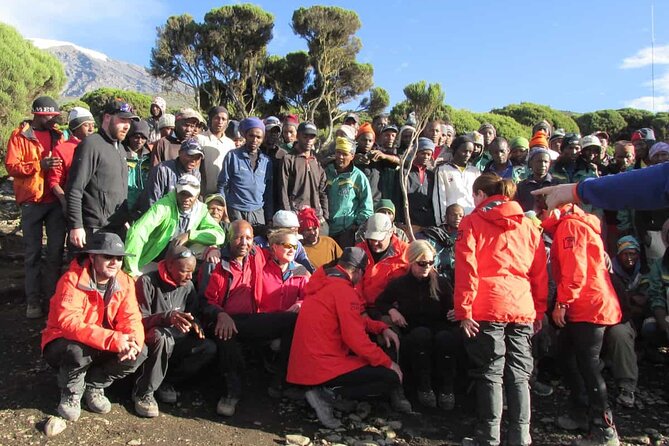
After breakfast, you drive to Machame Gate, meet your guides and porters, and begin walking. The first mountain camp sits at about 3,000 meters, reached after roughly five to seven hours on foot.
This opening day takes you through thick tropical forest. The air is warmer and more humid than it will be later, and the trail can feel busy because Machame is popular. Do not judge the whole climb by this first section. The forest is only the opening chapter.
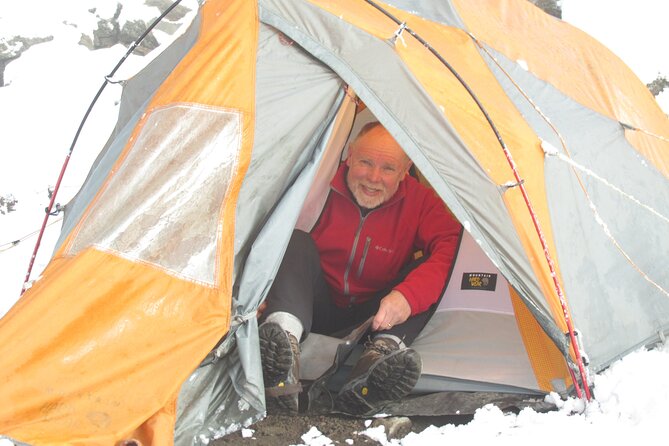
You spend the night in a mountain camp, with breakfast, lunch, and dinner provided. Camping means you trade hotel comfort for a closer connection to the mountain, but it also means you need to keep your personal kit organized. The climb works best when your headlamp, water, rain gear, and warm layer are easy to reach.
The first day is not technically difficult, but five to seven hours is a substantial walk. Start slowly. The best habit on Kilimanjaro is a patient pace from the first morning, not a heroic one.
Day 4: Shira Plateau and the first big views
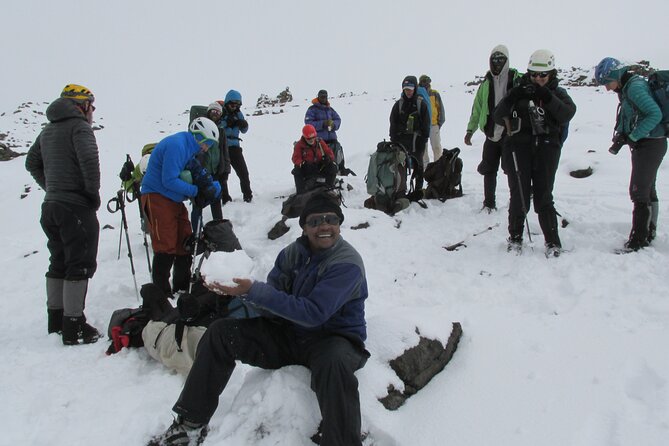
The next day is described as an easy-paced acclimatization walk. You cross streams, pass a river gorge, and move into moorland before reaching camp on the Shira Plateau. Walking time is about four to five hours.
This is one of the route’s great scenic changes. The dense forest gives way to open high ground, and you may have views toward Kilimanjaro and Mount Meru. The Shira Plateau gives you room to look around and notice how quickly the vegetation thins as you gain height.
Breakfast, lunch, and dinner are included at camp. The shorter walking day is valuable because altitude affects people in different ways. You may feel fine at breakfast and slower by afternoon. Use the easier pace to drink, eat, and rest rather than treating it as a chance to race ahead.
A few more trips of this kind worth comparing:
- Safari Serengeti And Ngorongoro
★ 5.0 · 288 reviews - Climbing Kilimanjaro – Machame Route
★ 5.0 · 170 reviews - Climbing Kilimanjaro through 7 days Machame Route
★ 5.0 · 151 reviews - Kilimanjaro climb, Lemosho Route (8-day)
★ 5.0 · 148 reviews
Day 5: climbing high before sleeping at Barranco
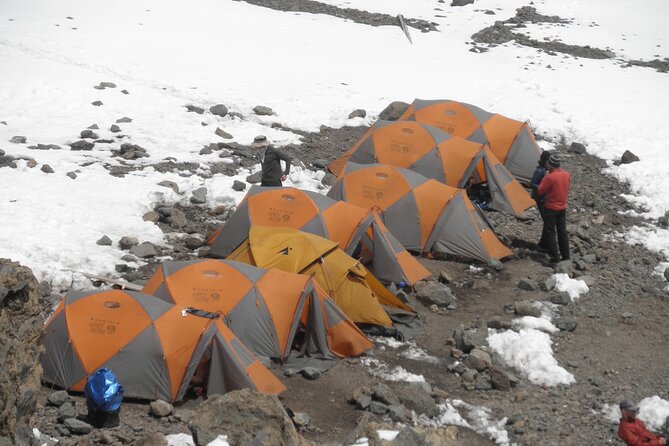
Day five is central to the climb’s altitude plan. You rise through moorland to about 4,250 meters, or roughly 15,000 feet, before descending into the Barranco area for the night.
Above the moorland, plant life becomes sparse. Grasses and lichens are among the few survivors, and the surroundings take on the stark character of a high-altitude desert. The Western Breach of Kibo comes into view, adding a dramatic volcanic backdrop.
After around four hours, the path turns and descends into a gorge. Barranco means gorge in Swahili, and the name fits the setting. The route includes plenty of up-and-down walking, so the day can feel more tiring than the total distance suggests. Walking time is about five to six hours, although the schedule also gives a four-hour estimate for the main stop.
This is a day when you should pay attention to your body. Headache, nausea, unusual tiredness, or poor coordination should be reported to the guide promptly. The included oximeters and emergency equipment provide useful support, but good safety begins with honest communication.
Day 6: the Barranco Wall and southern glaciers
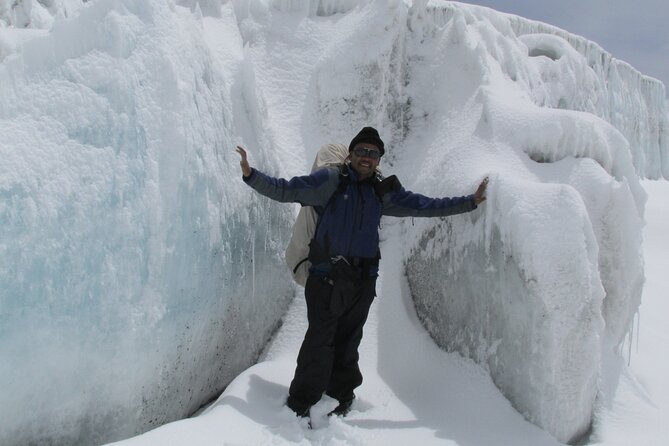
The morning begins with the Barranco Wall. It is not a technical climb, but you will use your hands at points and work upward over uneven rock. Guides are important here, not because ropes or climbing skills are required, but because a steady pace and careful foot placement make the section much easier.
After the wall, you follow the Kibo South Circuit. Clear weather can bring views of Kibo’s southern glaciers, a reminder that this is not just a long walk but a climb across a huge volcanic mountain.
This is a short mountain day, about three to four hours, with camp reached around lunchtime on a ridge just beyond Karanga Valley. The route descends through ridges and valleys, making this another useful acclimatization stage.
Arriving early gives you time to rest, eat, and prepare for the colder camps ahead. Do not waste the afternoon trying to prove your fitness. Save your energy for summit night.
Day 7: Barafu Camp and the final preparation
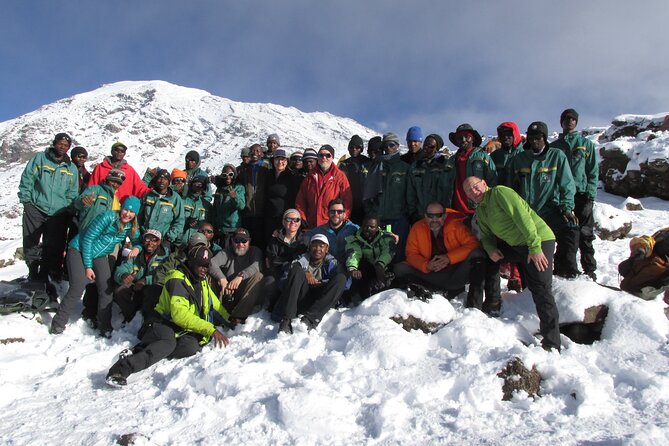
The trail climbs steadily toward Barafu Camp. As you gain height, the air grows colder and the vegetation becomes increasingly sparse. Barafu means ice in Kiswahili, and the camp sits on an exposed ridge that serves as the launch point for the summit attempt.
Walking time is about four to five hours, with arrival expected by late lunchtime. This early arrival is one of the day’s advantages. You can eat, sort your headlamp and warm clothing, and rest before the midnight departure.
Barafu is not described as a comfortable camp. Its exposed position means wind and cold may be part of the night, and the thin air can make ordinary tasks feel slow. Eat what you can, drink steadily, and keep your summit clothing ready before trying to sleep.
Day 8: midnight to Uhuru Peak
Summit day is the hardest part of the trip. You leave around midnight and climb from Barafu toward Stella Point on a steep trail. The route reaches Rebmann Glacier at about 4,870 meters and continues between the Rebmann and Ratzel glaciers.
The climb to the crater rim takes about six to seven hours. From there, you join the main trail and walk for about another hour to Uhuru Peak, Kilimanjaro’s highest point at 5,895 meters, or 19,340 feet.
The schedule aims for an arrival around 8 a.m. Early morning often offers the best chance of broad views before clouds gather, with Africa extending in every direction. The reward is not just the summit sign. It is the strange, quiet feeling of standing above the clouds after hours of slow, cold work.
The summit section takes about seven to eight hours before the descent continues toward the Mweka side of the mountain. The supplied schedule is cut off at the point where the descent is described, so confirm the exact summit-day camp arrangement and total walking time before you set out.
You need realistic expectations here. Reaching the crater rim does not always mean reaching Uhuru Peak, and a guide may turn you around if your condition becomes unsafe. That is not failure. Kilimanjaro is high enough that judgment matters more than pride.
Day 9: descending to Mweka Gate
The final mountain walk descends about 3,500 feet over three to four hours to Mweka Gate. The trail is steep in places and can become slippery when wet, so trekking poles are strongly recommended in the trip information.
At the gate, you say goodbye to the mountain crew and have a picnic lunch. Your trip leaders then return you to your Moshi hotel, where a hot shower awaits at Bristol Cottages or Parkview Inn.
This final day is easier than summit day, but tired legs can make downhill walking surprisingly awkward. Take short steps, use your poles, and do not rush simply because the finish is close.
Day 10: airport, safari, or Zanzibar
The final day is set aside for onward travel. If you are flying home, you receive a transfer to Kilimanjaro International Airport. If you are continuing to a safari or Zanzibar, pickup takes place at your hotel for the next part of your trip.
That arrangement makes the climb easy to combine with a longer Tanzania holiday. Still, allow yourself time after the mountain before planning anything demanding. The schedule provides a transfer, but it does not promise a leisurely recovery day.
What the $3,025 price covers
At $3,025 per person, this is not a budget walk, but the inclusions cover many of the costly parts of a Kilimanjaro climb. Park fees alone can be substantial, and the price also includes the guides, chef, porters, camping, mountain water, and meals.
Included meals are seven breakfasts, seven lunches, and six dinners. Alcohol and soft drinks are not included, so plan to pay separately for those if available. International and local flights, visa fees, souvenirs, personal spending, tips, and travel insurance are also outside the listed price.
The safety equipment adds value. Emergency oxygen, oximeters, a hyperbaric chamber, and Flying Doctors Insurance are specifically included. These items do not make the climb risk-free, but they show that the operator has planned for altitude-related emergencies rather than treating them as an afterthought.
Tips are not included. You should budget for them separately, along with any personal items you need to buy before the climb.
Food, camping, and mountain support
You receive breakfast, lunch, and dinner on the mountain according to the schedule. A chef is part of the mountain crew, which is important because food becomes fuel during long days, particularly before and after the summit attempt.
Boiled or filtered water is provided on the mountain. Bring a reusable bottle or hydration system that works for you, and ask the operator for the exact water quantity and container requirements before departure.
Porters carry the group’s mountain equipment, while you still need to manage your own daypack. Keep essentials such as water, snacks, rain protection, warm layers, sun protection, and personal medication with you.
Past praise for Real Life Adventure Travel focuses strongly on care and encouragement. Freddie Chikima is singled out for professional handling, while Hans and Wilfred are named as guides who helped keep a summit engagement safe and memorable. The company is also described as a KPAP member, a useful point to check if fair porter treatment matters to you.
Who should book this climb
You should consider this route if you have moderate physical fitness and some experience with hiking or backpacking. You do not need to be a technical climber, since the Barranco Wall is not a technical climb, but you do need to accept long walking days and a demanding summit push.
This is a good fit if scenic variety matters to you. You pass from tropical forest to open plateau, moorland, high desert, glacier views, and exposed volcanic ground. The route feels more adventurous than a simple up-and-down mountain walk.
Think twice if you want a relaxed holiday, hotel beds every night, or a short and gentle ascent. The Machame Route is popular because it is beautiful, not because it is easy.
The tour is private, so only your group participates. That can make pacing and communication simpler than a large shared departure, though the provided information does not specify the maximum group size.
Cancellation is free if you cancel at least 24 hours before the local start time. Changes or cancellations within 24 hours are not accepted for a refund.
Should you book the 10-day Machame climb?
I would recommend it if you want Kilimanjaro’s strongest mix of scenery, acclimatization time, and professional mountain support, and if you are prepared for a real physical challenge.
The best reasons to book are the varied route, the high-before-low acclimatization pattern, the short rest-friendly days before summit night, and the extensive safety equipment included in the price. The main reasons to hesitate are the steep trail, basic camping, cold exposure, and midnight-to-morning summit effort.
Before paying, confirm the exact day-eight descent schedule, pickup time, hotel assignment, porter practices, and tipping guidance. If those details suit you, this is a serious but well-supported way to attempt Africa’s highest peak.
FAQ
Where does the Kilimanjaro climb begin?
The trip begins in Moshi, Tanzania, with airport pickup from Kilimanjaro International Airport and transport to a Moshi hotel.
How long does the experience last?
The experience lasts approximately 10 days, including arrival, preparation, seven mountain days, descent to Mweka Gate, and departure or onward travel.
Which route is used to climb Kilimanjaro?
The ascent uses the Machame Route from the southwest. The descent uses the Mweka Route.
How high is Uhuru Peak?
Uhuru Peak is listed at 5,895 meters, or 19,340 feet.
Is the Barranco Wall a technical climb?
No. The Barranco Wall is not a technical climb, though it is steep and requires careful walking over uneven ground.
What level of fitness is required?
A moderate level of physical fitness is required. The route is challenging and is better suited to people with some hiking or backpacking experience.
Are meals included?
Yes. The price includes seven breakfasts, seven lunches, and six dinners during the mountain portion of the trip.
Is water provided on the mountain?
Yes. Boiled or filtered water is included while you are on the mountain.
What safety equipment is included?
The package includes emergency oxygen, oximeters, a hyperbaric chamber, and Flying Doctors Insurance, along with park fees and mountain crew wages.
Just added around Moshi
- Moshi: Lake Chala Tour: Hiking &/or Kayaking★ 4.5 · 3 reviews
- 3 Days Tanga Exclusive Beach Holiday★ 5.0 · 3 reviews
- Serengeti Wildebeest Migration.★ 5.0 · 3 reviews
- Chemka Hotpsrings E-Bike Day Trip★ 5.0 · 3 reviews
- Explore 1 day Ngorongoro Crater Budget Group Safari from Arusha★ 5.0 · 3 reviews
- Explore the 360° of Kilimanjaro★ 5.0 · 3 reviews
- Affordable Short Tanzania Safari (2 Days Camping Safari)★ 5.0 · 3 reviews
- Rongai Route 7 Days★ 5.0 · 3 reviews
Kilimanjaro Treks, compared.



8-Day Small-group Lemosho Kilimanjaro Summit Trekking
Read our review →


Climbing Kilimanjaro through 7 days Machame Route
Read our review →

Browse the lists this tour appears in