
Reviewed · KILIMANJARO TREKS
5 Days Marangu Route Kilimanjaro Trekking
The summit begins long before sunrise. This five-day Marangu Route trek appeals because you sleep in mountain huts rather than tents, and the route includes a walk to Maundi Crater with views toward Kenya. I also like that it is a private trip, so your group is not mixed with strangers. The main concern is the schedule: four nights gives you less time to adjust to altitude, and summit day can last 12 to 15 hours.
At $1,800.16 per person, the package covers park and rescue fees, accommodation, guides, porters, meals, taxes, and mountain equipment. That is a useful bundle for a Kilimanjaro climb, though you still need to budget for flights, Moshi lodging before and after the trek, a sleeping bag, rental climbing gear, insurance, visa costs, and tips. The positive signs are practical ones: Walter is praised for patience and care, while the wider Mafie Adventures team has earned praise for organization, food, safety, and last-minute help.
In This Review
- Key points to know before you book
- Why the Marangu Route feels different
- Day 1: Rainforest, Mandara Hut, and Maundi Crater
- Day 2: Moorland views at 3,700 meters
- Day 3: Across the saddle to Kibo Hut
- Day 4: The midnight push to Uhuru Peak
- Day 5: Back through the forest to Moshi
- What the $1,800.16 price covers
- Guides, food, and the human side of the climb
- Private group travel and practical logistics
- Who will get the most from this trek
- Should you book the Marangu Route trek?
- FAQ
- Where does the trek start?
- What time does the activity start?
- How long is the Kilimanjaro trek?
- How high is Uhuru Peak?
- How long is summit day?
- Are meals included?
- Is a sleeping bag included?
- Can I cancel for a refund?
Key points to know before you book
- Marangu is Kilimanjaro’s hut route: You sleep in mountain huts instead of standard camping tents, though the package also lists camping equipment, so confirm exactly what your trip uses.
- The summit day is very demanding: Day four covers 22 kilometers and may take 12 to 15 hours, beginning around midnight.
- Maundi Crater is a worthwhile extra walk: The first day includes a chance to see across toward Kenya after reaching Mandara Hut.
- The route reaches 5,895 meters: Uhuru Peak comes after Gillman’s Point at 5,681 meters, with altitude as the central physical challenge.
- Meals and support are included: Four dinners, four breakfasts, five lunches, a professional guide, porters, rescue fees, and park charges are part of the price.
- Last-minute help has been a strength: Walter is singled out for patience, while Mafie Adventures has also been praised for responsive planning and good food.
Why the Marangu Route feels different
Marangu is often called the Tourist Route or Coca-Cola Route. The first name points to its popularity. The second comes from the fact that it is the only Kilimanjaro route in this package information with sleeping huts, where drinks such as Coca-Cola may be available along the way.
That gives Marangu a simpler overnight setup than a tent-based route. You do not have to carry or sleep in a personal tent, and the huts provide a fixed place to rest. Still, this is not a soft mountain holiday. You will walk for several hours each day, sleep at high altitude, and face a very long summit push.
The five-day format is efficient but tough. You gain less acclimatization time than on a longer climb, and the itinerary moves upward quickly. If you already know that altitude affects you strongly, ask Mafie Adventures about a longer option before paying. The short schedule may suit a fit person with limited time, but it gives you less room to recover or adapt.
More Kilimanjaro routes and climbs:
- 8-Day Small-group Lemosho Kilimanjaro Summit Trekking
★ 5.0 · 186 reviews - 7-Day Machame Kilimanjaro Summit Tour from Arusha
★ 5.0 · 125 reviews - Mountain Kilimanjaro Day Hike
★ 5.0 · 102 reviews
Day 1: Rainforest, Mandara Hut, and Maundi Crater
Your day begins after breakfast with collection from your lodge in Moshi and transport to the Marangu Gate. The listed meeting location is Arusha, while the day-one instructions refer to pickup in Moshi, and the stated start time is 1:30 am. Confirm your exact pickup point and time before setting off, especially if you are staying outside Moshi.
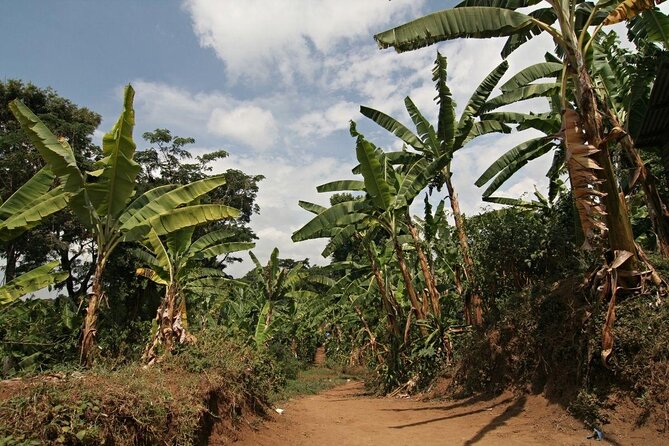
At the gate, paperwork comes first. Once that is done, you begin on a trail through dense rainforest. The route covers 8.3 kilometers and takes about five hours, so this is a manageable opening day compared with what follows.
The forest is more than a warm-up. Thick vegetation gives the first section a shaded, enclosed feel, and you might catch sight of primates along the way. That possibility adds a little life to what could otherwise feel like a steady uphill walk.
Mandara Hut is the overnight destination. After resting, your guide can take you to Maundi Crater. This extra outing is one of the best details in the trip because it gives you a viewpoint toward the Kenyan interior. It also breaks up the first afternoon and lets you see more than just the path between gate and hut.
The key practical point is pacing. Do not treat day one as a race because the mountain gets harder quickly. Use the shorter stage to settle into a slow rhythm, check your clothing, and pay attention to how your body responds to the first gain in height.
Day 2: Moorland views at 3,700 meters
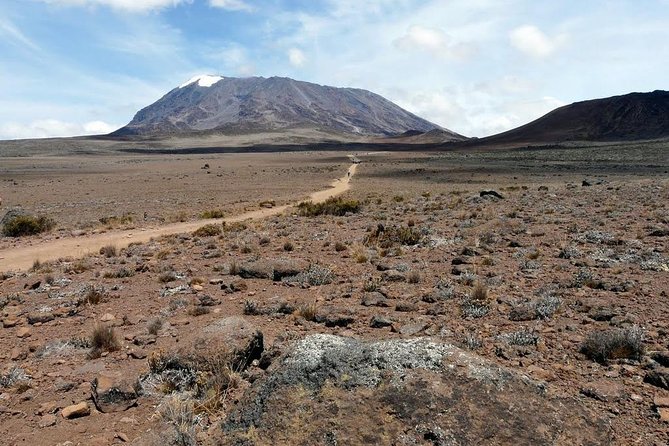
Day two starts with an early breakfast, then the path leaves the rainforest behind. You pass the timberline and enter the heath and moor zone, where the vegetation becomes more open and the views grow wider.
The distance is 12.5 kilometers, with about nine hours on foot. That makes this a full day even before altitude becomes a concern. Horombo Hut appears after roughly four to six hours, at 3,700 meters.
The reward is the setting around the hut. You can look toward Mawenzi and Kibo, the two major volcanic features of Kilimanjaro, while the Masai steppe spreads out below. The changing scenery helps mark your progress. You are no longer in forest, and the mountain feels more exposed.
This is also the first point where the short five-day plan deserves serious attention. You are gaining height at a steady rate, and the day is long. Your guide’s role matters here. Walter, one of the guides praised in the feedback, is described as patient and careful about comfort. Those qualities are useful on a climb where steady walking is more valuable than speed.
Horombo is not just a bed for the night. It is the place to eat, rest, and prepare for the next stage. The package includes meals, but bath towels are not included, so pack your own small towel. A sleeping bag is also not included, though rental is available.
Day 3: Across the saddle to Kibo Hut
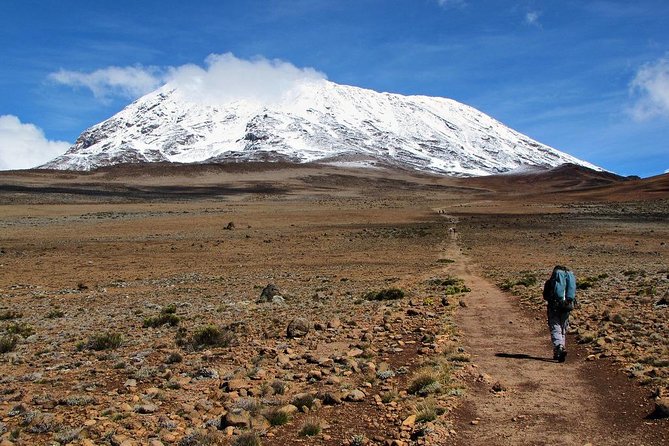
Day three covers 9.5 kilometers and takes about seven hours. The trail passes the Last Water point, then crosses the saddle, a broad plateau with very little vegetation between Mawenzi and Kibo.
This section can feel stark. The earlier forest and moorland are gone, and the route becomes a long approach toward the summit zone. The lack of vegetation makes the scale of the mountain easier to understand, but it also means there is less visual shelter and little distraction from the climb.
Kibo Hut is usually reached after five to six hours, although the full stage is listed at about seven hours. The plan calls for an early evening meal and an early night. That is not a suggestion to ignore. Your sleep will be short, and the next ascent begins around midnight.
The Kibo stop is where organization matters most. You need to eat, arrange your layers, prepare your head and hands for cold conditions, and rest as much as possible. Climbing gear is available for rent, but the package does not specify which items are supplied or at what cost. Ask for a complete gear list before departure rather than discovering a missing item at high altitude.
The equipment section also deserves clarification. The package lists tents, a mess tent, mattresses, and cooking equipment, while Marangu is known for hut accommodation. That may reflect the operator’s standard mountain equipment rather than your actual overnight setup. Confirm the sleeping arrangements, mattress type, and what you personally must carry.
A few more trips of this kind worth comparing:
- Private Full Day Hiking Experience to Marangu Route
★ 5.0 · 61 reviews - 4 Days Mount Meru Trekking
★ 5.0 · 55 reviews - 4 days Best experience Kilimanjaro Hike, Serengeti &Ngorongoro
★ 5.0 · 54 reviews - From Arusha/Moshi: Kilimanjaro Hike Marangu Route Day Trip
★ 4.5 · 54 reviews
Day 4: The midnight push to Uhuru Peak
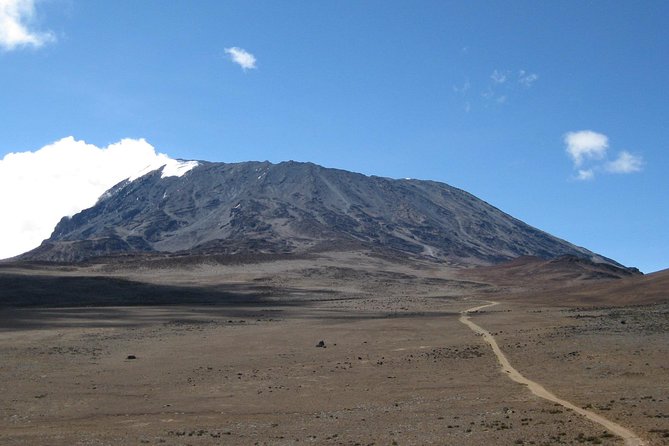
Day four is the heart of the climb and the hardest part by a wide margin. You leave around midnight for a 22-kilometer stage that can take 12 to 15 hours.
The ascent goes slowly toward Hans Meyer Cave at 5,220 meters. From there, the trail continues to Gillman’s Point at 5,681 meters, the crater rim. Reaching Gillman’s Point around sunrise gives you the first major summit milestone. The cold night begins to ease as the sun reaches the mountain.
Uhuru Peak is another one to two hours from Gillman’s Point, at 5,895 meters. This final section may feel short on paper, but altitude makes every step count. Your progress depends on calm pacing, warm clothing, hydration, and listening to your guide.
The schedule after the summit is just as important. You return to Kibo Hut for a hot meal and a one to two hour break, then continue down to Horombo Hut. That means you do not simply reach the summit and relax for the rest of the day. You still have a long descent after a night with little sleep.
I like that the plan includes food and a rest stop at Kibo, since the summit stage demands sustained effort. I would still ask how meals are timed and what food is practical during the climb. The feedback about excellent, plentiful food is encouraging, but your own appetite at altitude can be unpredictable.
The summit day is the clearest reason to think carefully about fitness and timing. Most people will find the distance and duration tiring even without altitude trouble. If you want a gentler climb, the five-day version may not be the best match.
Day 5: Back through the forest to Moshi
The final day covers 20.8 kilometers and takes about eight hours. You descend through heath and moorland to Mandara Hut at 2,700 meters, where a warm lunch is planned.
From Mandara, the path returns to tropical rainforest. The change is welcome after the open, cold upper mountain, and the forest gives the final hours a different mood from the summit approach. After roughly six hours of trekking, you reach the Kilimanjaro National Park Gate at 1,860 meters, although the full day is listed at about eight hours.
At the gate, you say goodbye to the mountain guides before a short transfer back to your Moshi hotel. A hot shower and a proper rest will likely feel like part of the reward. Accommodation in Moshi before and after the trek is not included, so arrange those nights separately.
The last day is not a token walk. After the summit push and descent the day before, 20.8 kilometers is a serious distance. The good news is that the route is downhill overall. The less good news is that tired legs can make a long descent uncomfortable.
What the $1,800.16 price covers
The price offers solid value if you need a package that handles the mountain’s main costs. Included items are:
- Park and parking fees
- Rescue fees
- All listed taxes and VAT
- Mountain accommodation
- A professional driver and guide
- Porters
- Camping equipment
- Four dinners
- Four breakfasts
- Five lunches
Those inclusions matter on Kilimanjaro. Park charges and rescue fees can add a lot to an independent budget, while porters and cooking support make the climb possible without carrying every item yourself.
The package does not include international flights, personal travel insurance, visa fees, souvenirs, sleeping bags, climbing gear rentals, bath towels, tips, or lodging before and after the mountain trip. Government increases in tax or park fees can also be passed on to you.
I would compare the price by looking at what support you actually receive, not just the headline number. A professional guide, porters, food, rescue coverage, and park fees are central expenses, so the bundle is easier to judge than a cheap trek that adds charges later. Ask for the exact gear rental rates and tipping guidance before you commit.
Guides, food, and the human side of the climb
The strongest personal detail connected with this experience is the praise for Walter. He is described as patient and careful about comfort, with the ability to provide clothing and gear when a solo climber arrived without everything needed.
That is useful, but do not treat borrowed gear as a substitute for preparation. You should arrive with the required clothing and ask the operator for a written packing list. Rental support is helpful when something is missing, but availability and cost should be confirmed.
Mafie Adventures has also been praised for handling a last-minute family climb, keeping communication responsive, and adapting food during the trek. Another guide, Lucas, is praised in connection with a safari, along with a good cook and professional organization. That safari feedback is not proof of mountain performance, but it does give you some indication of the wider company’s approach to guides, meals, and planning.
Food is included throughout the climb, which removes one major worry. The package provides four breakfasts, four dinners, and five lunches. One small detail is worth checking: the day-by-day plan refers to warm meals at key points, but it does not explain menus, snacks, or drinks. Ask what you should bring for the summit night.
Private group travel and practical logistics
This is a private activity, so only your group participates. That can be a real advantage. You can discuss pace, rest breaks, and comfort directly with your guide instead of fitting into a large fixed group.
Pickup is offered, and public transportation is nearby. The information gives Arusha as the start location, but day one describes collection from a Moshi lodge. Because those towns are not the same base, confirm the meeting place, transfer plan, and whether any extra transport charge applies.
Confirmation arrives when you book, and the activity is described as suitable for most people. That broad statement should not replace an honest self-check. The summit reaches 5,895 meters, and the fourth day can run for 15 hours. You need to be comfortable with long mountain walks and a rapid schedule.
The cancellation terms are strict. The experience is non-refundable and cannot be changed for any reason. If illness, weather, flight trouble, or a change of plans could affect you, read the payment terms carefully and arrange suitable travel insurance.
Who will get the most from this trek
This climb suits you if you want the classic Marangu approach, prefer huts to ordinary tent camping, need a private group, and have only five days available. It is also a practical choice if you value an all-in package with porters, meals, park charges, rescue fees, and a guide already arranged.
You may want another option if you prefer a slower altitude schedule or dislike very long summit days. The short duration leaves little spare time, and the final ascent is followed by a long descent rather than a full recovery day.
It can work well for solo climbers, families, and small private groups, provided everyone understands the physical demands. The positive experience described by a solo climber who received patient guidance and useful gear support suggests that the operator can respond well when plans come together quickly.
Should you book the Marangu Route trek?
Book it if the huts, private format, included support, and five-day timetable match your priorities. At $1,800.16, the package covers many of the expensive essentials, and the praise for patient guiding, food, safety, and organization gives Mafie Adventures a promising profile.
Before paying, get four points confirmed in writing: your exact pickup location, the hut or tent arrangement, the cost and availability of rented gear, and the full personal packing list. If you are fit, prepared, and realistic about the midnight summit push, this can be a direct and well-supported way to attempt Kilimanjaro. If altitude adjustment is your main concern, spend more time on the mountain rather than choosing this five-day schedule simply because it is shorter.
FAQ
Where does the trek start?
The experience is listed in Arusha, while the first day describes pickup from a lodge in Moshi and transport to Marangu Gate. Confirm your exact meeting point with Mafie Adventures before the trek.
What time does the activity start?
The stated start time is 1:30 am. The day-one description also refers to collection after breakfast, so confirm the precise pickup time for your date.
How long is the Kilimanjaro trek?
The trek lasts approximately five days.
How high is Uhuru Peak?
Uhuru Peak is at 5,895 meters.
How long is summit day?
Day four covers about 22 kilometers and may take 12 to 15 hours, beginning around midnight.
Are meals included?
Yes. The package includes four breakfasts, four dinners, and five lunches.
Is a sleeping bag included?
No. Sleeping bags are available for rent, but the cost is not provided.
Can I cancel for a refund?
No. The experience is non-refundable and cannot be changed for any reason once booked.
More 5-Day Experiences
- 5 Days Group Camping Safari
★ 5.0 · 730 reviews - 5-Day Highlights mid-Range Crater, Serengeti, Tarangire
★ 5.0 · 296 reviews - 5 Days Camping Tarangire, Serengeti & Ngorongoro crater & Visiting Maasai
★ 5.0 · 229 reviews - Tanzania Simba Safari – 5 Days
★ 5.0 · 217 reviews
Just added around Arusha
- 5 Days Safari Tarangire, Serengeti, and Ngorongoro Crater★ 5.0 · 3 reviews
- Love lives in Africa★ 5.0 · 3 reviews
- 5 Days of Safari, Culture & Hot Springs – Tour from Arusha★ 5.0 · 3 reviews
- Arusha National Park Safari by Jeep★ 4.5 · 3 reviews
- 5Days Family _Group Tour Lodging Mid-Range in the Jungle★ 5.0 · 3 reviews
- Serengeti & Ngorongoro 3 Days Budget Safari★ 5.0 · 3 reviews
- 2 Days Tarangire and Ngorongoro Crater Tour★ 5.0 · 3 reviews
- 7 Days PRIVATE Best of Tanzania Safari *Departing everyday*★ 5.0 · 3 reviews
Kilimanjaro Treks, compared.



8-Day Small-group Lemosho Kilimanjaro Summit Trekking
Read our review →


Climbing Kilimanjaro through 7 days Machame Route
Read our review →

Browse the lists this tour appears in