
Reviewed · KILIMANJARO TREKS
6 Day Kilimanjaro Climbing Via Marangu Route
The roof of Africa rewards patience. This Marangu Route climb takes you from rainforest to the arctic zone and up to Uhuru Peak at 19,340 feet. I like the steady five-night plan, which gives you time to move through changing elevations, and I like the strong staff support praised by guests who climbed with guides including Antipas, Emanuel, William, and Tuliza. One caution: the information calls this both a five-day and six-day trip, and it mentions camping equipment even though the daily plan uses huts, so confirm the exact schedule and sleeping setup before paying.
The route starts at Kilimanjaro National Park and ends back at the meeting point near Kilimanjaro International Airport. You get meals, snacks, bottled water, a sleeping bag, park fees, and guide service in the listed price of $2,196 per person. The main challenge is altitude, not technical climbing, and the summit day is a long, demanding push that requires sensible pacing.
In This Review
- Key points to know before you book
- What the $2,196 price really covers
- Day 1: Marangu Gate to Mandara Hut
- Day 2: Mandara Hut to Horombo Hut
- Day 3: Horombo Hut to Kibo Hut
- Day 4: Kibo Hut to Uhuru Peak and Horombo Hut
- Day 5: Horombo Hut to Marangu Gate
- Why the Marangu Route works for many climbers
- The people behind the climb
- Food, water, and equipment on the mountain
- Who should choose this experience?
- Practical booking advice for the 7:30 a.m. start
- Should you book the Marangu Route climb?
- FAQ
- How long does the Kilimanjaro climb take?
- Which Kilimanjaro route does this experience use?
- What time does the experience start?
- Where does the experience start?
- Where does the experience end?
- Is food included?
- Are park fees and equipment included?
- What happens if I cancel?
Key points to know before you book
- Marangu Route hut trek: Sleep at Mandara, Horombo, and Kibo huts rather than following a tent-based itinerary as the camping wording suggests.
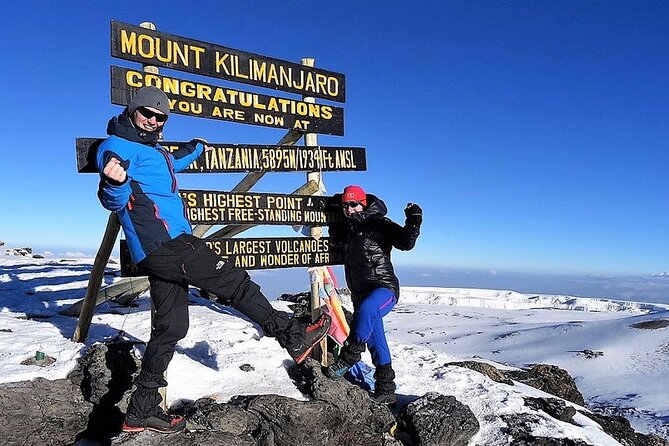
- Six ecological zones: The route moves from lush rainforest through heathland and alpine desert to the harsh arctic zone near the summit.
- Early summit attempt: You leave Kibo Hut in the early morning and aim to reach Uhuru Peak before sunrise.
- Strong guide support: Names praised in the supplied feedback include Antipas, Emanuel, William, and Tuliza.
- Meals and equipment included: Five breakfasts, five lunches, five dinners, snacks, bottled water, a sleeping bag, and camping equipment are listed.
- Simple cancellation terms: Cancel at least 24 hours before the 7:30 a.m. start for a full refund.
What the $2,196 price really covers
At $2,196 per person, this is not a bargain day hike. It is a full mountain package with park access, staff, food, water, sleeping gear, and transportation from the stated meeting point. Those inclusions matter on Kilimanjaro, where a self-organized trip would require you to arrange several moving parts separately.
The package includes all fees and taxes, a tour guide, snacks, bottled water, coffee or tea, a sleeping bag, and camping equipment. You also receive five breakfasts, five lunches, and five dinners. That is useful because the route reaches places where ordinary meal stops are not part of the experience.
The price does not include an international flight or visa. You should also read the booking details carefully because the duration is described as approximately five days in one place and as a six-day climb elsewhere. The daily plan covers five hiking days, from the first walk to the park gate through the descent from Horombo. Ask the provider, Spirit of Kilimanjaro, whether there is an arrival or departure day included outside those trekking days.
The group limit is listed as 100 people. That is a large possible maximum, even if your own departure is smaller. A big group can offer company and shared energy, but it can also mean a slower pace and less personal attention. The supplied feedback points to attentive staff, including Antipas looking after a 70-year-old father in one family group, but you should still ask how many climbers will be assigned to each guide.
More Kilimanjaro routes and climbs:
- 7 Days Kilimanjaro via Machame route affordable price
★ 5.0 · 110 reviews - Kilimanjaro Airport taxi to/from Moshi town/Arusha town
★ 5.0 · 60 reviews - 6 Days Climbing Mount Kilimanjaro Machame Route
★ 5.0 · 40 reviews
Day 1: Marangu Gate to Mandara Hut
Your climb begins at Marangu Gate in Kilimanjaro National Park. Park formalities come first, followed by introductions to the guides and porters who will support the ascent.
The opening walk covers about 8 kilometers and takes roughly four hours. Compared with the days ahead, it is a gentle start. The path passes through rainforest, with thick plant growth and the chance to see birds and other wildlife. You may also spot colobus monkeys later on the route, although sightings are not guaranteed.
Mandara Hut sits at about 2,700 meters. This first overnight stop is important because it begins your adjustment to altitude without placing you immediately in the most severe conditions. Take the evening slowly, drink water, and resist the temptation to treat the first day as a normal hike.
The rainforest is one of the most rewarding parts of the route because it feels far removed from the dry summit slopes. It also makes clear why Kilimanjaro is more than one long climb. The mountain changes character as you gain height.
Day 2: Mandara Hut to Horombo Hut
After breakfast, you leave the rainforest and enter the heathland zone. The route covers about 12 kilometers, and the day ends at Horombo Hut at roughly 3,700 meters.
This is a bigger day than the first, but the main change is not just distance. The air gets thinner, vegetation becomes lower, and the open views begin to replace the enclosed forest. You may get glimpses of Mawenzi Peak, one of Kilimanjaro’s most distinctive volcanic formations.
Horombo is a key overnight stop because the elevation is now high enough for altitude symptoms to become a serious concern. The itinerary refers to proper acclimatization as vital, and that is sound advice. Walk slowly, keep drinking water, and tell your guide if you feel unwell.
The route description lists only a very short duration for this day, which appears inconsistent with the stated 12-kilometer walk. Treat the distance as the more useful planning figure and ask for the expected hiking time before departure. A clear schedule helps you judge how much rest you will have at Horombo.
Day 3: Horombo Hut to Kibo Hut
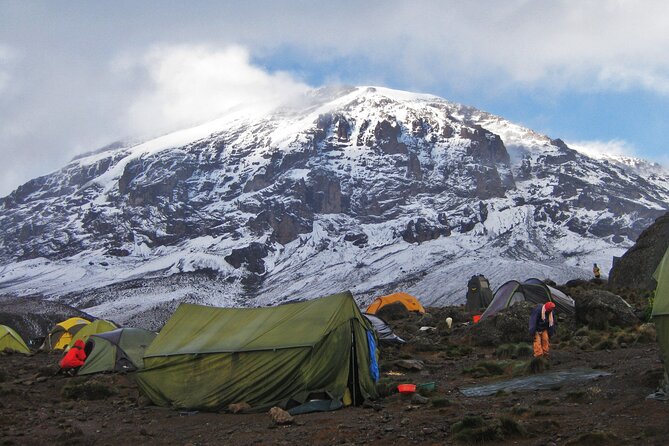
Day three takes you to Kibo Hut at around 4,700 meters. The terrain changes again, this time to alpine desert, with much less plant life and a more exposed feel.
The route crosses the saddle between Mawenzi and Kibo, the two dormant volcanic cones that shape Kilimanjaro’s summit area. This is a dramatic part of the climb. Mawenzi gives the view a jagged profile, while Kibo leads your attention toward the final ascent.
The listed hiking time is about four hours, but altitude can make a moderate distance feel much harder. You should expect the thin air to affect your walking speed and energy. Keep your pace easy and even. This is not the day to prove how fast you can climb.
Kibo Hut is the staging point for the summit attempt. Rest becomes the main task. You will need to conserve energy for the early start rather than spend the afternoon wandering around. The itinerary specifically highlights pacing and hydration here, and those are not minor suggestions.
A few more trips of this kind worth comparing:
- 6 Days Tanzania Classic Safari
★ 5.0 · 52 reviews - 6 Days Big Five Tanzania Safari
★ 5.0 · 15 reviews - 6 Days Machame Route Kilimanjaro Trekking
★ 5.0 · 13 reviews - 6 Days 5 Nights lodge safari Tarangire, Manyara, Serengeti & Ngorongoro Crater
★ 4.5 · 10 reviews
Day 4: Kibo Hut to Uhuru Peak and Horombo Hut
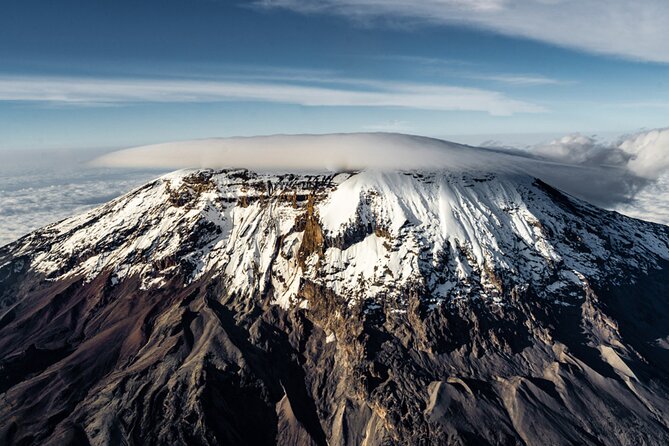
Summit day is the hardest and most memorable part of the trip. The climb begins in the early hours so you can reach Uhuru Peak before sunrise.
The final ascent is physically and mentally demanding. Darkness, cold, thin air, and the long return walk all add to the challenge. The reward is reaching Uhuru Peak, described here as the highest point in Africa, at 19,340 feet.
The pre-sunrise timing has a clear purpose. It gives you the chance to see the first light from the summit and complete much of the upward effort before the day warms. It also means you should expect a tiring schedule, not a relaxed morning walk.
After celebrating at the top, you descend to Kibo Hut and then continue to Horombo Hut. That second descent makes this a very long day. Reaching the summit is only part of the job. You still need to return safely, eat, drink, and rest.
This is where good staff support matters most. Several supplied accounts praise the team for kindness, organization, English communication, and encouragement. One climber said the staff kept the experience entertaining, which can matter when tiredness sets in. Another account describes Tuliza and the wider team checking that the ascent and return went well.
Do not judge your chances only by the distance. Altitude affects people differently, and the itinerary does not promise a summit success rate. Experienced guides can support you, but they cannot remove the need for preparation or guarantee that you will reach the peak.
Day 5: Horombo Hut to Marangu Gate
The final hiking day takes you back to Marangu Gate through the heathland and rainforest zones. The return covers the same broad route in reverse, but the scenery looks different after the open upper slopes and summit effort.
The descent is generally less demanding than the ascent, though tired knees and feet can make it feel long. Keep your pace controlled and watch your footing. The return through the forest may offer another chance to see colobus monkeys and birds.
At the gate, you receive summit certificates and say goodbye to the guides and porters. That closing moment gives the trip a clear sense of completion. The staff are not just background support on this route. They help carry equipment, prepare meals, manage the mountain logistics, and guide you through changing conditions.
The published information says the activity ends back at the meeting point. Since the start point is listed as Kilimanjaro International Airport, Kilimanjaro Airport Road, Tanzania, confirm exactly where the first transfer begins and where the final return takes you.
Why the Marangu Route works for many climbers
The Marangu Route follows a gradual progression through several ecological zones. You start among rainforest plants, move into heathland, cross alpine desert, and finish in an arctic zone that is harsh, cold, and spare.
That variety gives you a strong sense of the mountain’s scale. You are not simply walking uphill for several days. The trees disappear, the air thins, and the terrain becomes increasingly severe.
The route also uses huts at the named overnight points. That can appeal to you if you prefer a fixed indoor sleeping stop instead of carrying or relying entirely on tent accommodation. However, the package also lists camping equipment and describes Signature Camping in the overview, which does not match the hut-based itinerary. Get this clarified in writing.
The daily plan is demanding but straightforward. You do not need to understand ropes, climbing anchors, or technical mountaineering from the information provided. The main skills are endurance, patience, hydration, and the ability to follow a slow pace at high altitude.
The people behind the climb
The strongest theme in the feedback is staff care. A family group of four brothers and their 70-year-old father credited guide Antipas with paying close attention to the older climber. That detail is useful because it shows the support can be adapted to different ages within one group.
Other accounts praise friendly staff, good English, organization, and respectful treatment. One climber spent six days with Emanuel and described the experience as personal and encouraging. William is also named in connection with an organized six-day climb, while Tuliza led another ascent when the original contact, William, could not attend for family reasons.
You should not assume that every departure will include these exact guides. Still, their names provide useful questions to ask before you book: Who will lead your group? How many guides and porters are assigned? How does the team handle a climber who needs a slower pace or must turn back?
The supplied rating summary gives the experience a five-star score from six reviews, though the individual entries do not show numerical scores. I would treat the praise as encouraging rather than as a guarantee. The comments consistently favor the staff and organization, but they do not provide detailed information about hut conditions, food menus, equipment brands, or summit success rates.
Food, water, and equipment on the mountain
Five breakfasts, five lunches, and five dinners are included, along with coffee or tea, snacks, and bottled water. This reduces the amount of planning you need to do before the climb and gives the staff responsibility for much of the daily catering.
The food details are not specific, so you should ask about dietary needs before arrival. The supplied information confirms that meals are included, but it does not state whether vegetarian, vegan, gluten-free, or other special menus are available.
A sleeping bag and camping equipment are listed. Because the day-by-day plan names Mandara, Horombo, and Kibo huts, ask whether the sleeping bag is supplied for hut use and what the camping equipment refers to. This is one of the most important points to settle before you pack.
Bottled water is included, but the amount per day is not stated. Ask how much is provided and whether you need a refill system or extra carrying capacity. Hydration is especially important once you reach the higher sections.
Who should choose this experience?
I would consider this trip if you want a guided Kilimanjaro ascent with meals, park fees, sleeping gear, and staff support bundled together. It suits you if you value a clear route through distinct ecological zones and prefer the familiar structure of named overnight huts.
It may also suit a mixed-age family or group, provided everyone understands the altitude challenge. The account involving a 70-year-old father shows that the team can give close attention to an older climber, but it does not mean the route is easy for any age.
You should think twice if you want a quiet, small-group mountain trip. The maximum group size is 100, and the information does not promise a smaller departure. Ask about your actual group size, guide ratio, and sleeping arrangements.
You should also avoid booking until the five-day versus six-day wording is resolved. The difference could affect your hotel nights, airport transfers, visa timing, and return flight. The same applies to the mixed references to Marangu huts and camping equipment.
Practical booking advice for the 7:30 a.m. start
The listed start time is 7:30 a.m., with pickup offered. The meeting point is Kilimanjaro International Airport, so make sure your arrival plans fit that start. The provider confirms bookings at the time of reservation, and the activity is near public transportation.
Most people can participate according to the supplied information, but that should not be confused with a promise that everyone will reach the summit. You are climbing to approximately 5,895 meters, and the itinerary itself stresses physical preparation, acclimatization, pacing, and hydration.
Free cancellation applies if you cancel at least 24 hours before the local start time. Inside that 24-hour window, you receive no refund and changes are not accepted. That policy gives you flexibility while your plans are still taking shape, but it offers little protection at the last minute.
Should you book the Marangu Route climb?
I would book this experience if the provider confirms the exact duration, sleeping arrangements, group size, and guide assignment. The value is strongest when you want a single package covering meals, water, fees, equipment, and mountain staff rather than arranging each part yourself.
The staff praise is the best reason to take it seriously. Antipas, Emanuel, William, and Tuliza are linked with accounts describing care, organization, encouragement, and respectful service. Those qualities matter far more than polished marketing when you are tired at altitude.
I would hold off if you need a guaranteed small group, detailed food planning, or a fully specified camping setup. Ask direct questions before booking. If the answers are clear and you are prepared for a long summit day, this is a well-supported route to one of the world’s great high points.
FAQ
How long does the Kilimanjaro climb take?
The experience is presented as a six-day climb, but the itinerary lists five hiking days and the summary says approximately five days. Confirm the exact trip length with Spirit of Kilimanjaro before booking.
Which Kilimanjaro route does this experience use?
The itinerary follows the Marangu Route, beginning at Marangu Gate and stopping at Mandara Hut, Horombo Hut, and Kibo Hut.
What time does the experience start?
The listed start time is 7:30 a.m.
Where does the experience start?
The meeting point is Kilimanjaro International Airport on Kilimanjaro Airport Road, Tanzania. Pickup is offered.
Where does the experience end?
The activity ends back at the meeting point.
Is food included?
Yes. The package includes five breakfasts, five lunches, five dinners, coffee or tea, snacks, and bottled water.
Are park fees and equipment included?
Yes. All fees and taxes, a sleeping bag, and camping equipment are listed as included. Since the itinerary names huts, confirm how the camping equipment is used.
What happens if I cancel?
You receive a full refund if you cancel at least 24 hours before the local start time. Cancellations or changes made within 24 hours are not accepted and are not refunded.
Just added around Kilimanjaro
- 5 days Serengeti Wildebeest Migration Safari★ 5.0 · 3 reviews
- Tanzania Safari and Kilimanjaro Climb Multi-Day Experience★ 5.0 · 3 reviews
- 9 Days – Best of Tanzania Safari★ 5.0 · 4 reviews
- 7 Days Mountain Kilimanjaro climb Machame Route★ 5.0 · 4 reviews
- 8-Day Tanzania Migration Footsteps – Midrange★ 5.0 · 4 reviews
- 4 Days Lake Manyara National Park, Ngorongoro Crater , Serengeti National Park.★ 4.0 · 4 reviews
- 6 Days Mara River Crossing – The Great Migration★ 5.0 · 5 reviews
- 6- Day Adventure Lodge safari to see Migration★ 4.5 · 5 reviews
Kilimanjaro Treks, compared.



8-Day Small-group Lemosho Kilimanjaro Summit Trekking
Read our review →


Climbing Kilimanjaro through 7 days Machame Route
Read our review →

Browse the lists this tour appears in