
Reviewed · KILIMANJARO TREKS
6 days Kilimanjaro Climbing Machame Route in Tanzania
Africa’s highest summit demands patience, not speed. This six-day climb with Twende Africa Tours follows Kilimanjaro’s scenic Machame Route, a tent-based trail that moves from rainforest to moorland, high desert, scree, snow, and the summit at 5,895 meters.
I like the route’s varied scenery and the built-in acclimatization day around Lava Tower and Barranco. I also like the private format, since your group climbs together rather than joining a large mixed party. The catch is that six days is still a demanding schedule, and the midnight summit push leaves little room for a bad night’s sleep or altitude trouble.
The price is $2,800 per person. That is a serious sum, but it includes national park fees, private transport, dinner, some accommodation, and a support team. Before paying, I would ask exactly what meals, tents, porter support, airport transfers, and hotel nights are covered.
In This Review
- Key points before you book
- Why choose Machame over Marangu?
- Day one: Machame Gate to Machame Camp
- Day two: Heather country and Shira Camp
- Day three: Lava Tower, Shark’s Tooth, and Barranco
- Day four: Barranco Wall to Barafu Camp
- Day five: The midnight climb to Uhuru Peak
- Day six: Mweka Gate and the return to Moshi
- Guides, porters, and the human side of the climb
- What the $2,800 price gets you
- Who will like this climb?
- Practical details to settle before departure
- Should you book the Machame Route?
- FAQ
- Where does the Kilimanjaro climb start?
- How long is the Machame Route experience?
- Does the Machame Route use mountain huts?
- What fitness level is required?
- Is transportation included?
- What is included in the $2,800 price?
Key points before you book
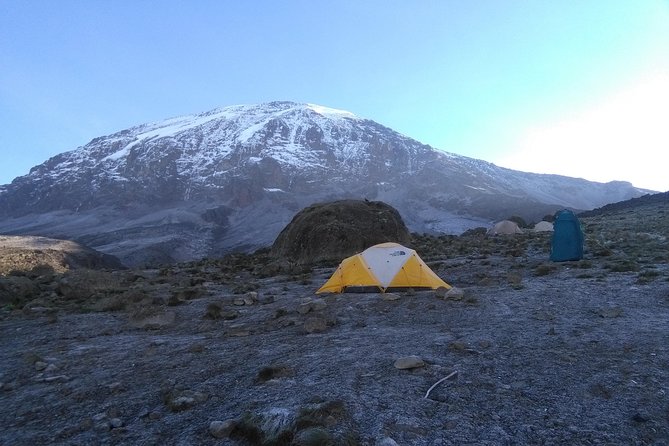
- Machame means tents, not huts: You sleep at mountain camps, so this suits hikers who accept basic conditions.
- The route changes scenery every day: Expect rainforest, heather, moorland, semi-desert, alpine desert, scree, and snow.
- Day three is crucial for altitude: You climb to Lava Tower, then descend to Barranco Camp, a classic acclimatization pattern.
- Summit day begins at midnight: You climb to Stella Point and Uhuru Peak, then descend for several hours the same day.
- The tour is private: Only your own group participates, which can make the pace and support feel more personal.
- Twende Africa receives strong praise for care: Peter, guide Eli, Elisafi, John, and the wider crew are named positively for organization, support, cooking, and teamwork.
Why choose Machame over Marangu?
Machame is often called the Whisky Route, a playful name for a trail that is longer and more rugged than Marangu. The comparison matters because Marangu uses mountain huts, while Machame uses tents only.
I would choose Machame if scenery and a stronger sense of adventure matter more to you than hut accommodation. The trail winds through several vegetation zones, and the changing surroundings help the climb feel like a real journey rather than a long staircase to the top.
The route is not technical climbing. The challenge comes from long hiking days, steep sections, thin air, cold, and the final summit effort. You need a moderate fitness level, and you should be comfortable walking for five to eight hours on most days, with a much harder summit night.
The advertised summit success figure is about 85 percent. Treat that as an encouraging guide rather than a promise. Altitude affects people differently, and no operator can guarantee the summit.
More Kilimanjaro routes and climbs:
- 8-Day Small-group Lemosho Kilimanjaro Summit Trekking
★ 5.0 · 186 reviews - 7-Day Machame Kilimanjaro Summit Tour from Arusha
★ 5.0 · 125 reviews - Mountain Kilimanjaro Day Hike
★ 5.0 · 102 reviews
Day one: Machame Gate to Machame Camp
The day begins with a drive from Moshi to Mount Kilimanjaro National Park’s gate, roughly 45 minutes. The road passes through Machame village on the mountain’s lower slopes before you begin walking.
The first trail section enters montane forest. You follow a winding path up a ridge, with dense greenery and a steady uphill grade. Lower down, the path may be muddy and slippery, especially after rain.
This is a good place to use trekking poles and gaiters. Even if you dislike carrying poles at home, they can help with balance on wet ground. Wear shoes you trust, and keep rain protection close rather than buried in your pack.
You climb from about 1,830 meters to 3,000 meters. The distance is 11 kilometers, and the walking time is listed at five to seven hours. That is a full first day, but the pace should allow you to settle into the mountain routine.
Machame Camp is the first night under canvas. The important adjustment is mental: you are no longer returning to a hotel after each walk. You eat, organize your gear, and sleep at altitude.
Day two: Heather country and Shira Camp
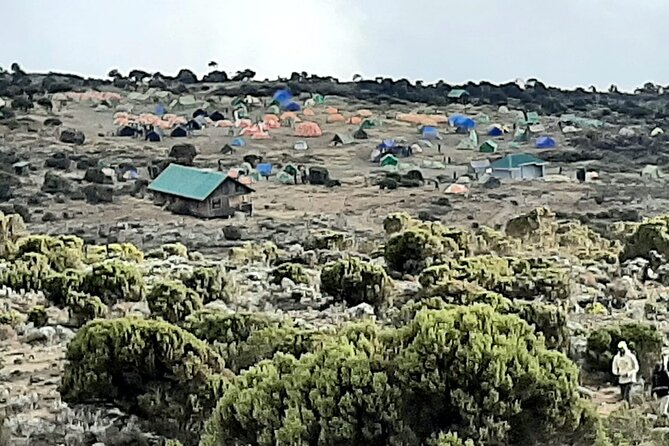
After breakfast, you leave the rainforest behind and enter moorland. The trail rises through heather, crosses a small valley, and follows a steep rocky ridge before turning west toward a river gorge.
This day is shorter than the first, with about five kilometers of walking and four to five hours on the trail. The elevation rises from 3,000 to 3,840 meters, so the distance may look easy on paper while the altitude makes it feel more serious.
Shira Camp gives you a broad change of scenery. The forest is gone, and the vegetation becomes lower and more open. Take this evening slowly. Drink what your guide recommends, eat well, and resist the urge to race ahead simply because the distance is short.
The schedule allows time to rest at camp. That is valuable. The best Kilimanjaro days are rarely about proving how fast you can walk. They are about saving energy for the summit.
Day three: Lava Tower, Shark’s Tooth, and Barranco
This is one of the most useful days in the itinerary. From the Shira Plateau, you climb east along a ridge, pass the junction toward Kibo, and continue toward Lava Tower, also called Shark’s Tooth.
The route reaches roughly 4,630 meters before descending to Barranco Camp at about 3,986 meters. The total walking distance is 11 kilometers, with five to seven hours on the trail.
That climb high, sleep lower pattern gives your body a chance to adjust. You do not finish the day much higher than where you began, but the effort prepares you for the summit. This is why I would not cut the schedule shorter simply to save money or time.
The surroundings become semi-desert, with more exposed rock and less plant cover. The Arrow Glacier junction reaches about 4,876 meters, but the route described here continues down to Barranco rather than taking a separate climb toward the glacier.
Expect this to be a mixed day. The ascent can feel slow, and the descent may be tiring, but Barranco is a rewarding place to spend the night. You get a clear sense that the summit section is approaching.
A few more trips of this kind worth comparing:
- Tanzania Wildlife Encounters – 6 Days
★ 5.0 · 277 reviews - Private 6-Day Tarangire Manyara Crater and Serengeti with Mid-Range Lodges
★ 5.0 · 238 reviews - 6 Days Private Budget Safari
★ 5.0 · 163 reviews - 6 Days Tanzania Budget Camping Safari
★ 5.0 · 145 reviews
Day four: Barranco Wall to Barafu Camp
Day four starts with the Barranco Wall, the most visually memorable obstacle before the summit. The path climbs a steep ridge, then continues through the Karanga Valley.
This section is not described as technical climbing, but it is steep and calls for careful footing. Keep your hands free where possible, follow your guide’s line, and do not worry about moving quickly. A steady pace is more useful than a dramatic one.
Lunch is planned at about 4,200 meters. From there, you continue toward Barafu Hut and camp at roughly 4,600 meters. The distance is nine kilometers, with around eight hours of hiking.
You have now completed what is known as the South Circuit, with views toward Kibo and Mawenzi from different angles. These two peaks give the high mountain setting a sense of scale. Barafu is also the place to prepare for the hardest part of the trip.
Organize summit clothing before dinner. Put warm layers, gloves, headwear, water, and any needed personal items where you can reach them quickly. You will not want to sort through every bag at midnight.
Day five: The midnight climb to Uhuru Peak
The summit day starts at midnight. You climb northwest over heavy scree toward Stella Point on the crater rim, reaching about 5,685 meters.
This is the hardest section both physically and mentally. The trail is steep, the air is thin, and the surface can shift under your feet. The itinerary gives six to eight hours for the ascent, followed by another two hours from Stella Point to the summit.
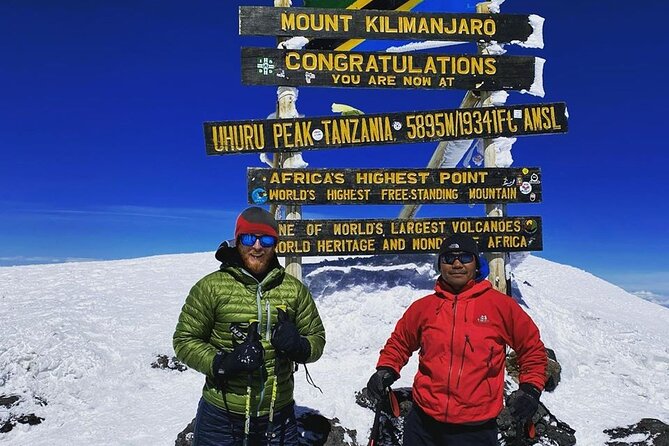
At Stella Point, weather permitting, you can pause for sunrise. That may be the most striking moment of the entire climb. From there, snow is expected along the roughly two-hour route to Uhuru Peak, at 5,895 meters.
The summit distance is listed as five kilometers up. The descent adds about 12 kilometers and roughly three hours, bringing the total hiking day to a demanding level. You descend all the way to about 3,100 meters, so this is not a day for extra sightseeing or ambitious plans afterward.
The summit is an achievement, but do not treat the final push as a test of pride. If altitude symptoms become serious, listen to your guide. Turning around can be the sensible choice, not a failure.
Day six: Mweka Gate and the return to Moshi
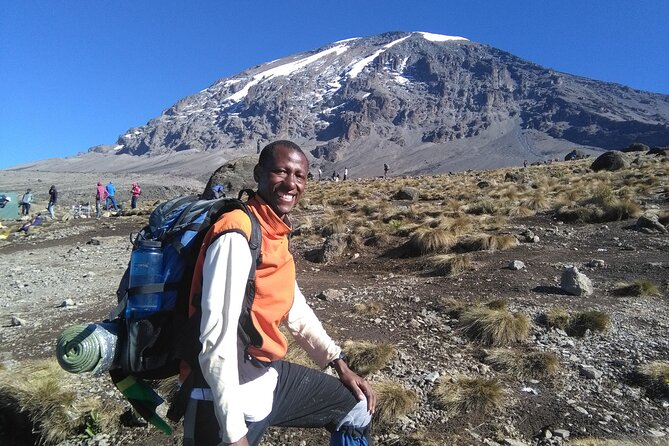
After breakfast, you descend from about 3,100 meters to 1,830 meters through forest. The walk covers 10 kilometers and takes three to four hours.
The lower trail may be wet and muddy. Gaiters and poles are useful again, and you may be comfortable in shorts and a T-shirt once the temperature rises. Keep rain gear and warmer clothing handy because mountain weather can change quickly.
At Mweka Park Gate, you receive summit certificates before the vehicle transfer. The stated drive back to your Moshi hotel takes about 30 minutes.
This last day is easier than summit day, but your knees may disagree. Trekking poles help on the descent, and careful steps matter more than speed.
Guides, porters, and the human side of the climb
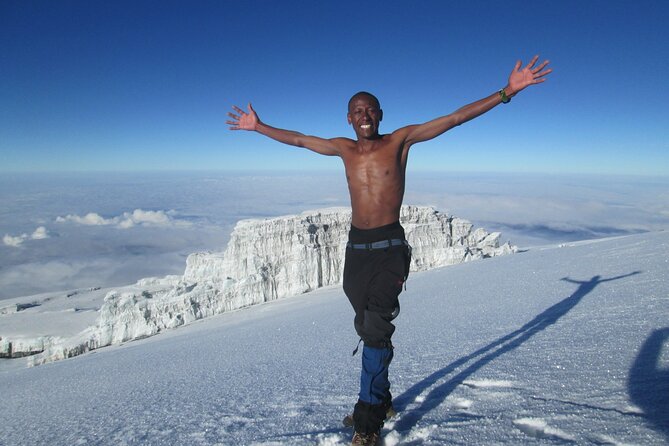
The strongest praise for this company centers on care and practical support. Peter is described as easy to work with during planning, including online arrangements from the United States. Guide Eli is specifically praised for being friendly, reliable, and well informed about the route.
Elisafi and John are also mentioned positively, along with the cooking and the wider crew. The porters carry most of the mountain equipment, which makes your climb possible. I would treat their work as part of the real cost of the trip, not as an invisible service.
A good climb depends on communication. Tell the guide early if you feel unwell, are struggling with the pace, or need help adjusting your clothing and water routine. A private tour can make these conversations easier because your group is not competing with a large crowd.
One practical point deserves attention: ask how porter numbers, tips, meals, camping gear, and luggage limits are handled. The listed package includes dinner, but it does not clearly spell out every meal or every piece of equipment.
What the $2,800 price gets you
At $2,800 per person, the trip is not a budget walk. The value depends on what is included beyond the headline items.
The package includes national park fees, private transportation, dinner, two nights of accommodation, and a round-trip shared transfer. Pickup is offered, and one account describes airport pickup and a briefing before the climb. Still, I would confirm whether airport pickup applies to your booking and what the two accommodation nights cover.
For a six-day Kilimanjaro climb, park charges and mountain staffing are major costs. Private transport and a private group also add value, particularly if you want your own schedule and direct contact with the guide.
Before booking, ask for a written list covering:
- All meals, especially breakfast and lunch
- Tent, sleeping mat, and dining equipment
- Porter support and baggage limits
- Hotel nights before and after the climb
- Airport pickup and drop-off
- Guide and porter tips
- Any rental gear
- Extra charges described as landing or facility fees
Souvenir photos are not included, and landing and facility fees are listed separately. Those points are easy to overlook when comparing prices.
Who will like this climb?
I would recommend this route to a fit hiker who wants more scenery and a more outdoors-focused experience than the hut route. It suits people who can accept basic camping and who are willing to walk slowly for several days.
The private format is useful for couples, families with older children, or a small group of friends. Children must be accompanied by an adult, and every participant needs to provide passport name, number, expiry date, and country at booking.
This is not a casual holiday add-on. You should expect early mornings, long uphill sections, cold at high camp, a midnight start, and a long descent after the summit. Moderate fitness is the stated minimum, but preparation beyond that will make the climb more enjoyable.
If you want a shorter, simpler mountain holiday with hut accommodation, this may not be your best match. If you value changing scenery, personal support, and the feel of a real expedition, Machame makes a strong case.
Practical details to settle before departure
The meeting point is in Arusha, with a listed start time of 9:00 a.m. The activity ends back at the meeting point, although the daily plan also describes transfers to and from Moshi. Clarify the exact pickup location and hotel arrangements before you travel.
Confirmation is sent within 48 hours of booking, subject to availability. The activity is private, and mobile tickets are offered.
The cancellation rule is simple: cancel at least 24 hours before the local start time for a full refund. Cancellations or changes made inside that 24-hour window are not accepted for a refund.
Should you book the Machame Route?
I would book this climb if you want Kilimanjaro’s more scenic tent route and prefer a private group with a local company that has earned strong praise for care, organization, guides, cooking, and porter support.
I would pause before booking if the price stretches your budget or if the included meals and accommodation are unclear. Get those details in writing, then compare the total cost with other six-day climbs.
The key decision is the schedule. Six days gives you a useful acclimatization day, but it remains tough. If you can prepare properly, walk patiently, and accept that summit success is never guaranteed, this is a well-shaped route with a rewarding mix of forest, moorland, rock, snow, and sunrise above Africa.
FAQ
Where does the Kilimanjaro climb start?
The meeting point is in Arusha, in Tanzania’s Arusha Region. The itinerary describes a drive from Moshi to Mount Kilimanjaro National Park Gate on the first day.
How long is the Machame Route experience?
The climb lasts approximately six days. Hiking times range from three to eight hours on most days, with the summit day beginning around midnight and including both the ascent and descent.
Does the Machame Route use mountain huts?
No. Machame uses tents only. This differs from the Marangu Route, where accommodation is provided in huts.
What fitness level is required?
A moderate level of physical fitness is required. The route includes steep ridges, long hiking days, high altitude, a midnight summit climb, and a lengthy descent.
Is transportation included?
Private transportation and a round-trip shared transfer are included. Pickup is offered, and the final transfer from Mweka Gate to a Moshi hotel is described as taking about 30 minutes.
What is included in the $2,800 price?
The stated inclusions are dinner, national park fees, private transportation, two nights of accommodation, and a round-trip shared transfer. Souvenir photos and landing and facility fees are not included.
Just added around Arusha
- 5 Days Safari Tarangire, Serengeti, and Ngorongoro Crater★ 5.0 · 3 reviews
- Love lives in Africa★ 5.0 · 3 reviews
- 5 Days of Safari, Culture & Hot Springs – Tour from Arusha★ 5.0 · 3 reviews
- Arusha National Park Safari by Jeep★ 4.5 · 3 reviews
- 5Days Family _Group Tour Lodging Mid-Range in the Jungle★ 5.0 · 3 reviews
- Serengeti & Ngorongoro 3 Days Budget Safari★ 5.0 · 3 reviews
- 2 Days Tarangire and Ngorongoro Crater Tour★ 5.0 · 3 reviews
- 7 Days PRIVATE Best of Tanzania Safari *Departing everyday*★ 5.0 · 3 reviews
Kilimanjaro Treks, compared.



8-Day Small-group Lemosho Kilimanjaro Summit Trekking
Read our review →


Climbing Kilimanjaro through 7 days Machame Route
Read our review →

Browse the lists this tour appears in