
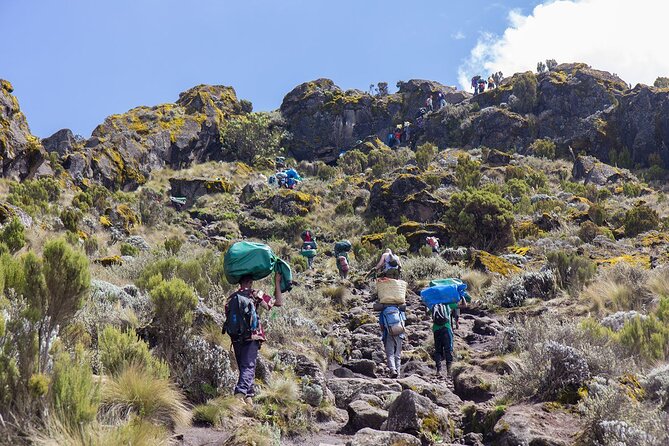
Reviewed · KILIMANJARO TREKS
7-Day Kilimanjaro Hiking Tour via Machame Route
Kilimanjaro rewards patience, not speed. This seven-day Machame Route trek gives you time to adjust to altitude while moving through rainforest, rocky ridges, high camps, and the summit zone. I like the route’s strong scenery and the practical support package, including tents, meals, porters, rescue fees, and an English-speaking wilderness first responder guide.
I also like that the group is limited to 12 people and that the crew wages are described as fair and sustainable. The main caution is the summit day: you may trek for 10 to 14 or more hours, beginning just after midnight, so this is a serious mountain trip rather than a long sightseeing walk.
In This Review
- Key points to know before booking
- Why the Machame Route is a good seven-day choice
- Day 1: Rainforest from Machame Gate to Machame Camp
- Day 2: Rocky ridges and the open ground near Shira
- Day 3: Lava Tower, the Barranco Wall, and the best camp
- Day 4: Climbing over the Barranco Wall to Karanga
- Day 5: The short approach to Barafu Camp
- Day 6: The midnight summit push to Uhuru Peak
- Day 7: Forest descent and the drive back to Arusha
- What the $2,150 price includes
- Who should book this trek?
- Practical details before you commit
- Should you book the Machame Route trek?
- FAQ
- How long is the Kilimanjaro Machame Route tour?
- Where does the tour start?
- How many people can join the tour?
- Do climbers sleep in tents?
- Are meals included?
- Is drinking water included?
- Is a guide included?
- Are porters and a cook included?
- Are flights and visas included?
- What happens if bad weather cancels the tour?
Key points to know before booking
- Seven days on the Machame Route: The extra day helps with altitude adjustment compared with shorter Kilimanjaro schedules.
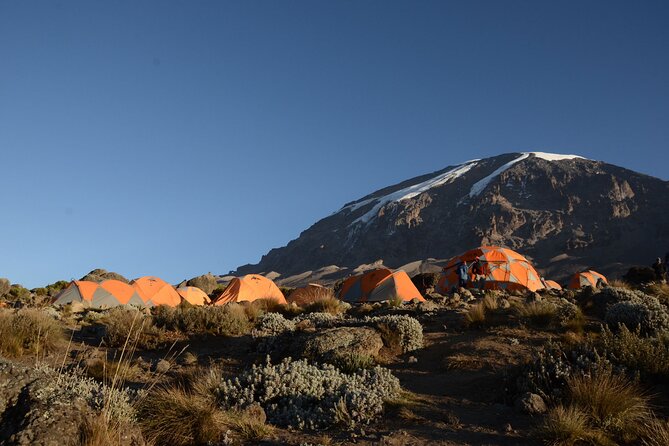
- Camping every night: You sleep in supplied tents, with meals served in a mess tent or outside on a blanket.
- A demanding summit day: The final ascent involves a 1,100-meter climb over just more than 3 kilometers before the descent.
- Small group size: The maximum is 12 people, which should make camp routines and guide communication easier.
- Strong support package: Porters, a cook, drinking water, rescue fees, gate transfers, and full-board meals are included.
- Good crew feedback: Clean gear, well-kept tents, tasty food, and caring staff are repeatedly praised, with guide Josia named positively in one account.
Why the Machame Route is a good seven-day choice
Machame is also called the Whiskey Route. The nickname hints at its tougher character, but the real appeal is its scenery and gradual change in surroundings. You begin in tropical forest and finish among barren volcanic slopes near Uhuru Peak.
The route is the second most popular way up Kilimanjaro and is known as one of the more scenic choices. You do not simply walk uphill for a week. The path rises, falls, crosses rocky ground, and uses a climb-high, sleep-lower pattern on the third day. That rhythm can help your body adjust to thin air.
The seven-day plan matters. Kilimanjaro is not won by strong legs alone. Altitude affects people differently, and a longer schedule gives you more time on the mountain before the summit push. You still need good fitness and some hiking experience, but you are not being rushed through the route.
You should also understand the camping style. This is not a hut-to-hut walk. Tents are supplied, and the food is prepared by the mountain crew. Meals are served in a dinner tent with tables and chairs or outdoors on a blanket, depending on camp conditions.
More Kilimanjaro routes and climbs:
- 8-Day Small-group Lemosho Kilimanjaro Summit Trekking
★ 5.0 · 186 reviews - 7-Day Machame Kilimanjaro Summit Tour from Arusha
★ 5.0 · 125 reviews - Mountain Kilimanjaro Day Hike
★ 5.0 · 102 reviews
Day 1: Rainforest from Machame Gate to Machame Camp
Your day begins with a drive to Machame Gate, where registration takes place before you start walking. The first stage is a roughly six-hour hike through tropical rainforest to Machame Camp.
This is a pleasant introduction to Kilimanjaro, although the path can still feel demanding because you are carrying yourself uphill from the start. The forest is one of the best reasons to choose this route. Colobus monkeys and wild birds may appear along the trail, giving you something to watch besides your boots.
The forest also provides a sharp contrast with the high mountain ahead. You begin among thick vegetation, then gradually leave the trees behind as the route gains height. Dinner and overnight camping at Machame Camp keep the first day simple and focused.
The six-hour estimate is useful as a guide, not a promise. Walking pace, trail conditions, rest stops, and group movement can all affect the timing. Keep your first day controlled. Saving energy now is smarter than trying to prove how fast you can walk.
Day 2: Rocky ridges and the open ground near Shira
From Machame Camp, the trail crosses a stream and follows a steep, rocky ridge toward Shira Camp. The path criss-crosses the slope several times before reaching camp at the base of a semi-circular rock wall.
This section feels more rugged than the first day. The forest has receded, and the trail becomes more exposed and stony. You should expect another roughly six-hour hiking day, with dinner and camping at Shira.
Shira Camp is important because it marks a major change in the mountain environment. The thick lowland vegetation is gone, and the views begin to open. The surroundings feel bigger and less sheltered, which can be exciting but also makes weather more noticeable.
The route’s steady progression is useful here. You are gaining altitude without attempting the summit, and the camp gives you time to rest before the longer acclimatization day. Pay attention to your body. Headaches, unusual tiredness, or difficulty sleeping are worth reporting to your guide rather than quietly pushing through.
Day 3: Lava Tower, the Barranco Wall, and the best camp
Day 3 is one of the most valuable parts of the itinerary. From Shira Camp, you climb to Lava Tower at about 15,000 feet, then descend to Barranco Camp by way of the Great Barranco Wall.
This is a classic high-altitude training day. You go higher during the day and sleep lower than your highest point. That pattern is one reason the seven-day schedule can work better than a rushed ascent.
Lava Tower is not simply a stop for photographs. It is the point where you test how your body reacts to serious altitude. The route then drops toward Barranco, so do not be discouraged if the day includes a descent after such a hard climb. The descent is part of the plan.
The Great Barranco Wall adds drama and effort. It looks imposing, and the trail around it can feel steep and rough. Barranco Camp is described as one of the finest camps on the mountain, with striking views and a memorable setting.
This is another roughly six-hour day, but the terrain makes the number less important than your pace. Walk slowly, drink the supplied water, and follow the guide’s rhythm. A guide such as Josia, praised for helping a group reach the top safely and smoothly, can be especially valuable on days when confidence rises and falls.
A few more trips of this kind worth comparing:
- Private Full Day Hiking Experience to Marangu Route
★ 5.0 · 61 reviews - 4 Days Mount Meru Trekking
★ 5.0 · 55 reviews - 4 days Best experience Kilimanjaro Hike, Serengeti &Ngorongoro
★ 5.0 · 54 reviews - From Arusha/Moshi: Kilimanjaro Hike Marangu Route Day Trip
★ 4.5 · 54 reviews
Day 4: Climbing over the Barranco Wall to Karanga
The morning begins with a climb along the edge of the Great Barranco Wall. It is steep and tough, but the views from the top make the effort worthwhile.
This section is not a technical climbing route in the sense suggested by ropes and rock equipment in the supplied plan. Still, you need steady footing, patience, and a willingness to move carefully. The trail can feel demanding after several nights outdoors, even though the distance is shorter than the summit day.
You continue to Karanga Camp for dinner and the night. The schedule again lists about six hours of walking. This day helps break up the approach to Barafu Camp, giving you another chance to gain altitude without spending the entire day on the trail.
Karanga is also a mental checkpoint. You are now close to the final camp, and the summit attempt is no longer an abstract idea. Rest whenever the schedule allows. You will need your reserves for the next night.
Day 5: The short approach to Barafu Camp
Day 5 is described as a shorter climb to the final camp before the summit attempt. You hike to Barafu Camp, eat dinner, and try to sleep or at least rest before the midnight start.
Barafu means snow or ice in Swahili, although the supplied details do not promise snow at camp. What matters for you is the camp’s role as the launch point for the summit. The surroundings are high, exposed, and far removed from the forest where you began.
The day is still listed at roughly six hours, so shorter does not mean effortless. You may feel tired by now, and high altitude can make an ordinary walk feel slow. Use the time to organize warm layers, water, headlamp equipment, and anything else you have brought.
The tour includes equipment rentals, but the specific rental items are not listed. Ask the operator exactly what is available before you arrive. Do not assume every personal item will be provided.
Day 6: The midnight summit push to Uhuru Peak
This is the hardest day by a wide margin. You start just after midnight and spend six to eight hours climbing roughly 1,100 meters over just more than 3 kilometers to reach the summit area around sunrise.
The ascent is steep, cold, dark, and physically draining. The stated total for the day is 10 to 14 or more hours, even though the stop entry also shows six hours, so you should plan around the longer figure. The six-hour estimate clearly refers to part of the day rather than the full summit-and-descent schedule.
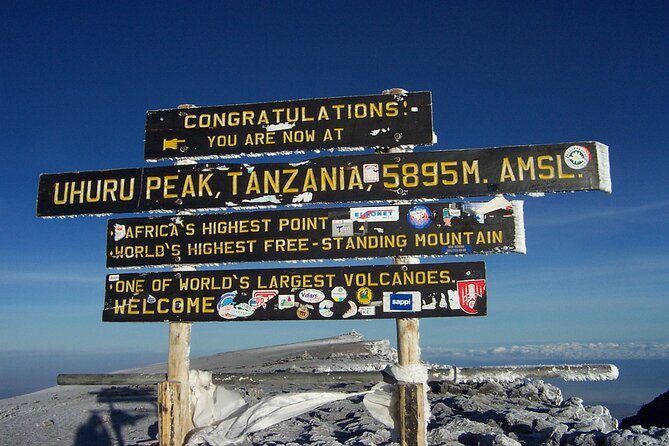
Reaching the summit for sunrise is the emotional center of the trip. From the roof of Africa, you may see the Great Rift Valley below and have time for photographs before beginning the descent. The summit stop itself may be brief. At this altitude, taking care of your body matters more than lingering for a perfect picture.
After the summit, you descend to Mweka Camp below the tree line. The descent is welcome but not easy. Your legs have already worked hard, and loose ground can punish tired knees. Dinner and a night at Mweka provide a needed break before the final walk out.
The guide and crew matter most on this day. A professional guide with wilderness first responder and CPR certification is included, along with rescue fees and porters. Those details do not remove the risks of high altitude, but they give you a proper support structure when the day becomes difficult.
Day 7: Forest descent and the drive back to Arusha
The last day is a roughly three-hour hike through lush forest to Mweka Park Gate. You meet the vehicle there for the drive back to your hotel in Arusha.
Compared with the summit day, this is gentle, but do not expect to feel fresh. Your feet and legs may still be sore, and the descent can be harder than it sounds. The forest provides a cool, shaded finish and a satisfying return to lower altitude.
The gate transfer is included, which removes one practical worry at the end of the trek. The tour also includes private transportation, although the exact vehicle arrangement and hotel drop-off details should be confirmed with Kitau Tanzania Safaris before departure.
What the $2,150 price includes
At $2,150 per person, this is not a budget walk, but Kilimanjaro prices need to be judged by what is covered. The package includes park fees and taxes, private transportation, gate transfers, drinking water, full-board meals, tents, porters, a cook, rescue fees, and a professional English-speaking guide.
It also states that crew members receive fair and sustainable salary wages. That is important because porters and cooks do much of the work that makes a camping climb possible. The included mess tent, tables, and chairs add comfort after long days on rough trails.
The food receives strong praise, along with clean gear and tents. That matters more than it may sound. After six hours of hiking, a reliable meal and a dry place to sleep are not minor luxuries.
Breakfast is included six times, dinner six times, and lunch seven times. Flights, visas, and optional extras are not included. You should also ask about the exact equipment available for rent, since the package mentions rentals without listing each item.
Who should book this trek?
I would consider this route a good fit if you have a strong fitness level, some hiking experience, and enough patience to walk slowly for several days. The route is demanding but gives you seven days for acclimatization, which is a sensible balance for many first-time Kilimanjaro climbers.
The maximum group size of 12 is another plus. You are not signing up for a huge procession, yet you still have the social energy of a small expedition. Group pace can affect every day, so ask how the operator handles different walking speeds.
This is not the right choice if you want lodge accommodation, a short summit schedule, or a soft adventure with easy access to bathrooms and meals. All climbers sleep in tents, and the summit day is long enough to test very fit people.
Practical details before you commit
Pickup is offered, and the listed start time is 7:00 am. Confirmation is provided at booking, and the meeting area is near public transportation. The trip is based in Arusha, Tanzania.
The tour requires good weather. If poor weather causes cancellation, you are offered another date or a full refund. Otherwise, you can cancel for a full refund if you do so at least 24 hours before the local start time. Changes made inside that window are not accepted, and late cancellations are not refunded.
Kitau Tanzania Safaris receives its strongest praise for organization, food, tents, gear, and the friendly, caring mountain crew. Those are exactly the areas I would want handled well on Kilimanjaro. One account also identifies guide Josia as a major help, though guide assignments can vary.
Should you book the Machame Route trek?
Book this tour if you want a scenic, tent-based Kilimanjaro climb with a seven-day schedule, a small group limit, and a broad set of services included in the price. The best reasons to choose it are the gradual route plan, strong crew support, quality camping equipment, and the chance to pass from rainforest to summit terrain in one climb.
Before paying, confirm the exact meeting point, hotel pickup details, rental equipment, and how the operator handles the long summit day. If you are physically ready and understand that the mountain may require patience, this looks like a well-supported way to attempt Kilimanjaro. If you are unsure about your fitness or dislike camping, choose a different style of trip.
FAQ
How long is the Kilimanjaro Machame Route tour?
The tour lasts approximately seven days, including the final descent from Mweka Camp and the drive back toward Arusha.
Where does the tour start?
The experience is based in Arusha, Tanzania, with a listed start time of 7:00 am. Pickup is offered.
How many people can join the tour?
The maximum group size is 12 people.
Do climbers sleep in tents?
Yes. Tents are included, and all climbers sleep in tents during the route.
Are meals included?
Yes. Full-board meals are included, with six breakfasts, six dinners, and seven lunches listed in the package.
Is drinking water included?
Yes. Drinking water is included.
Is a guide included?
Yes. The package includes a professional English-speaking guide who is Wilderness First Responder and CPR certified.
Are porters and a cook included?
Yes. The mountain crew includes porters and a cook, with crew wages described as fair and sustainable.
Are flights and visas included?
No. International or internal flights, flight taxes, and visas are not included.
What happens if bad weather cancels the tour?
If the experience is canceled because of poor weather, you will be offered a different date or a full refund.
More 7-Day Experiences
- Tanzania Classic – 7 Days
★ 5.0 · 1,151 reviews - 7-Day Premium Luxury Tanzania Safari All-Inclusive
★ 5.0 · 426 reviews - Group Safari 7 Days in Tanzania’s Main Parks
★ 5.0 · 240 reviews - 7 Days Tanganyika Wilderness Safari
★ 5.0 · 159 reviews
Just added around Arusha
- 5 Days Safari Tarangire, Serengeti, and Ngorongoro Crater★ 5.0 · 3 reviews
- Love lives in Africa★ 5.0 · 3 reviews
- 5 Days of Safari, Culture & Hot Springs – Tour from Arusha★ 5.0 · 3 reviews
- Arusha National Park Safari by Jeep★ 4.5 · 3 reviews
- 5Days Family _Group Tour Lodging Mid-Range in the Jungle★ 5.0 · 3 reviews
- Serengeti & Ngorongoro 3 Days Budget Safari★ 5.0 · 3 reviews
- 2 Days Tarangire and Ngorongoro Crater Tour★ 5.0 · 3 reviews
- 7 Days PRIVATE Best of Tanzania Safari *Departing everyday*★ 5.0 · 3 reviews
Kilimanjaro Treks, compared.



8-Day Small-group Lemosho Kilimanjaro Summit Trekking
Read our review →


Climbing Kilimanjaro through 7 days Machame Route
Read our review →

Browse the lists this tour appears in