
Reviewed · KILIMANJARO TREKS
7-Day Mt. Kilimanjaro Hiking: Machame Route
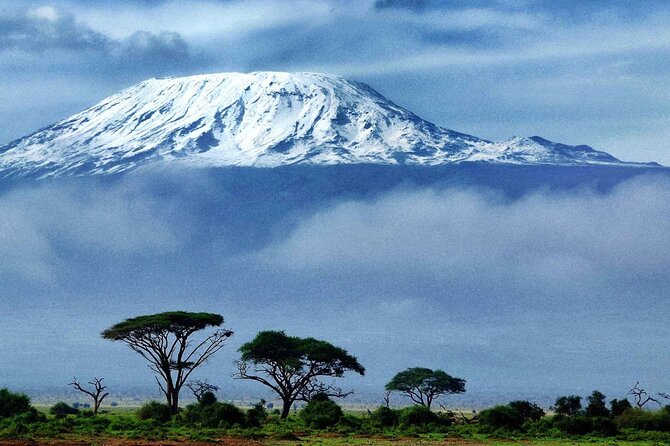
Kilimanjaro rewards patience, not bravado. The Machame Route gives you striking scenery, from rainforest to glacier views, while the seven-day schedule adds useful time for altitude adjustment. I like the route’s changing habitats and the careful high-point-then-low-camp plan, especially the climb to Lava Tower followed by the descent to Barranco. I also like that the price includes meals, bottled water, camping gear, porters, park fees, and a professional guide and cook.
The catch is that this is still a hard mountain trek. Machame is steep in places, the first forest section can turn into mud, and summit night begins around 11:30 p.m. The seven-day version is better for someone with reasonable fitness and some hiking or high-altitude experience, not for a casual walk in the hills.
In This Review
- Key details before you book
- What the Machame Route feels like
- Day 1: Arusha to Machame Gate and the rainforest
- Day 2: Moorland and the Shira Plateau
- Day 3: Lava Tower and the Barranco descent
- Day 4: The Barranco Wall and Karanga Valley
- Day 5: Karanga Camp to exposed Barafu
- Day 6: Stella Point, Uhuru Peak, and the long descent
- Day 7: Mweka Gate and the mountain farewell
- What the $2,500 price includes
- The guide team and support
- Who should book this climb?
- Booking, cancellation, and practical checks
- Should you book the Machame Route?
- FAQ
- How long is the Machame Route hiking experience?
- What time does the experience start?
- Is pickup available?
- What is the highest point reached?
- Is bottled water included?
- Are meals included?
- Is camping equipment provided?
- How large can the group be?
- What is the cancellation policy?
Key details before you book
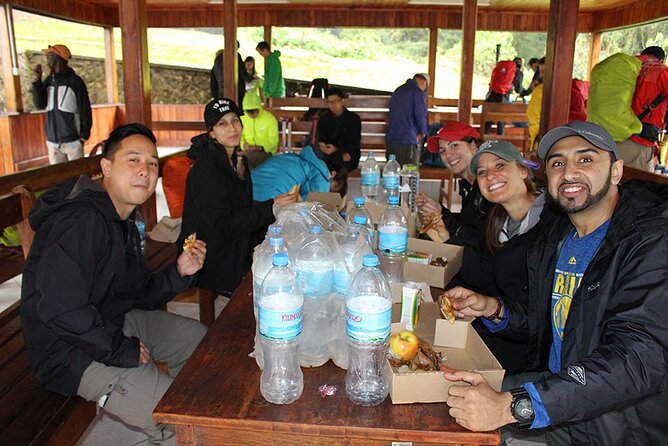
- Rainforest mud arrives early: The first day can include a muddy 3-kilometer walk if road conditions prevent a vehicle from reaching the gate.
- Altitude changes quickly: You climb to 4,630 meters at Lava Tower, then sleep lower at Barranco, a useful acclimatization pattern.
- Summit night is the test: Expect a midnight start, about six hours to Stella Point, and another two hours toward Uhuru Peak.
- The group can reach 15 people: That is small enough for a shared mountain experience, though pace and support can vary.
- The team receives strong praise: Guides Samuel, Edgar, and Justin are named for their encouragement, while head guide Abouh is described as caring and supportive.
- The $2,500 price covers the basics: Food, water, park fees, tents, porters, a guide, and a cook are included. Flights, visas, tips, and personal mountain clothing are not.
What the Machame Route feels like
Machame is Kilimanjaro’s popular Whiskey Route, a name that hints at its tougher character compared with easier trekking options. Its appeal is not simply reaching Africa’s highest peak. You get a fast change of scenery over one week, beginning in thick rainforest and ending among cold rock, scree, snow, and open high-altitude terrain.
The route is scenic, but scenery does not make it easy. The trail includes steep sections, rocky ground, cold camps, and long hours on your feet. At higher elevations, even a modest climb can feel slow. Your guide will likely set a gentle pace, and you should expect the familiar mountain rhythm of walking, eating, resting, and repeating.
A seven-day schedule gives you more time than a shorter Machame program, but the route still compresses a major altitude gain into one week. That makes your preparation important. Regular walking alone may not be enough. You should be comfortable with sustained uphill hiking and carrying at least a small personal daypack.
The maximum group size is 15 people. That keeps the trip from feeling like a huge procession, while still giving it a social side. It also means you should ask how the group is managed if hikers move at different speeds. The supplied information does not specify guide-to-hiker ratios, so that is worth confirming before payment.
More Kilimanjaro routes and climbs:
- 8-Day Small-group Lemosho Kilimanjaro Summit Trekking
★ 5.0 · 186 reviews - 7-Day Machame Kilimanjaro Summit Tour from Arusha
★ 5.0 · 125 reviews - Mountain Kilimanjaro Day Hike
★ 5.0 · 102 reviews
Day 1: Arusha to Machame Gate and the rainforest
Your morning begins with pickup in Arusha at about 7:00 a.m. The stated meeting point is Arusha Airport, and pickup is offered. Arusha sits at roughly 1,400 meters, so the drive to Machame Village also acts as a transition from town life to mountain routine.
At Machame Village, you can buy mineral water and collect a packed lunch. Depending on the road, the vehicle may continue toward the Machame gate. If the road is muddy, you may walk the final 3 kilometers, which takes about an hour. That detail matters during wet conditions, since the trek can begin before you officially enter the national park.
After registration at the gate, the trail enters the rainforest almost at once. This is a satisfying start, with dense vegetation and a clear feeling that the ordinary world is being left behind. It can also be wet, muddy, and slippery. Good footwear is essential, and your rain protection should be easy to reach rather than buried at the bottom of a bag.
The first day takes around eight hours and ends at Machame Camp. A welcome lunch stop comes about halfway through the walk. Do not treat this as a warm-up stroll. The combination of early pickup, possible road walking, mud, and a long climb can make Day 1 tiring.
Day 2: Moorland and the Shira Plateau
The second day covers about 9 kilometers in roughly six hours. You rise from the forest zone into moorland, first climbing for about an hour and then following a gentler gradient for another two hours.
This change in vegetation is one of the route’s pleasures. The thick forest gives way to more open ground, and the views begin to stretch farther. After lunch and a rest, the trail follows a rocky ridge toward the Shira Plateau. You may see the Western Breach and its glaciers to the east, an early reminder that the summit is not just a distant idea.
Shira Camp sits at about 3,840 meters. The porters prepare drinking and washing water before dinner, a small but important part of mountain comfort. At this height, the exposed camp can be much colder than the night before, with temperatures dropping well below freezing.
The practical lesson is simple: keep warm layers close, even if the morning begins in mild weather. You should also use the washing water thoughtfully. On a high mountain, comfort comes from small routines rather than hotel-style convenience.
Day 3: Lava Tower and the Barranco descent
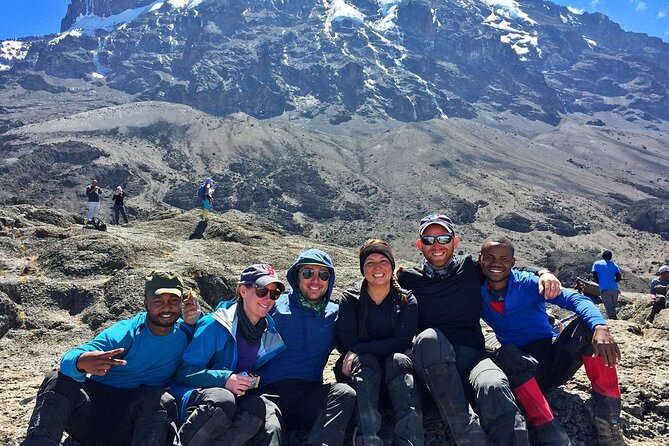
Day 3 is the route’s main acclimatization day and one of its hardest. You walk into a semi-desert area of rock and scree, aiming for Lava Tower at 4,630 meters. The ascent takes about five hours before lunch.
At this altitude, you might notice breathlessness, a headache, irritability, or a general sense that your body is working harder than expected. Tell your guides promptly if you feel unwell. The information provided does not promise medical support beyond the guiding team, so do not hide symptoms to protect your summit chances.
After lunch, you descend almost 680 meters to Barranco Camp. This is the smart part of the day. You briefly reach a higher altitude, then sleep lower, giving your body a better chance to adjust. The walk is demanding because of the climb to Lava Tower, but the descent also brings welcome relief.
The mountain scenery here is raw and open. The trail no longer feels like a forest walk. It feels exposed, rocky, and more serious. Pace yourself, eat even if your appetite is poor, and keep drinking the supplied water.
A few more trips of this kind worth comparing:
- Private Full Day Hiking Experience to Marangu Route
★ 5.0 · 61 reviews - 4 Days Mount Meru Trekking
★ 5.0 · 55 reviews - 4 days Best experience Kilimanjaro Hike, Serengeti &Ngorongoro
★ 5.0 · 54 reviews - From Arusha/Moshi: Kilimanjaro Hike Marangu Route Day Trip
★ 4.5 · 54 reviews
Day 4: The Barranco Wall and Karanga Valley
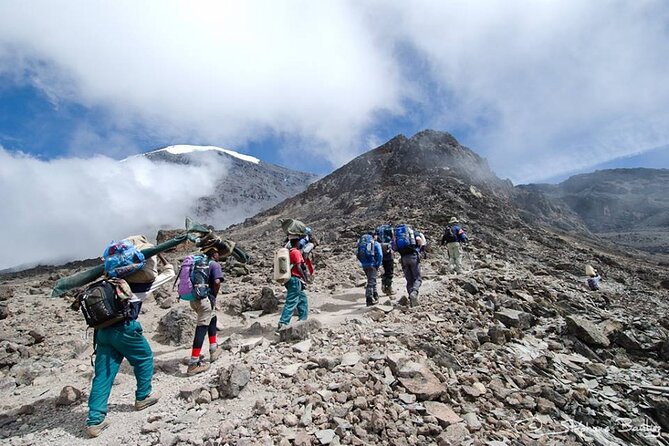
Day 4 covers only about 5 kilometers and takes four to five hours, but do not mistake the shorter distance for an easy day. The main feature is the Great Barranco Wall.
From below, the wall can look intimidating. It is described as a Class 2 hike, and the route requires hands-on movement in places, though it is generally easier than its first appearance suggests. Your guides are especially useful here because they can help you choose a steady line and avoid rushing.
At the top, you get views toward Heim Glacier and a position above the clouds. That is one of the route’s best visual moments. The trail then rises and falls through the Karanga Valley before reaching camp.
This is a good acclimatization day because the walking hours are moderate and the route includes both climbing and recovery. Use the afternoon to eat, drink, organize your summit clothing, and rest. A mountain camp is not the place to win a packing contest. Keep the items you need most accessible.
Day 5: Karanga Camp to exposed Barafu
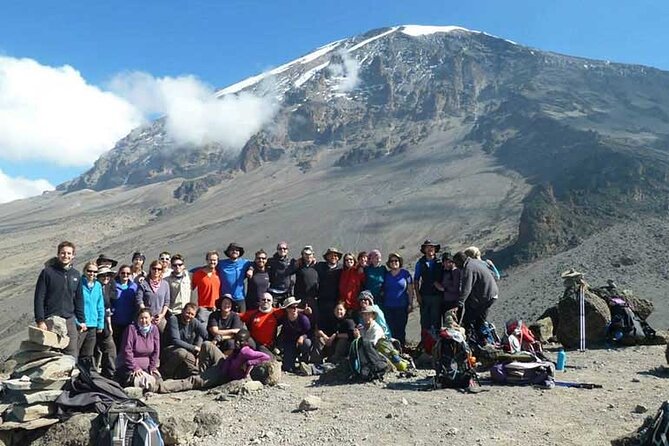
Day 5 is short on paper, about 4 kilometers and two to three hours of hiking. You leave Karanga Camp at 3,959 meters and continue toward Barafu Hut at about 4,550 meters.
The trail joins the Mweka Route, which you use for the descent during the final two days. Barafu means ice in Swahili, and the camp sits on a rocky, exposed ridge. There is no accessible water at Barafu, so it is the final water stop for the porters before camp. That explains why the included water service matters so much.
The tents can be exposed to wind and rocks. Arrive with enough daylight to learn where everything is and arrange your sleeping area. Dinner is served early, followed by an attempt to rest before the midnight start.
This may be the least glamorous camp of the trek. It is cold, exposed, and not a place to linger outside. Yet it also creates a clear sense of purpose. You are close to the summit, and the next major task is now in front of you.
Day 6: Stella Point, Uhuru Peak, and the long descent
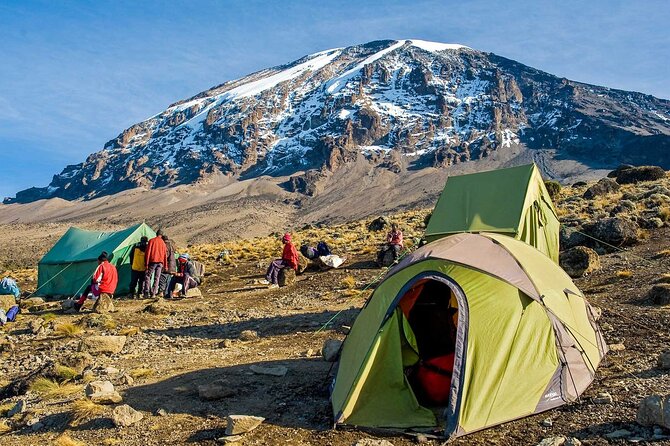
Summit day begins around 11:30 p.m. After tea and biscuits, you start walking into the night. The route heads northwest through heavy scree toward Stella Point on the crater rim.
The climb to Stella Point takes about six hours and is often the most demanding part of the trip mentally and physically. The darkness hides much of the slope, but it does not hide the effort. The air is thin, progress can feel slow, and every small rise seems to take time.
At Stella Point, at 5,685 meters, you may reach the rim around sunrise. Weather permitting, the sunrise is a major reward. Hikers who reach Stella Point receive green completion certificates, while those who continue to Uhuru Peak receive gold certificates.
From Stella Point, the trail usually includes snow for the two-hour ascent to Uhuru Peak at 5,895 meters. Your time at the summit depends on weather conditions. Keep the stop brief and follow your guide’s advice. At this elevation, the summit photo is important, but safety matters more.
After the summit, you descend toward the lower camp. The supplied schedule identifies this as an approximately eight-hour hiking day, though the full effort can feel longer because it combines a night ascent, the summit push, and a major descent. Your knees may appreciate trekking poles, though personal mountain gear is not included and must be arranged separately.
Day 7: Mweka Gate and the mountain farewell
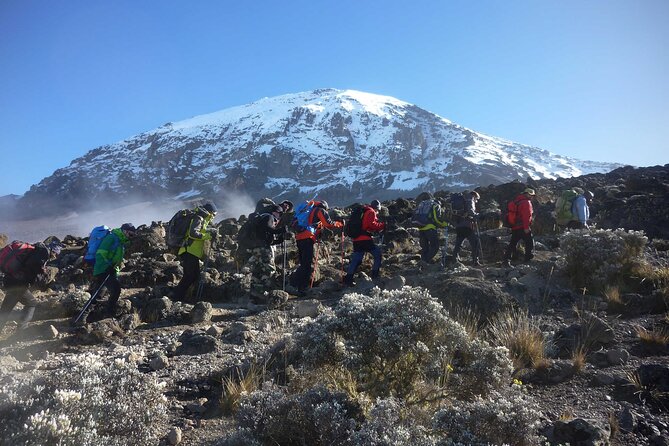
The final day returns you to the forest zone. After breakfast, the staff hold a celebration with dancing and singing. This is also when you present tips to the guides, assistant guides, cooks, and porters.
Tipping is not included in the $2,500 cost, so plan for it before departure. The information provided does not state recommended amounts, but you should budget for tips as a normal part of the mountain program. The team carries much of the practical burden of the trek, including water and camp work.
The descent to Mweka Gate takes about three hours and covers roughly 15 kilometers through forest. At the gate, hikers sign their names and receive completion certificates. You then descend another hour, about 3 kilometers, to Mweka Village.
This last day is easier in altitude terms but can be tough on tired legs. Watch your footing, especially if the trail is wet. The return through forest also gives you a final look at how sharply Kilimanjaro’s climate zones change within one week.
What the $2,500 price includes
At $2,500 per person, this is not a budget walk, but the price covers many of the costly parts of a guided Kilimanjaro climb:
- Park fees and taxes
- Camping equipment
- Porters
- An English-speaking mountain guide
- A cook
- Six lunches
- Six dinners
- Five breakfasts
- At least 3 liters of bottled water per day
That package offers solid value if you want a supported climb rather than an independent camping effort. Porters, cooking, water, and park access are not minor extras. They are central to making a seven-day mountain trip possible.
You still need to pay for tips, flights, visas, and mountain gear. The last item can become a major expense if you need to buy or rent warm clothing, waterproof layers, suitable boots, and other equipment. Ask exactly what camping equipment is supplied, since personal sleeping and clothing needs are not fully described.
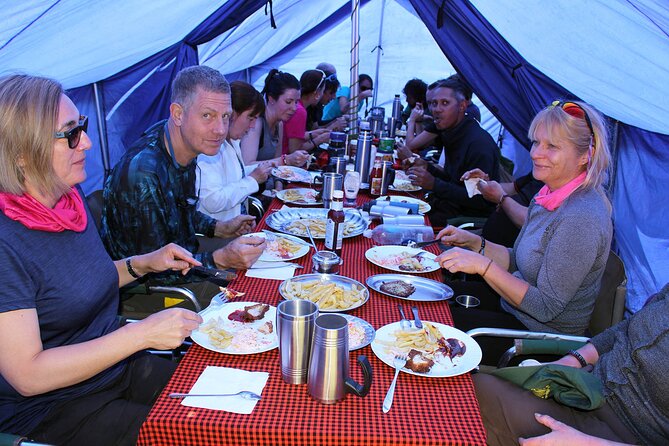
Meals are included for six lunches, six dinners, and five breakfasts. The schedule begins with breakfast at your Arusha hotel and ends after the mountain celebration and descent, so confirm what meals are covered before and after the listed mountain days.
The guide team and support
The strongest theme in the feedback is personal support. Abouh, identified as head guide, is praised for being cheerful, caring, and supportive all the way to the summit. Guides Samuel, Edgar, and Justin are also singled out for motivation, reassurance, attention, and good humor.
That matters most on Days 3 and 6, when altitude and fatigue can change your confidence quickly. A guide who notices your condition, keeps the pace sensible, and gives clear encouragement can make the difference between a controlled climb and a miserable one.
The porters are also repeatedly praised for being helpful, courageous, and cheerful. That is worth recognizing, but it also gives you a practical responsibility: pack lightly, respect staff, and prepare a fair tip. Portage is included, but that does not mean unlimited luggage.
The reviews available for this experience are few, with three perfect ratings. That is encouraging, especially because the praise is specific. Still, a small number of ratings is not the same as a long record, so I would ask current questions about group size, emergency procedures, equipment, and guide-to-hiker ratios.
Who should book this climb?
I would recommend this trek to you if you enjoy a physical challenge, can handle long uphill days, and have some hiking, backpacking, or high-altitude experience. It suits people who want changing scenery and a social, fully supported mountain trip.
You should think carefully if you dislike cold camping, early starts, mud, steep scree, or basic facilities. The phrase moderate physical fitness may sound reassuring, but the itinerary includes an ascent to 5,895 meters and a summit day that starts before midnight.
This is not a sightseeing tour with a mountain view added on. It is a serious trek with food, porters, and camp support. That support makes it more manageable, not effortless.
Booking, cancellation, and practical checks
Confirmation is received at booking, and free cancellation is available up to 24 hours before the experience start time. Cancellations within 24 hours are not refunded, and changes inside that period are not accepted. Cutoff times use local time.
Before booking, confirm the pickup point, since the stated start is Arusha Airport at 7:00 a.m. Also ask what happens if the road to Machame Gate is too muddy for vehicles, how water is distributed each day, and precisely which camping items are supplied.
The activity is near public transportation, though the main practical transfer is the offered pickup from Arusha. The group maximum is 15 people. You should also check visa requirements and arrange mountain gear well before the climb, since neither is included.
Should you book the Machame Route?
Book it if you want Kilimanjaro’s most scenic popular route and are ready for a demanding week. The Lava Tower acclimatization pattern, the Barranco Wall, the glacier views, and the sunrise near Stella Point give this climb plenty of memorable moments.
I would choose it for a fit hiker who values strong guide support and wants most major costs bundled into one price. I would not choose it for a first-time camper who expects a relaxed holiday or for anyone hoping to decide at the last minute about clothing and fitness.
The named guides, especially Abouh, Samuel, Edgar, and Justin, receive unusually warm praise for care and encouragement. Combined with included porters, meals, water, park fees, and camping equipment, that makes the trip attractive. Just respect the mountain’s difficulty, prepare for cold and wet conditions, and treat summit day as a serious physical effort.
FAQ
How long is the Machame Route hiking experience?
The experience lasts approximately seven days, beginning in Arusha and ending after the descent through Mweka Gate and Mweka Village.
What time does the experience start?
The stated start time is 7:00 a.m., with Arusha Airport in Arusha, Tanzania, listed as the meeting point.
Is pickup available?
Yes. Pickup is offered, and the listed start location is Arusha Airport.
What is the highest point reached?
Uhuru Peak is the highest point at 5,895 meters. Stella Point, on the crater rim, is at 5,685 meters.
Is bottled water included?
Yes. The package includes 3 liters or more of bottled water per day.
Are meals included?
Yes. Six lunches, six dinners, and five breakfasts are included.
Is camping equipment provided?
Yes. The tour includes the use of camping equipment. Personal mountain gear is not included.
How large can the group be?
The maximum group size is 15 people.
What is the cancellation policy?
You can cancel at least 24 hours before the start time for a full refund. Cancellations or changes made less than 24 hours before the start time are not accepted for a refund.
More 7-Day Experiences
- Tanzania Classic – 7 Days
★ 5.0 · 1,151 reviews - 7-Day Premium Luxury Tanzania Safari All-Inclusive
★ 5.0 · 426 reviews - Group Safari 7 Days in Tanzania’s Main Parks
★ 5.0 · 240 reviews - 7 Days Tanganyika Wilderness Safari
★ 5.0 · 159 reviews
Just added around Arusha
- 5 Days Safari Tarangire, Serengeti, and Ngorongoro Crater★ 5.0 · 3 reviews
- Love lives in Africa★ 5.0 · 3 reviews
- 5 Days of Safari, Culture & Hot Springs – Tour from Arusha★ 5.0 · 3 reviews
- Arusha National Park Safari by Jeep★ 4.5 · 3 reviews
- 5Days Family _Group Tour Lodging Mid-Range in the Jungle★ 5.0 · 3 reviews
- Serengeti & Ngorongoro 3 Days Budget Safari★ 5.0 · 3 reviews
- 2 Days Tarangire and Ngorongoro Crater Tour★ 5.0 · 3 reviews
- 7 Days PRIVATE Best of Tanzania Safari *Departing everyday*★ 5.0 · 3 reviews
Kilimanjaro Treks, compared.



8-Day Small-group Lemosho Kilimanjaro Summit Trekking
Read our review →


Climbing Kilimanjaro through 7 days Machame Route
Read our review →

Browse the lists this tour appears in