
Reviewed · KILIMANJARO TREKS
7 Days Kilimanjaro Trekking Machame Route with Professional Guide
Kilimanjaro rewards patience, not speed. This Machame Route trek gives you seven days on the mountain, with a private guide team, airport transfers, camping, meals, rescue fees, oxygen, and first-aid support included. I like the careful route design, especially the climb toward Lava Tower followed by a descent to Barranco Camp, and I like that the final summit push is followed by a night at Millennium Camp instead of one punishing descent all the way to the gate. The main consideration is the altitude and the summit day, which can involve 11 to 15 hours of walking.
I also like the extra night in Arusha at the start and end. It gives you time for an equipment check, a pre-climb briefing, and a proper transfer after the mountain. Past groups have praised guides including Frankie, Nestor, Bryson, Emmanuel, and Augustine for adjusting the pace, offering steady support, and keeping the trip organized. The price is substantial at $2,400 per person, but the many included services make it easier to judge as a full trekking package rather than a simple guided hike.
In This Review
- Key details to know before you book
- Arusha begins the climb at a relaxed pace
- Day two enters Kilimanjaro’s rainforest
- Day three reaches the Shira Plateau
- Day four uses the Lava Tower climb
- Day five tackles the Barranco Wall
- Day six prepares you at Barafu Camp
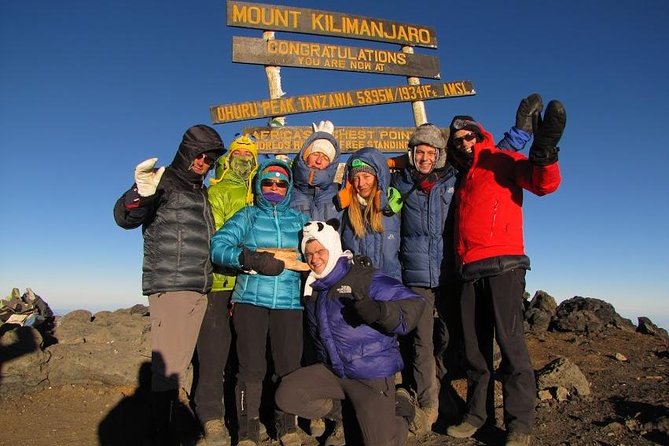
- Summit night reaches Stella Point and Uhuru Peak
- Day eight descends through forest and farms
- The guide team is central to the experience
- What $2,400 includes and what it means
- Who should choose this Machame itinerary
- Practical details before you reserve
- Should you book it?
- FAQ
- How long is the complete experience?
- How much does the trek cost?
- Where does the trip begin and end?
- Which route does the trek use?
- How physically fit do I need to be?
- What time does the summit climb begin?
- Is reaching Uhuru Peak guaranteed?
- Are meals included?
- Are airport transfers included?
- What happens if bad weather cancels the trip?
Key details to know before you book
- Seven mountain days, nine days total: The trek begins and ends at a lodge in Arusha, with one arrival day, seven days on Kilimanjaro, and a final departure day.
- Machame is called the Whiskey route: It starts in rainforest, crosses the Shira Plateau, passes below the Southern Icefields, and reaches the summit from Barafu Camp.
- The route includes a useful altitude pattern: You climb high toward Lava Tower, then sleep lower at Barranco Camp, which helps break up the ascent.
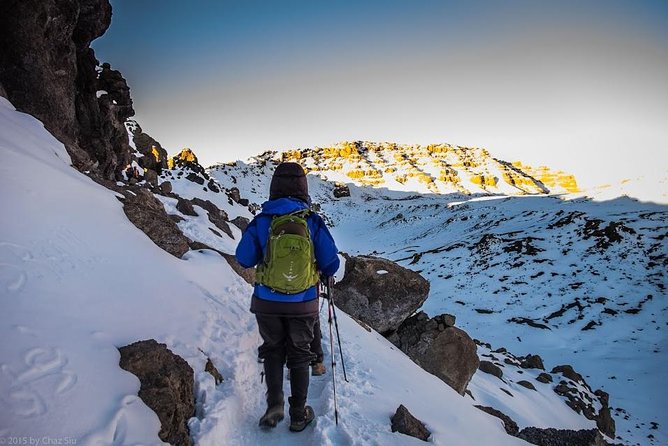
- Summit night begins around 1 a.m.: The climb to Stella Point takes about five or six hours, followed by an optional two-hour round trip to Uhuru Peak.
- The package is highly inclusive: Transfers, accommodation, park fees, guide services, rescue fees, oxygen, first aid, tents, meals, and gear are included.
- This is a private activity: Only your group participates, and a moderate level of physical fitness is required.
Arusha begins the climb at a relaxed pace
Your trip starts with a private transfer from Kilimanjaro International Airport to Arusha Safari Lodge. You can arrive at any time on the first day, which is useful if your flight schedule is awkward or delayed.
The evening is practical rather than fancy. There is a pre-climb meeting at about 4:30 p.m., followed by dinner at 6:30 p.m. The team checks your equipment and confirms that you have the required medical coverage and travel insurance.
That equipment check matters. Kilimanjaro is not a casual hill walk, and small gaps in clothing or personal kit become much more serious at altitude. The package says that all gear is included, but you should still use the meeting to confirm exactly what is supplied and what you must bring yourself.
Your first night includes bed, dinner, and breakfast. The final night in Arusha includes the same arrangement. This two-night lodge setup is one of the sensible parts of the plan. You avoid rushing straight from the airport to the trail, and you have a bed and a shower after the descent.
More Kilimanjaro routes and climbs:
- 8-Day Small-group Lemosho Kilimanjaro Summit Trekking
★ 5.0 · 186 reviews - 7-Day Machame Kilimanjaro Summit Tour from Arusha
★ 5.0 · 125 reviews - Mountain Kilimanjaro Day Hike
★ 5.0 · 102 reviews
Day two enters Kilimanjaro’s rainforest
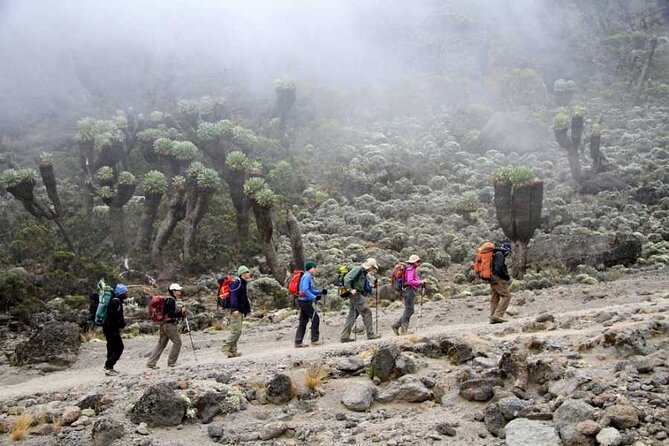
After registration at Machame National Park Gate, you begin walking through thick rainforest. This first mountain day takes about five to six hours and ends at Machame Camp, at roughly 9,800 feet.
The forest is a good introduction to Kilimanjaro because the route begins among lush vegetation rather than bare rock. The walking is steady, but you are already gaining altitude, so a slow pace is an advantage. A picnic lunch is eaten along the route.
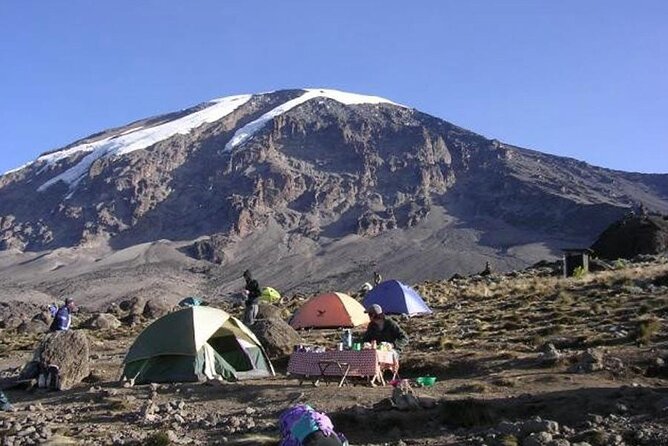
Machame Camp is your first night under canvas. The package includes tents, and camping fees are covered in the listed price. You should expect a basic mountain camp rather than a lodge-style stay. The attraction is the setting and the gradual start, not comfort.
Day three reaches the Shira Plateau
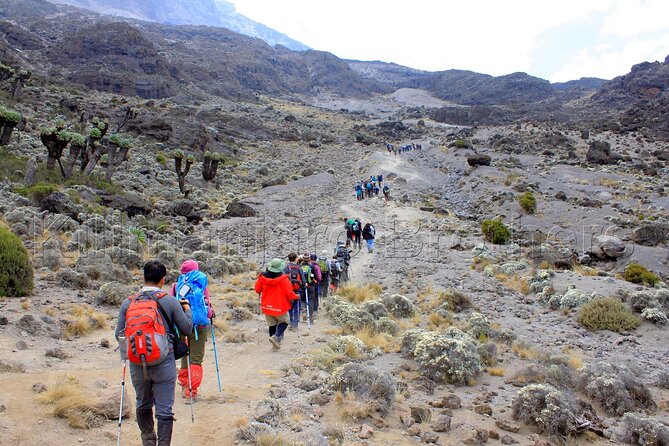
The rainforest soon gives way to moorland and tall heather. The route climbs through rocky hills toward the Shira Plateau, with the day’s walking lasting about four to five hours.
Camp near Shira Hut sits around 12,600 feet. From here, you may see Mount Meru rising through the clouds. This is a shorter walking day than the first, which gives your body more time to adjust to the change in altitude.
I like this part of the route because the scenery changes quickly. In a single day, you move from thick forest into open high country. The drawback is that the altitude gain is still significant, even though the mileage is modest. Walking slowly and following your guide’s pace is more important than trying to arrive early.
Day four uses the Lava Tower climb
Day four is one of the hardest walking days before the summit. You climb for much of the morning toward Lava Tower, reaching about 14,900 feet for lunch. The full day takes roughly seven to nine hours.
After lunch, the trail descends to Barranco Valley and Barranco Camp at about 12,800 feet. The camp sits beneath high cliffs and looks down toward the plains far below.
This high-climb, lower-sleep pattern is an important part of the route. You spend time at a higher elevation during the day, then sleep at a lower camp. That does not remove the effects of altitude, but it gives the itinerary a more gradual rhythm than simply climbing higher every night.
The length of the day can be tiring. You gain altitude, lose some of it, then continue to camp. Still, Barranco is a memorable place to spend the night, and the descent after Lava Tower keeps this day from becoming a straight uphill grind.
A few more trips of this kind worth comparing:
- Private Full Day Hiking Experience to Marangu Route
★ 5.0 · 61 reviews - 4 Days Mount Meru Trekking
★ 5.0 · 55 reviews - 4 days Best experience Kilimanjaro Hike, Serengeti &Ngorongoro
★ 5.0 · 54 reviews - From Arusha/Moshi: Kilimanjaro Hike Marangu Route Day Trip
★ 4.5 · 54 reviews
Day five tackles the Barranco Wall
The morning begins with a steep climb up the Barranco Wall. The trail then becomes more undulating as it follows the southeastern side of Kibo, the main volcanic cone of Kilimanjaro.
You can expect five to seven hours of walking before reaching Karanga Camp at approximately 13,100 feet. The route gives you views toward the Southern Icefields. The ground becomes more like loose volcanic scree, though sheltered hollows still hold patches of vegetation.
Karanga is described as the last water point on the approach to the summit. That detail helps explain why this camp matters, even though the day itself is shorter than the previous one. You are now entering the dry, exposed upper part of the mountain, where each camp feels more like a staging point for the final ascent.
The Barranco Wall may sound intimidating, but the supplied itinerary describes a climb rather than a technical rock climb. You should still expect steep, careful walking and a slower pace.
Day six prepares you at Barafu Camp
The trail to Barafu Hut follows compacted scree and climbs steadily toward about 14,800 feet. This section takes approximately three to five hours, with lunch at Barafu.
There is also a short acclimatization walk to a plateau around 15,700 feet. After that, the main task is rest. You spend the remainder of the day preparing for the summit attempt, which begins in the early hours.
This is not a day for sightseeing or extra activity. The short walking time is deliberate. You need to conserve energy, organize your clothing and equipment, and settle in for a difficult night. Since the summit departure is around 1 a.m., the timing can feel strange. Your ability to rest during the afternoon and evening will matter.
Summit night reaches Stella Point and Uhuru Peak
The final ascent begins by torchlight at about 1 a.m. The target is the crater rim near sunrise.
The climb to Stella Point, at roughly 18,800 feet, takes about five or six hours. The trail crosses loose volcanic scree and uses a series of zigzags. At this altitude, the slow pace is not a sign of failure. It is the practical way to keep moving.
At Stella Point, you have time for a short rest and views of the sunrise over Mawenzi. If you still feel strong, you can continue along the crater rim to Uhuru Peak at 19,345 feet. The round trip from Stella Point takes about two hours and passes near glaciers and ice cliffs.
The itinerary presents Uhuru Peak as an option for those who have enough energy. That is a sensible approach. Reaching Stella Point is already a major effort, and the final section should depend on how you feel at the time, not on pride or pressure.
After the summit attempt, you descend quickly to Barafu for refreshments. You then continue down to Millennium Camp at about 12,500 feet. The entire day can take 11 to 15 hours, with the supplied schedule estimating about 13 hours.
This is the day that demands the most from you. The early start, cold, altitude, loose ground, and long descent all arrive at once. You should treat the summit as a serious endurance event, not simply the final item on a sightseeing schedule.
Day eight descends through forest and farms
From Millennium Camp, the route drops through tropical forest on a well-constructed path. The walking takes roughly four to six hours.
The forest is filled with birdsong and thick undergrowth before the route reaches Mweka Gate at around 5,400 feet. From there, you continue through coffee and banana farms to Mweka village, where a transfer takes you back to Arusha Safari Lodge.
This descent is physically easier than summit day, but tired legs can make even a good path feel long. The return through farms also gives you a change from the high mountain environment. After days of rock, scree, and sparse vegetation, the lower slopes feel warm and full of life.
Back in Arusha, you have another included night with dinner and breakfast. The arrangement makes sense if your flight is not until the following day. You are not forced to leave the mountain and head directly to the airport.
The guide team is central to the experience
The strongest praise for this trip focuses on the guides and porters. Specific guides named in past groups include Frankie, Nestor, Bryson, Emmanuel, and Augustine. Assignments can vary, but the important point is the kind of support the operator aims to provide.
The most useful guide skill on Kilimanjaro is not simply route knowledge. It is the ability to notice how you are coping, adjust the pace, and keep you moving without turning the day into a race. That was especially important during summit night.
One group included people aged 19, 40, 46, 48, and 69, with some not especially experienced in hiking. The support team handled food, tents, and personal belongings for that group. Another account described a 22-person support team. That number may not apply to every private departure, so ask how many guides and porters will be assigned to your group.
The package includes a professional guide, rescue fees, oxygen, first aid, tents, and all listed gear. Tips are not included. Plan for tipping separately and ask the operator for its current guidance, since the provided information does not give an amount.
What $2,400 includes and what it means
At $2,400 per person, this is not a budget walk. The value comes from how many moving parts are covered.
The package includes all fees and taxes, private transportation, airport and other transfers, accommodation, professional guide services, rescue fees, oxygen, first aid, tents, and meals. Breakfast is listed nine times, dinner eight times, and lunch eight times. The lodge nights in Arusha and the seven mountain days explain most of that meal structure.
You are paying for more than a path up the mountain. Park access, camp arrangements, food, porters, transfers, emergency support, and the return night in Arusha all need to be organized. Buying a cheaper trek can look attractive until you discover that transport, equipment, meals, or safety services are extra.
Still, I would ask for a precise gear list before paying. The phrase all gears is broad, and personal comfort items may not be covered. Confirm what the operator supplies, what size tents are used, and how luggage is handled.
Who should choose this Machame itinerary
This trip suits you if you want a private Kilimanjaro climb with a full support structure and you can manage long days at altitude. A moderate fitness level is required, but the summit day is far beyond an ordinary moderate hike.
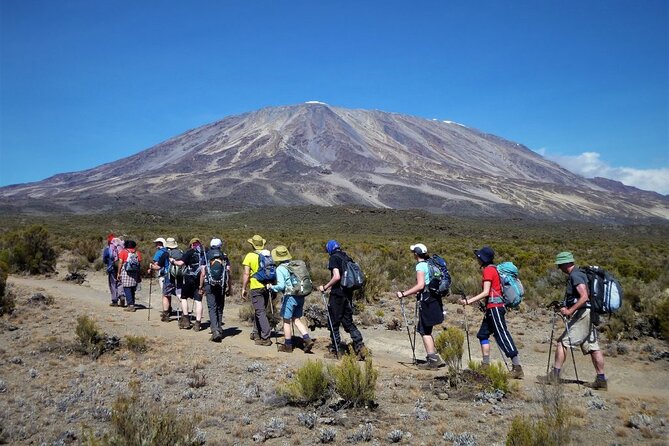
The route is a good fit if you value varied scenery. You move through rainforest, giant heather, the Shira Plateau, high scree, cliffs, icefields, and the tropical forest on the way down.
It may not suit you if you dislike camping, struggle with long walking days, or need a predictable sleep schedule. The summit departure at 1 a.m. and the 11 to 15-hour final day are serious commitments.
The private format is useful if you want your own group rather than a mixed departure. It also gives the guide team a better chance to respond to your group’s pace and condition, though the exact level of staffing should be confirmed before booking.
Practical details before you reserve
The tour offers pickup, uses mobile tickets, and provides private transportation. The listed meeting time is 8:30 a.m., while the first-day briefing is around 4:30 p.m., so confirm the exact meeting arrangements with the operator after booking.
Confirmation is provided at booking. Public transportation is nearby, but the package already includes private transfers, so you are unlikely to need it for the main trip.
Free cancellation is available if you cancel at least 24 hours before the local start time. Late cancellations and changes are not accepted under the stated terms. The experience also depends on good weather. If poor weather causes cancellation, you are offered another date or a full refund.
Should you book it?
I would choose this trek if you want a well-supported private climb and prefer an itinerary that takes seven days on the mountain rather than rushing the ascent. The Lava Tower and Barranco pattern, the extra Arusha nights, and the strong emphasis on guide support all add practical value.
I would not book it casually. The summit night is long, altitude can change your plans, and camping is part of the deal. Before committing, confirm the equipment list, guide-to-climber ratio, porter arrangements, and tipping expectations.
For a fit person who accepts the physical challenge, this is a serious but well-structured way to approach Kilimanjaro through Machame. The best reason to book is not simply the chance to reach Uhuru Peak. It is the combination of gradual route design, private support, and a team prepared to help you keep going at the right pace.
FAQ
How long is the complete experience?
The complete program lasts approximately nine days. Seven days are spent trekking on Mount Kilimanjaro, with lodge nights in Arusha at the beginning and end.
How much does the trek cost?
The listed price is $2,400 per person.
Where does the trip begin and end?
The trip begins and ends at a lodge in Arusha, Tanzania. Airport transfers to and from Kilimanjaro International Airport are included.
Which route does the trek use?
It uses the Machame Route, also known as the Whiskey route.
How physically fit do I need to be?
The activity requires a moderate level of physical fitness. The summit day is the most demanding, with approximately 11 to 15 hours of walking.
What time does the summit climb begin?
The final ascent begins at about 1 a.m. by torchlight.
Is reaching Uhuru Peak guaranteed?
No. The itinerary describes the walk from Stella Point to Uhuru Peak as an option for people who still feel strong. Conditions and personal health can affect the summit attempt.
Are meals included?
Yes. Breakfast, dinner, and lunch are included according to the listed meal schedule. Dinner and breakfast are provided during the lodge nights in Arusha.
Are airport transfers included?
Yes. Private transfers between Kilimanjaro International Airport and Arusha are included.
What happens if bad weather cancels the trip?
If poor weather causes cancellation, you are offered a different date or a full refund. Free cancellation for personal plans requires at least 24 hours’ notice before the experience begins.
More 7-Day Experiences
- Tanzania Classic – 7 Days
★ 5.0 · 1,151 reviews - 7-Day Premium Luxury Tanzania Safari All-Inclusive
★ 5.0 · 426 reviews - Group Safari 7 Days in Tanzania’s Main Parks
★ 5.0 · 240 reviews - 7 Days Tanganyika Wilderness Safari
★ 5.0 · 159 reviews
Just added around Arusha
- 5 Days Safari Tarangire, Serengeti, and Ngorongoro Crater★ 5.0 · 3 reviews
- Love lives in Africa★ 5.0 · 3 reviews
- 5 Days of Safari, Culture & Hot Springs – Tour from Arusha★ 5.0 · 3 reviews
- Arusha National Park Safari by Jeep★ 4.5 · 3 reviews
- 5Days Family _Group Tour Lodging Mid-Range in the Jungle★ 5.0 · 3 reviews
- 2 Days Tarangire and Ngorongoro Crater Tour★ 5.0 · 3 reviews
- Serengeti & Ngorongoro 3 Days Budget Safari★ 5.0 · 3 reviews
- 7 Days PRIVATE Best of Tanzania Safari *Departing everyday*★ 5.0 · 3 reviews
Kilimanjaro Treks, compared.



8-Day Small-group Lemosho Kilimanjaro Summit Trekking
Read our review →


Climbing Kilimanjaro through 7 days Machame Route
Read our review →

Browse the lists this tour appears in