
Reviewed · KILIMANJARO TREKS
7 Days Machame Route Kilimanjaro Trekking
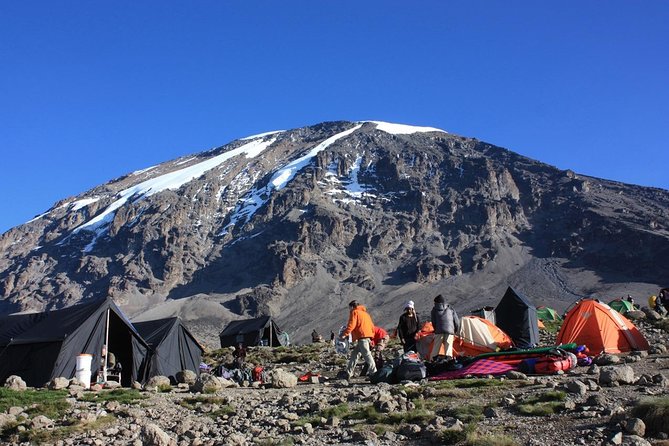
The mountain changes character every day. This seven-day Machame Route trek gives you rainforest, moorland, volcanic rock, ice, and a sunrise summit attempt on Kilimanjaro, all with camping support from Mafie Adventures. I like the route’s variety and the extra acclimatization time built into the schedule. I also like that the price includes porters, meals, camping equipment, rescue fees, and park-related costs. The main drawback is the summit day: reaching Uhuru Peak and then descending to Mweka can take roughly 15 hours.
You begin with pickup in Arusha at 4:00 am, then spend six nights on the mountain before returning through Mweka. Guides including Oliver, Godlove, Ombeni, Safaeli, and Mathew are praised for calm support and strong mountain experience. Still, you need to arrive ready for cold nights, basic camping, altitude symptoms, and a strict non-refundable booking policy.
In This Review
- Key points before you book
- Why the Machame Route earns its popularity
- Arusha pickup and the first climb through rainforest
- Day two: leaving the trees for Shira Plateau
- Day three: Lava Tower and the Barranco descent
- Day four: the Barranco Wall and Karanga Valley
- Day five: the exposed camp at Barafu
- Summit night: Stella Point, Uhuru Peak, and Mweka
- The final descent and mountain celebration
- What the $2,200.11 price actually covers
- Who will get the most from this trek
- Practical details that affect your decision
- Should you book the seven-day Machame Route?
- FAQ
- How long is the Machame Route trek?
- What time does the activity start?
- Is this a private tour?
- What is the highest point reached?
- Are meals included?
- Is camping equipment included?
- Are climbing clothes and equipment included?
- Are tips included in the price?
Key points before you book
- A route with changing habitats: You walk from montane forest to heathland, moorland, semi-desert, alpine desert, stone scree, and the ice-capped summit.
- A useful acclimatization pattern: Day three takes you up to Lava Tower at 4,630 meters before descending to Barranco Camp at 3,950 meters.
- The hardest day is very long: Summit morning begins around 11:30 pm, followed by the climb to Uhuru Peak and a long descent to Mweka Camp.
- A private group experience: Only your own group participates, with a professional guide and porters supporting the camp.
- Strong service is part of the appeal: Meals, tents, mattresses, rescue fees, porterage, and six breakfasts, six dinners, and seven lunches are included.
- Bring or rent the right gear: Climbing equipment and sleeping bags are not included, but both are available to rent.
Why the Machame Route earns its popularity
Machame is often chosen because it packs a lot of scenery into a relatively short climb. The path does not simply point uphill through one unchanging forest. Instead, you pass through several distinct habitats, and the surroundings change as quickly as your breathing.
The route is also popular with experienced climbers because it offers a sensible high-and-low rhythm. Day three is the clearest example. You climb to Lava Tower at 4,630 meters, where altitude can begin to make itself known, then drop to Barranco Camp. That descent helps your body adjust while giving you a dramatic approach to the mountain’s upper slopes.
The tradeoff is that Machame is not a gentle stroll. The trail includes mud, rocky ridges, steep sections, exposed camps, and a very demanding summit day. You need reasonable fitness and the patience to walk slowly. Your guide’s pacing matters here, and the company’s named guides, including Oliver, Godlove, Ombeni, Safaeli, and Mathew, have been singled out for their supportive approach.
More Kilimanjaro routes and climbs:
- 8-Day Small-group Lemosho Kilimanjaro Summit Trekking
★ 5.0 · 186 reviews - 7-Day Machame Kilimanjaro Summit Tour from Arusha
★ 5.0 · 125 reviews - Mountain Kilimanjaro Day Hike
★ 5.0 · 102 reviews
Arusha pickup and the first climb through rainforest
Your day begins early, with a 4:00 am start from Arusha at about 1,400 meters. You drive to Machame Village, where you can buy mineral water and receive a packed lunch. Depending on road conditions, the vehicle continues for about three kilometers toward Machame Gate, or you walk that section.
At the gate, your guide registers with Tanzania National Parks while porters organize and pack the equipment. This is practical rather than glamorous, but it is an important part of the morning. You can see how the trek is being arranged before you enter the forest.
The first hike covers about 18 kilometers and takes roughly seven hours. You begin in montane forest, where rain, mud, and fog are normal possibilities. The trail is not necessarily difficult because of altitude yet, but wet ground can make the opening day tiring. Good waterproof layers and shoes with dependable grip matter more here than light clothing.
You finish at the first camp in the forest zone. Tents, a mess tent, mattresses, cooking equipment, drinking water, and washing water are part of the camping setup. The included camping service saves you from carrying the heaviest items, but you still need a daypack with water, rain protection, warm layers, and personal essentials.
Day two: leaving the trees for Shira Plateau
After breakfast, you walk about nine kilometers in roughly six hours. The forest gives way to heathland and moorland, with streams and a rocky ridge leading toward the Shira Plateau.
This is one of the most rewarding transitions on the route. You are no longer enclosed by trees, and the higher position opens views toward the Western Breach and its glaciers. The changing plant life also gives you a clear sense of altitude. The walk is shorter than day one, but the exposed setting can feel colder and more serious.
Shira Camp sits at about 3,840 meters beside a stream. Your tents should be ready before you arrive, and the porters prepare water for drinking and washing. Evening snacks and dinner come from the camp chef.
Take the cold seriously. Temperatures at this exposed camp can fall below freezing. You may find the six-hour hiking time manageable, but the night can be uncomfortable if your sleeping bag and clothing are not suited to low temperatures. A sleeping bag is available to rent, but it is not included in the quoted price, so arrange that before departure.
Day three: Lava Tower and the Barranco descent
Day three is one of the most useful days for altitude adjustment. You leave the moorland and enter a rocky semi-desert zone, walking east for about 15 kilometers. The hike takes around seven hours and reaches Lava Tower at 4,630 meters.
Packed lunch is served at the tower, and climbing it may be possible if weather conditions allow. Do not treat that option as a requirement. The real value of this section is reaching a higher point, noticing how your body responds, and then descending to Barranco Camp.
Headaches and shortness of breath can begin at this altitude. Tell your guide how you feel rather than trying to hide symptoms. Walking slowly, drinking regularly, and following the guide’s instructions are more useful than trying to prove you can race uphill.
After lunch, the trail drops to Barranco Camp at about 3,950 meters. That high-point-then-lower-camp pattern is a strong feature of this itinerary. You get a demanding altitude test without sleeping at the day’s highest point.
A few more trips of this kind worth comparing:
- Private Full Day Hiking Experience to Marangu Route
★ 5.0 · 61 reviews - 4 Days Mount Meru Trekking
★ 5.0 · 55 reviews - 4 days Best experience Kilimanjaro Hike, Serengeti &Ngorongoro
★ 5.0 · 54 reviews - From Arusha/Moshi: Kilimanjaro Hike Marangu Route Day Trip
★ 4.5 · 54 reviews
Day four: the Barranco Wall and Karanga Valley
The fourth day covers only about five kilometers and takes four to five hours, but it is not a throwaway rest day. You start with the Barranco Wall, a steep Class 2 section that can look more intimidating from below than it feels once you are moving.
You should expect hands-on scrambling in places, though the route is presented as manageable for hikers. At the top, you get views of Heim Glacier and the striking feeling of standing above the clouds. After the wall, the trail rises and falls through Karanga Valley.
This short day is valuable because it lets you continue gaining altitude without piling on a huge distance. It also breaks up the long approach to the summit. The drawback is that the terrain is uneven, so short does not mean effortless. Keep your daypack light and listen carefully to foot placement.
Day five: the exposed camp at Barafu
From Karanga Camp at about 3,959 meters, you walk roughly four kilometers to Barafu Camp at 4,550 meters. The official hiking time is listed as two to three hours, although the day’s main purpose is to reach camp, eat early, and rest before the summit attempt.
The trail joins the Mweka Route, which you use for the final descent. Barafu is the last water stop for the porters because there is no accessible water at the camp itself. That detail explains why porter support is so important on this route. Water must be carried to an exposed, rocky campsite.
Barafu means ice in Swahili, and the camp lives up to that name in feel. It sits on a rocky ridge exposed to wind, with tents placed among rocks. You should learn the layout before dark, since you will leave during the night and may need to move around in poor light.
Dinner is served early. Your job is to eat, organize your summit clothing, and sleep as much as possible. That can be easier said than done at 4,550 meters, especially with the excitement and cold. Keep your headlamp, warm layers, water, and essential personal items ready before lying down.
Summit night: Stella Point, Uhuru Peak, and Mweka
Your guide wakes you around 11:30 pm for tea and biscuits. The summit attempt begins in darkness, heading northwest over stone scree. This is usually the toughest mental and physical part of the trek because the surface is loose, the air is thin, and the climb comes after five days of walking.
The ascent to Stella Point at 5,685 meters takes about six hours. Sunrise from the crater rim is one of the major rewards of the route. From Stella Point, you continue for about two hours over a snow-covered trail to Uhuru Peak at 5,895 meters.
The itinerary gives about eight hours to reach the summit area, followed by seven to eight hours descending to Mweka. The total distance is about seven kilometers uphill and 23 kilometers downhill. That is a huge day, and you should judge the trip by the full day rather than the short distance printed for the ascent.
You may receive a green certificate for reaching Stella Point or a gold certificate for reaching Uhuru Peak. Reaching the main summit is never guaranteed, even on a well-planned trek, because altitude, weather, and physical condition all matter. Your guide’s judgment should come before personal pride.
After the summit, you descend to Mweka Camp. The downhill section can feel deceptively easy at first, but tired legs and loose ground add up. This is when trekking poles, careful steps, and a steady pace become especially useful.
The final descent and mountain celebration
Day seven begins with breakfast and a celebration with dancing and singing. You also present tips to the guide, assistant guides, chef or chefs, and porters. Tips are not included, so budget for them separately and carry enough local currency or an agreed payment method.
The final descent takes about three hours to Mweka Gate through forest and covers around 15 kilometers. At the gate, you sign your name to receive your completion certificate. You then continue toward Mweka Village, described as about one hour and three kilometers farther, before returning to the meeting point.
The celebration and certificate provide a fitting end, but the descent still requires care. Your muscles may be sore, and the final forest path is not simply a quick walk out. The activity ends back at the starting meeting point in Arusha.
What the $2,200.11 price actually covers
At $2,200.11 per person, this is not a bare-bones trail permit. The price includes camping equipment such as a mess tent, mattress, and cooking equipment. It also includes porterage, rescue fees, parking fees, accommodation on the trek, taxes and VAT, and a professional driver and guide.
Your food allowance includes seven lunches, six dinners, and six breakfasts. That matches the seven-day structure, with food provided throughout the mountain portion. A chef prepares dinner, and evening snacks are also described at camp.
This package can offer good value if you would otherwise need to arrange guides, porters, cooking equipment, rescue coverage, meals, and park expenses separately. You still need to pay for climbing gear, a sleeping bag, bath towels, personal items, travel insurance, visa fees, international flights, accommodation before and after the trek, tips, and any government tax or park-fee increase.
The quoted price is therefore best viewed as a supported mountain package, not a fully inclusive holiday from your front door. Ask about current park charges and any required gear rental before paying.
Who will get the most from this trek
I would consider this route a good fit if you want a private climb with a clear seven-day schedule and strong practical support. The private format means only your own group participates, which can make pacing and communication simpler.
It also suits you if changing scenery matters. You move from wet forest to cold moorland, open semi-desert, rocky alpine ground, snow, and forest again. That range makes the route feel like a real journey rather than a repeated uphill walk.
You should think twice if you dislike camping, cold nights, long hiking days, or basic mountain facilities. The summit day is especially demanding, and the early start at Barafu leaves little room for comfort. Most travelers can participate according to the supplied activity information, but altitude still makes this a serious physical undertaking.
Mafie Adventures has also handled last-minute arrangements, including equipment support for a person who booked only a few days before the trip. That flexibility is useful, but I would not copy the last-minute approach. Proper clothing, sleeping arrangements, travel insurance, and altitude preparation deserve early attention.
Practical details that affect your decision
Pickup is offered from Arusha, with the stated start time at 4:00 am. The activity has a mobile ticket, and booking confirmation is provided at the time of booking. The meeting point and end point are both listed as Arusha, Tanzania.
The trek is non-refundable and cannot be changed for any reason after cancellation or an amendment request. That is a major financial consideration, especially at this price. Make sure your dates, insurance, flights, and personal gear are settled before booking.
You can rent climbing equipment and a sleeping bag, but the available details do not specify rental prices or exactly which items are stocked. Ask for the current equipment list. You should also confirm the arrangements for accommodation before the climb and after returning, since those nights are not included.
Should you book the seven-day Machame Route?
I would book this trek if you want Kilimanjaro’s most varied scenery, a private group, porter and cooking support, and an itinerary that gives you a useful Lava Tower acclimatization day. The strongest part of the package is the combination of route design and attentive staff. Guides such as Oliver, Godlove, Ombeni, Safaeli, and Mathew are repeatedly praised for kindness, professionalism, and steady support.
I would not book it casually. The summit day is long, Barafu is cold and exposed, and several important costs sit outside the advertised price. If you can accept those conditions, prepare your gear, and protect the trip with suitable insurance, the seven-day Machame Route offers a serious but well-supported shot at Uhuru Peak.
FAQ
How long is the Machame Route trek?
The trek lasts approximately seven days, beginning and ending in Arusha, Tanzania.
What time does the activity start?
Pickup and departure are scheduled for 4:00 am from Arusha.
Is this a private tour?
Yes. Only your own group participates in the activity.
What is the highest point reached?
Uhuru Peak is at 5,895 meters. Stella Point, on the crater rim, is at 5,685 meters.
Are meals included?
Yes. The package includes seven lunches, six dinners, and six breakfasts.
Is camping equipment included?
Yes. Camping equipment includes a mess tent, mattress, and cooking equipment. A sleeping bag is not included, but it is available for rent.
Are climbing clothes and equipment included?
No. Climbing gear is not included, though it is available for rent.
Are tips included in the price?
No. Tips for the guide, assistant guides, chef or chefs, and porters are not included.
More 7-Day Experiences
- Tanzania Classic – 7 Days
★ 5.0 · 1,151 reviews - 7-Day Premium Luxury Tanzania Safari All-Inclusive
★ 5.0 · 426 reviews - Group Safari 7 Days in Tanzania’s Main Parks
★ 5.0 · 240 reviews - 7 Days Tanganyika Wilderness Safari
★ 5.0 · 159 reviews
Just added around Arusha
- 5 Days Safari Tarangire, Serengeti, and Ngorongoro Crater★ 5.0 · 3 reviews
- Love lives in Africa★ 5.0 · 3 reviews
- 5 Days of Safari, Culture & Hot Springs – Tour from Arusha★ 5.0 · 3 reviews
- Arusha National Park Safari by Jeep★ 4.5 · 3 reviews
- 5Days Family _Group Tour Lodging Mid-Range in the Jungle★ 5.0 · 3 reviews
- 2 Days Tarangire and Ngorongoro Crater Tour★ 5.0 · 3 reviews
- Serengeti & Ngorongoro 3 Days Budget Safari★ 5.0 · 3 reviews
- 7 Days PRIVATE Best of Tanzania Safari *Departing everyday*★ 5.0 · 3 reviews
Kilimanjaro Treks, compared.



8-Day Small-group Lemosho Kilimanjaro Summit Trekking
Read our review →


Climbing Kilimanjaro through 7 days Machame Route
Read our review →

Browse the lists this tour appears in