
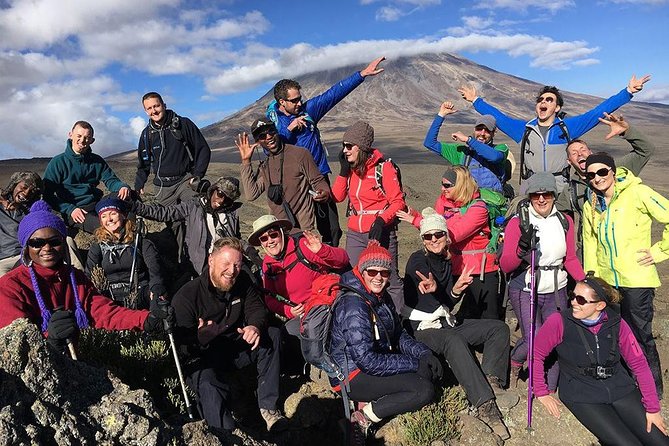
Reviewed · KILIMANJARO TREKS
7 Days Machame Route Trek Mount Kilimanjaro
Kilimanjaro begins in the trees. This seven-day Machame Route trek appeals to me for two clear reasons: the changing scenery moves from rainforest to alpine desert, and the itinerary gives you a useful acclimatization climb before summit night. I also like the small maximum group size of four, plus the support of an expert mountain crew.
The main caution is simple: this is a hard, high-altitude trek, not a long sightseeing walk. Summit night may mean 5 to 7 hours to Stella Point, followed by another 1 to 2 hours to Uhuru Peak, then a descent. At $2,200 per person, the value depends heavily on the quality of the guides, food, camping support, and equipment arrangements, so ask what the price includes before paying.
In This Review
- Key points about the Machame Route trek
- Why Machame is a good seven-day choice
- Day one: From the gate to Machame Camp
- Day two: Leaving the forest for Shira Camp
- Day three: Lava Tower and the Barranco Valley
- Day four: Over the Barranco Wall to Karanga
- Day five: The dry approach to Barafu Camp
- Day six: The midnight push to Uhuru Peak
- Day seven: Forest, farewell, and the Mweka Gate
- Guides, crew, and the small-group advantage
- What $2,200 buys you in practical terms
- Who should book this trek?
- Should you book the Machame Route?
- FAQ
- How long is the Machame Route trek?
- Where does the trek start?
- What is the highest point reached?
- Where do you sleep during the trek?
- How many people can join the experience?
- What time does the experience start?
- Can I cancel for a full refund?
Key points about the Machame Route trek
- Seven days from Arusha and back: Hotel pickup begins the trip, and the final day returns you to your hotel after reaching Mweka Gate.
- A strong acclimatization pattern: You climb toward Lava Tower at 4,640 meters, then sleep lower at Barranco Camp.
- Rainforest wildlife: The first and final walking days pass through forest where you might spot black and white colobus monkeys.
- A real hands-on obstacle: The Barranco Wall requires the occasional use of your hands, though no technical climbing is described.
- Summit at 5,895 meters: You aim for Uhuru Peak after a midnight wake-up, tea, biscuits, and a long night ascent.
- Small group setting: The advertised maximum is four participants, with guides and porters supporting the climb.
Why Machame is a good seven-day choice
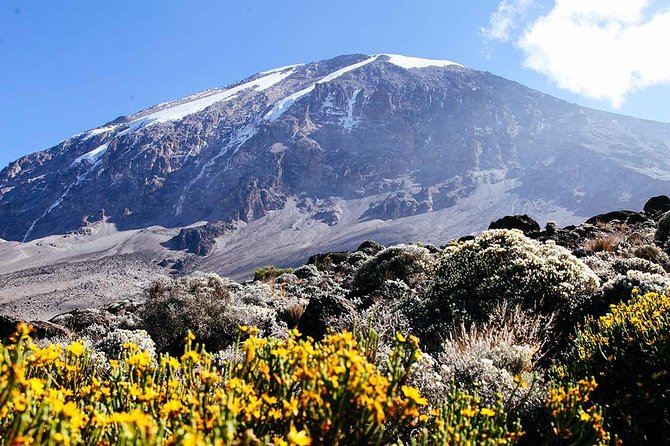
The Machame Route earns its reputation through variety. You start under tall trees and finish among snow and ice near Kibo Summit. In between, you cross heath, moorland, alpine desert, rocky ridges, and the Barranco Valley.
That change is not just pretty. It gives your body and mind a series of fresh targets. On day one, you are watching for flowers and monkeys. By day three, you are thinking about altitude and steady breathing. The route keeps changing before the climb has a chance to feel like one long gray uphill slog.
The seven-day schedule also gives you a better rhythm than a rushed ascent. Day three is especially useful. You climb about 700 meters to Lava Tower, then descend to sleep at Barranco Camp, which sits not much higher than the previous night. That climb-high, sleep-lower pattern is one of the most valuable features of the plan.
Still, no itinerary can guarantee a summit. Fitness matters, and altitude affects people differently. The tour description says most people can participate, but you should treat that as a broad statement, not a promise that the climb will feel easy.
More Kilimanjaro routes and climbs:
- 8-Day Small-group Lemosho Kilimanjaro Summit Trekking
★ 5.0 · 186 reviews - 7-Day Machame Kilimanjaro Summit Tour from Arusha
★ 5.0 · 125 reviews - Mountain Kilimanjaro Day Hike
★ 5.0 · 102 reviews
Day one: From the gate to Machame Camp
After breakfast, pickup from your hotel takes you to Kilimanjaro National Park Gate. Registration and paperwork come first, so the walking does not begin the moment you leave the hotel. Once those formalities are finished, you set off toward Machame Camp on a hike of about 5 to 6 hours.
The forest is the reward for the early effort. Ancient trees, large ferns, and endemic flowers such as Impatiens Kilimanji create a cool, green setting. You might also see black and white colobus monkeys watching from the branches. The route feels alive here, though you should not count on a wildlife sighting.
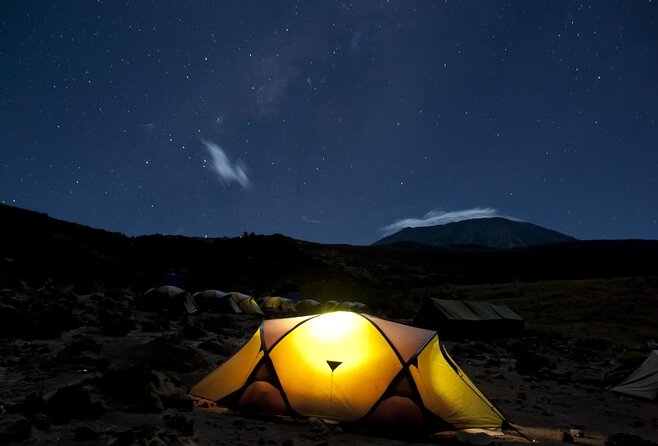
Machame Camp is your first tent night. The plan allows time to stretch, rest, and eat a cooked meal after arriving. That matters because the first day is often when you discover whether your boots, pack, and clothing are working well.
I would use this evening for a quick gear check. Any hot spot on your foot, damp layer, or awkward strap will become a larger problem later. The trip includes tents, but the supplied details do not spell out every camping item or meal arrangement, so clarify the exact inclusions before departure.
Day two: Leaving the forest for Shira Camp
Day two begins early, even though the walking time is not the longest of the trip. The goal is to reach Shira Camp around mid-afternoon, with the route changing from rainforest to dry heath and moorland.
This is one of the most satisfying transitions on the mountain. The dense green canopy gives way to open ground, ferns, and high-country plants. You begin to see the scale of Kilimanjaro more clearly, and the view toward the mountain range opens near camp.
At sunset, Kibo’s glaciers may catch the golden light. It is the kind of view that makes a basic tent camp feel like an excellent place to be. You will also notice that the air and ground feel less forgiving than in the forest.
The early arrival helps in two ways. You have time to eat and rest, and you avoid turning every day into a race against darkness. Use the afternoon carefully. The mountain rewards patience, not heroic pacing on the second day.
Day three: Lava Tower and the Barranco Valley
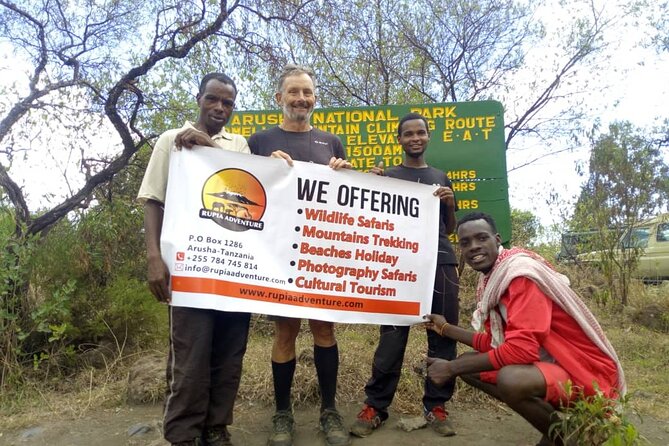
Day three is the key acclimatization day. From Shira Plateau, you climb toward Lava Tower at 4,640 meters. After a rest there, you continue through alpine desert and down toward Barranco Camp.
The total trek takes about 6 to 7 hours. That number can sound manageable on paper, but the altitude changes the effort. A slow pace and regular pauses matter more than speed.
The scenery becomes strange and memorable. Small lobelia plants and giant senecios appear in the Barranco Valley, surrounded by dry volcanic ground. These plants give the high slopes a sense of scale, since they look both delicate and remarkably tough.
Sleeping at Barranco after reaching Lava Tower is the clever part of the day. You gain height during the walk without spending the night at the highest point reached. If you have never trekked at altitude, this is the day when you may learn that breathing, eating, and drinking require more attention than usual.
Your guide’s role is important here. The trip places you with an expert guide, and previous arrangements connected with this operator have included guides named Gideon, Laurent, Emanuel, Meshack, Frank, Julius, Johnny, and others. Names and assignments can change, but the useful point is to confirm who will lead your group and how the guide handles pacing and altitude concerns.
A few more trips of this kind worth comparing:
- Private Full Day Hiking Experience to Marangu Route
★ 5.0 · 61 reviews - 4 Days Mount Meru Trekking
★ 5.0 · 55 reviews - 4 days Best experience Kilimanjaro Hike, Serengeti &Ngorongoro
★ 5.0 · 54 reviews - From Arusha/Moshi: Kilimanjaro Hike Marangu Route Day Trip
★ 4.5 · 54 reviews
Day four: Over the Barranco Wall to Karanga
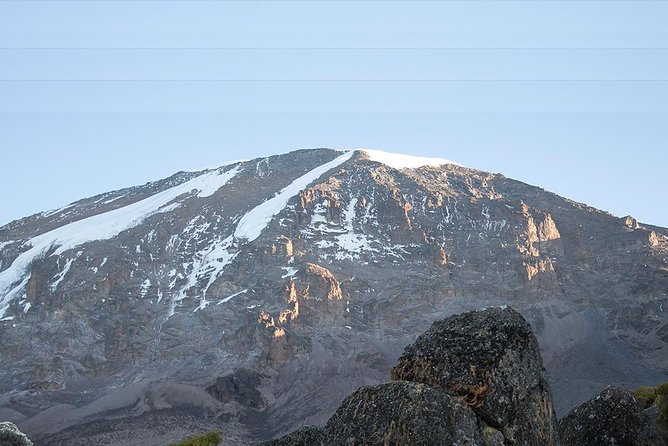
The Barranco Wall is the day’s headline feature. You may use your hands for balance and grip on some sections, but the itinerary describes no technical climbing. A guide stays with you and offers help as you move up.
That distinction matters. The wall can feel intimidating, especially when you are tired and looking at steep ground, but it is presented as a trekking challenge rather than a climbing route. Good footwear, calm movement, and listening to your guide will be more useful than trying to rush.
Beyond the wall, the route rises and falls along a mountain ridge. Those repeated ascents and descents continue the acclimatization process, while the changing views show sharp contrasts between bare desert ground and pockets of vegetation.
Karanga Camp arrives after about 3 to 4 hours, leaving a comparatively long afternoon. Rest is the sensible choice. The itinerary even suggests a game of rummy, which gives you an idea of the slower pace at camp. Do not mistake a short walking day for an easy overall day. Your body is saving energy for the summit.
Day five: The dry approach to Barafu Camp
After breakfast, you walk toward Barafu Camp for about 3 to 4 hours. Kibo Summit remains on your left, and much of the route crosses very dry, desert-like ground.
The scenery is stark now. You have left the softer forms of the lower mountain behind, and the summit feels close enough to dominate your thoughts. Barafu is not a place to linger for sightseeing. It is the launch point for the hardest part of the trip.
The schedule calls for an early dinner and overnight stay. That short night is not a mistake. You need to rest before being woken around midnight for the final ascent.
This is the day to prepare, not explore. Organize your headlamp, warm layers, water, snacks, and any personal medication before lying down. A warm cup of tea and biscuits are provided at wake-up, but you should not expect that small snack to replace your full food plan for a long night and morning.
Day six: The midnight push to Uhuru Peak
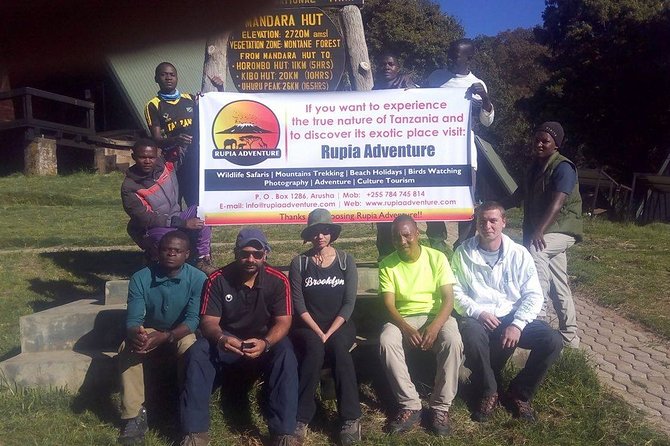
Summit day is the test of the entire route. Your guide wakes you at about midnight, and you begin walking under moonlight and headlamps toward Stella Point.
The climb to the crater rim takes roughly 5 to 7 hours. The pace will be slow, and the cold, darkness, altitude, and steep ground can make the distance feel much longer than the clock suggests.
From Stella Point, you continue for another 1 to 2 hours to Uhuru Peak at 5,895 meters. The reward is sunrise over the African scenery, with pink light on the snowy summit and glittering glaciers. This is the emotional center of the trip, but it is also important to keep your expectations practical. Weather and physical condition may affect how long you can stay at the top.
After photographs and time at the summit, you descend along the same route to Barafu Camp. The descent is not an afterthought. One previous climber’s practical warning was blunt: the climb down can feel worse than the climb up. Your knees, feet, and concentration may be under serious strain after the summit effort.
The available itinerary is cut off after noting that the team awaits you at Barafu Camp, so confirm the exact food, rest, and onward schedule for the remainder of day six. Do not assume that a listed 7-day trip explains every hour of the summit day.
Day seven: Forest, farewell, and the Mweka Gate
The final morning begins with breakfast and a farewell ceremony from the mountain crew. Then you descend through rainforest toward Mweka Gate, a walk of about 2 to 3 hours.
The forest feels different on the way down. You now recognize how high you have been, and the return to thick green vegetation brings a real sense of closure. You might spot colobus monkeys again, though wildlife is never guaranteed.
At Mweka Gate, transport takes you back to the hotel. The promise of a long shower and pool time is not a minor detail. After several nights in tents and the strain of summit day, a comfortable hotel afternoon may be the best luxury on the schedule.
Dinner and a hotel overnight are included in the stated final-day plan. Confirm whether the hotel night is part of the $2,200 price, along with transfers and meals, because those details strongly affect the actual value.
Guides, crew, and the small-group advantage
The strongest theme in the available feedback is the mountain crew. Guides and porters receive repeated praise, with names including Mathias, Julius, Johnny, Frank, Emanuel, Gideon, Laurent, and Meshack. The cooking team and porters are also singled out as important to successful climbs.
That support changes the character of a Kilimanjaro trip. You are not simply following a marked path with a daypack. You rely on the crew for pacing, encouragement, camp routines, meals, and help when the altitude begins to affect your confidence.
The listed maximum of four participants is a real advantage. A small group can keep a steady pace and make it easier for the guide to notice how each person is coping. Some past arrangements connected with the operator involved larger support crews, so do not confuse a four-person participant limit with a four-person total mountain team.
The guide’s attitude matters most on summit night. Several accounts describe guides assessing individual ability and encouraging people toward the top. Ask before booking how the operator manages a participant who needs to turn back. A responsible summit plan must protect health rather than treat reaching the peak as the only result that counts.
What $2,200 buys you in practical terms
At $2,200 per person, this is a serious purchase. The price is easier to judge when you look at the length of the trip, the national park access, hotel pickup, tents, mountain guides, porters, camp cooking, and the return transfer described in the schedule. Those services provide real value if they are all included and delivered well.
The price is harder to assess because the supplied details do not give a full inclusion list. You should ask about park and camping fees, hotel nights, meals, drinking water, porter support, gear rental, airport transfers, tips, and emergency arrangements. Do not rely on a general phrase such as all-inclusive unless the operator spells it out.
The repeated emphasis on professional crews and successful summits supports the idea that support is the main value here. A cheaper trip with weak pacing or poor organization is not a bargain on a mountain this high. At the same time, a higher price alone does not guarantee a safer or better climb, so compare what each operator actually provides.
Who should book this trek?
I would recommend this route to someone who wants a classic Kilimanjaro experience with changing scenery, tent camping, a structured acclimatization day, and a serious summit attempt. It suits you if you can handle long uphill walks, basic camp nights, an early start, and a demanding descent.
It is especially appealing if you prefer a small participant group. The route also works well for people who want wildlife and forest at the beginning, then open high-altitude scenery and the Barranco Wall later.
I would hesitate if you want a relaxed holiday, dislike camping, or expect the guide to carry you through the hard parts. The itinerary is supportive, but you still need grit and physical preparation. Consider asking about a longer route if you are worried about altitude, although this seven-day plan already gives you a meaningful acclimatization schedule.
Booking offers free cancellation up to 24 hours before the experience start time for a full refund. Changes or cancellations inside that 24-hour window are not accepted for a refund, and poor weather or failure to meet the minimum group size may lead to a new date, another experience, or a full refund.
Should you book the Machame Route?
I would book this trek if the operator confirms the price inclusions in writing and you are ready for a demanding high-altitude climb. The route offers the right ingredients: forest wildlife, strong scenery, a climb-high and sleep-lower day, a small participant limit, and a well-supported summit attempt.
Choose it for the mountain experience, not just the photograph at Uhuru Peak. If you train properly, pack carefully, accept a slow pace, and treat the guides as part of your safety system, this seven-day Machame Route plan offers a powerful way to reach Africa’s highest point.
FAQ
How long is the Machame Route trek?
The experience lasts approximately seven days. The final day includes the descent to Mweka Gate and transport back to the hotel.
Where does the trek start?
You are picked up from your hotel after breakfast and taken to the Kilimanjaro National Park Gate. The walk begins after the required paperwork is completed.
What is the highest point reached?
The route aims for Uhuru Peak, which is 5,895 meters above sea level.
Where do you sleep during the trek?
Overnight stays on the Machame Route use tents. The itinerary also includes a hotel night after the final descent.
How many people can join the experience?
The advertised maximum is four participants.
What time does the experience start?
The listed start time is 8:30 am. Summit day begins around midnight, when the guide wakes you for the final ascent.
Can I cancel for a full refund?
Yes, if you cancel at least 24 hours before the experience start time. Cancellations or changes made less than 24 hours in advance are not accepted for a refund.
More 7-Day Experiences
- Tanzania Classic – 7 Days
★ 5.0 · 1,151 reviews - 7-Day Premium Luxury Tanzania Safari All-Inclusive
★ 5.0 · 426 reviews - Group Safari 7 Days in Tanzania’s Main Parks
★ 5.0 · 240 reviews - 7 Days Tanganyika Wilderness Safari
★ 5.0 · 159 reviews
Just added around Arusha
- 5 Days Safari Tarangire, Serengeti, and Ngorongoro Crater★ 5.0 · 3 reviews
- Love lives in Africa★ 5.0 · 3 reviews
- 5 Days of Safari, Culture & Hot Springs – Tour from Arusha★ 5.0 · 3 reviews
- Arusha National Park Safari by Jeep★ 4.5 · 3 reviews
- 5Days Family _Group Tour Lodging Mid-Range in the Jungle★ 5.0 · 3 reviews
- Serengeti & Ngorongoro 3 Days Budget Safari★ 5.0 · 3 reviews
- 2 Days Tarangire and Ngorongoro Crater Tour★ 5.0 · 3 reviews
- 7 Days PRIVATE Best of Tanzania Safari *Departing everyday*★ 5.0 · 3 reviews
Kilimanjaro Treks, compared.



8-Day Small-group Lemosho Kilimanjaro Summit Trekking
Read our review →


Climbing Kilimanjaro through 7 days Machame Route
Read our review →

Browse the lists this tour appears in