
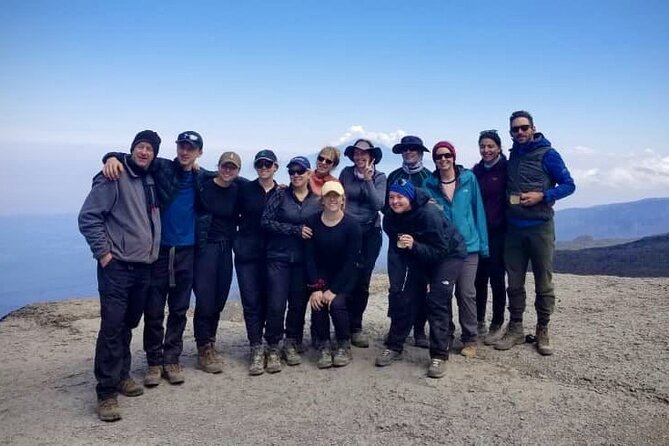
Reviewed · KILIMANJARO TREKS
8 Day Kilimanjaro Trek via Lemosho Route
Kilimanjaro rewards patience. I like this trek for its quieter start through rainforest and its careful altitude profile, especially the high climb to Lava Tower followed by sleep at Barranco. I also like that Soraka Tours handles transport, meals, tents, park fees, and health checks, so you can focus on walking. The main consideration is the summit day: 14 to 16 hours on your feet is a serious test, even for fit hikers.
This is not an eight-day holiday from start to finish. The mountain trek lasts eight days, but the full program takes about 10 days, including arrival in Moshi, two hotel nights, airport transfers, and departure. At $3,450 per person, the cost is substantial, but it covers many expenses that can quickly add up on a self-arranged climb.
In This Review
- Key points at a glance
- Why the Lemosho Route is a smart Kilimanjaro choice
- Moshi arrival and the pre-trek briefing
- Day 2: Lemosho Gate to Mti Mkubwa Camp
- Day 3: Mti Mkubwa to Shira 1 Camp
- Day 4: Crossing the Shira Plateau
- Day 5: Lava Tower and the descent to Barranco
- Day 6: The Barranco Wall to Karanga Camp
- Day 7: Karanga to Barafu Camp
- Day 8: Uhuru Peak and the long descent
- Day 9: Mweka Gate and the return to Moshi
- Day 10: Airport transfer and the practical finish
- What the $3,450 price really covers
- The Soraka team and the human side of the climb
- Who should book this Lemosho trek?
- Should you book it?
- FAQ
- How long does the full Kilimanjaro experience take?
- Where does the trek begin?
- Is airport pickup included?
- Where do I stay before and after the mountain trek?
- How many people are in the group?
- What meals are provided?
- Do porters carry all my equipment?
- Is camping equipment provided?
- What safety measures are included?
Key points at a glance
- Lemosho begins at 7,824 feet, giving you a gradual start in Kilimanjaro’s rainforest.
- The Lava Tower day reaches 15,091 feet, then drops to Barranco for better altitude adjustment.
- Summit day lasts 14 to 16 hours, beginning before dawn at Barafu Camp.
- Three mountain meals are prepared daily, with vegetarian, gluten-free, halal, and kosher plans available.
- Two daily health checks use an oximeter and specific questions about your condition.
- Only your group participates, making the climb private rather than part of a large shared departure.
Why the Lemosho Route is a smart Kilimanjaro choice
Lemosho is a strong choice if you want scenery and a measured approach to altitude. You start in thick rainforest, then cross open high country, volcanic rock, and alpine desert before reaching the summit zone. That changing scenery helps the trek feel like a journey rather than a long uphill walk.
The route also gives your body time to adjust. You do not rush straight from the forest to the highest camps. Instead, the itinerary spreads the climb over several days, with the important high-and-low acclimatization walk to Lava Tower on Day 5.
You should still be clear about what this route cannot do. Gradual acclimatization helps, but it does not remove the risks of high altitude. A strong physical fitness level is required, and you need to be ready to follow guide instructions, move slowly, and accept that reaching the summit is never guaranteed.
The quieter feel is another attraction. Lemosho is described as a less crowded route, although the mountain is still popular and you may see other climbing groups. The private format means only your own group takes part, which can make pacing, encouragement, and daily decisions more personal.
More Kilimanjaro routes and climbs:
- Kilimanjaro climb by Lemosho Route (7-day)
★ 5.0 · 651 reviews - Kilimanjaro climb, Machame Route (7-day)
★ 5.0 · 262 reviews - Kilimanjaro Climbing Lemosho Route 8 Days.
★ 5.0 · 186 reviews
Moshi arrival and the pre-trek briefing
Your first day is simple but useful. Soraka Tours collects you at Kilimanjaro International Airport and transfers you to a hotel in Moshi, with accommodation at Kili Wonders Hotel or a similar property.
A briefing takes place before you start walking. This is the time to ask about your gear, confirm the daily plan, discuss health concerns, and understand what your porters will carry. Your personal day pack remains your responsibility, while the porters carry the rest of your equipment.
The two hotel nights are included, with breakfast. Lunch and dinner at the hotel are not included, so allow extra money for those meals. Airfare, visas, insurance, sleeping bags, hiking boots, and other personal climbing equipment are also outside the quoted price.
Day 2: Lemosho Gate to Mti Mkubwa Camp
The mountain portion begins at Lemosho Gate, at 7,824 feet. The trail heads through lush rainforest toward Mti Mkubwa Camp, at 9,251 feet.
The walk takes about three to four hours. This is a fairly gentle opening compared with what comes later, but it still gives you an early sense of the pace. Your guides will likely encourage the slow walking style that is essential on Kilimanjaro.
The forest is one of the pleasures of choosing Lemosho. You get shade, thick plant growth, and a strong sense of entering a protected mountain environment. It is also a good day to check your boots, adjust your day pack, and notice any hot spots before the trail becomes harder.
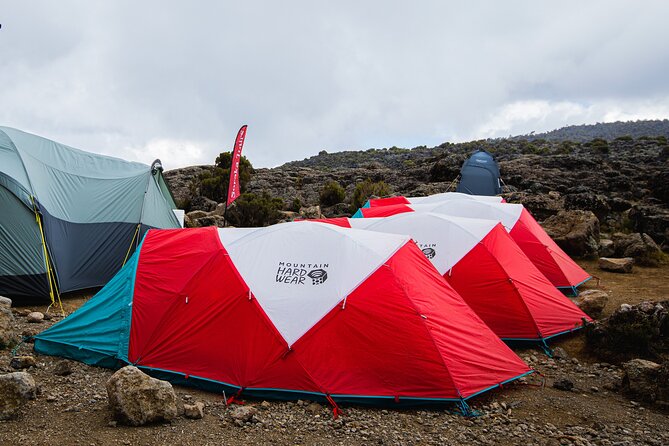
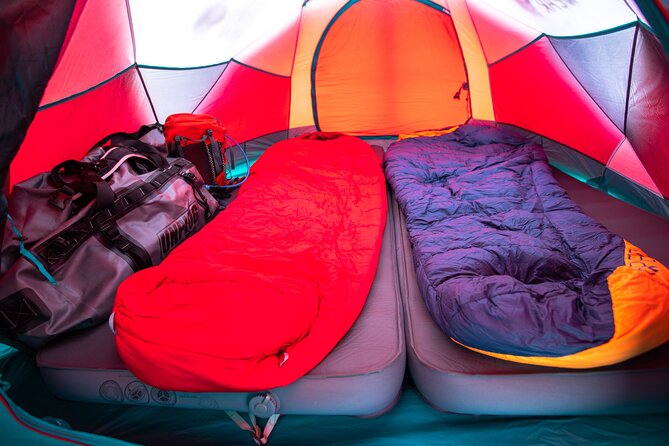
Your sleeping arrangement is a four-season Mountain Hardware tent, shared by two people. A dining tent, tables, chairs, cutlery, and warm sleeping mats are provided. That setup is a major comfort compared with carrying and organizing everything yourself.
Day 3: Mti Mkubwa to Shira 1 Camp
Today you leave much of the forest behind and climb toward Shira 1 Camp, at 11,499 feet. The walk takes about five to six hours.
The change in vegetation is part of the appeal. You move above the forest line and into more open ground, with wider views and cooler conditions. The route begins to feel more exposed, and the altitude becomes a factor rather than a distant concern.
This is a day when you should resist the temptation to walk quickly. The distance may not sound extreme, but the rise from 9,251 to 11,499 feet is meaningful. Drink as directed, eat even if your appetite is reduced, and tell your guide about headaches, nausea, unusual tiredness, or shortness of breath.
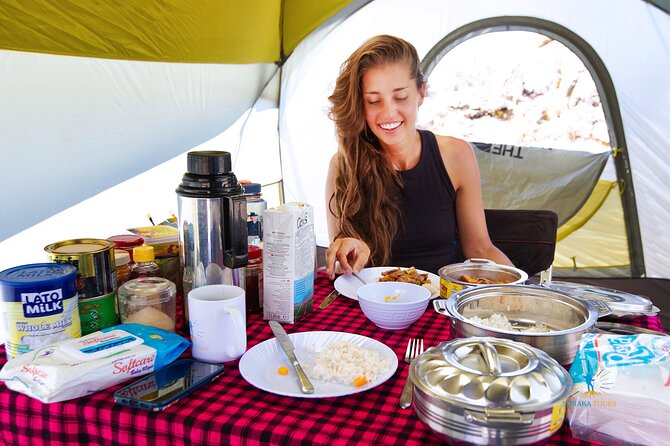
The cook prepares three meals each day on the mountain. That matters here because steady food intake supports the long effort ahead. The company can provide vegetarian, gluten-free, halal, and kosher meal plans, but you should arrange your needs before departure.
A few more trips of this kind worth comparing:
- Private Kilimanjaro Hike 7 Day Lemosho Route
★ 5.0 · 60 reviews - Best Kilimanjaro hiking day trip tour with Kilinge Adventures
★ 4.5 · 54 reviews - #1. Best Kilimanjaro Day hike Tour-Machame Route-ISMANI
★ 4.2 · 47 reviews - Best Kilimanjaro Adventure 7 days Machame route Trekking
★ 5.0 · 42 reviews
Day 4: Crossing the Shira Plateau
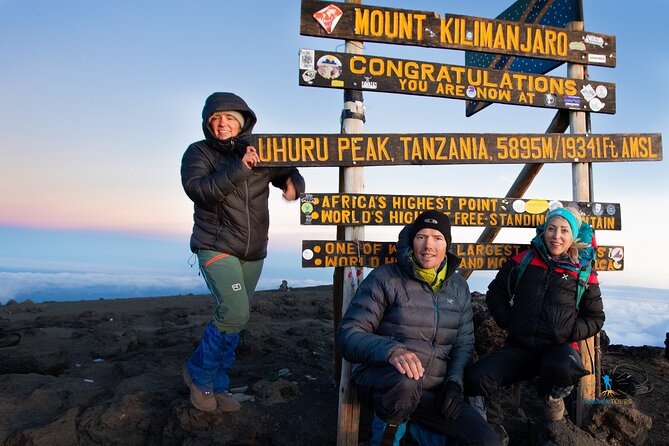
From Shira 1, you continue to Shira 2 Camp at 12,598 feet. The walk takes about four to five hours and crosses the broad Shira Plateau.
This is one of the route’s scenic high points. The forest has disappeared, and the setting becomes more open, spare, and volcanic. You can see the mountain’s climate zones changing in a single trek, from wet forest to high-altitude desert.
Although the walking time is shorter than the day before, the altitude can make a modest climb feel slow. The useful habit is to treat this as an acclimatization day, not a race. Your guides have more than a decade of climbing experience each, and the best use of that experience is careful pacing and close attention to your condition.
Evenings at this height may feel very different from your first night in Moshi. Keep warm clothing and essential personal items in your tent rather than buried in a porter’s bag. Small organizational choices become important once the air is cold and you are tired.
Day 5: Lava Tower and the descent to Barranco
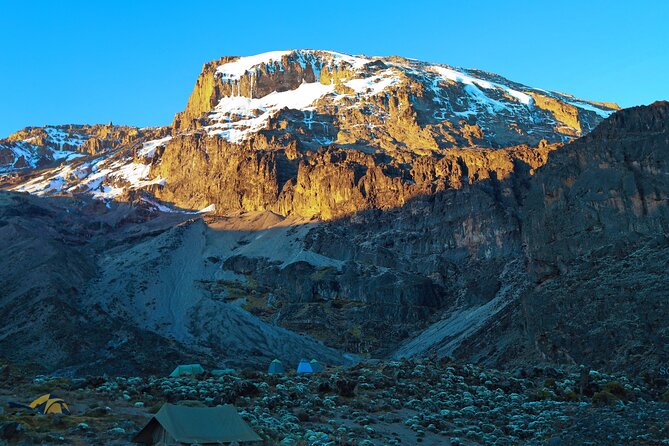
This is the trek’s key acclimatization day. You hike from Shira 2 to Lava Tower at 15,091 feet, then continue down to Barranco Camp at 12,959 feet.
The full day takes about six to seven hours. The logic is simple: climb high, then sleep lower. Your body gets valuable exposure to a higher elevation without requiring you to spend the night at the day’s maximum height.
Lava Tower is also where the climb begins to feel genuinely demanding. You may walk slowly, take more breaks, and notice that ordinary tasks require extra effort. That is normal at altitude, but symptoms that worsen or fail to settle must be reported immediately.
Barranco Camp is a rewarding place to finish the day. You have worked high and then descended, and the next morning brings the famous Barranco Wall. The combination of scenery and altitude planning makes this one of the most important days in the entire route.
Day 6: The Barranco Wall to Karanga Camp
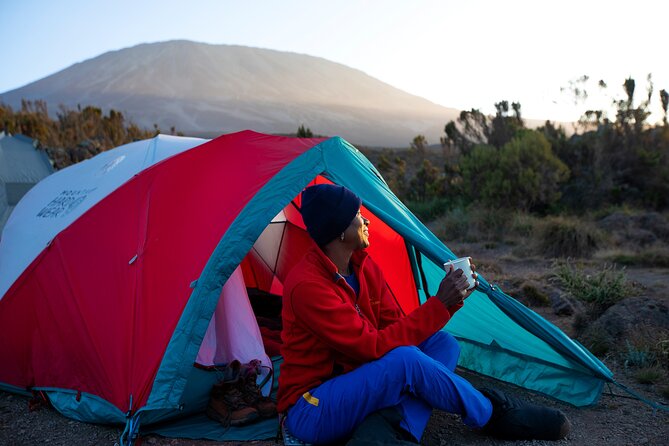
The route climbs from Barranco Camp to Karanga Camp, at 13,106 feet. This takes about four to five hours and includes the Barranco Wall.
The wall sounds intimidating, but the important point is that this is a guided mountain trail, not a technical rock-climbing day as described in the supplied program. You should expect a steep, physical section where careful foot placement and a calm pace matter.
Your day pack needs to remain manageable. Carry only what you need for the walk, such as water, rain protection, warm layers, snacks, sunscreen, and personal medication. Porters carry the rest, but you still need access to your own essentials during the day.
Karanga Camp is another relatively short walking day, yet the height makes recovery important. Use the extra time to eat, drink, rest, and prepare for the move to Barafu. The climb is now entering its most demanding phase.
Day 7: Karanga to Barafu Camp
You hike from Karanga to Barafu Camp, at 15,223 feet, in about four to five hours. Barafu is the final camp before the summit push.
The distance is not huge, but this day often feels serious because you are high, tired, and thinking about the night ahead. You need to organize your summit clothing, headlamp, water, snacks, and day pack before trying to sleep.
Barafu is the launch point for the summit attempt. You leave in the early hours, so the rest period here is short. The practical challenge is not only the climb to camp but also getting enough food, warmth, and rest before the longest day.
Soraka provides warm sleeping mats, a dining tent, and three prepared meals a day. These comforts do not make Barafu easy, but they reduce the number of chores you must handle yourself. At this point, good support has real value.
Day 8: Uhuru Peak and the long descent
Summit day begins in the early morning from Barafu Camp. You climb to Uhuru Peak, at 19,340 feet, then descend to Mweka Camp. The complete day takes about 14 to 16 hours.
This is the hardest part of the program. The climb is slow, cold, and prolonged, followed by a major descent when your legs are already tired. You should prepare mentally for a full day rather than imagining only the summit moment.
The reward is reaching Uhuru Peak, the highest point on Kilimanjaro. The program is designed around a summit attempt, but a responsible guide may turn someone around if continuing would be unsafe. That is not failure. At this altitude, good judgment matters more than a photograph.
The company supplies emergency oxygen and a medical kit. Guides are certified Wilderness First Responders, and health checks take place twice daily with an oximeter and specific questions about how you feel. These measures are reassuring, but they are not a substitute for travel insurance, mountaineering insurance, or honest communication about symptoms.
Day 9: Mweka Gate and the return to Moshi
After sleeping at Mweka Camp, you descend to Mweka Gate. The itinerary then transfers you back to the hotel for another overnight stay.
The downhill walk may sound easy after the summit, but tired knees and feet can make it surprisingly demanding. Your boots, socks, and walking poles, if you use them, matter just as much on the descent as on the way up.
Back in Moshi, you have a chance to rest and recover. Hotel breakfast is included, while lunch and dinner are not. This is also the point when you can settle tips for the mountain staff, which are specifically excluded from the tour price.
Day 10: Airport transfer and the practical finish
The final day is an airport drop-off. Kilimanjaro International Airport pickup and drop-off are included, along with ground transportation during the program.
This arrangement is helpful if you want fewer transport details to manage. It also makes the package easier to budget, since airport transfers, mountain transfers, park charges, and hotel transport are included rather than left for you to arrange locally.
The operating hours provided for the experience run Monday through Sunday from 8:00 AM to 11:30 PM during the stated availability period. Confirm your exact transfer timing when booking, especially if your flight arrives late or departs early.
What the $3,450 price really covers
At $3,450 per person, this is not a budget climb. Still, the fee includes Kilimanjaro National Park charges, rescue and camping fees, airport pickup and drop-off, ground transport, two hotel nights, mountain tents, mats, dining equipment, meals, guides, porters, emergency oxygen, and medical supplies.
The food and staff support are particularly important. Carrying your own gear, buying and preparing food, arranging permits, and organizing mountain transport would add work and risk. Here, porters carry everything except your day pack, and a dedicated chef prepares three meals each day.
You should budget separately for a visa, airfare, hotel lunches and dinners, tips, personal equipment, and insurance. Single tent accommodation is available for an extra charge, while the standard arrangement is two people per tent.
One important ethical point is included in the package description: the mountain crew are paid fair wages according to KINPA. That does not remove your responsibility to tip appropriately, but it is a useful question to ask any Kilimanjaro operator.
The Soraka team and the human side of the climb
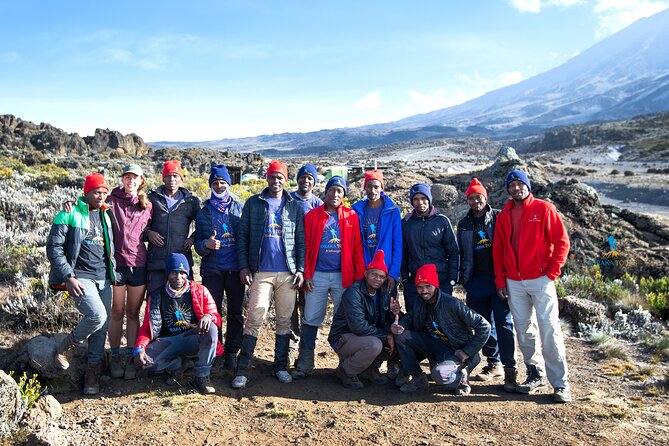
The strongest praise for Soraka centers on care, communication, food, and staff support. Several people described the crew as friendly and attentive, with some saying the group began to feel like a family. That kind of atmosphere matters on a long climb, when a calm guide or encouraging porter can change the mood of a difficult day.
Baraka and Baltazar were specifically praised for their mountain guidance and for teaching people about Kilimanjaro. Sophia was also praised for clear pre-trip help and communication. Guide assignments can vary, so you should not assume that every named person will be on your departure, but these names give you a useful sense of the company’s personal approach.
The feedback is strongly positive, with a listed five-star rating and 100 percent recommendation from 17 reviews. That is encouraging, but you should still judge the trip by its demands. Warm meals and supportive staff cannot replace fitness, proper boots, suitable insurance, and a willingness to turn around if necessary.
Who should book this Lemosho trek?
I would recommend it to a fit hiker who wants a private Kilimanjaro program with substantial logistical support. It suits you if you value a slower route, changing climate zones, organized meals, professional guides, and a company that handles airport and mountain transport.
It is also a good match if food requirements are important. Vegetarian, gluten-free, halal, and kosher meal plans are specifically accommodated, which removes one common concern on a long remote trek.
I would hesitate to recommend it if you dislike camping, struggle with long uphill days, or expect a relaxed sightseeing holiday. The summit day is extremely long, and personal climbing equipment is not included. You also need mountaineering insurance, which is highly recommended.
Free cancellation is available if you cancel at least 24 hours before the experience start time. Changes or cancellations inside that period are not accepted for a refund, so check the local cut-off time before finalizing your plans.
Should you book it?
Book this trek if you want the Lemosho Route’s gradual climb and varied scenery, and you are willing to train for a demanding summit day. The price buys a high level of support, from three mountain meals and porter service to health checks, certified guides, park fees, airport transfers, and private-group arrangements.
Before paying, confirm what personal equipment you must bring, the extra cost for a single tent, the expected tip budget, your dietary needs, and the details of your insurance. If those points are clear, Soraka Tours offers a well-supported way to take on Kilimanjaro without handling every difficult detail yourself.
FAQ
How long does the full Kilimanjaro experience take?
The mountain trek takes eight days, while the full program lasts approximately 10 days. The extra time covers arrival in Moshi, hotel stays, transfers, and airport departure.
Where does the trek begin?
The hiking portion begins at Lemosho Gate inside Kilimanjaro National Park, at an elevation of 7,824 feet.
Is airport pickup included?
Yes. Pickup and drop-off at Kilimanjaro International Airport are included, along with ground transportation.
Where do I stay before and after the mountain trek?
You receive two nights at Kili Wonders Hotel in Moshi or a similar hotel. Breakfast is included.
How many people are in the group?
This is a private activity, so only your group participates.
What meals are provided?
Three freshly prepared meals are provided each day on the mountain. Vegetarian, gluten-free, halal, and kosher meal plans can be accommodated.
Do porters carry all my equipment?
Porters carry your equipment except for your day pack. Personal climbing equipment, including sleeping bags and hiking boots, is not included.
Is camping equipment provided?
Yes. The program includes four-season Mountain Hardware tents shared by two people, warm sleeping mats, and dining tents with tables, chairs, and cutlery. Single accommodation is available for an additional fee.
What safety measures are included?
The guides are certified Wilderness First Responders with more than 10 years of climbing experience each. The trek includes emergency oxygen, a medical kit, and two daily health checks using an oximeter and specific health questions.
Just added around Moshi
- Moshi: Lake Chala Tour: Hiking &/or Kayaking★ 4.5 · 3 reviews
- 3 Days Tanga Exclusive Beach Holiday★ 5.0 · 3 reviews
- Serengeti Wildebeest Migration.★ 5.0 · 3 reviews
- Chemka Hotpsrings E-Bike Day Trip★ 5.0 · 3 reviews
- Explore 1 day Ngorongoro Crater Budget Group Safari from Arusha★ 5.0 · 3 reviews
- Explore the 360° of Kilimanjaro★ 5.0 · 3 reviews
- Affordable Short Tanzania Safari (2 Days Camping Safari)★ 5.0 · 3 reviews
- Rongai Route 7 Days★ 5.0 · 3 reviews
Kilimanjaro Treks, compared.



8-Day Small-group Lemosho Kilimanjaro Summit Trekking
Read our review →


Climbing Kilimanjaro through 7 days Machame Route
Read our review →

Browse the lists this tour appears in