
Reviewed · KILIMANJARO TREKS
8 Day Mount Kilimanjaro Trekking Lemosho Route
Kilimanjaro rewards patience, not bravado. This 8-day Lemosho trek gives you a gradual approach to Uhuru Peak, quiet early trails, changing habitats, and extra time for your body to adjust to altitude. I like the route’s slower rhythm and the chance to cross the Shira Plateau before joining Kilimanjaro’s southern circuit. I also like that pickup is offered and the trek finishes with a drive back to Moshi.
The main consideration is cost and preparation. At $2,250 per person, the package covers important park costs and meals, but not accommodation before or after the trek, personal gear, or crew tips. Also, the available praise for this operator focuses largely on safari trips rather than this specific climb, so I would confirm your trekking crew, equipment arrangements, and exact inclusions before paying.
In This Review
- Key points to know before you book
- Why the Lemosho Route is a smart eight-day choice
- Day 1: 4WD access and the Mti Mkubwa campsite
- Day 2: Crossing the Shira Ridge
- Day 3: A useful acclimatization day on Shira 2
- Day 4: Lava Tower, then down to Barranco
- Day 5: The Barranco Wall and Karanga Valley
- Day 6: Barafu Camp and the final rest before the summit
- Day 7: Stella Point, Uhuru Peak, and the long descent
- Day 8: Forest descent and the return to Moshi
- What the $2,250 price really covers
- Food, private touring, and support
- Who should book this climb?
- Should you book the Lemosho Route?
- FAQ
- How long is the Kilimanjaro Lemosho trek?
- Where does the trek start?
- What route does the trek use?
- Is the summit attempt included?
- Are meals included?
- Is accommodation in Moshi included?
- Is trekking equipment included?
- Can I request vegetarian food?
- What is the cancellation policy?
Key points to know before you book
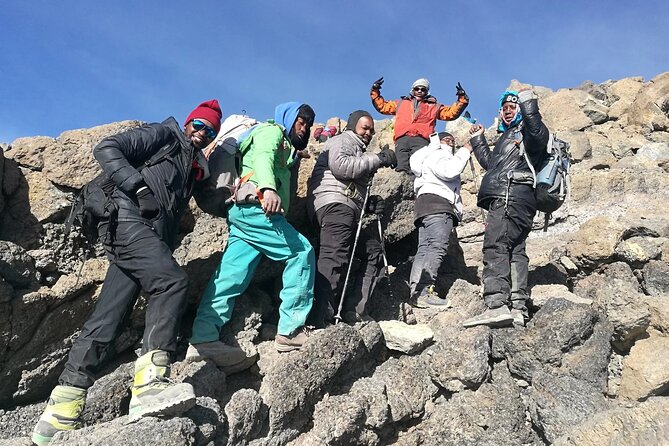
- Lemosho starts in a remote forest zone: The opening drive uses a 4WD vehicle to reach the Lemosho Glades, where buffalo, elephant, and other wildlife can be present.
- Eight days gives you a sensible acclimatization schedule: The route climbs gradually, includes a high Lava Tower day, then sleeps lower at Barranco.
- The Shira Plateau is a major highlight: Days two and three cross open moorland with time for extra acclimatization walks.
- Summit day begins around midnight to 2 a.m.: You climb through scree to Stella Point, then continue to Uhuru Peak.
- The Barranco Wall is the route’s hands-on section: It is steep, but the day is short enough to leave time for a steady climb.
- The price includes meals and fees, not everything: Budget separately for gear, tips, personal expenses, and hotel nights in Moshi.
Why the Lemosho Route is a smart eight-day choice
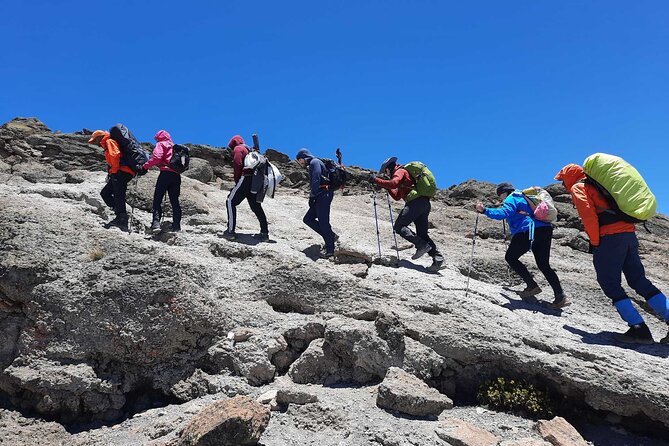
Lemosho is often chosen for its slower altitude gain and attractive approach from the west. The first days feel more remote than routes that begin closer to the mountain’s busy eastern or southern entrances. You start in montane forest, then move through heather, moorland, semi-desert, and alpine desert before reaching the summit zone.
That variety matters. You do not spend the whole trek staring at the same trail under the same type of vegetation. The route changes as quickly as your altitude does, which makes the climb feel like a real journey rather than a long uphill walk.
The extra day also has practical value. Altitude sickness is unpredictable, and nobody can promise a successful summit. Still, a longer schedule gives your body more time to adjust and gives you more room to rest before the hardest night.
This is a private activity, so only your group participates. That can make pacing, meal requests, and rest stops easier to manage, though the available details do not state the maximum group size. Ask how many people will be in your party and how many guides, cooks, and porters will support it.
More Kilimanjaro routes and climbs:
- Kilimanjaro climb by Lemosho Route (7-day)
★ 5.0 · 651 reviews - Kilimanjaro climb, Machame Route (7-day)
★ 5.0 · 262 reviews - Kilimanjaro Climbing Lemosho Route 8 Days.
★ 5.0 · 186 reviews
Day 1: 4WD access and the Mti Mkubwa campsite
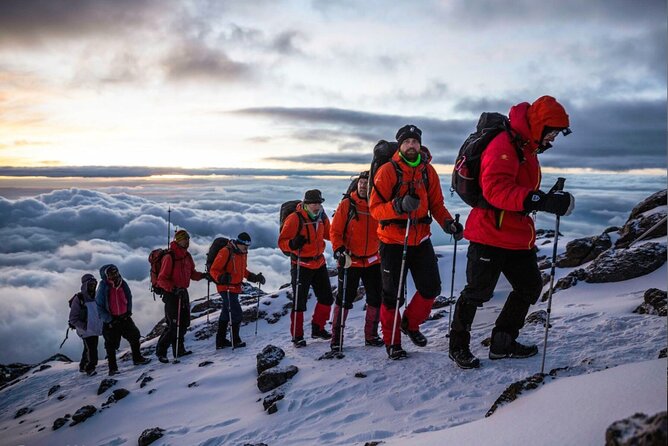
After breakfast and a briefing, you drive from Moshi toward Lemosho Park Gate. The route then uses a forest track that requires a 4WD vehicle before you reach the Lemosho Glades.
That access road is part of what makes this beginning appealing. You are not starting amid a crowded trailhead. You enter through forest, where the route may be accompanied by an armed ranger because buffalo, elephant, and other wildlife live around the Lemosho Glades.
The walk to Mti Mkubwa, also called Big Tree campsite, covers about 6 kilometers. It takes roughly two to five hours, with an altitude gain from 1,830 meters to 2,650 meters.
This is a gentle first day by Kilimanjaro standards. The montane forest offers shade and a softer introduction than the exposed upper mountain. Your included meals are lunch and dinner, so you should have breakfast before departure and clarify how food is packed during the transfer and first walk.
Day 2: Crossing the Shira Ridge
The trail steepens after breakfast as you leave the forest and enter the giant heather moorland zone. You cross several streams, climb over the Shira Ridge, and then descend gently to Shira 1 Camp beside a stream.
The day covers about 8 kilometers and takes four to five hours. You climb from 2,650 meters to 3,500 meters, a noticeable gain that makes a slow pace important.
I like this part because the mountain begins to open up. The trees give way to taller heather and broader views, and the Shira Plateau starts to feel spacious rather than enclosed. The tradeoff is that the open ground provides less shelter from poor weather, so rain gear should remain easy to reach.
Breakfast, lunch, and dinner are included. The schedule is not long on paper, but altitude can make a five-hour walk feel like a full day. Use the afternoon to rest rather than treating the early finish as an invitation to overdo it.
Day 3: A useful acclimatization day on Shira 2
Day three crosses the Shira Plateau to Shira 2 Camp. The walk is about 8 kilometers, takes four to five hours, and rises from 3,500 meters to 3,850 meters.
This is one of the most useful days in the program. The trail crosses moorland meadows by a stream, and the plateau allows different short hikes for acclimatization. The steady, moderate climb gives you time to notice how your body reacts before the route becomes more demanding.
You may be tempted to think of this as an easy sightseeing day. It is better treated as a controlled training day. Walk slowly, drink as directed by your crew, and tell your guide promptly if you feel unwell. Extra time on the plateau is valuable because the summit push is still several days away.
The exposed setting can also bring cold, wind, or wet weather. Carry a warm layer even if the morning in Moshi felt hot. Kilimanjaro changes clothes quickly.
A few more trips of this kind worth comparing:
- Private Kilimanjaro Hike 7 Day Lemosho Route
★ 5.0 · 60 reviews - Best Kilimanjaro hiking day trip tour with Kilinge Adventures
★ 4.5 · 54 reviews - #1. Best Kilimanjaro Day hike Tour-Machame Route-ISMANI
★ 4.2 · 47 reviews - Best Kilimanjaro Adventure 7 days Machame route Trekking
★ 5.0 · 42 reviews
Day 4: Lava Tower, then down to Barranco
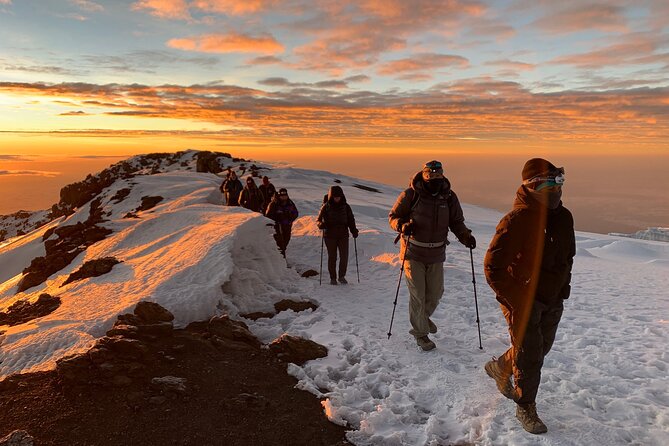
Day four is the route’s classic climb high, sleep lower day. From Shira 2, you head east along a ridge, pass the junction toward Kibo, and continue southeast toward Lava Tower, also called the Shark’s Tooth.
Lava Tower reaches about 4,650 meters. After passing it, the route reaches another junction toward Arrow Glacier, then descends to Barranco Camp. The day covers roughly 8 kilometers and takes five to six hours, moving from 3,850 meters to a camp near 4,000 meters.
The altitude profile is more important than the mileage. You spend time at a high point, then finish near your starting elevation. That exposure helps prepare your body for summit night without forcing you to sleep at the highest point reached during the day.
This section passes through semi-desert, with less vegetation and more volcanic rock. It can feel stark and demanding, but it is also where the scale of Kilimanjaro becomes clear. You should expect a slower day and resist the urge to race ahead simply because the trail is not especially long.
Day 5: The Barranco Wall and Karanga Valley
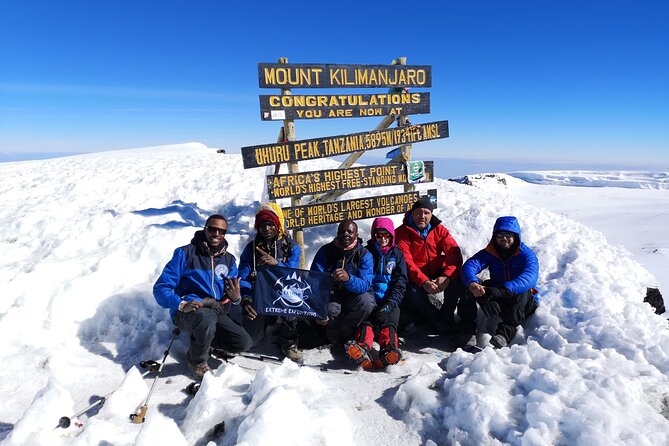
After breakfast, you leave Barranco and climb the Barranco Wall. The trail then continues toward Karanga Valley and the junction connecting with the Mweka Trail.
The distance is only about 5 kilometers, and the climb takes three to five hours. You rise from 4,000 meters to around 4,050 meters, so this is not a major altitude-gain day.
The Barranco Wall is the most physical section so far. You use your hands in places, follow a steep ridge, and concentrate on each step. It is not a technical rock climb according to the provided program, but you should be ready for a narrow, uneven route and a patient pace.
I like this day’s short distance. The challenge is concentrated in the wall, then you have more time to rest and prepare for Barafu. Keep your daypack manageable, since an awkward load becomes much more noticeable on steep ground.
Day 6: Barafu Camp and the final rest before the summit
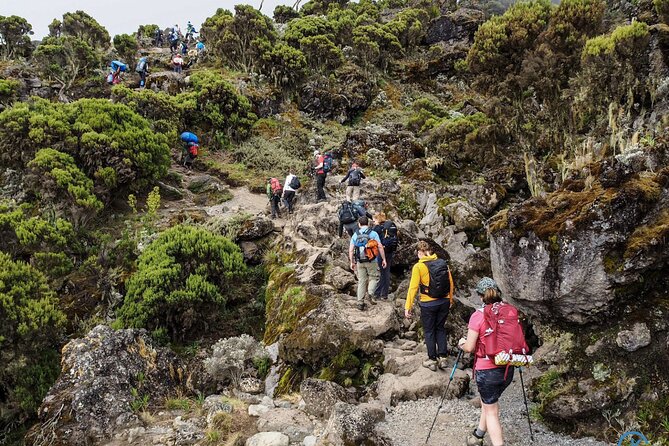
The route continues upward to Barafu Camp, climbing from 4,050 meters to 4,700 meters. The distance is about 4 kilometers, with three to four hours of walking through alpine desert.
Barafu marks the completion of the South Circuit, which provides views of the summit from different angles. It is also the staging point for the hardest part of the trek. After arriving, you eat, rest, and prepare clothing and equipment for the midnight-to-2 a.m. start.
This day can feel deceptively short. The altitude makes even a four-kilometer climb tiring, and you may have trouble sleeping at 4,700 meters. Keep your evening calm and organized. Put your headlamp, warm clothing, water, snacks if you carry them, and trekking poles where you can reach them.
The included meals continue through the day. Admission is listed as free for this stop, while the other route days include admission tickets. Since the package also says all fees and taxes are included, ask the operator to explain this wording if you want a precise cost breakdown.
Day 7: Stella Point, Uhuru Peak, and the long descent
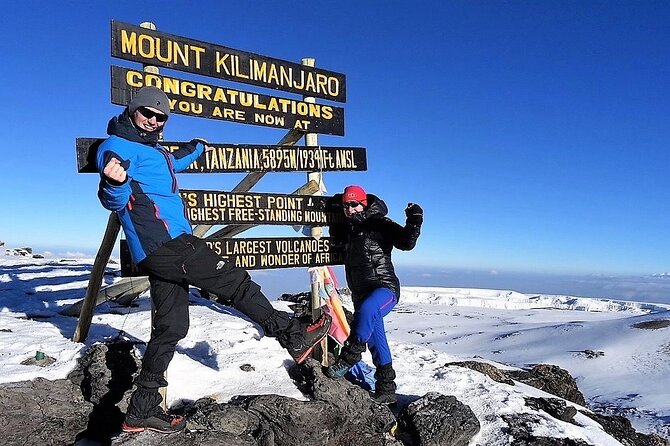
Summit day starts between midnight and 2 a.m. You climb northwest between the Rebmann and Ratzel glaciers, moving through heavy scree toward Stella Point on the crater rim.
This is the most physically and mentally difficult part of the trek. Scree shifts underfoot, the air is thin, and the darkness makes the climb feel longer. A slow, steady rhythm matters more than speed.
At Stella Point, you pause for a short rest. The sunrise from the crater rim is one of the great rewards of the route, although faster climbers may reach Uhuru Peak in time to see it from the summit.
From Stella Point, you continue for about an hour toward Uhuru Peak. Snow may appear along this section. At 5,895 meters, Uhuru Peak is the highest point on Mount Kilimanjaro and the highest point in Africa.
The descent begins immediately after the summit. The plan continues down toward the Mweka route, with the day listed at about six hours, though the actual experience depends heavily on pace, weather, altitude, and how long you spend at the summit. I would ask for the expected overnight location and full day-by-day timing, since the supplied schedule cuts off part of the descent details.
Do not treat reaching Uhuru Peak as the only measure of a successful climb. Stella Point, or even turning back earlier for health reasons, can still represent a major achievement. Your guide’s judgment should take priority over a fixed summit goal.
Day 8: Forest descent and the return to Moshi
After breakfast, you descend from about 3,090 meters to Mweka Park Gate at roughly 1,680 meters. The walk covers approximately 10 kilometers and takes three to five hours.
The habitat changes back to forest, but the lower trail can be wet and muddy. Gaiters and trekking poles are specifically useful here. You may be comfortable in shorts and a T-shirt at the lower elevation, but keep rain gear and warmer clothing handy until you know what the weather is doing.
At Mweka Gate, you receive summit certificates. The Monkey Adventures vehicle then takes you back to your hotel in Moshi, a drive of around 60 minutes.
There is a point worth confirming here. The experience provider is identified as Afrishare Trekking and Safaris, while the return vehicle is described as belonging to Monkey Adventures. That may simply reflect a transport partner, but I would ask who is responsible for your guide team, vehicle, insurance arrangements, and post-trek transfer.
What the $2,250 price really covers
The price is not a bare trail fee. It includes all fees and taxes, plus breakfast, lunch, and dinner during the trek. The itinerary provides seven breakfasts, eight lunches, and seven dinners in its inclusion summary, while the daily schedule appears to show lunch on the first seven days. Ask the operator to confirm the meal count so you know what is supplied on summit day and during transfers.
Accommodation before and after the trek is not included. You also pay separately for personal trekking gear, personal expenses, alcohol, and tips for the crew.
The value depends on what you already own. If you have suitable boots, warm layers, rain gear, a sleeping system, and trekking poles, the package may look reasonable. If you need to rent or buy most of your equipment, the final cost will be higher than the advertised amount.
Crew tips also deserve advance planning. They are not included, and the information does not state a suggested amount or payment method. Ask before departure rather than trying to solve it at the gate.
The package’s strongest practical value is the eight-day schedule. A shorter climb may cost less, but the added acclimatization time can make this route a better choice for someone who values a more measured ascent and a higher stated success rate.
Food, private touring, and support
Breakfast, lunch, and dinner are included on the scheduled trekking days. Vegetarian meals are available if requested at booking, and you should provide any other dietary requirements at that time.
The group is private, which is useful if you want your own pace and do not want to be matched with strangers. At the same time, a private trip does not automatically mean a small support crew or a luxury camp. The information does not describe tent size, sleeping mats, toilet arrangements, shower access, or dining setup, so ask direct questions.
The operator’s available safari praise highlights friendly service and guides named Leokadia and Karim. One safari customer particularly valued Karim’s punctual, considerate approach, while another praised Leokadia’s effort in finding the Big Five. Those comments suggest positive service potential, but they do not confirm that either person will guide this Kilimanjaro trek. Get your actual guide’s name and experience before departure.
Who should book this climb?
I would point this trek toward fit adults who can handle consecutive days of walking, cold conditions, steep ground, and a very early summit start. The program says most people can participate, but that should not be read as a promise that altitude will be easy for everyone.
The route suits you if acclimatization is a priority and you prefer a longer approach over a rushed ascent. It also works well for a private group that wants a shared challenge without joining a larger scheduled party.
It may not suit you if you want hotel comfort every night, dislike basic mountain camping, or need a fixed guarantee of reaching the summit. The supplied details do not describe the camping facilities, and personal gear is your responsibility.
Confirmation is provided at booking. Pickup is offered, the activity starts in Moshi, and it ends back at the meeting point after the drive from Mweka Gate. The trek operates in all weather, so you need clothing for wet forest, cold high camps, and possible snow near the top.
Should you book the Lemosho Route?
I would book this trek if you want a gradual eight-day route and are prepared to handle the extra costs beyond the headline price. The Shira Plateau, Lava Tower acclimatization day, Barranco Wall, and sunrise approach to Uhuru Peak give the journey plenty of variety.
Before booking, confirm four things: the exact accommodation and equipment arrangements, the identity and experience of your mountain crew, the full summit-day schedule, and the relationship between Afrishare Trekking and Safaris and Monkey Adventures. If those answers are clear, the route offers a strong balance of scenery, acclimatization time, and practical support.
Free cancellation is available up to 24 hours before the local start time for a full refund. Changes or cancellations made within 24 hours are not accepted or refunded.
FAQ
How long is the Kilimanjaro Lemosho trek?
The trek lasts approximately eight days, beginning in Moshi and ending back at the meeting point after the descent to Mweka Gate.
Where does the trek start?
The meeting point is in Moshi, Tanzania. Pickup is offered.
What route does the trek use?
The route begins at Lemosho Park Gate, continues through Mti Mkubwa, Shira 1, Shira 2, Lava Tower, Barranco, Karanga, and Barafu, then reaches Uhuru Peak before descending through the Mweka route.
Is the summit attempt included?
Yes. Day seven includes the early-morning climb to Stella Point and the continued ascent to Uhuru Peak, the highest point on Mount Kilimanjaro.
Are meals included?
Yes. Breakfast, lunch, and dinner are included during the trek. The inclusion summary lists seven breakfasts, eight lunches, and seven dinners. Confirm the lunch count with the operator because the daily schedule appears to show lunch on the first seven days.
Is accommodation in Moshi included?
No. Accommodation before and after the trek is not included.
Is trekking equipment included?
No. Personal trekking gear is not included. Alcohol and personal expenses are also excluded.
Can I request vegetarian food?
Yes. Vegetarian meals are available, and you should state your dietary requirements when booking.
What is the cancellation policy?
You can cancel at least 24 hours before the local start time for a full refund. Cancellations or changes made less than 24 hours before the start time are not accepted, and the amount paid is not refunded.
Just added around Moshi
- Moshi: Lake Chala Tour: Hiking &/or Kayaking★ 4.5 · 3 reviews
- 3 Days Tanga Exclusive Beach Holiday★ 5.0 · 3 reviews
- Serengeti Wildebeest Migration.★ 5.0 · 3 reviews
- Chemka Hotpsrings E-Bike Day Trip★ 5.0 · 3 reviews
- Explore 1 day Ngorongoro Crater Budget Group Safari from Arusha★ 5.0 · 3 reviews
- Explore the 360° of Kilimanjaro★ 5.0 · 3 reviews
- Affordable Short Tanzania Safari (2 Days Camping Safari)★ 5.0 · 3 reviews
- Rongai Route 7 Days★ 5.0 · 3 reviews
Kilimanjaro Treks, compared.



8-Day Small-group Lemosho Kilimanjaro Summit Trekking
Read our review →


Climbing Kilimanjaro through 7 days Machame Route
Read our review →

Browse the lists this tour appears in