
Reviewed · KILIMANJARO TREKS
8 Days 7 Nights Kilimanjaro Lemosho Route
Kilimanjaro rewards patience, not speed. This 8-day Lemosho climb gives you a scenic approach, gradual altitude gain, and the southern circuit before summit night. I like the route’s low-crowd opening and its strong acclimatization pattern. The main drawback is the price, $3,480 per person, and the demanding midnight summit push.
I also like the private format, pickup option, and the steady support associated with Topi Adventure’s owner, Emanuel, and guide Elly. The schedule is active every day, and summit day can last 11 to 14 hours, so you need moderate fitness, patience, and a real tolerance for cold, thin air, and tired legs.
In This Review
- Key points to know before booking
- Why the Lemosho Route earns its reputation
- What the $3,480 price means
- Day one: from Moshi to the rain forest
- Day two: reaching Shira Ridge
- Day three: a schedule detail to clarify
- Day four: Lava Tower and the descent to Barranco
- Day five: scrambling up the Barranco Wall
- Day six: Barafu Camp and the final preparation
- Day seven: Stella Point, Uhuru Peak, and the long descent
- Day eight: Mweka Gate and the return to Moshi
- The guide team and private format
- Who should book this climb?
- Should you book Topi Adventure’s Lemosho climb?
- FAQ
- Where does the Kilimanjaro climb begin?
- How long is the experience?
- What route does the climb use?
- How much does the climb cost?
- Is this a private tour?
- What level of fitness is required?
- How high is Uhuru Peak?
- What time does summit day begin?
- Where does the climb finish?
- Can I cancel for a full refund?
Key points to know before booking
- Lemosho begins on Kilimanjaro’s quieter western side, with a long drive from Moshi to Londorossi Gate before the walk starts.
- The route crosses the Shira Plateau from west to east, offering broad views of Kibo and a less crowded first half.
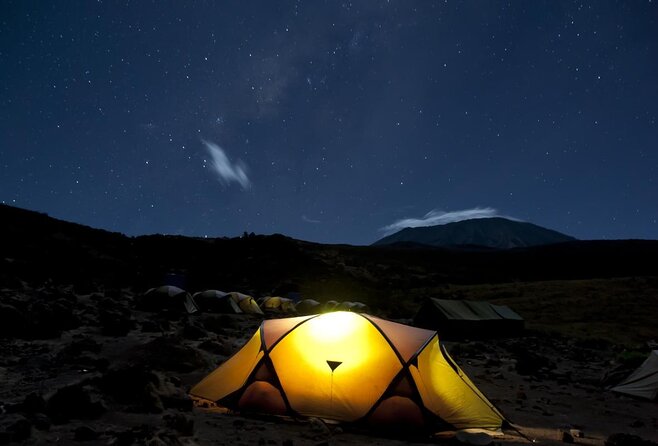
- Day four is the main acclimatization day, climbing toward Lava Tower before dropping to Barranco Camp.
- The Barranco Wall is a hands-on scramble, but the route then gives you a shorter day to Karanga for recovery.
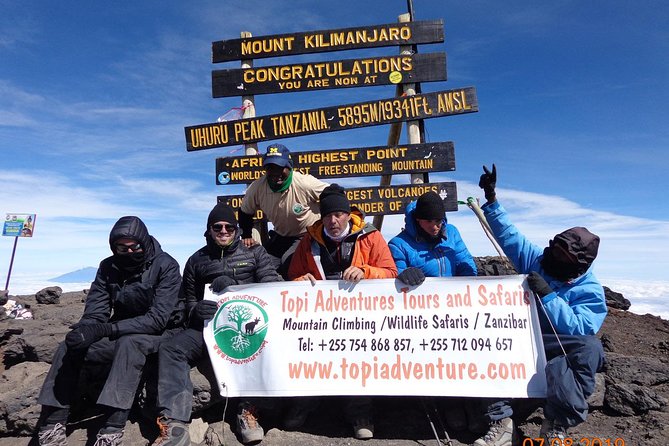
- Summit night starts around midnight, reaches Uhuru Peak at 19,341 feet, and finishes with a long descent.
- Topi Adventure receives especially strong praise for its people, with Emanuel, Elly, guides, and porters singled out for planning, care, and encouragement.
Why the Lemosho Route earns its reputation
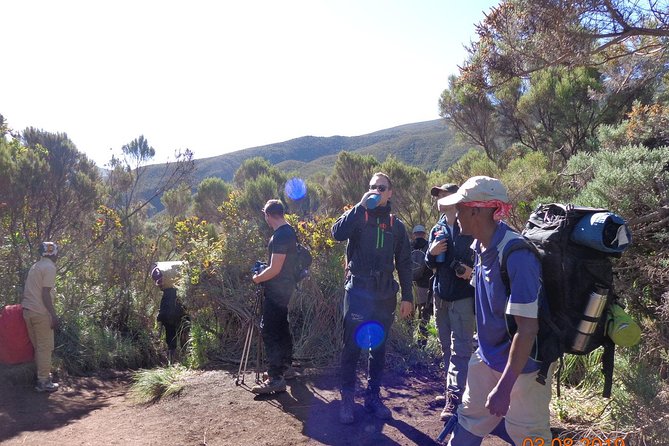
Lemosho is a good choice if scenery matters as much as reaching the summit. Instead of starting on the busy southern approach, you begin in the west and spend the first stages among rain forest, heath, open grass, and volcanic rock.
That route design gives you a changing mountain experience. The forest feels enclosed and damp at first. Higher up, the view opens across the Shira Plateau, with Kibo becoming a constant presence in the distance. Later, the route joins the busier Machame corridor near Lava Tower, but you get several quieter days before that happens.
I especially like the route’s balance of beauty and altitude preparation. You do not simply walk uphill every day. Day four climbs high to Lava Tower and then drops to Barranco, an important pattern for helping your body adjust. Days five and six are relatively short, allowing you to conserve strength before the summit.
The route is still hard. Eight days on Kilimanjaro means repeated walking at altitude, basic mountain camps, early starts, and one very long summit day. A high summit success rate is presented as a strength of the route, but no route can remove the effects of altitude. Your pace, health, preparation, and response to the mountain still matter.
More Kilimanjaro routes and climbs:
- Kilimanjaro climb by Lemosho Route (7-day)
★ 5.0 · 651 reviews - Kilimanjaro climb, Machame Route (7-day)
★ 5.0 · 262 reviews - Kilimanjaro Climbing Lemosho Route 8 Days.
★ 5.0 · 186 reviews
What the $3,480 price means
At $3,480 per person, this is a substantial trip rather than a casual day excursion. The value depends largely on the quality of the guide team, the organization of the mountain days, and how much help you need with planning and equipment.
The strongest evidence for value comes from the personal service connected with Topi Adventure. Emanuel is praised for helping with route planning and preparation before the climb. Elly is credited with helping when one group’s luggage failed to arrive at the airport, including lending equipment and assisting with the luggage problem. Those details matter because a Kilimanjaro climb begins before the trailhead.
The private format also has value. Only your group participates, so the experience is not built around a large mixed party. The supplied details do not specify the exact group size, equipment package, meals, lodging, transfers beyond the stated pickup, or porter arrangements. Ask for those details before paying, since they affect the real value of the price.
You should also confirm what happens on arrival in Moshi, where the pickup occurs, and what you need to bring yourself. The meeting point is on Old Moshi Road, with a stated start time of 7:30 am. The activity ends back at the meeting point after the return to Moshi.
Day one: from Moshi to the rain forest
The first day includes a long road transfer to Londorossi Gate, roughly four hours from Moshi. You complete entry formalities there, then continue by vehicle to the Lemosho trailhead.
The walking begins after lunch, with a 6-kilometer hike from about 7,742 feet to 9,498 feet. You spend three to four hours in the rain forest, surrounded by dense growth rather than open mountain views.
This is a gentle introduction in terms of distance, but the travel time makes the day longer than the walking figures suggest. You should expect a full day from pickup to camp. Wear footwear suited to damp ground, and keep rain protection easy to reach.
The forest is valuable because it lets you begin gaining height without an abrupt physical shock. It also gives the route a sense of progression. You start below the open volcanic zones and gradually leave the thick greenery behind.
Day two: reaching Shira Ridge
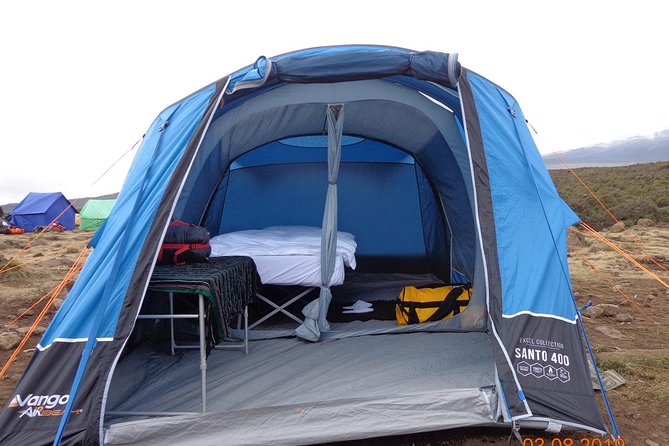
On day two, the trail climbs from 9,498 feet to about 11,500 feet over 8 kilometers. The walk takes five to six hours and moves from rain forest into heath, tall grass, heather, volcanic rock, and lichen-covered vegetation.
You cross several streams and pass through rolling ground before reaching Shira Ridge. From there, the route drops gently to Shira 1 Camp. The first clear views of Kibo across the plateau are a major reward.
This is one of the route’s best days for scenery. You have left the enclosed forest, but you are not yet in the stark alpine desert near the summit. The open setting gives you room to see how far you have come.
Pace matters here. The day is not technically extreme, but the rise to 11,500 feet is significant. Walk slowly, drink as directed by your guide, and do not treat an easy trail as permission to rush.
A few more trips of this kind worth comparing:
- Safari Serengeti And Ngorongoro
★ 5.0 · 288 reviews - Climbing Kilimanjaro – Machame Route
★ 5.0 · 170 reviews - Climbing Kilimanjaro through 7 days Machame Route
★ 5.0 · 151 reviews - Kilimanjaro climb, Lemosho Route (8-day)
★ 5.0 · 148 reviews
Day three: a schedule detail to clarify
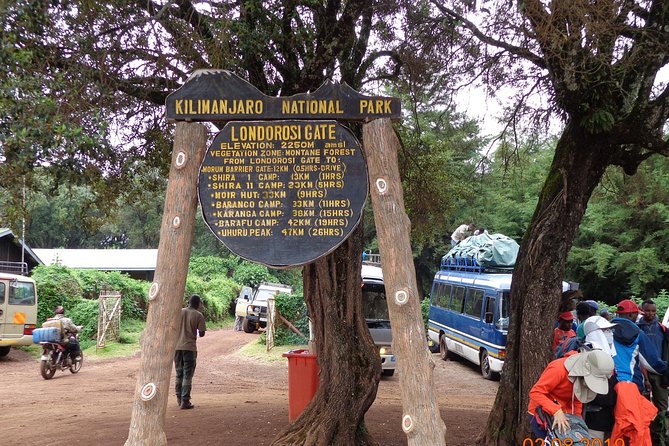
The supplied day three plan repeats the day two figures: 9,498 to 11,500 feet, 8 kilometers, five to six hours, heath habitat, Shira Ridge, and Shira 1 Camp. That is almost certainly a duplicated description, because an eight-day Lemosho route normally needs a separate movement across the Shira Plateau before the Lava Tower section.
You should ask Topi Adventure to confirm the exact day three camp, elevation, distance, and walking time before booking. This is not a reason to reject the climb, but it is an important planning point. Your acclimatization schedule, packing plan, and expectations depend on knowing where you sleep each night.
The key idea remains clear: this portion of Lemosho crosses the Shira Plateau from west to east on relatively gentle ground. The views toward Kibo are one of the route’s central attractions, and the gradual crossing helps you spend more time at altitude before the harder southern circuit.
Day four: Lava Tower and the descent to Barranco
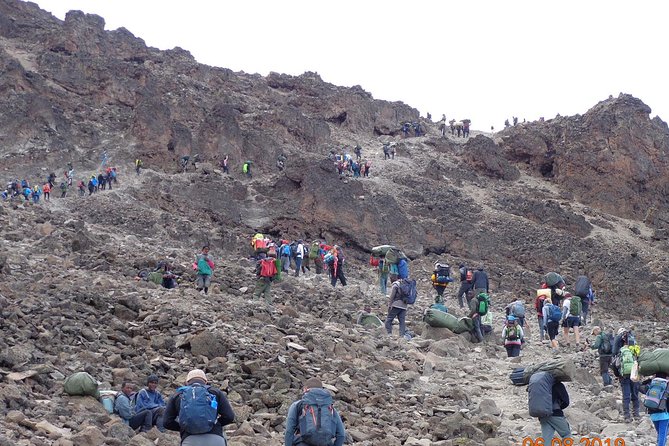
Day four is the most carefully designed acclimatization day. You climb from roughly 13,800 feet to 15,190 feet, with the route reaching the Lava Tower area before dropping to Barranco Camp at about 13,044 feet.
The total distance is 10 kilometers, and walking takes six to eight hours. The habitat changes to alpine desert, with less vegetation and more bare volcanic ground. The route passes a junction toward Kibo, then turns southeast toward Lava Tower, also described as the Shark’s Tooth.
A second junction leads toward Arrow Glacier at around 16,000 feet, although the day continues down to Barranco rather than staying at that height. Ending near your starting elevation may seem strange, but the high point gives your body useful exposure before you sleep lower.
This day can feel tough because of the height, not just the distance. Follow the guide’s pace and keep your warm layers accessible. The reward is a broad mountain setting and a better chance to understand how your body responds before summit night.
Day five: scrambling up the Barranco Wall
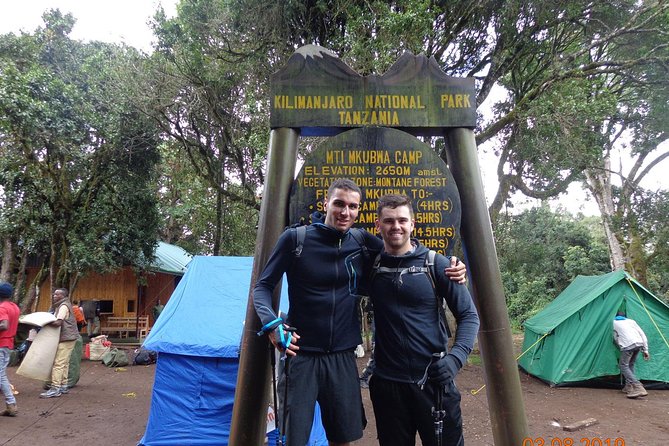
The Barranco Wall is the route’s most memorable physical feature before the summit. You climb and scramble over about 1,200 feet of volcanic rock, then stop near the top for lunch and views toward Barafu and Mount Meru.
The day covers only 5 kilometers, rising from 13,044 to about 13,106 feet, with four to five hours of walking. It is short on paper, but the wall requires attention, balance, and confidence on uneven ground.
You do not need a long-distance pace here. The challenge is the shape of the route. Your hands may help in places, and you should listen closely to your guide’s instructions. The top offers a fine sense of achievement without using up all your energy.
After lunch, the trail crosses ridges and valleys to Karanga Camp. This shorter day is well placed. You have worked hard on the wall, but you still have time to rest and prepare for the climb to Barafu.
Day six: Barafu Camp and the final preparation
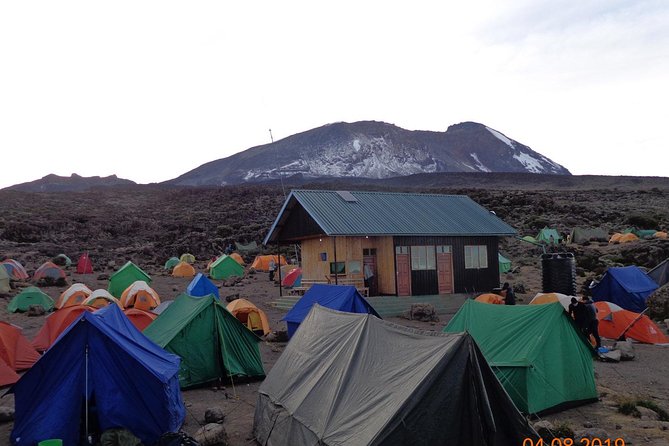
Day six covers just 4 kilometers, climbing from 13,106 to 15,331 feet. The walk takes four to five hours through alpine desert and ends at Barafu Hut.
The trail connects with the Mweka route, marking the completion of the southern circuit. From Barafu, you can see the summit from another angle, along with Mawenzi and Kibo.
This is not a sightseeing day in the usual sense. It is a staging day. You reach camp, have an early dinner, rest, and prepare your clothing and equipment for a midnight start.
Use the short distance wisely. Eat, drink, and sleep whenever you can. Put your summit layers where you can reach them quickly. The information provided does not specify the sleeping setup or exact camp facilities, so ask the operator what to expect and what personal gear is required.
Day seven: Stella Point, Uhuru Peak, and the long descent
Summit day is the test. You start around midnight from 15,331 feet and climb toward Stella Point at 18,600 feet through heavy scree. The summit section is 17 kilometers in total, with 11 to 14 hours of walking.
The route reaches Uhuru Peak at 19,341 feet, the highest point on Mount Kilimanjaro. The final approach from Stella Point takes about another hour, according to the schedule. Sunrise from the crater rim is presented as one of the great rewards of the climb.
The summit effort is mental as much as physical. You will be walking in darkness, wearing many layers, on loose ground, and breathing thin air. The most useful attitude is steady rather than heroic. Move at the guide’s pace, take short rests, and focus on the next small section.
After the summit, you descend to about 10,065 feet. That drop is a relief for many people, but it comes after a very long day. Do not assume the climb ends at Uhuru Peak. The descent is part of the work, and tired legs can make loose ground awkward.
The schedule cuts off part of the final sentence describing the summit section, so ask the operator for the exact summit-day camp arrangement and descent plan. The stated route clearly continues down after Uhuru Peak, but the precise overnight details should be confirmed.
Day eight: Mweka Gate and the return to Moshi
The final day descends from about 10,065 feet to 5,380 feet. You walk 10 kilometers through rain forest for three to four hours, then continue to Mweka Park Gate to receive summit certificates.
Lower down, the trail can be wet and muddy. This is where your footwear and patience matter again. The mountain is not finished simply because you have reached the forest.
From the gate, you walk another hour to Mweka Village. A vehicle meets you there and takes you back to your hotel in Moshi. The return drive gives you a clear finish to a demanding week, though you may be tired enough to treat the vehicle seat as a luxury.
The guide team and private format
The human side of this climb receives unusually strong praise. Emanuel is described as polite, supportive, and closely involved in preparation. The guide and porter team is described as experienced, friendly, and enjoyable to climb with.
That is important on a mountain where simple decisions matter. A good guide helps set a sensible pace, keeps the group moving safely, and offers calm support when the summit night becomes difficult. Elly’s help with delayed luggage also shows the value of having a local operator who can respond to problems before the trek begins.
The private format suits people who want their own schedule and group dynamic. It may also work well for friends who want to share a serious physical challenge without being placed in a large party. Still, private does not mean easy. Your group will need to follow the guide’s mountain timing and safety advice.
Who should book this climb?
I would recommend this route to someone who wants Kilimanjaro’s scenery and prefers a slower eight-day plan over a shorter, harder itinerary. It suits people who value a quieter opening, varied habitats, and a route that spends time on the Shira Plateau before joining the southern circuit.
It is also a good match for anyone who wants direct support from a local operator. Emanuel’s preparation help and the team’s personal approach are meaningful advantages, especially if this is your first high-altitude trek.
I would hesitate if you want a relaxed holiday, dislike long transfers, or are not prepared for an 11 to 14-hour summit day. The published information asks for moderate fitness, but you should treat that as a minimum. You will need stamina, careful preparation, and flexibility if the mountain feels harder than expected.
The $3,480 price can be reasonable for a private eight-day climb with strong guide support, but only after you confirm exactly what is included. Ask about accommodation, meals, transfers, park charges, equipment, porter support, and the corrected day three schedule.
Should you book Topi Adventure’s Lemosho climb?
I would consider booking it if your priorities are scenery, a longer acclimatization pattern, and a small private group supported by a praised local team. The Lemosho route gives you forest, heath, the Shira Plateau, Lava Tower, Barranco Wall, and the stark upper mountain in one carefully paced journey.
Before committing, get the day three plan and all inclusions in writing. If those details are clear and you are ready for the physical demands, this is a strong choice for a serious Kilimanjaro attempt.
FAQ
Where does the Kilimanjaro climb begin?
The activity begins from Old Moshi Road in Tanzania, with a stated start time of 7:30 am. Pickup is offered.
How long is the experience?
The climb lasts approximately eight days and seven nights.
What route does the climb use?
It uses the Lemosho Route, approaching Mount Kilimanjaro from the west before crossing the Shira Plateau and joining the southern circuit.
How much does the climb cost?
The listed price is $3,480 per person.
Is this a private tour?
Yes. Only your group participates in the activity.
What level of fitness is required?
A moderate level of physical fitness is required. The itinerary includes several hours of walking each day and an 11 to 14-hour summit day.
How high is Uhuru Peak?
Uhuru Peak reaches 19,341 feet.
What time does summit day begin?
The summit climb begins around midnight on day seven.
Where does the climb finish?
The activity ends back at the meeting point after transport from Mweka Village to the hotel area in Moshi.
Can I cancel for a full refund?
You can cancel at least 24 hours before the experience start time for a full refund. Cancellations within 24 hours are not refunded, and changes within that period are not accepted.
Just added around Moshi
- Moshi: Lake Chala Tour: Hiking &/or Kayaking★ 4.5 · 3 reviews
- 3 Days Tanga Exclusive Beach Holiday★ 5.0 · 3 reviews
- Serengeti Wildebeest Migration.★ 5.0 · 3 reviews
- Chemka Hotpsrings E-Bike Day Trip★ 5.0 · 3 reviews
- Explore 1 day Ngorongoro Crater Budget Group Safari from Arusha★ 5.0 · 3 reviews
- Explore the 360° of Kilimanjaro★ 5.0 · 3 reviews
- Affordable Short Tanzania Safari (2 Days Camping Safari)★ 5.0 · 3 reviews
- Rongai Route 7 Days★ 5.0 · 3 reviews
Kilimanjaro Treks, compared.



8-Day Small-group Lemosho Kilimanjaro Summit Trekking
Read our review →


Climbing Kilimanjaro through 7 days Machame Route
Read our review →

Browse the lists this tour appears in