
Reviewed · KILIMANJARO TREKS
8 Days Climbing Mt.Kilimanjaro (Lemosho Route)
Kilimanjaro rewards patience more than speed. This 8-day Lemosho Route climb gives you time to move through forest, moorland, alpine desert, and high volcanic terrain while a guide, cook, porters, and waiter handle the camp work. I like the gradual acclimatization plan, especially the Shira Plateau day and the climb high to Lava Tower before sleeping lower at Barranco. I also like the small private-group format, which lets your party set a sensible pace instead of marching behind a large crowd. The main concern is that some feedback raises questions about communication, promised services, and payment arrangements, so you should confirm every detail in writing before sending money.
At $2,300 per person, the price includes park and rescue fees, tents, mattresses, meals, boiled water, a dining tent, basic camp furniture, first aid, pulse oximeters, and the full mountain crew. That can be a fair price for an eight-day climb, but gear, tips, visas, emergency oxygen, and two nights before and after the trek are extra. The operator also offers pickup and help finding rental equipment at local prices, a useful service if you arrive without a full kit.
In This Review
- Key details before you book
- Why the Lemosho Route earns eight days
- Day 1: Lemosho Gate to Mti Mkubwa Camp
- Day 2: Mti Mkubwa to Shira 1
- Day 3: Shira 1 to Shira 2
- Day 4: Shira 2 to Lava Tower and Barranco
- Day 5: The Barranco Wall to Karanga
- Day 6: Karanga to Barafu Camp
- Day 7: Barafu to the summit, then Mweka Camp
- Day 8: Mweka Camp to the gate and Moshi
- What the $2,300 price really covers
- Crew care, food, and safety
- Who should choose this climb?
- Should you book the Lemosho climb?
- FAQ
- How long is the Kilimanjaro climb?
- Where does the climb start?
- Is pickup included?
- Are meals included?
- Are tents and sleeping equipment provided?
- Is this a private climb?
- What happens if bad weather cancels the climb?
Key details before you book
- The route uses eight days: You start in montane forest, cross the Shira Plateau, pass Lava Tower, climb Barranco Wall, and reach the summit from Barafu Camp.
- Day 4 is your key acclimatization day: You climb toward 4,650 meters at Lava Tower, then descend to Barranco Camp at about 4,000 meters.
- The summit day begins around midnight to 2 a.m.: Expect the hardest effort on steep scree before sunrise at Stella Point, followed by the final ascent to Uhuru Peak.
- A full mountain team is included: Guides, porters, cooks, and a waiter support the climb, with meals and boiled water provided.
- This is a private activity: Only your group participates, which gives you more control over rest stops and walking speed.
- The final descent is muddy: Gaiters and trekking poles are useful on the way from Mweka Camp to the gate.
Why the Lemosho Route earns eight days
Lemosho is a good choice if you want scenery and a slower climb rather than the shortest possible route. The itinerary begins at roughly 1,830 meters and reaches the summit zone gradually, with several days designed to help your body adjust to thinner air.
You move through several distinct habitats. The first day passes through montane forest, then the trees give way to giant heather and open moorland. By the Shira Plateau, the views widen and the walking feels more exposed. Later, the route becomes dry and spare, with alpine desert around Karanga and Barafu.
That change is part of the pleasure. You are not simply walking uphill for a week. You are watching the mountain alter around you, one ecological zone at a time. The Lemosho route also approaches the summit from the west before joining the southern circuit, giving you broad views of Kibo from different angles.
The eight-day length matters. Kilimanjaro is not a technical climb in the usual mountaineering sense, but altitude makes it demanding. The extra time does not guarantee a summit, yet it gives you more room to walk slowly, rest, and respond to how you feel.
More Kilimanjaro routes and climbs:
- Kilimanjaro climb by Lemosho Route (7-day)
★ 5.0 · 651 reviews - Kilimanjaro climb, Machame Route (7-day)
★ 5.0 · 262 reviews - Kilimanjaro Climbing Lemosho Route 8 Days.
★ 5.0 · 186 reviews
Day 1: Lemosho Gate to Mti Mkubwa Camp
After breakfast and a briefing, you drive to Lemosho Park Gate. The route to the trailhead uses a forest track that requires a four-wheel-drive vehicle, continuing to the Lemosho Glades before you start walking.
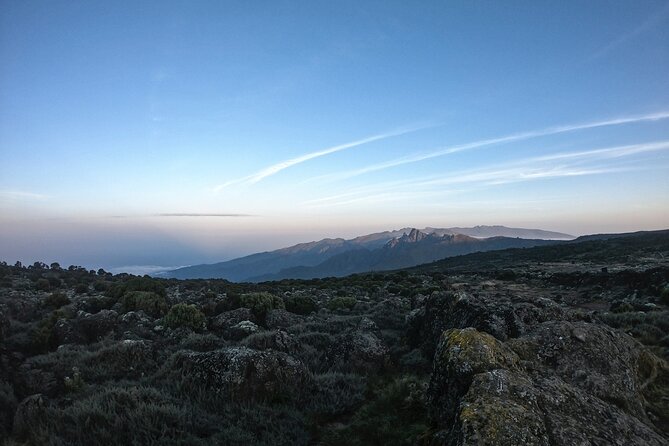
The first hike is short by Kilimanjaro standards: about 6 kilometers, or 4 miles, taking two to three hours. You climb from about 1,830 meters to 2,650 meters and sleep at Mti Mkubwa, which means big tree.
This is a gentle opening, but do not treat it as a throwaway day. You are meeting your guide and mountain crew, settling into the walking rhythm, and testing your boots. The forest section also gives you a softer start than an immediate push into bare high country.
Lunch and dinner are included. Accommodation is in tents, with sleeping mattresses supplied. Since the route begins by vehicle and then changes to forest trail, keep your daypack accessible rather than packing everything into luggage carried by porters.
Day 2: Mti Mkubwa to Shira 1
Day two covers about 8 kilometers and takes four to five hours. The trail steepens as you leave the forest and enter the giant heather moorland zone.
You cross several streams, climb over the Shira Ridge, and then descend gently to Shira 1 Camp beside a stream on the plateau. The altitude rises from 2,650 meters to about 3,500 meters.
This is your first real taste of open high-altitude walking. The trees have mostly disappeared, so weather and wind matter more. The distance is manageable, but the gain in height can be felt, especially if you have arrived from a much lower elevation.
Breakfast, lunch, and dinner are included. I would use this evening to check your sleeping system, organize warm layers, and tell the guide about any headache, nausea, or unusual fatigue. Small problems are easier to address early than on summit night.
Day 3: Shira 1 to Shira 2
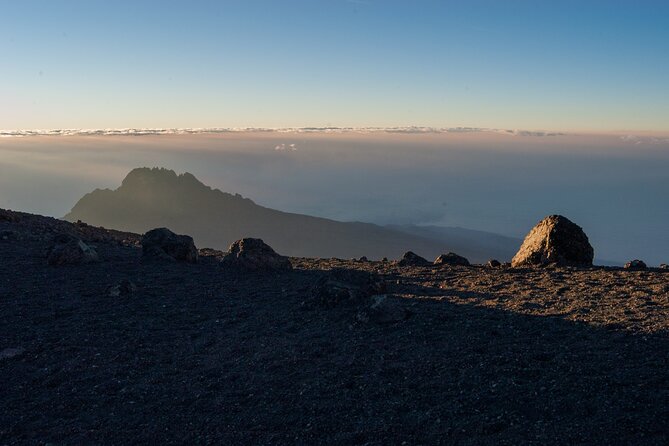
The third day is another 8-kilometer walk, usually taking four to five hours. You cross the Shira Plateau through moorland meadows, following a gentler trail to Shira 2 Camp near a stream.
The itinerary allows for different walks on the plateau, making this a useful acclimatization day. That flexibility is important. If you feel strong, your guide may be able to use the surrounding trails for extra walking. If your body is adjusting slowly, you can keep the day calm.
The Shira Plateau is one of the route’s visual highlights. The open views and unusual high-altitude vegetation make this section feel very different from the forest below. It is also one of the quieter parts of the climb, fitting the promise of small groups and a less crowded walking experience.
Do not judge the entire climb by how easy this day feels. The summit push is still ahead, and preserving energy is wiser than trying to prove your fitness on the plateau.
A few more trips of this kind worth comparing:
- Safari Serengeti And Ngorongoro
★ 5.0 · 288 reviews - Climbing Kilimanjaro – Machame Route
★ 5.0 · 170 reviews - Climbing Kilimanjaro through 7 days Machame Route
★ 5.0 · 151 reviews - Kilimanjaro climb, Lemosho Route (8-day)
★ 5.0 · 148 reviews
Day 4: Shira 2 to Lava Tower and Barranco
This is the most intelligently planned day of the route. You leave Shira 2 at roughly 3,850 meters and climb toward Lava Tower, also called the Shark’s Tooth, at about 4,650 meters. After passing the junction toward Arrow Glacier, you descend to Barranco Camp at around 4,000 meters.
The day covers about 8 kilometers and takes five to six hours. You finish close to the same elevation where you began, but your body has spent time higher. That climb-high, sleep-lower pattern is useful preparation for the summit.
The habitat changes to semi-desert. The open, dry terrain can feel stark after the heather of the plateau. The Lava Tower section may be tiring, and that is the point. You are giving the guide a chance to monitor how you respond to altitude well before summit day.
Barranco Camp is a memorable stop because it sits below the Barranco Wall. You will see part of the next day’s challenge from camp, which can look more intimidating than it feels once you begin.
Day 5: The Barranco Wall to Karanga
The route from Barranco to Karanga is short, about 5 kilometers, with three to four hours of climbing. The main feature is the steep ridge up the Barranco Wall, followed by the Karanga Valley and the junction with the Mweka Trail.
You climb only from about 4,000 meters to 4,050 meters, so the low distance and modest net gain offer another chance to conserve energy. The habitat is alpine desert, with little shelter and a more severe feel than the forest or moorland.
The Barranco Wall is not described as a technical rock-climbing section in the supplied details, but it is steep enough that you should expect to use your hands at times and move carefully. Follow the guide’s line and avoid rushing. The value of a private group is clear here, since you can take the time you need without worrying about a large procession behind you.
The short day also gives the crew time to establish camp while you rest, eat, and prepare for the final approach.
Day 6: Karanga to Barafu Camp
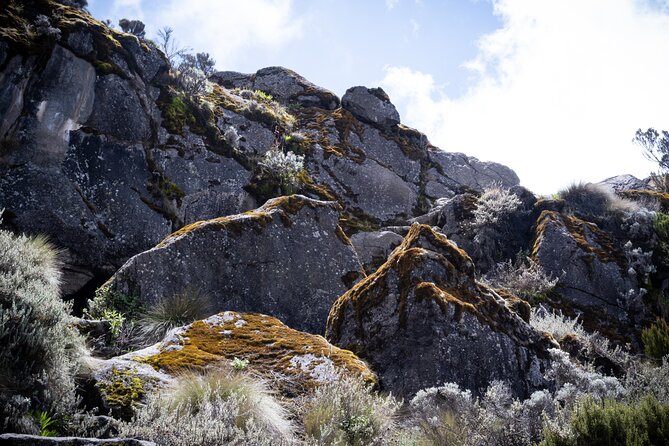
From Karanga, you climb about 4 kilometers to Barafu Camp, gaining roughly 650 meters. The walk takes three to four hours through alpine desert.
Barafu sits at about 4,700 meters. This is the high camp for the summit attempt, and the day finishes the southern circuit, which has provided views of the summit from several sides.
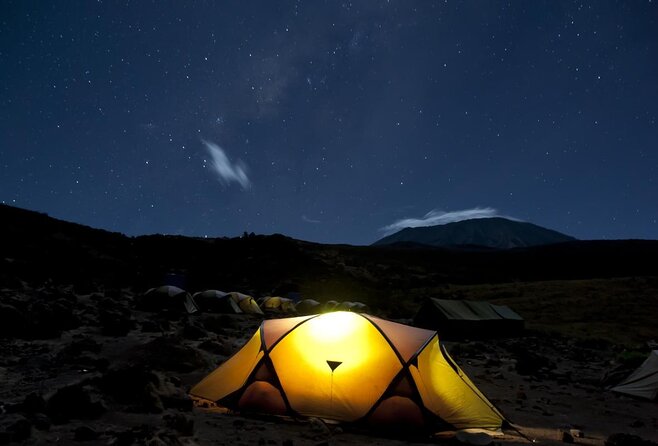
Do not expect a normal evening here. You eat dinner, organize summit clothing, and try to sleep before the midnight to 2 a.m. start. Rest may be difficult at this altitude, so preparation matters more than comfort.
Keep your headlamp, gloves, warm layers, water, snacks, and trekking poles ready before you lie down. The supplied information confirms meals and boiled water on the mountain, but you should clarify how water is distributed and what personal snacks you need to bring.
Day 7: Barafu to the summit, then Mweka Camp
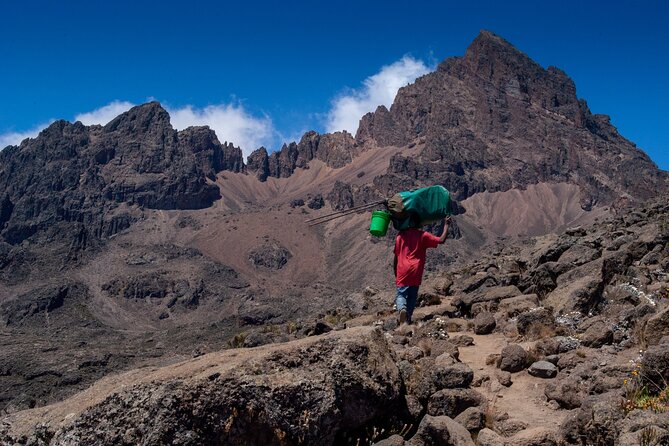
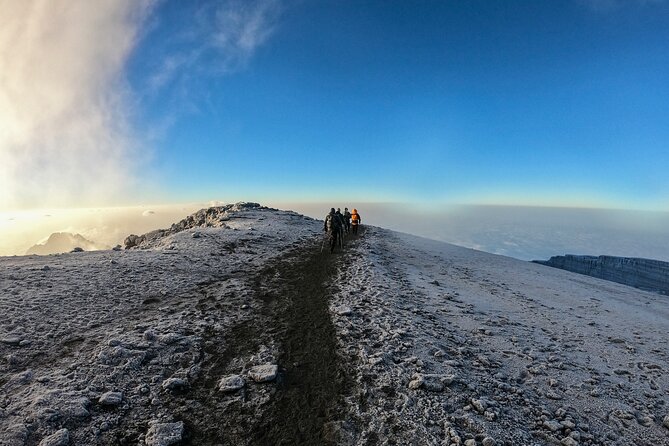
Summit day is the heart of the trip and the part that demands the most from you. You start between midnight and 2 a.m., heading between the Rebmann and Ratzel glaciers before climbing through heavy scree toward Stella Point on the crater rim.
This section is mentally and physically hard. The ground is loose, the air is thin, and the darkness makes the climb feel longer. Move slowly, keep your breathing steady, and let the guide set a pace you can maintain.
At Stella Point, you pause and may see sunrise over the mountain. Faster climbers might reach the summit in time for sunrise, but the more useful goal is simply to continue safely. From Stella Point, the final ascent to Uhuru Peak takes about an hour and may include snow.
After reaching the summit, you descend to Barafu and continue to Mweka Camp. The supplied itinerary gives six hours for this portion, though the total effort on summit day is substantial because it combines the overnight ascent with a long descent. You should expect tired legs and limited enthusiasm for anything beyond food, water, and sleep.
This is also the day when crew support matters most. Guides such as Haji, Mariki, Musa, Jonathan, Tulzia, Geoffrey, Fabian, Moses, Kaniki, Seif, and Adam have been praised in individual accounts for encouragement, care, and summit support. If your assigned guide differs, ask about their mountain experience and medical training before departure.
Day 8: Mweka Camp to the gate and Moshi
The final day is a 10-kilometer descent from about 3,090 meters to 1,680 meters. It takes roughly three to four hours and returns you to forest.
The ground may be wet and muddy at lower elevations. Gaiters and trekking poles are specifically useful here, and you should keep rain gear handy even if you start the morning in warm sunshine. Shorts and a T-shirt may be comfortable later in the descent, but the mountain can change quickly.
At Mweka Park Gate, you receive your summit certificate. A Monkey Adventures vehicle then takes you back to your Moshi hotel, with the drive taking about 60 minutes.
That transfer is welcome after eight days on foot. Confirm the exact hotel and meeting arrangements in advance because the information gives Moshi as the destination, Machame as the start point, and the meeting point as both start and end location.
What the $2,300 price really covers
The price looks reasonable for an eight-day private Kilimanjaro climb because several expensive items are bundled together. Park entry, rescue fees, tents, sleeping mattresses, dining equipment, meals, boiled water, first aid, pulse oximeters, guides, porters, cooks, and waiter salaries are all included.
You also receive a mess tent, small camping chairs, tables, and candles. These details will not turn a mountain camp into a hotel, but they make meals and evenings more organized.
You still need to budget for:
- Tips for guides, porters, cooks, and waiters
- Meals and drinks not specifically listed
- Personal climbing and rain gear
- Visas
- Emergency oxygen
- Two nights of accommodation before and after the climb
The accommodation note lists two nights at Kili Base Hotel at $50 for a full body, but the wording is not fully clear. Ask if $50 is the total rate, a nightly rate, or a separate service charge. Also ask exactly what room, meals, transfers, and facilities are included.
The operator offers to take you to a local hiking store and help you rent equipment at favorable prices. That is helpful if you are not a regular high-altitude trekker, but inspect every rental item yourself. Make sure boots fit, rain gear works, and sleeping equipment is suitable for cold nights.
Crew care, food, and safety
The structure of this climb depends heavily on the mountain crew. You are not carrying the tents, dining equipment, cooking supplies, and shared camp items yourself. Guides lead the route, porters move equipment, and the cook and waiter support meals and camp routines.
Food is provided three times daily on the mountain. The exact menu is not listed, so ask about vegetarian, allergy, or other dietary needs before arrival rather than assuming the kitchen can meet them.
Safety equipment includes first aid, rescue fees, pulse oximeters, and qualified guides. Emergency oxygen is not included, which is worth discussing clearly before you start. You should also ask how the guide checks symptoms and what happens if someone must descend.
The feedback is not uniformly positive. Many accounts praise the crew, including guides Haji and Mariki, and describe strong support, flexible planning, and successful summit attempts. Other accounts raise serious complaints about unclear communication, poor organization, promised services not being delivered, and disputed advance payments.
That does not prove that your trip will go badly, but it does create a practical warning. Get the itinerary, total price, hotel arrangements, payment schedule, crew plan, tipping expectations, and cancellation terms in writing. Pay attention to the company name used on your confirmation, since the experience is associated with Kilimanjaro Wonders Expedition Safari and also with KWESA and Kwesa Tours in the supplied material.
Who should choose this climb?
I would consider this route for a fit adult who wants a longer acclimatization schedule, varied scenery, and a private group. It also suits people who prefer a local operator and want help arranging rental gear in Moshi.
The itinerary may work for a family with an unusually fit older child, since one account describes a successful private climb with a 10-year-old and flexible guides. That is not a guarantee of suitability. You should make an independent decision based on the child’s health, endurance, and response to altitude.
I would not choose this trip if you want hotel comfort, fixed indoor facilities, or a short and easy mountain holiday. You sleep in tents, face cold and thin air, start the summit climb in the middle of the night, and deal with mud on the final day.
Cancellation is free if you cancel at least 24 hours before the local start time. Within 24 hours, the payment is not refunded, and weather cancellations may result in a new date or a full refund.
Should you book the Lemosho climb?
I would book this experience if the operator answers your questions clearly and gives you a written, itemized agreement before payment. The route itself is appealing: eight days, strong scenery, a useful high point at Lava Tower, a private group, and a full support crew.
I would be cautious about booking on price alone. Confirm the extra $50 accommodation arrangement, equipment costs, emergency procedures, meeting point, and exact payment recipient. If those answers are clear, the $2,300 package offers solid value for a long Kilimanjaro route. If communication remains vague, choose a different operator before you arrive in Tanzania.
FAQ
How long is the Kilimanjaro climb?
The activity lasts approximately eight days, including the final descent from Mweka Camp to the park gate and transfer back to the hotel.
Where does the climb start?
The meeting information gives Machame, Tanzania, as the start point. The first hiking day begins after a drive to Lemosho Park Gate and the Lemosho Glades.
Is pickup included?
Pickup is offered. The final transfer from Mweka Gate to a hotel in Moshi takes about 60 minutes by vehicle.
Are meals included?
Breakfast, lunch, and dinner are included on most mountain days. The final day includes breakfast only. Other meals and drinks not specifically listed are extra.
Are tents and sleeping equipment provided?
Yes. Tents and sleeping mattresses are included, along with a dining tent and basic camping furniture.
Is this a private climb?
Yes. Only your group participates in the activity.
What happens if bad weather cancels the climb?
If poor weather causes cancellation, you are offered a different date or a full refund. You must cancel at least 24 hours before the local start time to receive a full refund for your own cancellation.
Just added around Moshi
- Moshi: Lake Chala Tour: Hiking &/or Kayaking★ 4.5 · 3 reviews
- 3 Days Tanga Exclusive Beach Holiday★ 5.0 · 3 reviews
- Serengeti Wildebeest Migration.★ 5.0 · 3 reviews
- Chemka Hotpsrings E-Bike Day Trip★ 5.0 · 3 reviews
- Explore 1 day Ngorongoro Crater Budget Group Safari from Arusha★ 5.0 · 3 reviews
- Explore the 360° of Kilimanjaro★ 5.0 · 3 reviews
- Affordable Short Tanzania Safari (2 Days Camping Safari)★ 5.0 · 3 reviews
- Rongai Route 7 Days★ 5.0 · 3 reviews
Kilimanjaro Treks, compared.



8-Day Small-group Lemosho Kilimanjaro Summit Trekking
Read our review →


Climbing Kilimanjaro through 7 days Machame Route
Read our review →

Browse the lists this tour appears in