
Reviewed · KILIMANJARO TREKS
8 Days Kilimanjaro Climbing Lemosho Route
Kilimanjaro saves its best for the patient. This 8-day Lemosho climb gives you a scenic approach across the Shira Plateau, a slower altitude schedule, and a private mountain crew from Furaha Adventures. I like the route’s quiet first days and the extra acclimatization time, both useful advantages on a high-altitude trek. The main drawback is summit day, which can last 12 to 17 hours and demands a midnight start, cold-weather stamina, and steady pacing.
You begin near Londorossi Gate on Kilimanjaro’s western side and descend by the Mweka Route. I also like that the price includes park fees, porters, cooks, mountain guides, tents, meals, purified water, rescue fees, and airport transfers. Still, $2,300 is a serious outlay, and tips, drinks, personal purchases, and any expenses outside the listed inclusions are extra.
In This Review
- Key points to know before booking
- Why the Lemosho Route earns its reputation
- Airport pickup, Moshi orientation, and the first morning
- Day 1: Londorossi Gate to Forest Camp
- Day 2: Forest edge and Shira 1 Camp
- Day 3: Across the Shira Plateau to Moir Camp
- Day 4: Lava Camp and Barranco Valley
- Day 5: The Barranco Wall to Karanga Camp
- Day 6: Karanga to Barafu Camp
- Day 7: Uhuru Peak and the long descent
- Day 8: Mweka descent and farewell
- What the $2,300 price covers
- Who should choose this climb?
- Booking advice and cancellation terms
- Should you book the 8-day Lemosho Route?
- FAQ
- How long does the Kilimanjaro Lemosho Route experience last?
- Where does the climb begin?
- Which route is used for the descent?
- Is airport pickup included?
- Is this a private activity?
- What is included in the price?
- Are meals included?
- Are drinks and tips included?
- When does the summit attempt begin?
Key points to know before booking
- The Lemosho Route starts quietly: You hike through forest and across the Shira Plateau before meeting busier trails near Lava Tower.
- Eight days help with acclimatization: The itinerary gives you gradual altitude gains and several days with shorter hiking hours before the summit push.
- The summit attempt starts around midnight: You may hike 6 to 7 hours to Stella Point, then another 1 to 2 hours to Uhuru Peak.
- Your private group has a full support team: Professional mountain guides, porters, and a cook are included, with safety equipment and an oximeter available.
- The scenery changes every day: Expect forest, heath, volcanic terrain, the Barranco Wall, ice-field views, and high alpine camps.
- The route is demanding even with eight days: Long hours, cold, steep ground, and altitude make preparation essential.
Why the Lemosho Route earns its reputation
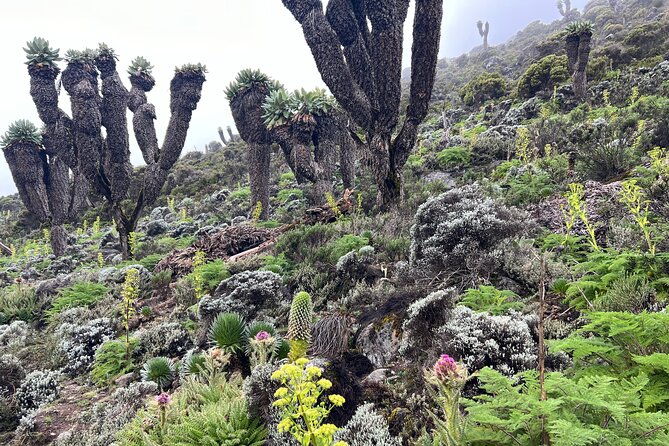
Lemosho is a strong choice if you care about scenery as much as reaching the summit. The route crosses the Shira Plateau from west to east, and its early sections are quieter than the approach used by many climbers. You get time among forest, moss, flowers, and bird calls before the mountain opens into broad high-country views.
The first few days also make practical sense. Instead of racing toward the upper camps, you gain height in stages. Day two climbs to about 11,500 feet, day three reaches roughly 13,650 feet, and day four rises past Lava Camp before dropping into Barranco Valley. That repeated pattern of going higher, then sleeping a little lower, supports acclimatization.
The route becomes busier once it joins the Machame trail near Lava Tower. You should not expect solitude for the whole climb. Still, the quieter western approach gives Lemosho a more gradual beginning than a direct push up the mountain.
This is a private activity, so only your own group participates. The supplied information does not state the maximum group size, so ask Furaha Adventures for the exact number before booking. Group size affects walking pace, meal service, tent arrangements, and how much individual attention you receive.
More Kilimanjaro routes and climbs:
- Kilimanjaro climb by Lemosho Route (7-day)
★ 5.0 · 651 reviews - Kilimanjaro climb, Machame Route (7-day)
★ 5.0 · 262 reviews - Kilimanjaro Climbing Lemosho Route 8 Days.
★ 5.0 · 186 reviews
Airport pickup, Moshi orientation, and the first morning
The experience begins with airport pickup at Kilimanjaro Airport. You then go to a lodge in Moshi for an orientation and gear check. This meeting is more than a formality. It is your chance to confirm the daily plan, ask about cold-weather clothing, and make sure your equipment is suitable before you leave town.
The guides check your trekking gear at this stage. That is useful because a missing warm layer or poor sleeping setup becomes a major problem above the forest. You should use the orientation to clarify what the company supplies and what you must bring yourself, especially personal clothing, headlamp batteries, and any medication.
The itinerary says the first gate is a few hours from Arusha, but the service begins with a transfer from the airport to Moshi. Confirm your exact pickup time and lodge arrangements before arrival. Airport transfers are included, but the supplied details do not clearly state if pre-trek lodging is included in the $2,300 price.
Day 1: Londorossi Gate to Forest Camp
The approach to Londorossi Gate takes you to the western side of Mount Kilimanjaro. From there, you begin at the Lemosho trailhead and hike for about three to four hours to Forest Camp, at approximately 9,498 feet.
This is a gentle way to begin a major climb. The montane forest brings moss, flowers, bird calls, and the possibility of black-and-white colobus monkeys. You may also see signs of elephants moving through the area. The forest is not just scenery. It provides shade and a softer introduction before the exposed upper zones.
Rain can affect this first day. In muddy conditions, vehicles may not reach the true trailhead, creating extra walking before the planned route begins. Pack your rain protection where you can reach it quickly, not buried at the bottom of your bag.
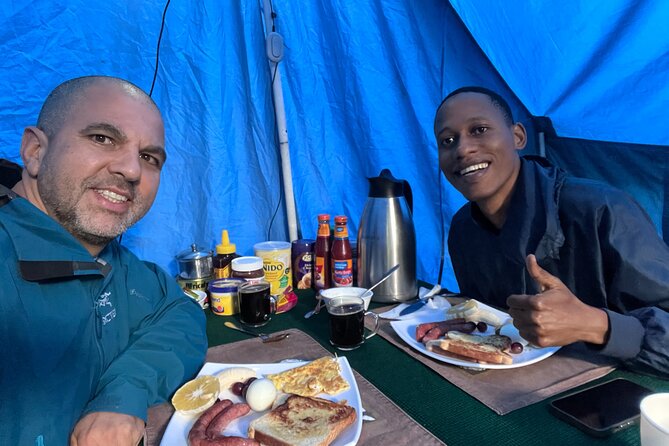
A picnic lunch is provided during the day, and you sleep in a private, waterproof, four-season mountain tent. The short hiking time looks easy on paper, but the transfer, registration, and first night outdoors can make the day feel full.
Day 2: Forest edge and Shira 1 Camp
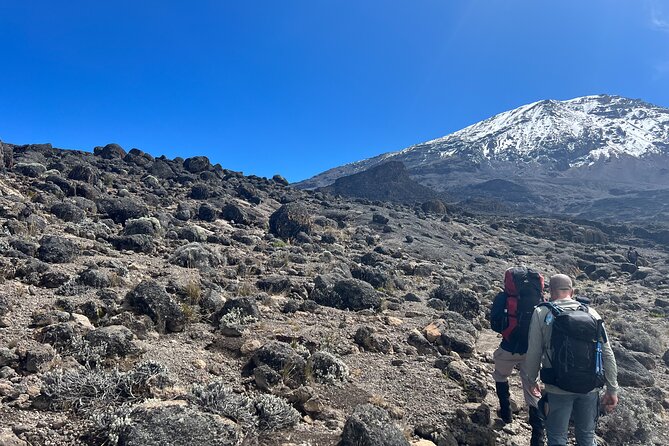
Day two lasts about six to nine hours and reaches roughly 11,500 feet. You leave the montane forest and enter the Hagenia zone, where the trees thin and the views open toward Kibo, Kilimanjaro’s highest cone.
This is a valuable acclimatization day because the trail rises and falls over several ridges rather than climbing in one straight line. The route may feel tiring despite the moderate distance. Follow the guides’ pace and resist the temptation to rush simply because the trail looks manageable.
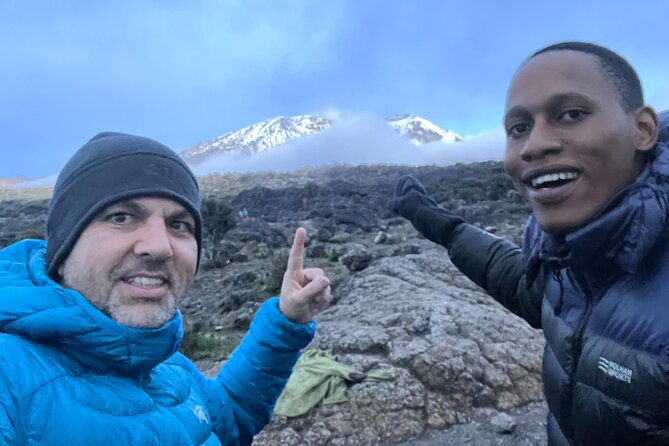
The first clear view of Kibo is a powerful moment. It also gives you a useful sense of scale. The summit is still far away, and the days ahead become more exposed and demanding.
Shira 1 Camp sits at high altitude, so you should expect a colder evening than at Forest Camp. The included cook provides dinner, and the package covers all meals while on the mountain. Breakfast is listed for eight days, lunch for eight days, and dinner for seven days.
A few more trips of this kind worth comparing:
- Safari Serengeti And Ngorongoro
★ 5.0 · 288 reviews - Climbing Kilimanjaro – Machame Route
★ 5.0 · 170 reviews - Climbing Kilimanjaro through 7 days Machame Route
★ 5.0 · 151 reviews - Kilimanjaro climb, Lemosho Route (8-day)
★ 5.0 · 148 reviews
Day 3: Across the Shira Plateau to Moir Camp
Day three covers about five to six hours and ends near Moir Camp at approximately 13,650 feet. You cross the heath zone of the Shira Plateau, then begin climbing the western slope of the Kibo Massif.
This is one of the route’s defining days. The plateau gives Lemosho its broad, open character, with volcanic ground and distant mountain views replacing the enclosed feel of the forest. The hiking is not simply a march toward camp. You gain height, cross open ridges, and adjust to thinner air.
A picnic lunch is planned at Scott Fisher Memorial Camp, named for the Mount Everest guide. Depending on the weather, the guides may arrange an afternoon acclimatization hike. That optional extra walk can help your body adjust, but you should treat it as a useful training effort, not a sightseeing obligation. If you feel unwell, tell the guide rather than trying to prove toughness.
Moir Camp is high enough for altitude symptoms to become a real concern. The presence of an oximeter gives the crew another way to monitor you, but it does not replace your own honesty. Headache, unusual fatigue, nausea, or breathing trouble should be reported promptly.
Day 4: Lava Camp and Barranco Valley
The fourth day takes four to six hours. You leave the heath zone and enter the alpine zone, hiking through stark volcanic terrain past Lava Camp at about 14,300 feet before descending slightly to Barranco Camp, around 13,044 feet.
This is a smart route design. You climb high during the day, then sleep lower than your highest point. The drop into Barranco Valley offers some relief after the exposed height near Lava Camp, though the terrain still requires care.
Expect a noticeable change in scenery. Vegetation becomes sparse, rock becomes more prominent, and the mountain feels less forgiving. The route’s beauty here comes from contrast: dark volcanic ground, open sky, and the huge mass of Kibo above you.
The six-hour maximum listed for the day may not reflect every group’s actual pace. Weather, trail conditions, and stops can stretch the schedule. Keep your pack light and make water easy to reach.
Day 5: The Barranco Wall to Karanga Camp
Day five is shorter, at roughly three to five hours, but it includes one of the trek’s most memorable challenges: the Great Barranco Wall. You climb beside views of Kilimanjaro’s ice fields, then cross small valleys on the way to Karanga Camp at about 13,106 feet.
The Barranco Wall looks imposing, but the route is described as a climb rather than technical climbing. You should still expect steep, uneven ground and moments when you need both hands for balance. Listen closely to the guides and give the person ahead room to move.
This day often feels rewarding because the physical work comes with a clear visual payoff. Ice fields appear above the volcanic slopes, a reminder that the summit environment is much colder than the lower mountain.
Karanga Camp is only slightly higher than Barranco Camp. That modest overnight gain is intentional. You are preparing for the final push without stacking too many difficult hours together.
Day 6: Karanga to Barafu Camp
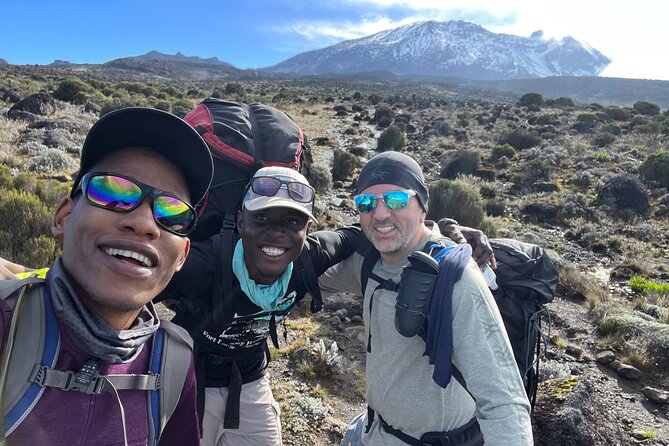
The hike to Barafu Camp takes about three to five hours and crosses more small valleys. Barafu sits around 15,100 feet, making it the highest overnight camp before the summit attempt.
This is a short walking day, but it is not a rest day in the usual sense. At this height, even simple movement can feel slow. Once you reach camp, you settle in, attend a safety demonstration, eat an early supper, and try to rest.
The demonstration covers equipment such as the Gamow bag and oxygen. These are important safety provisions, but their presence should not make you casual about altitude. The best safety step is to report symptoms early and follow the guides’ instructions.
Your wake-up call comes around 11:00 PM or midnight. Pack your summit essentials before dinner so you do not have to organize gear while half asleep. Bring extra lithium batteries for your headlamp. The information provided specifically notes that lithium batteries last better in cold, dark conditions.
Day 7: Uhuru Peak and the long descent
Summit day is the hardest part of the entire route. You leave around 11:00 PM or midnight, hike for six to seven hours to Stella Point, then continue for another one to two hours to Uhuru Peak at 19,341 feet, or 5,896 meters.
The goal is often sunrise, but do not treat a sunrise arrival as a pass or fail test. Hiking speed, energy, weather, and altitude response vary widely. Most people reach the summit across a span of several hours, not at one exact moment.
The route to Stella Point is cold, dark, and physically draining. Your headlamp, spare batteries, warm layers, gloves, hat, and accessible water matter here. Pace is more important than speed. A steady rhythm gives you a better chance than a fast start followed by exhaustion.
At Uhuru Peak, you have time for a summit celebration and photographs before descending to Barafu Camp for lunch. Then you continue to Mweka Camp, where you sleep at about 10,448 feet. The full day usually lasts 12 to 17 hours, with the descent adding a second major effort after the summit.
This is where the extra route day proves its worth. The eight-day plan gives you more time to adjust before attempting the summit, but it cannot remove the strain of a long night and full day at altitude.
Day 8: Mweka descent and farewell
The final descent takes about three to five hours to the trailhead. You have lunch there and say goodbye to the mountain crew before returning to town, usually arriving at your lodge between 3:00 and 5:00 PM.
The descent is easier for many people because you are going down, but tired legs and sore feet can make it surprisingly demanding. Trekking poles, careful footing, and patience remain useful until the final step.
The farewell matters. A successful climb depends on the guides, porters, and cook as well as the person wearing the hiking boots. Tips are not included, so set aside money for them. Alcohol, soft drinks, souvenirs, and other personal spending are also extra.
What the $2,300 price covers
At $2,300 per person, the package offers solid value if you want an organized private climb with major costs already bundled. Park fees alone form a substantial part of any Kilimanjaro trip, and this price also includes guides, porters, cook salaries, rescue fees, tents, purified drinking water, and all mountain meals.
Airport transfers add practical value, especially after a long international flight. You also receive professional mountain guides and safety support, including an oximeter, oxygen, and a Gamow bag demonstration.
The strongest praise for Furaha Adventures centers on organization, supportive staff, good food, and guide encouragement. Guide names that appear in the supplied material include Godfrey and Guiwa. One account specifically credits Godfrey’s planning and Guiwa’s guidance, while another highlights the crew’s effort to help the whole group reach Uhuru Peak.
Keep the exclusions in mind. Tips and personal spending are not covered, and neither alcoholic nor soft drinks are included. The information also does not clearly say that Moshi lodging is included, so confirm that point before paying.
Who should choose this climb?
I would point fit hikers toward this route if they want a scenic approach and prefer a slower eight-day schedule. It suits people who value a private group, full mountain support, and a route that begins with forest and the Shira Plateau rather than starting immediately in exposed high terrain.
You should be comfortable with long walking days and a final 12 to 17-hour summit day. Most participants can take part according to the supplied details, but Kilimanjaro is still a serious high-altitude climb. You need to prepare for cold, darkness, steep sections, basic mountain camping, and unpredictable trail conditions.
This is not the best pick if you want a relaxed holiday, dislike sleeping in tents, or cannot tolerate a midnight start followed by a full day of hiking. The extra acclimatization day improves the plan, but it does not make the mountain easy.
Booking advice and cancellation terms
Confirmation is provided at booking, and the experience operates with mobile tickets. Pickup is offered from Kilimanjaro Airport. The listed operating information runs from February 17, 2024, through December 31, 2029, with hours shown as Monday and Tuesday from 7:00 AM to 9:00 PM.
You can cancel for a full refund if you do so at least 24 hours before the local start time. Cancellations or changes made within 24 hours are not accepted for a refund. Because the climb is often booked well ahead, with an average booking lead time of 105 days, check your dates and mountain gear early.
Should you book the 8-day Lemosho Route?
I would book this climb if you want Kilimanjaro’s scenic western approach, a private group, and a schedule that gives acclimatization a fair chance. The included park fees, crew, meals, tents, water, rescue support, and airport transfers make the $2,300 price reasonable for a full-service mountain package.
Before committing, ask Furaha Adventures to confirm the group size, Moshi lodging, tipping guidance, exact airport arrangements, and the personal gear you must bring. If you accept the long summit night and prepare properly, this Lemosho plan offers a strong balance of scenery, support, and value.
FAQ
How long does the Kilimanjaro Lemosho Route experience last?
The climb lasts approximately eight days, from airport pickup and the Moshi orientation through the final descent from Mount Kilimanjaro.
Where does the climb begin?
The trek begins at the Londorossi Gate on the western side of Mount Kilimanjaro, with the hike starting near the Lemosho trailhead.
Which route is used for the descent?
The descent uses the Mweka Route.
Is airport pickup included?
Yes. Airport transfers are included, and the meeting point is Kilimanjaro Airport.
Is this a private activity?
Yes. Only your own group participates in the activity. The maximum group size is not specified.
What is included in the price?
The package includes park fees, professional mountain guides, porters, cook salaries, airport transfers, private waterproof four-season tents, purified drinking water, mountain meals, rescue fees, and an oximeter.
Are meals included?
Yes. The package lists eight breakfasts, eight lunches, and seven dinners. All meals while on the mountain are included.
Are drinks and tips included?
No. Alcoholic drinks, soft drinks, tips, and personal spending money are excluded.
When does the summit attempt begin?
The summit ascent begins around 11:00 PM or midnight on the night before day seven. The route usually takes six to seven hours to Stella Point and another one to two hours to Uhuru Peak.
Just added around Moshi
- Moshi: Lake Chala Tour: Hiking &/or Kayaking★ 4.5 · 3 reviews
- 3 Days Tanga Exclusive Beach Holiday★ 5.0 · 3 reviews
- Serengeti Wildebeest Migration.★ 5.0 · 3 reviews
- Chemka Hotpsrings E-Bike Day Trip★ 5.0 · 3 reviews
- Explore 1 day Ngorongoro Crater Budget Group Safari from Arusha★ 5.0 · 3 reviews
- Explore the 360° of Kilimanjaro★ 5.0 · 3 reviews
- Affordable Short Tanzania Safari (2 Days Camping Safari)★ 5.0 · 3 reviews
- Rongai Route 7 Days★ 5.0 · 3 reviews
Kilimanjaro Treks, compared.



8-Day Small-group Lemosho Kilimanjaro Summit Trekking
Read our review →


Climbing Kilimanjaro through 7 days Machame Route
Read our review →

Browse the lists this tour appears in