
Reviewed · KILIMANJARO TREKS
8 Days Kilimanjaro Climbing tour via the Lemosho Route
Kilimanjaro rewards patience, not speed. This 8-day Lemosho Route climb gives you a gradual approach to Uhuru Peak, with rainforest, open highlands, volcanic ground, and a carefully paced route toward Africa’s highest summit. I like the quieter western approach and the built-in acclimatization walks, especially the extra climb toward Lava Tower and Barafu. I also like that the tour is private, so your group can travel at its own pace with a professional guide.
The main caution is the price. At $1,090 per person, it looks competitive for eight days of guiding, transfers, meals, tents, and mountain support, but park fees are not included. You must also budget for tipping, a visa, flights, and personal hiking equipment. The schedule is demanding, and summit night brings altitude rather than technical climbing as the biggest challenge.
In This Review
- Key details before you book
- Why the Lemosho Route is a strong choice
- Day 1: Londorossi Gate to Mti Mkubwa Camp
- Day 2: Shira 1 and the first wide views
- Day 3: Shira 2 and the Lava Tower acclimatization walk
- Day 4: Lava Tower, 4,630 meters, then Barranco
- Day 5: Barranco Wall and Karanga Camp
- Day 6: Barafu Summit Camp and a quiet afternoon
- Day 7: Uhuru Peak and the long descent
- Day 8: Millennium Camp to Mweka Gate
- What the $1,090 price really covers
- Who should choose this climb?
- Practical booking advice
- Should you book the 8-day Lemosho climb?
- FAQ
- Where does the Kilimanjaro climb begin?
- How high is Uhuru Peak?
- Is transport included?
- Are meals included?
- Are Kilimanjaro park fees included in the price?
- Is this a private tour?
- What happens if bad weather cancels the climb?
Key details before you book
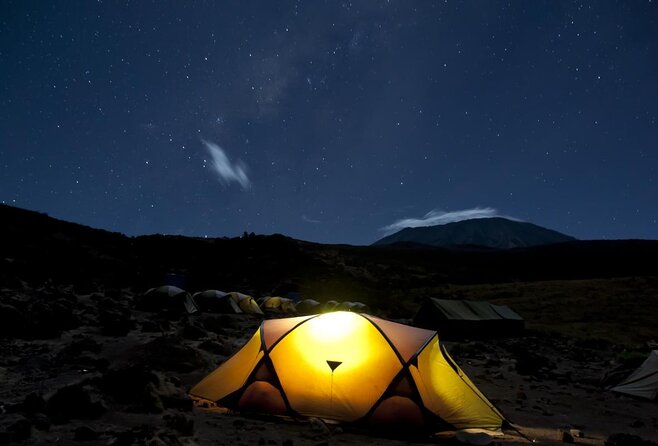
- Lemosho begins at Londorossi Gate: The western start takes you through rainforest before reaching the Shira Plateau.
- Eight days allow gradual acclimatization: The plan includes high-altitude stops at Lava Tower, Barafu, and an intermediate camp.
- Uhuru Peak reaches 5,895 meters: The summit attempt starts at night from Barafu Camp.
- Private group format: Only your party takes part, with a professional guide and mountain escort team.
- Meals and transfers are included: Breakfast, lunch, dinner, and transport to and from the activity area are covered, though personal needs are not.
- Weather can affect the schedule: Poor weather may lead to a new date or a full refund under the stated cancellation terms.
Why the Lemosho Route is a strong choice
The Lemosho Route is attractive because it does not rush you straight into high altitude. Your first day begins at 2,200 meters at Londorossi Gate, then rises to Mti Mkubwa Camp at 2,780 meters. By Day 2, you reach Shira 1 at 3,505 meters, and Day 3 takes you to Shira 2 at 3,900 meters.
That slow rise matters. Kilimanjaro is not usually a technical climbing problem. The real test is how your body handles thin air, cold, fatigue, and a long summit night. A route that gives you time to adjust is worth serious consideration.
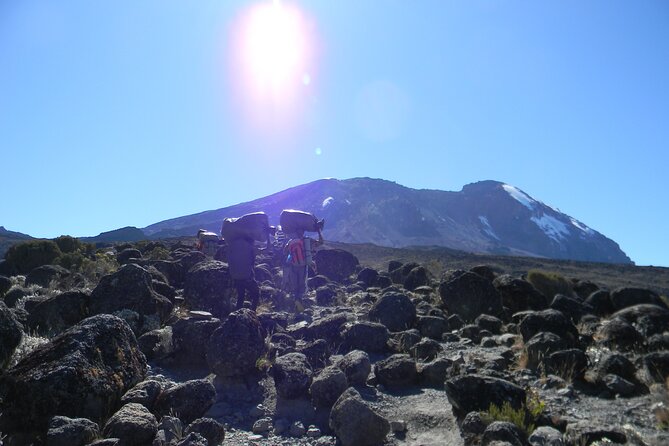
The scenery changes in clear stages. You begin in rainforest, move into high open country around Shira, pass volcanic rock near Lava Tower, then reach the stark upper mountain. The route also gives you a fine view of Kibo Volcano and, if the weather cooperates, Mount Meru from Shira 2.
The private format is another useful feature. A large group can move only as fast as its slowest member, while a private party may have more room to discuss pace and rest stops with the guide. That does not make the climb easy, but it can make the days feel more manageable.
More Kilimanjaro routes and climbs:
- Kilimanjaro climb by Lemosho Route (7-day)
★ 5.0 · 651 reviews - Kilimanjaro climb, Machame Route (7-day)
★ 5.0 · 262 reviews - Kilimanjaro Climbing Lemosho Route 8 Days.
★ 5.0 · 186 reviews
Day 1: Londorossi Gate to Mti Mkubwa Camp
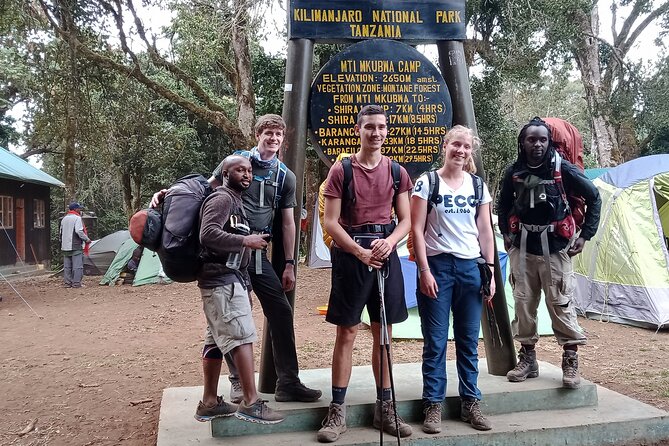
Your mountain team meets you at your hotel in the morning for another briefing. The drive from the Kilimanjaro area to Londorossi Gate takes about three to four hours, so this is partly a transport day before the walking begins.
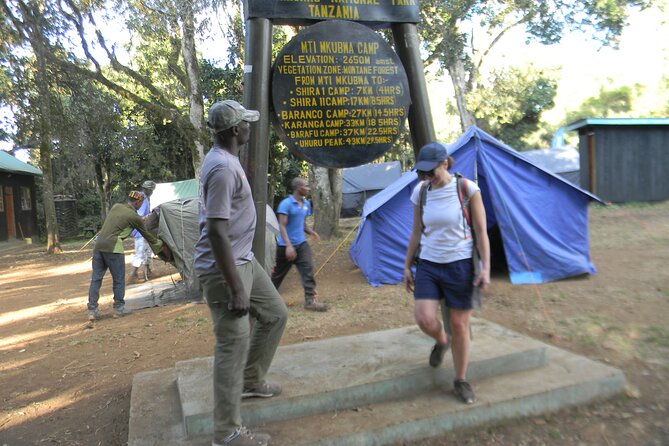
At the gate, the group handles permits and registers with Search and Rescue. Then you enter the rainforest and walk toward Mti Mkubwa Camp, at 2,780 meters. The walking time is listed as about two hours, though the total day will feel longer because of the drive and gate formalities.
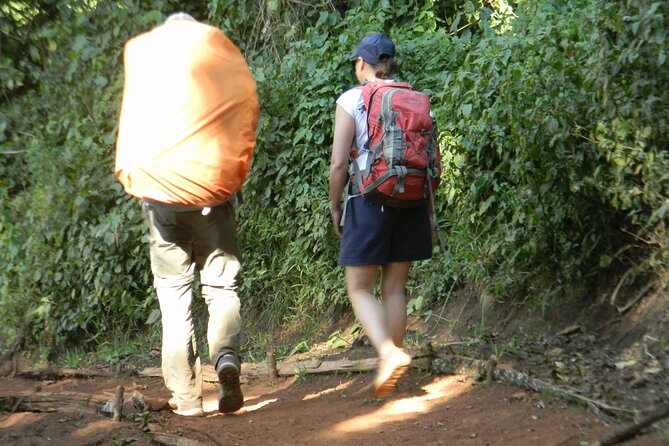
Pack your rain jacket where you can reach it. The rainforest is wet, and the first day is no time to discover that your waterproof layer is buried at the bottom of your bag. The opening section is less about distance than about settling into the rhythm of slow walking, regular meals, and life at camp.
This first night also gives you a practical test of your gear. Check your sleeping bag, headlamp, footwear, and clothing before the route gets higher and colder. You will appreciate finding small problems here rather than on summit night.
Day 2: Shira 1 and the first wide views
The morning starts early with breakfast and a steady climb toward Shira 1 Camp. The route rises to about 3,500 meters and takes roughly five to six hours.
This is when Kilimanjaro begins to feel much larger. You get your first clear views toward the Shira Plateau and Kibo Volcano, and the rainforest gives way to more open high country. The walking is described as gradual, which is exactly what you want at this stage.
Lunch is prepared by the mountain team, then you can rest in your tent or take a short walk around camp. Do not treat the easy day as an invitation to overdo it. A relaxed pace now may help you later, particularly once headaches, poor sleep, or appetite changes become possible at altitude.
The practical value here is the overnight height. Spending the night at 3,505 meters gives your body time to adjust before the route pushes higher.
Day 3: Shira 2 and the Lava Tower acclimatization walk
Day 3 is a shorter walking day from Shira 1 to Shira 2, rising from 3,505 to 3,900 meters. The listed trek takes about four hours, with striking views across the high country and distinctive Kilimanjaro plant life.
Shira 2 is also the best point on this schedule for seeing Mount Meru, described as Africa’s fifth-highest peak, if the weather is clear. That detail makes this camp more than just another overnight stop. Give yourself time to look around before clouds or afternoon weather close the view.
After lunch and about two hours of rest, you take an acclimatization walk toward Lava Tower. The elevation gain is about 300 meters. You then return to camp rather than sleeping at the higher point.
This high-and-low pattern is one of the better parts of the plan. You briefly expose your body to greater altitude, then return to sleep lower. It can feel inefficient when your legs are tired, but it serves a useful purpose for acclimatization.
A few more trips of this kind worth comparing:
- Safari Serengeti And Ngorongoro
★ 5.0 · 288 reviews - Climbing Kilimanjaro – Machame Route
★ 5.0 · 170 reviews - Climbing Kilimanjaro through 7 days Machame Route
★ 5.0 · 151 reviews - Kilimanjaro climb, Lemosho Route (8-day)
★ 5.0 · 148 reviews
Day 4: Lava Tower, 4,630 meters, then Barranco
Day 4 is a key test. You leave Shira 2 at 3,900 meters and work your way to Lava Tower at 4,630 meters. The route includes repeated climbs and descents, and the high point is more than 15,000 feet.
You may feel uncomfortable here. That is not unusual at this height, and the schedule allows you to spend one to two hours at Lava Tower, with lunch served there. The stop is designed to help your body adjust before you descend to Barranco Camp at 3,960 meters.
The descent is a welcome change, but you should not assume the day is easy. Altitude can affect you even when you are going downhill, and the repeated ups and downs can be tiring. Keep drinking as instructed by your guide, eat what you can, and tell the guide promptly if you feel unwell.
Barranco Camp gives you a memorable view of the Barranco Wall. It looks steep and imposing from below, but the route up is described as straightforward rather than technical. Seeing the wall the evening before helps you understand the next day’s work.
Day 5: Barranco Wall and Karanga Camp
Leave Barranco early if possible. The advice to start soon is practical because several groups may be moving toward the wall at the same time. An early departure can mean less waiting on the route.
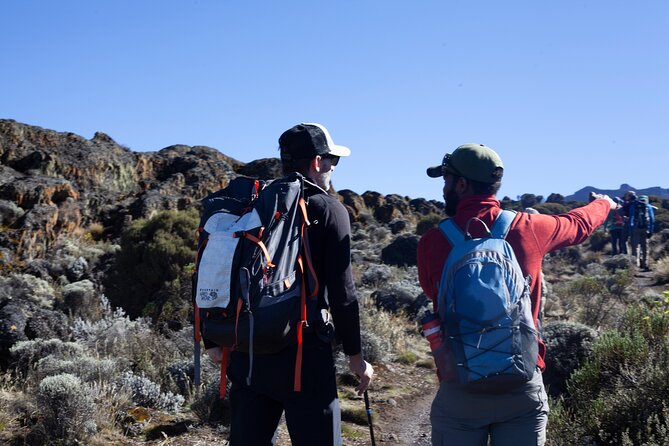
The climb up the Barranco Wall takes about an hour. It is not described as technically difficult, but you should expect hands-on movement in places and a steep-feeling ascent. Once above the wall, you have time to rest and take photographs with Kibo Volcano behind you.
The route to Karanga Camp is harder than the wall itself. It includes many ups and downs, and at this altitude even a moderate path can feel like a serious workout. The guide’s role in setting a steady pace is important. You should not race the stronger members of your party.
Karanga sits at about 3,960 meters. After a hot lunch and several hours of rest, the plan includes another acclimatization walk toward Barafu, gaining roughly 200 meters before returning to camp. Again, you sleep lower than the highest point reached during the day.
This is a full day, listed at about six hours, and it is a good example of why the eight-day version is not a casual mountain holiday. You need enough energy left for the next morning and the night climb that follows.
Day 6: Barafu Summit Camp and a quiet afternoon
Day 6 takes you from Karanga to Barafu Summit Camp at 4,640 meters. Barafu is the launch point for the night attempt on Uhuru Peak.
The team sets up the tents and sleeping bags in advance, allowing you to settle in without handling camp chores after the climb. You have a hot dinner and take an acclimatization walk to Kosovo Summit Intermediate Camp at about 4,800 meters, then return to Barafu.
The afternoon is for rest and sleep. This sounds simple, but sleeping at 4,640 meters can be difficult. Keep your clothing and summit items organized before you lie down. You do not want to search for gloves, headwear, or a headlamp in the dark while the rest of the group is preparing to leave.
The planned schedule is sensible in one respect: it does not ask you to walk a long distance during the day before summit night. The harder question is how well you personally rest at altitude. Your guide will be watching your condition, but you also need to speak clearly about symptoms.
Day 7: Uhuru Peak and the long descent
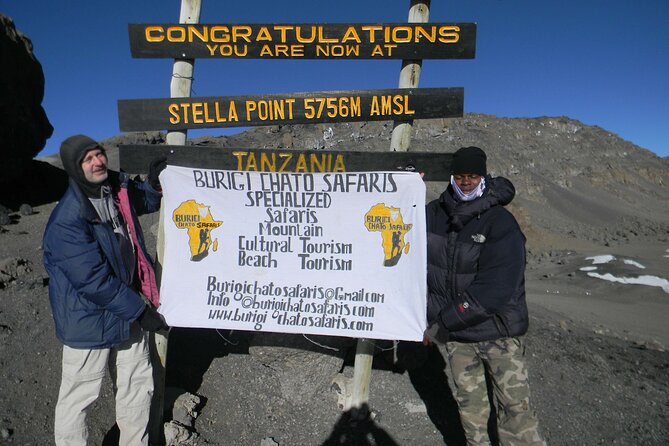
The summit attempt begins at night from Barafu, at 4,640 meters. The goal is Uhuru Peak at 5,895 meters. The walking is described as technically easy, but the altitude makes this the hardest part of the trip.
Each pair of climbers is assigned a personal guide for the ascent. That close supervision is valuable because the summit night is where pace, breathing, morale, and physical condition all matter. You will likely move slowly, with frequent pauses, toward the highest point.
At Uhuru Peak, you reach the final point of the Lemosho route. If conditions allow and you want to, there is an option to descend toward the nearest glacier. Treat this as an optional extra, not a promise of a long glacier visit, since the supplied schedule gives no further detail about its length or access.
After the summit, you return to Barafu Camp. The plan allows about two hours of rest before continuing down to Millennium Camp at 3,820 meters. This is a very long day, listed at about eight hours, and the real duration may feel greater because it includes the night ascent, summit time, return to Barafu, rest, and further descent.
The descent to Millennium is good news for your breathing, but tired knees and feet still need care. Trekking poles, strong footwear, and dry socks are personal items, so you must bring them yourself.
Day 8: Millennium Camp to Mweka Gate
You wake in tropical rainforest at Millennium Camp, now at a much lower elevation. The relief can be immediate, and breakfast gives you a welcome return to a more normal appetite and routine.
From camp, you descend to Mweka Gate at 1,650 meters. The walk is listed at about five hours. At the gate, the group gathers to celebrate the climb, and you can write about your experience in the guest book.
The operator then provides commemorative certificates at its office and transfers you back to your hotel. That final transfer is included, which is useful after eight days of walking and a demanding summit night.
What the $1,090 price really covers
The advertised price is $1,090 per person, with group discounts available. For an eight-day private climb, the value comes from the combination of a professional guide, mountain escort support, transport, camp setup, sleeping bags, and meals.
Food coverage is listed as seven breakfasts, seven dinners, and eight lunches. That fits the fact that you spend eight days on the program, although you should confirm exactly which meals are served before and after the mountain section.
Private transfer to the activity area is included, as is the return transfer to your hotel. Pickup is offered, and the stated start time is 8:30 a.m. on the first day, though the mountain team meets you in the morning for a briefing before the drive.
The largest extra cost is the park fee. It is not included in the quoted amount and may be paid directly to the park or through the tour operator. Add flights, visa costs, guide tipping, personal hiking gear, and other personal needs to your budget before deciding that this is a bargain.
The low headline price may be useful for someone comparing operators, but it also makes it especially important to request a full written cost breakdown. Ask what is included in the park fee arrangement, what type of sleeping bag is supplied, and whether all transport between your hotel and the route is covered.
Who should choose this climb?
I would look closely at this tour if you want a private Kilimanjaro experience with a gradual route and a full acclimatization plan. The Lemosho approach suits you if scenery matters and you prefer a route that begins in rainforest and passes through several distinct zones.
It also suits people who value close guide support. The personal guide arrangement for summit night is a strong feature, especially for a first high-altitude climb.
This is not a good match if you want a relaxed hiking holiday. The route reaches 5,895 meters, includes a night ascent, and requires good weather. Most people can participate according to the supplied information, but that should not be confused with an easy fitness level.
The tour is private, so it may work well for friends, couples, or family groups who want to share the challenge without joining a large party. Group discounts may improve the value for a larger booking.
The operator has also organized other northern Tanzania activities, including Materuni Waterfall visits and a Rongai Route climb. The Materuni outings are built around local contact, village culture, photography, and coffee, while the Rongai experience is known for a quieter route. Those details may help if you are building a wider Moshi itinerary, but they should not be treated as proof of how crowded or quiet the Lemosho route will be on your dates.
Practical booking advice
Pack your rain jacket in your day bag for Day 1. The rainforest is specifically noted as wet, and a waterproof layer is essential from the start.
Plan for temperature changes. The supplied information confirms rainforest, alpine desert conditions, high camps, and a cold night summit attempt, but it does not provide a packing list. Ask the operator for current gear advice rather than assuming personal hiking equipment is included.
Use the acclimatization walks properly. They are not spare sightseeing time. The walk toward Lava Tower on Day 3, the stop at Lava Tower on Day 4, the Barafu practice walk on Day 5, and the Kosovo walk on Day 6 all serve a purpose.
Keep your expectations realistic about weather. Clear views of Mount Meru, Kibo Volcano, the Shira Plateau, and the glacier option depend on conditions. If poor weather cancels the experience, the stated policy offers a different date or a full refund.
Free cancellation applies when you cancel at least 24 hours before the local start time. Cancellations inside 24 hours are not refunded, and late changes are not accepted. The activity ends back at the meeting point after the return transfer.
Should you book the 8-day Lemosho climb?
I would book this climb if you want a private, fully guided route with time built in for acclimatization and you are prepared to pay park fees and supply your own personal gear. The route offers a strong mix of rainforest, high plateau views, volcanic ground, the Barranco Wall, and a serious summit attempt.
I would pause before booking if the $1,090 price is your complete budget. It is only the starting figure once park fees, tips, visas, flights, and equipment are added.
For a determined hiker, the eight-day schedule is the better choice than trying to force Kilimanjaro into fewer days. You get more time to adjust, a carefully planned high-and-low rhythm, and direct guide attention on the summit night. Just confirm the full cost and equipment arrangements first, then decide if the mountain has earned a place on your trip.
FAQ
Where does the Kilimanjaro climb begin?
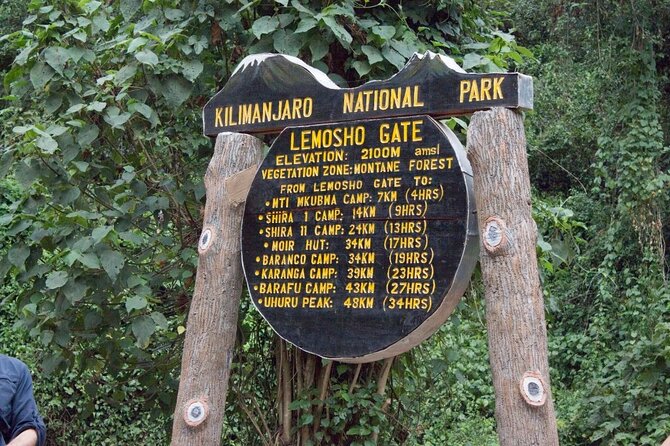
The climb begins at Londorossi Gate, at about 2,200 meters. You reach the gate by vehicle from the Kilimanjaro area, with the drive taking approximately three to four hours.
How high is Uhuru Peak?
Uhuru Peak is at 5,895 meters. It is the summit goal for the night ascent from Barafu Summit Camp.
Is transport included?
Yes. Private transfer to the activity area is included, and a return transfer to your hotel is provided after the descent. Pickup is offered.
Are meals included?
Yes. The package lists eight lunches, seven dinners, and seven breakfasts. You should confirm the exact meal schedule with the operator before departure.
Are Kilimanjaro park fees included in the price?
No. Park fees are excluded from the $1,090 price. They may be paid directly to the park or through the tour operator.
Is this a private tour?
Yes. Only your group participates, and the activity is described as a private tour with a professional guide and mountain escort team.
What happens if bad weather cancels the climb?
The experience requires good weather. If poor weather causes cancellation, you are offered a different date or a full refund. If you cancel yourself, you must do so at least 24 hours before the local start time for a full refund.
Just added around Moshi
- Moshi: Lake Chala Tour: Hiking &/or Kayaking★ 4.5 · 3 reviews
- 3 Days Tanga Exclusive Beach Holiday★ 5.0 · 3 reviews
- Serengeti Wildebeest Migration.★ 5.0 · 3 reviews
- Chemka Hotpsrings E-Bike Day Trip★ 5.0 · 3 reviews
- Explore 1 day Ngorongoro Crater Budget Group Safari from Arusha★ 5.0 · 3 reviews
- Explore the 360° of Kilimanjaro★ 5.0 · 3 reviews
- Affordable Short Tanzania Safari (2 Days Camping Safari)★ 5.0 · 3 reviews
- Rongai Route 7 Days★ 5.0 · 3 reviews
Kilimanjaro Treks, compared.



8-Day Small-group Lemosho Kilimanjaro Summit Trekking
Read our review →


Climbing Kilimanjaro through 7 days Machame Route
Read our review →

Browse the lists this tour appears in