
Reviewed · KILIMANJARO TREKS
8 Days Kilimanjaro Hike via Lemosho Route
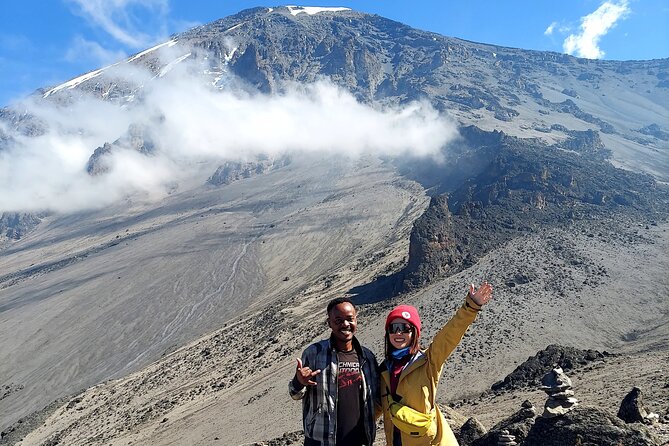
The mountain changes with every camp. This 8-day Lemosho hike gives you Kilimanjaro’s most varied scenery, from rainforest and moorland to glacier country, while allowing more time to adjust to altitude. I especially like the western approach, which feels quieter and more scenic than the busier routes, and the careful attention to health checks, pacing, and first aid. The main drawback is the summit day: up to 13 hours on foot, with a midnight start, little sleep, and a demanding descent.
Nafika Tours offers a well-supported climb at $2,350 per person, including tents, sleeping gear, meals, transport, treated water, guides, porters, emergency oxygen, and two hotel nights in Moshi. You should still approach this as a serious high-altitude trek, not a long sightseeing walk. A moderate fitness level is required, and the final ascent can test even strong hikers.
In This Review
- Key points before you book
- Why the Lemosho Route is a strong choice
- Day 1: Londorossi Gate to Big Tree Camp
- Day 2: Big Tree Camp to Shira 1
- Day 3: Shira 1 to Shira 2
- Day 4: Shira Plateau, Lava Tower, and Barranco
- Day 5: Barranco Wall to Karanga Valley
- Day 6: Karanga to Barafu Camp
- Day 7: Barafu to Uhuru Peak and the long descent
- Day 8: Millennium Campsite to Mweka Gate
- Guides, porters, food, and camp life
- What the $2,350 price really covers
- Who should choose this climb
- Should you book the 8-day Lemosho hike?
- FAQ
- How long is the Kilimanjaro Lemosho hike?
- What is the highest point reached?
- How difficult is the hike?
- Are meals included?
- What camping equipment is provided?
- Is transportation included?
- What is the cancellation policy?
Key points before you book
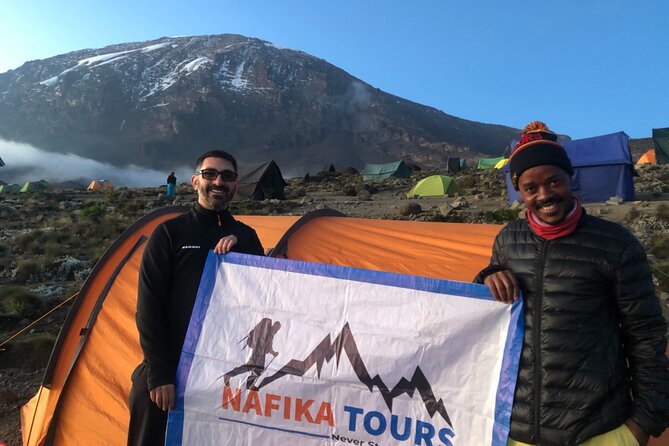
- Lemosho begins in rainforest at 2,360 meters: The route starts at Londorossi Gate and gradually moves through several climate zones.
- The itinerary includes valuable acclimatization time: Shira 2, the Lava Tower, and the optional climb near Karanga help your body adjust before the summit push.
- Lava Tower reaches 4,640 meters: You climb high on Day 4, then sleep lower at Barranco Camp, a useful high-climb, low-sleep pattern.
- Summit morning starts around midnight: Expect four to five hours to Stella Point, another hour to Uhuru Peak, then a long descent.
- Safety is a central part of the service: Guides conduct regular health checks and carry emergency oxygen and a first aid kit.
- The support camp setup is unusually practical: Tables, chairs, sleeping pads, sleeping bags, tea breaks, and cooked meals make long days easier.
Why the Lemosho Route is a strong choice
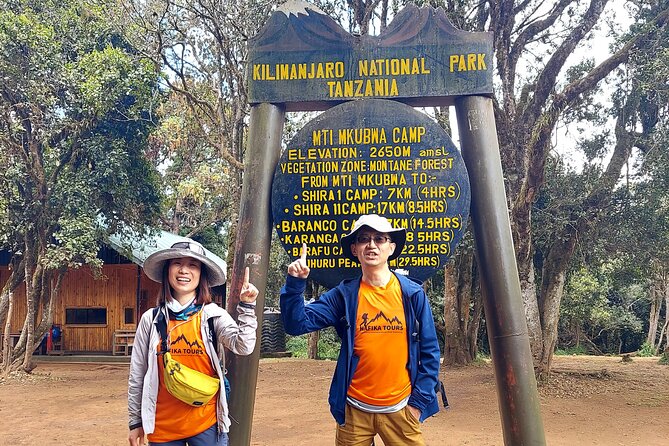
Kilimanjaro is not a technical climb in the usual mountaineering sense, but altitude makes it serious. The Lemosho route earns its reputation by giving you time and scenery. It approaches from the west, crosses the Shira Plateau, then circles toward the mountain’s southern side before the summit attempt.
That route design matters. You are not simply walking uphill for eight straight days. You move through rainforest, heather, grassy moorland, upland desert, and alpine desert. The changing vegetation helps you feel the mountain’s scale, while the gradual increase in height gives your body more time to respond.
The route is also described as having lower crowd levels than some older approaches. That does not mean you will have the mountain to yourself, especially near the southern camps, but the opening stages should feel less compressed. I like that balance: more scenery, more space, and a strong focus on acclimatization.
The group size can reach 20 people. That is not a tiny private expedition, so ask how many climbers are expected on your date. A smaller party may move more quickly, while a larger one can provide company and a lively camp atmosphere.
More Kilimanjaro routes and climbs:
- 7 Days Kilimanjaro via Machame route affordable price
★ 5.0 · 110 reviews - Kilimanjaro Airport taxi to/from Moshi town/Arusha town
★ 5.0 · 60 reviews - 6 Days Climbing Mount Kilimanjaro Machame Route
★ 5.0 · 40 reviews
Day 1: Londorossi Gate to Big Tree Camp
Your pickup is scheduled for around 8:00 am after breakfast. From the hotel, private transport takes you to Londorossi Gate on the western side of Kilimanjaro, where the pre-hike paperwork and entry formalities are handled.
The first walk follows forest trails through the Lemosho glades. After the drive and registration, the roughly four-hour hike is a sensible introduction. You gain altitude without facing a huge mileage challenge, then spend the night at Big Tree Camp.
The forest is one of the route’s appealing features. It gives you shade, bird calls, and a gradual shift away from everyday life. You may also notice that the camp routine begins immediately: walking, eating, checking equipment, and preparing for the next day.
Do not treat this first afternoon as a warm-up you can ignore. Use it to test your boots, organize your day pack, and learn the pace set by the guides. The slow rhythm is deliberate. On Kilimanjaro, pole pole, meaning slowly, is practical advice rather than a slogan.
Day 2: Big Tree Camp to Shira 1
Day 2 moves out of the forest and onto grassy moorland and heather. Volcanic rock formations begin to shape the view, and Kibo Peak may appear above the clouds. The destination is Shira 1 Camp after about 8.5 kilometers and five hours of walking.
This is one of the days when the route begins to feel properly alpine. The vegetation becomes shorter and more open. You gain a fair amount of altitude, and some sections are steep, but the stated schedule remains manageable for a person with moderate fitness.
The practical challenge is exposure. With less forest cover, sun, wind, and changing weather can affect how comfortable you feel. Keep water, sun protection, and an extra layer within reach. You do not want to stop and unpack your main bag every time the weather shifts.
Day 3: Shira 1 to Shira 2
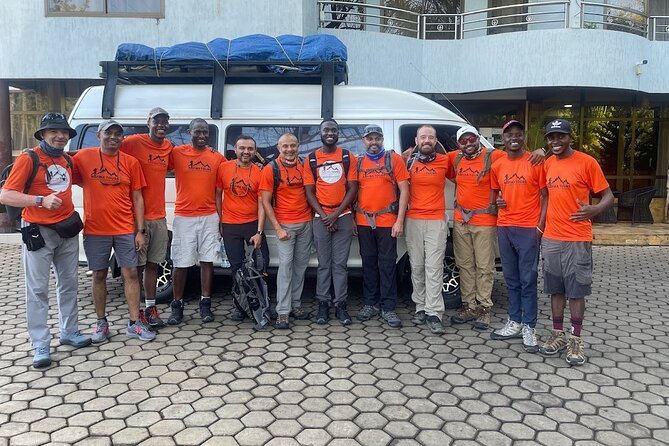
The Shira Plateau is the star of Day 3. You continue across open moorland for about eight kilometers, taking around four hours to reach Shira 2 Camp. The route gives you wide views toward Kibo and the Northern Ice fields from the western side.
The distance is short enough to leave room for an acclimatization walk after arrival. That extra walk is important. It lets you spend time at a higher point, then return to camp for dinner and sleep. This is one of the itinerary’s best design choices because acclimatization is not only about covering miles. It is also about controlled exposure to altitude.
Shira 2 can feel remote and spacious. The open plateau gives you a clear sense of the mountain’s broad upper slopes, but it also means there is little shelter from cold or wind. Nights can be uncomfortable, so a proper sleeping bag and insulated sleeping pad are not small luxuries. They are part of the value of a professionally supported climb.
A few more trips of this kind worth comparing:
- 6 Days Machame Route Kilimanjaro Trekking
★ 5.0 · 13 reviews - 8-Day Small-group Lemosho Kilimanjaro Summit Trekking
★ 5.0 · 186 reviews - Mountain Kilimanjaro Day Hike
★ 5.0 · 102 reviews - Private Full Day Hiking Experience to Marangu Route
★ 5.0 · 61 reviews
Day 4: Shira Plateau, Lava Tower, and Barranco
This is the route’s big acclimatization day. You climb through upland desert toward Lava Tower at 4,640 meters, covering about 10 kilometers in roughly seven hours. The trail follows lava ridges beneath the glaciers of the Western Breach, with broad views in several directions.
Lunch at Lava Tower gives you a chance to pause at the day’s highest point. Then comes the key move: you descend to Barranco Camp at about 3,960 meters. That high point followed by a lower sleeping altitude is useful preparation for the summit.
Barranco Camp sits beneath steep cliffs with views reaching down toward the plains. The setting is dramatic, but the day can be tiring because the altitude gain is real even though you sleep lower. Eat steadily, drink the treated water provided, and tell your guide early if you develop a headache, nausea, unusual fatigue, or breathing trouble.
The company says guides carry emergency oxygen and a first aid kit, and conduct regular health checks. Several accounts also describe daily medical checks as a normal part of the routine. That kind of monitoring is one of the strongest reasons to use an organized guided climb instead of trying to arrange mountain logistics on your own.
Day 5: Barranco Wall to Karanga Valley
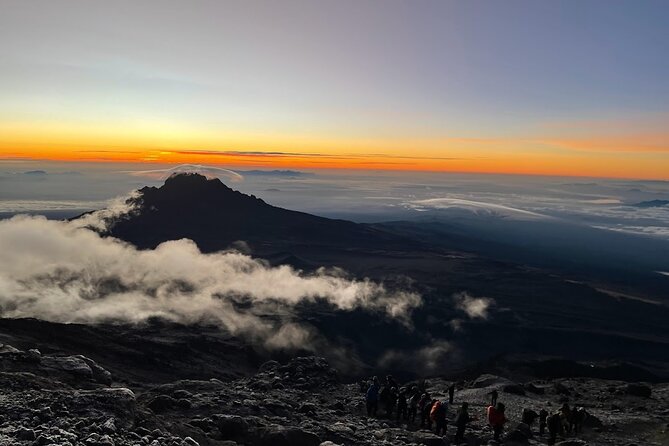
Day 5 begins with the famous Barranco Wall. It looks more intimidating than it is described, and the route climbs the ridge with help from the guide team. This is not a technical rock climb, but you should expect hands-on movement, uneven footing, and a slower pace in places.
You pass beneath the Heim and Kersten glaciers before continuing toward Karanga Valley. The views back toward the glaciers and across to Mawenzi Peak are particularly fine. At Karanga Camp, you have a hot lunch and a quieter afternoon.
That rest period is not wasted time. The summit attempt begins soon, so a nap can be more useful than extra sightseeing around camp. If you feel strong, the guides may offer an acclimatization walk to around 4,200 meters, followed by a descent to camp.
I appreciate the flexibility here. You are not forced into one schedule regardless of how you feel. At the same time, you should be honest about your energy. A short optional walk may help acclimatization, but it is not worth pushing yourself simply to prove a point.
Day 6: Karanga to Barafu Camp
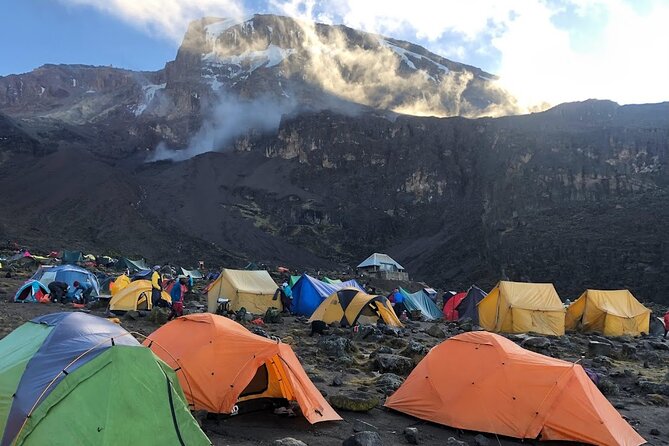
The walk to Barafu Camp covers only about four kilometers and takes roughly four hours, but this is not an easy day in the usual sense. Barafu sits at about 4,640 meters in the alpine desert, and the short schedule is built around rest before the summit.
You will see Kibo and Mawenzi from the route, then arrive for lunch and an afternoon in camp. Dinner comes early, followed by an attempt at sleep before alarms sound around midnight.
This is where good camp equipment matters. Nafika provides mountain tents, sleeping bags, sleeping pads, tables, and chairs. A comfortable camp cannot remove the cold or altitude, but it can help you conserve energy. Keep your summit clothing organized before lying down. Midnight is a poor time to search through a duffel bag for gloves.
Day 7: Barafu to Uhuru Peak and the long descent
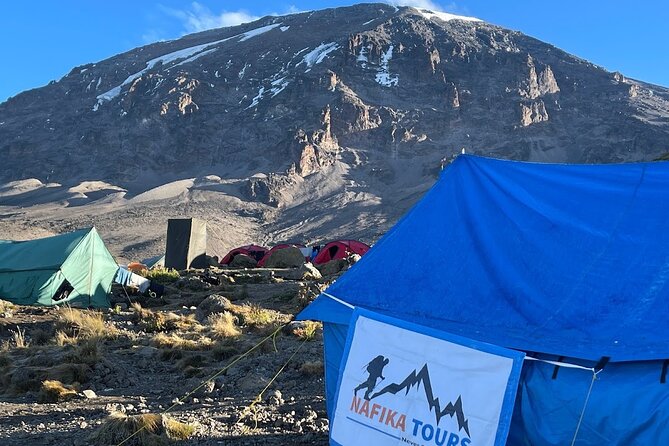
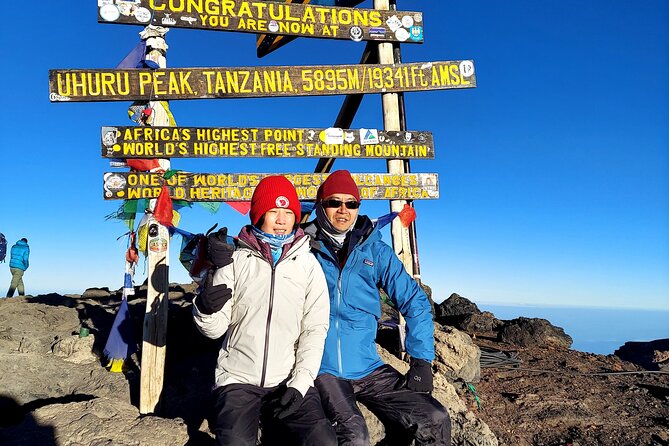
Summit day is the hardest part of the trek by a wide margin. You wake around midnight for light tea and breakfast, then begin a four to five-hour climb toward Stella Point at 5,756 meters.
The ascent gains a great deal of height over a short distance. The pace is slow, and darkness can make the climb feel even longer. The reward is the sunrise near the crater rim, followed by the final hour to Uhuru Peak at 5,895 meters, the highest point in Africa.
At the summit, you have time for photos and a short celebration, but the cold and altitude mean you should not linger too long. The descent to Barafu Camp follows for lunch and rest. The day then continues toward Millennium Campsite, according to the planned route, making the total day about 13 hours.
That schedule deserves a clear warning. Reaching Uhuru Peak is only half of summit day. Your legs and concentration still need to carry you down. If you are choosing between this experience and a shorter route, do not focus only on the summit mileage. Study the full summit-day timetable.
Day 8: Millennium Campsite to Mweka Gate
After breakfast, you make the final descent through montane forest to Mweka Gate. The listed distance is about 14 kilometers, with roughly five hours of walking.
After the stark upper mountain, the return to forest feels warm, shaded, and almost lush. At the gate, you collect your certificate and can enjoy a cold drink before saying goodbye to the guides and porters. Private transport then returns you to your hotel.
This final day is longer than its cheerful description may suggest. Your knees and feet can be sore after the summit descent, so trekking poles and careful footing are useful. Still, the gate marks a clear finish, and the promised hotel return gives you a welcome chance for a hot shower and proper rest.
Guides, porters, food, and camp life
The strongest praise for this operation centers on the staff. Names that appear in the trip feedback include Eli, Elias, Meshakii, Inocent, Musa, Diklan, Abdala, and Alyce. The exact guide team will depend on your departure, but the recurring picture is of attentive leaders who adjust the pace, check equipment, answer questions, and keep an eye on health.
One particularly useful detail is the equipment check before the climb. If you are missing an item, the team may help arrange a rental. Confirm this directly before arrival rather than relying on it as a guarantee, but it is a reassuring part of the preparation.
The food also receives unusually warm praise. Breakfast, lunch, and dinner are included, with eight breakfasts, eight lunches, and seven dinners listed. The cooking team is credited with providing varied meals and occasional surprises, which matters when you are eating in a tent after several hours of walking.
Tea breaks are another practical touch. Tables, chairs, food, and tea have been provided on some outings, rather than simply handing out a thermos. That makes breaks more comfortable and gives you a proper place to sit, adjust layers, and refuel.
The porter system deserves your attention too. The price includes salaries for the mountain crew, porters, and guides. Ask the operator about current tipping guidance and fair porter practices before you go. Your support should reach the people doing the heavy work.
What the $2,350 price really covers
At $2,350 per person, this is not a bare-bones hiking package. The price includes private transportation, two nights in a Moshi hotel, camping equipment, sleeping gear, meals, treated water, professional guides, porters, emergency oxygen, first aid, and park-related parking fees.
Those inclusions reduce the number of expensive extras you must arrange yourself. The two hotel nights are particularly helpful because you have a place to recover before or after the mountain, depending on the schedule.
A $50 visa fee is not included. You should also confirm what is covered for personal gear, airport transfers, tips, and any rental equipment, since those details are not fully specified here. Pickup is offered, and the stated meeting point is Kilimanjaro International Airport, but confirm the exact hotel and airport arrangements before paying.
The free-cancellation terms are simple: cancel at least 24 hours before the local start time for a full refund. Cancellations within 24 hours are not refunded, and late changes are not accepted.
Who should choose this climb
I would recommend this route to you if scenery, acclimatization time, and organized support matter more than the lowest possible price. It suits hikers who can manage repeated days of walking, sleep in tents, cope with cold, and accept that summit success is never guaranteed.
Families and mixed-age groups can do well with the right preparation. One reported group included climbers from 20 to 58, and another family celebrated a 69th birthday at the summit. Those examples do not make the climb easy, but they show how much pacing and guide support can matter.
You may want to reconsider if you dislike camping, struggle with long uphill days, or want a relaxed holiday schedule. The summit morning is physically and mentally demanding, and the 13-hour timetable leaves little room for comfort.
Should you book the 8-day Lemosho hike?
Yes, if you want a scenic Kilimanjaro route with strong acclimatization planning and a full support team. I like the combination of a quieter western start, the Shira Plateau, Lava Tower, Barranco Wall, and a gradual approach to Barafu.
Nafika Tours also appears to put real effort into the details that matter on a mountain: health checks, equipment inspections, hot meals, treated water, proper camp furniture, emergency supplies, and guide support. The price looks fair for what is included, though you should confirm gear rentals, tipping, airport pickup, and the exact accommodation before booking.
Choose it with open eyes. You are buying a serious high-altitude expedition, not a simple walk to a viewpoint. If you prepare properly and respect the slow pace, the Lemosho route offers one of the best all-around ways to experience Kilimanjaro.
FAQ
How long is the Kilimanjaro Lemosho hike?
The experience lasts approximately eight days, with the route beginning at Londorossi Gate and ending at Mweka Gate before private transport returns you to the hotel.
What is the highest point reached?
The summit is Uhuru Peak at 5,895 meters. On summit day, you first reach Stella Point at 5,756 meters before continuing for about one hour to Uhuru Peak.
How difficult is the hike?
A moderate level of physical fitness is required. The summit day is the most demanding, lasting about 13 hours and beginning around midnight.
Are meals included?
Yes. The package lists eight breakfasts, eight lunches, and seven dinners. Treated water is also provided throughout the trek.
What camping equipment is provided?
The company provides camping equipment, mountain sleeping tents, sleeping pads, sleeping bags, tables, and chairs.
Is transportation included?
Yes. Private transportation is included, along with pickup. The listed meeting point is Kilimanjaro International Airport, and the activity ends back at the meeting point.
What is the cancellation policy?
You can receive a full refund if you cancel at least 24 hours before the local start time. Cancellations or changes made within 24 hours are not accepted or refunded.
Just added around Kilimanjaro
- 5 days Serengeti Wildebeest Migration Safari★ 5.0 · 3 reviews
- Tanzania Safari and Kilimanjaro Climb Multi-Day Experience★ 5.0 · 3 reviews
- 9 Days – Best of Tanzania Safari★ 5.0 · 4 reviews
- 7 Days Mountain Kilimanjaro climb Machame Route★ 5.0 · 4 reviews
- 8-Day Tanzania Migration Footsteps – Midrange★ 5.0 · 4 reviews
- 4 Days Lake Manyara National Park, Ngorongoro Crater , Serengeti National Park.★ 4.0 · 4 reviews
- 6 Days Mara River Crossing – The Great Migration★ 5.0 · 5 reviews
- 6- Day Adventure Lodge safari to see Migration★ 4.5 · 5 reviews
Kilimanjaro Treks, compared.



8-Day Small-group Lemosho Kilimanjaro Summit Trekking
Read our review →


Climbing Kilimanjaro through 7 days Machame Route
Read our review →

Browse the lists this tour appears in