
Reviewed · KILIMANJARO TREKS
8 days Lemosho route Climbing Mt. Kilimanjaro
Reach Africa’s highest summit the long way. This 8-day Lemosho route gives you a gradual approach through rainforest, moorland, alpine desert, and summit scree, with a strong acclimatization day at Lava Tower. I like the route’s changing scenery and the support package, which includes guides, porters, a cook, tents, meals, treated water, oxygen, and airport transfers. The main consideration is the altitude: reaching 5,895 meters is demanding, and the summit night alone involves about 8 hours of climbing before a long descent.
I also like that the price includes two nights in Moshi, park and camping fees, rescue cover, and transport to and from the mountain. The company’s local planning support has earned particular praise, with Naick often handling clear pre-trip communication and guides such as Goodluck and Abraham receiving warm personal comments. Still, you need strong physical fitness, and tips for the mountain crew are not included in the $3,100 price.
In This Review
- Key details of the Lemosho climb
- Why Lemosho is a smart eight-day route
- Day one: From Moshi to the Lemosho rainforest
- Day two: Heather and volcanic rock on the Shira approach
- Day three: Across the Shira Plateau to Moir Hut
- Day four: Lava Tower, altitude practice, and Barranco
- Day five: Over the Barranco Wall to Karanga Camp
- Day six: Barafu Camp and preparation for summit night
- Day seven: Stella Point, Uhuru Peak, and the long descent
- Day eight: Mweka Gate, certificates, and a hot shower
- Food, camping, safety, and staff support
- Who should book this Kilimanjaro trip?
- Is the $3,100 price good value?
- Should you book the eight-day Lemosho route?
- FAQ
- How long is the Kilimanjaro Lemosho climb?
- What time does the climb start?
- What is included in the $3,100 price?
- Are flights, insurance, and tips included?
- How difficult is the summit day?
- What happens if bad weather cancels the climb?
Key details of the Lemosho climb
- Lemosho begins in quiet rainforest: The first two days feel remote and green before the route opens onto the Shira Plateau.
- Acclimatization is built into the route: Day four takes you high to Lava Tower, then drops you to Barranco Camp.
- The Barranco Wall adds a hands-on challenge: This Class 2 section looks more intimidating than it is, but it requires steady footing and confidence.
- Summit night is the real test: You start around 11:30 pm, reach Stella Point after roughly six hours, then continue to Uhuru Peak.
- The support package is substantial: Food, water, tents, rescue fees, oxygen, transport, and mountain staff are included.
- The group can reach 15 people: That keeps the price manageable, though it is not a private trek for just one or two climbers.
Why Lemosho is a smart eight-day route
Kilimanjaro is not a technical mountain climb in the usual mountaineering sense, but altitude makes it serious. The Lemosho route helps by giving you time to gain height gradually, and this eight-day plan includes a valuable high-altitude day before sleeping lower at Barranco.
The route begins on the western side of the mountain and joins the southern circuit near Lava Tower. You cross several ecological zones rather than walking through one long stretch of similar ground. That change matters. The forest is damp and enclosed, the Shira Plateau is broad and open, and the upper mountain is dry, rocky, and exposed.
I would choose this itinerary over a shorter Kilimanjaro route if you want better acclimatization and a more varied approach. An eight-day schedule is still physically demanding, but it avoids rushing the mountain into five or six days. One practical point from the available trip feedback is worth noting: a nine-day Lemosho itinerary may suit climbers who want the most gradual acclimatization, while the eight-day version is a reasonable choice for people in good condition.
The listed price is $3,100 per person. That is not a small sum, but Kilimanjaro costs include far more than a guide walking beside you. Park access, camping, rescue fees, food, porter support, mountain transport, VAT, tents, water, and staff wages are all part of the package. Airport transfers and two Moshi hotel nights add useful value before and after the climb.
More Kilimanjaro routes and climbs:
- Kilimanjaro climb by Lemosho Route (7-day)
★ 5.0 · 651 reviews - Kilimanjaro climb, Machame Route (7-day)
★ 5.0 · 262 reviews - Kilimanjaro Climbing Lemosho Route 8 Days.
★ 5.0 · 186 reviews
Day one: From Moshi to the Lemosho rainforest
The day begins with breakfast at your Moshi hotel and a briefing from your guide. Pickup is offered, and the start time is listed as 8:30 am. You then drive toward Londorossi Park Gate at about 2,100 meters, where entry formalities are completed.
The drive continues to the Lemosho trailhead, which takes about another hour from the village near the gate. After lunch at the trailhead, you walk roughly 6 kilometers through undisturbed rainforest. The hiking time is listed at three to four hours, and the first night is spent in the forest zone.
This is a gentle opening by Kilimanjaro standards. You are not trying to cover a huge distance, so you can settle into the slow walking rhythm that will matter later. Your crew carries the camping equipment and prepares three meals a day, leaving you to focus on hydration, pacing, and noticing how your body feels.
The drawback is that the first day includes a long road transfer before the walk begins. Road conditions and entry procedures can affect the timing, so do not expect a full morning on the trail.
Day two: Heather and volcanic rock on the Shira approach
The forest thins as you climb into moorland. Over about 8 kilometers and five and a half hours, the path crosses rolling ground covered with tall grasses, heather, volcanic rock, and lichen.
This section feels more open than day one, and the views begin to stretch toward Kibo, Kilimanjaro’s main volcanic cone. You cross streams and climb toward Shira Ridge before making a gentle descent to Shira 1 Camp.
Shira is one of the high plateaus on Earth, so this is a beautiful place to appreciate the scale of the mountain. The approach is not only about reaching camp. You are already training your body to work at altitude, and the relatively moderate distance gives you room to walk slowly.
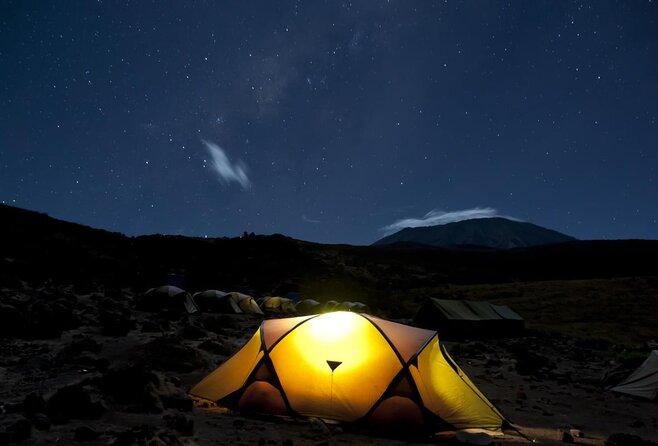
Nighttime conditions can feel very different from the warm forest. Pack layers where you can reach them easily, and keep small essentials inside your sleeping bag or clothing bag so they do not become cold and damp.
Day three: Across the Shira Plateau to Moir Hut
Day three covers approximately 15 kilometers, with five to seven hours of hiking through moorland. It is one of the longer days before the summit attempt, but the route is described as a gentle walk east across the Shira Plateau.
You pass Shira 2 Camp on moorland meadows beside a stream, then continue toward Moir Hut at the base of the Lent Hills. The destination is positioned beneath Kilimanjaro’s Northern Ice Fields, giving you a closer view of the upper mountain.
The Lent Hills area is useful for acclimatization because optional walks are available there. That flexibility matters. Your guide can judge how you are coping and use the area for extra walking without forcing you into a punishing day.
The distance is the main concern. Fifteen kilometers at altitude can feel much longer than the number suggests, particularly if the trail rises and falls. Keep your pace conservative. You are not racing the group, and arriving with energy for the next day is more important than walking quickly.
A few more trips of this kind worth comparing:
- Safari Serengeti And Ngorongoro
★ 5.0 · 288 reviews - Climbing Kilimanjaro – Machame Route
★ 5.0 · 170 reviews - Climbing Kilimanjaro through 7 days Machame Route
★ 5.0 · 151 reviews - Kilimanjaro climb, Lemosho Route (8-day)
★ 5.0 · 148 reviews
Day four: Lava Tower, altitude practice, and Barranco
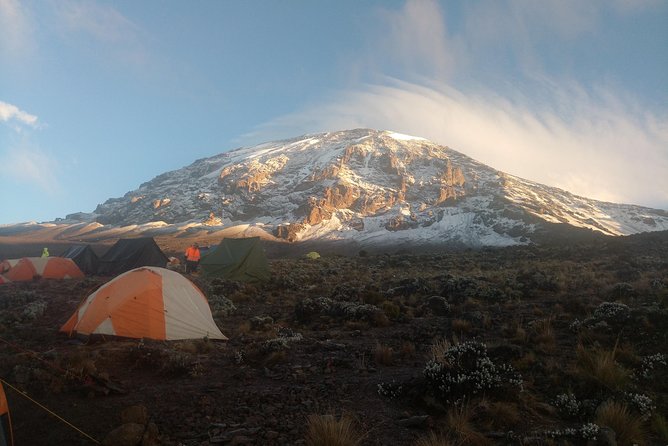
This is the route’s key acclimatization day. From Moir Hut, you climb east along a ridge, pass the junction toward Kibo, and continue southeast toward Lava Tower, also called the Shark’s Tooth.
The hiking distance is about 7 kilometers, but the day takes around seven hours because the route reaches high altitude. The itinerary describes a junction toward Arrow Glacier at approximately 16,000 feet before the trail descends to Barranco Hut at about 13,000 feet.
You finish the day close to the elevation where you began, but that is exactly the point. Your body spends time high, then you sleep lower. This climb high, sleep lower pattern is one of the most useful features of the itinerary.
The scenery changes again, from moorland to semi-desert. Vegetation becomes sparse, and the trail feels more exposed and volcanic. Lava Tower can be a rough moment for anyone who reacts strongly to altitude. Tell your guide promptly about headache, nausea, unusual tiredness, or other symptoms. The operator lists portable oxygen, an oximeter, and an emergency first-aid kit, but those tools are support, not a substitute for careful judgment.
Barranco Camp is a memorable place to rest beneath the mountain. You have completed a hard acclimatization day, and the next morning begins with one of Kilimanjaro’s most recognizable obstacles.
Day five: Over the Barranco Wall to Karanga Camp
After breakfast, you tackle the Great Barranco Wall. From below, it can look like a near-vertical barrier. In practice, the route is described as a Class 2 hike, meaning you use your hands in places but do not need technical climbing equipment.
The wall requires patience more than strength. You will likely move in a slower line, stepping carefully and following your guide’s route. This is not the place for a large daypack or a hurried pace.
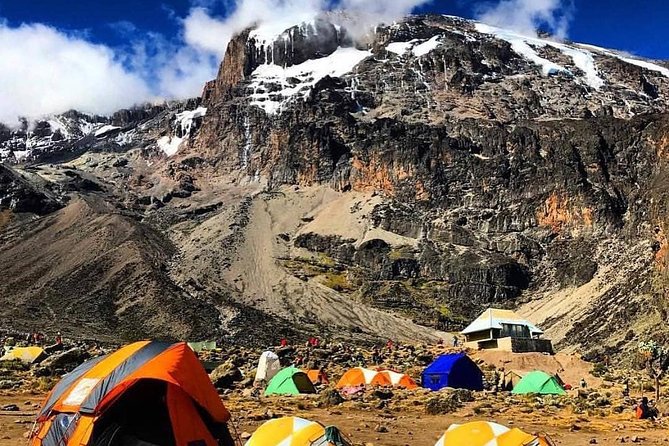
At the top, you can see the Heim Glacier and look out above the clouds. The trail then rises and falls through the Karanga Valley before reaching Karanga Camp at about 3,950 meters. The distance is approximately 5 kilometers, with four to five hours of hiking.
This shorter day is welcome after Lava Tower. It gives you time to recover while still gaining height. The alpine desert setting is dry and rocky, and the camp is more exposed than the forest camps below. Meals, hot water for washing, and tent accommodation are included, but mountain camping remains basic. You should value the support without expecting hotel comfort.
Day six: Barafu Camp and preparation for summit night
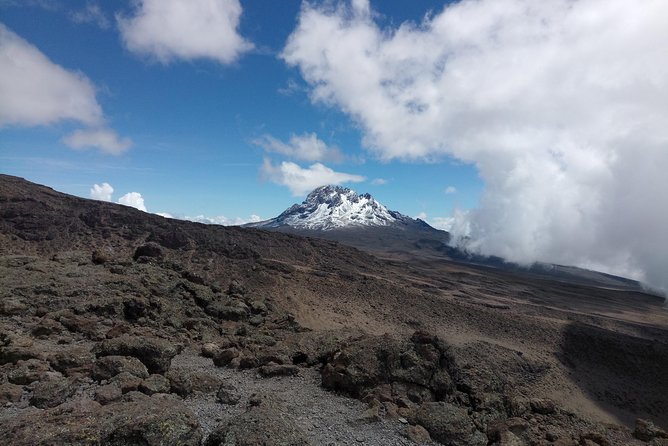
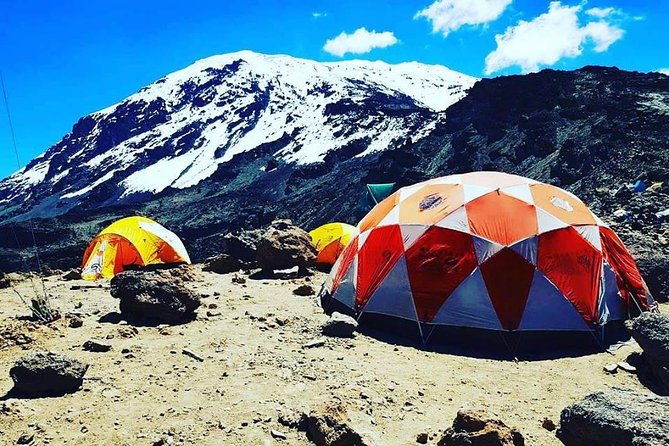
The walk from Karanga to Barafu is short, around 4 kilometers and three to four hours. The trail joins the Mweka Route, which you use during the final descent, then reaches Barafu Hut at approximately 4,550 meters.
Barafu means ice in Swahili. The camp sits on a rocky, exposed ridge, and there is no accessible water there. The porters’ last water stop is before camp, which explains why water management is part of the mountain operation.
You should arrive with enough time to become familiar with the camp before darkness. Wind and loose rock can make the site feel stark, and it is important to organize your clothing, headlamp, snacks, and summit pack before dinner.
An early meal is served, followed by a briefing on summit night. The planned bedtime is around 7:00 pm, though sleeping at this altitude and at such an early hour can be difficult. The wake-up call comes around 11:30 pm for tea and biscuits.
This is the quietest and most mentally important evening of the trek. You have done the approach. Now you must decide how to manage the hardest stretch.
Day seven: Stella Point, Uhuru Peak, and the long descent
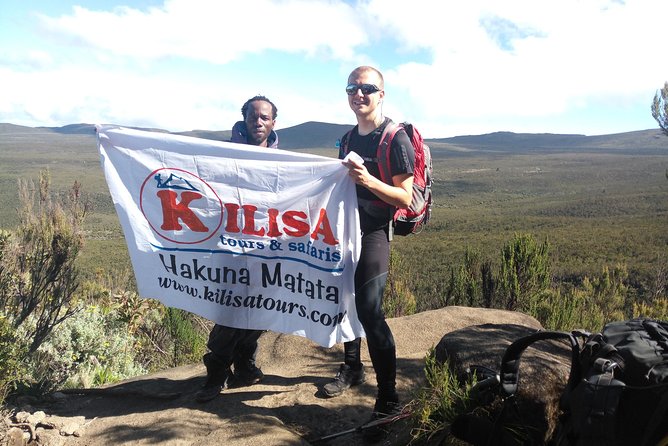
Summit day begins before midnight. The ascent heads northwest over stone scree, and the itinerary allows about six hours to reach Stella Point at 5,685 meters.
This is where patience pays. The pace is deliberately slow, and the cold, darkness, steep scree, and thin air can make every step feel important. The final hours to Stella Point are often the toughest part mentally, so keep your attention on steady movement rather than the total distance remaining.
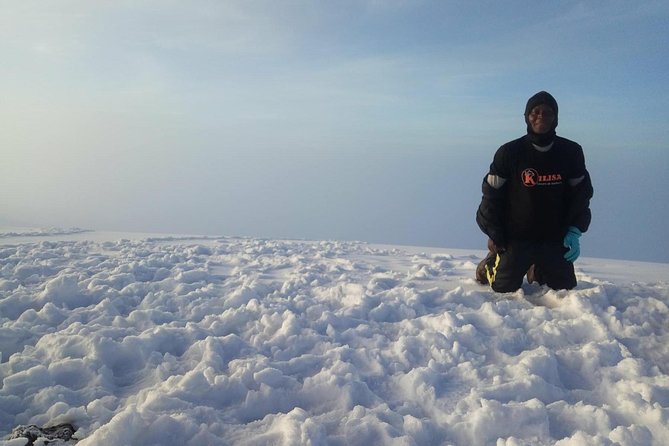
At Stella Point, you can pause for sunrise and recover before continuing along the crater rim. The route to Uhuru Peak at 5,895 meters takes about two more hours over a snow-covered trail. Reaching the summit is the high point of the trip, but do not linger too long in the cold. Listen to your guide and protect your energy for the descent.
The listed schedule gives eight hours to reach Uhuru Peak, then seven to eight hours to descend to Mweka Camp. The ascent is about 7 kilometers, while the descent covers approximately 23 kilometers. That is an enormous day, and successful summit plans depend on conserving energy from the start.
After the summit, you descend through scree before continuing toward Mweka. Lunch and dinner are included, but you should expect to be very tired. This is one reason the two Moshi nights included in the package are useful: the first comes before the climb, and the return to town after the mountain provides a proper recovery point.
Day eight: Mweka Gate, certificates, and a hot shower
The final hiking day covers about 15 kilometers through forest and takes roughly three hours. After breakfast, the mountain crew celebrates with dancing and singing.
There is also a formal certificate process at Mweka Gate. Climbers who reach Stella Point receive green certificates, while those who reach Uhuru Peak receive gold certificates. After signing out at the gate, you continue for about an hour and 3 kilometers to Mweka village, where a hot lunch is served.
You then return to Moshi for showers and more celebration. This last transfer marks a sharp change from the exposed upper mountain to ordinary town comforts. Clean clothes and a bed will feel like luxury.
One practical issue deserves clear attention: tipping is not included. The information provided notes that tips are not compulsory, but they are deeply expected within the local mountain culture. Ask for current guidance before departure and budget separately for the guide, assistant guides, cook, and porters. Discussing this early can prevent an uncomfortable conversation at the end.
Food, camping, safety, and staff support
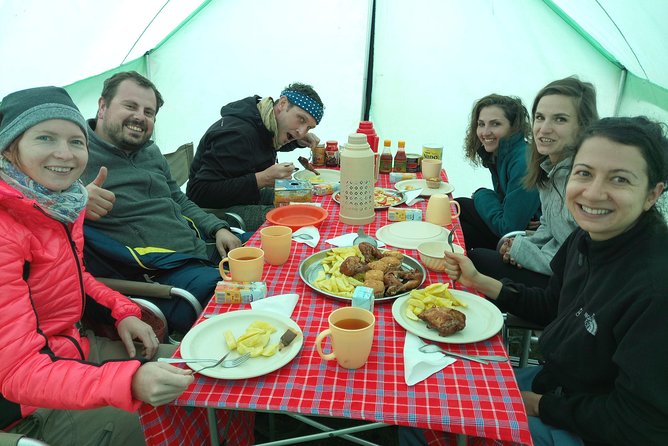
Three hot meals are provided each day on the mountain. The package also includes treated and filtered drinking water, hot water for washing, sleeping mats, four-season tents, and a cook. That is a meaningful level of support for an eight-day trek.
The operator lists professional guides, assistant guides, porters, rescue fees, portable oxygen, an oximeter, and an emergency first-aid kit. These inclusions are reassuring, but no equipment package removes the risks of altitude, cold, exhaustion, or poor weather. You still need travel insurance, which is not included.
Personal support is one of the strongest parts of the experience as described by the available feedback. Naick is repeatedly praised for responsive planning and for helping when flights were canceled, postponed, or disrupted. Guides Goodluck and Abraham are also named in connection with a safe and successful summit.
The maximum group size is 15. That can be a good compromise between cost and company, though it may feel less personal than a small private group. Ask how many climbers are in your specific departure and how the guide team is organized.
Who should book this Kilimanjaro trip?
I would recommend this climb to you if you want a full route experience, prefer gradual acclimatization, and are comfortable camping for a week. It suits fit hikers who can handle long days, changing temperatures, exposed camps, and a very demanding summit night.
It is less suitable if you want a relaxed holiday, dislike basic camping, or are looking for a short sightseeing trip from Moshi. You should also think carefully about the eight-day schedule if you have limited hiking experience at altitude. The nine-day option may be worth asking about if you want more acclimatization time.
Booking includes free cancellation up to 24 hours before the local start time for a full refund. Changes or cancellations made inside that 24-hour window are not accepted, and poor weather may lead to a different date or a full refund. Confirmation is provided at booking, and the activity begins and ends in Moshi.
Is the $3,100 price good value?
For a supported Kilimanjaro climb, I see the $3,100 price as a substantial but reasonable package price, provided the service is delivered as described. You are paying for seven nights on the mountain, park and camping fees, rescue cover, staff, meals, water, tents, transport, VAT, two Moshi hotel nights, and airport transfers.
The price does not include flights, travel insurance, or tips. Those extras can change your total budget, so calculate them before booking. The package also includes mobile ticketing and pickup, which makes the arrival process simpler.
The real value is the route length and the staff structure. Lemosho gives you varied scenery and a proper acclimatization day, while the local company setup offers direct communication before arrival. I would ask for a clear packing list, current tipping guidance, hotel details, group size, and the exact airport transfer arrangements before paying.
Should you book the eight-day Lemosho route?
Yes, if you are fit, want a well-supported climb, and prefer a gradual route rather than the quickest possible ascent. The combination of Lemosho’s changing zones, Lava Tower acclimatization, Barranco Wall, and full summit attempt makes this a strong Kilimanjaro plan.
I would pause and compare the nine-day option if altitude concerns you or you have little experience with multi-day mountain walking. If you choose this eight-day version, arrive prepared, walk slowly, budget for tips and insurance, and treat every symptom seriously. Kilimanjaro rewards patience, not bravado.
FAQ
How long is the Kilimanjaro Lemosho climb?
The experience lasts approximately eight days, beginning and ending in Moshi. It includes seven nights on the mountain and two nights of accommodation in Moshi as part of the package.
What time does the climb start?
The listed start time is 8:30 am from Moshi. The first day includes breakfast, a guide briefing, transport to Londorossi Park Gate, entry formalities, and the drive to the Lemosho trailhead.
What is included in the $3,100 price?
The price includes airport transfers, two Moshi accommodation nights, transport to and from the Kilimanjaro gate, park and camping fees, rescue fees, VAT, sleeping mats, guides, porters, a cook, three hot meals daily, treated drinking water, hot washing water, four-season tents, oxygen, an oximeter, and a first-aid kit.
Are flights, insurance, and tips included?
No. Flights, travel insurance, and tips for the guides, porters, and cook are not included.
How difficult is the summit day?
Summit day is the most demanding part. You wake around 11:30 pm, spend about eight hours reaching Uhuru Peak, then descend for another seven to eight hours toward Mweka. The route reaches 5,895 meters at the summit.
What happens if bad weather cancels the climb?
The experience requires good weather. If it is canceled because of poor weather, you are offered a different date or a full refund. Free cancellation for a full refund is also available when you cancel at least 24 hours before the local start time.
Just added around Moshi
- Moshi: Lake Chala Tour: Hiking &/or Kayaking★ 4.5 · 3 reviews
- 3 Days Tanga Exclusive Beach Holiday★ 5.0 · 3 reviews
- Serengeti Wildebeest Migration.★ 5.0 · 3 reviews
- Chemka Hotpsrings E-Bike Day Trip★ 5.0 · 3 reviews
- Explore 1 day Ngorongoro Crater Budget Group Safari from Arusha★ 5.0 · 3 reviews
- Explore the 360° of Kilimanjaro★ 5.0 · 3 reviews
- Affordable Short Tanzania Safari (2 Days Camping Safari)★ 5.0 · 3 reviews
- Rongai Route 7 Days★ 5.0 · 3 reviews
Kilimanjaro Treks, compared.



8-Day Small-group Lemosho Kilimanjaro Summit Trekking
Read our review →


Climbing Kilimanjaro through 7 days Machame Route
Read our review →

Browse the lists this tour appears in