
Reviewed · KILIMANJARO TREKS
8 Days Lemosho Route Kilimanjaro Trekking
Kilimanjaro saves its best scenery for the patient climber. This 8-day Lemosho trek begins in quiet rainforest, crosses the wide Shira Plateau, and then follows the southern circuit toward Uhuru Peak. I like the route’s changing habitats and its built-in acclimatization days, and I also like that Mafie Adventures is a local Tanzanian company with direct communication through owner Erastus. The main consideration is simple: this is a serious high-altitude climb, not an easy walking holiday.
The private format gives your group a more personal arrangement, and the crew receives especially strong praise, with Oliver named as a friendly and capable lead guide and John also mentioned as part of the summit team. The price of $2,700.52 per person covers park and rescue fees, camping, guides, porters, cooks, and all meals on the mountain. You still need to budget for flights, pre- and post-climb lodging, gear rental, tips, insurance, and a visa.
In This Review
- Key points to know before you book
- Why Lemosho is Kilimanjaro’s scenic choice
- Day 1: From Arusha to the rainforest
- Day 2: Shira Ridge and the first wide views
- Day 3: Shira 2, Moir Hut, and useful acclimatization
- Day 4: Lava Tower, Arrow Glacier junction, and Barranco
- Day 5: The Barranco Wall and Karanga Valley
- Day 6: Barafu Camp and the last water stop
- Day 7: Stella Point, Uhuru Peak, and the long descent
- Day 8: Mweka Gate, certificates, and the mountain goodbye
- What the $2,700.52 price includes
- The crew and the local-company advantage
- Who should choose this eight-day climb?
- Should you book the Mafie Adventures Lemosho trek?
- FAQ
- Where does the Kilimanjaro trek start?
- How long is the Lemosho trek?
- Is this a private tour?
- What route habitats will I see?
- How high is Uhuru Peak?
- What is the highest point before Uhuru Peak?
- Is camping equipment included?
- Is a sleeping bag included?
- Are meals included?
- Are tips included in the price?
Key points to know before you book
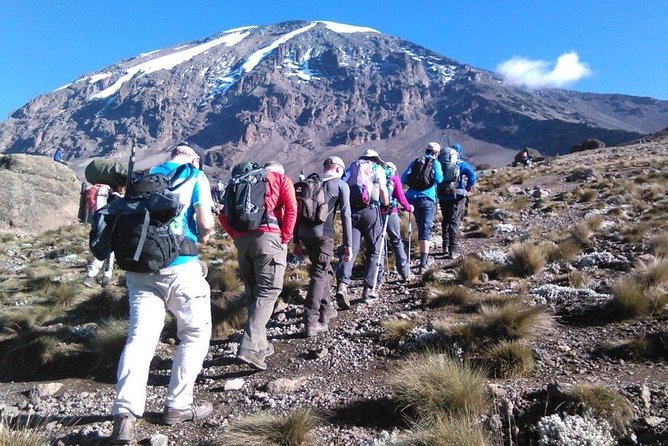
- The scenery changes every day: You move from rainforest to moorland, volcanic plateau, semi-desert, alpine desert, and finally stone scree and ice near the summit.
- The route takes acclimatization seriously: Days 3 and 4 are especially useful because you gain height, then sleep lower at Barranco Camp.
- Crowds are lighter at first: Lemosho is quiet until it joins the Machame route on the southern circuit.
- The summit day is long: You begin around 11:30 p.m., walk to Stella Point, continue to Uhuru Peak, then descend to Mweka in the same day.
- The package is broad: Camping equipment, rescue fees, taxes, permits, porters, guides, and all meals are included.
- The human side gets high marks: Erastus is praised for quick communication and flexible planning, while Oliver and the wider crew helped make several trips memorable.
Why Lemosho is Kilimanjaro’s scenic choice
Lemosho earns its reputation by changing character as you climb. The first day begins under trees in the rainforest, where the trail feels shaded and enclosed. By the second day, the forest gives way to heather, tall grass, volcanic rock, and wide views across the Shira Plateau.
That variety matters. Some Kilimanjaro routes reach high ground more quickly, but Lemosho gives you time to adjust while showing more of the mountain’s different habitats. You also spend the early days away from the heavier traffic found on routes that join the southern circuit sooner.
The quiet does not last forever. From Shira 2 onward, the route eventually combines with Machame, so the trail becomes more shared. Still, the early solitude and the gradual approach make Lemosho a strong choice for anyone who values scenery and a slower physical build-up.
This is a private activity, so only your own group participates. That can make a real difference on a climb where pace, rest stops, and morale matter. Pickup is offered, and the listed meeting point is in Arusha at 6:00 a.m.
More Kilimanjaro routes and climbs:
- 8-Day Small-group Lemosho Kilimanjaro Summit Trekking
★ 5.0 · 186 reviews - 7-Day Machame Kilimanjaro Summit Tour from Arusha
★ 5.0 · 125 reviews - Mountain Kilimanjaro Day Hike
★ 5.0 · 102 reviews
Day 1: From Arusha to the rainforest
Your first morning begins with breakfast at your hotel and a guide briefing. The drive from Arusha, at about 1,400 meters, to Londorossi Park Gate takes around two hours. The park gate sits at approximately 2,100 meters.
Formalities are completed in the village near Londorossi before you drive for another hour to the Lemosho trailhead. That transfer is worth noting because your walking day does not begin immediately after leaving Arusha. You should expect a morning of road travel, registration, lunch, and preparation before the trail starts.
The hike covers about 6 kilometers and takes roughly 3 to 4 hours. Your habitat is rainforest, and the trail winds through relatively undisturbed forest toward the first campsite.
This is a gentle introduction by Kilimanjaro standards, but the altitude has already begun to change. Keep your pace slow from the start. The purpose is not to prove how fit you are on day one. It is to arrive at camp with energy left.
Day 2: Shira Ridge and the first wide views
Day two covers about 8 kilometers in approximately 5 to 5.5 hours. The forest falls behind, replaced by moorland, tall grasses, heather, volcanic rock, and lichen-covered vegetation.
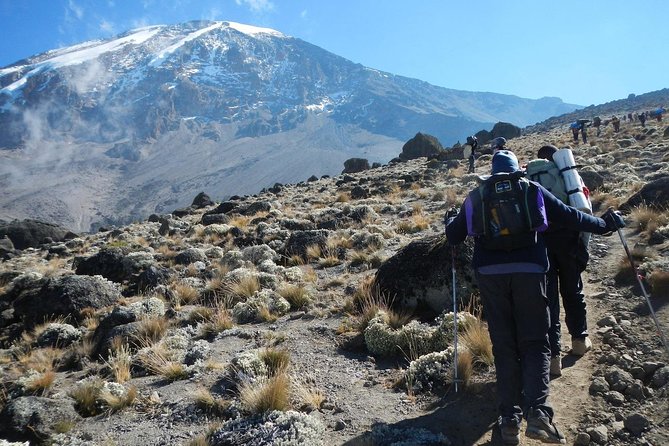
The trail rises through rolling hills and crosses several streams before reaching Shira Ridge. From there, you drop gently toward Shira 1 Camp. The view across the plateau toward Kibo, Kilimanjaro’s main summit cone, is one of the route’s early rewards.
This day is not just scenic. You gain height while walking at a manageable pace, which helps your body begin adjusting. The open terrain can also feel more exposed than the forest, so sun protection and warm layers become more important.
Shira is one of the highest plateaus on earth, and that fact gives this section a distinct feel. It is broad and open rather than steep and crowded with trees. You may find the change in scale striking: the mountain feels less like a distant peak and more like a huge volcanic world around you.
Day 3: Shira 2, Moir Hut, and useful acclimatization
Day three is longer, covering about 15 kilometers in 5 to 7 hours. You walk east across the Shira Plateau toward the glaciered summit and Shira 2 Camp, set among moorland meadows near a stream.
From Shira 2, the trail continues to Moir Hut, a lightly used campsite below Lent Hills. The area offers optional walks on Lent Hills, making this an important acclimatization day.
The point is not simply to reach a higher camp. You are spending time at altitude, then using the surrounding trails to adjust without rushing straight toward the summit. That rhythm is one of the best reasons to choose an 8-day route rather than trying to squeeze the mountain into fewer days.
The distance is moderate on paper, but altitude changes the effort. Let the guides set a steady pace. A private group can be helpful here, since your walking speed can be adjusted without trying to keep up with a larger party.
A few more trips of this kind worth comparing:
- Private Full Day Hiking Experience to Marangu Route
★ 5.0 · 61 reviews - 4 Days Mount Meru Trekking
★ 5.0 · 55 reviews - 4 days Best experience Kilimanjaro Hike, Serengeti &Ngorongoro
★ 5.0 · 54 reviews - From Arusha/Moshi: Kilimanjaro Hike Marangu Route Day Trip
★ 4.5 · 54 reviews
Day 4: Lava Tower, Arrow Glacier junction, and Barranco
Day four is one of the most important days on the route. You hike about 7 kilometers for roughly 7 hours through semi-desert terrain.
From Moir Hut, the trail rises along a ridge and passes the junction toward Kibo. It then turns southeast toward Lava Tower, also called the Shark’s Tooth. After Lava Tower, you reach a second junction leading toward Arrow Glacier at about 16,000 feet.
You do not finish the day at that higher point. Instead, you descend to Barranco Hut, at approximately 13,000 feet. The unusual gain-and-loss pattern is deliberate. You climb high, then sleep lower, giving your body a useful altitude lesson before summit day.
This can be a demanding day even though the distance is not great. Semi-desert conditions offer little cover, and the high point near Lava Tower may test your response to altitude. Move slowly, drink regularly, and tell your guide promptly if you feel unwell.
Barranco Camp is memorable because it sits beneath dramatic high terrain. Dinner and overnight rest come after a day that may feel like a preview of the summit challenge.
Day 5: The Barranco Wall and Karanga Valley
Day five is shorter, about 5 kilometers and 4 to 5 hours, but it begins with the famous Barranco Wall. The wall may look intimidating from below. The route is described as a Class 2 hike, and it is generally considered easier than its appearance suggests.
You should still expect hands-on movement and a careful pace. This is not a flat path, and the wall can feel more serious when you are carrying a pack at altitude. Your guides are particularly important here, helping you choose secure footing and maintain a calm rhythm.
At the top, you get views toward Heim Glacier and the chance to look down on the clouds. The trail then winds through the Karanga Valley, with repeated rises and dips before reaching Karanga Camp at about 3,950 meters.
Although this is a shorter walking day, it is not a day to waste by rushing. Use the extra time for eating, resting, checking clothing, and preparing for the higher camps ahead. Washing is available at the site, though you should not expect hotel-style facilities on a mountain camp.
Day 6: Barafu Camp and the last water stop
Day six covers only about 4 kilometers in 3 to 4 hours, but it brings you to the exposed Barafu Camp at 4,550 meters. The habitat is alpine desert, with rocky ground and very little shelter.
The trail intersects with the Mweka Route, which you use during the final descent. After roughly another hour, you reach Barafu Hut. This is the last water stop for porters because accessible water is not available at Barafu Camp.
That detail affects your routine. Make sure your bottles or water system are filled before leaving the last reliable source. Barafu means ice in Swahili, and the camp’s name fits its cold, exposed character.
Tents can be exposed to wind and rocks, so you should get familiar with the campsite before darkness arrives. Dinner is served early, followed by an attempt to sleep before the midnight wake-up. Many people find this rest period difficult because of excitement, cold, altitude, and the unusual schedule.
Day 7: Stella Point, Uhuru Peak, and the long descent
Summit day is the physical heart of the trek. Your guide wakes you at about 11:30 p.m. for tea and biscuits, then you begin the ascent over stone scree.
The climb to Stella Point, at approximately 5,685 meters, takes around 6 hours. This is often the toughest mental section because you are walking through darkness, climbing slowly, and operating on limited sleep. The distance is only about 7 kilometers to the summit area, but the altitude makes every step count.
At Stella Point, you reach the crater rim and can watch the sunrise. From there, the trail continues for about 2 hours over a snow-covered route to Uhuru Peak, at 5,895 meters.
Reaching Uhuru Peak is the main goal, but not everyone who attempts it will reach the top. Stella Point is also recognized as a completion point, with a green certificate, while Uhuru Peak earns a gold certificate. The right approach is to treat the guide’s safety judgment seriously and view the summit as a physical challenge, not a test of pride.
The descent is long: about 23 kilometers from the ascent route through the day to Mweka. The schedule lists around 7 to 8 hours for the descent to Mweka, after the approximately 8-hour summit effort. Your legs may feel surprisingly tired on the way down, especially after loose scree and the early start.
Day 8: Mweka Gate, certificates, and the mountain goodbye
After breakfast, the crew holds a celebration with dancing and singing. This is also the time to present tips to the guides, assistant guides, cooks, and porters.
You then descend for about 3 hours through forest to Mweka Gate. The park requires you to sign your name there before receiving a completion certificate. From the gate, the schedule allows another hour to descend to Mweka village, about 3 kilometers farther.
The final day is physically easier than the summit day, but it still involves downhill walking. Take care on wet or uneven sections, and keep your pace measured. The return to the forest feels like a real change from the cold, bare upper mountain.
What the $2,700.52 price includes
At $2,700.52 per person, the price is not just a guiding fee. It includes the main costs that make a supported Kilimanjaro climb possible:
- Camping equipment, including a mess tent, mattress, and cooking equipment
- Park and parking fees
- Rescue fees
- Taxes and VAT
- Mountain accommodation
- Professional driver and guide
- Porterage
- Seven breakfasts
- Seven dinners
- Eight lunches
That package offers solid value because park charges, rescue fees, porters, food, and camp equipment can otherwise add up quickly. You are still responsible for a sleeping bag, climbing gear, bath towels, tips, travel insurance, visa costs, international flights, and accommodation before and after the trek.
Climbing gear and sleeping bags are available to rent. Ask about rental costs and equipment condition before you arrive. You should also keep a separate budget for tips, since the crew includes guides, assistant guides, cooks, and porters.
Government tax or park fee increases can also be passed on to you. The activity is non-refundable and cannot be changed after booking, so insurance is especially important if your plans may shift.
The crew and the local-company advantage
The strongest part of the human service is direct communication. Erastus, the owner and organizer, is praised for responding quickly through WhatsApp and for helping adjust arrangements, even close to departure.
Oliver is singled out as the main guide on one successful climb, with a friendly manner that helped make the trek enjoyable. John is also named among the crew. The company is locally Tanzanian, which means you deal directly with the people organizing the climb rather than a distant reseller.
That local connection can be useful before the trip. You can ask Erastus about gear rental, sleeping bags, pickup details, hotel arrangements, and the exact tipping process. I would make those questions part of your planning, since the package does not include several comfort and travel essentials.
The mountain staff also handle the cooking, porterage, and camping setup included in the price. You should still pack with respect for the porters and avoid bringing unnecessary weight.
Who should choose this eight-day climb?
I would choose this route if you want Kilimanjaro’s most varied scenery and prefer a gradual approach to altitude. The 8-day schedule gives you useful acclimatization time, including the high Lava Tower section followed by a lower night at Barranco.
It suits people who are comfortable with long walking days, basic camping, cold conditions, and an overnight summit start. The private format is a good match for couples, families of capable hikers, or friends who want to set their own group rhythm.
I would think twice if you dislike sleeping in tents, need a flexible cancellation policy, or want a short and easy mountain outing. The summit day is especially demanding, and the low price of a package should not make you underestimate the altitude or the length of the descent.
The trip has also been used for a honeymoon and as part of a combined safari and mountain holiday. That pairing can work well, but remember that lodging before and after the climb is not included here.
Should you book the Mafie Adventures Lemosho trek?
Book it if you want a scenic, private Kilimanjaro route with strong practical coverage and direct access to a local organizer. The early rainforest and Shira Plateau section gives Lemosho a clear scenic advantage, while the 8-day schedule allows more time to adjust than a rushed climb.
Before paying, confirm gear rentals, pickup details, hotel nights, tipping expectations, and the current park-fee terms with Erastus. If you accept the fixed booking conditions and prepare seriously for the summit night, this looks like a well-priced way to tackle Kilimanjaro with a crew whose personal service has earned the most praise.
FAQ
Where does the Kilimanjaro trek start?
The trek starts in Arusha, Tanzania. Pickup is offered, and the listed start time is 6:00 a.m.
How long is the Lemosho trek?
The trek lasts approximately 8 days.
Is this a private tour?
Yes. Only your own group participates in this private activity.
What route habitats will I see?
You pass through rainforest, moorland, semi-desert, alpine desert, and stone scree near the ice-capped summit.
How high is Uhuru Peak?
Uhuru Peak is listed at 5,895 meters.
What is the highest point before Uhuru Peak?
Stella Point sits at approximately 5,685 meters on the crater rim.
Is camping equipment included?
Yes. The package includes a mess tent, mattress, and cooking equipment, along with mountain accommodation.
Is a sleeping bag included?
No. A sleeping bag is not included, but one is available for rent.
Are meals included?
Yes. The package includes seven breakfasts, seven dinners, and eight lunches.
Are tips included in the price?
No. Tips are not included. The crew celebration on the final day is the point when tips are presented to the guides, assistant guides, cooks, and porters.
Just added around Arusha
- 5 Days Safari Tarangire, Serengeti, and Ngorongoro Crater★ 5.0 · 3 reviews
- Love lives in Africa★ 5.0 · 3 reviews
- 5 Days of Safari, Culture & Hot Springs – Tour from Arusha★ 5.0 · 3 reviews
- Arusha National Park Safari by Jeep★ 4.5 · 3 reviews
- 5Days Family _Group Tour Lodging Mid-Range in the Jungle★ 5.0 · 3 reviews
- Serengeti & Ngorongoro 3 Days Budget Safari★ 5.0 · 3 reviews
- 2 Days Tarangire and Ngorongoro Crater Tour★ 5.0 · 3 reviews
- 7 Days PRIVATE Best of Tanzania Safari *Departing everyday*★ 5.0 · 3 reviews
Kilimanjaro Treks, compared.



8-Day Small-group Lemosho Kilimanjaro Summit Trekking
Read our review →


Climbing Kilimanjaro through 7 days Machame Route
Read our review →

Browse the lists this tour appears in