
Reviewed · KILIMANJARO TREKS
9 Days Mount Kilimanjaro Climb Machame Route
Kilimanjaro rewards patience, not bravado. This nine-day Machame Route climb gives you time to adjust to altitude, with high camps, planned acclimatization walks, and a small group capped at six people. I like the careful rise-and-fall route design, especially the night at Lava Tower before descending to Barranco, and I like the strong support system of guides, cooks, porters, tents, meals, and airport transfers.
The main drawback is the summit day. You climb from Barafu Camp around midnight, reach Uhuru Peak at 5,895 meters, then descend to Millennium Camp in one long push. The price is also substantial at $3,250 per person, and the strict non-refundable policy makes travel insurance and firm planning sensible.
In This Review
- Six details that shape the climb
- What the $3,250 price really buys
- Day 1: A gentle start at Stella Maris Lodge
- Day 2: Machame Gate to Machame Camp
- Day 3: Shira Camp and the first altitude lesson
- Day 4: Lava Tower at 4,630 meters, then Barranco
- Day 5: Barranco Wall and the Karanga section
- Day 6: Karanga to Barafu Camp
- Day 7: Uhuru Peak and the long descent
- Day 8: Millennium Camp to Mweka Gate
- Day 9: Airport transfer and the return home
- Who will get the most from this Machame climb?
- Should you book this $3,250 adventure?
- FAQ
- Where does the Kilimanjaro climb start and finish?
- How long does the experience last?
- What is the maximum group size?
- What fitness level is required?
- Are airport transfers included?
- Are meals included?
- Is drinking water provided?
- Are tips included in the price?
- Can I cancel or change the booking?
Six details that shape the climb
- A nine-day schedule with seven mountain days: The extra time includes airport transfers, a Moshi lodge night, and the return to the airport.
- Machame Gate begins at 1,800 meters: Your first walking hours pass through rainforest, where rain is common.
- Lava Tower provides a useful altitude test: You climb to 4,630 meters, eat lunch high up, then sleep lower at Barranco Camp.
- The group limit is six people: That allows the guides to watch individual climbers more closely.
- Summit night covers 1,222 meters of ascent: You climb from Barafu Camp to Uhuru Peak in darkness, then descend to Millennium Camp.
- Guides, cooks, and porters are included: Meals, treated water, sleeping mattresses, tables, and chairs are part of the package.
What the $3,250 price really buys
At first glance, $3,250 is a serious sum for a mountain trip. I would judge it against the amount of support involved rather than comparing it with a simple walking holiday.
The package includes round-trip airport transfers, a Moshi hotel stay, national park climbing arrangements, professional guides, a cook, porters, treated drinking water, sleeping equipment, camp furniture, and meals. That matters on Kilimanjaro, where you are not carrying the full camping setup or preparing food after a hard day at altitude.
You receive breakfast on all nine listed days, seven lunches, and six dinners. The meal plan suggests that the first and final hotel days are handled differently from the mountain nights, so I would confirm the exact meal schedule before arrival, especially if your flights fall outside the normal timing.
Tips are not included. Set aside money for the mountain crew, but ask the operator for its current tipping guidance before you go. The people carrying equipment, preparing meals, and helping at camp are central to how manageable this climb feels.
The price also buys time. A shorter Kilimanjaro route can look cheaper, but a longer schedule usually gives your body more chances to adjust. Here, the route includes several acclimatization walks, including the climb toward Lava Tower from Shira and the walk toward Barafu from Karanga.
One point needs clarification before booking. The tour title says nine days, while the overview describes a seven-day climb. The detailed plan clearly shows nine calendar days from airport pickup through airport transfer, with seven days tied to the mountain portion. Ask the company to confirm the exact dates, number of nights in Moshi, and what is included if your flight arrives or departs at an unusual hour.
More Kilimanjaro routes and climbs:
- Kilimanjaro climb by Lemosho Route (7-day)
★ 5.0 · 651 reviews - Kilimanjaro climb, Machame Route (7-day)
★ 5.0 · 262 reviews - Kilimanjaro Climbing Lemosho Route 8 Days.
★ 5.0 · 186 reviews
Day 1: A gentle start at Stella Maris Lodge
Your airport pickup begins the trip with a 30 to 40 minute drive from Kilimanjaro Airport to Stella Maris Lodge in Moshi. The lodge sits before Moshi town and is described as having a good view of Mount Kilimanjaro.
This first night has a practical purpose. You get a comfortable bed and hot shower before the climb, instead of trying to begin the route immediately after a long international flight. I would use the evening for a quiet dinner, gear check, and early sleep.
The mountain may be visible from the lodge, but do not treat that view as a forecast. Kilimanjaro weather can change quickly, and the first walking day is likely to be wet in the rainforest. Keep rain gear and spare clothes easy to reach rather than buried in your luggage.
Day 2: Machame Gate to Machame Camp
Your guide and support crew meet you at the hotel for a briefing before the drive to Machame Gate at 1,800 meters. Park entry, permits, and registration with the search and rescue service take place before you start walking.
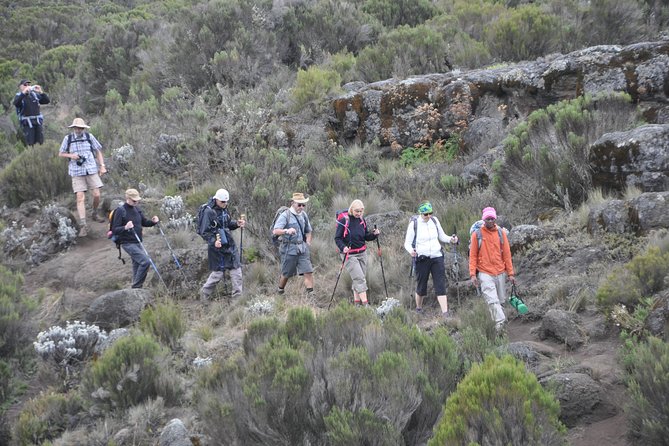
The first route section leads through rainforest to Machame Camp at 3,010 meters. Tropical showers are highly likely, so this is a day for waterproof clothing, careful foot placement, and a deliberately slow pace.
The distance is not the only challenge. You are moving from everyday elevation into mountain altitude, and your body needs time to respond. I would resist the urge to walk fast simply because you feel fresh at the start. Your guide sets the pace, but you should also speak up if you feel unwell.
The forest makes this a memorable opening, but it can also make the trail muddy and humid. Pack a dry change of clothes where you can reach it. Once at camp, a hot meal and rest are more valuable than trying to squeeze in extra activity.
Day 3: Shira Camp and the first altitude lesson
After breakfast, you climb from Machame Camp to Shira Camp at 3,845 meters. You leave the rainforest behind and reach the open Shira Plateau, with the first broad views of the upper mountain.
The walking is described as physically manageable, but altitude may begin to affect you. Headache, unusual tiredness, or a slower pace can appear even when your legs feel strong. The useful rule here is simple: go slowly, drink the treated water provided, and tell the guide how you feel.
After reaching Shira, you eat lunch and rest before an acclimatization walk toward Lava Tower Camp. The route gains about 300 meters before returning to Shira for dinner and sleep. That climb high and sleep lower pattern is one of the best features of this schedule.
This is also where the small group matters. With no more than six people, the mountain team has a better chance of noticing when one person is struggling or needs a slower rhythm. The schedule is not a race, and the most useful progress is steady progress.
A few more trips of this kind worth comparing:
- Safari Serengeti And Ngorongoro
★ 5.0 · 288 reviews - Climbing Kilimanjaro – Machame Route
★ 5.0 · 170 reviews - Climbing Kilimanjaro through 7 days Machame Route
★ 5.0 · 151 reviews - Kilimanjaro climb, Lemosho Route (8-day)
★ 5.0 · 148 reviews
Day 4: Lava Tower at 4,630 meters, then Barranco
This is one of the most important days for acclimatization. You leave Shira at 3,845 meters and climb to Lava Tower at 4,630 meters, where you stop for lunch and spend useful time at high elevation.
The route then drops about 650 meters to Barranco Camp at 3,960 meters. That drop is not wasted effort. It helps your body experience higher altitude while allowing you to sleep lower than the highest point reached during the day.
The rise and fall can feel hard, especially as the air gets thinner. Keep your pace calm and avoid treating the high point as a place to prove anything. The goal is to arrive at Barranco in good enough shape for the next morning.
Barranco Camp is memorable because of the Barranco Wall, a steep rock feature that looks more intimidating from below than it feels on the trail. You can study the route from camp and prepare for an early start.
Day 5: Barranco Wall and the Karanga section
An early departure helps you avoid crowding on Barranco Wall. The climb takes about an hour and is described as straightforward hiking rather than technical climbing, though the steep appearance can make it feel dramatic.
At the top, you get a strong photo opportunity with Kibo Peak behind you. Take a moment, but keep the day’s full route in mind. The trail after the wall includes repeated ups and downs before Karanga Camp.
You stop for lunch at Karanga, then climb toward Barafu for another acclimatization exercise. The high point is about 4,270 meters before you return to Karanga Camp for the night.
The listed altitude change from Barranco to Karanga is modest, from 3,960 to 4,035 meters, and the distance is about 5 kilometers. The short figures can be misleading because the trail undulates and the air is thin. I would treat this as a tiring preparation day, not an easy stroll.
The support crew is especially valuable here. One past account praised guides Kim and Oscar, while another singled out Moses and Pius, the cook Nicholas, and Julius for serving hot tea in the morning. Named staff can change, but those details show the kind of personal care this operation aims to provide.
Day 6: Karanga to Barafu Camp
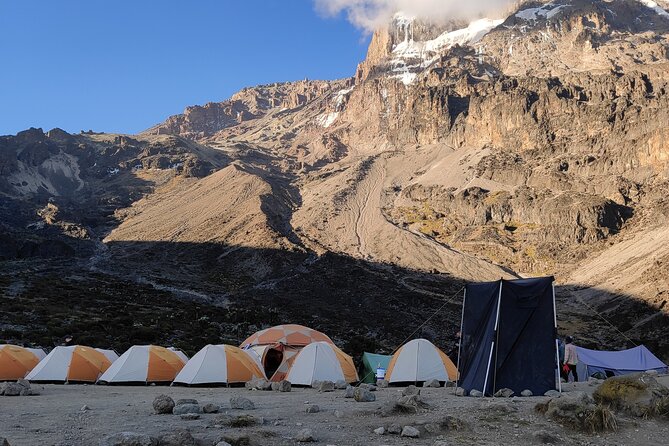
After breakfast, you climb to Barafu Summit Camp at 4,673 meters. The distance is about 6 kilometers and takes roughly four to five hours.
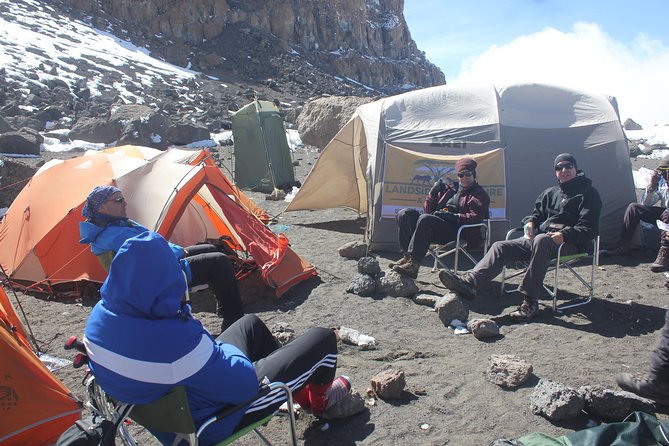
The camp team sets up your tent and sleeping bag ahead of time. That is a small luxury at a demanding point in the route. You can eat, rest, and organize your summit clothing instead of spending your remaining energy on camp work.
Later, you make an acclimatization climb toward Kosovo Summit Camp, reaching about 4,800 meters before returning to Barafu. The walk takes one to two hours and covers about 2 kilometers.
The point of this extra outing is not sightseeing. It is an altitude exercise before summit night. Once back at Barafu, eat the hot dinner provided and sleep if you can. You may not sleep deeply because of the altitude and the early start, so resting quietly still counts.
Pack your summit items before lying down. Water, warm layers, rain protection, headlamp if you have one, and any personal medication should be ready for the midnight departure. The information provided does not list a personal equipment package, so confirm what you must bring yourself.
Day 7: Uhuru Peak and the long descent
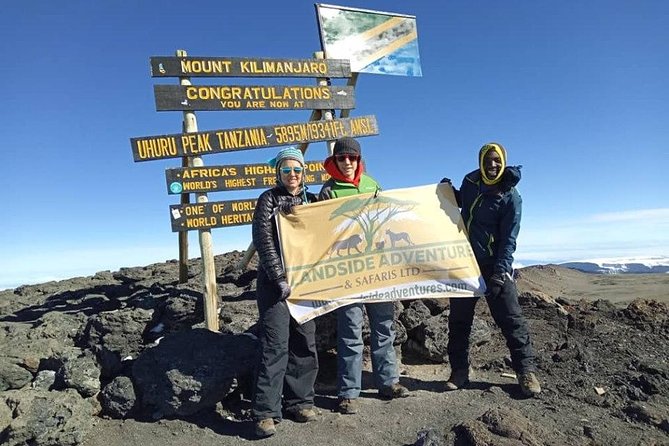
Summit day begins around midnight. From Barafu Camp at 4,673 meters, you climb to Uhuru Peak at 5,895 meters. The ascent is about 1,222 meters, but thin air makes it much harder than the numbers suggest.
The plan assigns a guide to monitor every two climbers. That close supervision is reassuring, particularly during the cold, dark hours when altitude symptoms can become serious. Your guide will watch your condition, but you must report headaches, nausea, dizziness, or unusual weakness promptly.
The summit section is described as technically simple, but that does not make it easy. You walk slowly, take regular breaks, and focus on one small stretch at a time. At the top, you have the chance to walk near the glacier, then return to Barafu for a two-hour rest.
The day is not over there. You descend to Millennium Camp at 3,820 meters, with the full route from Barafu to the peak and down to camp listed at 15.5 kilometers and seven to twelve hours.
The descent deserves respect. Loose or awkward footing can cause falls, and long downhill walking can damage toenails. Keep your boots secure, shorten your steps, and do not rush just because gravity is helping. You will be tired, and fatigue makes small slips more likely.
Day 8: Millennium Camp to Mweka Gate
Millennium Camp sits much lower, near the forest line, so you should get a better night of sleep after summit day. Breakfast comes before the final descent to Mweka Gate at 1,640 meters.
The route covers about 13.5 kilometers and takes five to six hours. Your knees and feet may feel the strain more than your lungs by now, so trekking poles, if you use them, can be useful. No specific pole rental or equipment service is listed, so arrange personal gear in advance.
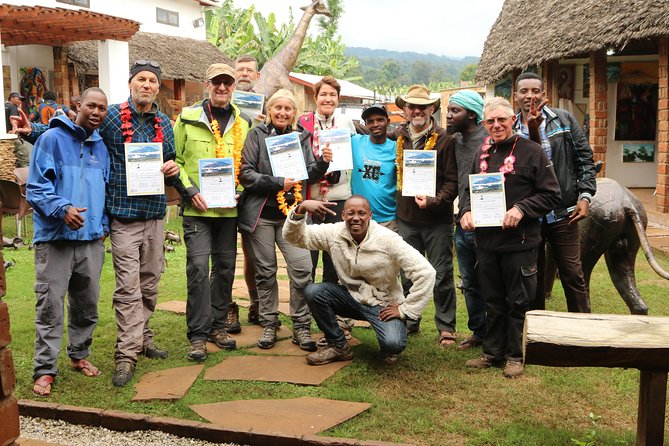
At Mweka Gate, the group celebrates with the climb crew. You then return to the company office, receive your climb certificate, and drive to the lodge.
This final day has an important emotional shift. The summit goal is behind you, but the gate formalities and certificate give the trip a clear finish. Keep some clean clothes accessible for the lodge, since the final walk can leave you wet or dusty.
Day 9: Airport transfer and the return home
The last day is for your hotel-to-airport transfer. Standard checkout is 11:00 AM, and late checkout may be available for a fee if your flight leaves later.
Confirm your departure transfer time early. The package includes round-trip airport transport, but flight schedules can vary and the transfer details are not spelled out. A little planning prevents an otherwise calm final morning from becoming hurried.
Who will get the most from this Machame climb?
I would recommend this trip to you if you have moderate physical fitness, can handle long walking days, and want a supported mountain experience rather than an independent trek. The route has demanding altitude changes, but the schedule includes several acclimatization walks and a maximum group size of six.
It suits someone who values a full support crew. You are not simply buying trail access. Guides, cooks, and porters manage much of the camp routine, and hot meals, treated water, a mattress, tables, and chairs are included.
It is less suitable if you need flexible cancellation. The booking is non-refundable and cannot be changed for any reason. You should also think carefully about the summit night, the long descent, and the cost of tipping on top of the listed price.
The company has also handled Mount Meru and other Kilimanjaro routes, including Rongai and Lemosho. That wider route experience is useful, but the exact guides may vary. If you have heard good things about Kim, Oscar, Moses, Pius, Nicholas, Julius, Maxon, or Keddy, ask who will lead your departure.
Should you book this $3,250 adventure?
I would book it if you want a carefully paced Machame climb with a small group, substantial mountain support, and a full nine-day schedule. The strongest value comes from the acclimatization design, the included crew and camp services, and the extra Moshi nights and transfers.
Before paying, confirm the nine-day versus seven-day wording, meal arrangements, tipping guidance, personal equipment requirements, and late-checkout fees. If those details are clear and you are comfortable with the non-refundable terms, this is a strong choice for a first supported Kilimanjaro climb.
FAQ
Where does the Kilimanjaro climb start and finish?
The mountain activity starts at Mount Kilimanjaro in Tanzania. The overall experience begins with airport pickup and ends with a hotel-to-airport transfer.
How long does the experience last?
The full program lasts approximately nine days. The mountain section covers seven days, with additional days for airport transfers and the Moshi lodge stay.
What is the maximum group size?
The group has a maximum of six people.
What fitness level is required?
You should have a moderate physical fitness level. The program includes long walking days, major altitude changes, a midnight summit attempt, and extended descents.
Are airport transfers included?
Yes. Round-trip airport transfers are included.
Are meals included?
Yes. The package includes breakfast for nine days, lunch for seven days, and dinner for six days. Both vegetarian and non-vegetarian meals are available.
Is drinking water provided?
Yes. Treated drinking water is included.
Are tips included in the price?
No. Tips are not included.
Can I cancel or change the booking?
No. The experience is non-refundable and cannot be changed for any reason.
Just added around Moshi
- Moshi: Lake Chala Tour: Hiking &/or Kayaking★ 4.5 · 3 reviews
- 3 Days Tanga Exclusive Beach Holiday★ 5.0 · 3 reviews
- Serengeti Wildebeest Migration.★ 5.0 · 3 reviews
- Chemka Hotpsrings E-Bike Day Trip★ 5.0 · 3 reviews
- Explore 1 day Ngorongoro Crater Budget Group Safari from Arusha★ 5.0 · 3 reviews
- Explore the 360° of Kilimanjaro★ 5.0 · 3 reviews
- Affordable Short Tanzania Safari (2 Days Camping Safari)★ 5.0 · 3 reviews
- Rongai Route 7 Days★ 5.0 · 3 reviews
Kilimanjaro Treks, compared.



8-Day Small-group Lemosho Kilimanjaro Summit Trekking
Read our review →


Climbing Kilimanjaro through 7 days Machame Route
Read our review →

Browse the lists this tour appears in