
Reviewed · KILIMANJARO TREKS
Climb Kilimanjaro – Marangu Route 8 Day Program
Here, the mountain sleeps in huts. I like the extra acclimatization day at Horombo and the practical comfort of hut accommodation, especially when it helps keep equipment dry. I also like the strong support from the mountain crew, with guides such as John, Issa, Dustin, and Mmasa praised for care and encouragement. The main drawback is that Marangu is the shortest route, so its easier reputation can tempt underprepared climbers into a very hard altitude climb.
This $2,111, eight-day program gives you a clear path from airport pickup in Tanzania to Uhuru Peak and back to Moshi. You get national park fees, food, boiled water, transport, guides, porters, Wi-Fi, and mountain huts. Still, you must bring or rent climbing gear, arrange health insurance, and budget for tips.
In This Review
- Key points to know before climbing Marangu
- Why Marangu appeals to first-time Kilimanjaro climbers
- Day 1: Airport pickup and a night in Moshi
- Day 2: Marangu Gate to Mandara Hut through rainforest
- Day 3: Heathland and the first view of the summit
- Day 4: Horombo’s acclimatization walk to Zebra Rocks
- Day 5: Across the alpine desert to Kibo Hut
- Day 6: The midnight start and Uhuru Peak
- Day 7: Returning through the forest to Moshi
- Day 8: Departure, safari, or Zanzibar
- What the $2,111 price covers
- What the huts and group size mean
- Who should book this Kilimanjaro program
- Should you book the Marangu Route?
- FAQ
- Where does the Kilimanjaro climb start?
- How long is the Marangu Route program?
- How high is Uhuru Peak?
- Where do you sleep on the mountain?
- Is running water available at every hut?
- Is an acclimatization day included?
- What is included in the price?
- Are climbing gear and tips included?
Key points to know before climbing Marangu
- The only full acclimatization day is at Horombo: You walk toward Zebra Rocks at about 4,100 meters, then return to the hut.
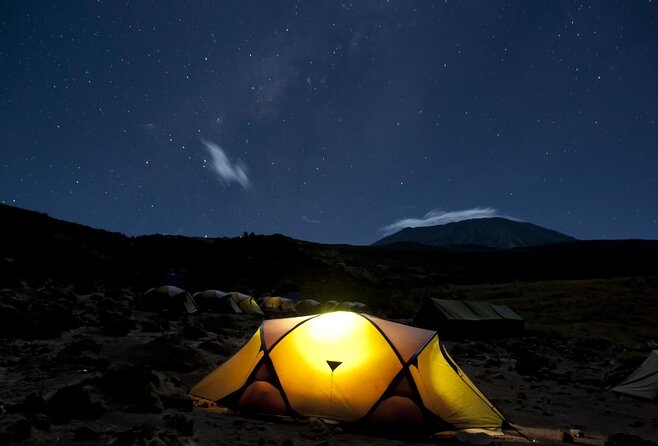
- You sleep in huts rather than tents: Mandara, Horombo, and Kibo provide a more sheltered night than camping, though Kibo has no running water.
- Summit night begins around 1:00 a.m.: You aim for Gilman’s Point by about 7:00 a.m. and Uhuru Peak around 8:30 a.m.
- The scenery changes quickly: Rainforest gives way to heath, then alpine desert on the saddle between Mawenzi and Kibo.
- The route goes up and down the same path: This keeps navigation simple but gives you less visual variety than a route with a separate descent.
- The group limit is 12 people: That is small enough for regular contact with your guide while still giving the trek a social feel.
Why Marangu appeals to first-time Kilimanjaro climbers
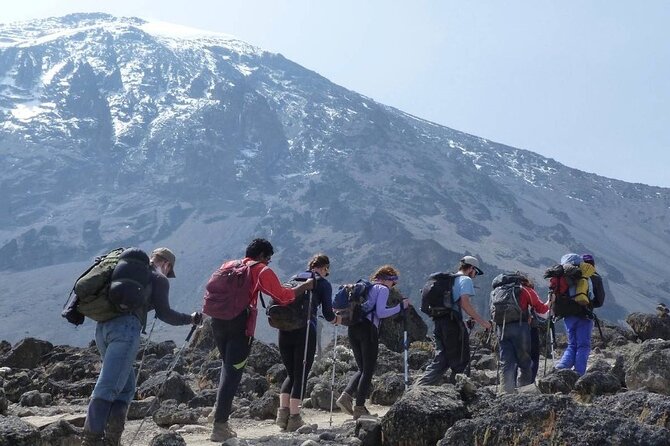
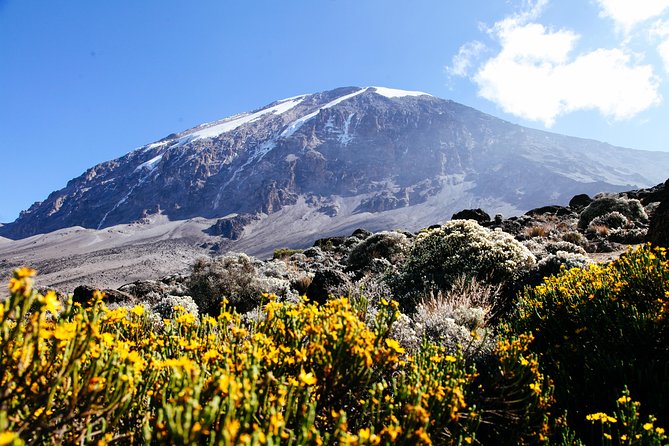
Marangu is often called Kilimanjaro’s tourist route because it has huts, established stopping points, and a straightforward trail. It is also known as the easiest and shortest route. That description needs care. The path may be simpler than some alternatives, but the summit still reaches 5,895 meters, and altitude can defeat a fit person just as quickly as a less active one.
I like the route’s plain structure. You start at Marangu Gate, climb through several distinct plant zones, spend an extra night at Horombo, and return by the same route. You do not need to work out a new descent route after a long summit day. Your guide can focus on pacing, food, water, and your condition.
The tradeoff is that the same route carries both climbers going up and coming down. You also see the trail in reverse on the final day. If your top priority is the most varied route, Marangu may not be your first choice. If you prefer huts, a familiar trail, and a shorter itinerary, it makes good sense.
The program accepts a maximum of 12 people and asks for a moderate level of fitness. That does not mean you need to be an elite athlete. It does mean you should be ready for several hours of walking on consecutive days, cold conditions near the top, and a long summit push with little sleep.
More Kilimanjaro routes and climbs:
- 8-Day Small-group Lemosho Kilimanjaro Summit Trekking
★ 5.0 · 186 reviews - 7-Day Machame Kilimanjaro Summit Tour from Arusha
★ 5.0 · 125 reviews - Mountain Kilimanjaro Day Hike
★ 5.0 · 102 reviews
Day 1: Airport pickup and a night in Moshi
Your trip begins at Kilimanjaro International Airport, where pickup and transfer to a hotel in Moshi are arranged. The listed stop lasts about two hours, and the main meeting point is Springlands Hotel in Moshi.
This first night is useful rather than glamorous. You can settle in, check your equipment, and meet the people handling the climb. Since climbing gear is not included, this is the time to make sure you have what you need before heading into the park.
The program later returns you to Springlands Hotel after the climb. That makes the hotel an important base for transport, tips, certificates, and the hot shower waiting after the mountain.
Day 2: Marangu Gate to Mandara Hut through rainforest
After leaving Springlands at about 8:00 a.m., you drive roughly 45 minutes to Marangu Gate on Kilimanjaro’s eastern side. Park registration and other paperwork take place before the walk begins, with hiking expected to start around 10:30 a.m.
The first trail section climbs from about 1,800 meters to 2,720 meters. You spend roughly four hours walking through rainforest, with a lunch stop halfway. The forest makes a gentle introduction to the mountain, though the four-hour estimate still requires steady movement.
Mandara Hut usually comes into view around 2:00 or 3:00 p.m. You can unpack, rest, and have tea or coffee before dinner at about 7:00 p.m. Running water is available in the bathrooms here, a small comfort that feels important after the first climb.
If you have energy, take the short side walk to Maundi Crater. It is about 15 minutes away and offers views toward Kenya and northern Tanzania. It is one of the best small additions to this day because it lets you see beyond the immediate forest instead of simply stopping at the hut.
Day 3: Heathland and the first view of the summit
The second walking day takes you from 2,720 meters to about 3,720 meters. Breakfast is around 7:30 a.m., departure around 8:30, and the walk to Horombo Hut lasts about five to six hours.
The rainforest fades into lower heathland, where small shrubs replace the taller vegetation. The views open up, and Mawenzi becomes a major feature of the day. At Horombo, you can also see Kibo, the volcanic cone that holds Uhuru Peak.
A halfway lunch break breaks up the climb. When you reach the hut around 3:00 p.m., you have time to unpack and rest before dinner. Running water is available in the bathrooms at Horombo.
This is the first day when altitude may begin to affect your appetite, sleep, or energy. The important habit is to move slowly and tell your guide how you feel. The supplied guidance specifically encourages you to watch for signs of altitude sickness and communicate with the guide rather than trying to hide symptoms.
A few more trips of this kind worth comparing:
- Serengeti Balloon Safari and authentic bush breakfast
★ 5.0 · 2,480 reviews - Balloon Safari & Bush Breakfast in Serengeti – Miracle Experience
★ 5.0 · 1,646 reviews - Tanzania Classic – 7 Days
★ 5.0 · 1,151 reviews - 4 Days Group Camping Safari
★ 5.0 · 1,101 reviews
Day 4: Horombo’s acclimatization walk to Zebra Rocks

The extra day at Horombo is one of the smartest parts of this schedule. Instead of gaining a large amount of height and immediately moving on, you spend a day walking higher and returning to sleep at 3,720 meters.
The planned walk goes toward Zebra Rocks at approximately 4,100 meters before returning to Horombo. This gives your body more time to adjust and gives you a look at the weather and conditions higher on the mountain.
You also get spectacular views from this area. The day is not a rest day in the usual holiday sense, but it is less demanding than a full transfer day. Think of it as useful training. You can walk, observe how your body responds, and ask your guide questions before the more exposed upper sections.
For a route sometimes chosen because it appears easy, this day matters. The low success rate associated with Marangu is linked in part to people underestimating it. An extra acclimatization day cannot remove altitude risk, but it is a much better plan than rushing upward.
Day 5: Across the alpine desert to Kibo Hut
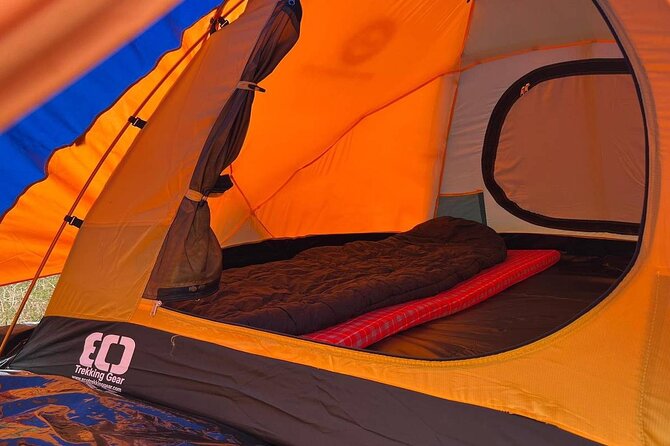
The trail rises from 3,720 meters to about 4,720 meters, with six to seven hours of walking. After breakfast, you leave Horombo and cross upper heathland before reaching the broad saddle between Mawenzi and Kibo.
The saddle is an alpine desert, and the setting changes sharply. Shrubs disappear, and the open ground has a stark, almost lunar feel. This is one of the most memorable sections of the climb because you can see how far you have come and how much higher Kibo still appears.
A lunch stop divides the day. At Kibo Hut, there is no running water, so plan to use your supplied boiled water carefully and keep personal items organized. You eat, rest, and prepare for the summit night rather than treating the hut as a place to socialize late into the evening.
This is where pacing becomes especially important. You may feel fine at the start and then notice the altitude later. Follow the guide’s instructions, walk slowly, and speak up about headache, nausea, unusual fatigue, or other changes. The program specifically puts responsibility on you to listen to your body and keep the guide informed.
Day 6: The midnight start and Uhuru Peak
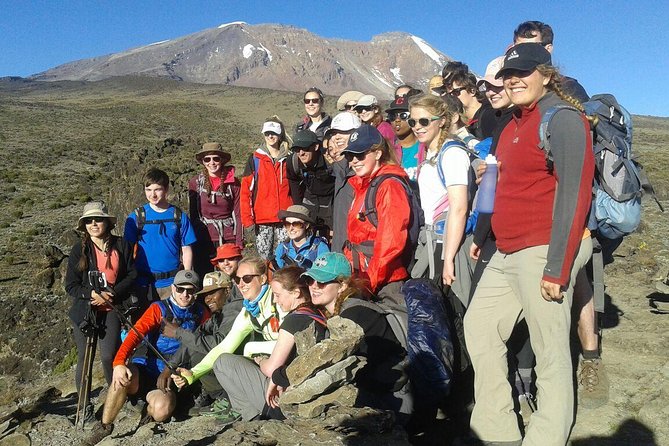
Summit day is the physical and mental center of the program. You wake around midnight for a light breakfast, prepare in the dark, and leave at approximately 1:00 a.m.
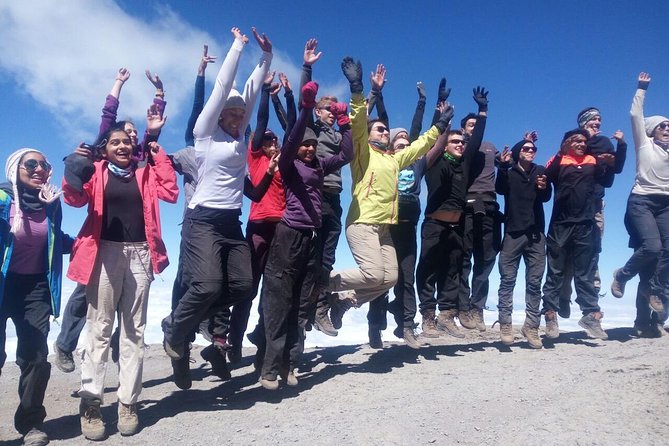
The plan is to reach Gilman’s Point at about 7:00 a.m. Gilman’s sits on the crater rim, so arriving there brings views into the crater as well as a major sense of achievement. From there, the route continues for about two hours toward Uhuru Peak, with arrival expected around 8:30 a.m.
The summit altitude is 5,895 meters. Even with a moderate walking pace, this is a serious effort. The early start is designed to get you to the top around sunrise, when the light can make the crater and surrounding peaks especially striking. It also means you tackle the steepest and coldest part of the climb before the day grows warmer.
After Uhuru Peak, you descend to Kibo Hut, collect your belongings, and cross the saddle again toward Horombo Hut. Dinner and sleep at Horombo follow what may be a roughly 12-hour day.
This schedule is demanding. You may spend several hours climbing before breakfast feels like a distant memory, then return much of the way down after reaching the summit. I would treat the summit day as a test of patience more than speed. Your guide’s support is valuable here, and the positive feedback about guides being attentive to health and motivation is encouraging.
Day 7: Returning through the forest to Moshi
You descend from Horombo to Mandara Hut, stop for lunch, and continue to Marangu Gate. The walking portion takes about six hours, with arrival at the gate expected around 2:00 or 3:00 p.m.
This is the same trail you used on the way up, but it feels different when you are descending. The vegetation becomes thicker, the air feels easier to breathe, and the prospect of a shower grows more appealing with every step.
Transport takes you back to Moshi and Springlands Hotel for the night. This overnight is included and gives you a comfortable place to recover instead of forcing an airport transfer immediately after the descent.
Successful climbers receive summit certificates at Springlands. Tipping is not included, so prepare to tip your guides, porters, drivers, and other crew members. The arrangements allow you to give tips to the main guide at the hotel, with local representatives available to help organize the process.
The strongest praise connected with this program focuses on the crew. John and assistant guide Issa were credited with expert guidance, motivation, and support. Dustin was described as attentive to health and personal needs, while Mmasa led another highly praised crew of guides, porters, and a cook. These names should not make you assume a particular guide is guaranteed, but they show the kind of personal care you should expect to value and ask about.
Day 8: Departure, safari, or Zanzibar
The final day is for departure from the airport or onward travel. You can also arrange more time around Moshi, a Kenya safari, or a beach stay in Zanzibar.
A post-climb extension is a practical idea. After eight days of walking and one very long summit day, you may want recovery time rather than another packed schedule. The program presents several options, but exact arrangements and prices for those additions are not included here.
What the $2,111 price covers
At $2,111 per person, the program is not a low-cost walk, but the price includes the expensive core parts of a Kilimanjaro climb. National park fees, mountain accommodation, meals, boiled water, transport, and a qualified mountain crew are all included.
You also receive Wi-Fi, though the information does not specify where or how consistently it is available. Accommodation on Marangu is in huts, not tents. That can be a meaningful value for you if you prefer a roof and a bed platform, and it may help keep clothing and equipment dry.
The meal allowance is listed as eight dinners, nine breakfasts, and eight lunches. Since the program lasts eight days, I would confirm the meal count before booking so you know exactly what is provided on arrival and departure days.
You must pay separately for visas, climbing gear, health insurance, and personal expenses. Tips for drivers, porters, and guides are also excluded. The practical value is strongest for someone who wants the major park and support costs handled in one package, not someone who already owns gear and plans every detail independently.
What the huts and group size mean
Hut accommodation is the defining comfort of this route. Mandara and Horombo have running water in the bathrooms, while Kibo does not. The huts give you a sheltered place to sleep, but they do not turn the climb into a soft holiday.
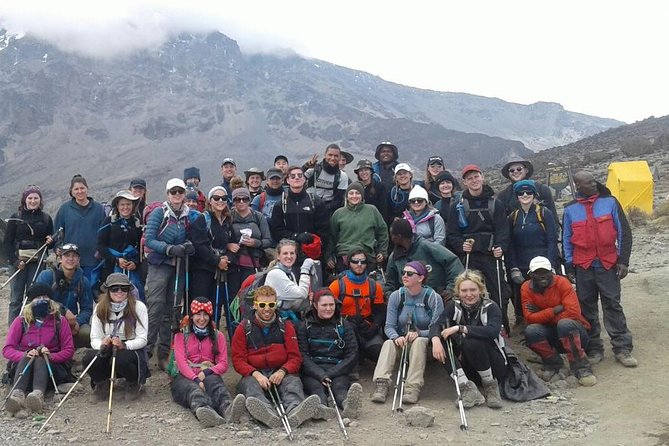
A group of up to 12 people is large enough that pace and energy may vary. The advantage is that you have company and a full support crew. The risk is that your preferred pace may not match everyone else’s. A qualified guide should help manage this, especially during the summit attempt.
The route has a strong reputation for comfort and order. One detailed account praised huts that helped keep equipment dry and described the trail as clean and not especially busy at the time of that climb. Conditions can vary, so treat that as a useful possibility rather than a guarantee.
Who should book this Kilimanjaro program
I would choose this program if you want:
- Hut accommodation instead of camping
- A shorter, direct route to Uhuru Peak
- An extra acclimatization day at Horombo
- A group capped at 12 people
- Transport from the airport and back to Moshi
- Meals, park fees, porters, guides, and mountain water included
- The option to continue to Zanzibar, Kenya, or other destinations afterward
I would think twice if you want a route that descends by a different trail or if you are drawn to Marangu mainly because it sounds easy. You still need moderate fitness, proper gear, health insurance, and a serious attitude toward altitude.
Confirmation is provided at booking, and the activity is listed for Monday and Tuesday operating hours from 9:00 a.m. to 6:00 p.m. The cancellation policy is strict: the experience is non-refundable and cannot be changed after booking. Since the program is sold by World Adventure Tours, check every included item and your insurance terms before paying.
Should you book the Marangu Route?
Book it if huts, a simple route, and an extra acclimatization day matter more to you than having a different descent trail. The combination of organized transport, included park costs, substantial food coverage, and a support crew gives the $2,111 price solid value.
Do not book it as a shortcut around preparation. The climb is still high, cold, tiring, and demanding, especially on summit night. If you arrive with sensible expectations, listen to your guide, and use the Horombo acclimatization day properly, this is a practical way to attempt Kilimanjaro with a little more shelter and structure.
FAQ
Where does the Kilimanjaro climb start?
The meeting point is Springlands Hotel in Moshi, Tanzania. Airport pickup is offered from Kilimanjaro International Airport.
How long is the Marangu Route program?
The program lasts approximately eight days, including airport pickup, the mountain climb, the return to Moshi, and departure or onward travel.
How high is Uhuru Peak?
Uhuru Peak is at 5,895 meters.
Where do you sleep on the mountain?
Accommodation on the Marangu Route is in mountain huts. You stay at Mandara Hut, Horombo Hut, and Kibo Hut during the ascent and descent.
Is running water available at every hut?
No. Bathrooms with running water are listed at Mandara and Horombo. Kibo Hut has no running water.
Is an acclimatization day included?
Yes. Day 4 is an extra acclimatization day at Horombo Hut. The planned walk goes toward Zebra Rocks at about 4,100 meters before returning to the hut.
What is included in the price?
The price includes boiled water on the mountain, qualified guides and mountain crew, national park fees, Wi-Fi, hut accommodation, transport to and from the mountain, dinner, breakfast, and lunch.
Are climbing gear and tips included?
No. Visas, climbing gear, health insurance, personal expenses, and tips for drivers, porters, and guides are not included.
Just added around Arusha
- 5 Days Safari Tarangire, Serengeti, and Ngorongoro Crater★ 5.0 · 3 reviews
- Love lives in Africa★ 5.0 · 3 reviews
- 5 Days of Safari, Culture & Hot Springs – Tour from Arusha★ 5.0 · 3 reviews
- Arusha National Park Safari by Jeep★ 4.5 · 3 reviews
- 5Days Family _Group Tour Lodging Mid-Range in the Jungle★ 5.0 · 3 reviews
- Serengeti & Ngorongoro 3 Days Budget Safari★ 5.0 · 3 reviews
- 2 Days Tarangire and Ngorongoro Crater Tour★ 5.0 · 3 reviews
- 7 Days PRIVATE Best of Tanzania Safari *Departing everyday*★ 5.0 · 3 reviews
Kilimanjaro Treks, compared.



8-Day Small-group Lemosho Kilimanjaro Summit Trekking
Read our review →


Climbing Kilimanjaro through 7 days Machame Route
Read our review →

Browse the lists this tour appears in