
Reviewed · KILIMANJARO TREKS
climb the KILIMANJARO via Lemosho route
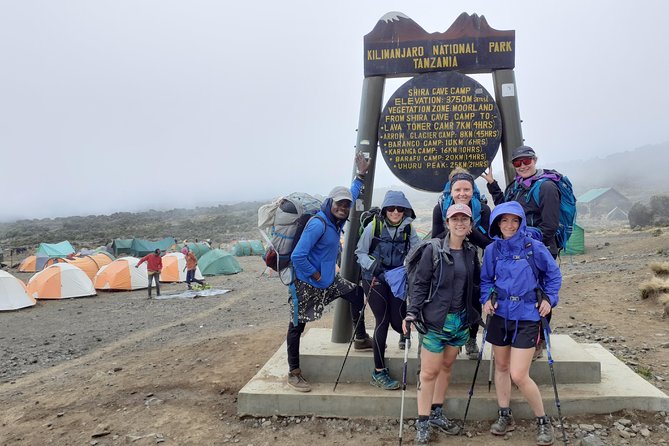
The mountain rewards patience. This eight-day private climb from Arusha or Moshi takes the quieter Lemosho route across forest, moorland, volcanic rock, and high alpine terrain before the final push to Uhuru Peak. I like the gradual altitude gain and the strong personal support from guide Paul Bernad, who has led small groups and adjusted the pace to match each climber’s ability.
I also like the variety of the route. You pass farms and rainforest, reach the open Shira Plateau, cross the high point at Lava Tower, and tackle the Barranco Wall before summit night. The main drawback is simple: this is a demanding high-altitude trek, not a casual walking holiday. The itinerary includes long days, very cold conditions, and a difficult summit push.
In This Review
- Key points to know before booking
- Why Lemosho is a strong choice for Kilimanjaro
- Day 1: Londrossi Gate and the first rainforest camp
- Day 2: Forest Camp to Shira 1
- Day 3: Shira Cathedral and the open plateau
- Day 4: Lava Tower and the descent to Barranco
- Day 5: Scrambling over the Barranco Wall
- Day 6: Barafu Hut and the push to Uhuru Peak
- Day 7: Down to Mweka Hut
- Day 8: Mweka Gate and the return to town
- The guide, cooks, and private group format
- Is $2,564.11 per person good value?
- Fitness, cold, and practical planning
- Who should book this climb?
- Should you book the Lemosho climb?
- FAQ
- Where does the Kilimanjaro climb begin?
- How long is the climb?
- Which Kilimanjaro route does it use?
- What is the price per person?
- Is pickup available?
- Is this a private climb?
- Who is the named guide?
- What level of fitness is required?
- How high is Uhuru Peak?
- What is the cancellation policy?
Key points to know before booking
- Lemosho gives you eight days to acclimatize, with several climbs followed by descents that help your body adjust to thinner air.
- Paul Bernad is named as the guide, and the private format means only your own group takes part.
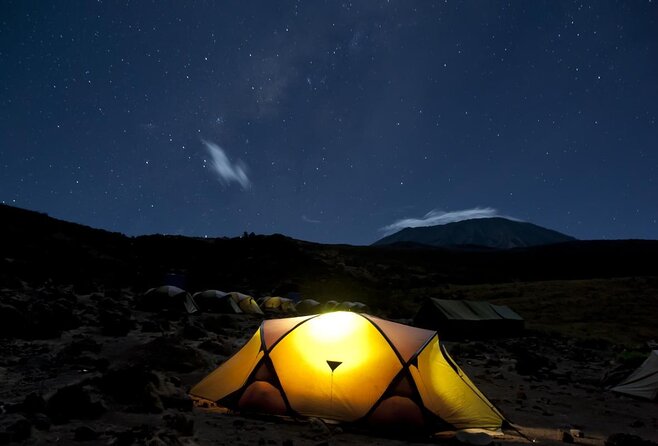
- The route crosses several distinct zones, from cultivated land and rainforest to heather, volcanic desert, and the summit ice and rock.
- The summit attempt begins from Barafu Hut, reaching Stella Point at 5,756 meters and Uhuru Peak at 5,896 meters.
- The price is $2,564.11 per person, a substantial cost that reflects an eight-day mountain operation with guides, cooks, camps, transfers, and park access.
- You should prepare seriously for cold and altitude, since the final day is physically and mentally much harder than the early forest walks.
Why Lemosho is a strong choice for Kilimanjaro
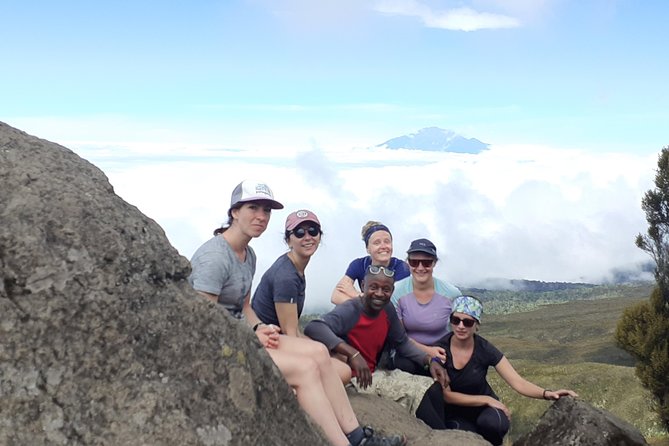
Kilimanjaro is not one uniform climb. The lower slopes are green and wooded, while the upper mountain becomes open, dry, rocky, and severe. Lemosho lets you experience those changes at a measured pace.
The route begins at Londrossi Gate, at about 2,200 meters, then enters the forest on foot. Over the next several days, you rise through the heather moorland and Shira Plateau before crossing the volcanic rock zone. The route later joins the familiar southern circuit around Barranco, Karanga, and Barafu.
That route design is valuable. You do not rush from low elevation straight to the summit. Day three includes an optional climb toward Shira Cathedral for acclimatization, and day four climbs to Lava Tower before descending to Barranco Camp. Those up-and-down sections can feel tiring, but they give you useful time at higher elevations without sleeping there immediately.
The private setup also matters. Your group is not combined with strangers, so the walking speed and rest pattern can be handled around your own party. This is especially useful if members have different levels of fitness. Paul Bernad is specifically identified as the guide, and the experience emphasizes experienced guides and cooks who provide support throughout the climb.
More Kilimanjaro routes and climbs:
- 8-Day Small-group Lemosho Kilimanjaro Summit Trekking
★ 5.0 · 186 reviews - 7-Day Machame Kilimanjaro Summit Tour from Arusha
★ 5.0 · 125 reviews - Mountain Kilimanjaro Day Hike
★ 5.0 · 102 reviews
Day 1: Londrossi Gate and the first rainforest camp
The first day starts with a drive from your hotel in Arusha or Moshi to Londrossi Gate. Registration takes place there, and the drive then continues toward the walking point.
One unusual feature of this approach is the passage through cultivated land, including Fill’s farm. Farmers grow vegetables such as carrots and round potatoes beneath planted trees. This gives you a quick look at how the lower slopes are used before the trail moves into wilder forest.
The walk is listed at about five kilometers and roughly four hours, ending at Forest Camp at 2,830 meters. The broader day is given as about 12 hours, which includes the road transfer and park formalities rather than 12 hours of walking.
The forest section is one of the most appealing early parts of the route. The vegetation is dense, birdlife is present, and the trail may pass areas where elephants, buffalo, and eland are found. You should treat that wildlife note seriously and follow the guide’s instructions. You are entering a natural area, not a managed city park.
This first day is not technically the hardest, but the combined drive, registration, and walk can make it feel full. Arrive ready to walk soon after the transfer, with easy access to water and rain protection.
Day 2: Forest Camp to Shira 1
Day two climbs from the big-tree area to Shira 1 Camp. The walk is listed as four to six hours over about seven kilometers, reaching roughly 3,509 meters.
The forest begins to thin as you enter the heather moorland. Erica species and high grass replace the thick lower vegetation, and the view opens toward the Shira Plateau. This change is one of the route’s pleasures because the mountain begins to feel wide and exposed after the enclosed first day.
The trail is described as narrow and uphill in places. You should expect a steady climb rather than a flat stroll. At Shira 1, a clear sky may allow a view of Kibo, the main volcanic cone of Kilimanjaro.
The camp itself is an important altitude step. You sleep considerably higher than at Forest Camp, but the day remains moderate in distance. Take this evening slowly. Eat well, drink regularly, and do not use the early success of the climb as a reason to push your pace.
Day 3: Shira Cathedral and the open plateau
Day three offers two route choices. The upper option climbs for four or five hours over about six kilometers toward Shira Cathedral, at approximately 3,920 meters, before continuing to Shira 2 Camp at 3,840 meters.
That climb is useful for acclimatization and offers some of the finest high-level scenery before the route reaches the harsher volcanic zones. The plateau is open and exposed, with heather and grass giving way to a more austere setting.
The alternative is a lower route across the rescue road, continuing directly toward Moir Hut Camp at about 4,200 meters. The supplied schedule describes this as a six-hour day. The choice should be made with the guide, since your condition and the group’s pace matter more than simply choosing the higher option.
Shira is not the place to hide a problem. Headache, unusual tiredness, nausea, or poor balance should be reported early. A guide can only respond well if you give clear information.
A few more trips of this kind worth comparing:
- Serengeti Balloon Safari and authentic bush breakfast
★ 5.0 · 2,480 reviews - Balloon Safari & Bush Breakfast in Serengeti – Miracle Experience
★ 5.0 · 1,646 reviews - Tanzania Classic – 7 Days
★ 5.0 · 1,151 reviews - 4 Days Group Camping Safari
★ 5.0 · 1,101 reviews
Day 4: Lava Tower and the descent to Barranco
Day four is one of the route’s most important acclimatization days. You climb through the rock and volcanic desert zone to Lava Tower, reaching about 4,605 meters, then descend to Great Barranco Camp at roughly 3,940 meters.
The listed walking time is five to six hours over about 9.5 kilometers. Lunch at Lava Tower gives you time at high elevation before the descent. Sleeping lower at Barranco after reaching that height is the classic climb high, sleep lower pattern, even though the itinerary does not use that phrase.
The scenery here changes again. Trees are gone, and the mountain feels stark and volcanic. The descent to Barranco is not wasted effort. It helps your body handle elevation while giving you a better chance of sleeping at a slightly lower camp.
Barranco Camp is also memorable for its views and position beneath the steep Barranco Wall. This is where the climb begins to look serious. You may feel the altitude more clearly, and cold nights become a bigger concern.
Day 5: Scrambling over the Barranco Wall
After breakfast, you climb the Barranco Wall, reaching about 4,200 meters, then continue to Karanga Camp at approximately 4,000 meters. The walking distance is listed at 5.5 kilometers, with three to four hours of walking and a hot lunch at camp.
The Barranco Wall is described as rock climbing, but this should not be confused with a technical climbing route using ropes and climbing equipment. The itinerary presents it as a demanding section of trail over rock. You will need careful foot placement, balance, and patience.
This is a good day to follow the guide’s pace. Rushing makes rocky sections harder, while a steady rhythm keeps the group together. After reaching Karanga, you have time to rest before dinner and the next day’s climb toward Barafu.
Karanga is the final camp before the summit base. The vegetation and terrain are now sparse, and the mountain feels more severe. The short distance does not mean an easy day, since altitude can make a modest climb feel much longer.
Day 6: Barafu Hut and the push to Uhuru Peak
Day six is the physical center of the trip. The morning ascent from Karanga to Barafu Hut covers about five kilometers and takes three to four hours, reaching roughly 4,620 meters through alpine desert.
From Barafu, the summit attempt rises toward Stella Point at 5,756 meters and Uhuru Peak at 5,896 meters. The itinerary describes a six-hour climb to the top, a short time for photographs, and about three hours descending to Barafu Hut. It also gives six hours as the total day duration, so you should treat the published timings as approximate rather than a precise schedule.
This is where preparation counts. One direct piece of advice from the experience is to prepare for severe cold. Do not rely on a phone as your only camera, since cold can shorten battery life and make handling a device difficult. More important, protect your attention and energy. The summit photograph is a small part of a much longer effort.
The arrival at Uhuru Peak is the high point of the climb, both literally and emotionally. You reach the highest point of Kilimanjaro, then return to Barafu for rest. The descent can be hard on tired legs, so poles, careful footing, and a controlled pace matter.
The itinerary’s summit description is compressed, and actual timing can vary. Weather, altitude, and group condition all affect the day. A strong guide should make safety and the group’s condition the priority, not an arbitrary clock.
Day 7: Down to Mweka Hut
After a food and rest break, the route continues down to Mweka Hut at about 3,100 meters. The day is listed at roughly six hours.
This descent is welcome after the summit, but do not underestimate it. Your legs have already climbed and descended at extreme altitude, and the trail can feel surprisingly long. Lower elevation usually brings easier breathing, yet fatigue remains.
Mweka Hut is the final mountain night. Dinner and sleep here give you a chance to recover before the last rainforest descent and the drive back to the hotel.
Day 8: Mweka Gate and the return to town
The final walk descends about eight kilometers through rainforest to Mweka Gate at approximately 1,760 meters. The walking time is listed as four hours.
At the gate, you sign out and receive a certificate recognizing the climb. The group then drives back to the hotel. The schedule refers to another timetable after the return, but it does not specify a separate activity, so you should regard the day as a mountain exit and transfer day.
The return to forest is a pleasant change after the bare upper slopes. You also finish with a clear sense of the mountain’s full range, from cultivated lower land to high volcanic terrain.
The guide, cooks, and private group format
The people supporting you can make or break a climb. This operation places strong emphasis on friendly guides, cooks, and management, and Paul Bernad is the named guide connected with the experience.
A particularly useful detail comes from a February 2025 climb by a family group that included climbers aged 69, 68, 34, and 36. That does not mean the climb is easy for older people, or that age alone predicts success. It does show why a guide who adjusts the pace to different abilities matters.
Another small group of four climbers reached the summit with Paul, with food receiving specific praise. On an eight-day climb, meals are not a minor issue. Good food helps you maintain energy when appetite and altitude may work against you.
The private format means your own group participates rather than joining a large mixed party. The number of people in your group is not stated, so ask for that before booking. Also confirm exactly what the price includes, especially meals, park fees, transfers, porter support, and equipment, since the supplied details do not itemize every inclusion.
Is $2,564.11 per person good value?
The listed price is $2,564.11 per person. That is a major expense, but an eight-day Kilimanjaro climb involves far more than a simple guided walk.
You are paying for a long mountain itinerary, park entry and registration, camp logistics, guide and cook support, and transport between the hotel and trailheads. The private arrangement also gives you a more personal experience than a large shared departure.
Still, value depends on what is included. The details clearly state that pickup is offered and admission is included on day one, while later days show admission ticket free or not included. Those labels are not a full cost breakdown. I would ask for an itemized list before paying, with special attention to park fees, meals, porters, tips, accommodation before and after the climb, and airport transfers.
For a private eight-day route with experienced mountain support, the price may be reasonable. It is not a budget trek, and you should not compare it with a short guided hike.
Fitness, cold, and practical planning
You should have a moderate level of physical fitness, but that phrase understates the challenge of summit day. You need to handle repeated uphill walking, long descents, rocky ground, and thin air over eight days.
Cold preparation deserves special attention. Bring a proper system of warm layers, gloves, head protection, and dry clothing, but the exact equipment list is not provided here. Ask the operator for its required packing list before departure.
The experience offers pickup and mobile ticketing. The meeting information shows daily operating hours from 8:00 AM to 11:30 PM during the stated availability period, from October 19, 2019 through June 18, 2026. Your exact pickup time should be confirmed after booking.
Confirmation is provided at booking, and the meeting point is near public transportation. Since this is a private activity, only your group takes part. The experience is not described as wheelchair accessible, so anyone with access needs should ask the provider directly.
Cancellation terms are strict close to departure. Cancel at least six full days before the start for a full refund, two to six full days before for a 50 percent refund, and within two days for no refund. Poor weather or failure to meet the minimum group size may lead to a different date or a full refund.
Who should book this climb?
I would choose this experience if you want the longer Lemosho route, personal guide attention, and a varied approach to the summit. It suits people who value a private group and are willing to prepare for cold, altitude, and sustained effort.
I would hesitate if you want a relaxed holiday, dislike camping and long walking days, or need a fully fixed schedule. The route has demanding sections, and the summit timetable is approximate.
Should you book the Lemosho climb?
Book it if the eight-day pace, private format, and Lemosho scenery match your goals. The strongest reasons are the gradual route, the broad range of terrain, the experienced support team, and Paul Bernad’s reported ability to work with different fitness levels.
Before paying, get the full inclusion list and packing requirements in writing. If you prepare properly and respect the mountain’s pace, this is a serious but rewarding way to reach Uhuru Peak.
FAQ
Where does the Kilimanjaro climb begin?
The experience begins with pickup from a hotel in Arusha or Moshi, followed by a drive to Londrossi Gate for registration.
How long is the climb?
The experience lasts approximately eight days.
Which Kilimanjaro route does it use?
It uses the Lemosho route, with camps and sections including Shira, Lava Tower, Barranco, Karanga, Barafu, and Mweka.
What is the price per person?
The listed price is $2,564.11 per person.
Is pickup available?
Yes. Pickup is offered from a hotel in Arusha or Moshi.
Is this a private climb?
Yes. Only your own group participates in the activity.
Who is the named guide?
Paul Bernad is the named guide associated with the climb.
What level of fitness is required?
You should have a moderate level of physical fitness. The route includes long walking days, steep sections, high altitude, and a demanding summit push.
How high is Uhuru Peak?
Uhuru Peak is listed at 5,896 meters, or about 19,650 feet.
What is the cancellation policy?
Cancel at least six full days before the start for a full refund. Cancellations made two to six full days before receive a 50 percent refund, while cancellations within two days are not refunded.
Just added around Arusha
- 5 Days Safari Tarangire, Serengeti, and Ngorongoro Crater★ 5.0 · 3 reviews
- Love lives in Africa★ 5.0 · 3 reviews
- 5 Days of Safari, Culture & Hot Springs – Tour from Arusha★ 5.0 · 3 reviews
- Arusha National Park Safari by Jeep★ 4.5 · 3 reviews
- 5Days Family _Group Tour Lodging Mid-Range in the Jungle★ 5.0 · 3 reviews
- Serengeti & Ngorongoro 3 Days Budget Safari★ 5.0 · 3 reviews
- 2 Days Tarangire and Ngorongoro Crater Tour★ 5.0 · 3 reviews
- 7 Days PRIVATE Best of Tanzania Safari *Departing everyday*★ 5.0 · 3 reviews
Kilimanjaro Treks, compared.



8-Day Small-group Lemosho Kilimanjaro Summit Trekking
Read our review →


Climbing Kilimanjaro through 7 days Machame Route
Read our review →

Browse the lists this tour appears in