
Reviewed · KILIMANJARO TREKS
Climbing Kilimanjaro – Marangu Route
Africa’s highest summit rewards steady effort. This guided Marangu Route trek gives you a clear five-day path up Mount Kilimanjaro, with national park fees, meals, mountain crew, airport transfers, and two hotel nights included. I especially like the changing scenery, from Colobus monkeys and wet rainforest to open moorland and the stark saddle below Kibo. I also like the strong practical support, including porters, a cook, rescue fees, first-aid supplies, and pulse oximeters.
The main consideration is the schedule. Five days is a demanding climb, and the short route leaves less time for altitude adjustment than a longer itinerary. You can add an acclimatization day at Horombo Huts, making the trip six days, but that option should be settled before you start. The summit night is the real test: you wake around midnight and begin climbing at 1 AM.
In This Review
- Key points to know before you book
- What the $2,004.11 price really covers
- Leaving Moshi for the Marangu Gate
- Mandara Huts to Horombo Huts
- Crossing the saddle toward Kibo Huts
- The 1 AM climb to Uhuru Peak
- Returning through moorland and rainforest
- Food, sleeping arrangements, and crew support
- Who should choose this five-day climb?
- Should you book the Marangu Route with Zara Tours?
- FAQ
- How long is the Marangu Route experience?
- What time does the summit climb begin?
- When should I reach Uhuru Peak?
- Are meals included?
- Is accommodation included?
- Is a sleeping bag included?
- Are airport transfers provided?
- Are tips included in the price?
- Can I cancel for a full refund?
Key points to know before you book
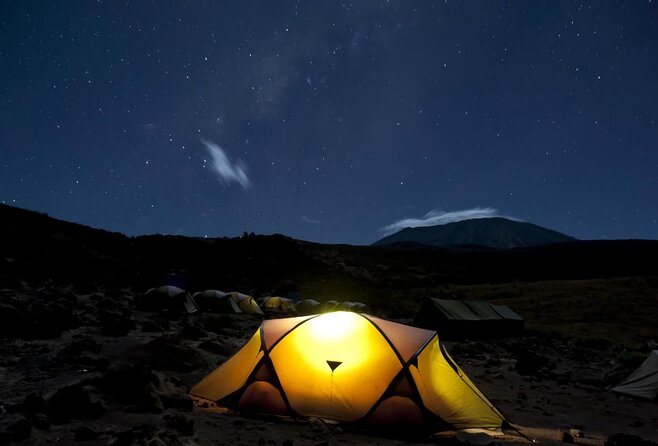
- Marangu Route uses huts rather than a fully tent-based camp experience, with basic mountain accommodation and no running water at Kibo Huts.
- The summit push begins at 1 AM, aiming for Gilman’s Point around 5 to 7 AM and Uhuru Peak around 9 AM.
- Horombo Huts is your best acclimatization decision, since you can rest there for an extra day or climb toward Mawenzi.
- Meals, boiled water, porters, cooks, guides, rescue fees, and park costs are included, which gives the $2,004.11 price real substance.
- The lower rainforest may be wet and muddy, so gaiters, trekking poles, rain gear, and warm layers are useful.
- A crew of up to 15 people is possible, and tips for guides, porters, cooks, and waiters are not included.
What the $2,004.11 price really covers
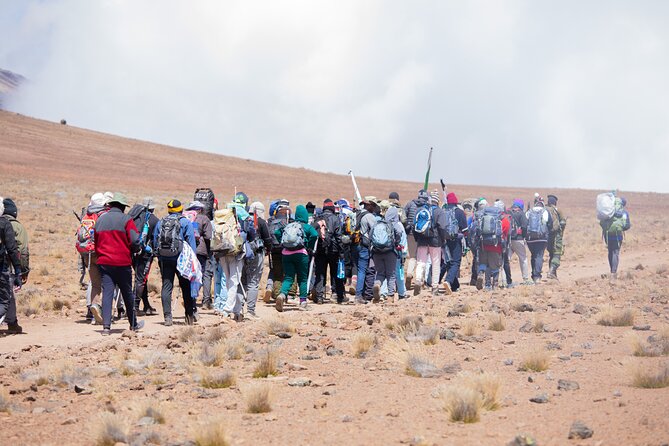
At $2,004.11 per person, this is not a cheap mountain walk. It is also not simply a park entry ticket with a guide attached. The price includes two nights at the Springlands Hotel in Moshi, one before and one after the climb, plus airport transfers from Kilimanjaro International Airport.
On the mountain, your fee covers national park charges, hut and camping fees, tents, foam sleeping pads, cooking equipment, eating utensils, boiled water, and all breakfasts, lunches, and dinners. You also have qualified guides, porters, a cook, and a waiter. Their mountain entry fees and accommodation are included as well.
That package matters because Kilimanjaro costs build quickly when separated into individual items. National park and rescue charges are already handled. A first-aid kit and pulse oximeters are supplied, and rescue fees required by the park are covered. You still need to budget for tips, travel insurance, visas, flights, personal spending, and equipment rental or purchase.
Sleeping bags are not included. Neither is emergency oxygen. The operator says some mountain equipment can be rented, so you should ask for the current rental list before flying to Tanzania. Single-room charges at Springlands Hotel are also extra unless you are booking the one-person rate.
The package includes five breakfasts, five lunches, and five dinners, though the wording is a little awkward because the trip itself is described as five days and some meals depend on your exact timing. I would confirm the meal schedule and sleeping arrangement before payment. The inclusion of a cook and dedicated food supplies is valuable, since you will need regular meals during long uphill days.
More Kilimanjaro routes and climbs:
- Kilimanjaro climb by Lemosho Route (7-day)
★ 5.0 · 651 reviews - Kilimanjaro climb, Machame Route (7-day)
★ 5.0 · 262 reviews - Kilimanjaro Climbing Lemosho Route 8 Days.
★ 5.0 · 186 reviews
Leaving Moshi for the Marangu Gate
The published plan has you leave Moshi at 9 AM after breakfast and a guide briefing. The drive to Marangu Gate takes about 45 minutes. The meeting information also gives an 8 AM start point at Kilimanjaro Airport, so you should confirm the exact pickup plan with Zara Tours, especially if you are arriving that morning.
At the gate, your crew registers with the national park. This is not wasted time. Park registration is part of the official process, and the delay gives the porters time to organize loads and the guides time to prepare the group.
The first walking day lasts about eight hours, though the actual hiking distance and pace will depend on your group. You begin around 10:30 AM and climb through rainforest. Look for tall Eucalyptus trees, bird life, and Colobus monkeys. The forest is a fine introduction to Kilimanjaro because it feels alive and shaded before the mountain grows colder and more exposed.
The wet ground is the practical catch. Rainforest trails can be muddy, so gaiters and trekking poles are more than optional comforts. Shorts and a T-shirt may feel right at the lower elevation, but keep rain gear and warmer clothing in your daypack. Weather can shift as you climb.
A lunch stop comes around the middle of the day. You reach Mandara Huts around 2 or 3 PM, unpack, rest, and have tea or coffee. If energy remains, take the 15-minute side trip to Maundi Crater. It offers a useful first look at the surrounding area, including views toward northern Tanzania and Kenya.
Mandara is a gentle first night by mountain standards, but do not treat it as a normal hotel stop. Accommodation is basic, and you are sharing the rhythm of a working mountain camp. The reward is an early start into higher vegetation the next morning.
Mandara Huts to Horombo Huts
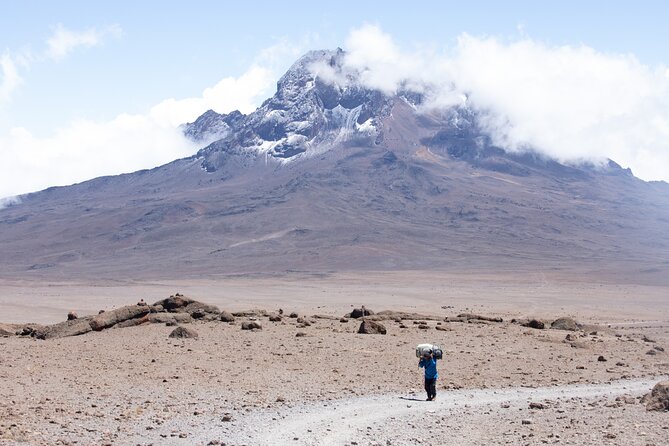
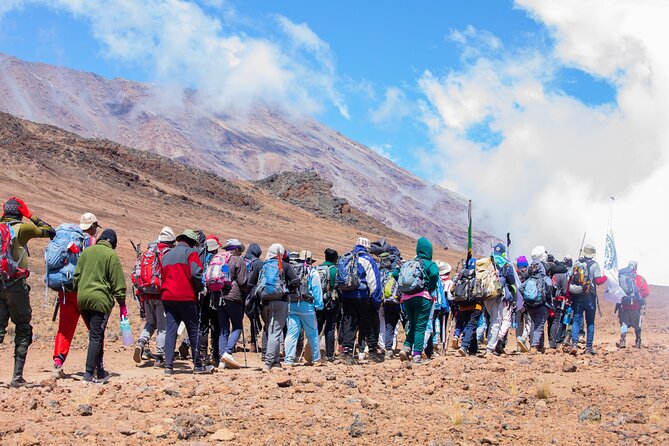
Day two begins with breakfast at 7:30 AM and departure around 8:30 AM. You spend roughly an hour moving through rainforest glades before the vegetation changes to heathland. Giant lobelias and groundsels make this section feel very different from the previous day.
The route then opens into moorland, where small shrubs replace the taller forest. This gradual change is one of the Marangu Route’s pleasures. You can see the mountain’s plant zones shift under your feet, rather than arriving suddenly in a bare summit environment.
A lunch stop comes halfway through the day, with views toward Mawenzi. You reach Horombo Huts around 3 PM. From here, Kibo’s summit is visible, giving you a clear reminder of the work ahead. The sight can be inspiring, though it can also make the next two days feel more serious.
Horombo has bathrooms with running water, a notable comfort after the lower camp. You may begin to feel altitude effects here. The itinerary gives you two choices: continue on the five-day plan, or spend an extra day resting at Horombo or climbing toward a base camp below Mawenzi’s sub-peak.
I strongly prefer treating that extra day as a serious option rather than a luxury. The five-day schedule is possible, but it compresses your adjustment to altitude. The added day changes the trip to six days and gives your body more time before the summit attempt. If you are uncertain about your fitness at elevation, ask about this option before the climb starts.
Crossing the saddle toward Kibo Huts
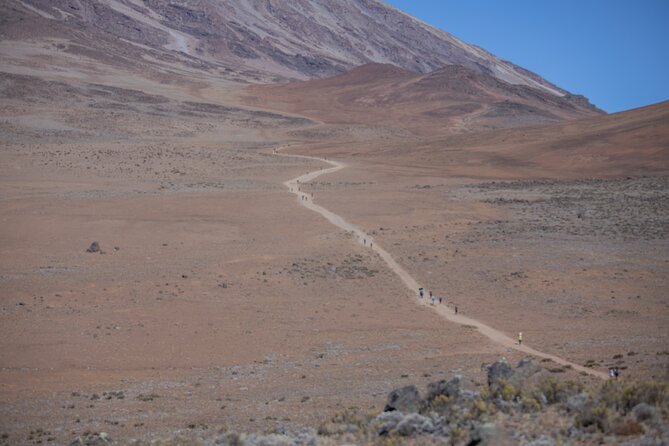
The third day begins in the familiar pattern: breakfast, packing, and an uphill walk. If you wake early, you may catch sunrise photographs around Horombo. The trail first passes through thinning heathland, then changes into a stark, almost moonlike zone.
You cross the broad saddle between Mawenzi and Kibo. This open section gives you a long view of the summit climb ahead. At lunch, and again while crossing the saddle, you can study the route up Kibo. Seeing that final climb in daylight can help you understand the shape of the challenge, although it may also make summit night feel daunting.
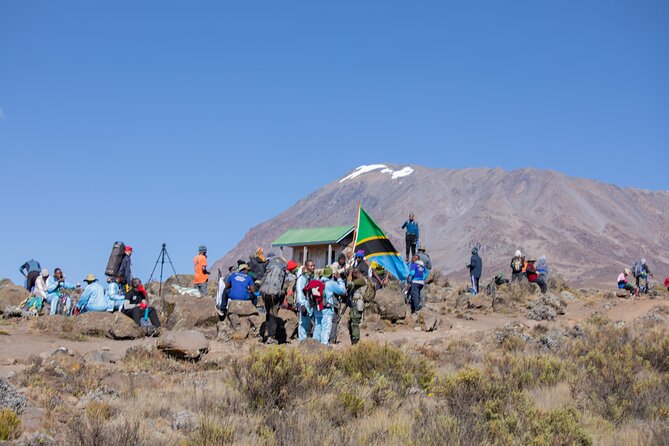
There is no running water at Kibo Huts. Plan to rely on the boiled water provided on the mountain and keep your essential items close. This is a good evening to organize your warm clothing, headlamp, gloves, snacks if you bring them, and summit layers. The schedule says you will begin the final ascent only a few hours after arriving, so avoid leaving everything until the last minute.
The third day is less about sightseeing than preparation. Altitude symptoms need attention here. The itinerary specifically advises you to watch for signs of altitude sickness. Tell your guide promptly if you feel unwell. A summit attempt is never worth ignoring serious symptoms.
A few more trips of this kind worth comparing:
- Safari Serengeti And Ngorongoro
★ 5.0 · 288 reviews - Climbing Kilimanjaro – Machame Route
★ 5.0 · 170 reviews - Climbing Kilimanjaro through 7 days Machame Route
★ 5.0 · 151 reviews - Kilimanjaro climb, Lemosho Route (8-day)
★ 5.0 · 148 reviews
The 1 AM climb to Uhuru Peak
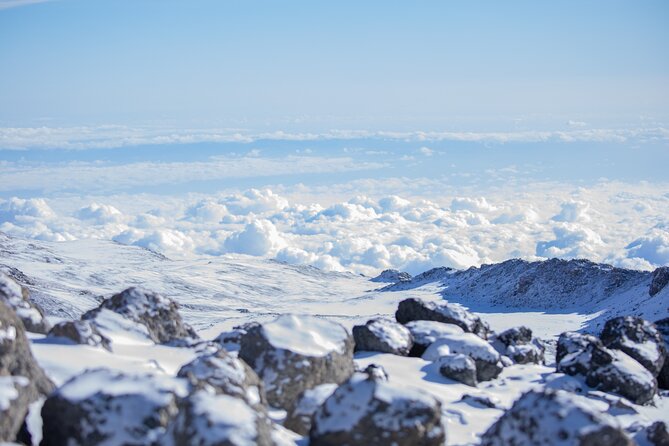
Summit night begins at midnight with a light breakfast. You leave at 1 AM and climb steep switchbacks over scree, with possible snow. The goal is to reach Gilman’s Point on the crater rim between 5 and 7 AM, at 5,861 meters or 18,640 feet.
This is the hardest portion of the trip. It is dark, cold, steep, and slow. You will be climbing before dawn after several days of effort, so the value of your guide and crew becomes especially clear. The pace is not about speed. It is about conserving energy and taking one controlled step after another.
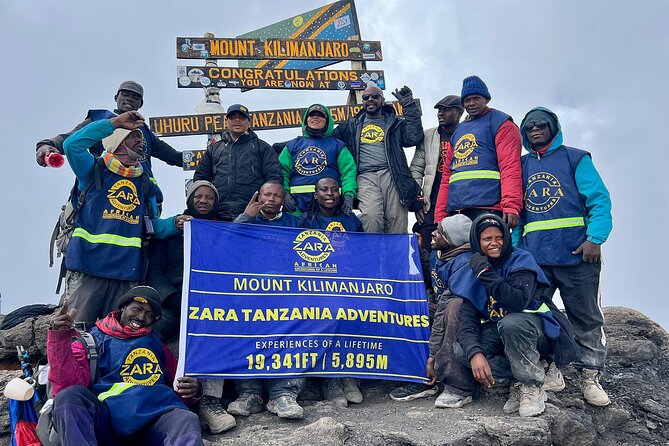
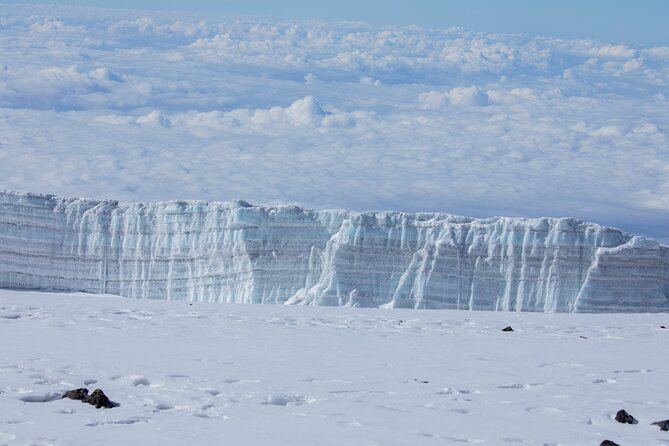
At Gilman’s Point, you reach the crater rim. Views of the crater and ice fields are part of the reward. From there, the route continues for about two hours along the rim toward Uhuru Peak, the true summit of Kilimanjaro. The planned arrival is around 9 AM.
Uhuru Peak is Africa’s highest point. The sense of achievement here is earned, not handed to you by a vehicle or cable car. Take the photograph, but keep your time at the summit sensible. The air is thin, and the descent still has a long way to go.
The itinerary describes the summit day as an eight-hour stop, but the full effort can feel much longer because it includes the pre-dawn start, ascent, summit time, and descent to Kibo Huts. Confirm the exact rest and sleeping plan with your guide. You should expect this to be the day that tests your determination.
Returning through moorland and rainforest
After the summit effort, you descend from Kibo Huts through the moorland to Horombo Huts. You then continue to Mandara Huts for lunch before entering the lush forest again.
The route may look familiar in reverse, but your body will feel very different. The lower elevation should be welcome, and the return through forest gives you a softer finish after the bare summit zone. You reach the park gate around 2 or 3 PM.
At the gate, remember to tip your guides, porters, cook, and waiters. Tips are not included in the price, and the crew’s work is central to the trip. Porters handle luggage, the cook keeps meals coming, and guides manage the pace and mountain decisions. The crew members praised most often by name include guides Gilbert Kasaba, Charles, Living, Eddie, Felix, Ambrose, Johnny, John, James, and Tumaini, though your assigned team may be different.
A vehicle returns you to Springlands Hotel in Moshi. A hot shower and a proper celebration are well deserved. The operator can also arrange extra activities such as a waterfall tour or cultural village visit, but these cost extra. Zanzibar is suggested as a possible recovery stop, though flights and additional arrangements are not part of this package.
Food, sleeping arrangements, and crew support
Food is one of the stronger parts of this climb. All mountain meals are included, and several accounts describe the food as good or decent, with enough available during the trek. That does not mean restaurant dining. Expect practical mountain meals rather than elaborate choices.
Accommodation is basic. The route is associated with huts, while the package also lists tents and camping equipment. Ask Zara Tours to clarify exactly where you will sleep on each night, particularly if the group arrangement changes. At Horombo, running water is available. At Kibo, it is not.
The crew receives especially warm praise for kindness, encouragement, and careful handling of luggage. One especially useful point is that porters were described as keeping bags on time, which matters when you arrive tired and need your warm clothes or sleeping gear without delay.
The maximum group size is 15 people. That is large enough for a social climb and small enough to allow the guides to monitor the group, though your personal experience will depend on the final number and crew structure. If you value close attention, ask how many guides are assigned to your departure.
Who should choose this five-day climb?
This trip suits you if you want guided access to Kilimanjaro without planning park permits, crew logistics, food, transport, and mountain equipment on your own. It is also a good match if you prefer the Marangu Route’s direct path and hut-based style over a longer, more remote-feeling route.
You need moderate physical fitness, but you should not read that as a promise of an easy walk. The operator calls Marangu the easiest and shortest route to the summit, yet altitude can affect fit people as well as casual hikers. The summit night is demanding for everyone.
I would choose the six-day version if it is available and fits your schedule. The extra Horombo day gives you a better chance to adjust before the summit. If you have only five days, prepare carefully and be honest with your guide about symptoms.
Should you book the Marangu Route with Zara Tours?
I would consider booking this trip if you want a well-supported Kilimanjaro package with a clear price and substantial inclusions. The $2,004.11 cost covers the expensive essentials: park fees, rescue fees, mountain crew, hotel nights, meals, airport transfers, and water. That makes it easier to judge the total cost.
I would not book without confirming three points first: the exact five-day or six-day schedule, the sleeping arrangement between huts and tents, and the equipment available for rent. Also budget for tips, insurance, visas, flights, and a sleeping bag.
The strongest reason to choose Zara Tours is the repeated praise for its guides, porters, food, and attentive service. The strongest reason to pause is the compressed five-day altitude schedule. If you accept the physical challenge, prefer a direct route, and can add an acclimatization day, this is a serious and practical way to attempt Kilimanjaro.
FAQ
How long is the Marangu Route experience?
The standard experience lasts about five days. You may choose an extra acclimatization day at Horombo Huts, making the trek six days.
What time does the summit climb begin?
You wake around midnight for a light breakfast and leave for the summit at about 1 AM.
When should I reach Uhuru Peak?
The planned arrival at Uhuru Peak is around 9 AM, after reaching Gilman’s Point between 5 and 7 AM and continuing along the crater rim.
Are meals included?
Yes. Breakfast, lunch, and dinner on the mountain are included. The package lists five breakfasts, five lunches, and five dinners.
Is accommodation included?
Yes. Two nights at the Springlands Hotel in Moshi are included, along with mountain hut and camping fees, tents, and foam sleeping pads.
Is a sleeping bag included?
No. A sleeping bag is listed as personal mountain equipment and is not included. Some equipment may be available to rent.
Are airport transfers provided?
Yes. Airport transfers from Kilimanjaro International Airport are included.
Are tips included in the price?
No. Tips for guides, porters, cooks, and waiters are not included.
Can I cancel for a full refund?
You can cancel at least 24 hours before the experience start time for a full refund. Cancellations or changes made less than 24 hours before the start time are not accepted for a refund.
Just added around Moshi
- Moshi: Lake Chala Tour: Hiking &/or Kayaking★ 4.5 · 3 reviews
- 3 Days Tanga Exclusive Beach Holiday★ 5.0 · 3 reviews
- Serengeti Wildebeest Migration.★ 5.0 · 3 reviews
- Chemka Hotpsrings E-Bike Day Trip★ 5.0 · 3 reviews
- Explore 1 day Ngorongoro Crater Budget Group Safari from Arusha★ 5.0 · 3 reviews
- Explore the 360° of Kilimanjaro★ 5.0 · 3 reviews
- Affordable Short Tanzania Safari (2 Days Camping Safari)★ 5.0 · 3 reviews
- Rongai Route 7 Days★ 5.0 · 3 reviews
Kilimanjaro Treks, compared.



8-Day Small-group Lemosho Kilimanjaro Summit Trekking
Read our review →


Climbing Kilimanjaro through 7 days Machame Route
Read our review →

Browse the lists this tour appears in