
Reviewed · CITY TOURS
Essence of Arusha City Tour
Arusha rewards curious detours. This private day tour gives you a useful break from safari roads, combining Tanzanian art, local crafts, shopping, village scenery, and Bangata Waterfalls below Mount Meru. I like the mix of city culture and countryside, and I like having private transport with hotel pickup and return to the Clocktower Roundabout. The main thing to watch is the timing: the advertised duration ranges from three to eight hours, yet the four listed stops can take much longer if each visit runs as described.
The tour costs $160 per person, so value depends on your group size and how much you want to see in one day. I think it works best when you have limited time in Arusha and want one organized outing instead of arranging several separate visits. I would also confirm the final schedule, refreshments, and pickup details before paying, since the information gives different totals for the duration and for coffee and tea.
In This Review
- Four Arusha moments worth knowing
- Why this makes sense between safari days
- The Cultural Heritage Centre: art, shopping, and Tanzanite
- Shanga Foundation: beautiful objects with a clear purpose
- Bangata Waterfalls below Mount Meru
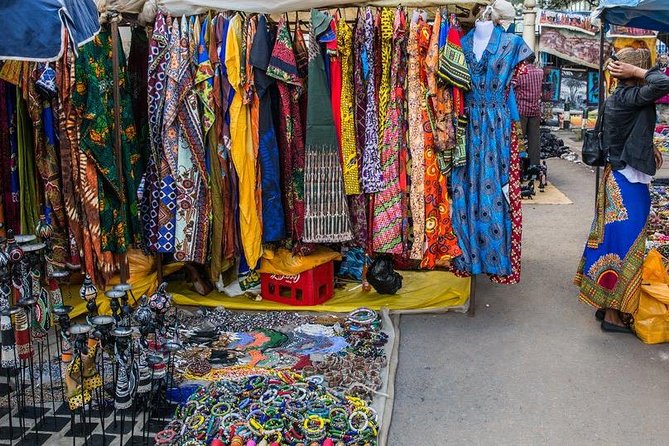
- Maasai Market: allow time for browsing and bargaining
- What $160 really buys you
- Timing, meeting point, and practical planning
- Who will enjoy this Arusha day?
- Should you book the Essence of Arusha City Tour?
- FAQ
- Where does the Essence of Arusha City Tour start and end?
- How long does the tour last?
- What days and times is the tour available?
- Is transportation included?
- Is this a private tour?
- What is included in the price?
- What happens if bad weather cancels the tour?
- Can I cancel for a refund?
Four Arusha moments worth knowing
- Cultural Heritage Centre: See carvings, masks, modern art, gemstones, books, and work linked to more than 120 Tanzanian tribes.
- Shanga Foundation: Shop for handmade glassware, beads, paintings, fabrics, and recycled-material art made through a social enterprise supporting disabled artisans.
- Bangata Waterfalls: Follow village roads below Mount Meru, pass farms and fish ponds, and finish near a natural waterfall.
- Maasai Market: Browse fruit, coffee, nuts, spices, sculptures, and souvenirs, with time to bargain.
- Private air-conditioned vehicle: Your group travels together, with pickup offered and the tour ending back at the meeting point.
- A guide-led introduction to Arusha: Guide Grifton is specifically praised for being ready at the hotel and helping make a one-day visit run smoothly.
Why this makes sense between safari days
Arusha is often treated as a staging point for Serengeti, Ngorongoro, or Kilimanjaro. That is a shame. The city sits below Mount Meru on the eastern branch of the Great Rift Valley, and it offers a different view of Tanzania from the one you get on a game drive.
This tour is built around that change of pace. Instead of watching animals from a vehicle, you spend time with sculpture, jewelry, recycled art, food-growing communities, market sellers, and a waterfall. I like this balance because it gives you a better feel for daily creative and commercial life in northern Tanzania.
The private format matters. You are not sharing the day with a large group, and only your party participates. That should make it easier to spend more time at a shop you enjoy or move along when a stop is not your thing. Pickup is offered in a modern, air-conditioned vehicle, which is welcome after a hot morning in town or a dusty road toward Mount Meru.
The schedule needs a little care. The listed stops are described as three hours at the Cultural Heritage Centre, three hours at Shanga, two hours at the waterfall, and two hours at the Maasai Market. That adds up to ten hours before driving time, while the general duration is given as three to eight hours. The operating hours are listed as Monday through Saturday, 8:30 AM to 3:30 PM. Ask the operator how your chosen version is arranged.
A few more trips of this kind worth comparing:
- Serengeti Balloon Safari and authentic bush breakfast
★ 5.0 · 2,480 reviews - Balloon Safari & Bush Breakfast in Serengeti – Miracle Experience
★ 5.0 · 1,646 reviews - Tanzania Classic – 7 Days
★ 5.0 · 1,151 reviews
The Cultural Heritage Centre: art, shopping, and Tanzanite
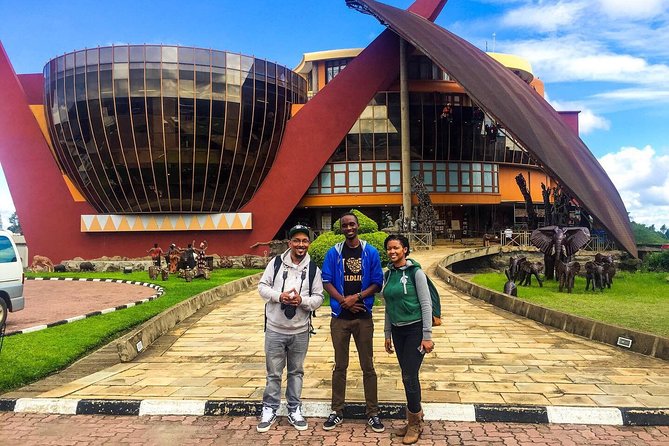
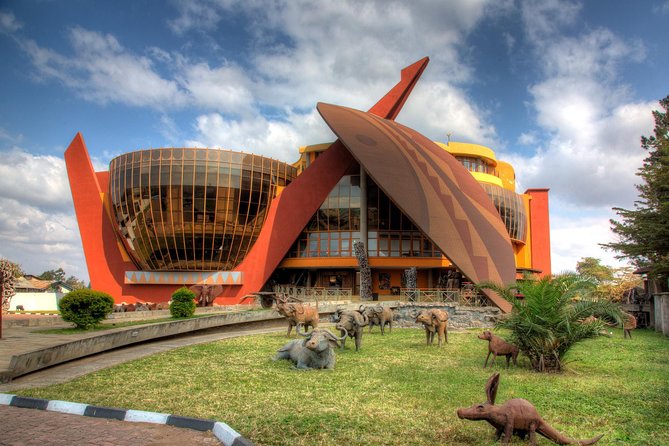
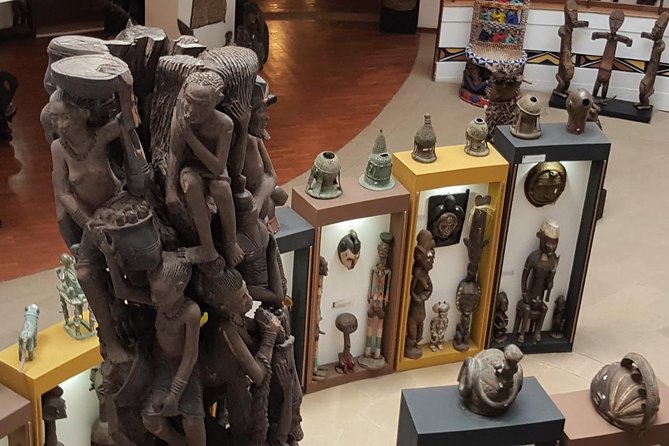
The Cultural Heritage Centre is the strongest opening stop for anyone who wants context before shopping. It functions as a gallery, sculpture space, handicraft center, jewelry boutique, restaurant, curio shop, and book store. You can expect masks, carved animals, traditional crafts, modern art, gemstones, and souvenirs in one large setting.
The collection draws from Tanzania’s more than 120 tribes. That does not mean every cultural tradition can be understood in a single visit, but it does give you a broad visual introduction. Look closely at the difference between decorative pieces and items made for daily or ceremonial use, then ask your guide or the staff about anything that catches your eye.
The center is also tied to the Tanzanite Experience part of the outing. Tanzanite is associated with Tanzania, and the boutique offers bracelets and necklaces. If you plan to buy a stone, take your time. Ask about the piece, its setting, and its documentation rather than treating the purchase as a quick souvenir stop.
I appreciate that this is not just a shop. You can look at the art first, then decide if you want to buy. The center has welcomed well-known figures including former U.S. presidents Bill Clinton and George W. Bush, King Harald of Norway, and former U.S. Secretary of State James Baker. That gives the place some historical interest, though the real value for you is the range of Tanzanian work on display.
The possible drawback is time. Three hours is a long visit if you are not interested in art, jewelry, or serious souvenir shopping. If you prefer local street life to a polished gallery, tell your guide early so the rest of the day does not feel rushed.
Shanga Foundation: beautiful objects with a clear purpose
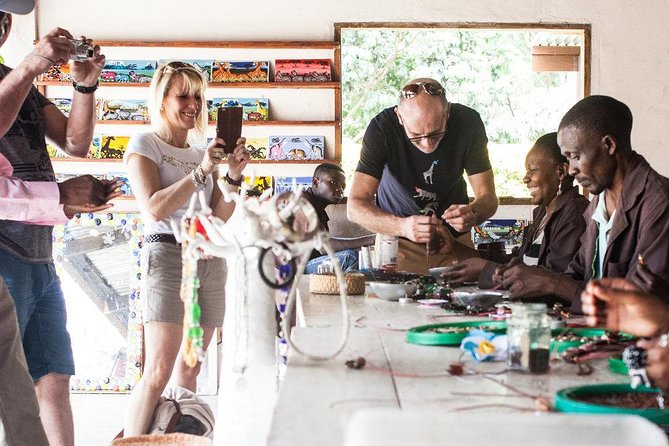
Shanga is one of the most worthwhile stops because the shopping has a direct social purpose. The foundation supports disabled local artisans, who create glassware, beads, paintings, fabrics, and other handmade pieces for sale.
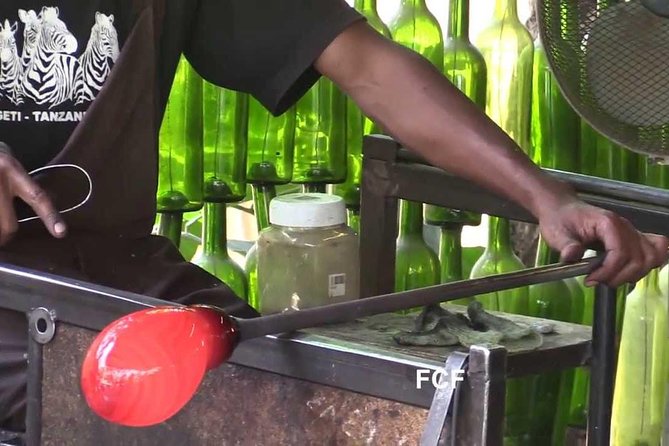
The workshop and store make the process visible. You might see beaded jewelry and cloth being made, then find finished goods nearby. Recycled materials are a major part of the work. Stuffed elephants can be made from reused men’s shirts, and walls built from recycled wine bottles catch the light and make a soft sound when moved.
That detail gives Shanga more character than a standard craft shop. You are not simply looking at finished objects behind glass. You can connect the material, the making process, and the people whose work supports the foundation.
This is a particularly good stop if you want gifts for family or friends. Glassware, fabric, beads, and small decorative items are easier to pack than large carvings, and the recycled designs are distinctive. I would leave room in your luggage.
The visit also includes another chance to see Tanzanite jewelry. That can be convenient, but it means the day includes two jewelry-focused stops. If gemstones are not on your shopping list, you may want to keep this portion short and focus on the workshop itself.
Because this is a private tour, you should be able to ask for a slower look at the craft process or a shorter shopping period. The information does not promise a fixed demonstration, so treat the workshop as a chance to see artisans at work rather than a guaranteed formal show.
Bangata Waterfalls below Mount Meru
The waterfall visit changes the mood completely. After the indoor galleries and shops, you travel through small agricultural villages on the lower slopes of Mount Meru. The route passes cultivated areas where people grow and sell coffee, maize, bananas, fruits, and vegetables.
This is one of the tour’s most appealing features. You get to see how food is grown and sold close to home rather than only hearing about Tanzania through a guidebook. The trip also gives you a closer look at the connection between Mount Meru’s foothills and local farming.
At the waterfall entrance, the surroundings include avocado plantations and fish ponds. You can learn about cultivation from planting through the point when produce is ready for export. The fish ponds add another working element to the visit, and you can feed the fish before continuing downhill.
The waterfall itself is described as a place to relax after a long day. That sounds simple, and that is the point. This is not presented as a major wilderness trek or a difficult adventure. It is a nature stop linked to village life, farming, and a short walk down toward the water.
Wear practical shoes. The route descends toward the falls, and the ground may be less comfortable than the city stops. Good walking footwear will also help you enjoy the village and plantation areas without worrying about every step.
Weather matters here. The experience requires good weather, and poor conditions can lead to a different date or a full refund. If the waterfall is the main reason you want the tour, confirm the weather plan and the walking conditions before setting out.
More city tours:
- Arusha Guided Walking City Tour, Culture, Lifestyle & History
★ 5.0 · 150 reviews - Full Day Arusha City Tour
★ 5.0 · 18 reviews - Arusha: City Walking Tour Historic and Modern Highlights
★ 4.5 · 12 reviews - Arusha City Culture and Historical Walking Tour
★ 5.0 · 8 reviews
Maasai Market: allow time for browsing and bargaining
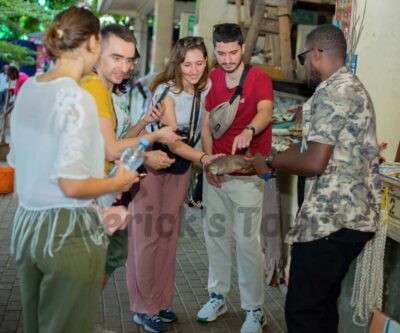
The Maasai Market is the liveliest shopping stop. It is described as a sensory experience, with sellers offering exotic fruit, coffee, nuts, spices, African art, sculptures, and artifacts.
You should arrive ready to browse rather than rush. A market visit is more enjoyable when you compare several stalls, inspect the workmanship, and decide what you really want. Bargaining is part of the experience, but keep it friendly. You are buying from local sellers, and a good exchange matters more than shaving the last few coins off a price.
The market is a good place for smaller gifts. Coffee, spices, nuts, and compact crafts are easier to carry than large artworks. If you want higher-end carvings and carefully made pieces, the Cultural Heritage craft mall is recommended as a better place to look.
That contrast is useful. The Maasai Market offers energy and variety, while the craft mall gives you a more controlled setting for choosing art. I would not treat one as better in every case. Go to the market for atmosphere and negotiation, and use the gallery setting when quality, presentation, or a larger purchase matters most.
A two-hour stop can be generous. If you love shopping, you will appreciate it. If markets make you tired, ask how much time you can spend here and still reach the waterfall or return on schedule.
What $160 really buys you
At $160 per person, this is not a bargain city walk. You are paying for a private experience, transportation, admissions, and a full day that reaches beyond central Arusha.
The price makes more sense for a small group. If several people share the private vehicle, the cost buys convenience and flexibility. For one person, it is a larger expense, so compare it with the cost and effort of arranging transport to the Cultural Heritage Centre, Shanga, the waterfall, and the market separately.
The strongest value comes from variety. You get art, crafts, social enterprise shopping, rural scenery, farming information, a waterfall, and a market in one organized outing. That would be difficult to coordinate independently, especially if you have only one day in town.
The weaker value is for anyone who dislikes shopping. Two of the main stops focus heavily on crafts and jewelry, and the market adds another shopping period. You may feel that the day spends too much time in stores unless you are genuinely interested in Tanzanian art, gifts, and gemstones.
Private transport also helps with comfort. You are not expected to navigate between several stops on your own, and the air-conditioned vehicle provides a break from the heat. All fees and taxes are included, as are snacks. The information is inconsistent about coffee and tea: the highlights say they are provided as light refreshments, while the inclusions and exclusions list coffee and tea differently. Confirm this before departure rather than counting on it.
Timing, meeting point, and practical planning
The stated start and end point is the Clocktower Roundabout in Arusha, with the activity ending back there. Pickup is offered, and one account describes guide Grifton waiting at a hotel and ready to begin. Confirm your exact pickup address and time because the meeting point and hotel pickup wording are both used.
The experience is offered Monday through Saturday from 8:30 AM to 3:30 PM. The dates shown run through June 18, 2026. Sunday availability is not listed.
Confirmation arrives at booking, and mobile tickets are accepted. The tour is near public transportation, though you may not need that if pickup is arranged. Most people can participate, but the waterfall route includes a descent, so anyone concerned about walking should ask for a clear description before booking.
You can cancel for a full refund if you do so at least 24 hours before the start time. Changes or cancellations inside that window are not accepted for a refund. Since poor weather can affect the waterfall visit, the operator offers another date or a full refund if the activity is canceled for that reason.
Who will enjoy this Arusha day?
I would choose this tour if you have one free day in Arusha and want more than a transfer between airport, hotel, and safari camp. It suits people who enjoy meeting local makers, buying crafts, seeing farms, and mixing a city visit with an easy nature outing.
It is also a good fit for families and private groups that value their own vehicle. The range of stops means different people can find something to enjoy, although younger children may not want several hours of shopping.
Art buyers and souvenir hunters will get the most from the Cultural Heritage Centre, Shanga, and the Maasai Market. If you are interested in Tanzanite, you have two opportunities to see jewelry and ask questions.
I would be more cautious if you want a focused walking tour about Arusha’s political history. The overall description points to political and cultural learning, but the detailed stops emphasize art, crafts, shopping, farming, and the waterfall. You should ask the operator how much formal history is included.
Should you book the Essence of Arusha City Tour?
Book it if you want a private, varied day and you enjoy combining shopping with local culture and a short countryside outing. The Cultural Heritage Centre and Shanga Foundation are the best reasons to go, while Bangata Waterfalls gives the day a welcome change of setting.
I would skip it if you want a short three-hour city tour, dislike shopping, or need a tightly timed schedule. Before booking, confirm the real duration, the pickup arrangement, which stops are included on your date, and whether coffee and tea are provided. If those details line up with your plans, $160 can be fair value for a private introduction to Arusha beyond the safari circuit.
FAQ
Where does the Essence of Arusha City Tour start and end?
The listed meeting point is the Clocktower Roundabout in Arusha, Tanzania. The activity ends back at the meeting point, and pickup is offered.
How long does the tour last?
The general duration is listed as approximately three to eight hours. The individual stop descriptions total more time, so you should confirm the exact schedule with the provider before booking.
What days and times is the tour available?
The stated operating hours are Monday through Saturday, from 8:30 AM to 3:30 PM. Sunday availability is not listed.
Is transportation included?
Yes. Private transportation is included, and pickup is offered in a modern, air-conditioned vehicle.
Is this a private tour?
Yes. Only your group participates in the activity.
What is included in the price?
Private transportation, all fees and taxes, and snacks are included. The supplied details give conflicting information about coffee and tea, so confirm whether those refreshments are included.
What happens if bad weather cancels the tour?
The experience requires good weather. If the provider cancels because of poor weather, you will be offered a different date or a full refund.
Can I cancel for a refund?
Yes. You can receive a full refund if you cancel at least 24 hours before the experience start time. Cancellations or changes made less than 24 hours in advance are not accepted for a refund.
Just added around Arusha
- 5 Days Safari Tarangire, Serengeti, and Ngorongoro Crater★ 5.0 · 3 reviews
- Love lives in Africa★ 5.0 · 3 reviews
- 5 Days of Safari, Culture & Hot Springs – Tour from Arusha★ 5.0 · 3 reviews
- Arusha National Park Safari by Jeep★ 4.5 · 3 reviews
- 5Days Family _Group Tour Lodging Mid-Range in the Jungle★ 5.0 · 3 reviews
- Serengeti & Ngorongoro 3 Days Budget Safari★ 5.0 · 3 reviews
- 2 Days Tarangire and Ngorongoro Crater Tour★ 5.0 · 3 reviews
- 7 Days PRIVATE Best of Tanzania Safari *Departing everyday*★ 5.0 · 3 reviews
City Tours, compared.

Arusha Guided Walking City Tour, Culture, Lifestyle & History
Read our review →

The Best/Top Rated Cultural City Tour in Dar es Salaam
Read our review →
Browse the lists this tour appears in