
Reviewed · KILIMANJARO TREKS
6 Days Kilimanjaro climb – Marangu route
Kilimanjaro rewards patience, not bravado. This six-day climb follows the historic Marangu Route, known as the Coca-Cola route, and gives you the unusual comfort of sleeping in mountain huts instead of tents. I especially like the hut accommodation and the extra acclimatization day on Mawenzi Ridge. I also like that meals, private transport, and a dedicated mountain crew are included.
The main drawback is the short schedule. Six days gives you one useful acclimatization day, but altitude remains a serious concern, and the summit push is long, cold, and demanding. The price of $2,000 per person is reasonable for a private climb with meals and transport, but tips for the mountain crew and personal expenses are extra.
In This Review
- Key points to know before booking
- Why the Marangu Route appeals to many climbers
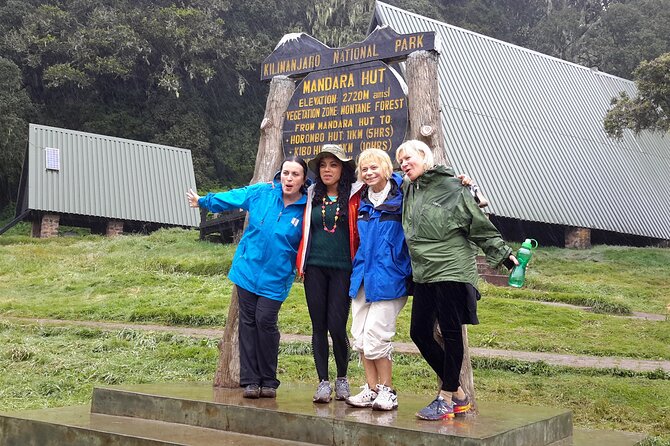
- Day one: Marangu Gate to Mandara Hut
- Day two: Forest edge, moorland, and first peak views
- Day three: Mawenzi Ridge gives you time to adjust
- Day four: Across the Saddle to Kibo Hut
- Day five: The midnight push to Uhuru Peak
- Day six: The long descent to Mweka Gate
- Food, transport, and crew support
- Is $2,000 good value?
- Who should choose this climb?
- FAQ
- Where does the Kilimanjaro climb begin?
- How many days does the Marangu Route climb take?
- Do I sleep in tents on this route?
- What meals are included?
- How difficult is the summit day?
- Can I cancel for a full refund?
- Should you book the six-day Marangu climb?
Key points to know before booking
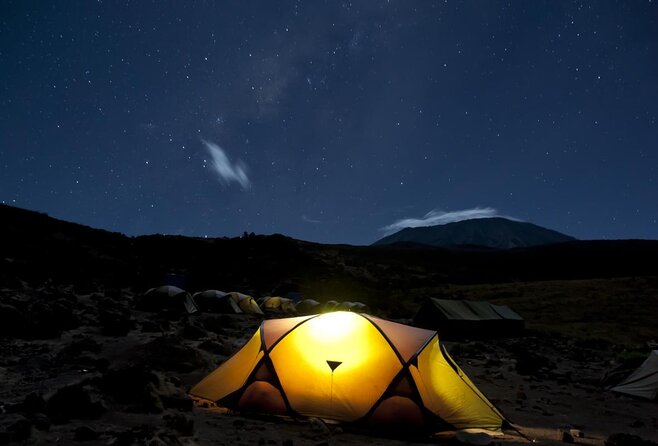
- Hut-based climbing: You sleep in shared huts at Mandara, Horombo, and Kibo rather than camping in tents.
- A valuable acclimatization day: Day three uses a hike toward Mawenzi Ridge before returning to Horombo Hut.
- A midnight summit start: The push to Uhuru Peak begins around midnight and can last six to eight hours.
- A large support team: One six-person group was supported by 27 guides, cooks, and porters.
- Meals are included: The package covers six lunches, five breakfasts, and five dinners.
- Altitude is the real test: One climber had to turn back after suffering altitude sickness, so the six-day timetable requires honest preparation.
Why the Marangu Route appeals to many climbers
The Marangu Route is the classic way up Kilimanjaro. It follows the path associated with Hans Meyer, the first European to reach the summit, and it is the only route in this experience that uses huts for overnight stays.
That hut system changes the feel of the climb. You do not need to carry or sleep in a tent, and you avoid packing up camp each morning. The huts are a practical feature, not a luxury resort. You should still expect basic mountain accommodation and shared sleeping arrangements.
The Coca-Cola nickname comes from the route’s reputation as the more approachable Kilimanjaro option. That label can mislead you. The route is friendly in its logistics, but the mountain is still 19,341 feet high at Uhuru Peak. The final climb is difficult for strong hikers and can be especially tough if your body does not adjust well to altitude.
This is a private activity, so only your group participates. That gives you a more personal setup than a large mixed group. It also means the pace and daily support are centered on your party, although the mountain crew still makes the key decisions about safety and timing.
More Kilimanjaro routes and climbs:
- Kilimanjaro climb by Lemosho Route (7-day)
★ 5.0 · 651 reviews - Kilimanjaro climb, Machame Route (7-day)
★ 5.0 · 262 reviews - Kilimanjaro Climbing Lemosho Route 8 Days.
★ 5.0 · 186 reviews
Day one: Marangu Gate to Mandara Hut
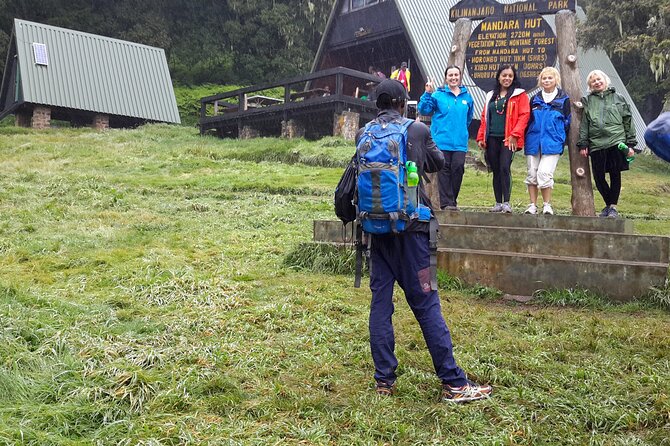
Your morning begins with pickup at about 7:00 a.m. in Moshi, followed by private transport to Marangu Gate. Before walking, you complete the required entry formalities. This start can feel administrative, but it marks the change from city travel to a serious mountain journey.
The first day covers about five miles and takes roughly four to five hours. You rise from about 6,046 feet to 8,858 feet, walking through Kilimanjaro’s tropical rain forest.
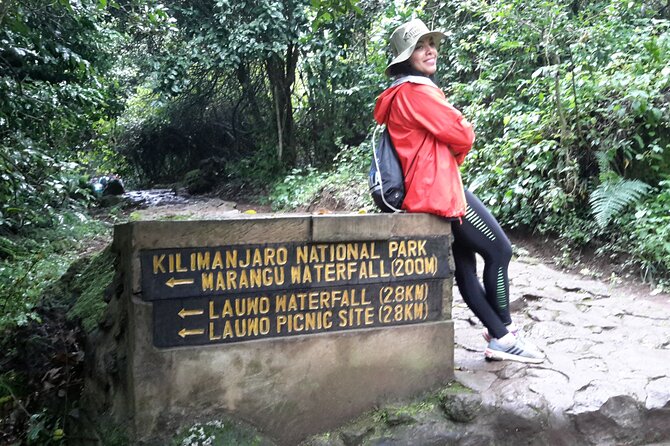
This is the gentlest walking day, but it is not without interest. The forest is thick, humid, and shaded, and blue monkeys may appear near the upper edge of the trees. I like this opening because it gives you time to settle into a slower rhythm before the altitude becomes more noticeable.
The trail eventually widens, exposing hillsides as you approach Mandara Hut. The change from dense forest to more open ground helps you see how quickly Kilimanjaro’s natural zones shift with height.
You should use this day to pay attention to your guide’s pace. The best approach is slow and steady, with no need to prove anything early. You have several harder days ahead.
Day two: Forest edge, moorland, and first peak views
Day two is longer, covering about seven miles in six to eight hours. The route rises from 8,858 feet to 12,205 feet, passing out of the forest and into high moorland.
The scenery becomes more open and spare. You may get your first views of Kibo and Mawenzi, two of Kilimanjaro’s three volcanic peaks. These views matter because they make the scale of the climb clear. Kibo is the summit cone, while Mawenzi has a sharper, more broken profile.
The description labels this section as heath, which fits the plant zone better than the repeated wording in the schedule. The important point is that you are leaving the forest and entering a cooler, more exposed section of mountain.
This is where you begin to learn the central rule of high-altitude walking: a short day at a slow pace can be more useful than a fast day that leaves you exhausted. Drink as directed by your crew, eat even if your appetite fades, and tell your guide early if you develop a headache, nausea, or unusual weakness.
The second night at altitude can be uncomfortable. The hut makes the overnight arrangement simpler, but it does not remove the effects of thin air.
Day three: Mawenzi Ridge gives you time to adjust
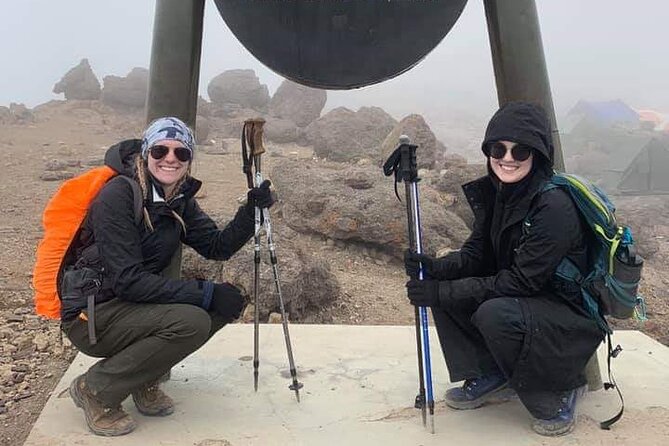
Day three is the smart part of this schedule. Instead of moving directly toward Kibo, you take an acclimatization hike from Horombo Hut toward Mawenzi Ridge, then return to Horombo.
The walk up takes about two to three hours, with another one to two hours for the return. The total distance is about six miles, and the highest point on the outing is listed at roughly 14,400 feet.
This day is not filler. It lets your body spend more time at altitude while giving you a relatively short walking day. You also get unusual views toward both Kibo and Mawenzi, making it one of the most scenic sections of the climb.
The return to Horombo Hut is important. You gain height during the day, then sleep lower than your highest point. That pattern can help your body adjust, though it cannot guarantee that altitude sickness will not occur.
I would treat this as a rest day with a purpose, not a chance to race up Mawenzi Ridge. Keep your clothing accessible, move carefully, and save energy for the long approach to Kibo on day four.
A few more trips of this kind worth comparing:
- Kilimanjaro climb, Lemosho Route (6-day)
★ 5.0 · 129 reviews - Kilimanjaro climb, Marangu route (6-day)
★ 5.0 · 72 reviews - 6 Days 5 Night Safari
★ 5.0 · 57 reviews - 6 Days Tanzania Classic Safari
★ 5.0 · 52 reviews
Day four: Across the Saddle to Kibo Hut
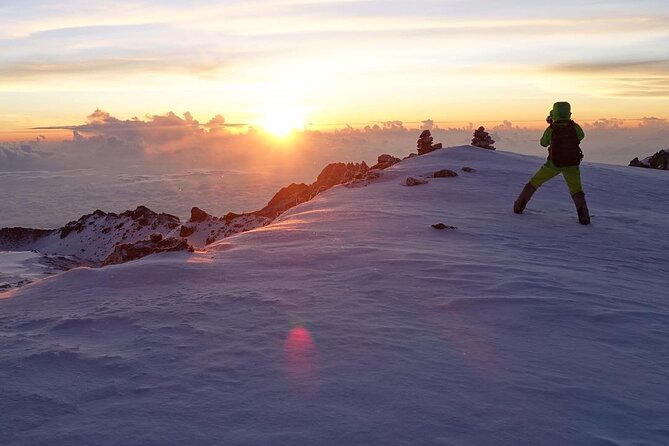
Day four covers about six miles in six to eight hours. You climb from 12,205 feet to 15,430 feet, entering the alpine desert zone.
The major feature is the Saddle, the broad, stark area between Mawenzi and Kibo. The route crosses this open volcanic ground before reaching Kibo Hut at the base of Kibo’s crater wall.
This is one of the less forgiving days for weather and comfort. The vegetation is now sparse, and the surroundings can feel almost lunar. There is little visual distraction, which is useful in one way: your attention naturally turns to your breathing, pace, and footing.
Once you reach Kibo Hut, the plan is to rest and eat an early dinner before the summit attempt. This is a short night. You start again around midnight, so the afternoon and evening should be used for quiet recovery rather than extra exploring.
The Kibo overnight stop is also the point where the route feels most serious. You are already above 15,000 feet, and the summit is still nearly 4,000 feet higher. If you feel unwell, speak clearly with your guide. A summit attempt is never worth hiding symptoms.
Day five: The midnight push to Uhuru Peak
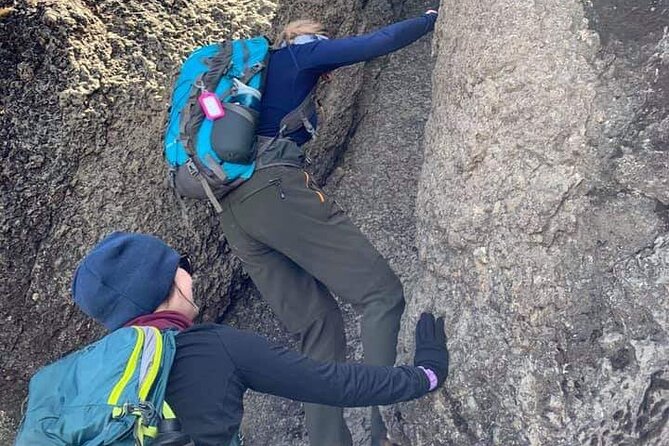
Day five is the hardest and longest part of the climb. You leave Kibo Hut around midnight and spend six to eight hours reaching Uhuru Peak at 19,341 feet. Afterward, you descend to Horombo Hut, a further four to five hours of walking.
The summit section is listed at about four miles, followed by roughly ten miles on the descent. In total, this is a 13-hour day, though the exact duration depends on pace, conditions, and how your body responds to the altitude.
The first hours are spent walking in darkness. Wind and cold can be severe at this height and time of day. Short, frequent breaks are more useful than long stops, since standing still can make you colder.
The route reaches Gilman’s Point at about 18,600 feet. From there, the sunrise over Mawenzi can be one of the most powerful moments of the climb. The final route around the crater rim continues toward Uhuru Peak, the highest point in Africa.
Reaching Gilman’s Point is not the same as reaching Uhuru Peak. You should ask your guide to explain the day’s route and milestones before leaving Kibo Hut, so you know what remains after the first major high point.
The descent to Horombo is a relief, but do not underestimate it. Your legs are tired, the ground can be loose, and altitude symptoms may continue during the way down. One climber in the group had to turn back after developing altitude sickness. That is an important reminder that a well-supported climb can still end short of the summit.
The support described for one six-person group was substantial: 27 people between guides, cooks, and porters. When one climber fell behind, someone stayed with that person. That kind of support is one of the strongest reasons to consider an organized climb rather than attempting to manage the mountain alone.
Day six: The long descent to Mweka Gate
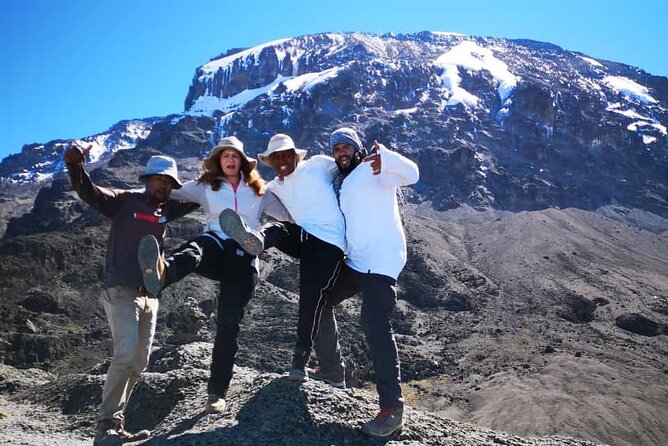
The final day descends from Horombo Hut at about 12,205 feet to Mweka Gate at about 6,046 feet. The walk covers roughly 12 miles and takes five to seven hours.
You return through the rain forest, which feels warmer and thicker after the exposed upper mountain. Lower down, the trail may be wet and muddy. Good footwear matters here, even though the summit is already behind you.
The route continues for about another hour from Mweka Gate to Mweka Village. A vehicle then meets you at the village and drives you back to your Moshi hotel.
At the gate, you collect summit certificates. The certificate process gives the end of the climb a clear finish, but the descent is still a real hiking day. Do not pack away your water, rain protection, or snacks too early.
Food, transport, and crew support
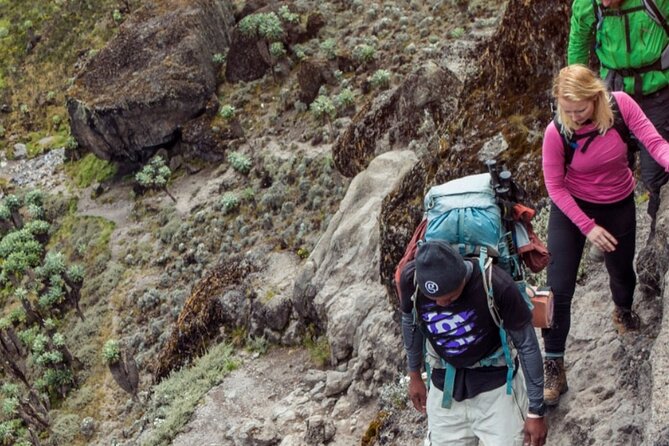
The $2,000 price includes private transportation, six lunches, five breakfasts, and five dinners. That is a useful package for a six-day climb because food at altitude is not something you want to arrange day by day.
The food received especially strong praise for being fresh and delicious. That matters more than it might sound. Long days, cold temperatures, and thin air can reduce your appetite, so reliable meals help you keep moving.
The crew also received repeated praise for professionalism and dependability. Issa handled reservations and responded to questions within a day, with detailed answers during the booking process. That sort of communication is valuable before a high-altitude trip, when unclear arrangements can create stress.
Tips for the mountain crew are not included. You should also budget separately for personal expenses. The supplied details do not give a recommended tipping amount, so ask Destiny Explorers for current guidance before departure.
Is $2,000 good value?
At $2,000 per person, this is not a cheap walk, but Kilimanjaro requires a large logistical operation. The price includes private transport, hut-based support, meals, guides, cooks, and porters. For a private group, that package can represent fair value.
The strongest value comes from the human support. A large crew can help with food, carrying equipment, route management, and keeping an eye on anyone who struggles. That support is especially important on summit day and during the descent.
The tradeoff is the six-day length. A longer climb can give you more time to adjust, while this schedule has only one dedicated acclimatization day. You should not choose this version simply because it is shorter. Choose it because six days fits your time and you are prepared to walk slowly and respond honestly to altitude symptoms.
Who should choose this climb?
I would recommend this experience to you if you want the historic Marangu Route, prefer huts to tents, and value a private arrangement with organized meals and transport.
It suits people with moderate physical fitness who can handle several hours of walking each day. You do not need to be a competitive athlete, but you do need to prepare for long uphill and downhill days, especially the 13-hour summit attempt.
I would think carefully before booking if you have no experience with long mountain walks or if your schedule leaves no flexibility for a difficult summit day. The booking terms allow free cancellation up to 24 hours before the start time, but changes or cancellations within 24 hours are not refunded. That policy is worth noting before your final plans are fixed.
FAQ
Where does the Kilimanjaro climb begin?
The experience starts with pickup at about 7:00 a.m. in Moshi. Private transportation takes you to Marangu Gate, where the required formalities are completed before hiking begins.
How many days does the Marangu Route climb take?
The climb lasts approximately six days. The schedule includes five nights of meals and mountain support, followed by transport back to a hotel in Moshi on the final day.
Do I sleep in tents on this route?
No. The Marangu Route uses mountain huts at Mandara Hut, Horombo Hut, and Kibo Hut, so tents are not required for the overnight stays described here.
What meals are included?
The package includes six lunches, five breakfasts, and five dinners. Tipping the mountain crew and personal expenses are not included.
How difficult is the summit day?
Summit day is the most physically and mentally demanding part. You begin around midnight, spend six to eight hours reaching Uhuru Peak, then walk another four to five hours down to Horombo Hut. The full day is listed at about 13 hours.
Can I cancel for a full refund?
Yes, if you cancel at least 24 hours before the experience start time. Cancellations within 24 hours are not refunded, and changes made within that period are not accepted.
Should you book the six-day Marangu climb?
I would book this climb if hut accommodation, a private group, and strong crew support matter more to you than having the longest possible acclimatization schedule. The fresh meals, prompt booking communication from Issa, and attentive support for a struggling climber are meaningful advantages.
I would not treat the Coca-Cola nickname as a promise of an easy walk. The route is simpler logistically than a camping route, but the altitude and summit day remain serious. Go in prepared, walk slowly, listen to your guide, and accept that turning back can be the correct decision. For a prepared climber with six days available, this offers a direct, well-supported route to one of Africa’s great summits.
Just added around Moshi
- Moshi: Lake Chala Tour: Hiking &/or Kayaking★ 4.5 · 3 reviews
- 3 Days Tanga Exclusive Beach Holiday★ 5.0 · 3 reviews
- Serengeti Wildebeest Migration.★ 5.0 · 3 reviews
- Chemka Hotpsrings E-Bike Day Trip★ 5.0 · 3 reviews
- Explore 1 day Ngorongoro Crater Budget Group Safari from Arusha★ 5.0 · 3 reviews
- Explore the 360° of Kilimanjaro★ 5.0 · 3 reviews
- Affordable Short Tanzania Safari (2 Days Camping Safari)★ 5.0 · 3 reviews
- Rongai Route 7 Days★ 5.0 · 3 reviews
Kilimanjaro Treks, compared.



8-Day Small-group Lemosho Kilimanjaro Summit Trekking
Read our review →


Climbing Kilimanjaro through 7 days Machame Route
Read our review →

Browse the lists this tour appears in