
Reviewed · KILIMANJARO TREKS
Kilimanjaro 360° 9 days Tour
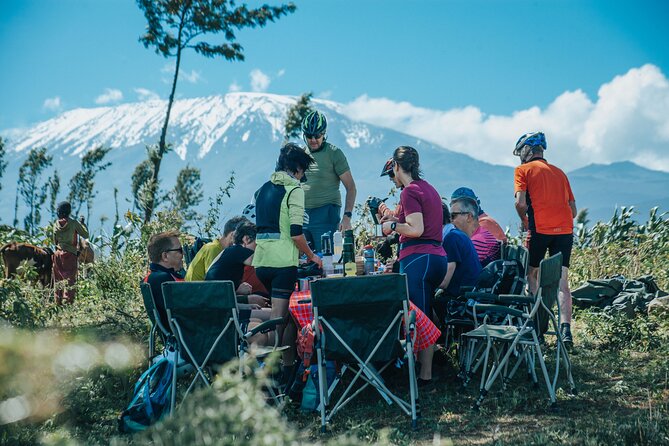
Circle Africa’s highest mountain by bicycle. This nine-day mountain bike tour from Moshi combines rough tracks, Chagga and Maasai communities, wildlife corridors, forest roads, and striking views of Kilimanjaro from several sides. You are not simply riding toward a summit. You are tracing the mountain’s changing edges by bike.
I like the way the route connects local culture with outdoor challenge. You eat local food, pass farms and villages, and spend a night in a traditional Maasai hut at Olpopongi. I also like the variety: open plains, coffee country, high mountain tracks, Lake Chala, forest roads, and a final ride back to Moshi.
The main caution is physical demand. This is not a gentle sightseeing ride. Expect steep climbs, loose gravel, rocky roads, mud, and long days in the saddle. The price is $2,499 per person, so you should be comfortable with both the cost and the effort before booking.
In This Review
- Five things to know before you pedal away
- What the $2,499 price really covers
- Day 1: Moshi arrival and a sensible start
- Day 2: Machame Gate, coffee country, and Maasai territory
- Day 3: Open plains and a wildlife corridor
- Day 4: The hard climb to the Shira Plateau
- Day 5: Northern villages and Rongai forest
- Day 6: A smoother ride to Lake Chala
- Day 7: Forest roads, mud, and repeated climbs
- Day 8: Mweka Gate and the return to Moshi
- Day 9: Rest, then your airport transfer
- The cycling difficulty is the real deciding factor
- Bikes, support, meals, and practical comfort
- What past riders reveal about One Bike Tanzania
- Who should book this Kilimanjaro cycling circuit?
- Should you book the Kilimanjaro 360° 9-day Tour?
- FAQ
- Where does the Kilimanjaro 360° cycling tour start?
- How long does the tour last?
- Is the tour private?
- What level of fitness is required?
- Is a mountain bike provided?
- Is a support vehicle included?
- Which meals are included?
- Are flights and insurance included?
- What happens if bad weather cancels the tour?
Five things to know before you pedal away
- Kilimanjaro from several angles: The route gives you views of Kibo, the Shira Plateau, Mount Meru, Mount Ol Doinyo Lengai, and Kenya’s open country.
- A real off-road challenge: Dirt, gravel, rock, mud, climbs, and descents make this a serious cycling trip, not a casual ride.
- Culture is part of the route: You pass through Chagga farming areas and Maasai country, then spend a night in a Maasai village.
- Support is built in: A mountain bike, helmet, water, snacks, meals, and a supporting vehicle are included.
- The route can be adapted: One Bike Tanzania has adjusted shorter versions for riders seeking a five-day or even two-day challenge.
- Private and flexible: Only your group participates, and pickup is offered from Kilimanjaro Airport or another arrival point.
What the $2,499 price really covers
At $2,499, this is a substantial trip rather than a cheap bike rental with a guide. The price includes a mountain bike and helmet, a support vehicle, water, snacks, nine lunches, eight breakfasts, and seven dinners. Airport or departure tax, insurance, and flights are not included.
The support vehicle matters here. A circuit around Kilimanjaro includes rough mountain roads and several demanding climbs. Knowing that a vehicle follows the route gives you a practical safety net and makes it easier for the operator to adjust the day if conditions or energy levels change.
The food plan also reduces daily planning. Breakfast is included on eight mornings, lunch on all nine days, and dinner on seven nights. You will still want to confirm the exact meal arrangements for the two evenings without listed dinners, especially if you have dietary needs.
I see the best value in the combination of transport, equipment, guiding, meals, camping, and route planning. You are paying to link together areas that would be difficult to organize independently. The weaker value is for anyone who only wants a short mountain bike outing. In that case, a local day ride would be a better fit.
More Kilimanjaro routes and climbs:
- Kilimanjaro climb by Lemosho Route (7-day)
★ 5.0 · 651 reviews - Kilimanjaro climb, Machame Route (7-day)
★ 5.0 · 262 reviews - Kilimanjaro Climbing Lemosho Route 8 Days.
★ 5.0 · 186 reviews
Day 1: Moshi arrival and a sensible start
One Bike Tanzania picks you up at Kilimanjaro Airport or another arrival point and takes you to your hotel. At the One Bike Shop on Mailimoja Road in Moshi, you receive trip information and make preparations for the ride.
This first day is useful because it gives you time to rest, check your equipment, and explore Moshi without immediately facing a hard climb. If your flight arrives late or you are tired from a long journey, protect this day. The next morning starts with a transfer to Machame Gate.
The first day includes no admission ticket cost, and the town portion is fairly light. That is good planning for a demanding cycling circuit.
Day 2: Machame Gate, coffee country, and Maasai territory
After breakfast, you transfer to Machame Gate, the starting point of the cycling route. The first roads are dirty and gravelly, leading through rainforest, banana plots, coffee plantations, and homes belonging to the Chagga people.
This section gives the tour its human side. You see how the lower slopes of Kilimanjaro support farming communities before the route moves into more open country. The change is gradual, which makes the day feel like a journey through several parts of Tanzania rather than one long mountain road.
As you head west, the forest gives way to open plains and acacia woodland. This is Maasai country, and the route passes Ngabobo and Tinga Tinga village. You also ride along the edge of Kilimanjaro National Park, crossing paths and native areas used by animals.
The night at Olpopongi Maasai village is one of the tour’s most distinctive stops. You sleep in a traditional Maasai hut, an experience that offers a closer connection to local life than a standard hotel. It also means you should be ready for a simple night, not resort comforts.
Day 3: Open plains and a wildlife corridor
The third day takes you across the Sinya and Ngasurai plains. These areas form a wildlife corridor between Amboseli National Park in Kenya and the Enduimet wildlife management area in Tanzania.
The cycling is fully off-road, with no tarmac. That makes the ride more adventurous, but it also means the surface can be slower and more tiring than the distance alone suggests. A rough day on a bicycle is measured in effort, not just kilometers.
On a clear day, you may see Mount Kilimanjaro, Mount Meru, and Mount Ol Doinyo Lengai. The views depend on weather, so keep expectations flexible. Mountain clouds can hide the peaks even when the ride itself is excellent.
You spend the night at Simba Farm campsite. Camping adds to the sense of being out in the country, but it is another reason to pack with practical comfort in mind. The tour supplies meals and water, yet personal items for camping are not described in the available details, so ask One Bike Tanzania what equipment is provided.
A few more trips of this kind worth comparing:
- Safari Serengeti And Ngorongoro
★ 5.0 · 288 reviews - Climbing Kilimanjaro – Machame Route
★ 5.0 · 170 reviews - Climbing Kilimanjaro through 7 days Machame Route
★ 5.0 · 151 reviews - Kilimanjaro climb, Lemosho Route (8-day)
★ 5.0 · 148 reviews
Day 4: The hard climb to the Shira Plateau
Day four is the physical centerpiece. You cycle uphill on a dirty, rocky road toward the Shira Plateau, one of Kilimanjaro’s three volcanic peaks or major summit areas. The route reaches a helipad at about 3,700 meters.
This is where the strong fitness requirement becomes real. Loose rock and altitude make uphill cycling harder than a paved climb at the same gradient. You should be prepared to walk sections if needed. The support vehicle is especially valuable on this day.
At the high point, the reward is a broad view of Kibo, Kilimanjaro’s snow-capped summit area, on one side and Maasai country stretching out on the other. After resting, you ride downhill back to Simba Farm campsite.
The descent sounds easier, and it is less tiring than the climb, but rough roads still demand care. A mountain bike helps, yet you should not treat the downhill as a race. Loose gravel and rock can punish careless speed.
Day 5: Northern villages and Rongai forest
The route now turns toward Kilimanjaro’s northeastern side, close to the Kenya border. You pass through farmland and villages before finishing near the Rongai route to Kilimanjaro in Nalemoru village.
This is a quieter side of the mountain experience. Instead of focusing only on famous gates and summit routes, you see rural life around the northern slopes. Nalemoru also sits beside Rongai forest, a conservation area with many tree species.
The night is at Snow Cap Cottages in Rongai Village. After the previous day’s climb and descent, a cottage night may feel like a welcome change from the campsite. The itinerary does not specify the room setup or exact facilities, so confirm what is included if comfort is important to you.
Day 6: A smoother ride to Lake Chala
After several difficult days, day six offers a more relaxed ride. You head downhill on a smoother route toward Lake Chala, a caldera lake fed by underground springs from Kilimanjaro.
The lake is a good change of pace. You have time to enjoy the water, forest, plants, birds, and other forms of life around it. This is not just a cycling stop. It gives you room to pause and notice the natural setting without immediately preparing for another major ascent.
You spend the night by the lake. The itinerary does not name the accommodation, so ask about sleeping arrangements in advance. Even so, the location provides a useful rest point in the middle of the circuit.
Day 7: Forest roads, mud, and repeated climbs
The seventh day returns to harder riding. The road is dirt, sometimes muddy, with plenty of uphill and downhill sections. You ride into dense forest, where the vegetation and animal life create a different mood from the dry plains and open Maasai country.
The challenge here is less about one famous climb and more about constant changes in effort. A short uphill followed by a descent may repeat throughout the day, and mud can make both steering and pedaling harder.
The ride ends at Kahawa Shambani campsite in Uru village. The name suggests a coffee-growing setting, but the available details do not promise a specific coffee activity. You should think of this as a camping night after a full forest ride, not as a formal cultural program.
Day 8: Mweka Gate and the return to Moshi
The final cycling day starts uphill toward Mweka Gate. After circling the mountain, you take a much easier ride back to Moshi on tarmac.
That final paved stretch will feel well earned. It also provides a clear contrast with the gravel, rock, and mud of earlier days. In town, you have dinner and time to rest or experience Moshi’s nightlife before sleeping at your hotel.
This is a long tour, so the hotel night is important. You are not finishing the ride and immediately rushing to the airport. The schedule gives you a chance to recover before departure.
Day 9: Rest, then your airport transfer
The last day is deliberately simple. You sleep and rest at the hotel, then receive a transfer to the airport or another departure point from Moshi.
Kilimanjaro Airport pickup and departure arrangements are offered, but flights are not included. Check the timing of your onward flight before finalizing the transfer plan.
The cycling difficulty is the real deciding factor
The tour requires a strong level of physical fitness. That wording should be taken seriously. The route includes a major uphill effort to approximately 3,700 meters, repeated climbs and descents, rocky surfaces, gravel roads, and muddy forest tracks.
You do not need to be an elite cyclist based on the information provided, but you should be comfortable riding off-road for several days. A casual weekend rider may find the distance and surfaces too demanding.
One Bike Tanzania has shown flexibility with custom plans. A five-day version has been arranged by removing some side adventures, and a particularly ambitious two-day version was adapted for a rider who wanted a major personal challenge. That flexibility is useful, but a shorter schedule does not automatically make the ride easier. It may compress the same effort into fewer days.
Ask about the expected daily distance, bike fit, spare equipment, and what happens if you cannot complete a climb. Those details are especially important for a private tour, since the schedule can be shaped around your group.
Bikes, support, meals, and practical comfort
A mountain bike and helmet are provided, along with water and snacks. The supporting vehicle is one of the strongest practical features because it can carry supplies and support the route across remote sections.
The tour also makes a clear effort to reduce the need for outside transport during the riding days. You move by bicycle through villages, plains, forests, and mountain roads, with the vehicle there as backup rather than as the main event.
Meals include breakfast, lunch, and dinner on the stated schedule. The focus is on local food, which fits the tour’s connection with Tanzanian communities. If you have dietary restrictions, contact the operator before arrival because the supplied details do not explain menu choices.
The tour is private, so only your group participates. That is a major plus if you want to set a steady pace, take breaks for photos, or discuss changing the route. It can also mean the cost feels high for a solo rider, since there is no larger group sharing the experience.
What past riders reveal about One Bike Tanzania
The strongest praise centers on flexibility, route variety, bike quality, and personal support. One Bike Tanzania has adjusted plans for riders who wanted five days or two days, rather than forcing every group into one fixed schedule.
A shorter local ride around Moshi was described as roughly 40 kilometers with good views, a quality bike, and plenty of hills. That is useful evidence that the company also handles smaller outings, though it should not be confused with the full nine-day circuit.
The company has also been praised for affordable bike hire in Moshi and for community work connected with recycling awareness and bike donations. Those efforts fit the tour’s environmental message, though you should still ask specific questions if responsible tourism is a major reason for booking.
The overall rating is listed as 5 from six reviews. That is a small sample, so I would treat it as encouraging rather than final proof. Still, the consistent themes are meaningful: professional planning, personal attention, strong views, and a memorable sense of place.
Who should book this Kilimanjaro cycling circuit?
I would recommend it to a fit cyclist who wants more than a summit photograph. You should enjoy rough roads, simple overnight stays, local food, and changing conditions. The tour suits someone who sees the effort as part of the reward.
It is also a good match if you want a private itinerary. You can discuss pacing and possible adjustments with the operator instead of riding in a large fixed group.
I would hesitate to recommend it to anyone seeking luxury, predictable road surfaces, or a low-effort way to see Kilimanjaro. The mountain views are a major reward, but clouds may hide them, and several days require real stamina.
Pickup is offered, mobile tickets are available, and confirmation is received at booking. Free cancellation is available up to 24 hours before the start time. If poor weather causes cancellation, you can receive a different date or a full refund, according to the stated policy.
Should you book the Kilimanjaro 360° 9-day Tour?
Book it if you want a demanding, private bicycle journey through the communities and natural areas around Kilimanjaro. The best parts are the route variety, the Maasai village stay, the high climb to the Shira Plateau, the Kenya views, and the chance to experience the mountain without following only a standard walking route.
Think carefully if your fitness is uncertain or if $2,499 stretches your budget. Before paying, ask for daily cycling distances, camping equipment details, accommodation standards, meal options, and the exact support plan. If the answers match your comfort level, this is a memorable way to see Kilimanjaro from the ground up, one rough road at a time.
FAQ
Where does the Kilimanjaro 360° cycling tour start?
The listed meeting point is One Bike Shop on Moshi Mailimoja Road in Tanzania. Pickup is also offered from Kilimanjaro Airport or another arrival point.
How long does the tour last?
The tour lasts approximately nine days, including arrival, eight riding or touring days, and departure arrangements.
Is the tour private?
Yes. Only your group participates in the activity.
What level of fitness is required?
The tour requires a strong physical fitness level. It includes steep and rocky climbs, off-road surfaces, muddy roads, and a climb to about 3,700 meters.
Is a mountain bike provided?
Yes. A mountain bike and helmet are included.
Is a support vehicle included?
Yes. A supporting vehicle accompanies the cycling tour.
Which meals are included?
The package includes nine lunches, eight breakfasts, and seven dinners. Water and snacks are also included.
Are flights and insurance included?
No. Flight tickets, insurance, and airport or departure tax are not included.
What happens if bad weather cancels the tour?
If poor weather causes cancellation, you are offered a different date or a full refund. You can also cancel up to 24 hours before the start time for a full refund.
Just added around Moshi
- Moshi: Lake Chala Tour: Hiking &/or Kayaking★ 4.5 · 3 reviews
- 3 Days Tanga Exclusive Beach Holiday★ 5.0 · 3 reviews
- Serengeti Wildebeest Migration.★ 5.0 · 3 reviews
- Chemka Hotpsrings E-Bike Day Trip★ 5.0 · 3 reviews
- Explore 1 day Ngorongoro Crater Budget Group Safari from Arusha★ 5.0 · 3 reviews
- Explore the 360° of Kilimanjaro★ 5.0 · 3 reviews
- Affordable Short Tanzania Safari (2 Days Camping Safari)★ 5.0 · 3 reviews
- Rongai Route 7 Days★ 5.0 · 3 reviews
Kilimanjaro Treks, compared.



8-Day Small-group Lemosho Kilimanjaro Summit Trekking
Read our review →


Climbing Kilimanjaro through 7 days Machame Route
Read our review →

Browse the lists this tour appears in