
Reviewed · KILIMANJARO TREKS
Kilimanjaro Climb – 8 Days Lemosho Route
The mountain saves its best views for patient climbers. This 8-day Lemosho climb takes a gradual route from western Kilimanjaro through rainforest, moorland, high desert, and glacier country before reaching the summit. I like the extra time for acclimatization, and I like that the route crosses the broad Shira Plateau before joining the busier southern trail. The main drawback is simple: this is a serious high-altitude trek, not a scenic walk, and summit day is long, cold, and physically demanding.
I also like the practical setup. Airport transfers, park fees, tents, meals, water, guides, cooks, porters, and an emergency first-aid kit are included in the $2,900 price. That makes the cost easier to understand, though you still need to budget for insurance, hotel meals, personal gear, and tips for the mountain crew.
The route is private for your group, but the climb can still include shared experiences with other groups on the mountain. The company has earned praise for careful preparation, strong support from the guides and porters, quick problem solving, and a warm group spirit. Those details matter when your legs are tired and the air is thin.
In This Review
- Key points to know before booking
- Why Lemosho is worth the extra days
- Day 1: Londorossi Gate to Mti Mkubwa Camp
- Day 2: Mti Mkubwa to Shira I Camp
- Day 3: Shira I to Shira Hut
- Day 4: Shira Hut, Lava Tower, and Barranco Camp
- Day 5: The Great Barranco Wall to Karanga Camp
- Day 6: Karanga Camp to Barafu Camp
- Day 7: Barafu Camp to the summit and Mweka Camp
- Day 8: Mweka Camp to Moshi
- What $2,900 includes, and what it does not
- The human side of the climb
- Who should book this route?
- Should you book the 8-day Lemosho climb?
- FAQ
- How long is the Kilimanjaro Lemosho climb?
- What is the price per person?
- What is included in the price?
- Are meals at the hotel included?
- Do I need travel insurance?
- What happens if the climb is canceled because of bad weather?
Key points to know before booking
- Eight days gives you more time to adjust: The longer schedule is one of Lemosho’s main advantages, with several moderate days before the summit push.
- The scenery changes sharply: You move from rainforest to moorland, the open Shira Plateau, semi-desert, alpine desert, and glacier country.
- The route joins Machame near Lava Tower: From there, you descend toward Barranco Valley before climbing the Great Barranco Wall.
- Summit day is the real test: You climb from Barafu Camp to the summit, then descend for six to eight hours to Mweka Camp.
- The price covers the mountain operation: Park costs, camping equipment, food, water, airport transfers, and the full support crew are included.
- Good fitness is required: The tour specifically calls for a moderate fitness level, but high altitude adds a separate challenge that training alone cannot remove.
Why Lemosho is worth the extra days
Kilimanjaro has several routes, and Lemosho earns its reputation through space, scenery, and a slower start. The trail begins at Londorossi Gate on the western side of the mountain, below the Shira Plateau. Instead of rushing toward high camp, you gain altitude in measured steps.
That matters because your body needs time to adjust to thinner air. The first few days are not easy, but they are less compressed than shorter climbs. You have a better chance to notice how you are responding before the route reaches its highest sections.
Lemosho also gives you a remarkable change in scenery. The first day begins in rainforest, where the trail is enclosed and shaded. Later, the trees thin out. The route opens into moorland, then onto the huge Shira Plateau, where the views become broad and exposed.
The plateau has an unusual volcanic story. It formed after one of Kilimanjaro’s earlier volcanic eruptions and was later filled by material from the larger Kibo eruption. You do not need to be a geology expert to appreciate the effect. It feels like walking across an old volcanic floor beneath the mountain’s main summit.
More Kilimanjaro routes and climbs:
- Kilimanjaro climb by Lemosho Route (7-day)
★ 5.0 · 651 reviews - Kilimanjaro climb, Machame Route (7-day)
★ 5.0 · 262 reviews - Kilimanjaro Climbing Lemosho Route 8 Days.
★ 5.0 · 186 reviews
Day 1: Londorossi Gate to Mti Mkubwa Camp
Your first mountain day covers about 7 kilometers in roughly three hours. The altitude gain is about 360 meters, and the route stays in the rainforest zone.
This is a sensible introduction. You are walking uphill, but the distance is moderate, leaving time to settle into the rhythm of the expedition. You should expect a forest trail rather than dramatic summit views right away. The reward is the feeling of entering the mountain gradually, with the change from ordinary road travel to a remote walking route.
Mti Mkubwa Camp is your first overnight stop. The name means Big Tree Camp, fitting for this lower forest setting. Since the first day is short compared with what follows, use it to check your boots, daypack, water supply, and clothing system.
The first camp also reveals an important truth about a supported climb: your personal comfort depends partly on how well you organize small items. Keep rain protection, warm layers, and a headlamp easy to reach. You do not want to search through a large bag after dark.
Day 2: Mti Mkubwa to Shira I Camp
Day two is longer, covering 10 kilometers in six to seven hours. You gain about 755 meters while leaving the rainforest and entering moorland.
This is one of the more useful acclimatization days because the elevation gain is meaningful without being the summit push. The scenery opens as the trees give way to high vegetation and wider views. You begin to feel the mountain’s scale rather than simply walking through forest.
The schedule requires patience. Six or seven hours on a trail can feel much longer if you push too hard early. I would keep your pace steady and let the guide set the rhythm. A supported climb works best when you conserve energy from the first morning instead of treating every day like a race.
Shira I Camp marks your first night in the higher, more exposed part of the route. Conditions can feel cooler and more open here. The contrast with the previous night is part of Lemosho’s appeal.
Day 3: Shira I to Shira Hut
The third day is shorter, with 8 kilometers taking about three to four hours. The altitude gain is listed at approximately 305 meters.
A shorter day gives your body useful recovery time while still moving you higher. You continue across the moorland zone toward Shira Hut, with the plateau providing the kind of wide, uncluttered scenery that makes this route special.
Do not dismiss the short schedule as easy. At altitude, a few hours can be tiring, and the open terrain may offer little shelter from changing weather. You should drink regularly and pay attention to how you feel. The purpose of this day is not only to reach camp. It is also to prepare for the longer and higher crossing ahead.
A few more trips of this kind worth comparing:
- Safari Serengeti And Ngorongoro
★ 5.0 · 288 reviews - Climbing Kilimanjaro – Machame Route
★ 5.0 · 170 reviews - Climbing Kilimanjaro through 7 days Machame Route
★ 5.0 · 151 reviews - Kilimanjaro climb, Lemosho Route (8-day)
★ 5.0 · 148 reviews
Day 4: Shira Hut, Lava Tower, and Barranco Camp
Day four is the route’s big acclimatization lesson. You walk 10 kilometers in six to seven hours, reaching Lava Tower before descending to Barranco Camp. The stated net altitude gain is only about 50 meters, but that figure hides the day’s up-and-down profile.
You climb high, then sleep lower. This pattern is valuable on a mountain because it exposes your body to greater elevation without making you spend the night at the highest point reached that day. Lava Tower is also where the Lemosho route meets the Machame Route, so the trail can feel more active from this point.
After Lava Tower, you descend into Barranco Valley. The change is dramatic. You have moved through semi-desert terrain, and the valley brings a different sense of scale beneath the southern side of Kilimanjaro.
Barranco Camp is one of the most memorable stops because the Great Barranco Wall rises nearby. Take a good look at it before dinner. The next morning, you will climb it.
Day 5: The Great Barranco Wall to Karanga Camp
The fifth day covers only 6 kilometers in three to four hours, with an altitude gain of about 140 meters. Short on paper, it is still a demanding morning because the Great Barranco Wall requires hands-on scrambling in places.
This is not described as technical climbing, but you should expect a steep, uneven ascent. The guide and the pace of the group matter here. Move carefully, use the route offered by the guide, and keep your hands free as much as possible.
Once above the wall, the route traverses beneath Kilimanjaro’s southern ice field. The mountain begins to feel more severe and high-altitude. The scenery is less leafy and more spare, with rock, sky, and snow or ice depending on conditions.
Karanga Camp provides a relatively short day before the final approach to high camp. That break is useful. You may feel strong after the short distance, or you may discover that the altitude is beginning to affect sleep, appetite, or energy. Either way, this is a day to conserve strength.
Day 6: Karanga Camp to Barafu Camp
The route from Karanga to Barafu Camp is only about 4 kilometers, but it climbs approximately 600 meters in two to four hours. You are now in alpine desert, and the surroundings become increasingly bare.
Barafu means ice in Swahili, a fitting name for the high camp near the summit route. This is your staging point for the hardest part of the trip. The short walking time can be misleading because the altitude gain is substantial.
Your head guide will have already handled a briefing and gear check before the mountain portion, with arrangements available to hire equipment you need. Still, Barafu is where you should make your own final check. Set out warm clothing, gloves, water, snacks, and whatever personal items you will need during the summit attempt.
You will likely have an unusual schedule here because the summit departure comes during the night. The supplied program does not give a precise departure time, so follow the guide’s instructions rather than expecting a normal evening at camp. Rest is valuable, even if sleep comes in short stretches.
Day 7: Barafu Camp to the summit and Mweka Camp
Summit day is the hardest part by a wide margin. The ascent from Barafu to the summit is about 7 kilometers, takes six to eight hours, and gains approximately 1,296 meters. After reaching the summit, you descend for another six to eight hours over 12 kilometers, losing about 2,896 meters before sleeping at Mweka Camp.
Those numbers explain why you need a moderate fitness level and a steady attitude. The climb is not just long. It combines high altitude, cold conditions, steep ground, and a major descent on tired legs.
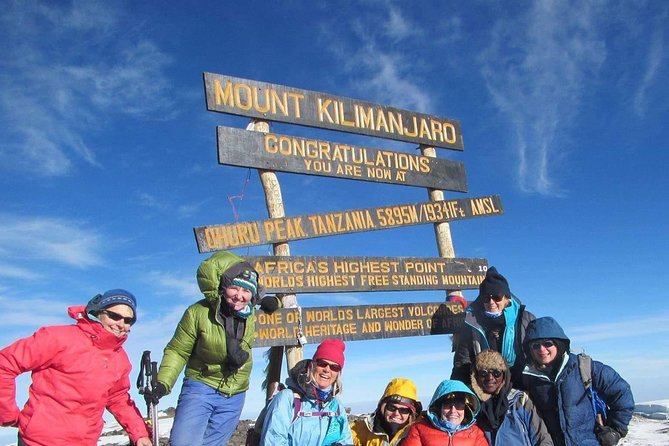
The summit section is described as glacier country. Reaching the top of Kilimanjaro is the central goal, but the experience also depends on how safely you manage the effort. Keep your pace controlled, listen closely to your guide, and do not treat the final ascent as a contest.
The descent to Mweka Camp is not an afterthought. Losing nearly 2,900 meters in one day puts stress on your knees and feet. Trekking poles, properly fitted footwear, and careful foot placement can make a real difference, although personal equipment is not included in the price.
The support crew is especially important on this day. The package includes professional mountain guides, cooks, and porters, as well as meals and water. The company also states that it provides fair treatment for the whole crew. Tips are not included, so plan for that separate cost and ask the operator for current guidance before you go.
Day 8: Mweka Camp to Moshi
The final mountain section drops 1,360 meters over 10 kilometers. The walk from Mweka Camp to Mweka Gate takes about four to five hours, returning you to the rainforest zone before transport to Moshi.
This is a satisfying finish because the vegetation changes again as you descend. Your legs may feel heavy after summit day, but the distance is manageable compared with the previous day.
Airport transportation is included between Kilimanjaro International Airport and your accommodation in Moshi. The initial arrival plan includes a hotel night, a meeting with the head guide, a briefing, and a gear check. Hotel meals are not included, so check exactly what your accommodation package covers.
What $2,900 includes, and what it does not
At $2,900 per person, this is not a low-cost mountain holiday. It is also more than a basic trail fee. The price includes:
- Transport to and from Kilimanjaro International Airport and your Moshi accommodation
- Park entry fees and camping fees
- Camping equipment and accommodation equipment on the mountain
- Professional guides, cooks, and porters
- Three meals daily and water while on the mountain
- An emergency first-aid kit with facilities intended to support your safety
That package provides real value because park charges, food, camp operations, and a full support crew can add up quickly. You are paying for an organized mountain expedition rather than simply access to a trail.
You still need to pay for travel insurance, meals at your hotel, personal items, and tips for the guides, porters, and cook. Personal clothing and footwear are also your responsibility, and the information provided does not give a full packing list.
I would compare the price by checking exactly how the operator treats its crew, what camping equipment is supplied, and how clear the gear-hire arrangements are. The strong points here are the stated fair treatment policy, included safety kit, and praise for planning and problem solving.
The human side of the climb
A Kilimanjaro trip is not only about altitude. You spend days with the guide team and porters, often relying on them for pacing, meals, camp routines, and decisions when conditions change.
Incredible Africa Adventures has been praised for meticulous preparation, attentive support, and a crew that helped turn a solo climb into a friendly group experience. One solo climber joined a small group, which grew to five people and developed a close social bond. Since this is a private activity, only your group participates in the booking, but the exact group arrangement should still be confirmed before payment.
The company has also received praise from people completing their first major high-altitude hike and from a solo climber treating Kilimanjaro as a first of seven major summits. That suggests the support system can appeal to both newcomers and experienced goal-oriented climbers.
Still, no operator can remove the mountain’s risks. Good organization helps, but it does not guarantee a summit. Your health, weather, altitude response, and preparation remain part of the result.
Who should book this route?
I would choose this climb if you want a slower approach, varied scenery, and a structured expedition with food and crew support included. It fits someone who can commit to eight days on the mountain and accept that the summit day will be tough.
It may suit you especially well if this is your first high-altitude hike and you want professional guidance. The longer route offers more time for acclimatization than a compressed schedule, though it still requires fitness and sensible preparation.
I would think twice if you want a relaxed holiday with plenty of free time. Every day involves walking, and the summit day is exceptionally long. You should also be comfortable with basic camping conditions and with paying extra for insurance, personal gear, hotel meals, and tips.
Free cancellation is available up to 24 hours before the start time for a full refund. Changes made inside that period are not accepted, and poor weather or failure to meet the minimum number of participants can lead to a different date or a full refund.
Should you book the 8-day Lemosho climb?
I would book this tour if your main goal is to reach Kilimanjaro’s summit by a scenic route with a gradual schedule and a full mountain crew. The best reasons are the longer acclimatization plan, the Shira Plateau, the Barranco Wall, the southern ice-field traverse, and the practical inclusions in the price.
Go in with clear expectations. You are not buying an easy walk, and the $2,900 price does not cover every trip expense. But if you prepare properly, budget for the extras, and value careful organization and strong crew support, this Lemosho route offers a well-structured way to take on Africa’s highest mountain.
FAQ
How long is the Kilimanjaro Lemosho climb?
The climb lasts approximately eight days. The route begins at Londorossi Gate, includes seven mountain days before the final descent, and finishes at Mweka Gate before transport to Moshi.
What is the price per person?
The listed price is $2,900 per person.
What is included in the price?
The price includes airport transfers to and from your Moshi accommodation, park and camping fees, mountain accommodation equipment, professional guides, cooks and porters, three meals daily, water while on the mountain, fair treatment of the crew, and an emergency first-aid kit.
Are meals at the hotel included?
No. Meals at your hotel are not included. Three meals per day are provided while you are on the mountain.
Do I need travel insurance?
Yes. Travel insurance is not included in the tour price, so you need to arrange it separately.
What happens if the climb is canceled because of bad weather?
If poor weather causes cancellation, you will be offered a different date or a full refund. The experience may also be canceled if the minimum number of participants is not met, with a different date or experience, or a full refund, offered in that case.
Just added around Moshi
- Moshi: Lake Chala Tour: Hiking &/or Kayaking★ 4.5 · 3 reviews
- 3 Days Tanga Exclusive Beach Holiday★ 5.0 · 3 reviews
- Serengeti Wildebeest Migration.★ 5.0 · 3 reviews
- Chemka Hotpsrings E-Bike Day Trip★ 5.0 · 3 reviews
- Explore 1 day Ngorongoro Crater Budget Group Safari from Arusha★ 5.0 · 3 reviews
- Explore the 360° of Kilimanjaro★ 5.0 · 3 reviews
- Affordable Short Tanzania Safari (2 Days Camping Safari)★ 5.0 · 3 reviews
- Rongai Route 7 Days★ 5.0 · 3 reviews
Kilimanjaro Treks, compared.



8-Day Small-group Lemosho Kilimanjaro Summit Trekking
Read our review →


Climbing Kilimanjaro through 7 days Machame Route
Read our review →

Browse the lists this tour appears in