
Reviewed · KILIMANJARO TREKS
Kilimanjaro Climb • Machame Route ~ 10 Day
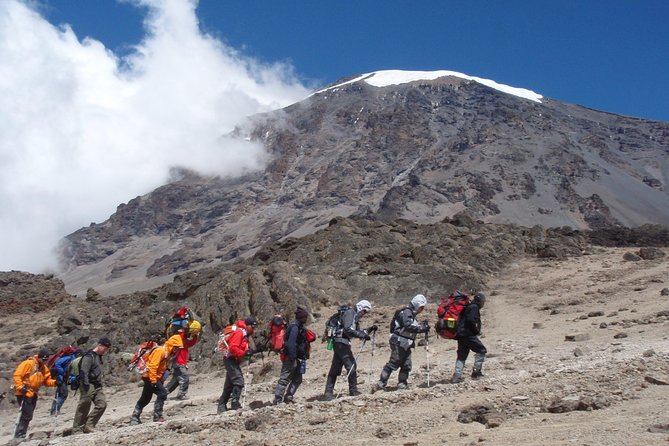
Africa rises beneath your boots. This 10-day Machame Route climb gives you a carefully paced path to Uhuru Peak, the 19,341-foot summit of Mount Kilimanjaro, with a strong support crew handling camp, equipment, meals, and daily mountain care. I especially like the two-night Moshi preparation period and the medically trained high-altitude guides, both of which make a demanding climb feel more organized. The main caution is simple: this is a serious altitude trip, not a scenic stroll, and the $5,628 price requires a close look at what is included.
You hike through rainforest, heather, lava fields, giant Senecios, and high rocky ground before reaching the summit. The route uses a useful climb-high, sleep-lower pattern around Lava Tower and Barranco, while the private format means only your group takes part. You still need to supply or rent your own climbing clothing and gear, which adds to the total cost.
In This Review
- The climb at a glance
- Starting gently in Moshi
- Day 3: Machame Gate to Machame Camp
- Day 4: Machame Camp to the Shira Plateau
- Day 5: Lava Tower, then down to Barranco
- Day 6: The Barranco Wall and alpine valleys
- Day 7: Barafu Camp and the summit eve
- Day 8: Barafu to Uhuru Peak, then Millennium Camp
- Day 9: Millennium Camp to the gate
- Food, camp, and the human support system
- What $5,628 buys you
- Who should book this Machame climb?
- Should you book it?
- FAQ
- Where does the Kilimanjaro climb begin?
- How long does the experience last?
- What route does the climb use?
- How high is Uhuru Peak?
- Is this a private tour?
- Are meals included?
- Is climbing gear included?
- How long is the summit day?
- Can I cancel for a full refund?
The climb at a glance
- Two nights in Moshi: You get time to rest, meet your guides, complete an orientation, and check your equipment before walking into the park.
- Machame’s changing scenery: The route moves from mossy rainforest to open heather, the Shira Plateau, ancient lava formations, glacial views, and cold volcanic rock.
- Lava Tower and Barranco: This is the key acclimatization section, with a high uphill push followed by a descent to camp.
- A private group experience: Only your party participates, so the pace and group atmosphere are more personal than on a large shared departure.
- A heavily supported summit attempt: The crew carries your equipment, builds camp, prepares meals, and provides daily medical checks through medically trained high-altitude first responders.
- Nine nights of breakfasts and eight dinners, plus ten lunches: Food is covered throughout the listed climbing program, though gear rental is not.
Starting gently in Moshi
Your first day begins in Moshi, Tanzania, where you check into a family-owned hotel and settle in. That may sound like a small detail, but it matters after a long international journey. A welcoming base gives you a place to sleep, sort your bags, and begin thinking like a climber instead of an airport passenger.
The next day is set aside for preparation. You spend a second night in Moshi, attend a detailed climb orientation, and complete a gear check with the guides. I consider this one of the strongest features of the schedule. Kilimanjaro success is not only about determination. It also depends on arriving with the right clothing, knowing how the days will work, and understanding what the guides expect from you.
Pickup is offered, and the tour has a mobile ticket. The stated start time is 12:00 a.m., but the first actual activity is your arrival and hotel check-in, so confirm the precise pickup and arrival arrangements before you fly. The 10-day plan is approximate, and departure from Tanzania happens on Day 10 unless you continue to a safari.
More Kilimanjaro routes and climbs:
- Kilimanjaro climb by Lemosho Route (7-day)
★ 5.0 · 651 reviews - Kilimanjaro climb, Machame Route (7-day)
★ 5.0 · 262 reviews - Kilimanjaro Climbing Lemosho Route 8 Days.
★ 5.0 · 186 reviews
Day 3: Machame Gate to Machame Camp
After breakfast, you drive to Machame Gate and sign into Kilimanjaro National Park. Your guide handles the park paperwork while you prepare to start walking. This is the point where the trip changes from hotel-based preparation to a full mountain expedition.
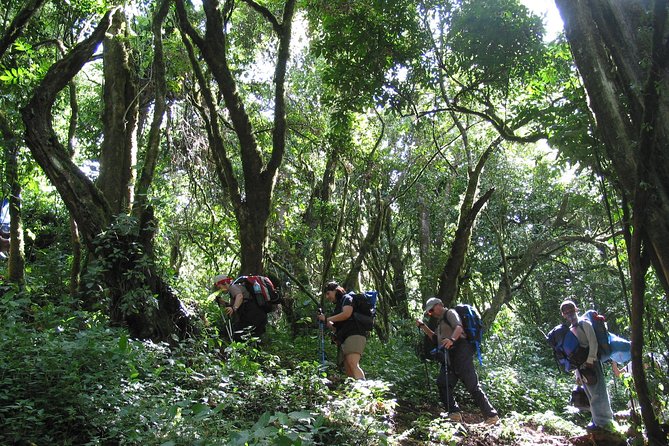
The trail narrows as it climbs through tropical rainforest toward Machame Camp. Expect about seven hours of hiking. The forest is dense, mossy, and full of unusual plant life. Colobus monkeys may call from the canopy, adding a welcome bit of wild drama to what is already a memorable first day.
The crew sets up camp before you arrive, so you do not spend the evening wrestling with tents. That service is more important than it sounds. After several hours of uphill walking, your job is to eat, rest, and prepare for the next day. You are not also collecting firewood, pitching camp, or organizing group equipment.
Day 4: Machame Camp to the Shira Plateau
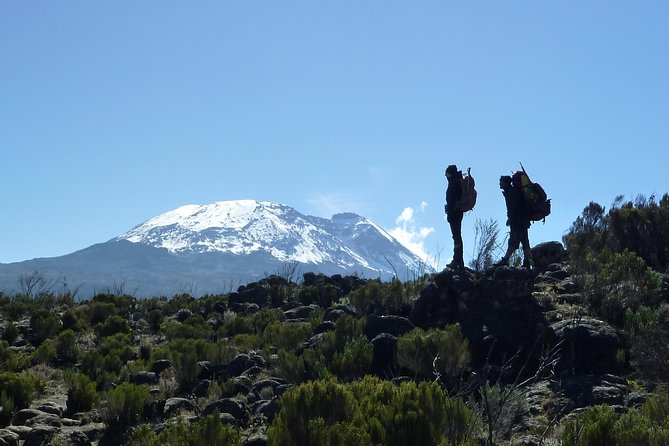
The forest begins to thin as you leave the last glades behind. On a clear day, Kibo Peak appears from roughly 20 miles away, giving you your first close look at the summit area. The trail then passes through heather and increasingly open ground.
After about 9,000 feet, you begin to see lobelia, protea, and giant Senecio plants. These hardy forms make the mountain feel far removed from ordinary hiking country. The route takes about seven to eight hours, and the instructions emphasize a slow pace as altitude begins to affect your breathing.
Shira is one of Kilimanjaro’s original three calderas, or collapsed volcanic formations. Reaching the plateau is a major psychological lift. You have left the rainforest, gained broad views, and entered a high world shaped by old volcanic forces.
The drawback is that the scenery opens up while comfort drops. You are higher, colder, and more exposed than on Day 3. Take the slow pace seriously. Racing here may feel heroic for an hour and foolish by dinner.
Day 5: Lava Tower, then down to Barranco
This is one of the most useful days in the plan. You hike uphill toward Lava Tower, then descend through fields of giant Senecios toward Barranco Camp. The day takes about eight hours.
The value is not just the views, though the views are a major reward. Kibo’s south-facing glaciers and the high volcanic formations give you a close sense of the summit terrain. The uphill section also lets your body experience higher elevation before you sleep lower at Barranco.
That high point followed by a descent is a sound rhythm for a long altitude climb. You may feel short of breath and tired, but you finish the day at a lower camp than the highest point reached. The path through heather and lobelias offers a striking change from the forest below.
This can be a tiring day because the route is not simply uphill or downhill. You gain height, lose it, and keep walking. Good boots, careful foot placement, and a willingness to move slowly matter more than speed.
A few more trips of this kind worth comparing:
- Safari Serengeti And Ngorongoro
★ 5.0 · 288 reviews - Climbing Kilimanjaro – Machame Route
★ 5.0 · 170 reviews - Climbing Kilimanjaro through 7 days Machame Route
★ 5.0 · 151 reviews - Kilimanjaro climb, Lemosho Route (8-day)
★ 5.0 · 148 reviews
Day 6: The Barranco Wall and alpine valleys
After breakfast, you tackle the Barranco Wall. This is one of the more memorable sections of the route, with hiking up and down through a series of valleys. Kibo Peak sits over your left shoulder, while Mawenzi rises ahead to the right.
The route takes about five hours, making it shorter than the previous two days. That does not mean easy. The Barranco Wall can feel demanding because of its steep, rocky character, but the shorter schedule gives you useful time to recover at camp.
I like this day because it offers the kind of close contact with the mountain that can be missing on a purely gradual trail. You are not only looking at Kilimanjaro from a distance. You are working your way around its folds and rock faces, with the two great peaks guiding the view.
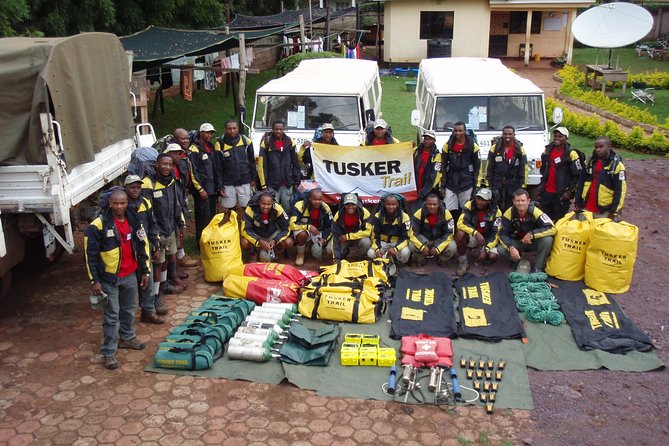
Your guides are especially important here. A strong team can help keep the group together and prevent the excitement of a dramatic section from turning into a rushed climb. Tusker’s guiding team is presented as medically trained in high-altitude first response, and daily care is a central part of the program.
Day 7: Barafu Camp and the summit eve
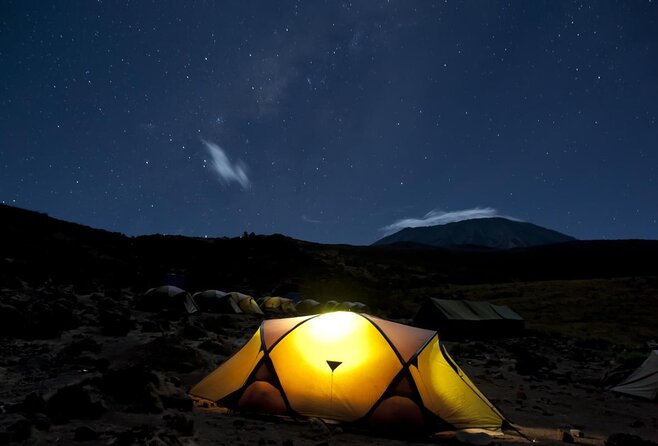
The path grows rockier and the air thinner as you climb toward Barafu Camp. The listed hiking time is about four hours, but the physical difficulty rises because of altitude. Barafu means ice in Swahili, and the camp is described as extremely cold.
This is the night when the summit attempt becomes real. You can see Mawenzi’s eroded peak through moving clouds, and the mood shifts toward quiet focus. The hard work is no longer abstract. The next stage will involve a long pre-dawn climb, a summit push, and a major descent.
Do not expect a normal night’s sleep. The schedule has you start a couple of hours before sunrise, and the summit day is the longest and hardest part of the trip. Keep your summit clothing organized before resting. Since climbing gear and clothing rental are not included, you need to arrive with suitable equipment or arrange rental separately.
Day 8: Barafu to Uhuru Peak, then Millennium Camp
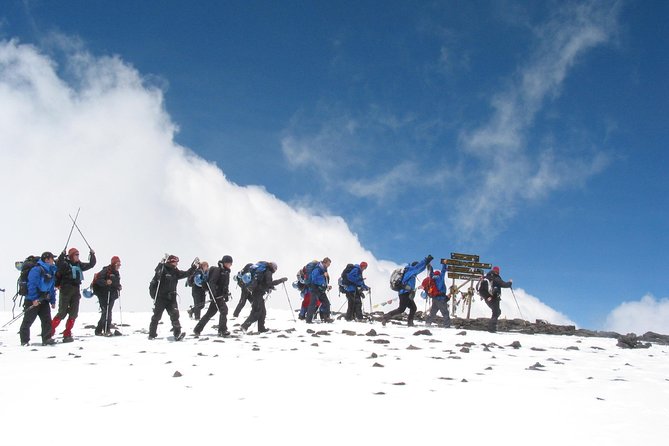
The summit day covers about 2.75 miles to the summit and takes roughly seven to nine hours. The trail is steep and demanding, and the early start is designed to put you on the hardest section in daylight. Exact timing can shift with weather, group pace, and altitude, but you should expect a very long day.
You first work toward the crater rim, with the itinerary allowing several hours for this section. From there, Uhuru Peak is another one to two hours. At 19,340 or 19,341 feet, depending on the stated figure, it is the highest point in Africa.
The reward is enormous: high volcanic views, Mawenzi Peak, the Kibo saddle, and the crater’s ice walls. The descriptions place the summit around the morning to early afternoon period, so do not assume you will arrive at a fixed sunrise moment. Conditions and pace control the clock.
After the summit, the day is only partly finished. You descend to Barafu Camp for a rest, then continue to Millennium Camp, at about 12,590 feet. The second section covers approximately 6.3 miles and takes five to six hours, making this a day of roughly 12 to 15 hours of effort.
That descent is a major part of the challenge. Many people focus on reaching Uhuru Peak and forget that tired legs must still manage loose, steep ground afterward. The crew’s camp setup, meals, and medical attention are particularly valuable here. You need food, water, rest, and clear guidance, not extra chores.
Day 9: Millennium Camp to the gate
After breakfast, you hike for about two hours to Mweka Camp, then continue for roughly four hours through rainforest to the park gate. The vegetation feels dramatically different after the cold, bare upper mountain.
At the gate, you have a final lunch and a celebration with the guides and porters. Then the team drives you back to the hotel for a well-earned shower. That return to ordinary comfort can feel almost as rewarding as the summit itself.
The schedule calls this about six hours of hiking, but downhill walking can be surprisingly tough after summit day. Your knees and feet may be more tired than your lungs. Keep your pace controlled and save some energy for the final descent.
Food, camp, and the human support system
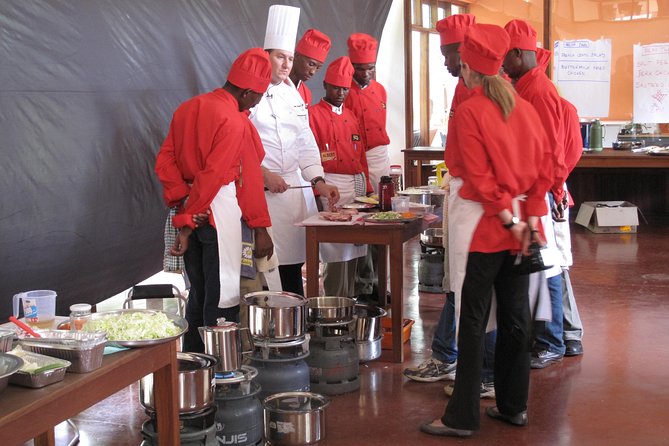
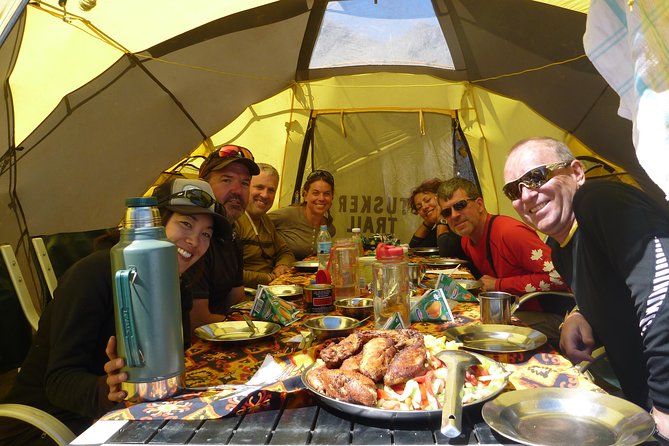
The package includes eight dinners, ten lunches, and nine breakfasts. That broad meal coverage is useful because you are not trying to plan mountain food while coping with altitude. The description also promises nourishing meals with local touches, though no detailed menu is provided.
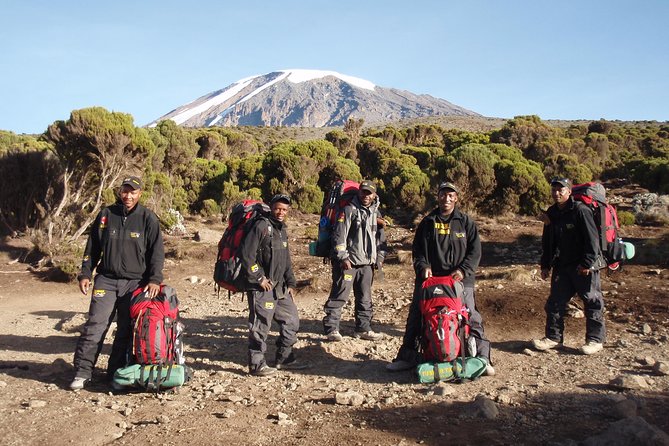
The crew carries your equipment and sets up camp each night. This lets you focus on walking and recovery, but it also means you should understand what personal items you must carry yourself. The tour does not include climbing gear or clothing rental, so ask for a current equipment list before booking.
The strongest praise directed at this operation focuses on care. The support includes careful medical evaluations, attentive guides, well-managed tents, food, advice, and hospitality. The guiding team has included Kombe, Guadance, Nemis, and Ureo, names worth noting if you want to ask who may lead your departure.
The group can also feel like a small expedition family. A private booking means only your group participates, and that may suit families, friends, or solo climbers who want a more personal setting. One solo female participant felt safe throughout the trip, while a large family group valued the attentive support around children and young adults.
What $5,628 buys you
At $5,628 per person, this is a high-priced Kilimanjaro climb. The value depends on how much you place on preparation, medical oversight, camp support, and a private group rather than on finding the cheapest route to the summit.
You are paying for a 10-day structure with two nights in Moshi, park access for the climb, guides, porters, camp setup, meals, transportation connected with the route, and a professionally managed summit attempt. The stated price does not include climbing gear and clothing rental, so add that expense before comparing options.
I would not choose this trip solely because it includes a peak. Kilimanjaro operators can differ greatly in guide quality, pacing, food, camp standards, and safety procedures. Here, the strongest value is the level of attention promised by the team. Daily medical evaluations and trained high-altitude first responders matter far more than a decorative hotel or a fancy meal when you are above 15,000 feet.
The price is easier to justify for a first-time high-altitude climber, a family group, or a solo participant who wants substantial support. A very experienced climber with all personal gear may find the cost harder to accept, especially if they prefer a leaner expedition.
Who should book this Machame climb?
You should consider it if you want a longer 10-day schedule rather than rushing up the mountain. The extra time allows two nights in Moshi and a staged route through Shira, Lava Tower, Barranco, Barafu, and Millennium.
It suits people who value strong logistics, guided pacing, and a crew that handles camp. Families and groups of friends may like the private format, while solo climbers may appreciate joining a team built around close support.
You should think twice if you dislike cold camps, steep rocky paths, long summit days, or basic mountain living. The route is physically demanding, and the summit day includes both the climb to Uhuru Peak and a long descent to Millennium Camp.
You also need to budget for clothing and climbing gear rental if you do not already own suitable equipment. Confirmation is provided at booking, and free cancellation is available up to 24 hours before the experience start time. Changes or cancellations inside that window are not accepted for a refund.
Should you book it?
I would book this Machame Route climb if your priority is a carefully supported summit attempt rather than the lowest available price. The two Moshi preparation nights, gradual route, full meal plan, camp crew, and medical focus give you a sensible framework for a difficult mountain.
I would not book it without first confirming the equipment requirements, exact airport or hotel pickup details, summit-day timing, and who will lead your group. Ask specifically about the guide team and the medical checks. If the answers are clear, the $5,628 cost can represent solid value for a private, service-heavy Kilimanjaro expedition.
FAQ
Where does the Kilimanjaro climb begin?
The experience begins in Moshi, Tanzania. You check into a family-owned hotel, prepare for the climb, and later drive to Machame Gate.
How long does the experience last?
The climb lasts approximately 10 days. The mountain hiking takes place from Day 3 through Day 9, with departure from Tanzania or continuation to safari on Day 10.
What route does the climb use?
It uses the Machame Route, passing through rainforest, the Shira Plateau, Lava Tower, Barranco, Barafu, Uhuru Peak, Millennium Camp, and the Mweka descent.
How high is Uhuru Peak?
Uhuru Peak is listed at approximately 19,340 to 19,341 feet, or 5,895 meters. It is the highest point in Africa.
Is this a private tour?
Yes. Only your group participates in the private tour or activity.
Are meals included?
Yes. The package includes nine breakfasts, ten lunches, and eight dinners.
Is climbing gear included?
No. Climbing gear and clothing rental are not included in the price.
How long is the summit day?
The summit section from Barafu to Uhuru Peak is listed at about seven to nine hours. The descent to Millennium Camp takes another five to six hours after a rest at Barafu.
Can I cancel for a full refund?
You can cancel at least 24 hours before the experience start time for a full refund. Cancellations or changes made less than 24 hours before the start time are not accepted for a refund.
Just added around Moshi
- Moshi: Lake Chala Tour: Hiking &/or Kayaking★ 4.5 · 3 reviews
- 3 Days Tanga Exclusive Beach Holiday★ 5.0 · 3 reviews
- Serengeti Wildebeest Migration.★ 5.0 · 3 reviews
- Chemka Hotpsrings E-Bike Day Trip★ 5.0 · 3 reviews
- Explore 1 day Ngorongoro Crater Budget Group Safari from Arusha★ 5.0 · 3 reviews
- Explore the 360° of Kilimanjaro★ 5.0 · 3 reviews
- Affordable Short Tanzania Safari (2 Days Camping Safari)★ 5.0 · 3 reviews
- Rongai Route 7 Days★ 5.0 · 3 reviews
Kilimanjaro Treks, compared.



8-Day Small-group Lemosho Kilimanjaro Summit Trekking
Read our review →


Climbing Kilimanjaro through 7 days Machame Route
Read our review →

Browse the lists this tour appears in