
Reviewed · KILIMANJARO TREKS
Kilimanjaro Climb • Marangu Route ~ 9 Day
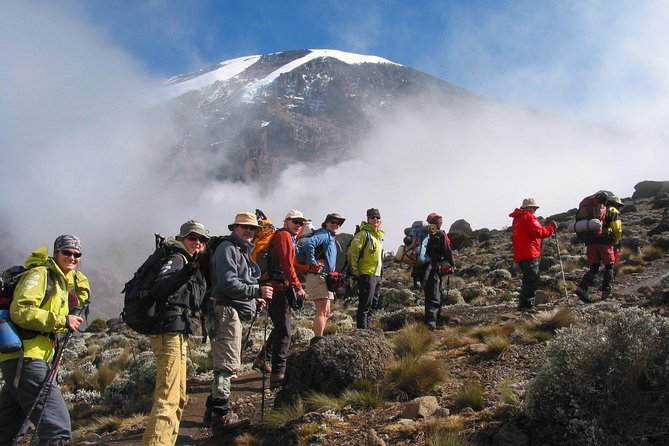
Kilimanjaro starts with a long, quiet walk. Tusker Trail’s Marangu Route climb gives you a carefully paced path to Uhuru Peak, with two nights at Horombo Hut for acclimatization, shared mountain huts instead of tents, and a full day in Moshi before the climb begins. I especially like the extra acclimatization day and the company’s strong focus on medical training and guide support.
I also like the human touch: a family-owned hotel in Moshi, cooks trained by the Culinary Institute of America, and guides such as Urio and Pastorey, who have been praised for putting safety before the summit. The main drawback is the price, $5,699 per person, plus the fact that the route can feel busy because you share huts and dining areas with other climbers.
In This Review
- Key points to know before climbing
- Why the Marangu Route works well for a nine-day climb
- Days 1 and 2: Moshi is part of the preparation
- Day 3: Montane forest to Mandara Hut
- Day 4: Heath and moorland, then Horombo Hut
- Day 5: The extra acclimatization day at Horombo
- Day 6: Across the Kibo Saddle to Kibo Hut
- Day 7: Gillman’s Point, Uhuru Peak, and the long descent
- Day 8: Back through the forest to Moshi
- Day 9: Departure or a Tanzanian safari
- What the $5,699 price represents
- What is included, and what needs attention
- Cancellation and planning notes
- Should you book this Kilimanjaro climb?
- FAQ
- Where does the Kilimanjaro climb begin?
- How long does the experience last?
- Which Kilimanjaro route does this climb use?
- How many nights are spent in Moshi before climbing?
- Where do you sleep on the mountain?
- Is an acclimatization day included?
- What time does the summit climb begin?
- How high is Uhuru Peak?
- Are meals included?
- Is equipment rental included?
- How many people can join the climb?
- Can you cancel for a full refund?
Key points to know before climbing
- Two nights at Horombo Hut: The extra night gives your body more time to adjust before the high-altitude push.
- A hut-based Marangu climb: You sleep in shared mountain huts with running water and toilets rather than custom walk-in tents.
- A 99 percent stated summit success rate: Tusker attributes this to careful pacing, medical training, and close guide attention.
- A demanding summit night: You begin around midnight, reach Gillman’s Point, continue to Uhuru Peak, then descend to Horombo.
- A maximum group size of 16: Large enough for a social climb, but still limited compared with a mass-market operation.
- A strong crew welfare policy: Tusker says it provides high pay, pensions, and medical benefits for its mountain staff.
Why the Marangu Route works well for a nine-day climb
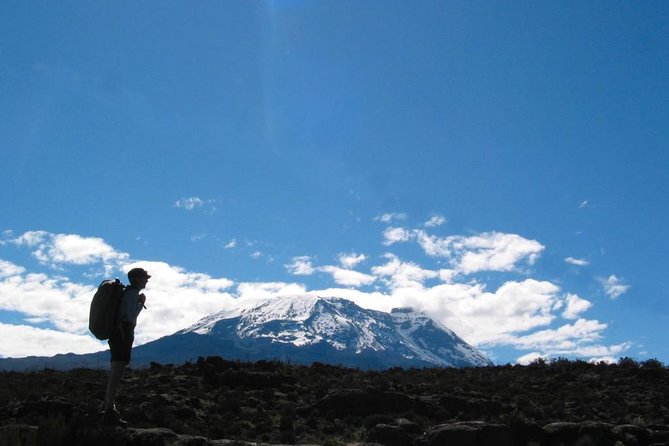
The Marangu Route is often called the Coca-Cola Route, but that nickname can make it sound easy. It is not. You still climb to 19,340 feet, or 5,895 meters, and altitude is the serious challenge.
What makes this route appealing is its steady structure. You walk through several distinct mountain zones, sleep in fixed huts, and return by the same general route. That simplicity can be useful when you are already tired and thinking less clearly.
The nine-day schedule includes two nights in Moshi before the mountain and two nights at Horombo. That matters. A shorter schedule may look attractive on paper, but the body needs time to adjust to thinner air. Here, the extra Horombo night gives you a short acclimatization hike, lunch back at the hut, and a quieter afternoon before dinner.
The schedule information also says to check the calendar for an open 12-day trip start date. That does not perfectly match the nine-day itinerary described here, so I would confirm the exact departure length and dates before paying. The plan shown runs from arrival in Moshi through departure on Day 9, but the available trip date may belong to a longer departure format.
More Kilimanjaro routes and climbs:
- Kilimanjaro climb by Lemosho Route (7-day)
★ 5.0 · 651 reviews - Kilimanjaro climb, Machame Route (7-day)
★ 5.0 · 262 reviews - Kilimanjaro Climbing Lemosho Route 8 Days.
★ 5.0 · 186 reviews
Days 1 and 2: Moshi is part of the preparation
Your first day is deliberately gentle. You arrive in Moshi, check into a family-owned hotel, and have time to rest and prepare. After flights and airport transfers, that breathing room is welcome.
Day 2 is where the practical work begins. You spend another night in Moshi, meet the guides, attend a detailed climb orientation, and complete a gear check. I consider this one of the most valuable parts of the trip because bad equipment becomes a bigger problem at altitude.
Equipment rental is not included, so you need to bring or arrange the required gear separately. The supplied information does not list the rental prices or specific equipment available, so ask Tusker for a current gear list and rental inventory before you arrive.
The early Moshi stay also gives you a chance to raise concerns before the mountain. If your boots rub, your layers do not fit, or something is missing, Day 2 is the time to address it, not summit night.
Day 3: Montane forest to Mandara Hut
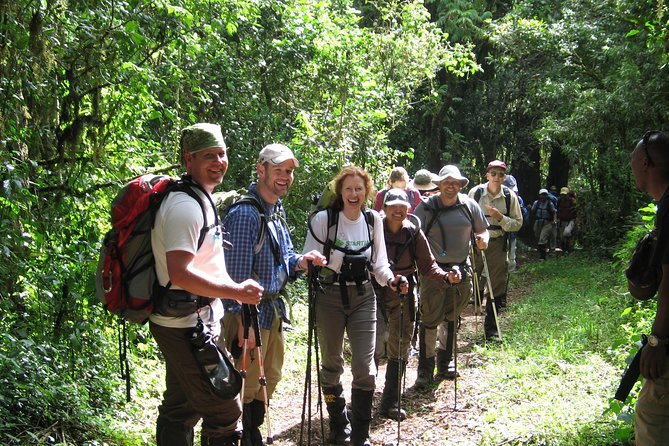
The climb begins with a drive to Marangu park gate. From there, you walk for roughly four to five hours through lush montane forest toward Mandara Hut. The itinerary lists about three hours for the stop, so expect the timing to depend on the day’s pace, trail conditions, and breaks.
Look into the trees for black and white colobus monkeys. They add a bit of wildlife interest to what could otherwise feel like a simple approach walk.
Mandara is a cluster of mountain huts shared with other climbers. The huts have running water and toilets, and meals are served in a common dining area. This is less private than a tented climb, but it creates a social setting where you can meet people from many parts of the world.
Tusker’s cooks prepare the meals on the mountain. The company highlights its Culinary Institute of America trained chefs and its focus on adventure cuisine. That may sound fancy for a mountain trek, but food quality has real value here. You need to eat even when altitude or fatigue dulls your appetite.
The first day is a good test of your boots, pack, and layering system. The forest is greener and more enclosed than the upper mountain, and the gradual climb lets you settle into the walking rhythm.
Day 4: Heath and moorland, then Horombo Hut
On Day 4, the forest fades and the trail enters the heath and moorland zone. The mountain opens up, and you get your first views of Mawenzi and Kibo Peaks in the distance.
The day takes about eight hours according to the schedule. That is a long walking day, but it is not the summit push. The best approach is to keep your pace easy and let the guides control the speed.
You arrive at Horombo Hut in the afternoon, with time to rest before dinner. The views here are one of the rewards of the route. Mawenzi has a jagged profile, while Kibo looks broader and more imposing.
Horombo is where the climb becomes more serious. You are high enough for altitude symptoms to appear, yet you still have a second night here. That extra night is a major reason I find this itinerary more sensible than a rushed climb.
A few more trips of this kind worth comparing:
- Safari Serengeti And Ngorongoro
★ 5.0 · 288 reviews - Climbing Kilimanjaro – Machame Route
★ 5.0 · 170 reviews - Climbing Kilimanjaro through 7 days Machame Route
★ 5.0 · 151 reviews - Kilimanjaro climb, Lemosho Route (8-day)
★ 5.0 · 148 reviews
Day 5: The extra acclimatization day at Horombo
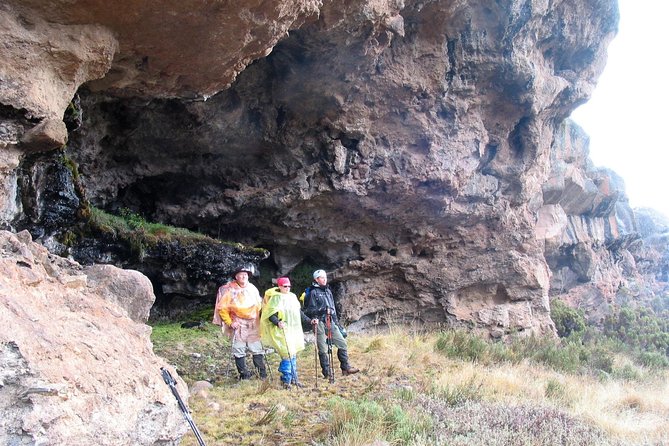
This is the day that gives the schedule its strength. You take a short acclimatization hike, return to Horombo for lunch, and spend the afternoon resting before dinner.
The point is not to cover a great distance. It is to spend time at altitude, climb a little higher, then return to sleep at the lower hut. That pattern helps you prepare without forcing you to spend the night at the highest point you have reached.
You should treat the afternoon seriously. It may be tempting to explore, take endless photographs, or chat for hours in the dining area. Rest is part of the climb, not time wasted.
The stated walking time is about eight hours, which may include the full day’s schedule and acclimatization activity. I would ask for the expected distance and elevation gain for this day during orientation, since the description calls the hike short but does not give exact figures.
Day 6: Across the Kibo Saddle to Kibo Hut
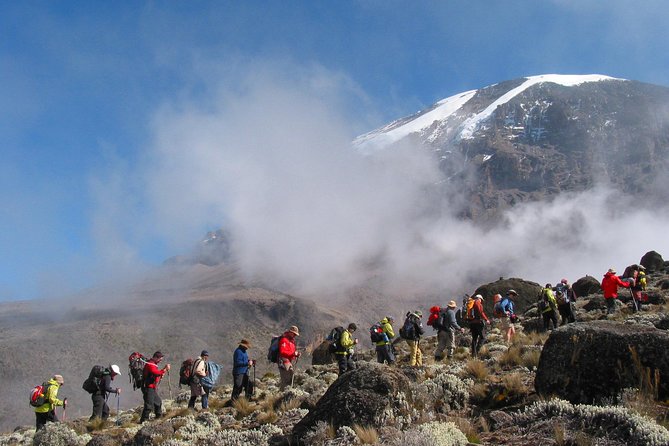
After breakfast, you leave the moorland and enter the Alpine desert zone. The vegetation becomes sparse, and the surroundings feel more exposed. You cross the barren Kibo Saddle between Mawenzi and Kibo Peaks.
This is a psychologically important section. The route looks more severe, and the summit goal feels close, but you still have a long night ahead. The walk to Kibo Hut takes about seven hours, with arrival around mid-afternoon.
On a clear day, you may see Gillman’s Point on the crater rim. It is a useful landmark because it shows where the steepest part of the summit route leads.
At Kibo Hut, you relax, eat dinner, and prepare for the midnight start. You should try to sleep, even if the timing feels strange. The summit attempt begins when most people would normally be in bed, so every minute of rest helps.
The Kibo section has fewer visual distractions than the lower mountain. That can be peaceful, but it can also make the climb feel austere. Keep sipping water and follow your guide’s instructions closely.
Day 7: Gillman’s Point, Uhuru Peak, and the long descent
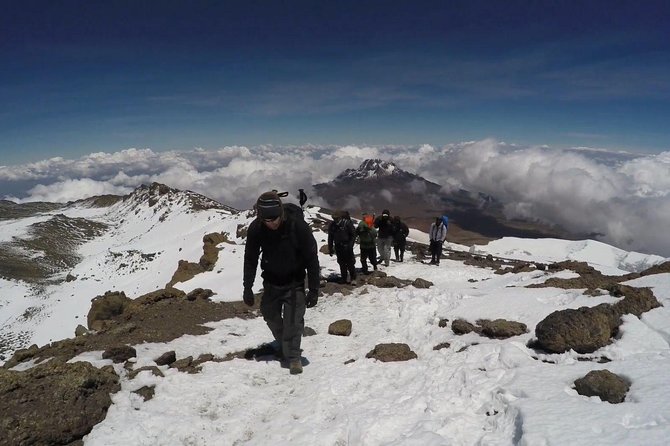
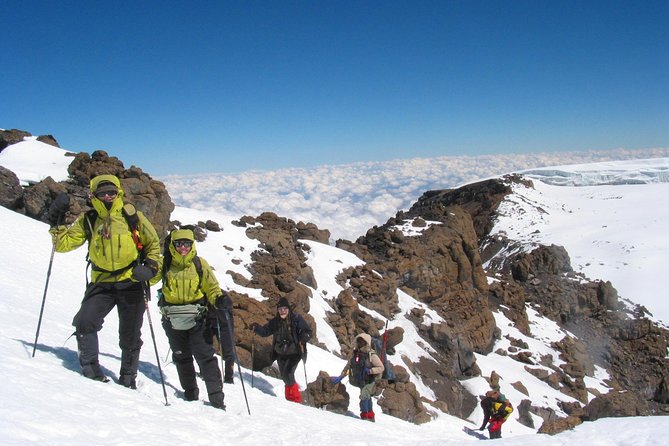
This is the hardest day. The guide wakes you just before midnight with hot tea and snacks, then you begin the uphill climb in darkness.
The summit route heads over rocky outcrops and loose scree toward Gillman’s Point on the crater rim. You climb slowly, and the pace may feel almost comically cautious. That is exactly what you want at this altitude.
The sunrise views are a major reward. From the upper mountain, you can see Mawenzi, the Kibo Saddle, and the plains below. Reaching Gillman’s Point marks the end of the steepest section, but it is not the summit yet.
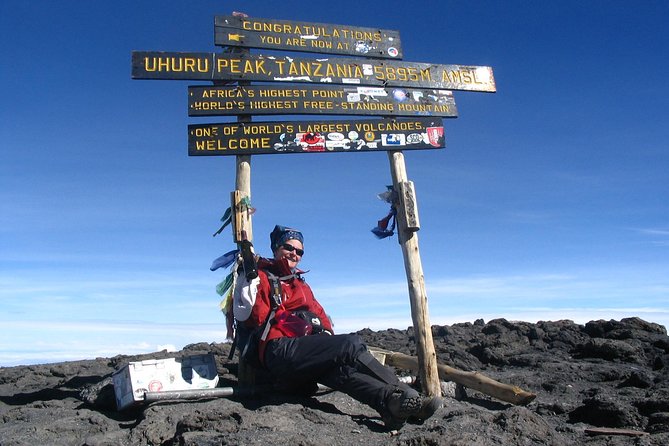
The itinerary allows about two more hours to Uhuru Peak. At 19,340 feet, Uhuru is the highest point in Africa and the emotional high point of the trip. You celebrate briefly, take photographs, and begin the descent.
The description lists five hours for this stop, but the day also includes a substantial descent to Horombo Hut. The mileage figures provided for the summit day are demanding, so do not read the five-hour figure as the full door-to-door effort. This is a very long day of walking, often with little sleep.
Safety deserves special attention here. Tusker says its guides receive expert altitude medical training, and the strongest praise attached to the company concerns safety, preparation, and personal attention. One couple described a headache early in the climb and appreciated the careful response. That is the kind of support you want when altitude symptoms appear.
Guides Urio and Pastorey are specifically named in the feedback, along with Julian in Moshi and Katie in the United States. The consistent picture is of a warm, professional team that focuses on safety before summit ambition. That order is right. No summit photo is worth ignoring signs of altitude illness.
After Uhuru Peak, you descend to Horombo for the night. The lower altitude feels welcome, but your legs will be tired. Eat, drink, and rest rather than trying to make the evening a second celebration.
Day 8: Back through the forest to Moshi
After breakfast, you walk downhill past Mandara Hut, continuing to the national park gate. The descent takes about four hours, and the forest near Mandara offers a pleasant change after the stark upper mountain.
Tusker vehicles meet you at the gate and take you on the roughly 90-minute drive back to the Moshi hotel. This transfer matters more than it may seem. After the summit day and the long descent, having transport waiting saves you from dealing with another local connection while exhausted.
Back at the hotel, you can finally take a proper shower and join a final climb celebration. The day combines a manageable walk with a practical return to comfort.
Day 9: Departure or a Tanzanian safari
The final day is open-ended. You can depart Tanzania or continue to a safari in one of the country’s wildlife reserves.
Tusker has specialized in East African safaris since 1983 and can arrange a continuation after the climb. That option makes sense geographically and emotionally: you finish a demanding mountain and then move into a very different side of Tanzania.
The schedule mentions about five hours for the Moshi portion, but no detailed safari itinerary is included. If you want to continue, request the exact parks, transport, accommodation, meals, and additional price before booking the climb.
What the $5,699 price represents
At $5,699 per person, this is a premium-priced Kilimanjaro climb. The value comes from more than the trail itself. The package includes eight breakfasts, eight lunches, and seven dinners, along with park admission, mountain support, hotel stays in Moshi, transportation to and from the trail, guides, cooks, and the planned acclimatization structure.
The company also says it provides high pay, pensions, and medical benefits for its crew and supports community development through a local Lions Club partnership, including a school for deaf children. Those policies matter if you want your money to support better treatment for the people who carry, cook, guide, and organize the climb.
Tusker’s stated 99 percent summit success rate is impressive, but you should read it as a company figure rather than a personal guarantee. Altitude affects each person differently, and the guide team must be able to turn someone around if safety requires it.
The group limit is 16 people. That is not an intimate private climb, but it is limited enough to allow organized support. Ask whether your departure is expected to be full, since group size can affect the social feel and the amount of individual attention.
What is included, and what needs attention
Included meals cover the main food requirements during the trip, but the package does not include equipment or gear rental. That is the biggest practical omission for a first-time high-altitude climber.
Before you commit, ask about:
- The current gear list
- Rental costs and available sizes
- The exact Moshi hotel
- The number of guides and support staff for your group
- The confirmed trip length, especially because a 12-day start date is mentioned
- Any park, permit, or transfer details not clearly shown in your booking documents
Pickup is offered, and the experience uses a mobile ticket. Confirmation is provided at booking. The stated start time is 12:00 am, but that appears to be a generic listing time rather than the practical arrival schedule, since Day 1 begins with hotel check-in. Confirm your actual pickup and orientation times directly.
Most people can participate according to the supplied information, but this should not be mistaken for an easy holiday walk. You need to be ready for long days, high altitude, cold conditions, and a midnight summit start.
Cancellation and planning notes
You can cancel up to 24 hours before the local start time for a full refund. Changes or cancellations made less than 24 hours before the start are not accepted and are not refunded.
That policy is fairly clear, but your larger concern should be preparation. Give yourself enough time to sort out equipment, understand the altitude plan, and confirm the exact departure date.
Should you book this Kilimanjaro climb?
I would choose this trip if you want a carefully managed Marangu Route climb with hut accommodation, serious acclimatization time, strong food support, and an experienced operating team. The extra Horombo night, medical focus, and close guide attention are the best reasons to consider it.
I would hesitate if you want solitude, a low-cost climb, or a route with tented camps and more varied scenery. Marangu uses shared huts and follows a direct out-and-back pattern, so it may feel less remote than other Kilimanjaro routes.
The price is high, but it is easier to justify if you value safety systems, crew welfare, quality meals, Moshi support, and a well-paced itinerary. Confirm the nine-day versus 12-day schedule, then book if those details match your plans and you are prepared to treat the mountain with respect.
FAQ
Where does the Kilimanjaro climb begin?
The experience begins in Moshi, Tanzania, with hotel accommodation and preparation before the mountain portion starts.
How long does the experience last?
The advertised itinerary lasts approximately nine days, from Day 1 in Moshi through departure or safari planning on Day 9.
Which Kilimanjaro route does this climb use?
It uses the Marangu Route.
How many nights are spent in Moshi before climbing?
You spend two nights in Moshi before starting the trek.
Where do you sleep on the mountain?
You stay in shared mountain huts at Mandara Hut, Horombo Hut, and Kibo Hut. The huts have running water and toilets.
Is an acclimatization day included?
Yes. You spend two nights at Horombo Hut, with a short acclimatization hike on the extra day and a return to Horombo for lunch and rest.
What time does the summit climb begin?
The guide wakes you shortly before midnight on Day 7, and the summit climb begins around midnight.
How high is Uhuru Peak?
Uhuru Peak is listed at 19,340 feet, or 5,895 meters.
Are meals included?
Yes. The package includes eight breakfasts, eight lunches, and seven dinners.
Is equipment rental included?
No. Equipment and gear rental are not included in the price.
How many people can join the climb?
The maximum group size is 16 travelers.
Can you cancel for a full refund?
Yes. You can cancel at least 24 hours before the local start time for a full refund. Cancellations or changes made less than 24 hours before the start are not accepted.
Just added around Moshi
- Moshi: Lake Chala Tour: Hiking &/or Kayaking★ 4.5 · 3 reviews
- 3 Days Tanga Exclusive Beach Holiday★ 5.0 · 3 reviews
- Serengeti Wildebeest Migration.★ 5.0 · 3 reviews
- Chemka Hotpsrings E-Bike Day Trip★ 5.0 · 3 reviews
- Explore 1 day Ngorongoro Crater Budget Group Safari from Arusha★ 5.0 · 3 reviews
- Explore the 360° of Kilimanjaro★ 5.0 · 3 reviews
- Affordable Short Tanzania Safari (2 Days Camping Safari)★ 5.0 · 3 reviews
- Rongai Route 7 Days★ 5.0 · 3 reviews
Kilimanjaro Treks, compared.



8-Day Small-group Lemosho Kilimanjaro Summit Trekking
Read our review →


Climbing Kilimanjaro through 7 days Machame Route
Read our review →

Browse the lists this tour appears in